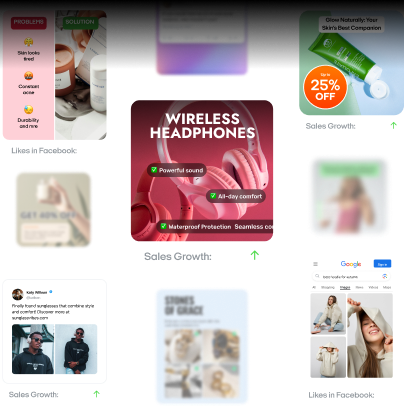
40 Facebook ad mistakes that you can fix to get more customers
What if your campaigns fail not because of the algorithm, but because of simple Facebook ad mistakes you don’t notice? Zeely AI analyzed hundreds of campaigns to present the 40 most common errors and the exact fixes you can apply today.
Most Facebook ads fail quietly. They just fade, don’t crash. According to Adweek, 45% of small business advertisers waste at least a quarter of their Facebook budget on campaigns that never convert. It’s rarely bad luck, it’s repeatable mistakes hiding in setup, targeting, and creativity.
This guide walks you through the 40 most common Facebook ad mistakes, what they look like in real campaigns, and how to fix them before they drain your spend. Each one’s built from real patterns we’ve seen across performance teams and mobile game advertisers, the same small errors that separate learning ads from losing ones.
If you’ve ever stared at a flat dashboard wondering what went wrong, you’ll find the answer here and the fix right beside it.

40 Facebook ad mistakes
Most Facebook ads don’t fail because of bad ideas, they fail because of small, repeatable mistakes. The wrong setup, cluttered targeting, or creative that looks good but teaches the algorithm nothing. This section breaks down 40 Facebook ad mistakes to avoid: from strategy and audience setup to creative, budget, and measurement.
Strategy and planning
Every strong Facebook campaign starts with structure and most weak ones fall apart without it. HubSpot shows that nearly 60% of ad accounts lose efficiency because they skip the basics: clear goals, clean segmentation, and the patience to let data lead. This section covers the foundation, the strategy and planning mistakes that quietly drain performance before the first click ever happens.
1. No clear goal: When one campaign tries to do everything
If your campaign’s chasing installs, traffic, and purchases at once, it’s not really chasing anything. This is one of the most common Facebook ad mistakes and it’s easy to make when the pressure to “show results” kicks in. For mobile games, it’s even trickier: you want to reach for a new title and install it for the current one, all in the same setup.
Why it happens:
- Teams blur short-term goals with long-term ones
- Everyone wants their KPI hit in one campaign
- Reusing last quarter’s setup feels safer than starting clean
- The algorithm ends up guessing your priority
How to spot it: Your dashboard shows mixed signals: great reach, low conversions, unstable spend.
Fix: Strip it down. Pick one goal and one success metric. If you’re running Facebook ad mistakes mobile games campaigns, separate awareness and install pushes so each can learn properly. It’s one of those Facebook ad mistakes to avoid if you want steady growth instead of scattered results.
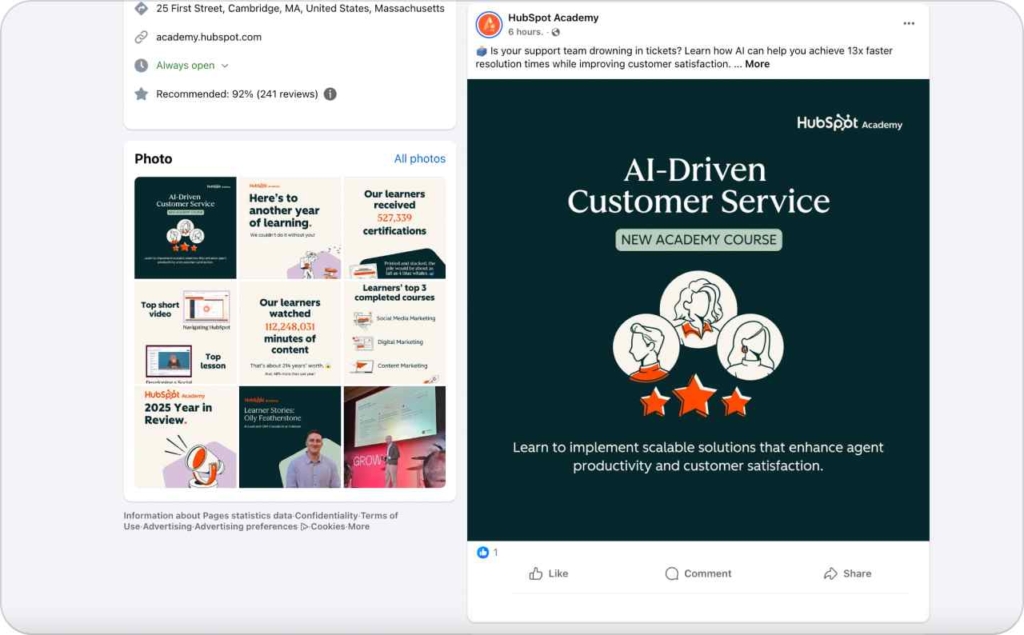
Photo source: HubSpot Academy on Facebook
2. Using the wrong objective: When clicks don’t mean customers
Your campaign gets clicks, views, and comments, but no sales. You’re not broken; you’re just asking the algorithm the wrong question. This is a quiet Facebook ad mistake that costs more than it looks, especially in Facebook ad mistakes mobile games setups where “Traffic” feels easier than “App installs.”
Why it happens:
- You’re optimizing for delivery instead of value
- Old habits stick from pre-conversion tracking days
- The fear of “learning limited” pushes you toward high-volume goals
- Clicks look like progress when budgets are under review
How to spot it: Strong CTR, solid engagement, but nothing moves downstream: purchases, leads, or installs.
Fix: Switch to the objective that mirrors your real outcome. If you want installs, choose App Installs. If you want revenue, choose Conversions. Give it time to learn. It’s one of the common Facebook ad mistakes to avoid, and fixing it can turn vanity numbers into actual business results.
3. Mixing cold, warm, and hot audiences in one ad set: When blended targeting hides real results
When you blend everyone into one audience: new visitors, repeat buyers, past leads, your data turns to fog. You can’t see what’s working or who’s reacting. It’s one of those common Facebook ad mistakes that hides strong performers and makes scaling impossible.
Why it happens
- You’re moving fast or managing small budgets
- Prospecting and remarketing feel easier to merge
- There’s pressure to “simplify” setup
- It looks efficient on paper but breaks in delivery
How to spot it: Unstable CPAs, frequency spikes, and audience fatigue within days.
Fix: Split your campaigns by intent: cold for discovery, warm for engagement, hot for conversion. In mobile game UA campaigns, that means separate sets for new players and lapsed ones. Once you isolate intent, learning stabilizes and costs drop. Among the Facebook ad mistakes to avoid, this one clears the fog fastest.
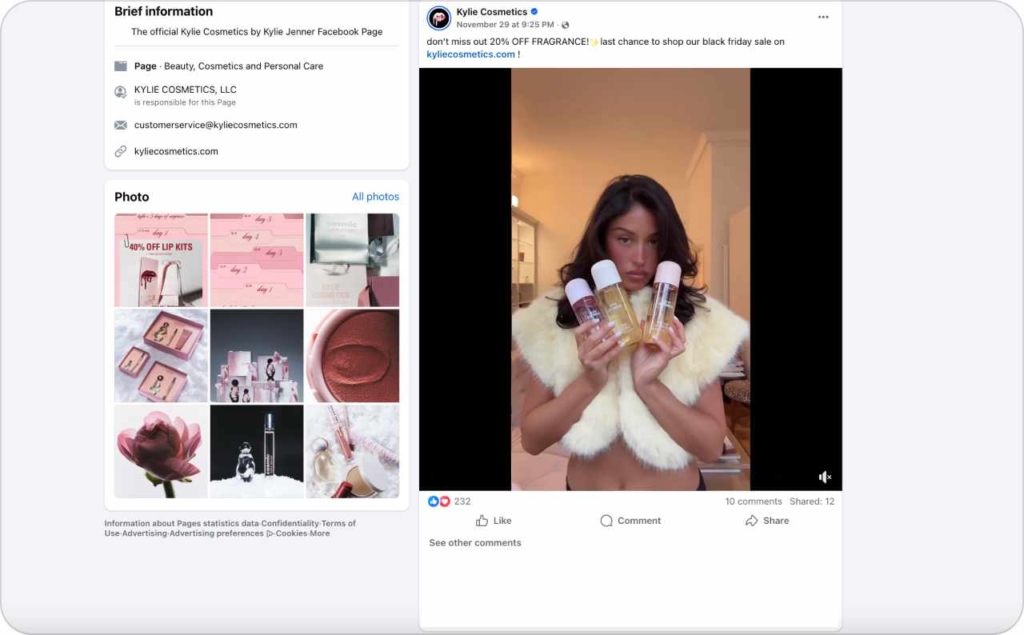
Photo source: Kylie Cosmetics on Facebook
4. Chasing vanity metrics: When pretty numbers hide weak performance
A high CTR or CPM looks good in a report, but pretty graphs don’t pay bills. It’s one of the classic Facebook ad mistakes, optimizing for what’s easy to measure instead of what grows the business. Read about Average CTR for Facebook ads.
Why it happens
- Surface numbers are fast to celebrate
- Pressure to “show traction” early in a test
- Dashboards default to engagement metrics
- Reporting cadence rewards movement, not outcomes
How to spot it: Great engagement, flat revenue, and no real lift in LTV or ROAS.
Fix: Reframe what winning means. Report on conversions, qualified leads, or lifetime value. For mobile game advertisers, track installs, in-app events, and retention. It’s one of the common Facebook ad mistakes to avoid if you want marketing that measures what matters.
5. Spreading budget too thin: When too many ad sets kill learning
If every ad set gets a sliver of budget, nothing ever learns. Your dashboard fills with “learning limited,” delivery stalls, and you start chasing ghosts. It’s one of the common Facebook ad mistakes that makes campaigns look busy but perform flat.
Why it happens
- You’re trying to cover every angle or audience
- There’s pressure to keep everyone’s idea live
- Small budgets get sliced instead of scaled
- It feels organized, but the algorithm sees confusion
How to spot it: Ad sets under 50 conversions a week, unstable CPA, and no clear signal of success.
Fix: Trim the noise. Fewer, stronger ad sets give the algorithm the signal strength it needs to stabilize. Test one audience, one offer, one creative batch at a time. For mobile game UA teams, think of each campaign as a lab run. Among the Facebook ad mistakes to avoid, this one’s about discipline: focus depth over variety.
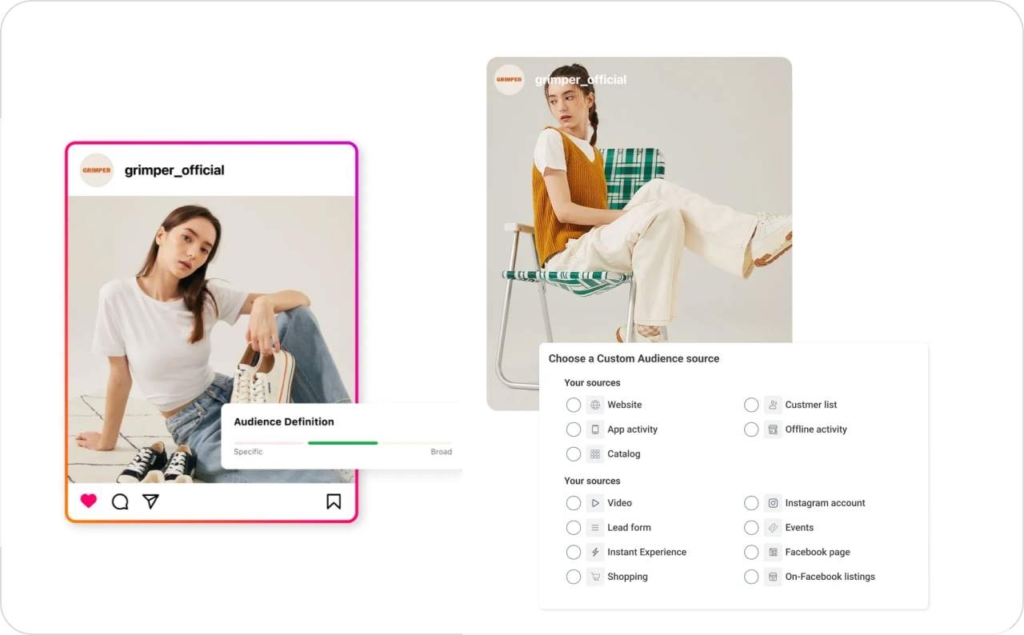
Photo source: Meta
6. No offer–audience fit: When great creative can’t save the wrong pitch
Even the best ad won’t work if the offer doesn’t fit the person seeing it. You can have killer hooks and clean design, but if the promise misses the user’s intent, the scroll wins. It’s one of those Facebook ad mistakes that looks creative but loses on clarity.
Why it happens
- Creative ideas lead before audience insight
- No validation loop before scaling
- Offers sound generic, not personal
- Funnel stage isn’t matched to motivation
How to spot it: Comments like “Not for me,” low add-to-cart rates, or poor lead quality.
Fix: Get curious. Talk to real users, test offers at each cold, warm, hot stage and listen to what actually clicks. For mobile game advertisers, try a “free level” or “exclusive skin” before a paid upgrade. Among the common Facebook ad mistakes to avoid, this is the most human one: your offer has to meet your audience where they are, not where you wish they were.
7. Ignoring seasonality and promo cadence: When “always on” stops working
Running the same message all year feels efficient, but it quietly drains results. Seasons, events, and promo cycles shape how people spend, especially in fast-moving categories like e-commerce and mobile games UA. Treating the calendar as static is one of those Facebook ad mistakes to avoid that’s easy to fix once you see it.
Why it happens
- “Set-and-forget” comfort after a good month
- No promo roadmap or content rotation
- Teams chase last month’s winner too long
- Creative fatigue hides behind average CPMs
How to spot it: Margins dip during promos, spikes come too late, and your best creative suddenly stops converting.
Fix: Plan for rhythm. Mark key retail and app store events, build creative in advance, and adjust pacing before the rush. For mobile games advertisers, align bursts with launches or feature spots. Seasonality isn’t noise, it’s the beat your ads should follow.

Photo source: Huda Beauty on Facebook
8. No hypothesis log or success criteria: When “testing” turns into guessing
You can’t learn from chaos. And chaos is what happens when every ad test blurs together. Without a written hypothesis or a clear win rule, “testing” becomes tinkering and that’s one of the common Facebook ad mistakes even smart teams make.
Why it happens
- You change things fast to “keep momentum”
- There’s no habit of writing down what you’re proving
- Everyone wants to call a win, so the goalpost moves
- Results get explained after, not defined before
How to spot it: You can’t tell which edit worked or why performance changed at all.
Fix: Start small: one line per test. What are we trying to learn? What metric proves it? Set a stop rule before you launch. Review weekly. Over time, you’ll build a record of real learnings, not lucky guesses. It’s one of those Facebook ad mistakes to avoid if you want your experiments to compound instead of confuse.
Targeting and audiences
Great creative can’t save bad targeting. Many campaigns fail not because the idea is weak, but because the signal never reaches the right people. This section breaks down the most common Facebook ad mistakes in audience setup from over-targeting and overlap to ignored lookalikes and lazy exclusions.
9. Audience overlap cannibalizing delivery: When your own ads compete against each other
When ad sets chase the same people, they bid against each other and you end up paying twice. It’s one of those Facebook ad mistakes that hides inside good intentions: more testing, more audiences, more waste.
Why it happens
- Interest and lookalike audiences built from similar seeds
- Duplicate setups across campaigns or teams
- No exclusion logic between ad sets
- Overconfidence that Meta “will figure it out”
How to spot it: Use the Overlap tool. If you see 30 – 40%+ shared users, you’re cannibalizing delivery.
Fix: Merge or exclude overlapping sets. Keep one audience per intent stage and differentiate your seeds: purchasers, leads, high-value users. For mobile games advertisers, separate active players from prospects. It’s one of the common Facebook ad mistakes to avoid if you want stable scaling and predictable costs.
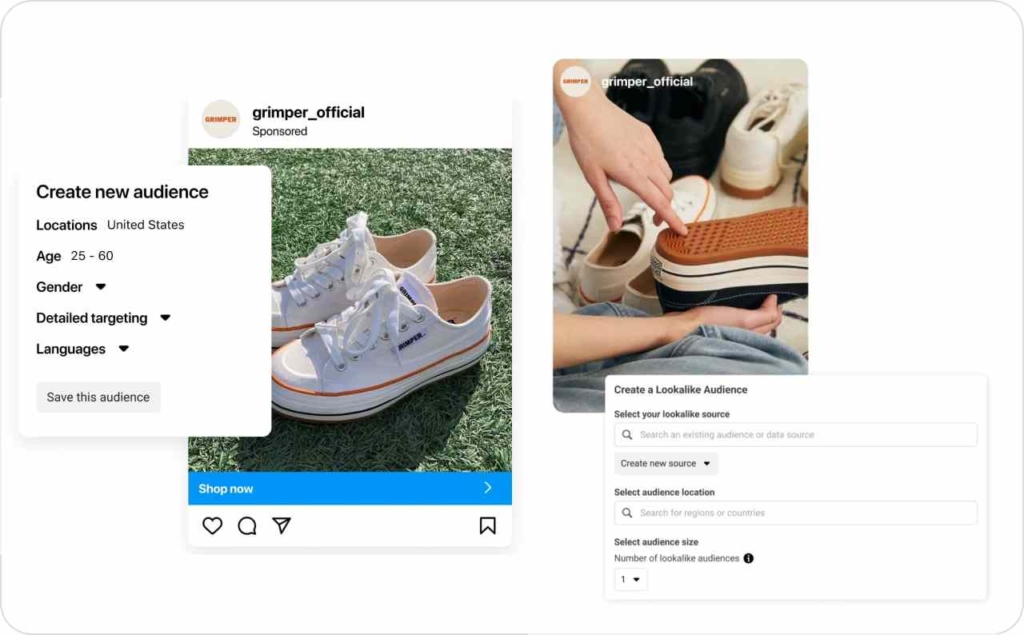
Photo source: Meta
10. Not using first-party lists or lookalikes: When you ignore your best data
You already know your best buyers: the people who clicked, purchased, or played before. Ignoring them forces Meta to relearn what your own data could have told it in a day. It’s one of the common Facebook ad mistakes that keeps good campaigns stuck in neutral.
Why it happens
- Uploading CRM or app data feels technical or low-priority
- Teams rely on legacy interest stacks that once worked
- Ownership of lists or pixels sits outside the ad team
- Early wins give a false sense of security
How to spot it: Only interest audiences show in your account. No lookalikes, no value-based lists, and inconsistent CPA trends.
Fix: Upload what you already have: emails, high-value buyers, or active users. Build 1% lookalikes, then widen to 2 – 5% as results stabilize. For mobile games advertisers, feed in-app events and retention tiers so Meta knows who matters. It’s one of the Facebook ad mistakes to avoid if you want data doing the work, not guesswork.
11. Over-targeting with stacked interests: When narrow targeting costs you more
Stacking too many interests might feel smart like aiming laser-precise, but it often shrinks reach until ads get expensive. Tiny audiences drive high CPMs and unstable delivery, one of the common Facebook ad mistakes that quietly kills scale. In mobile games UA, this shows up fast: narrow interest clusters drive installs early, then hit a wall.
Why it happens
- Fear of wasted impressions or irrelevant traffic
- A belief that more filters equal more relevance
- Pressure to “define the perfect audience”
- Old habits from pre-algorithmic targeting days
How to spot it: High CPMs, flat reach, and frequency spikes despite small spend.
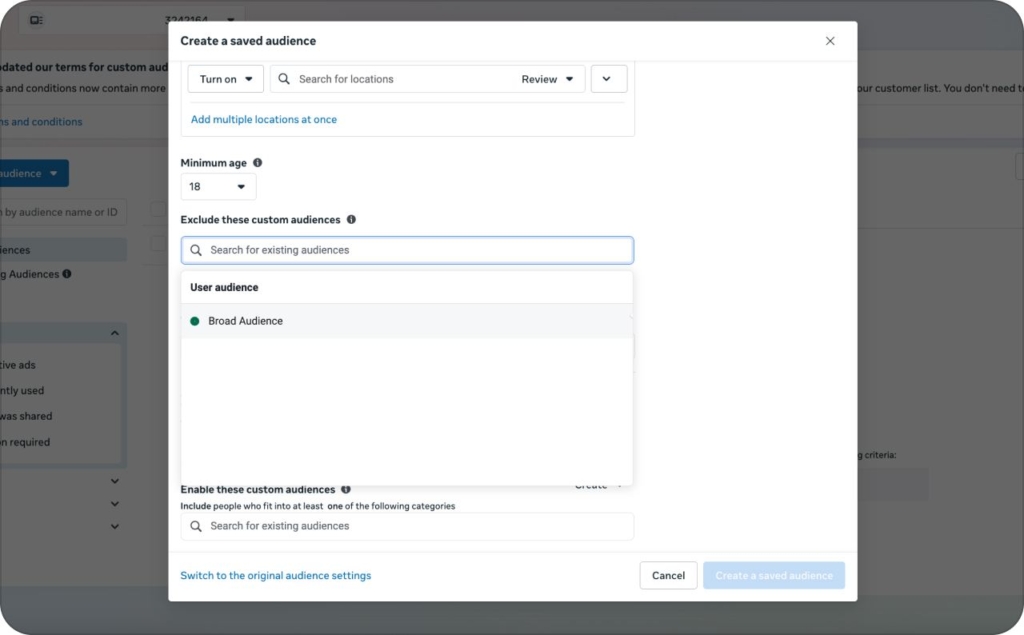
Fix: Loosen up. Remove stacked filters and test a Broad audience alongside. Meta’s system now optimizes from signals, not guesses. If you’re scaling Facebook ad mistakes mobile games campaigns, trust the algorithm to find new look-alikes once early signals are clean. Among the Facebook ad mistakes to avoid, this one saves money the moment you let go of control.
12. Retargeting windows too long: When you keep paying for people who’ve moved on
If your retargeting window stretches too far, you’re spending on people who’ve already decided. “More days” sounds safer, but it usually means stale audiences and rising CPAs. It’s one of the common Facebook ad mistakes that sneaks in when results slow and you widen targeting instead of refreshing it.
Why it happens
- Belief that bigger audiences mean better results
- No recency-based segmentation in place
- Fear of missing late converters
- Old habits from pre-iOS remarketing days
How to spot it: High frequency, flat conversions, and expensive 30–180-day retargeting sets.
Fix: Tighten your windows. Keep recent visitors in one group 1–7 or 7–14 days and serve different offers to older segments. For mobile game advertisers, adjust by play activity, recent players get creative refreshes; dormant ones need stronger hooks. Among the Facebook ad mistakes to avoid, this one’s pure efficiency: talk to who’s still listening.
13. No country or device splits when they matter: When hidden costs stay hidden
Combining every country and device may look efficient, but it blurs what’s really driving results. A strong market hides a weak one, and blended CPAs make smart decisions impossible. This quiet Facebook ad mistake wastes more than it saves.
Why it happens
- Fear of “over-segmenting” after consolidation advice
- No habit of checking breakdowns by geo or platform
- Assumption that Meta will self-optimize evenly
- Time pressure to keep structures simple
How to spot it: Large CPA swings between countries or devices once you open breakdowns.
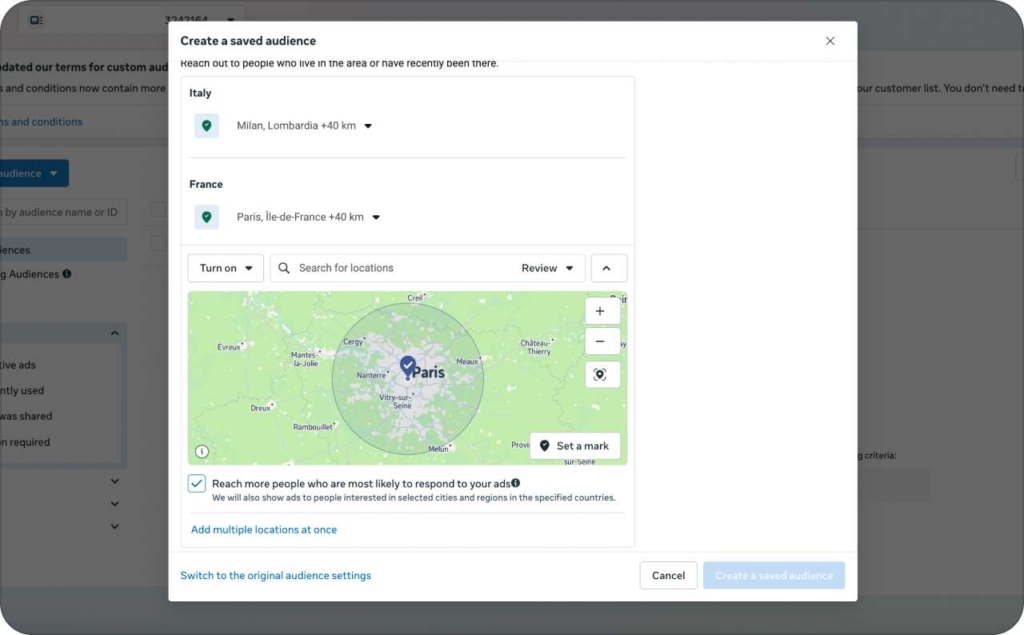
Fix: Split where economics or behavior differ: payment flow, pricing, or user type, but not everywhere. Keep similar regions together and isolate outliers. For mobile game UA, Android and iOS usually need separate pacing. Among the common Facebook ad mistakes, this one’s easy: visibility first, optimization second.
14. Excluding existing customers incorrectly: When you pay to win people you already have
If your ads keep showing up for people who’ve already bought, so you’re re-acquiring. Wrong or outdated exclusion lists turn smart setups into silent budget drains. It’s one of the common Facebook ad mistakes that hides behind good performance metrics but erodes real ROI.
Why it happens
- CRM lists or pixel data go stale
- Emails or phone numbers don’t match the right format
- Customer events aren’t passed back after updates
- Nobody owns list hygiene week to week
How to spot it: Customer comments like “Already bought this!” or steadily falling incremental lift.
Fix: Refresh exclusion lists weekly and double-check identifiers: email, phone, and event match. Cross-reference purchase pixels with CRM exports. For mobile games advertisers, exclude active players by in-app activity to focus spend on new installs. Among the Facebook ad mistakes to avoid, this one’s pure maintenance: small effort, major savings.
15. Ignoring advantage+ placements: When manual control costs you reach
If you’re still running Feed-only placements, you’re leaving conversions on the table. Meta’s Advantage+ system learns where users actually engage and delivers accordingly. Skipping it is a subtle Facebook ad mistake that quietly raises CPMs while shrinking audience reach.
Why it happens
- Habit from early ad-set structures
- Worry about brand safety or odd placements
- Preference for visible “control”
- Old results that made manual seem better
How to spot it: Higher CPMs and weaker delivery than comparable Advantage+ tests.
Fix: Test one campaign with Advantage+ placements on. Exclude only where you truly can’t appear, sensitive contexts or mismatched visuals. Then compare efficiency after a week. For mobile games UA, Advantage+ often surfaces inventory in Reels or Stories that outperforms Feed entirely. Among the common Facebook ad mistakes, this is one of the easiest wins: less control, more results. Read which Facebook ad placement works best.
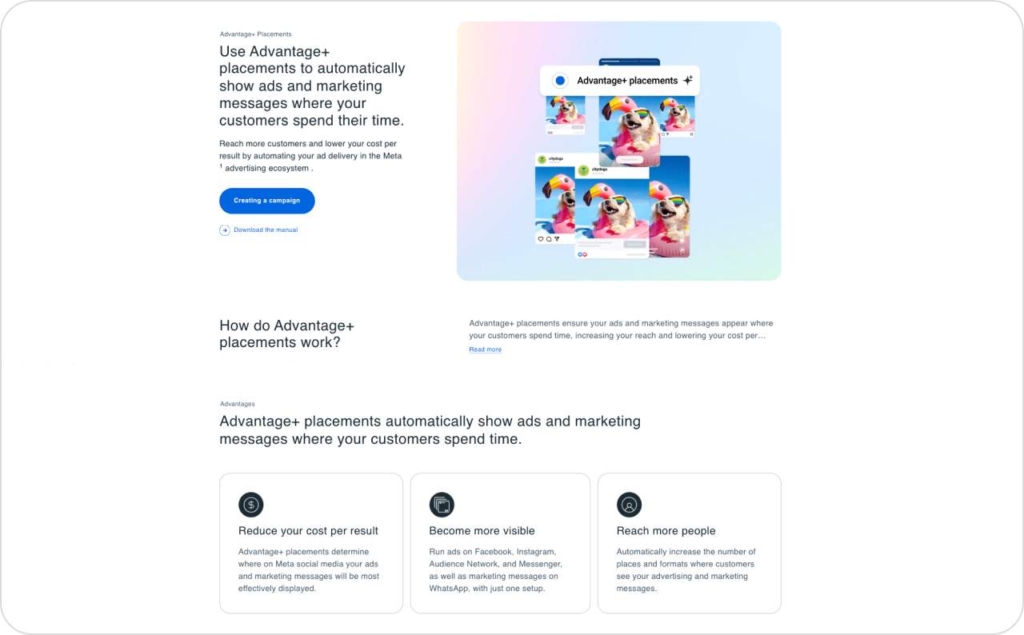
Photo source: Meta
16. Avoiding broad when it’s right: When control feels safer than scale
Tight targeting feels responsible, but sometimes it blocks growth. Meta’s algorithm works best when it has freedom to find patterns fast. Skipping Broad audiences entirely is a classic Facebook ad mistake that keeps strong offers stuck in small pools.
Why it happens
- Preference for visible control over delivery
- Old bias against “wasted” impressions
- Lack of trust in automated optimization
- Past Broad tests run with weak conversion signals
How to spot it: Targeted sets cap out quickly while Broad delivers lower CPMs and steadier CPAs.
Fix: Always run one Broad baseline alongside your refined audiences. Let Meta learn from strong conversion data, not assumptions. For mobile game UA, pair Broad with purchase or retention events, it scales only when the signal is clear. Among the common Facebook ad mistakes to avoid, this one’s about trust: give the system enough room to prove you right.
Creative and messaging
Weak hooks, vague CTAs, or polished-but-empty visuals stop good campaigns cold. This section covers the creative and messaging Facebook ad mistakes to avoid, the ones that decide whether someone scrolls past or stops to click. Fix these, and every dollar you spend learns faster and converts better.
17. One creative per audience: When you stop learning after the first idea
You can’t find a winner if you never run a race. One creative per audience means you’re testing distribution, not ideas and learning grinds to a halt. It’s one of those common Facebook ad mistakes that keeps even good ads from scaling.
Why it happens
- You’re rushing to launch and skip creative variety
- There’s a belief that targeting does the hard work
- Creative bandwidth feels limited
- The first ad “works fine,” so testing stops
How to spot it: Performance stalls early, fatigue hits fast, and you can’t tell what angle actually drives results.
Fix: Always test multiple ideas within an audience. Swap hooks, tones, and offers, not colors and fonts. For mobile game advertisers, try different emotional angles: challenge, relaxation, progress. Let data, not assumption, decide what resonates. Among the Facebook ad mistakes to avoid, this one’s about curiosity: the more you learn, the faster you grow.
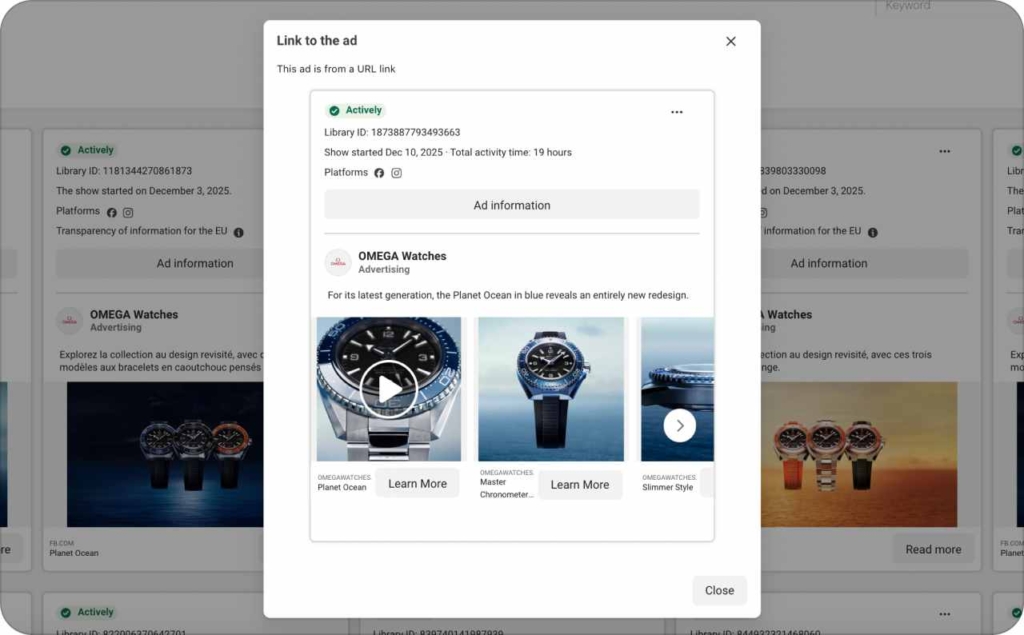
Photo source: OMEGA on Meta Library
18. Weak first 2 seconds: When you lose attention before you even start
If you don’t hook attention fast, nothing else matters. The first two seconds decide whether someone watches, scrolls, or buys. Weak openings are one of the common Facebook ad mistakes that make good ideas invisible.
Why it happens
- The ad starts with a logo or slow intro
- You hide the payoff until halfway through
- The story matters to you, not to the viewer
- Creative teams follow brand order instead of human curiosity
How to spot it: Steep drop-offs in the first three seconds or engagement that never climbs back.
Fix: Start where the viewer’s brain already is: the problem, the moment, the emotion. Show movement, transformation, or payoff right away. For mobile game advertisers, that might mean starting with gameplay intensity, not the title screen. Among the Facebook ad mistakes to avoid, this one’s about energy: catch eyes first, explain later.
19. Over-polished, ad-like creative: When perfect production breaks connection
You don’t need a studio to make a great ad, you need a spark. When every frame looks too polished, it stops feeling real. People scroll right past because it screams “ad.” This quiet Facebook ad mistake costs more than it shows.
Why it happens
- Brand teams chase perfection or visual consistency
- Creative rules come from old TV thinking
- Leadership loves “beautiful,” not “believable”
- It feels safer to polish than to test
How to spot it: Strong click-throughs but low watch time or weak conversions. Comments that admire visuals but don’t engage with the offer.
Fix: Show people, not polish. Record on phones, feature customers, use movement that feels native to the feed. For mobile game UA, gameplay clips or short reaction videos always outperform cinematic trailers. It’s one of the common Facebook ad mistakes that disappears the moment you trade polish for presence.
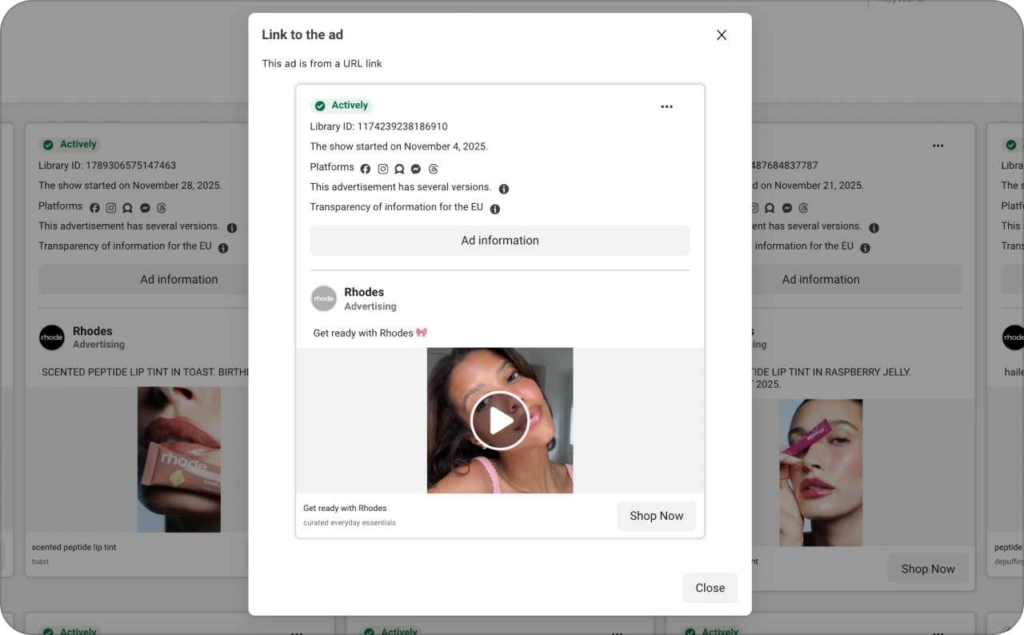
Photo source: Rodes on Meta Library
20. Reusing the same headline and body across formats: When one message misses the moment
You’ve seen it happen: an ad looks fine in Feed but feels off in Reels or Stories. The headline gets cut, text overlaps, and your strongest line never lands. It’s one of those common Facebook ad mistakes that quietly limits reach without looking broken.
Why it happens
- You’re exporting fast, reusing copy for every placement
- There’s pressure to “go live” instead of rework
- The team assumes Meta will adapt automatically
- It feels efficient until results stall
How to spot it: Watch your previews: cropped headlines, missing CTAs, or visuals that feel squeezed.
Fix: Write for the space, not the spreadsheet. Feed copy should breathe; Stories should sprint. In Reels, say less and show more. For mobile game UA, open with action: gameplay or rewardб then move text off the screen fast. Among the Facebook ad mistakes to avoid, this one’s a design mindset: make each placement feel made for it.
21. No clear CTA: When people like the ad but don’t know what to do
People can’t take action if you never ask. A vague or missing CTA turns attention into waste. It’s a small detail, but one of those Facebook ad mistakes that breaks the whole flow from interest to conversion.
Why it happens
- Fear of sounding “too salesy”
- Overreliance on visuals to do the talking
- Unclear landing page alignment
- Copy written for clicks, not actions
How to spot it: Strong engagement metrics but weak conversions or comments like “How do I sign up?”
Fix: Be specific. Tell people exactly what happens next: download, join, learn, or play. Use that language on-screen and in the headline. For mobile games, “Play free now” beats “Check it out” every time. Among the common Facebook ad mistakes to avoid, this one’s the easiest fix: clear beats clever, every time.
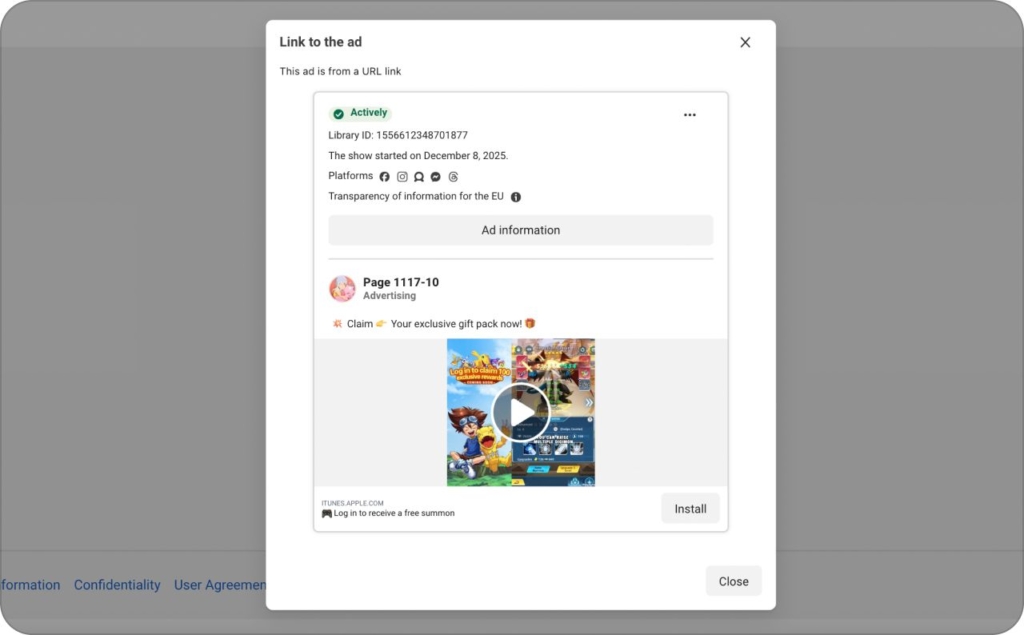
Photo source: Meta Library
22. Not localizing for key markets: When “global” ads miss local relevance
An ad that works in one market can fall flat in another. Currency, idioms, or even holidays shift context fast. When everything stays global, you lose connection, one of those common Facebook ad mistakes that looks efficient but costs resonance.
Why it happens
- One creative team handles all markets
- Tight deadlines favor translation over localization
- Brand guidelines overrule local nuance
- There’s no feedback loop from regional teams
How to spot it: Comments that don’t match intent, low engagement by region, or users flagging mismatched prices or phrases.
Fix: Adapt, don’t just translate. Update copy, pricing, and visuals per market. For mobile games UA, localize not only language but also characters, events, and app store visuals. Let each audience feel seen. Among the Facebook ad mistakes to avoid, this one’s simple: speak the way your customer thinks.
21. Missing social proof: When people like the ad but don’t believe it
People believe people, they don’t believe brands. Without proof, your ad can sound polished but hollow. It’s one of the Facebook ad mistakes that drags conversion quietly, even when your creative looks great.
Why it happens
- You’re racing to launch and skip collecting testimonials
- Legal or brand reviews slow approval
- You assume results speak for themselves
- Old creative keeps running without fresh validation
How to spot it: Comments ask “Does this actually work?” or engagement looks fine while conversions fade.
Fix: Add evidence. Ratings, real users, short quotes, screenshots, or media mentions all count. Keep it visual and believable. For mobile game advertisers, show real players reacting or screenshots from app store reviews. Among the common Facebook ad mistakes to avoid, this one’s about trust: let people see what makes you real.
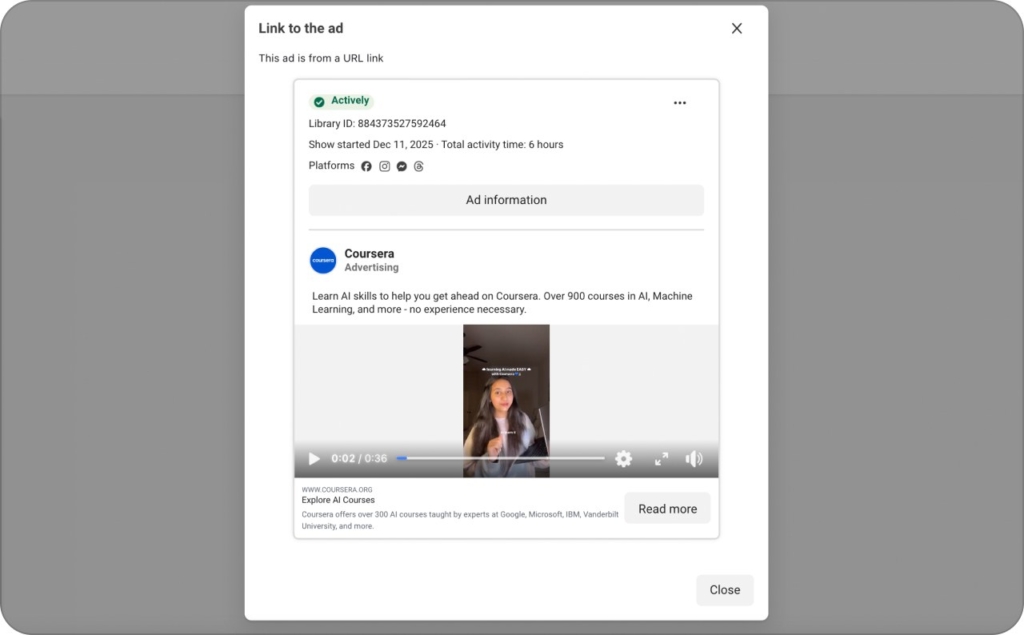
Photo source: Coursera on Meta Library
24. No placement-specific assets: When one format doesn’t fit all
A single 1:1 video won’t carry you everywhere. Different placements demand different shapes, speeds, and framing. Ignoring that is one of the common Facebook ad mistakes that quietly reduces reach and relevance.
Why it happens
- You’re moving fast and exporting one version for all
- Asset specs feel secondary to message
- There’s pressure to “just get something live”
- The team treats cropping as optimization
How to spot it: Tiny text, letterboxing, or visuals cut off in Stories and Reels.
Fix: Create purpose-built versions: 1:1 for Feed, 4:5 for Instagram, 9:16 for Stories and Reels. Adjust framing and CTA placement for each. For mobile game UA, start vertical-first gameplay fills the screen better than any crop. Among the Facebook ad mistakes to avoid, this one’s practical: format is context, not afterthought.
25. Sound-off design ignored: When your ad loses its voice in silence
Most people watch with the sound off. If your story only works with audio, they’ll miss it and move on. Forgetting captions or visual guidance is one of the Facebook ad mistakes that tanks view-through rates quietly.
Why it happens
- Creators edit with headphones on
- Teams assume everyone listens like they do
- Production templates don’t include captions
- No one checks analytics by sound status
How to spot it: Low completion rates on mobile, strong openers that drop off once dialogue starts.
Fix: Design for silence. Add captions, subtitles, or text motion that mirrors the script. Highlight CTAs visually. For mobile game advertisers, overlay progress cues or rewards so gameplay makes sense even muted. Among the common Facebook ad mistakes to avoid, this one’s visual empathy: make your ad work for every context, sound or not.
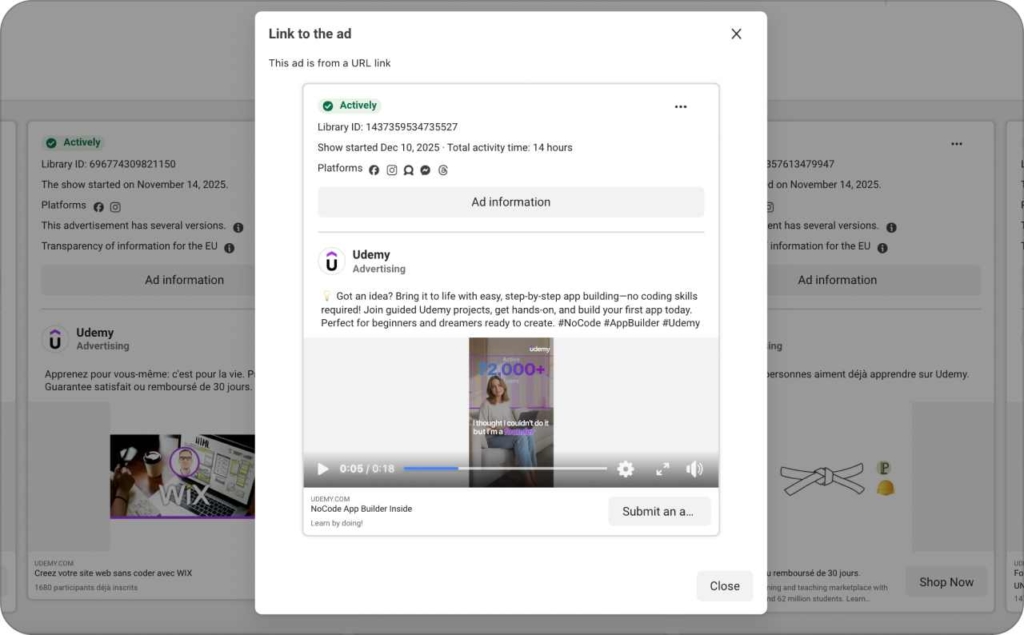
Photo source: Udemy on Meta Library
26. Testing skins, not ideas: When you keep changing the paint, not the message
Color swaps and font tweaks don’t make a new ad. When every test looks the same, you’re decorating data, not learning from it. This is one of those Facebook ad mistakes that drains budget while pretending to test.
Why it happens
- Small visual changes feel safe
- Big creative swings feel risky or slow
- Reporting celebrates “activity,” not insight
- There’s confusion between iteration and repetition
How to spot it: Hundreds of variants, none outperforming by much. CTR and CPA barely move.
Fix: Test meaning, not makeup. Change the hook, emotion, or offer, what you’re saying, not just how it looks. For mobile game advertisers, rotate between angles like challenge, relaxation, or reward. Among the common Facebook ad mistakes, this one’s simple: fresh thinking beats new colors every time.
Bidding, budget and delivery
27. Manual bidding without thresholds: When “control” turns into chaos
Manual bidding feels like taking control, but without math, it’s a blindfold. Guesswork bids lead to unstable delivery and unpredictable costs. It’s one of the common Facebook ad mistakes that drains both confidence and budget, especially for mobile game advertisers trying to fine-tune performance manually.
Why it happens:
- Pressure to “take back control” from automated bidding
- Lack of clear CPA or ROAS targets before setting bids
- Overreaction to short-term spend swings
- Misunderstanding of how Meta’s auction actually works
How to spot it: Erratic spend patterns, underdelivery, and CPAs that swing wildly day to day.
Fix: Anchor every bid to data, not instinct. Start with your real conversion value, set a target CPA or ROAS, and adjust only after several learning cycles. Track win rates instead of tweaking hourly. For mobile game UA, shift to manual bids only after automated campaigns have enough conversion history. Among the Facebook ad mistakes to avoid, this one’s straightforward control starts with clarity, not guesswork.
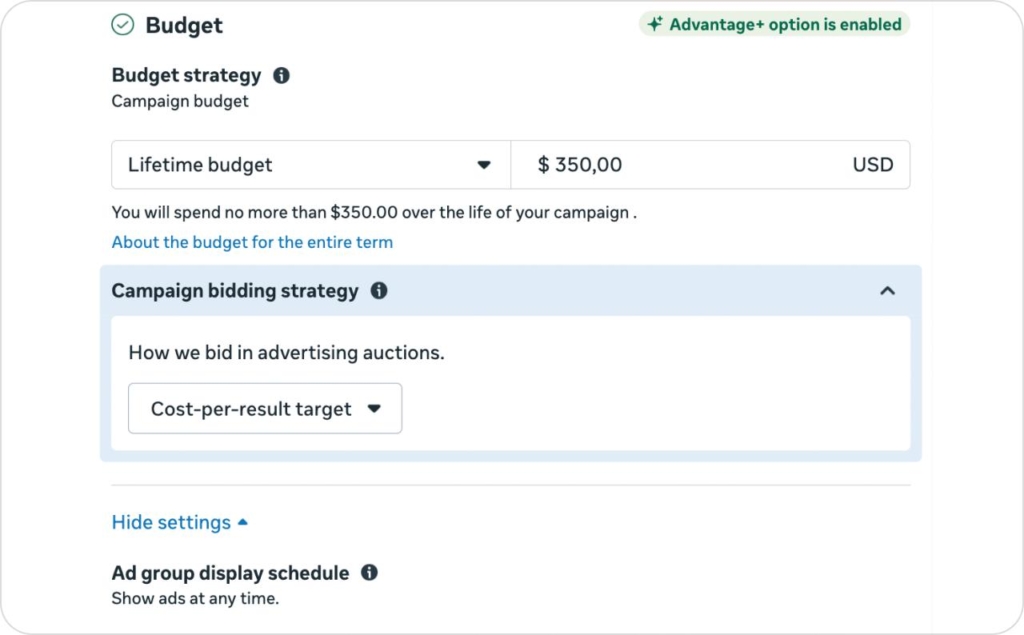
28. Sudden big budget jumps: When scaling too fast breaks what’s working
You’ve had a great week, performance looks strong, and it feels right to double your budget. Then delivery drops and CPAs explode overnight. It’s one of the common Facebook ad mistakes that punishes impatience, especially for mobile game UA, where algorithm stability is everything.
Why it happens:
- Excitement from strong results leads to overconfidence
- Teams confuse quick growth with smart scaling
- Pressure from above to “spend while it works”
- No pacing rule or daily increase limit in place
How to spot it: CPAs spike within 24 – 48 hours of a large budget jump; delivery turns unstable.
Fix: Increase spend in small, steady steps 10–20% every few days or duplicate into new ad sets with higher caps. For mobile games, stable learning beats fast jumps every time. Among the Facebook ad mistakes to avoid, this one’s simple: scale rhythmically, not reactively.
29. Ignoring the learning phase: When impatience resets your progress
Every edit restarts the learning phase, yet many advertisers tweak too soon. When you change budgets, creatives, or bids mid-flight, Meta has to relearn what was already working. It’s one of those common Facebook ad mistakes that keeps campaigns stuck in “Learning Limited” forever.
Why it happens:
- Impatience when results don’t stabilize fast enough
- Pressure to show movement or “optimization”
- Lack of trust in Meta’s gradual learning system
- Misunderstanding what counts as a significant change
How to spot it: “Learning limited” appears across ad sets, and results fluctuate after every small edit.
Fix: Batch your changes and give each ad set time to collect data, at least 50 conversions per event. Pause instead of constantly editing. For mobile game UA, that means letting each campaign find its rhythm before scaling or creative swaps. Among the Facebook ad mistakes to avoid, this one’s clear: patience beats panic every time.
30. Dayparting without data: When personal bias cuts off conversions
Turning ads off at night or on weekends feels efficient, but if you’re guessing, you’re leaving money behind. Conversion patterns often don’t match your own schedule. This is one of the Facebook ad mistakes that quietly raises CPAs and blocks Meta from finding low-cost opportunities.
Why it happens:
- Teams assume buyers behave like them
- A few bad hours lead to overcorrection
- Desire to “control” spend manually
- No historical performance breakdown by time
How to spot it: Cheap conversions disappear overnight, or cost per result rises after dayparting starts.
Fix: Check your breakdowns before changing schedules. If performance is steady, stay always-on. Only apply dayparting when there’s clear, sustained difference by hour or day. For mobile game advertisers, global audiences mean different peaks while you sleep, someone’s awake and ready to install. Among the common Facebook ad mistakes to avoid, this one’s simple: data first, opinion second.
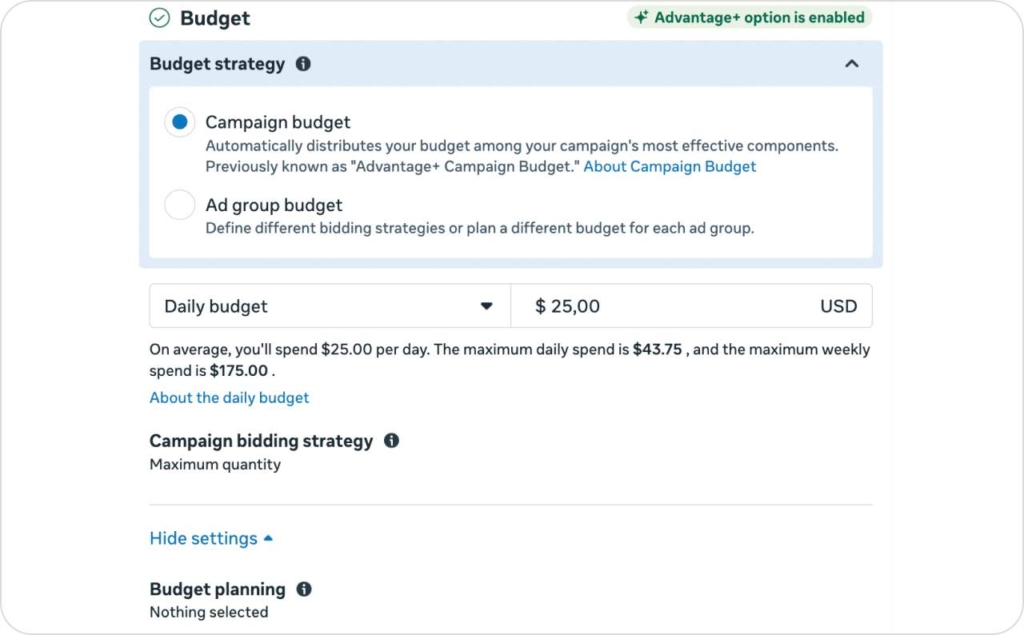
31. Not separating remarketing budget: When warm leads get lost in the crowd
If all your campaigns share one big budget, your warm audiences get outbid by cold traffic. Meta prioritizes volume, not intent and that means remarketing often gets starved. It’s one of the common Facebook ad mistakes that makes warm leads feel invisible.
Why it happens:
- Everything runs under one CBO “for simplicity”
- Prospecting audiences are larger and win delivery
- There’s no protected budget for retargeting
- Teams assume the algorithm will self-balance
How to spot it: High reach on cold sets but flat conversions from repeat visitors or site traffic.
Fix: Carve out a separate ad set or campaign with its own protected spend. Warm audiences convert faster but need consistent visibility. For mobile game UA, split spend between new installs and re-engagement campaigns, each requires different pacing and creatives. Among the Facebook ad mistakes to avoid, this one’s pure logic: feed the people most likely to buy.
32. Optimizing on link clicks for purchase goals: When traffic looks good but revenue doesn’t
Clicks don’t pay the bills, but purchases do. Optimizing for traffic when your real goal is conversion sends Meta the wrong signal. It’s one of those Facebook ad mistakes that looks fine in dashboards but hurts at checkout.
Why it happens:
- Fear of limited delivery with Conversion objectives
- Early testing habits from awareness campaigns
- Confusing “activity” metrics with performance
- Belief that traffic will “warm up” on its own
How to spot it: High CTR and low add-to-cart or checkout starts.
Fix: Choose the objective that matches your real outcome. Optimize for the end action, not the click before it. For mobile games, skip traffic goals altogether; App Installs with solid signal volume learn faster and perform stronger. Among the common Facebook ad mistakes to avoid, this one’s simple: tell the algorithm what you actually want.
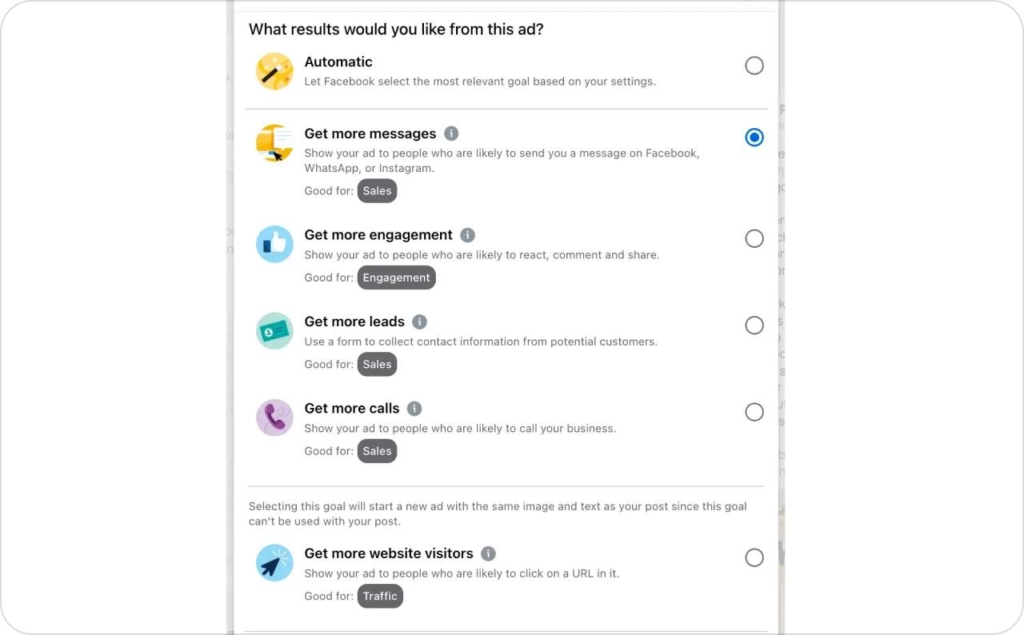
Photo source: Facebook
Measurement, data and experiments
Most Facebook ad mistakes in bidding and budgeting come from rushing scale, forcing control, or tweaking too often. This section covers how to spend smarter, not faster: keeping delivery stable, costs predictable, and learning intact while Meta’s system does the heavy lifting.
33. Broken or missing pixel / app sdk: When your tracking stops telling the truth
If your pixel or SDK isn’t firing correctly, every decision you make is off. Meta can’t learn, optimize, or attribute results accurately. It’s one of those common Facebook ad mistakes that looks technical but quietly wrecks performance, especially in mobile game UA, where event tracking drives all optimization.
Why it happens:
- Site or app updates overwrite existing event code
- No quality assurance after development changes
- Poor communication between devs and marketers
- Tracking setup built once and never revalidated
How to spot it: Analytics data doesn’t match Meta’s event counts or certain conversions just vanish.
Fix: Reinstall your pixel or SDK, then run Test Events to confirm each step fires properly. Keep a simple change log so edits don’t break tracking later. For Facebook ad mistakes mobile games, test installs and in-app events after every update. Among the Facebook ad mistakes to avoid, this one’s basic: you can’t fix what you can’t measure.
34. No conversion API: When browser tracking isn’t enough
Relying only on browser tracking is like flying half-blind. Post-iOS, you lose critical data when cookies or privacy settings block signals. It’s one of the Facebook ad mistakes that makes attribution shaky and optimization slower than it should be.
Why it happens:
- CAPI sounds complex or “too technical”
- No one owns backend implementation
- Teams assume pixel data is still reliable
- Misunderstanding of post-iOS tracking loss
How to spot it: Attribution looks unstable; events fluctuate without traffic changes.
Fix: Set up Meta’s Conversion API directly or through your platform integration. Always dedupe pixel and server events using event IDs to keep reporting clean. For mobile game advertisers, connect SDK-to-server data streams so app installs and in-app actions stay synced. Among the common Facebook ad mistakes to avoid, this one’s urgent: CAPI isn’t optional, it’s the backbone of modern tracking.
35. Testing too many things at once: When “speed” destroys clarity
If every variable changes at once, you’ll never know what worked. Running multiple tests together makes results meaningless. It’s one of those common Facebook ad mistakes that feels productive but leaves you guessing instead of learning.
Why it happens:
- Pressure to show “momentum” or fast iteration
- Misunderstanding of how Meta’s learning works
- No experiment calendar or testing framework
- Impulse to tweak everything when results dip
How to spot it: You can’t explain why a test “won,” or your results change wildly week to week.
Fix: Simplify. Test one clear variable: hook, format, or offer and let it run long enough to gather significance. Log every experiment, even the failed ones. For mobile game UA, isolate variables like character art or reward pacing before testing new creatives. Among the Facebook ad mistakes to avoid, this one’s about patience: clarity beats chaos every time.
36. Short attribution windows that don’t match your sales cycle: When you under-credit real results
If your attribution window is too short, you’re cutting off conversions that take time. Meta only counts what fits inside that window, everything else disappears. It’s one of the Facebook ad mistakes that hides real performance and sparks channel arguments.
Why it happens:
- Leaving default attribution settings untouched
- Ignoring how long customers actually take to decide
- Reporting pressure favors quick wins
- No system for comparing assisted conversions
How to spot it: Discrepancies between Meta and CRM data, or slow-cycle offers that seem unprofitable on paper.
Fix: Match attribution to your real buying cycle: 7-day, 28-day, or custom if needed. Review lift studies or MMM data for longer paths. For mobile game advertisers, track retention and LTV over time to credit ads that drive lasting players. Among the common Facebook ad mistakes to avoid, this one’s about seeing the full picture, not just the first click.
37. Ignoring incrementality: When you count conversions that would’ve happened anyway
Not every conversion your dashboard shows is a win. Some people would’ve bought, installed, or subscribed without ever seeing your ad. Ignoring that difference is one of those common Facebook ad mistakes that inflates performance and blinds you to what’s truly driving growth, especially in mobile games, where organic installs are constant.
Why it happens:
- Relying too heavily on platform-reported conversions
- No testing framework to separate organic from paid results
- Pressure to show fast ROI instead of real lift
- Misunderstanding how causation and correlation differ in ad data
How to spot it: Conversions hold steady or even rise when spend pauses. Organic traffic moves in sync with paid spend.
Fix: Test for truth. Run holdout or geo-split lift tests to see what spend actually adds. Compare paid vs. organic installs or leads during controlled pauses. For Facebook ad mistakes mobile games, run small no-ad windows to reveal how much your ads really move the needle. Among the Facebook ad mistakes to avoid, this one’s about honesty measure what you create, not what would’ve happened anyway.
Compliance, ops and process
Even the best-performing ads can fail behind the scenes. Many Facebook ad mistakes happen not in creative, but in compliance, follow-up, or process, where small oversights turn into wasted spend or policy blocks. This section shows how to stay compliant, respond faster, and treat every comment, lead, and approval step as part of performance, not paperwork.
38. Violating policy or using restricted claims: When a strong ad never sees the light
You’ve seen this before, a great campaign dies at review. The copy is sharp, the creative sings, but Meta blocks it before it runs. It’s one of those common Facebook ad mistakes that burns hours and momentum, especially for mobile game advertisers with fast release cycles.
Why it happens:
- Teams rush launches without reviewing Meta’s ad policy updates
- Creative inspiration comes from risky competitors
- Copywriters use claims that sound confident but read as misleading
- No final compliance checklist before approval
How to spot it: Repeated disapprovals, restricted delivery, or warning notices about ad quality.
Fix: Build a five-minute “pre-flight” routine: check claims, visuals, and targeting for sensitive terms. Replace absolutes like “guaranteed” or “best ever” with verifiable statements. For Facebook ad mistakes mobile games, watch for restricted wording in screenshots or gameplay promises. Among the Facebook ad mistakes to avoid, this one’s easy, clear truth always scales better than clever exaggeration.
39. Slow speed-to-lead: When the follow-up arrives after the interest fades
Leads age faster than you think. If you’re not calling or messaging within minutes, you’ve already lost them to someone who is. Delayed responses are one of the Facebook ad mistakes that kills conversion silently, no matter how great your targeting looks.
Why it happens:
- No set SLA for lead response
- Manual lead handoff or unconnected CRM
- Staffing gaps after business hours
- Underestimating how quickly attention fades
How to spot it: Drop-offs between form submission and first contact, or “cold” leads after a few hours.
Fix: Automate the handoff. Use instant routing or auto-replies so leads hear from you within 5–10 minutes. Track response times weekly and celebrate consistency, not just volume. For mobile games, use triggered push or email flows to re-engage new installs immediately. Among the common Facebook ad mistakes to avoid, this one’s simple: speed isn’t pressure, it’s professionalism.
40. Ignoring comments and community signals: When silence costs you credibility
Every comment under your ad is public proof of how your brand listens. Ignoring spam, questions, or feedback makes even good creative look careless. It’s one of those Facebook ad mistakes that turns healthy engagement into visible distrust.
Why it happens:
- No moderation system or daily ownership
- Comments treated as noise instead of data
- Lack of filters or automation tools
- Teams assume “if it’s bad, it’ll disappear”
How to spot it: Toxic threads, repetitive complaints, or visible spam on live ads.
Fix: Moderate like you’re protecting reputation, not just engagement. Reply, clarify, and thank, don’t delete genuine feedback. Use comment trends to guide creative changes and FAQs. For mobile game advertisers, player feedback often signals product or UX issues first. Among the Facebook ad mistakes to avoid, this one’s all about trust: showing up beats staying silent.
How to make Facebook ads without mistakes with an AI ad generator
You can use AI for Facebook ads optimization. Most Facebook ad mistakes come down to one thing: too much manual work and not enough time to test properly. That’s where Zeely’s AI Facebook ads creator changes the game. It builds static and video ads in minutes, giving you room to focus on performance, not production.
Why Zeely AI fixes the most common ad mistakes
Ad performance isn’t only creative, it’s timing, testing, and volume. Zeely’s AI makes it simple to stay consistent, even when budgets are tight or deadlines shorter than you’d like.
- Fast ad creation: Make ready-to-run ads in minutes. No waiting on design
- More conversions: Every creative is built to perform across Facebook, Instagram, and Meta placements
- No production crew needed: All you need is your idea; Zeely does the rest
- Reach the right audience: Publish across platforms instantly with adaptive formats
- Test and improve faster: Create, test, and learn without getting stuck in learning phases
Features built for marketers
Zeely gives you one place to turn ideas into finished ads without editing suites and post-production. Add your product link, and the system automatically pulls titles, descriptions, and images. Choose your format: static or video.
For static ads, you’ll get access to more than a 100 tested templates built from $1B+ in live ad data. You can refine each with your colors, tweak the copy, or regenerate headlines with AI in seconds.
If you prefer video, choose from dynamic templates with smooth transitions and let AI write your script using AIDA or PAS frameworks. Then pick your avatar: Zeely offers over 500+ hyper-realistic AI avatars, all designed to sound and move naturally. They can speak your offer in seconds, turning a script into a human-like performance that connects.
Everything is built for the rhythm of real marketing work: fast creation, fast learning, fewer mistakes.
Pricing that makes scaling simple
Automation shouldn’t be expensive. Zeely’s plans start at $29.95/month, with higher tiers for growing teams. You get creative, copy, and testing tools built to save hours every week without extra tools, freelancers, or agencies required.
Why marketers and mobile game advertisers choose Zeely AI
Zeely helps teams move faster, test smarter, and spend confidently. You get the clarity and creative consistency to scale without overthinking.
- Launch powerful campaigns yourself, no agencies required
- Scale your ads and fill your funnel faster with data-backed creative
Most Facebook ad problems are structural. A missing signal here, a mixed goal there, and performance quietly unravels. Every mistake you just read about is fixable, often in a single clean-up session. When your goals, data, and creative align, Meta’s system starts working for you instead of guessing at your intent.
Keep this list close, use it to audit, adjust, and learn in shorter loops. And if you want to skip the trial-and-error entirely, Zeely’s AI ad generator can turn those lessons into ready-to-run ads in minutes, built to test, learn, and grow without the usual mistakes.
Start generating AI-powered ads today and grow your marketing performance with Zeely.