UGC ads vs traditional ads and how I decide between them
Still deciding whether UGC ads or traditional ads deserve your budget in 2026? I wrote this from what I see at Zeely every day while turning product pages into paid creatives, testing creator-style ads, and fixing the gaps that stop ads from converting.
If I’m launching paid social for a product brand in 2026, I usually start with UGC-style ads. They’re faster to make, cheaper to test, and they fit how people actually consume Reels, TikTok, and short-form video.
Traditional ads still matter when I need:
- tighter brand control
- premium visual positioning
- a hero launch asset
- broader awareness across bigger media moments
For most brands, the best answer isn’t UGC or traditional. It’s a smart mix, with each format doing a different job.
A lot of teams still frame this as a style debate. I don’t. I frame it as a performance decision.
The real question is simple: which format earns trust faster, teaches the product better, and gives me more room to test before budget gets wasted? Once I look at it that way, the answer usually gets much clearer.
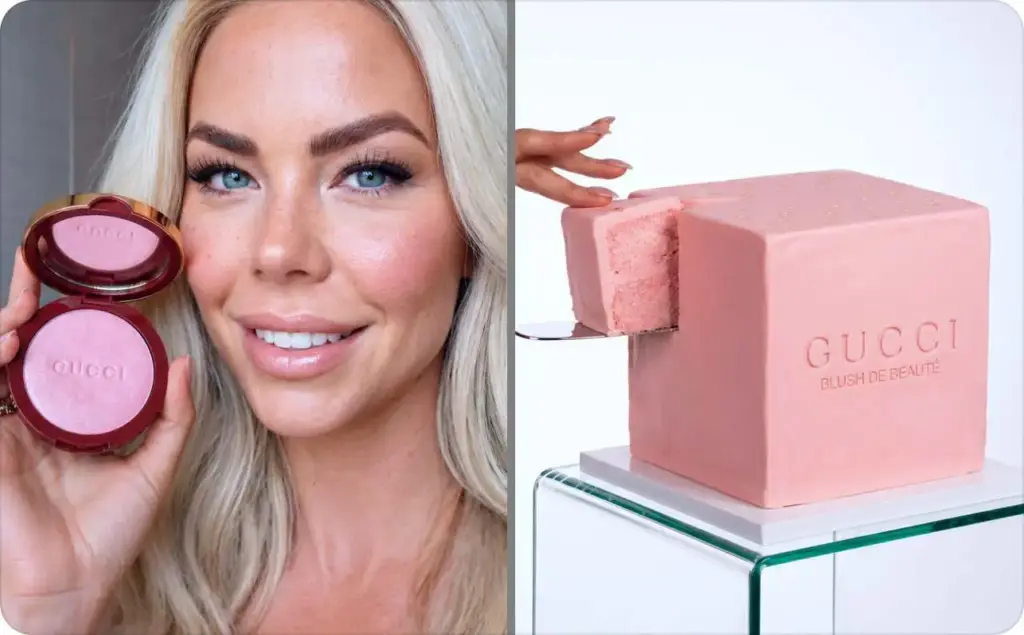
UGC ads vs traditional ads: quick answer
UGC ads are built to feel closer to a recommendation. Traditional ads are built to feel more controlled and brand-shaped. That’s the difference that matters most.
When I say UGC ads, I mean creator-style ads, customer-style reviews, demos, unboxings, problem-solution clips, and selfie-style product stories. When I say traditional ads, I mean polished brand campaigns, studio-shot product videos, scripted commercial-style edits, and tightly art-directed visual storytelling.
Here’s the fastest way I’d compare them:
| Factor | UGC ads | Traditional ads |
| Trust | Stronger in social feeds | Stronger for brand image |
| Speed | Faster to produce | Slower to produce |
| Cost | Usually lower | Usually higher |
| Flexibility | Easier to refresh | Harder to revise fast |
| Brand control | Lower | Higher |
| Best for | Reels, TikTok, retargeting, proof | Launches, awareness, premium positioning |
If you want the deeper AI UGC angle after this, read or article about what are AI UGC ads. That page does deeper into format definitions. This article is about choosing what to run.
When UGC ads work best
I start with UGC when the product sells better after a person explains it. That usually means beauty, wellness, fashion, home, fitness, apps, services, or ecommerce products with a clear use case.
If the customer is thinking, “Will this really work for me?” a polished commercial often isn’t enough. A face, a voice, a quick demo, or a first-person reaction gets me closer to the sale. Read more about UGC creators.
When traditional ads work best
I still want traditional ads when I’m launching a new line, shaping perception, or presenting a product that depends on visual polish. Jewelry, luxury, travel, premium design, and high-ticket offers often need that stronger frame.
That doesn’t mean traditional ads are better at everything. It means they often do a better job of making the brand feel intentional from the first second.
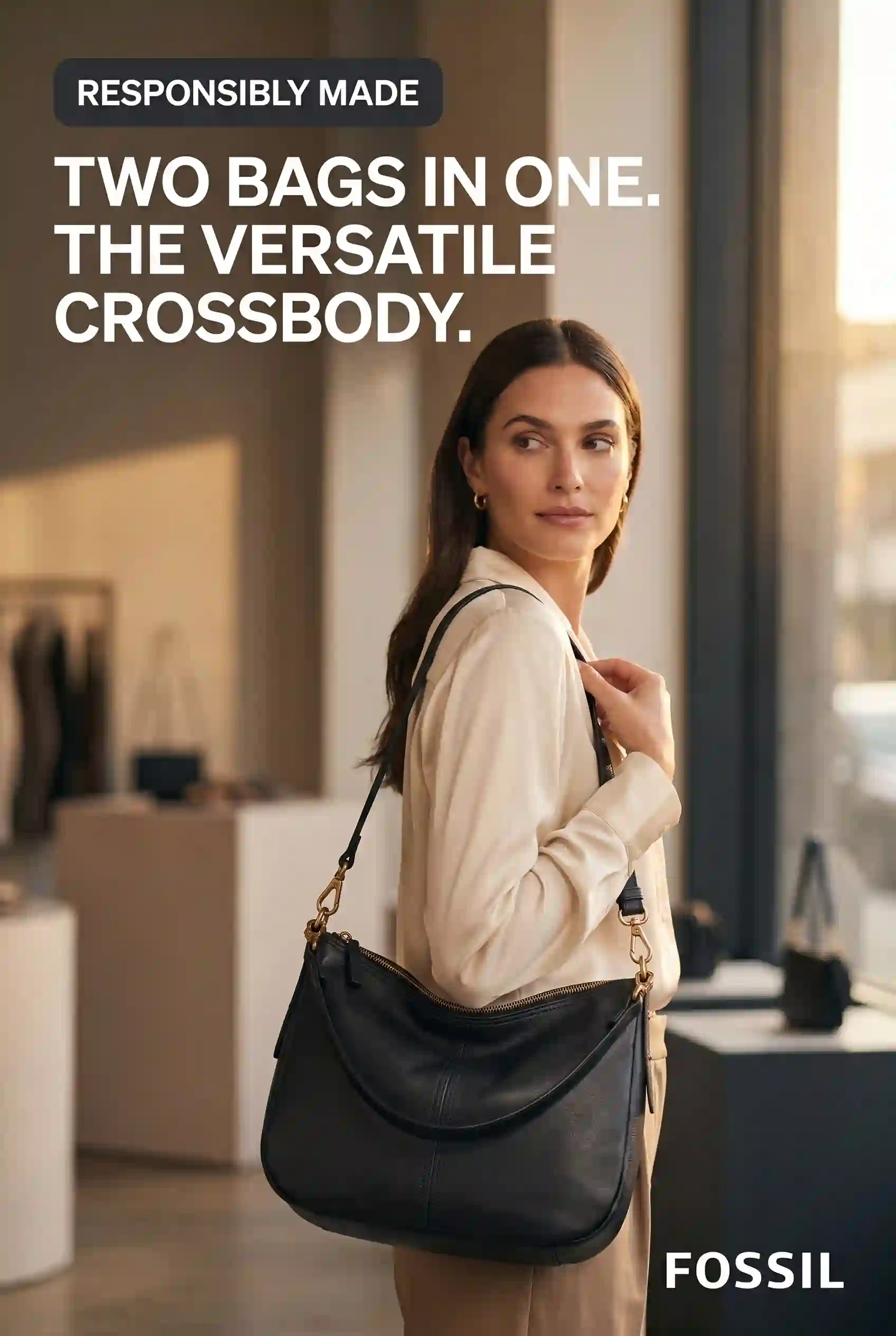


Why UGC ads often win on paid social
The biggest reason is simple. UGC looks more like the content people already choose to watch.
TikTok’s 2026 trend forecast says audiences are moving toward honesty, community, and shared experience. Its language is unusually direct: people are looking for “unfiltered stories,” “BTS moments,” and “real process and people over curated perfection.” That’s almost a one-line explanation for why creator-style ads keep winning in short-form feeds. Source: https://ads.tiktok.com/business/en/next.
I see this in creative reviews all the time. The ad that looks perfect often loses to the ad that explains the product like a real person. Not because viewers hate quality. Because they hate distance.
Why UGC ads blend into TikTok, Reels, and short-form Video
People open TikTok or Reels for people, not for commercials. They want reactions, routines, comparisons, tiny stories, useful tips, and fast proof.
That’s why the best UGC ads usually have the same bones:
- a hook in the first one or two seconds
- the product visible early
- one clear promise
- one clear problem
- a CTA that sounds like a person
The second the ad feels like a boardroom wrote it, performance usually softens. Not always, but often enough that I plan around it.
If you want better top-of-funnel openings, I’d pair this piece with UGC hooks that sell.
Why UGC ads help reduce buyer doubt before purchase
A traditional ad can make something look good. A UGC ad can make it feel usable.
That difference matters most in the middle and bottom of the funnel. When someone already knows the product exists, they’re usually not asking, “Is this a real brand?” They’re asking:
- does it work
- how do I use it
- is it worth the money
- is this better than what I use now
That’s where UGC gets stronger. Reviews, demos, simple side-by-sides, and “here’s what happened when I tried it” clips answer those questions without sounding defensive.
When traditional ads are better than UGC ads
I don’t like lazy “UGC replaces traditional” takes, because they flatten the real job of brand creative.
Traditional ads still win when I need scale, consistency, and strong visual control. They’re especially useful when I want to open a campaign with a clean, memorable frame before I start layering proof underneath it.
Google’s 2026 write-up on Go.Compare is a good example of that. In a YouTube-led campaign built around a major sports moment, the brand saw a 21% increase in top-of-mind awareness, a 4.5X year-over-year increase in website visits, and a 20% rise in branded searches. That is classic broad-reach awareness work doing exactly what polished campaign creative is supposed to do.
Why traditional ads are better for brand positioning and awareness
When I’m launching a brand or resetting perception, I want control over lighting, tone, pacing, copy, and the emotional frame. I want every shot to feel intentional.
That’s hard to do with raw creator-style footage alone. UGC is great at making claims believable. It’s not always great at building the full brand world from scratch.
Which brands and products benefit more from traditional ads
Not every product wants the same energy. Premium beauty, luxury accessories, interiors, travel, and certain services can lose perceived value when the ad feels too informal.
That’s why I think of traditional ads as the front door. They make the viewer take the brand seriously. Then UGC can do the conversational work inside the funnel.
Where AI UGC fits in this comparison
I use AI UGC as a speed tool, not as a substitute for trust.
Adobe’s 2026 AI and Digital Trends report is useful here because it doesn’t oversell AI. It says generative and agentic AI are changing the customer journey fast, but it also shows a readiness gap inside organizations and “cautious optimism” from customers. Adobe surveyed 3,000 executives and practitioners plus 4,000 customers, and one of the clearest takeaways is that people want AI-powered experiences to still feel human and brand-aligned.
That’s exactly how I think about AI UGC. It helps me test faster. It does not remove the need for believable messaging.
How AI UGC helps brands test more creative variations
This is where AI matters most. I can test more hooks, more scripts, more intros, more face-led formats, more product angles, and more variants without waiting on a shoot.
That makes AI UGC especially useful when:
- the offer is new
- the team is small
- the budget is tight
- I need signal before bigger production
- I’m localizing angles for different audiences
The limits of AI UGC: Speed does not replace trust
AI can speed up production, but it can’t invent credibility out of thin air.
I still need:
- a real product page
- real claims
- a clear buyer pain point
- believable language
- sensible editing
- proof that the offer makes sense
If the creative feels fake, oddly generic, or too perfect, the viewer picks that up fast. That’s why I treat AI UGC as a production advantage, not a truth advantage.
If you want the narrower comparison, read the differences between AI UGC and a UGC video. https://zeely.ai/blog/differences-between-ugc-video-and-ai-ugc/.
How to test UGC ads vs traditional ads in 7 days
I never want this decision to stay theoretical for long. I want a controlled test.
Meta’s January 2026 performance update shows the ad system is getting better at reading what people actually engage with. Meta said its latest improvements drove a 3.5% lift in ad clicks on Facebook, more than a 1% gain in conversions on Instagram, and a 3% increase in conversion rates across Instagram Feed, Stories, and Reels. My read is simple: if the system is getting better at ranking relevant creative, then weak creative gets exposed faster too.
So this is how I’d test.
Days 1 to 3: build one fair creative pack
I keep the offer constant. I keep the audience constant. I keep the landing page constant. Then I only change the creative format and angle.
My starter pack would be:
- 2 traditional ads
- one product-led
- one lifestyle or brand-led
- 3 UGC-style ads
- one problem-solution
- one demo
- one review or testimonial
Then I launch with the same CTA and the same objective.
The early metrics I care about are:
- first-second hold
- CTR
- CPC
- landing page view quality
- add-to-cart rate
- CPA
- ROAS if volume is high enough
Days 4 to 7: cut losers and remake winners
By day four, I usually know which direction is earning attention. By day seven, I should know which message deserves another round.
My rule is simple:
- kill the ad with weak hold and weak CTR
- keep the ad with the best click quality
- remake winners in new hooks, not new concepts
If UGC wins, I build more variants around the same proof. If traditional ads win, I still test a creator-style layer under it, because awareness and conversion rarely get solved by one creative type alone.
How to do UGC ads and test them with Zeely AI
This is where the article becomes practical for me, not just theoretical.
If I already have a product page, I can paste a direct product link and Zeely will pull in the product name, images, price, and details so I can turn that page into an ad faster with the UGC ad builder. That matters because most small teams don’t need another blank canvas. They need a faster starting point. Read a detailed guide on how to make UGC ads.
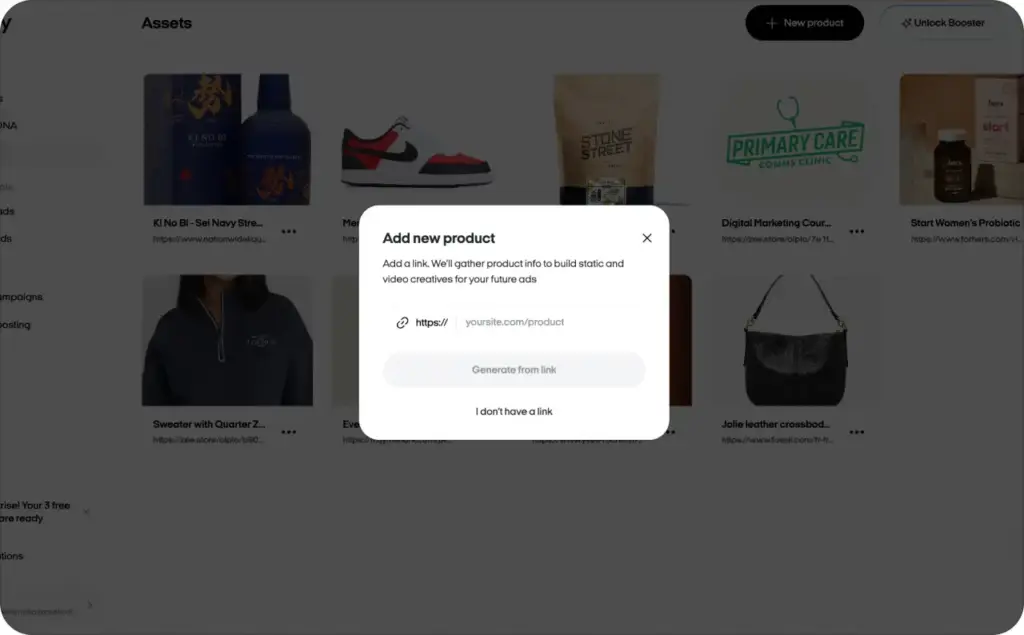
I’d start from the product page, not from scratch
If the site already exists, I’d import the product first and build the test pack from there. That gives me cleaner inputs, faster review, and less copy-paste mess.
From there, I’d make one polished brand angle and several creator-style angles. If I need volume fast, Zeely’s Batch mode lets me generate multiple ad creatives at once and choose up to 20 templates, or let AI select them for me.
Then I’d launch with enough variation for Meta to learn
Zeely’s own paid campaign guide says to create at least three ads before launch so Meta can test, learn, and automatically push the one that performs best. It also recommends uploading three to five visuals and checking the basics before launch so broken links, weak targeting, or policy problems don’t burn budget. Start your first campaign in less than an hour.
If I’m also testing organic, Zeely’s Instagram organic campaign guide says I need a professional Instagram account, not a personal one, for Zeely to post Reels through the web dashboard.
That’s why my answer in 2026 is still the same. I don’t pick UGC because it’s trendy. I pick it when trust, speed, and proof matter most. I keep traditional ads when the brand needs a stronger frame. Then I use a workflow that lets me test both without dragging production for weeks.
Emma blends product marketing and content to turn complex tools into simple, sales-driven playbooks for AI ad creatives and Facebook/Instagram campaigns. You’ll get checklists, bite-size guides, and real results, pulled from thousands of Zeely entrepreneurs, so you can run AI-powered ads confidently, even as a beginner.
Written by: Emma, AI Growth Adviser, Zeely
Reviewed on: April 27 2026