30 remarketing ad examples: Retargeting that converts in 2026
Struggling to make your retargeting ads stand out in a crowded feed? Zeely reviewed dozens of proven remarketing ad examples to guide you in creating high-impact campaigns.
This guide shows remarketing ads examples you can ship fast, plus how to set frequency caps, define audience windows, and build a privacy-safe setup that doesn’t waste impressions. As the IAB’s draft attention guidelines note, attention metrics are becoming as critical as reach metrics, they aim to bring “greater transparency, consistency, and comparability” to how ads are evaluated. You’ll see what makes retargeting truly convert in 2026: pacing, persuasive timing, and channels that respect attention. You’ll see dynamic remarketing ads examples you can plug into your campaigns today. For sequencing and pacing ideas powered by ML, see our primer on machine learning for ads.

30 annotated ad ideas
Short-form video ads keep outperforming every other format. It’s now the highest-ROI marketing channel in 2025, according to HubSpot’s State of Marketing report. That shift makes video-based remarketing ads one of the easiest ways to stay visible without over-targeting.
These remarketing ad examples show how real brands turn a quiet “maybe later” into another chance to connect. You’ll see product demo videos that teach, not tease. Short-form stories that make abandoned carts feel personal again. And retargeting sequences built for attention, not pressure. For additional motion formats and patterns that convert, browse our breakdown of dynamic video ads.
Each idea notes the ad format, message cue, and metric to test next, so you can build retargeting campaigns that convert and still feel respectful to watch.
Cart & checkout
Cart and checkout remarketing ad copy examples that remove risk and friction. These work best when users viewed prices or payment options but didn’t complete the purchase.
According to Adobe’s Customer Engagement & Digital Trends 2025 report, 78% of customers want consistent, connected brand experiences — a signal that trust and familiarity now drive most checkout completions.
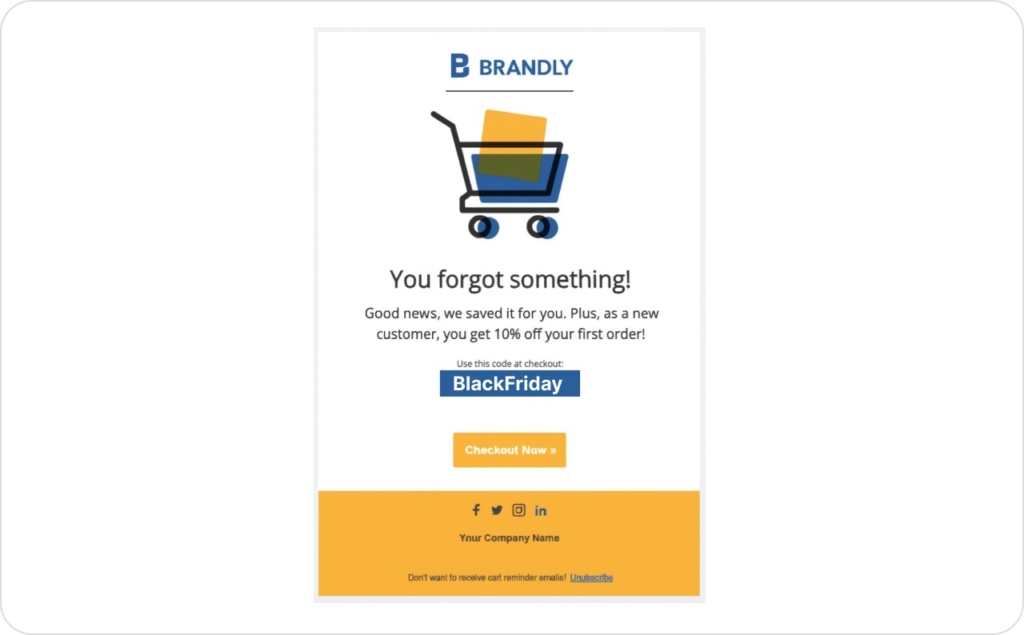
1. “Still in your cart” reminder
A calm, 10-second remarketing ad example that simply shows the product sitting in the cart with a soft return cue like “Ready when you are.” The visual focuses on familiarity, not pressure — open tabs, half-filled carts, or a quiet return to checkout.
Examples that work:
- Static or looping animation of an open cart with one product highlighted
- Tagline: “It’s still here for you”
- Secondary cue: “Finish in two clicks”
Why it works: People recognize their own hesitation. The reminder feels personal but not invasive, reducing friction instead of creating urgency. The calm tone and minimal movement keep trust high, which helps lift recovery rates.
How to use it in your advertising: Run this on Facebook, Instagram, or Google display remarketing ads. Use muted color palettes and short copy that mirrors your checkout design. Keep the CTA gentle — “Resume checkout” or “Pick up where you left off.”
2. Almost-there perk ad
A short remarketing ad example that highlights a perk customers nearly unlocked — free shipping, a discount tier, or a bonus item. The message reframes hesitation as opportunity: “Add $8 more for free delivery” or “You’re one item away from 10% off.”
Examples that work:
- Countdown banner or motion tag that updates in real time
- Tagline: “Almost there — free shipping unlocked”
- Supporting line: “One small add-on gets you free delivery”
Why it works: It’s encouraging, not pushy. The tone feels like a store clerk reminding you of a deal you already earned. By staying factual and incentive-based, it fits the calm confidence of remarketing ad copy examples that build trust instead of urgency.
How to use it in your advertising: Run this on Meta, display, or email retargeting. Pair with light animation or progress indicators that visualize how close users are to the perk. End with a friendly CTA like “Complete your order” or “Finish to save.”
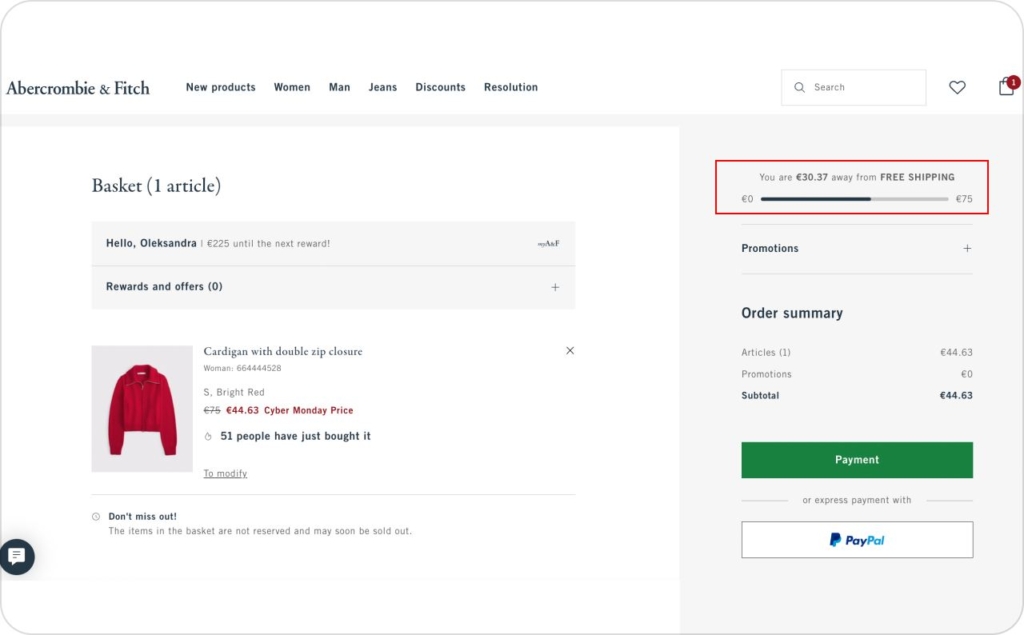
Photo source: Abercrombie & Fitch
3. Calm price check ad
A 15-second vertical remarketing ad example that rebuilds trust when users pause at checkout. The ad shows the same product they viewed, paired with clear proof of value — warranty, reviews, or “No hidden fees.” The tone stays conversational and steady.
Examples that work:
- Quick UGC clip showing a real buyer saying, “Worth it for the quality”
- Text overlay: “Same price, no surprises”
- End frame: verified badge or short testimonial quote
Why it works: Price hesitation is about trust. Reassuring copy and calm pacing keep users from feeling sold to. Among remarketing ads examples, these perform best when value is shown visually, not declared.
How to use it in your advertising: Run on Instagram Reels, TikTok, or YouTube Shorts. Keep visuals clean and copy under 20 words. End with a soft CTA like “Check details” or “See what others paid.”
4. Real-time stock alert ad
A 10- to 12-second remarketing ad example that uses live inventory or timing data to create genuine urgency. The focus is clarity. A small “3 left in stock” badge or countdown tag signals motion without pressure.
Examples that work:
- Product grid with a live-updating stock label
- Tagline: “Selling faster than usual”
- Supporting line: “Inventory updates every hour”
Why it works: People respond to truth, not tactics. By tying scarcity to real data, the ad builds trust instead of anxiety. Among remarketing ads examples, these convert best when the timing feels verifiable and the tone stays calm.
How to use it in your advertising: Run on Google display, Facebook, or product-feed retargeting placements. Sync your stock count or offer window dynamically. Keep motion subtle — small fades or number updates are enough. End with a grounded CTA like “Check availability.”
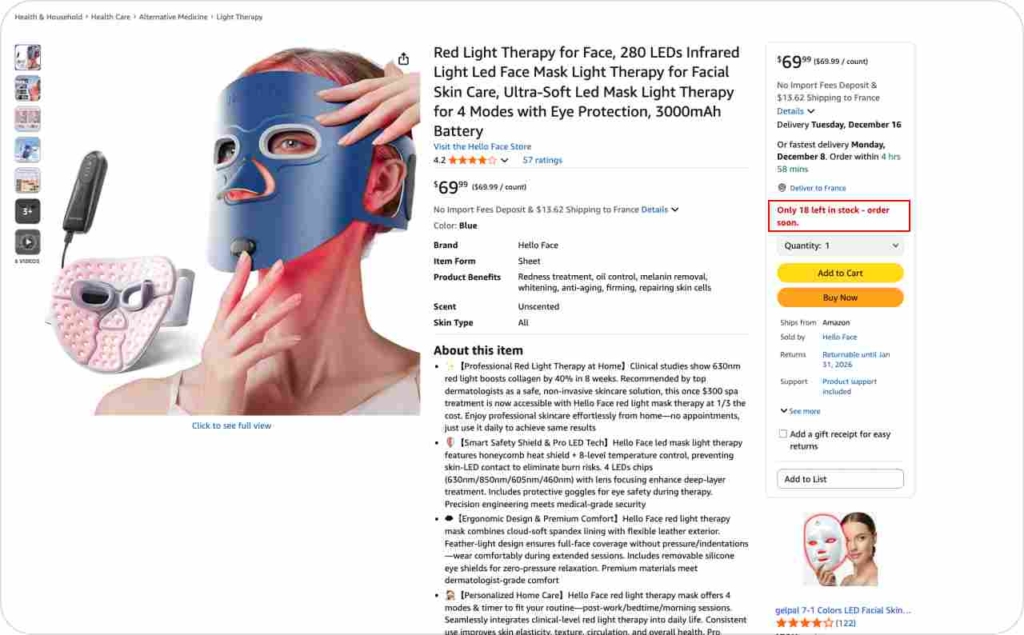
Photo source: Amazon
5. One-tap checkout ad
A 10-second remarketing ad example built around motion and ease. The video shows a quick path from cart to confirmation — a single tap, auto-filled fields, or digital wallet use. The story is speed itself: no talking, just flow.
Examples that work:
- Screen capture of checkout completed in under five seconds
- Tagline: “Done before your coffee’s ready”
- Supporting line: “Fast, secure checkout with saved details”
Why it works: It replaces hesitation with momentum. The smooth visual signals trust and modernity without over-explaining. In Google remarketing ads examples, this kind of pacing performs best for repeat visitors who just need reassurance that finishing takes seconds.
How to use it in your advertising: Run on YouTube Shorts, Display, or Instagram Reels. Keep copy minimal and focus on motion — thumb-taps, progress bars, and instant confirmations. End with a simple CTA like “Finish checkout” or “Complete in one tap.”
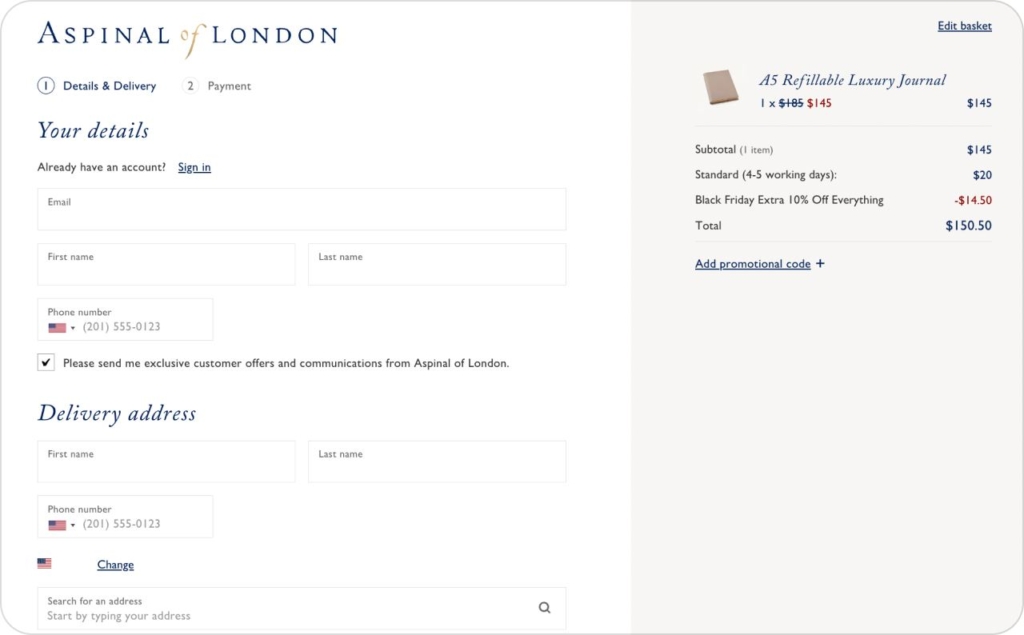
Photo source: Aspinal of London
6. Easy returns explainer ad
A short remarketing ad example that removes post-purchase worry. The clip or banner focuses on the return process itself — clear steps, fast turnaround, and visible reassurance. The copy is minimal: it explains, not sells.
Examples that work:
- 6-second animation showing “Return → refund → done” flow
- Tagline: “Returns made simple”
- Supporting line: “Free 30-day returns, no forms needed”
Why it works: Return anxiety blocks conversions as often as price. Showing how easy it is to undo a purchase makes users more confident to finish one. Among remarketing ad copy examples, this works best when the tone is neutral and the design mirrors your checkout visuals.
How to use it in your advertising: Run on display, Facebook, or email remarketing placements. Use brand colors, simple icons, and a direct CTA like “See how returns work” or “Shop with confidence.”
7. Saved cart reminder ad
A 10–15-second remarketing ad example designed for users who meant to buy but got distracted. It quietly reopens intent instead of pushing urgency — a simple “Your cart’s still waiting” paired with the product image and a single clear button.
Examples that work:
- Email header with product photo and soft CTA: “Finish when you’re ready”
- Display ad mirroring the same layout as the checkout page
- Supporting line: “Your items are saved for the next 24 hours”
Why it works: It’s about memory, not persuasion. The tone feels helpful — a gentle reminder rather than a pitch. In examples of remarketing ads that recover high-intent traffic, this format earns strong open and click-through rates because it mirrors the user’s own journey.
How to use it in your advertising: Run on email and display channels. Use consistent visuals between both placements for instant recognition. Keep copy short, CTA calm — “Return to checkout” or “See your saved items.”
8. Bundle value ad
A short remarketing ad example that reframes price through perceived value. Instead of discounts, it highlights smarter choices — bundles, starter kits, or tiered sets. The visual shows what’s included side by side, with a clean badge like “Most popular” or “Best value.”
Examples that work:
- Product set image with subtle badge overlay
- Tagline: “Everything you need, better together”
- Supporting line: “Save 15% when you bundle essentials”
Why it works: It appeals to logic, not urgency. By using badges proven in the best remarketing ads examples, you guide users toward a confident decision instead of a rushed one. The tone stays matter-of-fact, reinforcing ease and savings without feeling promotional.
How to use it in your advertising: Run on Meta, display, or in-app retargeting. Test bundle layouts and keep CTAs neutral — “View bundle” or “Compare sets.”
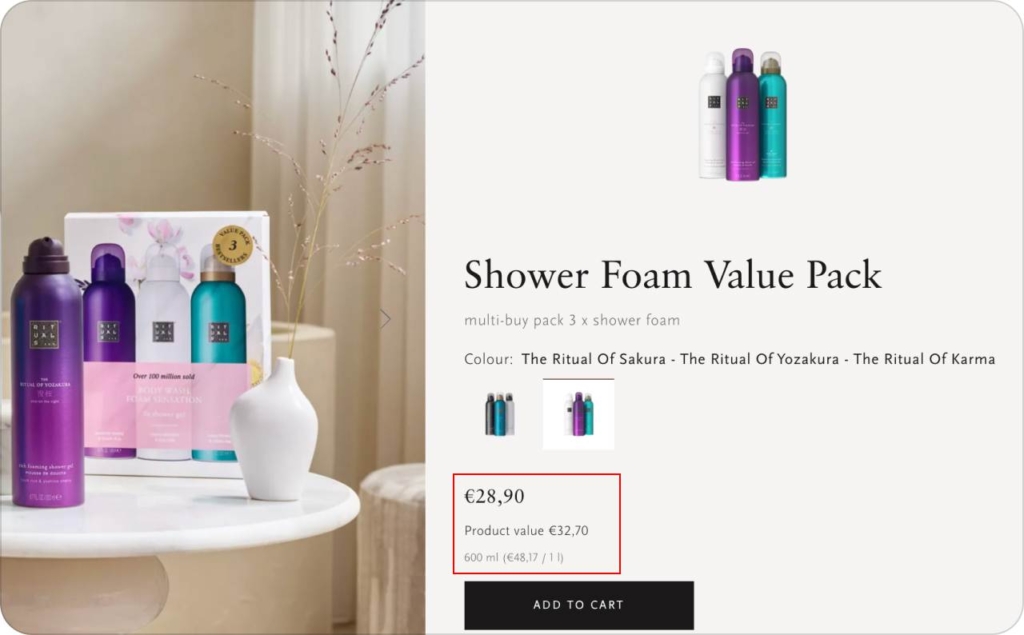
Photo source: Rituals
9. Last-mile FAQ ad
A 10-second remarketing ad example that answers the last questions holding buyers back — delivery time, warranty, or payment security. The focus is on reassurance, not persuasion. A quick voiceover or on-screen Q&A builds calm confidence right before checkout.
Examples that work:
- UGC clip of a real customer saying, “Shipping was faster than expected”
- Tagline: “Your top questions, answered”
- Supporting line: “Delivery in 2–3 days, easy tracking included”
Why it works: Clarity converts. Hearing a real person answer common questions makes the message believable and personal. In Facebook remarketing ads examples, UGC voiceovers perform well because they blend authenticity with precision, no hard sell, just trust cues.
How to use it in your advertising: Run on Facebook, Instagram, or TikTok retargeting placements. Keep visuals clean and captions readable. End with a soft CTA like “See delivery details” or “Learn more before checkout.”
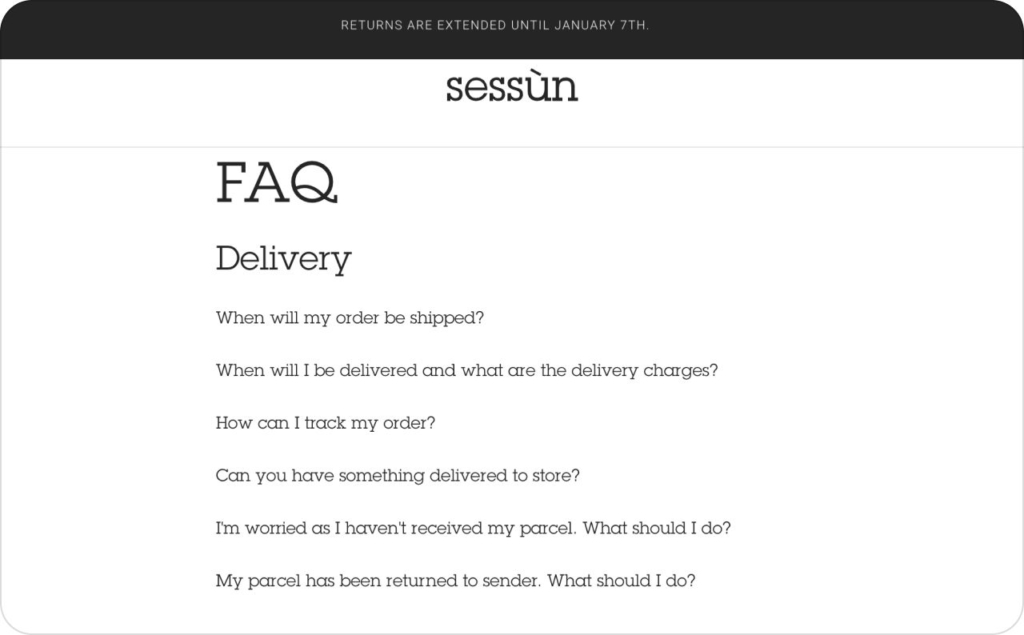
Photo source: Sessùn
10. Gentle deadline ad
A short remarketing ad example that uses time awareness instead of pressure. The message reminds users that an offer or cart will close soon, but it stays factual, no countdown panic, no fake scarcity. The tone is quiet, clear, and grounded in truth.
Examples that work:
- Static banner with a subtle date stamp: “Offer ends Sunday”
- Tagline: “Last day to order for weekend delivery”
- Supporting line: “Your items are held for 12 more hours”
Why it works: People respect honesty. By setting a real deadline, you add focus without stress. In Instagram remarketing ads examples, this approach lifts conversions because it feels like a helpful heads-up, not manipulation.
How to use it in your advertising: Run on Instagram, Meta, or display retargeting placements. Use real time limits — inventory, shipping windows, or event cutoffs. Keep CTAs consistent with your tone: “Finish before it closes” or “Complete your order today.”

Photo source: @thedancingcatart on Instagram
Browse & PDP
Inspiration from dynamic remarketing ads examples that convert product viewers without discounts. These ads use social proof, comparisons, and fit tools to reduce hesitation and help people choose confidently.
According to Google’s Retail Marketing Insights & Strategies report, 8 in 10 online purchase journeys involve multiple touchpoints, making PDP education and multi-format remarketing essential.

11. People also bought carousel
A dynamic remarketing ad example that uses related items to re-engage product viewers. It feels natural, like a store suggestion, not a push. The ad rotates complementary products, encouraging discovery without discounts. The tone is observational, not salesy.
Examples that work:
- Scrollable carousel with three complementary products
- Tagline: “Customers also added these”
- Supporting line: “Based on what you viewed”
Why it works: It builds trust through social proof. People respond when they see what others found useful, especially after viewing similar items. In Google remarketing ads examples, this format performs consistently well because it mirrors organic browsing behavior.
How to use it in your advertising: Run on Google display, Meta, or programmatic retargeting. Sync products dynamically with your catalog feed and highlight visual continuity — similar angles, lighting, or categories. Keep CTAs soft: “See more like this” or “Explore similar items.”
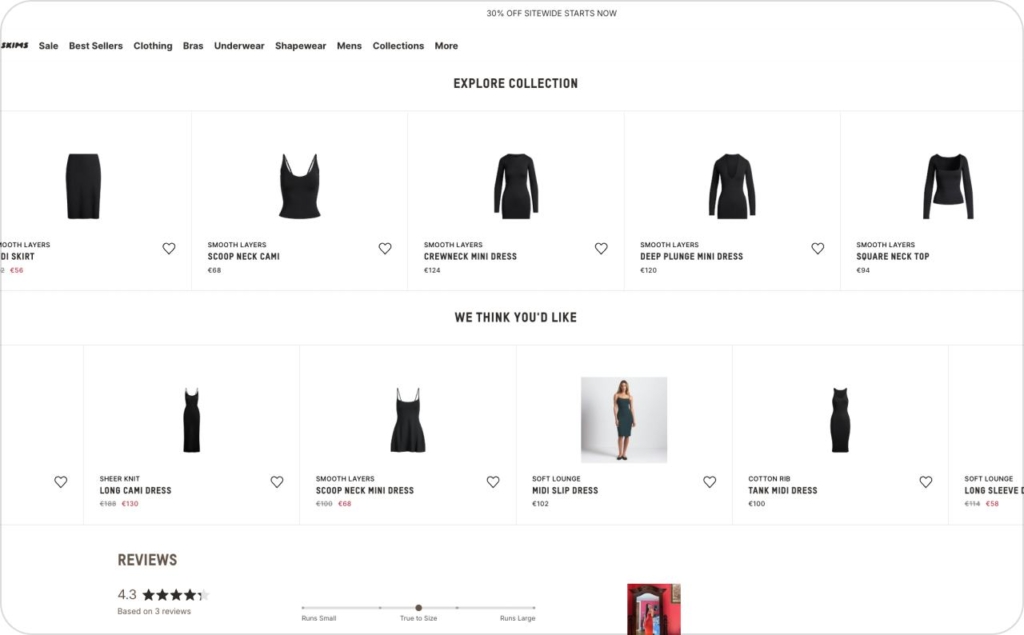
Photo source: Skims
12. A vs. B in five seconds
A short remarketing ad example that helps users choose fast by comparing two products side by side. It uses clear visuals to show what makes one option stand out. The pacing is quick but easy to follow, ending with a confident cue to decide.
Examples that work:
- Split-screen video showing both products in action
- Tagline: “See which one people kept”
- Supporting line: “95% chose model B”
Why it works: Comparison reduces hesitation. It gives users a sense of control instead of confusion. In the best remarketing ads examples, this approach boosts clarity because it answers the unspoken question without needing extra copy.
How to use it in your advertising: Run on Meta, YouTube, or display retargeting placements. Keep visuals balanced and neutral. End with a calm CTA like “Compare details” or “View both options.”
13. Pay monthly framing
A short remarketing ad example that reframes cost in a way that feels approachable, not promotional. It shows the total price broken into monthly terms and highlights trusted payment partners. The tone is steady and transparent, helping users feel in control of their purchase.
Examples that work:
- Static or motion ad showing a product with a payment breakdown
- Tagline: “From $12/month with Klarna or PayPal”
- Supporting line: “No fees, no surprises”
Why it works: Affordability is persuasive only when it feels safe. Compliance-first framing and clear math make users confident instead of cautious. Among frequent remarketing ad copy examples, this approach works best for higher-value items where hesitation comes from price, not interest.
How to use it in your advertising: Run on display, Facebook, or in-app remarketing. Keep visuals minimal and match platform standards for financial disclosures. Use a steady CTA like “See payment options” or “View monthly pricing.”
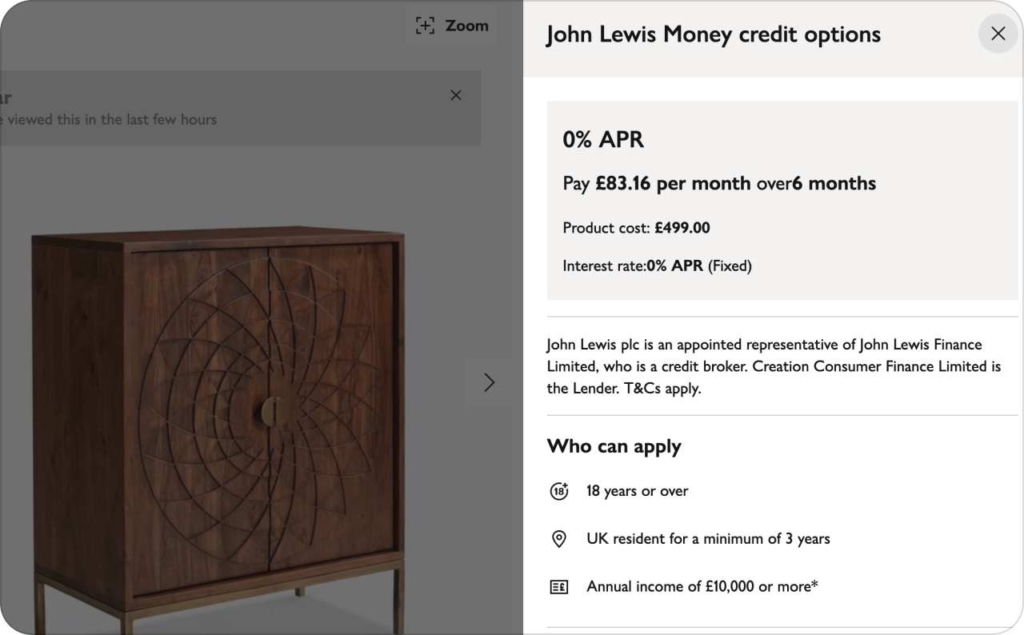
Photo source: John Lewis
14. Fit finder nudge
A short remarketing ad example designed for apparel or accessories where fit drives hesitation. The ad shows a quick preview of a size or fit tool in action, no models, no hype, just a clear path to confidence. The tone is friendly and factual.
Examples that work:
- 6–8 second Reels or Shorts showing a “Find your fit” quiz result
- Tagline: “Your size, guaranteed”
- Supporting line: “95% fit on first try”
Why it works: Fit fear is one of the biggest blockers for apparel conversions. Showing the process removes uncertainty before it grows. In Instagram remarketing ads examples, visual fit demos outperform static sizing charts because they feel personal, not technical.
How to use it in your advertising: Run on Instagram reels, TikTok, or YouTube shorts. Show the experience, not just the outcome — quick motion, one-tap result, clean design. End with a soft CTA like “Find your fit” or “Check your size.”
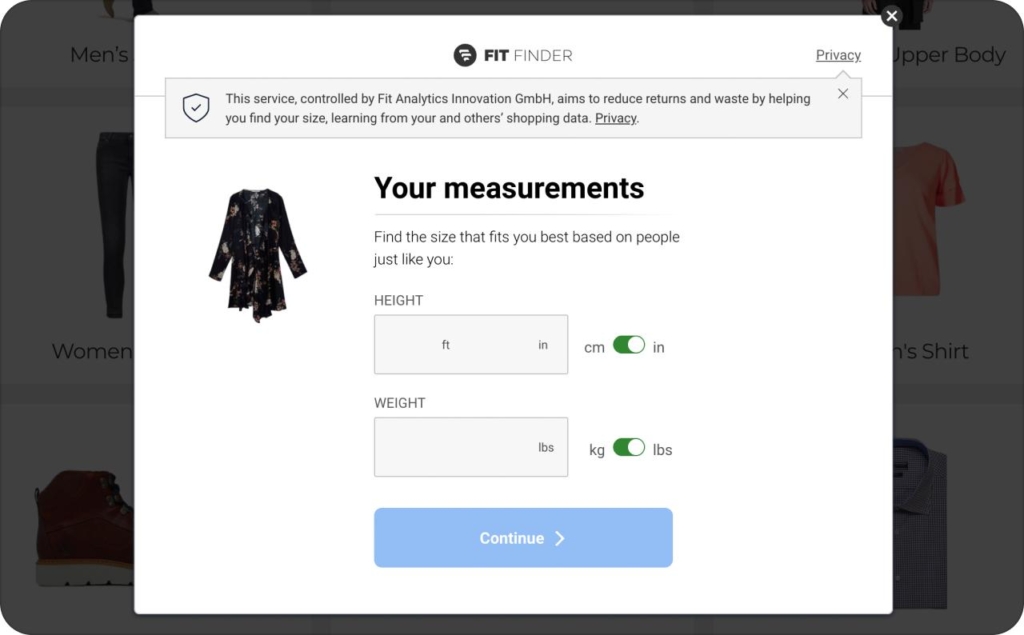
Photo source: Fit Analytics
15. Complete the setup
A dynamic remarketing ad example that encourages users to finish their purchase by showing compatible add-ons or accessories. The ad visualizes how everything fits together — the main product plus the parts that make it work better. It feels like helpful guidance, not upselling.
Examples that work:
- Carousel showing the main product followed by matching add-ons
- Tagline: “Make it work better together”
- Supporting line: “Save 10% when you add the full kit”
Why it works: It’s contextual, not pushy. Showing the complete setup reminds users what’s missing without applying pressure. In dynamic remarketing ads examples, this approach boosts average order value while keeping tone supportive and factual.
How to use it in your advertising: Run on Meta, Google display, or programmatic product feeds. Use real product groupings from your catalog and subtle motion between items. End with a gentle CTA like “Complete your setup” or “Add missing pieces.”
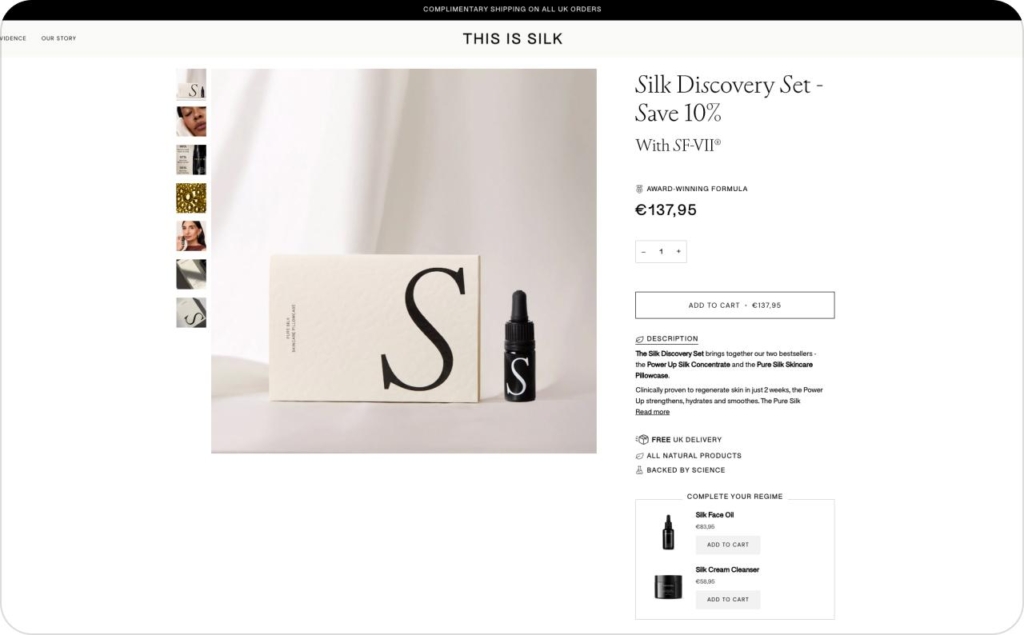
Photo source: ThisIsSilk
16. Review spotlight
A short remarketing ad example that lets real customers do the talking. The ad highlights one authentic review paired with a clean product shot. It’s about showing proof simply and visually. The tone is quiet confidence.
Examples that work:
- Static image or short clip with an overlay quote
- Tagline: “4.8 average rating”
- Supporting line: “Trusted by over 2,000 buyers”
Why it works: People believe people. A single genuine review can deliver more trust than any campaign slogan. In Facebook remarketing ads examples, this kind of peer validation performs best when it’s minimal — one face, one quote, one product.
How to use it in your advertising: Run on Facebook, Instagram, or display remarketing placements. Keep the design uncluttered and the text large enough to skim. End with a simple CTA like “Read reviews” or “See why buyers love it.”
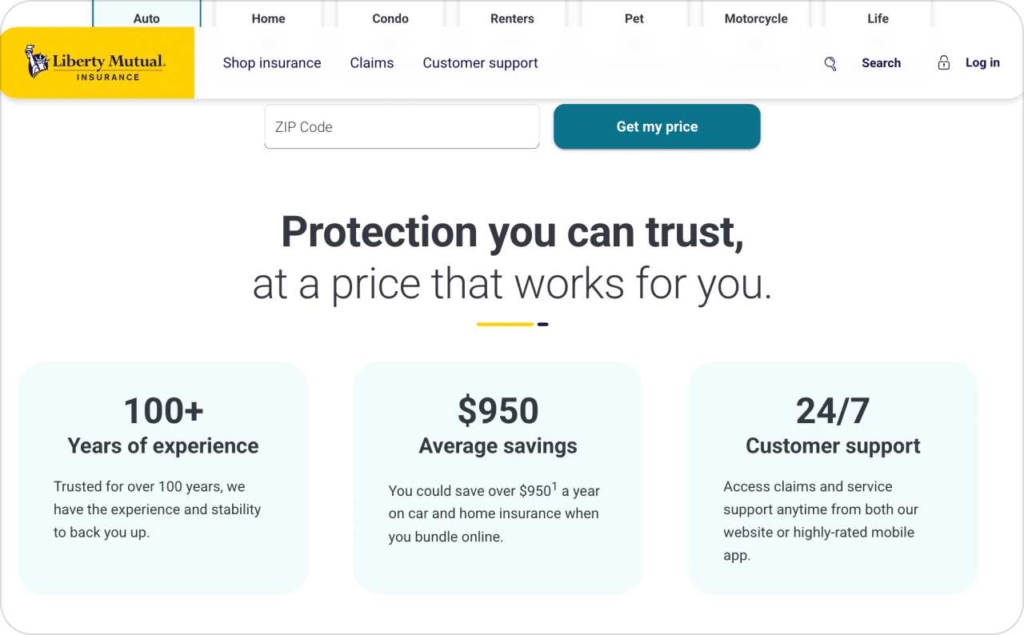
Photo source: Liberty Mutual
17. “Fair price” badge
A clear, google remarketing ads example that uses verified price history to prove honesty. The ad shows the product with a small “fair price” or “price verified” badge beneath the CTA. It’s quiet proof — enough to earn confidence without a single discount mention.
Examples that work:
- Static or motion ad showing product with badge and short context line
- Tagline: “Fair price verified”
- Supporting line: “Based on 30-day average”
Why it works: Transparency builds trust faster than urgency ever could. Shoppers hesitate when they’re unsure if a deal is real. Among Google remarketing ads examples, this format consistently lifts conversion by confirming value in seconds.
How to use it in your advertising: Run on Google display, Meta, or shopping feed remarketing. Use consistent badge styling across channels so users recognize it instantly. End with calm CTAs like “See verified price” or “Check current offer.”
18. Material/spec explainer
A short education-led remarketing ad example that highlights product quality through texture, build, or performance details. It doesn’t oversell — it teaches. The ad uses close-up visuals or simple diagrams to show what makes the product different in a way anyone can understand.
Examples that work:
- 6–10 second clip showing surface detail or construction layers
- Tagline: “Built to last”
- Supporting line: “Crafted from recycled steel and natural fiber”
Why it works: Information replaces doubt. When users see what they’re paying for, they feel more confident to buy. In education-led remarketing ad examples, short visual proof outperforms long spec lists because it teaches without technical jargon.
How to use it in your advertising: Run on display, Meta, or YouTube remarketing placements. Use neutral backgrounds and crisp motion to highlight quality. End with calm CTAs like “See how it’s made” or “Learn what’s inside.”
19. Color confidence
A dynamic remarketing ad example that helps users visualize products in real tones and textures. It lets them swipe or tap through color variations without leaving the ad — an experience that feels playful but purposeful. The focus is accuracy, not polish.
Examples that work:
- Interactive try-on or tap-to-change color demo
- Tagline: “Find your shade”
- Supporting line: “Real tones, no filters”
Why it works: Color uncertainty is one of the most common blockers for conversion. When shoppers can preview hues accurately, they stop second-guessing. In Instagram remarketing ads examples, realistic color demos reduce returns and increase time in view because they mimic real-life experience.
How to use it in your advertising: Run on Instagram, TikTok, or rich media display placements. Use natural lighting and true-to-life textures. Keep CTAs simple and neutral — “Try a color” or “See it in your shade.”
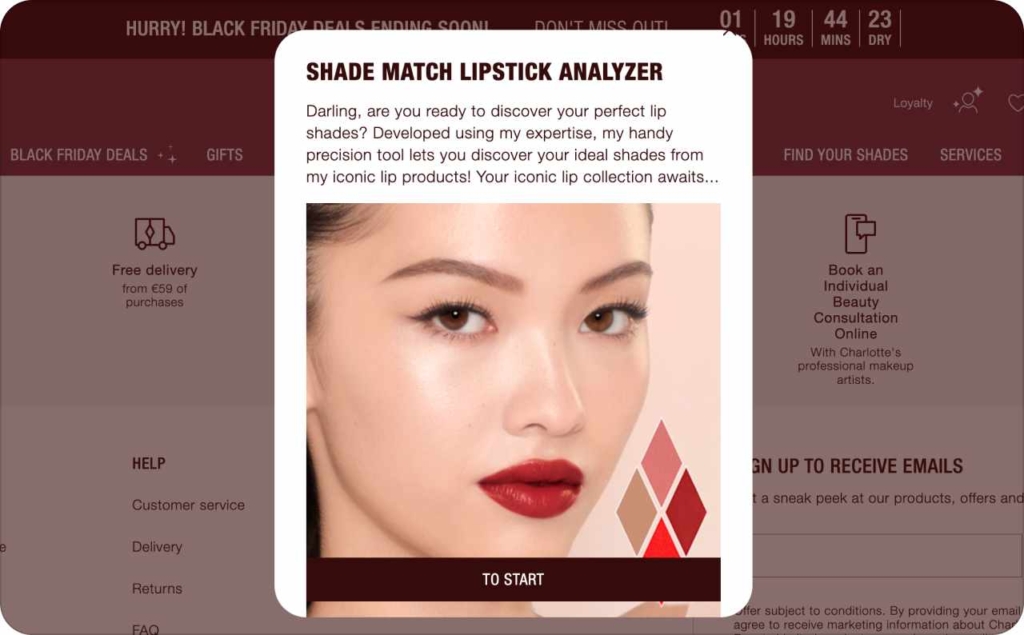
Photo source: Charlotte Tilbury
20. Back in stock alert
A remarketing ad example built to reconnect with users who viewed or wishlisted an item that recently returned to inventory. The tone is steady and factual, no countdowns, no push. The message focuses on availability and relevance, not scarcity.
Examples that work:
- Static or motion ad featuring product image with “Back in stock” label
- Tagline: “Your favorite’s back”
- Supporting line: “Available again while supplies last”
Why it works: It reactivates genuine demand instead of forcing urgency. Users already showed interest, so the reminder feels like service, not sales. In examples of remarketing ads focused on reactivation, live inventory signals consistently lift click-throughs and conversion rates.
How to use it in your advertising: Run on Google display, Meta, or email remarketing placements. Sync inventory feeds to trigger ads automatically when stock updates. Keep the layout simple and CTAs helpful — “Check availability” or “Order before it’s gone again.”
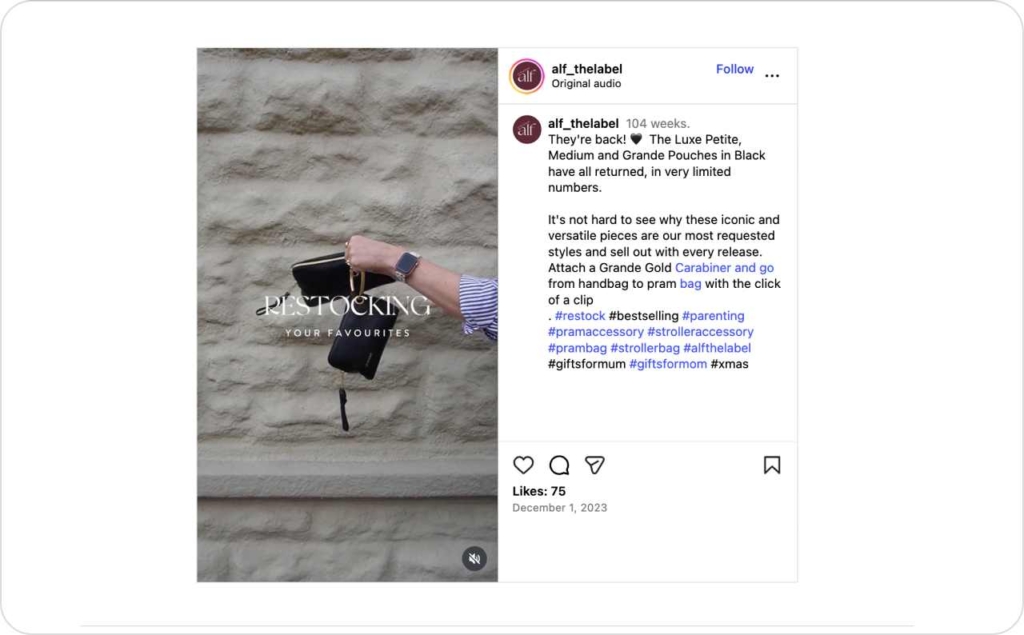
Photo source: @alf_thelabel on Instagram
Content & lead gen
Lower-friction remarketing ad copy examples for guides, templates, and replays. Lead with usefulness, not hype — ads that trade curiosity for value instead of urgency.
According to Deloitte’s 2025 Digital Media Trends report, social video platforms are becoming the dominant space for media consumption and learning, shifting how audiences engage with educational and lead-gen content.
21. Lead magnet alignment
A remarketing ad example built around clarity and direct value. The headline mirrors the outcome of the offer — “Grow site traffic with 5 tested templates”, so people instantly know what they’ll get. The tone stays calm and professional, focused on helping rather than selling.
Examples that work:
- Static or short motion ad showing the guide or template cover
- Tagline: “See what’s inside”
- Supporting line: “Free 8-page guide to faster ad setup”
Why it works: It removes guesswork. When users understand the benefit upfront, clicks feel intentional, not impulsive. In remarketing ad copy examples, outcome-based headlines outperform curiosity-based hooks because they build trust before the click.
How to use it in your advertising: Run on Meta, Linkedin, or display remarketing. Use neutral visuals, minimal copy, and clear CTAs like “Download guide” or “Get the templates.” Keep the offer visible above the fold — clarity should do the selling.
22. Case study proof
A short remarketing ad example that leads with measurable results instead of slogans. It uses real numbers from verified customers — small wins that feel believable. The message focuses on proof, not polish, showing that performance is achievable and repeatable.
Examples that work:
- Static card or short video with before-and-after metric
- Tagline: “+42% more conversions in 2 weeks”
- Supporting line: “Real results from real users”
Why it works: Specific numbers signal trust. Viewers instantly understand value without reading further. In the best remarketing ads examples, small quantified outcomes outperform long testimonials because they deliver credibility in one glance.
How to use it in your advertising: Run on Facebook, Linkedin, or display remarketing. Keep visuals clean — one product image, one stat, one CTA. Use straightforward prompts like “Read full story” or “See how they did it.”
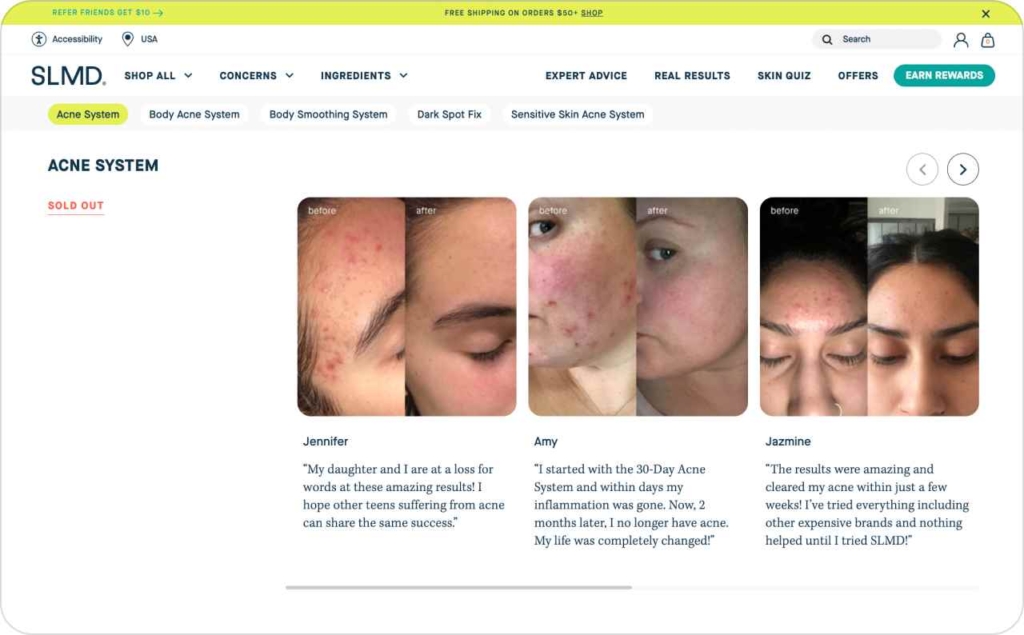
Photo source: SLMD Skincare
23. Calculator tease
An interactive remarketing ad example that draws attention through instant value. Instead of asking users to sign up, it shows a quick demo of a calculator or ROI estimator generating results in real time. The tone is confident but simple — “See what it could do for you.”
Examples that work:
- Short motion ad showing a number increasing or total calculated live
- Tagline: “See your savings in seconds”
- Supporting line: “Instant estimate, no form required”
Why it works: People trust tools that give before they ask. In examples of Google remarketing ads, calculators consistently outperform static downloads because they make the payoff tangible. Users feel they’re learning, not being marketed to.
How to use it in your advertising: Run on Google display, Linkedin, or programmatic remarketing. Keep visuals lightweight and mobile-friendly. Use CTAs like “Try the calculator” or “Estimate your ROI.”
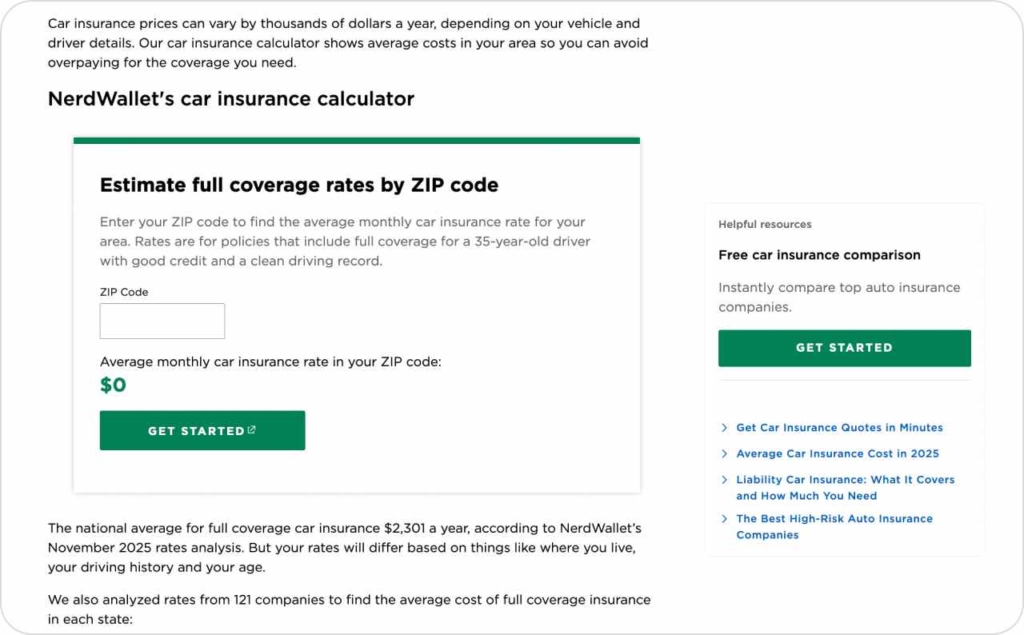
Photo source: Nerd Wallet
24. Checklist offer
A remarketing ad example that turns guidance into an easy win. Instead of broad promises, it offers a concrete tool — a short checklist users can act on right away. The tone is instructional, not promotional, helping people move forward with minimal effort.
Examples that work:
- Static preview of checklist layout with visible bullet points
- Tagline: “Launch-ready in 7 steps”
- Supporting line: “Free PDF checklist for faster setup”
Why it works: People like to finish things. Checklists turn abstract goals into small, doable actions. In remarketing ad copy examples, this format performs best because it feels practical and self-directed, not like a gated lead trap.
How to use it in your advertising: Run on Meta, display, or email remarketing placements. Keep visuals simple and text readable. Use CTAs like “Get the checklist” or “Download and start today.”

Photo source: Eagle Creek
25. Webinar replay snack
A short remarketing ad example that reuses your strongest webinar moment. Instead of promoting the full replay, it highlights a single insight or stat that teaches something instantly. The tone is calm and helpful, more like a quick tip than a promo.
Examples that work:
- 6–10 second clip showing the speaker’s key line or slide
- Tagline: “Missed it? here’s the best 10 seconds”
- Supporting line: “Watch the replay for the full session”
Why it works: It leads with value, not time commitment. Viewers get a takeaway immediately, which builds curiosity to watch more. In Instagram remarketing ads examples, short replay clips outperform full webinar ads because they reward attention upfront.
How to use it in your advertising: Run on Reels, YouTube shorts, or Linkedin video. Keep captions concise, visual transitions clean, and CTAs soft — “Watch full replay” or “See all sessions.”
26. Template trio
A carousel-style remarketing ad example that previews three related templates — design, copy, or analytics. It shows instant variety and utility without overpromising. The tone is confident, minimal, and friendly, like a quiet “Here, this will help.”
Examples that work:
- Three-card carousel showing each template thumbnail
- Tagline: “Three ready-to-use templates”
- Supporting line: “Made for marketers, free for you”
Why it works: Seeing multiple assets reinforces usefulness. It feels generous, not gated. In Facebook remarketing ads examples, template carousels convert well because they visually stack value in seconds.
How to use it in your advertising: Run on Facebook, Instagram, or display carousels. Keep designs consistent across cards and highlight different use cases. End with simple CTAs like “Get all three” or “Download your set.”
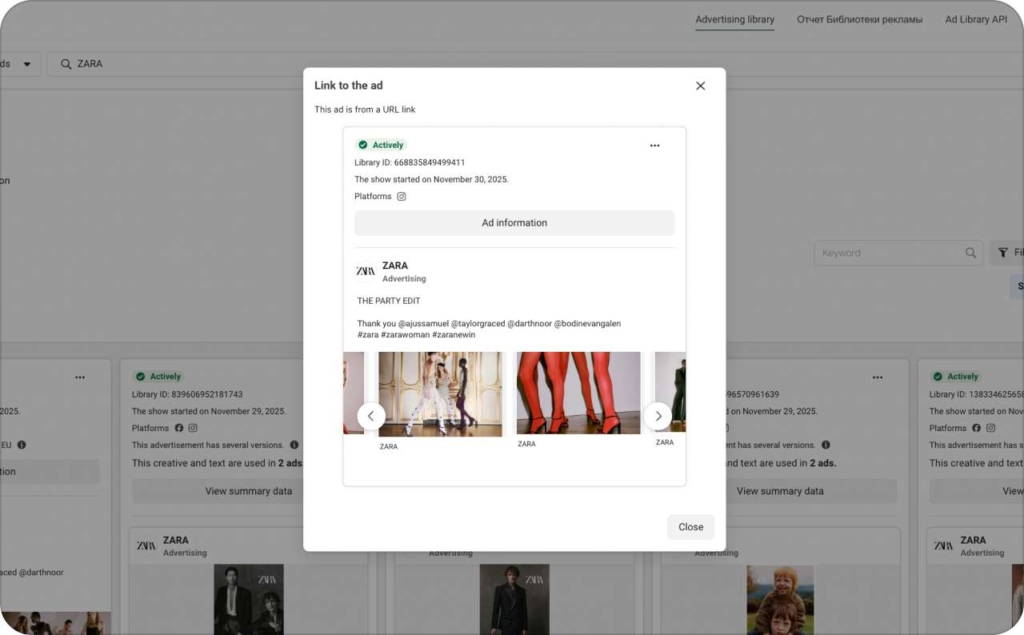
Photo source: Zara advertising in Meta Library
27. Myth vs. reality
A remarketing ad example that addresses common misconceptions head-on. It uses a calm, side-by-side structure — one panel for the myth, one for the truth. The tone is reassuring, not corrective, helping users replace uncertainty with understanding.
Examples that work:
- Split-screen graphic or short video with “Myth” and “Reality” headers
- Tagline: “Think it’s too late to start? think again.”
- Supporting line: “See what’s actually true in 2026”
Why it works: It reframes doubt into curiosity. In remarketing ads examples, myth-busting ads perform well because they educate without confrontation. The clarity builds trust, especially in industries where outdated beliefs slow conversions.
How to use it in your advertising: Run on Meta video, reels, or YouTube placements. Use clear typography and neutral visuals. Keep CTAs simple and conversational — “Learn what’s true” or “See how it really works.”
28. Quiz to qualify
An interactive remarketing ad example that turns lead qualification into a short, friendly quiz. It uses curiosity and play to draw people in — no forms, no friction. The tone is upbeat but measured, making interaction feel like exploration, not commitment.
Examples that work:
- Short motion ad showing question → instant result animation
- Tagline: “Find your best match in 3 questions”
- Supporting line: “No sign-up, instant results”
Why it works: Participation builds memory. When users engage directly, they remember both the experience and your brand. In Google remarketing ads examples, quiz-based formats often outperform static lead ads because they turn self-discovery into a value exchange.
How to use it in your advertising: Run on Google display, Linkedin, or TikTok. Use lightweight animations and conversational tone. Keep CTAs soft and action-focused — “Start quiz” or “See your match.”
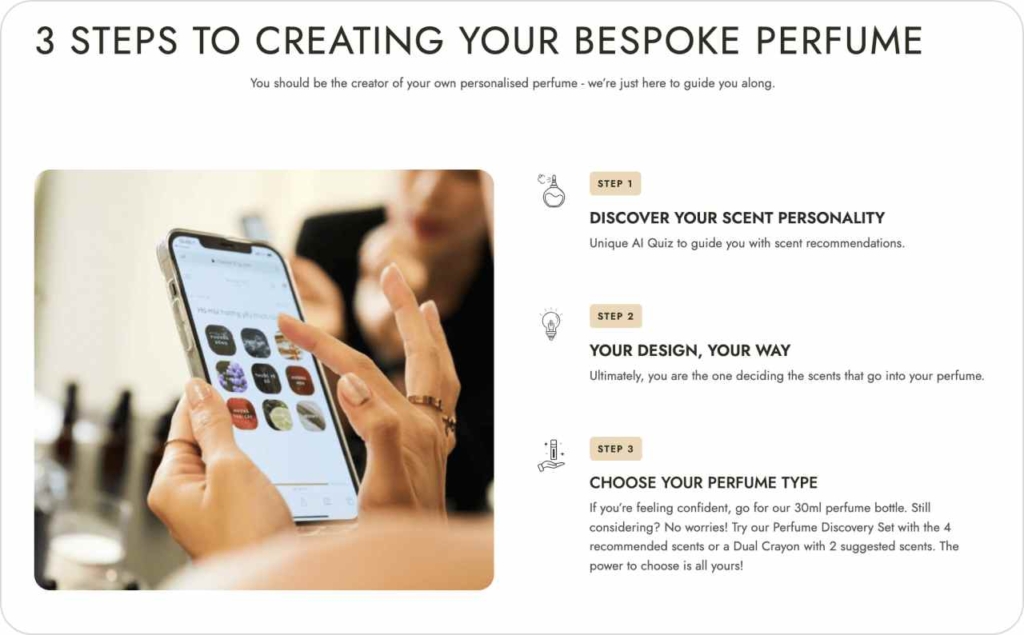
Photo source: Mansion 21G
29. Industry stat magnet
A remarketing ad example built around a single, powerful data point. The ad opens with a striking statistic that instantly signals authority and relevance. It’s designed to catch attention through proof, not volume. The tone is analytical but easy to grasp.
Examples that work:
- Static or motion ad with large-font number headline
- Tagline: “Only 23% of teams measure ad recall”
- Supporting line: “See how leaders track creative ROI”
Why it works: Facts stop scrolls. In remarketing ad copy examples, stat-led ads perform because they earn interest through insight. The audience feels informed, not pitched to, which builds trust fast, especially with professional or research-driven buyers.
How to use it in your advertising: Run on Linkedin, display, or Meta placements. Use real, recent data and cite your source clearly. End with soft CTAs like “See full report” or “Read the findings.”
30. Email-only perk
A remarketing ad example designed to grow your email list through quiet exclusivity. Instead of discounts, it highlights early access, extra content, or helpful updates. The message feels like an invitation, not an ask.
Examples that work:
- Static banner or short video featuring a soft incentive
- Tagline: “Join the list for early drops”
- Supporting line: “No spam, just useful updates”
Why it works: It feels optional yet rewarding. In the best remarketing ads examples, soft CTA list builders work because they give control back to the user. The calm framing builds trust and long-term engagement over quick conversions.
How to use it in your advertising: Run on Meta, display, or email remarketing placements. Keep tone consistent across ad and sign-up page. Use friendly CTAs like “Get early access” or “Join the list.”
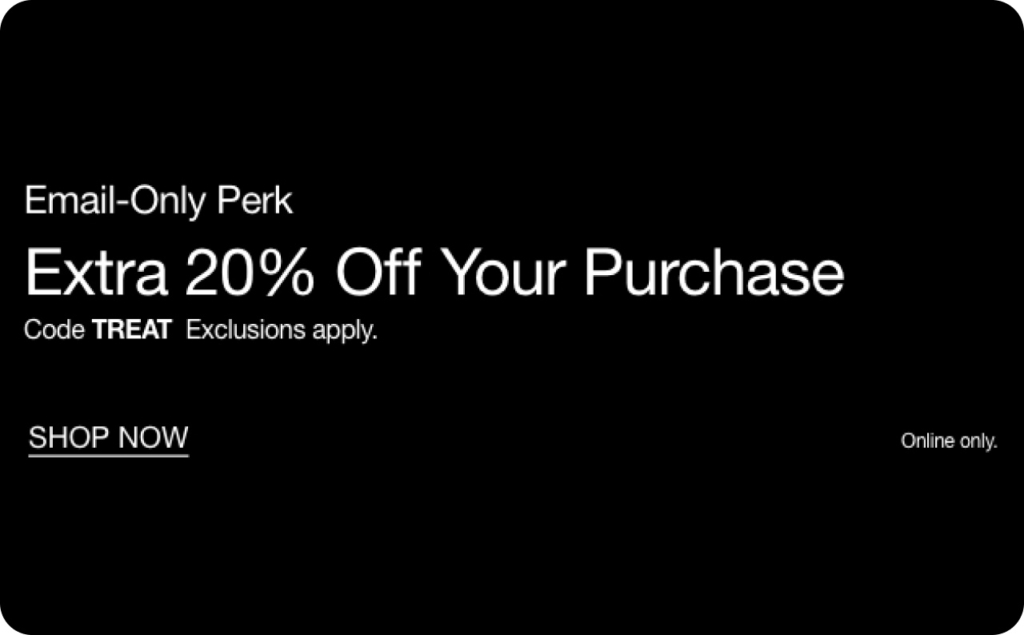
Photo source: Email-only perk from GAP
Reasons to use an AI ad generator for your remarketing ads
Remarketing only works when your creative is fast, consistent, and personal — three things most small teams struggle to keep up with. Zeely is an ad generator built for SMBs, marketers, and e-commerce brands that need to create high-performing ads in minutes, not days. As a business growth app, Zeely helps you design, test, and launch effective remarketing ads automatically, no agencies, no waiting.
Common roadblocks and how Zeely solves them
- No time: Creating fresh ads takes hours. Zeely’s AI generator for ads builds full remarketing campaigns in minutes, complete with visuals, captions, and CTAs
- Low budget: You don’t need a media team. Zeely produces low-budget ads that still look polished and perform across Google, Meta, and TikTok
- No design skills: The built-in smart layout system turns product photos into scroll-stopping creatives. You upload, Zeely designs
- Campaign complexity: Managing formats, specs, and placements can be overwhelming. Zeely automates setup and keeps every ad optimized for its platform
- Low conversion rates: The AI studies engagement signals and generates variants built to improve CTRs and conversions over time
- Scaling problems: Need to expand across channels fast? Zeely scales your remarketing ads automatically, keeping style, message, and spend consistent
- Wasted ad spend: Smart analytics identify which creatives underperform so you stop spending where it doesn’t convert
Zeely removes the barriers between you and better ads. It’s cost-efficient, accessible, and built to scale with you, whether you’re retargeting a few visitors or thousands. With Zeely’s AI ads generator, remarketing becomes simple, fast, and measurable, exactly how modern growth should feel.
Try Zeely today, create your first AI-generated ad in minutes and see how fast your remarketing can convert.