30+ social media campaign examples that actually help you build your next one
Struggling to create a social media campaign that truly stands out? Zeely AI analyzed dozens of high-performing campaigns to bring you the most effective insights for your next one.
Great social-media campaigns don’t just go viral, they go somewhere. They connect the dots between brand and behavior, idea and outcome.
Here’s one reason you should care: a recent Pew Research Center study found that 1 in 5 American adults now regularly get news on TikTok, up sharply from just 3% in 2020. That tells us something: social platforms aren’t just broadcasting zones, they’re decision spaces.
In this article, you’ll see social media campaign examples that make those dots visible. The kind of social media marketing examples that show what worked, why it worked, and how you can build your own version. No buzzwords. No fluff. Just proof that clarity converts.
UGC and generators: Creative social media ads people want to share
Some of the most effective social media ads don’t look like ads at all — they feel like participation. User-generated content and interactive ad generators give people a role in the story. Instead of just seeing a brand, they see themselves inside it. That is why these social media marketing examples tend to travel fast and stay memorable. In fact, social platforms that invite interaction often outperform traditional ads: the average engagement rate across major channels is between 1.4% and 2.8%, according to Hootsuite. Read more about why social media advertising works.
1. Barbie: Selfie generator
When Barbie launched its global social media marketing campaign in 2023, it did not rely on trailers alone. The team built a simple AI powered selfie generator that let anyone place their photo into the iconic pink movie poster.
It turned everyday audiences into the cast. Millions joined in as influencers, brands, and fans shared their own versions. Each post multiplied reach with zero paid boost. The result became one of the most successful social media campaign examples of the year and showed how creative social media ads can invite participation instead of pushing promotion.
Why it worked:
- Personalized content made it instantly shareable across TikTok and Instagram
- The design was universal, playful, branded, and easy to remix
- It blurred the line between user generated content and official brand creative
Try this: Build a UGC ads around your own brand moment. It could be a color filter, tagline remix, or product template. Keep it mobile first, fast to use, and make the share feel like the reward.
2. Apple: #ShotOniPhone
Apple’s #ShotOniPhone series is one of the clearest social media campaign examples of how consistency builds credibility. It transformed a single product feature into a global creative movement.
Instead of producing only studio shoots, Apple invited users to share their own photos taken on iPhone. Every image posted under the hashtag became proof of what the device could do in real life. The result is one of the most effective social media campaigns of the last decade, and a template for any brand that wants to turn customers into collaborators.
Why it worked:
- Real users showed the product’s value better than any ad claim
- The content was diverse, global, and endlessly renewable
- It turned everyday users into brand ambassadors without asking for loyalty
Try this: Launch a UGC marketing campaign that celebrates what your users create with your product. Choose one simple concept, like a hashtag or visual theme, and make it easy for people to participate. Consistency will build trust faster than perfection.
3. Getty Museum: #GettyMuseumChallenge
The #GettyMuseumChallenge is one of the smartest social media campaign examples of creativity meeting constraint. During global lockdowns, when museums were closed, the Getty Museum invited people to recreate famous artworks at home using whatever they had nearby.
What started as a playful prompt became one of the most effective social media campaigns of 2020. Thousands of people joined, posting side-by-side images of classic paintings and their homemade versions. The result was clever, funny, and deeply human, exactly the kind of connection people were craving online.
Why it worked:
- It turned isolation into participation
- Everyone could take part, regardless of skill or budget
- It positioned Getty as approachable and community-driven, not distant or elite
Try this: Create a social media marketing campaign that encourages reinterpretation. Ask your audience to remix, re-stage, or reimagine something connected to your brand story. Keep the idea simple, visual, and open enough for creativity to thrive.
4. ALS Association: Ice Bucket Challenge
The Ice Bucket Challenge remains one of the most iconic social media campaign examples ever. The idea was simple: pour a bucket of ice water over your head, post the video, and nominate friends — all to raise awareness and funds for ALS research.
Its power came from participation, not polish. People didn’t just watch; they acted. From everyday users to global celebrities, millions joined in, raising over $100 million for the ALS Association in weeks.
It proved how creative social media ads thrive when audiences become the story — simple, emotional, and contagious.
Why it worked:
- Clear action, clear purpose, and instant gratification
- Anyone could join without needing special tools or editing
- It spread through social pressure that felt positive, not forced
Try this: Design a social media marketing campaign with a simple, repeatable action that ties directly to your mission. Keep the steps easy to follow and make the impact visible. When people can both participate and contribute, your audience becomes your loudest channel.
5. Fireball: #FireballFriday
Fireball Whiskey’s #FireballFriday campaign is one of the simplest yet most enduring social media marketing examples of brand ritual done right. The idea was clear: every Friday, fans shared their Fireball moments using one short, repeatable hashtag.
What started as a casual weekend prompt grew into a long-term tradition across platforms. It kept the brand visible without forcing a sale, proving how effective social media campaigns can thrive on community rhythm instead of big budgets.
Each post, whether a bar photo, a backyard party, or a quick cheers, reinforced one message: Fireball equals Friday. The consistency turned a hashtag into habit and a drink into a symbol of weekend energy.
Why it worked:
- Simple timing made it easy for anyone to join
- The brand stayed present without over-producing content
- It created routine-based engagement that still feels organic years later
Try this: Build a repeating social media marketing campaign around a moment your audience already celebrates — a weekly theme, mood, or ritual. Give them a hashtag, a visual cue, and a reason to return. Let participation, not promotion, carry your brand forward.
6. Spotify: Wrapped and Time Capsule
Spotify’s Wrapped and Time Capsule campaigns are standout social media campaign examples of how data can drive emotion. Every December, Spotify Wrapped turns listening habits into shareable stories, giving users a visual snapshot of their top songs, artists, and genres. The idea transformed analytics into identity, making it one of the most effective social media campaigns year after year.
Later, Time Capsule invited users to create playlists for their future selves, shifting from nostalgia to anticipation. Both campaigns prove that creative social media ads work best when personalization feels personal, not programmed.
Why it worked:
- It used data to make each user feel seen, not tracked
- The visuals were bold, mobile-first, and perfectly timed for sharing
- It encouraged reflection, which deepens brand loyalty far beyond the app
Try this: Turn your audience data into storytelling moments. Summarize milestones, trends, or personal progress in a way that feels like a reward to share. Keep the tone human and celebratory. The more people recognize themselves in your story, the more your social media marketing campaign will spread.
7. State Bicycle Co: 12 Days of State
State Bicycle Co’s 12 Days of State is a textbook social media marketing campaign that proves consistency and creativity can outperform large budgets. The brand built a simple, seasonal rhythm: twelve days of limited-time offers, product reveals, and small surprises shared across its social channels.
Each post combined community tone with clear value — giveaways, discounts, and behind-the-scenes content that made the brand feel approachable. Over time, it became one of the most effective social media campaign examples in the niche cycling world, showing how small brands can sustain momentum with focused storytelling.
Why it worked:
- Predictable timing kept audiences checking back daily
- Visual consistency made every post recognizable
- The mix of exclusivity and generosity built long-term loyalty
Try this: Create your own short campaign series with a fixed number of posts or days. Each update should add value — a reveal, a reward, or a story worth returning for. A structured theme like 12 Days of [Your brand] turns followers into participants and keeps your social media marketing campaign easy to plan, measure, and repeat.

8. Honey Bunches of Oats: Mother’s Day
Honey Bunches of Oats ran one of the most heartfelt social media campaign examples with its Mother’s Day celebration. The idea was simple but strong: highlight the real moms behind the brand, the women who actually make the cereal, and invite audiences to share messages for their own.
This became one of the most effective social media campaigns for connecting product, purpose, and people. Instead of polished studio ads, the posts featured authentic voices from factory employees and their families. The result felt honest, warm, and deeply shareable — proof that sincerity can outperform scale.
Why it worked:
- It celebrated real people, not scripted talent
- The timing made the message instantly relevant and emotional
- It humanized a legacy brand for a new generation of social audiences
Try this: Plan a social media marketing campaign around a cultural moment that already carries emotion, like Mother’s Day or back-to-school season. Lead with real stories from your team or customers instead of ad copy. Genuine gratitude and visibility often create stronger engagement than any discount code.
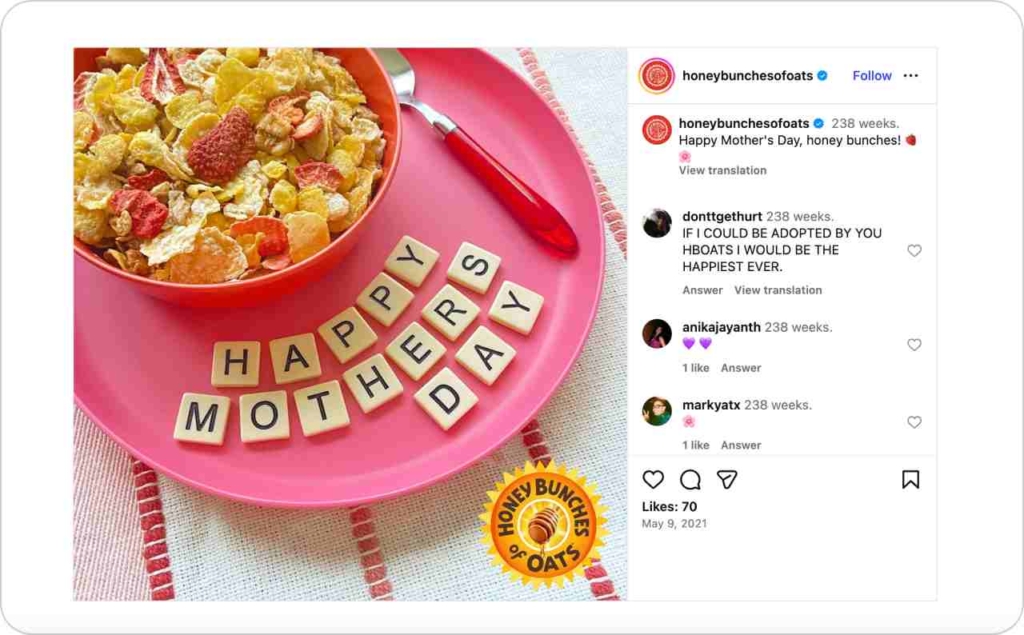
Photo source: @honeybunchesofoats on Instagram
Creators, celebrities, and collabs: Showing a strong social media marketing campaign fit
Some of the most effective social media campaigns happen when a brand’s personality meets the right creative partner. These collaborations work best when the story feels organic, not paid for. The audience should think, “Of course they teamed up,” not “How much did they spend?”
9. CeraVe: “Michael CeraVe”
CeraVe’s “Michael CeraVe” campaign is one of the smartest social media campaign examples of turning an online joke into a cultural moment. When fans joked that actor Michael Cera might own the skincare brand, CeraVe embraced it.
The team created a full social media marketing campaign around the rumor, featuring Cera himself in mock-serious videos pretending to have invented the moisturizer.
The idea built naturally to a Super Bowl reveal and became one of the most effective social media campaigns of the year — a mix of humor, creator energy, and self-awareness that showed CeraVe knows exactly how to play in internet culture.
Why it worked:
- It let the internet’s own joke lead the creative direction
- The tone matched how audiences already talked about the brand
- It blurred entertainment and advertising in a way that felt natural, not forced
Try this: Pay attention to how your audience talks about your product online. When a playful idea or nickname starts to circulate, explore it instead of shutting it down. Turning community humor into content can create an instantly relatable social media marketing campaign without heavy ad spend.
10. e.l.f.: eyes.lips.face.fandom and Power Grip BTS > Hero
e.l.f. has mastered the social media marketing campaign that feels effortless on every platform. From eyes.lips.face.fandom on TikTok to the Power Grip Primer BTS > Hero push, the brand turned short-form creativity into community.
The eyes.lips.face. challenge invited users to join a custom TikTok sound built around the brand name, generating millions of videos from fans and celebrities. Later, Power Grip Primer content focused on creators, real textures, and quick transformations.
Together, they proved the most effective social media campaigns blend culture, product, and authenticity, not just promotion.
Why it worked:
- Music, humor, and inclusivity gave the community room to co-create
- Creator-first storytelling built credibility faster than traditional beauty ads
- The rhythm of short, high-energy posts kept engagement steady long after launch
Try this: Think about how your audience naturally expresses themselves through music, humor, or quick tutorials. Build a creative social media ad that fits into those habits instead of interrupting them. Give your users ownership of the trend, then amplify their best work. The result can become a living social media marketing campaign instead of a short-term promotion.
11. Astronomer × Gwyneth Paltrow
The Astronomer × Gwyneth Paltrow collaboration is one of the most clever social media marketing campaign examples in beauty. A small skincare brand teamed up with a wellness icon, but with humor, not glamour.
Instead of a standard endorsement, Paltrow starred in short parody clips joking about her minimalist routines and “testing Astronomer products for the vibe.” The playful tone made it instantly viral, placing the indie brand in luxury-level conversations.
It’s a reminder that effective social media campaigns can win attention through wit and self-awareness, not just celebrity polish.
Why it worked:
- The campaign didn’t take itself too seriously, which made it relatable
- The celebrity fit felt intentional; the humor matched both audiences
- It used irony to reach younger viewers who usually tune out wellness ads
Try this: If your brand partners with a creator or celebrity, give them creative freedom to play, not just post. Collaborations work best when the tone matches what audiences already enjoy about the person. Let them interpret your product in their own voice, and you’ll earn genuine attention — the kind that drives a lasting social media marketing campaign, not just a spike in views.
12. Little Caesars: “Burn the Burns” with Disaster Girl
Little Caesars’ “Burn the Burns” is one of the funniest social media campaign examples of meme marketing done right. The brand teamed up with Disaster Girl, the meme-famous child smiling in front of a burning house, to promote its new hot-and-ready pizza.
Instead of a standard ad, the grown-up Disaster Girl appeared in short clips “burning” competitors in playful ways. The humor, nostalgia, and timing made it one of the most effective social media campaigns of the year — proof that creative social media ads work best when brands meet audiences where their humor lives.
Why it worked:
- It used nostalgia to bridge generations of online users
- The tone was clever but never mean-spirited, making it easy to share
- It paired brand message and meme energy in perfect proportion
Try this: Use cultural callbacks or internet moments your audience already knows and loves. Reintroduce them with your own twist — lightly, respectfully, and in a way that keeps the humor intact. When done right, this kind of storytelling can turn a familiar meme into a modern social media campaign example that travels fast and leaves a smile.
13. Liquid Death: “Marketing Spoof”
Liquid Death’s “Marketing Spoof” series is one of the boldest social media campaign examples in recent years. The brand built its identity on parody, releasing fake ads that mimic, then mock, traditional marketing tropes.
Each video starts like a real commercial, complete with dramatic visuals and pointless celebrity cameos, before twisting into absurd humor. The result is an effective social media campaign that entertains instead of sells.
By calling out advertising clichés with wit and confidence, Liquid Death turned rebellion into recognition, proving creative social media ads can thrive on irony.
Why it worked:
- It knew its audience, people tired of over-polished branding
- Humor built trust faster than slogans could
- Every spoof reinforced Liquid Death’s “brand against brands” position
Try this: If your product lives in a crowded category, consider poking fun at the sameness of your industry. A clever parody or honest exaggeration can become a creative social media ad that builds loyalty through laughter. Authentic humor, especially when it reflects real customer thoughts, can anchor a long-running social media marketing campaign without paid pressure.
Stunts, hoaxes, and provocations: Use with care
Some social media campaign examples thrive on surprise. They blur the line between reality and performance, using shock or curiosity to make people stop scrolling. But these campaigns only work when the stunt fits the brand’s personality, not when it feels like a gimmick. The best rule: provoke emotion, not confusion.
14. Duolingo: “Duo is Dead”
Duolingo’s “Duo is Dead” stunt is a perfect case study in playful provocation done right. The brand temporarily “killed off” its iconic green owl mascot on social media, replacing all its posts with eerie tributes, black backgrounds, and dramatic messaging about Duo’s mysterious disappearance.
For a few hours, users panicked, speculated, and mourned, until the reveal dropped: it was a creative social media ad teasing a new in-app feature and visual refresh. The chaos turned into celebration, earning millions of views across TikTok and X.
It was one of the most talked-about current social media campaigns that year, proving that when audiences trust your humor, even a fake crisis can strengthen brand love.
Why it worked:
- It tapped into existing fandom around the mascot
- The tone stayed consistent with Duolingo’s self-aware personality
- It rewarded followers who stayed curious, turning suspense into delight
Try this: If you experiment with stunts, build from a tone your audience already knows and enjoys. Make sure the “twist” feels like a wink, not a trick. A small dose of chaos, delivered with care, can refresh attention and spark conversation while keeping your social media marketing campaign true to your brand.
15. Dyson: “Airbrow” prank
Dyson’s “Airbrow” prank is one of the smartest social media campaign examples of brand humor done right. Known for its sleek, high-tech image, Dyson surprised audiences by “launching” a new beauty tool — the Airbrow, designed to dry and style eyebrows with “micro airflow precision.”
The product looked completely real, matching Dyson’s minimalist visuals and premium tone. But it was an April Fools’ prank. The post quickly went viral, sparking curiosity, debate, and laughter across TikTok and Instagram.
It became one of the most effective social media campaigns of the season, using humor to highlight Dyson’s reputation for innovation and its ability to not take itself too seriously.
Why it worked:
- It mirrored the brand’s real product style, adding believability
- It built anticipation through visual polish and confident tone
- The reveal strengthened brand affinity by showing personality behind the polish
Try this: If your brand is known for serious innovation, an occasional light prank can humanize it. The key is to make the humor fit your reputation — clever, not cheap. Design the fake just as carefully as you would the real thing. When executed well, this kind of creative tease can double as both entertainment and awareness, turning into a shareable social media marketing campaign that people actually enjoy.
16. McDonald’s: “As Featured In”
McDonald’s “As Featured In” is one of the most creative social media marketing campaign examples blending nostalgia and tech. The brand celebrated its countless pop-culture cameos by launching limited-edition meals inspired by famous film and TV moments.
An added AR layer through Snapchat lenses and QR codes let fans unlock interactive experiences tied to those references. The idea turned decades of cameos into a digital event, making it one of the most effective social media campaigns of the year — proof that mixing memory with innovation keeps a legacy brand culturally alive.
Why it worked:
- It used nostalgia to connect generations through shared memories
- The AR feature made the experience interactive, not just collectible
- The campaign stretched across platforms without losing consistency or tone
Try this: Look for the cultural touchpoints your brand already lives inside — old commercials, product cameos, or customer traditions. Reintroduce them with a modern twist, like AR, filters, or short-form storytelling. Mixing memory with innovation can turn a familiar story into a new social media marketing campaign that feels timeless and current at once.
17. McDonald’s: “Open Late”
McDonald’s “Open Late” campaign is a standout among social media campaign examples that bridge real-world design and digital storytelling. It began as a simple outdoor concept — minimalist billboards showing only a slice of McDonald’s golden arches glowing against a dark background. No logo. No text. Just recognition.
The creative was designed with social sharing in mind. Each billboard became a photo backdrop, perfectly framed for night-time posts and stories. Viewers turned into distributors, snapping and sharing what felt like an inside secret. That offline curiosity became a viral social media marketing campaign online.
It was a masterclass in creative social media ads that don’t need captions to communicate. The message was universal: McDonald’s is still open and still part of your late-night world.
Why it worked:
- Visual simplicity made it instantly recognizable, even without text
- The design invited participation through photos and tags
- It blurred the boundary between OOH advertising and user content
Try this: If your brand runs outdoor or print ads, design them for the camera, not just the street. Think about composition, lighting, and how the message will look when shared on social media. Smart physical design can become your next viral social media marketing campaign when it feels made for both real life and the feed.
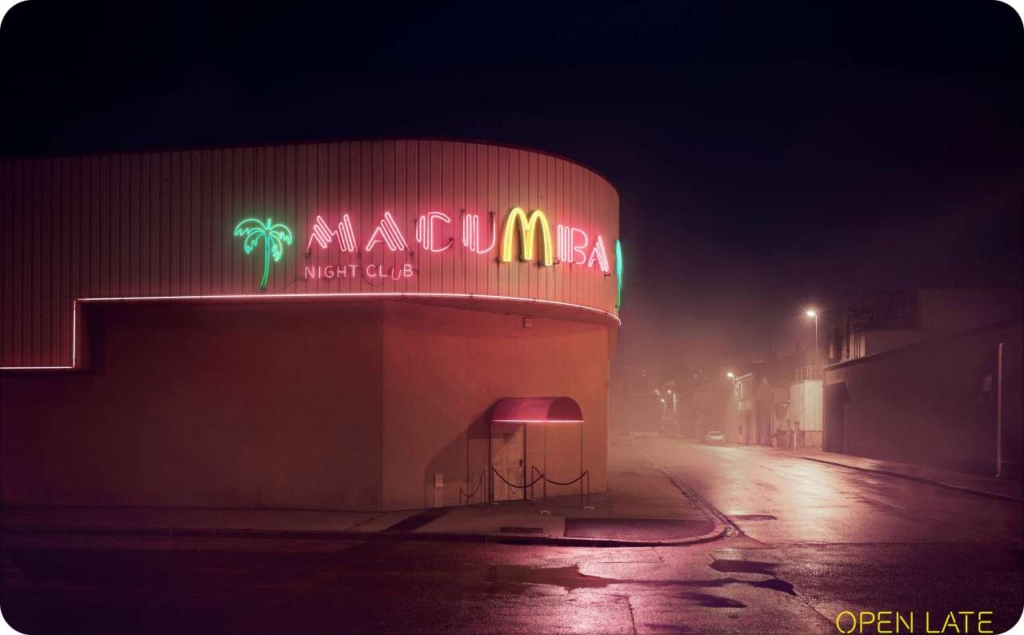
Photo source: TBWA\Paris, France
18. Blendtec: “Will It Blend?”
Blendtec’s “Will It Blend?” series is one of the most iconic social media campaign examples in digital history. The brand turned a simple question “can it blend?” into viral entertainment by dropping items like iPhones and golf balls into its blenders.
Hosted by the founder in a lab coat, the videos mixed authority with absurd humor. The idea was low-cost but high-impact, proving that even practical products can go viral. It became one of the most effective social media campaigns, showing that clear, confident storytelling can transform an everyday brand into internet legend.
Why it worked:
- It had one strong idea and repeated it consistently
- Authentic tone made it feel real, not overproduced
- Viewers watched for entertainment but stayed for proof of quality
Try this: Take the most powerful feature of your product and find an extreme way to show it in action. Use repetition to build expectation and recognition. A single clever test, filmed honestly, can become your brand’s signature and a surprisingly enduring social media marketing campaign.
19. Havana Club: Cuban Mode
Havana Club’s “Cuban Mode” is a vibrant social media marketing campaign that turned cultural pride into participation. Instead of promoting products, the brand invited people to embody the Cuban Mode mindset — confident, rhythmic, and full of life.
Through short videos, music partnerships, and creator collabs, users showed how they “switched on” Cuban Mode in their own way. The energy was contagious, making it one of the most effective social media campaigns in spirits marketing.
By celebrating real culture instead of clichés, Havana Club created storytelling that felt like an invitation, not an ad.
Why it worked:
- It made a national identity feel personal and shareable
- Creator collaborations kept the content authentic and diverse
- Music and rhythm gave the campaign a natural emotional hook
Try this: Build a social media marketing campaign around a feeling your brand embodies, not just what you sell. Define a “mode” or “moment” your audience can identify with, then let them show it their way. When people recognize themselves in your message, your brand becomes part of their lifestyle, not just their feed.
20. Surreal: Office Culture carousels
Surreal Cereal’s Office Culture carousels are among the funniest social media campaign examples of smart, low-cost creativity. Using LinkedIn-style posts, the brand mimicked corporate culture with fake job ads, employee quotes, and “motivational” slides — all turned into absurd cereal jokes.
The social media marketing campaign thrived on irony and simplicity, spreading from LinkedIn to TikTok through screenshots and edits.
It became one of the most effective social media campaigns for a challenger brand, proving that sharp humor and strong voice can outshine budget or polish and make cereal feel cool again.
Why it worked:
- The design mimicked office culture perfectly, making people stop and read
- The humor built recognition faster than repetition ever could
- It positioned the brand as relatable and modern, without losing credibility
Try this: Find a universal part of everyday life, office culture, routines, inside jokes, and twist it through your brand lens. Humor works best when it mirrors what people already experience. A simple carousel or post series built around that idea can become a low-cost, high-share social media marketing campaign that grows by resonance, not reach.
21. Talk Away the Dark: American Foundation for Suicide Prevention
“Talk Away the Dark” is one of the most meaningful social media campaign examples in public health. Created by the American Foundation for Suicide Prevention, it turned suicide awareness into a calm, human conversation instead of shock messaging.
The social media marketing campaign centered on one truth: silence fuels stigma. Through short videos and creator stories, it encouraged people to talk, listen, and check in with others.
It became one of the most effective social media campaigns in its space by offering action over awareness, giving audiences real language and simple steps to help.
Why it worked:
- It used empathy as the main creative device, not guilt or fear
- The stories were real and diverse, showing many ways to speak up
- The visuals were quiet and warm, aligning perfectly with the message
Try this: If your brand takes on a cause, focus on empowerment, not awareness alone. Give people a simple step they can take and language they can use. When your message replaces fear with agency, it becomes a social media marketing campaign that heals, educates, and mobilizes, not just one that trends.
22. Miami Beach: “Breaks Up With Spring Break”
Miami Beach’s “Breaks Up With Spring Break” is one of the boldest social media campaign examples in civic storytelling. Instead of attracting tourists, the city used marketing to set boundaries.
After years of chaotic crowds, officials launched a breakup-style social media marketing campaign declaring Miami Beach was “seeing other people.” Playful posts and videos across TikTok and Instagram used humor to deliver a serious message.
It became one of the most effective social media campaigns of the year, praised for honesty, wit, and confidence, proving civic voices can sound human, not bureaucratic.
Why it worked:
- It flipped the usual tourism tone with a clear, confident message
- The campaign used humor to deliver policy communication without alienating people
- It showed how a civic voice can be human, not bureaucratic
Try this: If your organization needs to change perception, do it with tone, not tension. Humor and honesty build trust faster than formality ever could. When you treat your audience like adults, even when saying “no”, you create a social media marketing campaign that earns both respect and reach.
23. Tuvalu: “First Digital Nation”
Tuvalu’s “First Digital Nation” is one of the most powerful social media campaign examples in climate communication. Facing rising sea levels, the island nation announced plans to digitally recreate itself, preserving its culture and sovereignty online.
The announcement came through a viral social media marketing campaign at the UN Climate Conference, featuring Tuvalu’s foreign minister standing knee-deep in water. The striking image captured global attention and transformed the message from despair to determination.
It quickly became one of the most effective social media campaigns for environmental awareness, blending realism, symbolism, and innovation in one frame.
Why it worked:
- One unforgettable image told the entire story
- It reframed crisis as creative survival
- It inspired empathy through action, not fear
Try this: Lead serious messages with clarity and creativity. Audiences share hope more than helplessness. When your story shows resilience instead of panic, it becomes a lasting social media marketing campaign that moves people to care and act.
24. Bombas: “Gives Back”
Bombas’ “Gives Back” initiative is one of the clearest social media campaign examples of purpose-driven marketing done right. The brand built its identity around a simple promise — for every pair of socks purchased, one is donated to someone in need.
Its social media marketing campaign highlights the impact behind that model through short, genuine stories from shelters, volunteers, and recipients. The tone is warm, factual, and human. Instead of polished ads, Bombas uses quiet visuals and direct captions that show the difference a basic item can make.
It remains one of the most effective social media campaigns in the apparel space because it connects everyday purchases with real outcomes as proof, not performance.
Why it worked:
- Clear cause-and-effect storytelling
- Real people, not actors
- Purpose shown through consistency, not slogans
Try this: If your brand supports a cause, make the process visible. Show where help goes and who benefits. Transparency builds trust faster than perfection and turns purpose into a sustainable social media marketing campaign audiences believe in.
25. Thrive Causemetics: “Bigger Than Beauty”
Thrive Causemetics’ “Bigger Than Beauty” initiative is one of the most heartfelt social media campaign examples built around purpose and proof. Every product sold supports women overcoming homelessness, cancer, or domestic abuse and the brand shows that impact clearly across its channels.
Through short videos, creator testimonials, and behind-the-scenes moments with partner organizations, the social media marketing campaign turns giving back into a daily part of the brand story, not a seasonal push. The tone is warm, authentic, and focused on community rather than self-promotion.
It stands out as one of the most effective social media campaigns in the beauty industry because it makes generosity feel actionable, not abstract.
Why it worked:
- The mission is simple, specific, and measurable
- Real women and real stories make the message relatable
- Every post reinforces “beauty with purpose” without heavy emotion
Try this: Build your own cause-led social media marketing campaign around action, not awareness. Let your impact show naturally through people and stories. When good feels genuine, it spreads quietly, powerfully, and long-term.
26. Make-A-Wish: BatKid
Make-A-Wish’s “BatKid” story remains one of the most moving social media campaign examples of all time. In 2013, the foundation granted a wish for five-year-old Miles Scott, who dreamed of becoming Batman for a day.
The city of San Francisco transformed into Gotham, complete with staged rescues, villains, and cheering crowds. News outlets, celebrities, and everyday people joined online to follow and amplify the story. Within hours, the hashtag #BatKid became a global trend, turning one local wish into one of the most effective social media campaigns for compassion ever created.
It worked because it made everyone feel part of the mission. The story didn’t just highlight the charity; it invited the world to participate in one child’s joy.
Why it worked:
- Real emotion, no embellishment
- A clear hero and narrative arc
- Shared humanity turned into mass engagement
Try this: When your campaign centers on kindness, keep it tangible and personal. Let people see the impact in one life, not an abstract cause. That intimacy turns a moment into a lasting social media marketing campaign that restores belief in connection.
27. Smirnoff: “Welcome Home”
Smirnoff’s “Welcome Home” is one of the most inclusive social media campaign examples in modern brand storytelling. Created to celebrate LGBTQ+ pride beyond a single month, the campaign invited people to share what “home” means, not as a place, but as a feeling of belonging.
Through short videos, creator collaborations, and real customer stories, the social media marketing campaign turned visibility into community. Smirnoff featured friends reuniting, families chosen and found, and bars reopening after lockdowns — all framed by the simple message: Everyone’s welcome here.
The result was one of the most effective social media campaigns in beverage marketing, connecting inclusivity with genuine warmth instead of slogans.
Why it worked:
- Representation was authentic, not performative
- Tone was celebratory yet human, no overproduction, no preachiness
- The message aligned perfectly with Smirnoff’s social DNA of togetherness
Try this: If your brand celebrates identity or inclusion, show it through real stories, not statements. Feature diverse voices and keep tone grounded in connection. When welcome feels real, it becomes a living social media marketing campaign people want to join.
28. Dove: “The Face of 10”
Dove’s “The Face of 10” is one of the most powerful social media campaign examples addressing beauty standards in the age of AI. Launched after research revealed that girls as young as ten were using filters and AI tools to alter their faces, the campaign urged viewers to see the real harm behind digital “perfection.”
The social media marketing campaign featured a haunting short film showing an AI-generated “ideal” version of a 10-year-old girl, then cut to the real child, smiling and unfiltered. It ended with a simple message: Let’s protect real beauty. The clip spread across TikTok, YouTube, and Instagram, sparking widespread discussion about youth, self-image, and authenticity.
It became one of the most effective social media campaigns in purpose-driven marketing, combining emotional storytelling with a clear cultural message.
Why it worked:
- It tackled a modern issue with empathy, not fear
- The visuals were intimate and instantly shareable
- The message connected Dove’s long-term mission to a new digital reality
Try this: If your brand addresses sensitive topics, show truth gently but clearly. Use storytelling that humanizes the issue and invites reflection. When emotion meets purpose, your message becomes more than content, it becomes a meaningful social media marketing campaign that shapes culture.
Platform / Brand-led moments
Some of the most effective social media campaigns come straight from the platforms or major brands that shape how people connect online. These moments usually do two things at once — celebrate culture and remind users why the platform exists in the first place.
Unlike product launches or influencer collaborations, platform-led social media marketing campaigns work because they feel like events inside the app. They invite participation, spark trends, and set the creative tone for everyone else.
This section highlights social media campaign examples that show how tech platforms and global brands use their own reach to drive emotion, belonging, and creativity at scale.
29. Tinder: “It Starts With a Swipe”
Tinder’s “It Starts With a Swipe” is one of the strongest social media campaign examples of a brand redefining its own narrative. Once known mostly for casual dating, Tinder used this social media marketing campaign to shift perception — from hookups to meaningful connection.
The campaign featured real stories of couples who met on the app, shared through short, cinematic videos and carousels. Each story proved that a single swipe could lead to friendship, love, or even marriage. The message: every connection has potential, and every story has a beginning.
Why it worked:
- Real user stories built credibility and warmth
- Modern, inclusive visuals mirrored authentic relationships
- It reframed the app as a connector, not just a convenience
Try this: If your brand wants to refresh perception, let customers narrate the evolution. Real voices and real outcomes rebuild trust faster than slogans. A grounded tone turns re-branding into a relatable social media marketing campaign people want to share.
30. Airbnb: “Live There” and “Iconic Stays”
Airbnb’s “Live There” and “Iconic Stays” are prime social media campaign examples of a platform turning its product into a story.
“Live There” encouraged travelers to experience destinations like locals, spotlighting host photos, neighborhood scenes, and real stays instead of glossy ads. The social media marketing campaign reframed travel from tourism to belonging, showing that Airbnb was about connection, not accommodation.
“Iconic Stays” brought fantasy to life by letting users book pop-culture homes like Barbie’s DreamHouse or the X-Men mansion. Each stay became shareable content, blending fandom, creativity, and travel into one of the most effective social media campaigns of the year.
Why it worked:
- Real experiences built authenticity and trust
- Pop culture made the message instantly viral
- It tied storytelling directly to product use
Try this: Show what your product lets people experience, not just buy. When use becomes story, your brand builds emotion and your next social media marketing campaign builds itself.
31. TikTok: “It Starts on TikTok”
TikTok’s “It Starts on TikTok” is one of the most defining social media campaign examples of platform-led storytelling. The campaign celebrated how trends, songs, and creators that shape global culture often begin right on the app.
Through short clips featuring real creators, viral challenges, and pop-culture moments, the social media marketing campaign positioned TikTok as more than entertainment, it was the launchpad for movements, music, and ideas. Every ad felt like a highlight reel of internet creativity, proving the platform’s power without ever having to say it outright.
It became one of the most effective social media campaigns for brand reinforcement, showing how user-generated content could tell the brand’s story better than traditional ads ever could.
Why it worked:
- Real creators made the message authentic
- The tone matched the energy of the app itself
- It turned user success into brand equity
Try this: Let your users do the talking. When your audience drives culture, your role is to amplify, not interrupt. That’s how a platform becomes a movement and a lasting social media marketing campaign.
32. Twitter/X: “If You Dream It, Tweet It”
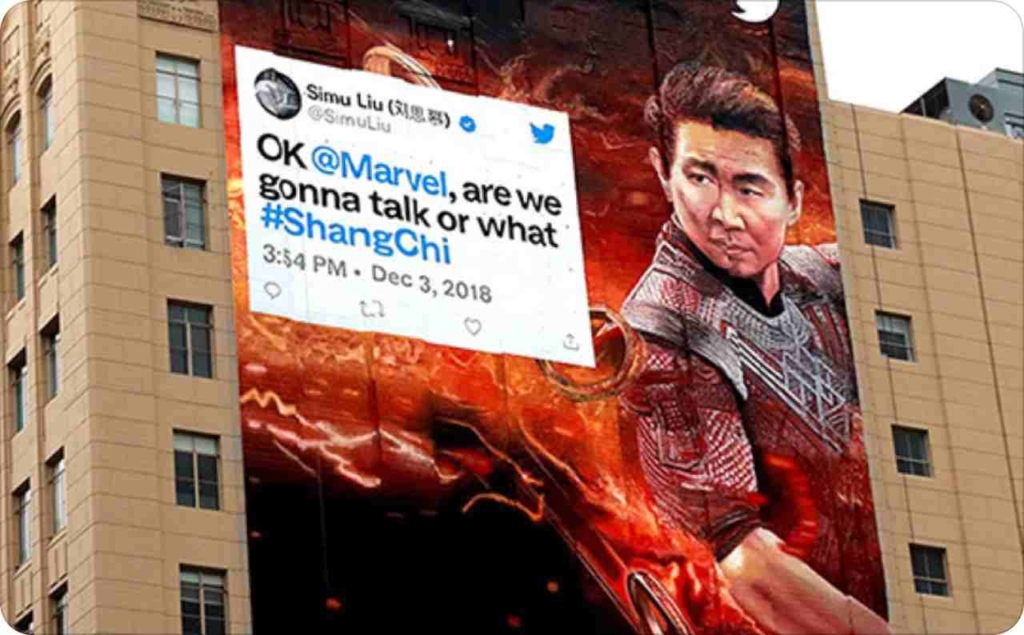
Twitter’s “If You Dream It, Tweet It” campaign is a sharp social media campaign example of turning everyday posts into proof of possibility. The idea was simple: real people once tweeted their dreams and then made them happen.
The social media marketing campaign paired screenshots of those original tweets with photos or videos showing the results — athletes, artists, and entrepreneurs who went from wish to achievement. Each story was quick, real, and perfectly built for sharing.
It became one of the most effective social media campaigns in platform branding because it turned the app into a mirror for ambition. Instead of focusing on features, Twitter showed what people could do with a voice and a moment of belief.
Why it worked:
- Real users made the message authentic and repeatable
- The format was simple, emotional, and native to the platform
- It turned optimism into engagement, not self-promotion
Try this: Highlight user milestones that connect to your product’s purpose. When your audience sees real wins they can relate to, your social media marketing campaign becomes a catalyst, not a commercial.
33. Everlane: “Know Your Factories”
Everlane’s “Know Your Factories” is one of the clearest social media campaign examples of transparency as marketing. The fashion brand built trust by showing exactly where and how its products are made, not just the final design.
The social media marketing campaign used short videos, behind-the-scenes photos, and worker stories from factories around the world. Each post shared real details about wages, working conditions, and sustainability efforts. It replaced vague “ethical fashion” claims with evidence.
This honest approach made it one of the most effective social media campaigns in retail. Instead of glamour, Everlane offered proof and that proof built a loyal, values-driven following.
Why it worked:
- Radical transparency turned process into storytelling
- Visual consistency made the brand instantly recognizable
- It showed accountability without self-congratulation
Try this: Show how your product comes to life. When audiences see the people and effort behind what they buy, trust grows naturally and your next social media marketing campaign becomes more credible before it even starts.
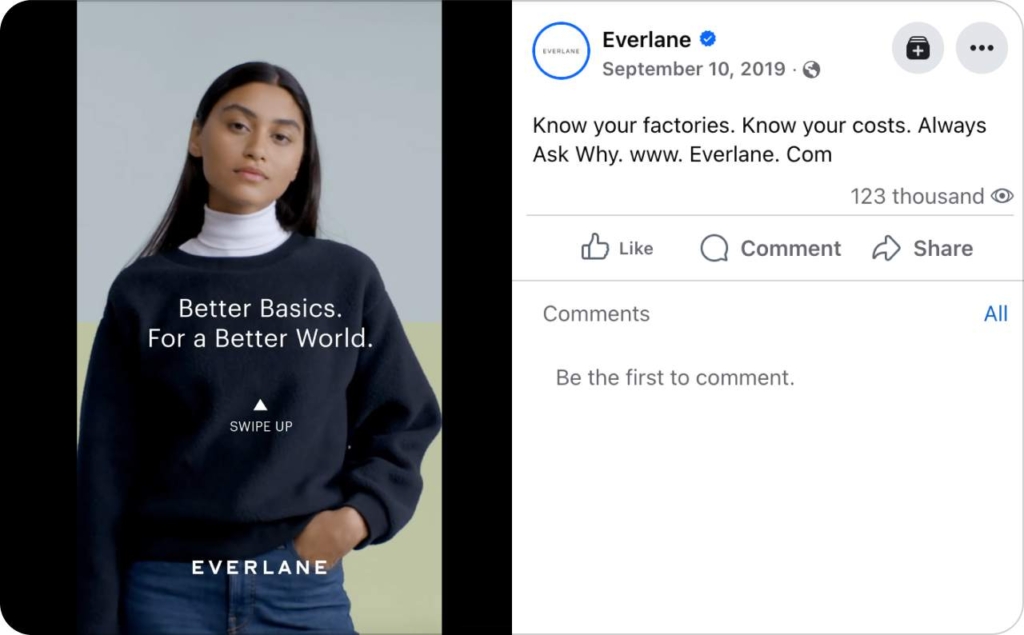
Photo source: Everlane on Facebook
34. Jet2: “Nothing Beats a Jet2 Holiday”
Jet2’s “Nothing Beats a Jet2 Holiday” is one of the most joyful social media campaign examples in the travel space. Instead of relying on glossy destination shots, the brand focused on emotion, capturing real holiday moments filled with laughter, warmth, and connection.
The social media marketing campaign featured authentic footage from families, couples, and friends enjoying their trips, paired with a simple message: no filter can beat the feeling of being there. It was bright, human, and refreshingly genuine in a category often dominated by perfection.
The result was one of the most effective social media campaigns in tourism marketing, reminding audiences that travel is about experience.
Why it worked:
- Real people created relatable emotion
- Consistent tone and color built strong brand recognition
- It focused on memories, not destinations
Try this: Center your campaign on feeling, not fantasy. When your audience sees themselves in your story, every post becomes a personal invitation and your social media marketing campaign turns inspiration into action.
35. Coca-Cola: “Happy Tears”
Coca-Cola’s “Happy Tears” is one of the most heartwarming social media campaign examples showing how emotion can modernize a global brand. The campaign introduced limited-edition bottles tied to uplifting digital moments — stories that make people smile instead of scroll past bad news.
Each bottle featured a QR code linking to short, feel-good videos collected from around the world. The social media marketing campaign spread across TikTok and Instagram, where users shared their own “happy tears” moments, turning positivity into participation.
It became one of the most effective social media campaigns in Coca-Cola’s recent history because it gave audiences something rare online: optimism that felt real.
Why it worked:
- Focused on emotion over promotion
- Encouraged user-generated joy, not polished ads
- Blended physical product with digital storytelling
Try this: Lead with emotion your audience wants more of — connection, laughter, relief. When people feel good sharing your story, your social media marketing campaign becomes a source of happiness, not just attention.
Why use an AI ad generator for social media campaigns
Creating ads should be fast, simple, and effective, that’s what Zeely’s AI Ad Generator for ads delivers. It helps you craft high-performing ads and videos in minutes, not hours, with no design or copywriting skills required.
- Quick ad creation. Generate static ads in a few taps and download them instantly in PNG format
- Higher conversions. AI analyzes campaign data and builds creatives optimized for clicks, sales, and ROI
- Proven templates. Choose from 100+ tested templates with AI-written copy and smart layouts tailored to your product
- Easy editing & branding. Adjust copy, colors, and visuals with built-in AI tools for background removal, cropping, and enhancement
- Scalable & integrated. Produce up to 20 ads per product, connect Meta accounts, and publish directly to Facebook or Instagram
- AI video maker. Create scroll-stopping video ads in under 7 minutes — complete with 500+ realistic AI avatars, sharp CTAs, and dynamic templates.
Ready to launch smarter, faster, and better? Try Zeely AI today and turn your next social media campaign into your easiest win yet.