The best copywriting ads: 30+ iconic examples that still work
Ever wondered why certain copywriting ads stay effective for decades? Zeely AI analyzed the most iconic campaigns to bring you the strongest examples and insights for your own copywriting.
Ad copywriting means writing words that help people understand and want what you offer. When someone searches “what is ad copywriting,” the answer is simple: it’s turning attention into action with clear, human language that fits your brand everywhere it appears.
A strong copywriting ad feels consistent, and that matters because 78% of customers want consistent brand experiences according to the Adobe Digital Trends Report.
Every ad has three jobs: the headline grabs attention, the body connects benefits to real needs, and the CTA or call to action gives a clear next step such as click, try, or buy.

Best copywriting ads
The advertising techniques show how the right words can stop a scroll, make someone laugh, or change how people see a brand. They turn product truths into emotion and action. This gallery of ad copy examples highlights campaigns that prove smart writing, not big budgets — makes ads unforgettable.
According to HubSpot’s 2025 State of Marketing Report, brands growing fastest this year are the ones combining strong creative with channel clarity, knowing exactly which formats and messages resonate where. Great copy isn’t just clever; it’s consistent across every touchpoint, driving growth through precision and voice alignment.
Headline-led ad copy examples
Some ads win through pure headline craft. These examples show how clarity, surprise, or restraint can make a brand instantly memorable.
1. Ricola “cough” series
The Ricola headline ad copy campaign turned a single sound into storytelling. Billboards showed just one word, “cough,” next to the Ricola logo. No visuals, no slogan, only a quiet reminder of the problem and the cure.
Why it works: It captures attention through simplicity and relevance. Everyone recognizes that sound, and Ricola claims it without shouting. The pause it creates in the reader’s mind becomes persuasion.
How to use it in your advertising: Build your next headline around one familiar moment instead of a full sentence. Use sound, emotion, or reaction as the hook. Let readers fill in the meaning, their own connection completes the ad.
2. Durex seasonal wordplay
Durex’s print and digital ads often play with context instead of visuals. Each season, they rewrite short, cheeky headlines that connect everyday events to their brand’s promise of safety and spontaneity. Lines like “Wrap up for winter” or “Easter comes once a year — make it count” use timing as humor, turning seasonal moments into brand relevance.
Why it works: It stays light but smart. The humor feels natural because it fits the season, not forced into it. Durex’s ad copywriting builds recognition over time without repeating itself.
How to use it in your advertising: Look at cultural or seasonal ad ideas your audience already relates to. Write short, clever headline copy that links those moments to your product benefit. Keep it playful, quick to read, and unmistakably in your brand voice.
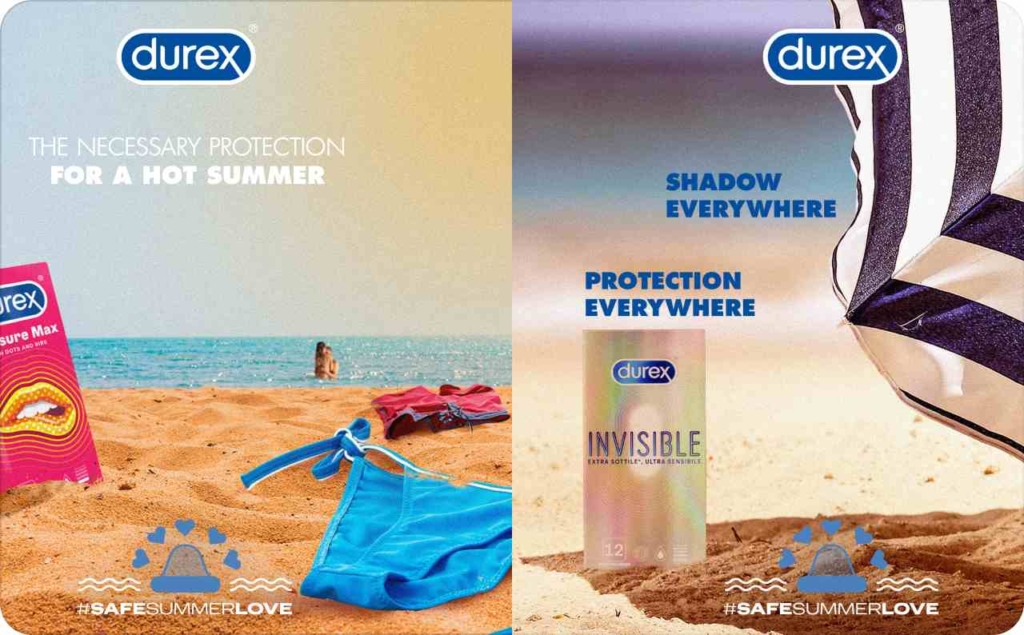
Photo source: Socialab
3. Hyposwiss honesty line
The Hyposwiss Bank ad campaign stood out by doing the opposite of what most financial ads do. Instead of promising instant wealth or certainty, it led with blunt honesty: lines like “Come to us before you need us” and “We can’t predict the market, but we can prepare for it.” The tone was calm, self-aware, and confident — everything you want from a brand that handles your money.
Why it works: This approach builds trust by rejecting exaggeration. The honesty itself becomes the selling point, which is rare in finance. It positions the brand as stable, transparent, and quietly competent.
How to use it in your advertising: Use ad copywriting that admits limits or tells the truth others avoid. People respond to transparency because it feels human. Try writing a headline that starts with what you can’t do, then show the real value behind it.
4. New York Lottery “Yeah, that kind of rich.”
The New York Lottery campaign used a single, confident line to capture what people actually dream about, like freedom, indulgence, and humor. The phrase “Yeah, that kind of rich” became shorthand for imagining a life that’s a little over the top but still relatable. Instead of describing prizes or odds, the ad focused on the feeling of winning and the casual tone people use when talking about it.
Why it works: It taps into aspiration without sounding forced. The line feels conversational, like something you’d say to a friend, which makes it memorable and repeatable.
How to use it in your advertising: Focus your ad copywriting on the emotion behind the product, not just its features. Use natural, everyday language that mirrors how your audience actually talks about their goals or desires.
5. Impact Employment Agency
The Impact Employment Agency ad turned a harsh truth into a sharp message. It showed two identical résumés side by side: one with a traditional Western name, one with a non-Western name. The headline read, “We see people, not names.” Simple, direct, and impossible to ignore, it made a clear statement about bias in hiring while positioning the agency as a fair, human-centered alternative.
Why it works: It transforms a social issue into brand credibility. The ad doesn’t lecture; it proves a point visually and verbally in one line. The honesty creates instant emotional connection and trust.
How to use it in your advertising: Use copywriting that reveals a truth your audience already senses but rarely sees brands address. Center the message on empathy and fairness. When your brand speaks for people, not at them, the copy becomes both purpose-driven and persuasive.
6. Triss
The Triss lottery ad campaign from Sweden took a humble, relatable approach to luck. Instead of showing luxury lifestyles, its ads featured ordinary people reacting with disbelief and joy to winning moments. The tagline “Plötsligt händer det,” which means “Suddenly it happens,” became iconic, turning unpredictability into a brand emotion rather than a promise.
Why it works: It makes luck feel human. The copy captures the surprise of good fortune without overselling it. People see themselves in those reactions, not distant winners in perfect lives.
How to use it in your advertising: Focus your ad copywriting on the moment your product delivers change. Write to the feeling before the outcome. Let the simplicity of an honest reaction carry the story instead of forcing excitement.
7. Bumble
The Bumble advertising campaign built its strength on tone and perspective. Instead of using clichés about dating, it spoke directly to women with confident, conversational headlines like “Be the CEO your parents always wanted you to marry.” The copy reframed dating as empowerment, not pursuit, aligning perfectly with the app’s core idea of women making the first move.
Why it works: It turns product functionality into a cultural message. The writing feels bold yet friendly, and the humor reinforces confidence instead of irony. Every line sounds like it came from a friend, not a brand.
How to use it in your advertising: Write ad copy that reflects your audience’s values, not just your product’s features. If your product challenges a norm, let the copy own that stance with clarity and warmth. Speak like your users would and let that voice lead the brand.
8. Newcastle Brown Ale “No Bollocks”
The Newcastle Brown Ale campaign became famous for cutting through beer-industry hype with blunt honesty. The tagline “No Bollocks” summed up the brand’s personality: straightforward, witty, and self-aware. Instead of glamorous lifestyle scenes, the ads poked fun at typical beer marketing and spoke like real people do at a pub.
Why it works: It rejects every advertising cliché in its category. The humor feels earned because it’s rooted in truth — beer drinkers are tired of exaggerated promises. That honesty turns skepticism into loyalty.
How to use it in your advertising: Write ad copy that trims away the polish. If your audience is already skeptical, meet them where they are. Be transparent, use humor naturally, and make your tone feel like conversation, not a campaign.
9. New York City Taxi “If you hate waiting, raise your hand.”
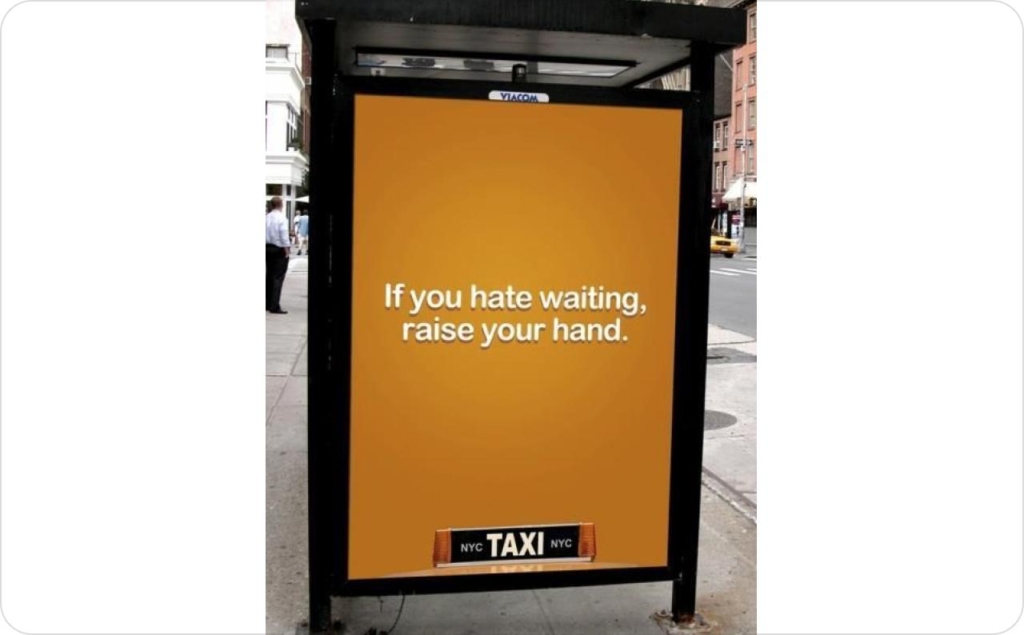
The New York City Taxi ad turned an everyday frustration into a perfect one-line solution. The headline “If you hate waiting, raise your hand.” appeared on the sides of taxis across the city, transforming each cab into its own moving billboard. It captured New York’s impatient energy while turning a habit into a CTA.
Why it works: It speaks the audience’s language. The line is short, witty, and action-driven, perfectly matching the rhythm of city life. It turns a product feature, instant pickup, into a human behavior.
How to use it in your advertising: Write ad copy that mirrors how your audience actually talks and acts. Frame your product as the obvious fix for a daily annoyance. When the message fits into real behavior, it doesn’t just advertise, it connects.
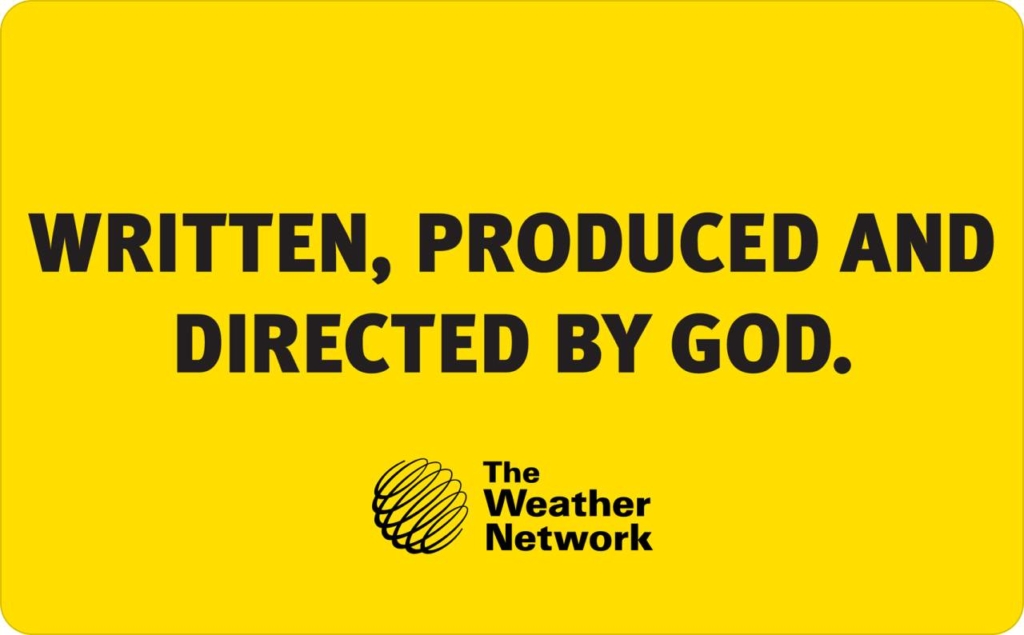
10. The Weather Network “Written, produced and directed by God.”
The Weather Network print ad used one clever line to make something ordinary feel dramatic. The headline “Written, produced and directed by God.” sat beneath an image of a stormy sky, blending humility with humor. It positioned the channel as the place to witness nature’s unpredictability while keeping the tone light and memorable.
Why it works: It gives personality to a factual brand. Instead of technical language, it uses creativity and irony to make weather coverage feel cinematic. The mix of reverence and wit keeps it both smart and approachable.
How to use it in your advertising: Use headline-driven ad copy to reframe something routine as remarkable. Add a touch of humor or unexpected perspective to make familiar subjects feel fresh. The goal is to surprise without overstating — clarity first, clever second.
11. The Invisible Orthodontist
The Invisible Orthodontist ad campaign used simplicity and confidence to make a complex service feel easy. Headlines like “Straight teeth. No braces.” explained the value in four words. The copy focused on clarity over cleverness, letting direct language do the heavy lifting while instantly answering the question every potential patient has.
Why it works: It proves that plain language can be powerful. The message removes doubt, communicates benefit, and shows empathy for what people actually want.
How to use it in your advertising: Use ad copywriting that cuts straight to the benefit. If your audience hesitates over complexity, remove the friction. Write short, declarative lines that promise clarity and deliver confidence.
12. PETA
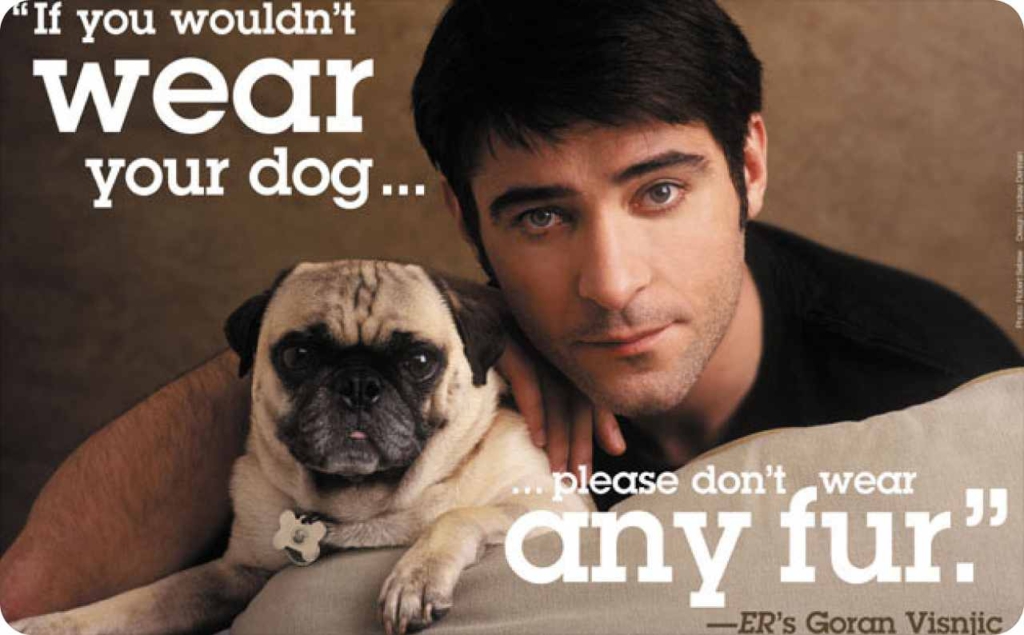
The PETA print and video ads often rely on emotional shock balanced with brevity. A striking example used the line “If you wouldn’t wear your dog, don’t wear fur.” The words confront the audience with their own logic, forcing empathy without overexplaining. The message is bold, simple, and hard to ignore, exactly what the brand stands for.
Why it works: It transforms empathy into action through direct comparison. The clarity and discomfort make people stop and think, which is the point. It turns moral awareness into instant visual understanding.
How to use it in your advertising: Use ad copy that makes people feel something real, not just informed. Replace general claims with human comparisons or questions that reframe the issue. Emotion with clarity always outperforms volume.
13. UNICEF
The UNICEF ad campaign uses quiet power instead of shock. One memorable headline read “This poster saves lives.” It wasn’t metaphorical, the poster included a QR code that let passersby donate directly to child vaccination programs. The simplicity of the line made people stop, read, and act within seconds.
Why it works: It fuses message and action. The copy doesn’t describe impact; it is the impact. By showing how even a small interaction matters, it makes the reader part of the solution instantly.
How to use it in your advertising: Write ad copy that turns engagement into purpose. Remove extra words and make the benefit immediate. When your copy connects meaning to action, people don’t just understand your message, they join it.
14. Romanian Police
The Romanian Police road safety ads became known for their mix of humor and blunt truth. One of the standout headlines read “Drive drunk and meet the ones you love sooner.” It’s dark, direct, and instantly unforgettable. Instead of relying on fear tactics or graphic images, the ad uses irony to make its point with a single, chilling twist.
Why it works: It flips tone to create impact. The calm, almost polite phrasing contrasts with the gravity of the message, which makes it linger. The honesty earns attention without feeling sensational.
How to use it in your advertising: Use copywriting that plays with contrast — pair a calm delivery with serious meaning. When the tone feels real instead of staged, readers process the message emotionally and intellectually at once.
15. Cancer Patients Aid Association
The Cancer Patients Aid Association campaign used emotional reversal to drive awareness about secondhand smoke. One striking print ad showed a child exhaling cigarette smoke beside the headline “Cancer cures smoking.” The shocking inversion forces readers to confront cause and effect in just three words. It’s uncomfortable, but unforgettable.
Why it works: It compresses an entire argument into a single phrase. The reversal technique makes people stop, reread, and process the truth behind it. The message doesn’t explain, it exposes.
How to use it in your advertising: Use ad copywriting that reframes cause and effect. Instead of listing harms or benefits, flip the logic to make the reader arrive at the conclusion themselves. The power lies in discovery, not instruction.
16. The Lung Association, British Columbia
The Lung Association BC campaign used wordplay to make a serious topic feel instantly clear. One of its standout headlines read “If you can read this, you’re too close.” Paired with a hazy, smoke-filled background, the line doubled as both a warning and a design element. It drew readers in only to push them back — a perfect embodiment of its message.
Why it works: It’s interactive without being gimmicky. The copy uses spatial awareness and humor to deliver a health warning people actually remember. The concept reinforces behavior through experience, not lecture.
How to use it in your advertising: Write ad copy that makes the audience physically or mentally engage with your message. When people feel the point rather than just read it, the copy becomes unforgettable.
17. Tivibu
The Tivibu television service ads used visual humor paired with sharp ad copywriting to show the ease of on-demand viewing. One headline read “Pause life. Not just TV.” The line reframed a technical feature, the pause button, into an emotional benefit about control and freedom. It turned convenience into empowerment with only a few words.
Why it works: It translates a product function into a feeling. The phrasing is light, relatable, and instantly connects everyday behavior with the brand’s core promise.
How to use it in your advertising: Focus your ad copy on how the feature improves someone’s day, not how it works. When you link technology to emotion, even a small detail can sound meaningful and human.
18. Volkswagen print classics
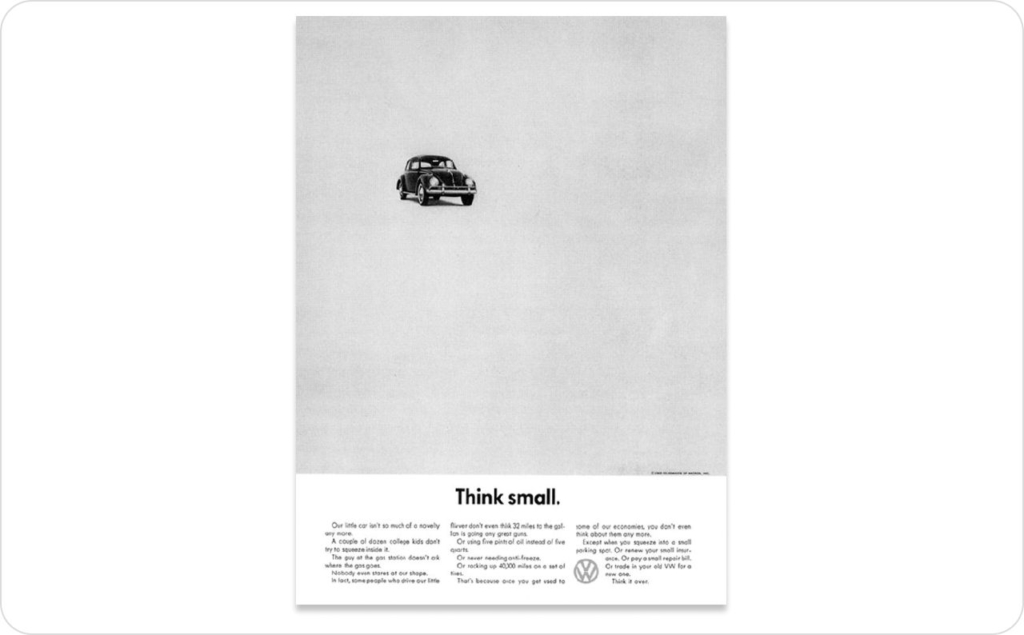
The Volkswagen print ads became legendary for redefining simplicity in automotive marketing. Headlines like “Lemon” and “Think small” proved that honesty, restraint, and wit could make a car brand iconic. Each ad paired minimalist visuals with direct, self-aware ad copy that invited trust by breaking the norms of flashy car advertising.
Why it works: It uses humility as persuasion. Instead of overpromising, the copy turns understatement into confidence. The humor feels intelligent, and the design lets every word breathe.
How to use it in your advertising: Write copywriting ads that say less, but mean more. Be specific, not loud. When you remove every unnecessary claim, what remains feels true and that’s what people remember.
19. Porsche “Kills bugs fast”
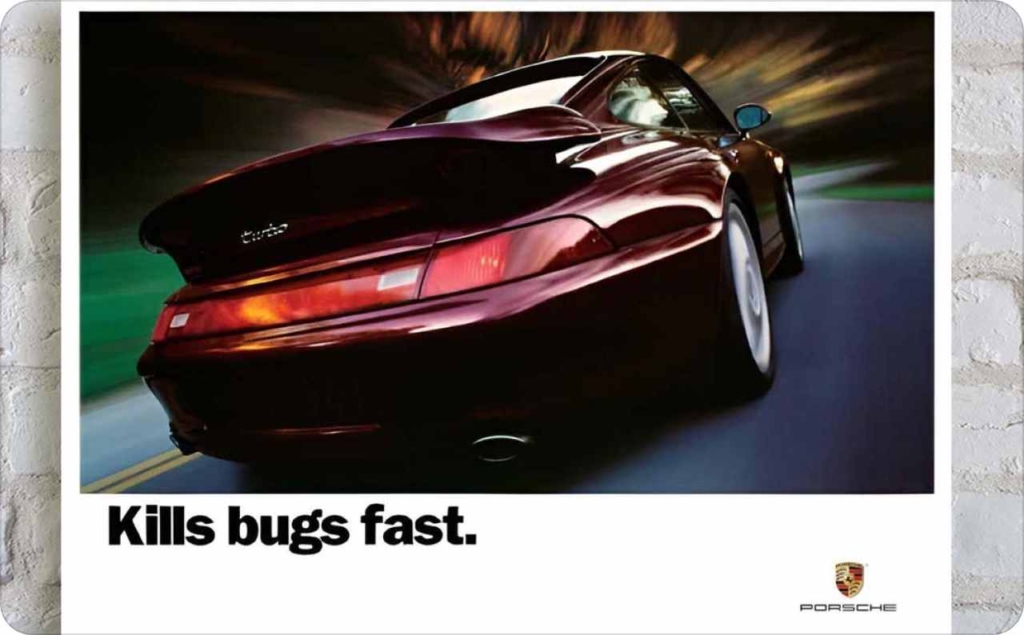
The Porsche print ad is one of the smartest blends of humor and precision in automotive ad copywriting. The headline “Kills bugs fast” appeared under an image of the car’s sleek front, hinting at speed through double meaning — bugs on the road and insect spray. It made readers smile while communicating the product’s performance in just three words.
Why it works: It connects product truth with wit. The humor is subtle, the message crystal clear, and the tone confident without arrogance. It shows that cleverness works best when it’s grounded in fact.
How to use it in your advertising: Use headline ad copy that fuses personality with proof. Find a phrase that means more than one thing and ties directly to your product’s real strength. Keep it short, smart, and true.
Honesty and inversion
Some of the best copywriting ads earn trust by flipping expectations. Instead of pretending to be perfect, they admit flaws or use mistakes to prove authenticity.
20. Avis “We try harder”
The Avis ad campaign embraced its underdog status against Hertz with a headline that said, “When you’re only No. 2, you try harder.” It turned weakness into virtue and honesty into confidence. Rather than hiding its position, Avis made it the reason to believe.
Why it works: It humanizes the brand. Admitting you’re second makes readers lean in, it feels honest, not defensive. That vulnerability builds more credibility than any claim of superiority.
How to use it in your advertising: Use ad copywriting that reframes a disadvantage as proof of effort or care. Show customers what you do better because you’re not the biggest or loudest.
21. KFC “FCK”
After a chicken shortage in the UK, KFC responded with an ad that rearranged its own logo to spell “FCK.” The headline sat above an empty bucket, paired with a short apology. No excuses, no PR spin, just self-awareness and humor.
Why it works: It turns a failure into brand humanity. The honesty disarms criticism and replaces anger with amusement. It feels real because it is.
How to use it in your advertising: Don’t hide mistakes; own them with clarity and wit. Write ad copy that acknowledges the moment directly. When you communicate like a person, not a press release, people forgive faster and remember longer.
Distinctive voice
The most memorable copywriting ads don’t just sell products, they sell a point of view. A distinctive voice turns plain words into brand identity, recognizable even without a logo.
22. The Economist
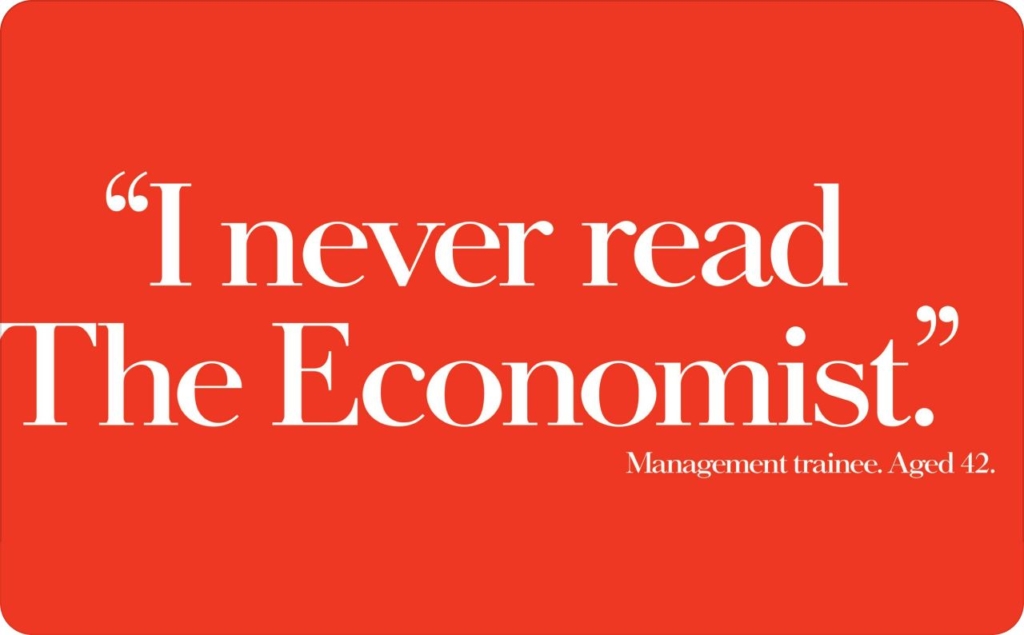
The Economist print ads built an empire on intelligence and restraint. Headlines like “I never read The Economist. Management trainee, aged 42.” or “Great minds like a think.” used wit to make readers feel both challenged and included. The tone was sharp, confident, and instantly identifiable — intelligence as brand personality.
Why it works: It speaks up to the audience, not down. The copy assumes readers are smart, curious, and ambitious, turning intellect into belonging. That mutual respect keeps The Economist’s tone both exclusive and inclusive.
How to use it in your advertising: Craft ad copywriting with a distinct attitude. Decide how your brand would sound if it were a person, dry, curious, daring, or calm, and write every line from that voice. Consistency builds identity faster than volume.
23. Oatly
The Oatly ad campaigns redefined what a brand voice could sound like. Their copywriting ads speak with self-aware humor, using everyday tone and meta commentary like “It’s like milk, but made for humans.” or “This ad will not change your life.” The writing feels handwritten, conversational, and completely unpolished on purpose, turning casual honesty into identity.
Why it works: It builds connection through transparency and personality. Oatly doesn’t try to sound like an ad; it sounds like a person thinking out loud. That difference makes readers trust and remember the brand.
How to use it in your advertising: Write ad copy that embraces imperfection. Drop the corporate polish and speak like your audience does. When your tone feels human and real, people listen longer and believe faster.
24. Quip email opt-in
The Quip toothbrush brand turned something dull, signing up for emails, into a clever moment of personality. Instead of a generic line like “Join our newsletter,” the opt-in read “Open wide.” It was simple, playful, and perfectly on brand. That one phrase carried the brand’s humor and confidence while tying directly to what the product does.
Why it works: It uses brand tone to make a boring step feel fun. The voice turns a routine CTA into a small delight, reinforcing trust and memorability.
How to use it in your advertising: Apply copywriting that turns the mundane into brand voice. Look for places where you normally write filler text — forms, buttons, microcopy, and give them personality. Small, smart lines often create the biggest emotional lift.
Cultural stance or timely tie-ins
Some of the best copywriting ads go beyond selling, they take a stand or speak to the moment. These campaigns align brand purpose with cultural relevance, turning awareness into action and emotion into identity.
25. Nike “Believe in something”
The Nike “Believe in something” campaign featuring Colin Kaepernick transformed a social movement into brand expression. The headline read “Believe in something. Even if it means sacrificing everything.” It connected Nike’s “Just Do It” philosophy to courage and conviction, showing that belief can be both personal and public.
Why it works: It fuses brand message with cultural truth. Nike didn’t chase attention, it reinforced a value system built over decades: resilience, grit, and self-belief. The copy made activism feel consistent with the brand’s story, not an add-on.
How to use it in your advertising: Write ad copy that joins real conversations, not just trending topics. Anchor every statement in what your brand genuinely stands for. When values and timing align, the message earns both respect and reach.
26. Patagonia “Buy less, demand more”
The Patagonia ad campaign challenged the logic of consumerism with its simple, counterintuitive message: “Buy less, demand more.” It encouraged people to purchase fewer, higher-quality items and hold brands accountable for sustainability. The line turned restraint into activism, positioning Patagonia as both ethical and practical.
Why it works: It aligns perfectly with the brand’s mission. The copy rejects overconsumption while deepening loyalty among conscious customers. It proves that sometimes the strongest sales message is one that sounds like the opposite.
How to use it in your advertising: Use copywriting that reflects conviction, not convenience. If your brand stands for something bigger than profit, let the words make that stance unmistakable. Clear beliefs, expressed simply, cut through louder noise.
27. Walmart x Mean Girls
The Walmart x Mean Girls campaign reimagined a pop-culture classic to announce Walmart’s Black Friday deals. Using familiar quotes like “Get in, loser, we’re going shopping,” the ads tied nostalgia to action in a way that felt playful, not forced. The tone blended humor, timing, and recognition — three pillars of modern ad copywriting that speak directly to digital audiences.
Why it works: It meets culture where it lives. The campaign used a beloved movie to create instant emotional connection while promoting new offers. The copy felt self-aware, letting fans feel in on the joke.
How to use it in your advertising: Write copy that borrows the language of your audience’s favorite moments. Cultural tie-ins work when they respect the original and make sense for your brand. Keep it light, clever, and timed to real conversation, not nostalgia for its own sake.
28. Solo Stove × Snoop “I’m going smokeless”
The Solo Stove and Snoop Dogg campaign became an instant viral moment built entirely on a line of copy. Snoop announced he was “giving up smoke,” a statement that initially read like a personal confession. Days later, the reveal showed it was about the Solo Stove smokeless fire pit, turning wordplay and celebrity tone into cultural gold.
Why it works: It blends mystery, timing, and humor. The double meaning grabbed headlines worldwide before the product even appeared. The copy used language true to Snoop’s persona while perfectly matching the brand’s “smokeless” feature.
How to use it in your advertising: Use ad copywriting that plays with curiosity and timing. A well-placed tease can create conversation before your reveal. When tone, voice, and concept align this seamlessly, one line can carry an entire campaign.
Tension and contrast
Some of the best copywriting ads work because they balance opposites — humor and fear, calm and urgency, charm and consequence. This tension keeps audiences watching, thinking, and remembering long after the message ends.
29. Dumb Ways to Die
The Dumb Ways to Die campaign from Metro Trains Melbourne used a cheerful song and cute animated characters to deliver a serious safety message. The catchy lyrics listed ridiculous ways to die, then connected them to careless behavior around trains. The contrast between tone and topic made it one of the most viral public safety ads ever created.
Why it works: It turns dark subject matter into something people actually want to share. The humor disarms, the melody sticks, and the message lands without scolding. It’s proof that lightness can make seriousness more effective.
How to use it in your advertising: Combine copywriting with unexpected tone. If your topic is heavy, use warmth or irony to keep attention. The right tension between message and mood makes your idea both memorable and repeatable.
30. Nike “If you let me play”
The Nike “If you let me play” campaign gave voice to young girls describing what sports could mean for their confidence, health, and future. Each line began with the same phrase — “If you let me play…”, building rhythm, emotion, and quiet strength. The copy didn’t shout empowerment; it let real voices speak it.
Why it works: It uses repetition to create empathy and movement. The tone is hopeful, not sentimental, turning permission into empowerment. The copy reflects Nike’s belief that sport changes more than bodies, it changes lives.
How to use it in your advertising: Write ad copy that sounds like it comes from the people you serve, not the brand. Use rhythm, truth, and restraint to let emotion grow naturally. When real voices lead, belief follows.
Medium-native ideas
Some of the best copywriting ads succeed because they’re built for the platform itself. They don’t fight the medium, they play with it.
31. Geico “Unskippable”
The Geico “Unskippable” campaign turned YouTube’s five-second skip rule into the entire concept. The ad opened with “You can’t skip this ad because it’s already over.” Then, the actors froze while everyday chaos unfolded around them. The copy acknowledged user behavior and flipped irritation into curiosity.
Why it works: It understands how people actually watch. The humor comes from timing and context, not just words. The copy doesn’t interrupt, it collaborates with the audience’s habits.
How to use it in your advertising: Write ad copy that uses the platform’s quirks to your advantage. Think about what viewers do before, during, or after your message, and design for that rhythm. Ads that feel native get attention without forcing it.
32. Depaul “Street corners”
The Depaul “Street corners” campaign addressed homelessness through a clever use of location and context. The ads appeared directly on street corners, each reading “If this corner were my home, I’d be cold too.” The line turned an everyday place into a mirror, forcing passersby to imagine the experience of living there.
Why it works: It makes the message inseparable from its setting. The copy transforms space into storytelling, no image or logo could make the point clearer. The empathy comes from realization, not instruction.
How to use it in your advertising: Create copywriting that interacts with its environment. Let the medium carry meaning as much as the words do. When the copy feels physically tied to the place it appears, the message becomes impossible to ignore.
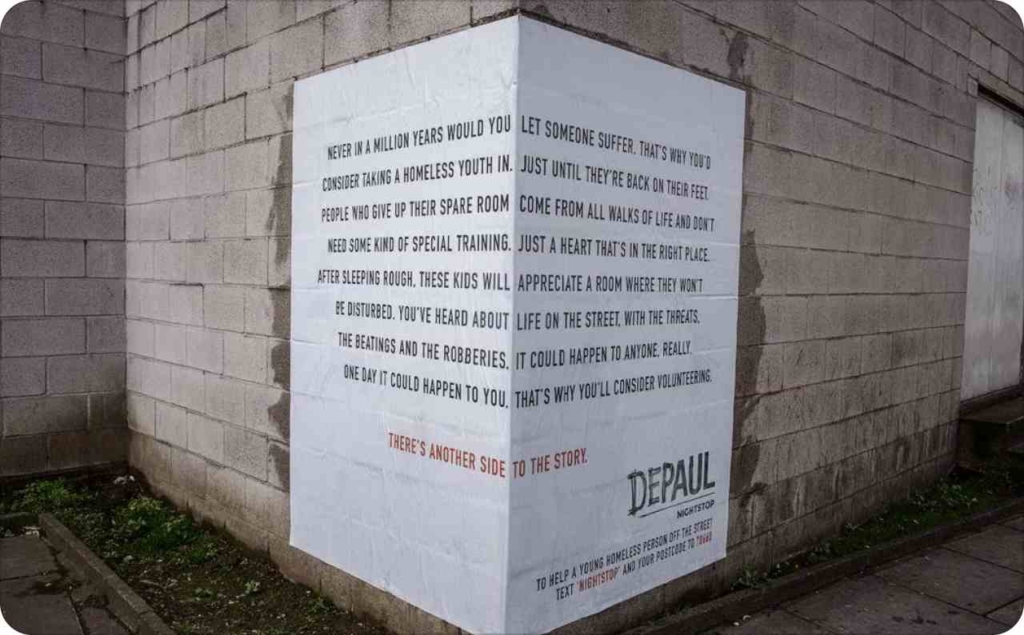
Photo source: Courtesy of Publicis London/Depaul UK
Long-form that earns attention
Some of the best copywriting ads don’t rush the message, they earn the time to tell it. Long-form works when every sentence deepens connection instead of adding clutter.
33. Bombas mission video
The Bombas mission video opened with the company’s founding problem: socks are the most requested clothing item in homeless shelters. From there, the copy unfolded with empathy and precision, explaining how each purchase donates a pair to someone in need. The storytelling felt human, not scripted, combining clarity about the product with quiet moral weight.
Why it works: It balances transparency and emotion. The writing avoids drama, instead building trust line by line. Every detail serves the story of purpose turned into action.
How to use it in your advertising: Use long-form ad copywriting when your story deserves depth. Let facts and feeling work together, show what you do and why it matters. When authenticity leads, attention follows.
34. Apple “Think different”
The Apple “Think different” campaign used long-form storytelling to celebrate creativity and rebellion. The ad opened with poetic narration — “Here’s to the crazy ones…”, and continued with a rhythmic tribute to those who challenge convention. It positioned Apple not as a tech company but as a symbol of innovation and individuality.
Why it works: It turns philosophy into brand identity. The copy never mentions products; instead, it speaks to aspiration. That emotional precision made the ad timeless and deeply personal.
How to use it in your advertising: Write long-form ad copy that elevates your purpose beyond function. When your words capture belief instead of product specs, you build loyalty rooted in meaning, not just utility.
35. Heinz “Pass the Heinz”
The Heinz “Pass the Heinz” campaign famously brought Don Draper’s fictional pitch from Mad Men to life. The ads showed close-up images of burgers, fries, and steak, each missing only one thing, and the headline simply said “Pass the Heinz.” There was no bottle, no logo in the center, just suggestion and appetite.
Why it works: It trusts the audience’s intelligence. The copy leaves space for participation, turning recognition into engagement. The restraint makes the brand feel iconic without saying a word about itself.
How to use it in your advertising: Write ad copy that invites completion instead of giving everything away. When readers fill in the gap themselves, they become part of the idea. Confidence in silence often speaks louder than long explanation.
36. Burger King “Confusing times”
The Burger King “Confusing times” campaign turned social uncertainty into relatable humor. The long-form ad copy listed everyday contradictions — “You crave connection, but want personal space. You want to be unique, but fit in.” It ended with the brand’s message: “It’s okay. You can have the Whopper your way.” The ad used empathy and wit to show that small comforts still matter.
Why it works: It meets people where they are emotionally. The writing acknowledges confusion without pretending to solve it, giving readers relief through understanding. It’s human, self-aware, and perfectly timed.
How to use it in your advertising: Use copywriting that reflects the mindset of your audience right now. When your words mirror their inner dialogue, even a simple product message feels honest and grounding.
37. Proper Chips “Done properly”
The Proper Chips “Done properly” campaign used long-form storytelling to explain what “proper” really means. The copy described every step of the process, careful sourcing, real ingredients, and no shortcuts, then tied it back to pride in the finished product. The headline “Done properly” became both a statement of craft and a quiet challenge to competitors.
Why it works: It turns detail into character. The writing builds rhythm and credibility without sounding self-congratulatory. Readers walk away believing the brand’s promise because every sentence proves it.
How to use it in your advertising: Use long-form ad copywriting to show care through specifics. Describe the process, not just the product. When each line earns belief instead of demanding it, your story feels genuine and complete.
38. Iceland & Greenpeace “Rang-tan”
The Iceland and Greenpeace “Rang-tan” campaign used storytelling and animation to expose the environmental cost of palm oil. The ad followed a young girl who finds an orangutan in her room, then learns its home was destroyed for palm oil production. The narration ended with “There’s a Rang-tan in my bedroom and I don’t know what to do.” It turned an ecological crisis into a personal, emotional story.
Why it works: It combines innocence with urgency. The child’s voice softens a serious issue, allowing empathy to lead before information. The copy uses simplicity, not shock, to make the message unforgettable.
How to use it in your advertising: Use ad copywriting that humanizes global issues. Replace data with story, and let emotion carry the message. When empathy builds before education, the impact lasts longer.
39. Old Spice “The man your man could smell like”
The Old Spice “The man your man could smell like” campaign blended comedy, speed, and rhythm to make long-form copy feel like entertainment. Delivered in a single unbroken monologue, the script jumped from absurd imagery to confident persuasion, ending with the instantly iconic line “I’m on a horse.” Every second of dialogue reinforced the product’s tone — clever, bold, and self-aware.
Why it works: It reinvents product demonstration through humor. The rapid-fire ad copywriting keeps attention by surprising the viewer at every turn, turning what could have been cliché into cultural legend.
How to use it in your advertising: Write long-form copy that earns its pace. Use rhythm, surprise, and personality to make your message feel alive. When storytelling and style move together, even a 60-second ad becomes unforgettable.
How to write great copy for ads
Good ad copywriting doesn’t start with fancy words, it starts with focus. Every line should have one clear job: to make the next line irresistible.
Five quick moves:
- Single-minded proposition: Know the one thing your reader should remember and stick to it
- Headline variants: Write 10 versions, not one. The first ideas are obvious; the tenth one sticks
- Proof line: Back up your claim with something concrete — data, a quote, or a real story
- CTA: Make the action clear, not clever. Tell people exactly what to do next
- Medium match: Adjust tone and length for where it lives — feed, print, video, or search
| Good copywriting ads | Great copywriting ads | |
| Focus | Describe features | Reveal a single human truth |
| Tone | Friendly but generic | Distinct, unmistakable voice |
| Structure | Clear intro and CTA | Seamless flow that feels natural |
| Proof | Mentions benefits | Shows real evidence or story |
| Impact | Grabs attention | Changes perception or behavior |
Create winning ad copy instantly with AI ad generator
Writing great ads takes time, testing, and clarity, but Zeely AI makes it effortless. As an AI advertising generator, it helps you turn ideas or product links into ready-to-run campaigns in minutes. The platform studies what works across good copywriting ads and the world’s great copywriting ads, then adapts tone, headline rhythm, and CTAs to your brand voice automatically.
You can generate headline and body copy variations, test which message converts best, and build visuals to match — all in one place. Whether you’re writing for Meta, TikTok, or display, Zeely AI aligns every version with platform specs and persuasive flow.
It’s like having a trained copywriter and designer working side by side — fast, clear, and endlessly adaptable. Try Zeely AI today, generate your first ad set in minutes, test three headline variations, and watch your next campaign launch with confidence.