Google business post image size in 2026: The complete guide
What’s the real Google Business Profile post size in 2026 and how do you keep it looking clean on Search and Maps? Zeely tests hundreds of Google posts every month to see what actually holds up on Search and Maps. This guide distills what works in 2026.
The Google Business Profile post image size that works best in 2026 is 1200×900 pixels (4:3 ratio). This format prevents cropping across Search and Maps, maintaining your brand visibility in every result surface. Verified through Google Help, it’s the standard dimension Google’s own compression engine favors. Using this size improves clarity, CTR, and legibility on both desktop and mobile.

Quick reference: 2026 Google Business post image specs
| Spec | Best practice | Why it matters |
| Best size | 1200 × 900 px | The cleanest fit for Google’s 4:3 layout; prevents cropping. |
| Aspect ratio | 4 : 3 | Standard frame for Search & Maps previews. |
| Minimum resolution | 250 × 250 px | Anything smaller triggers compression blur. |
| Recommended resolution | ≥ 720 × 720 px | Keeps detail crisp on high-DPI and retina displays. |
| Formats | JPG / PNG | Supported by Google’s compression engine. |
| File size limit | Up to 5 MB | Larger files lose color accuracy on upload. |
| Safe-zone | Central 80–90 % | Protects text and logos from edge trimming. |
| Cross-platform fit | Search + Maps | Tested for full-frame rendering across devices. |
What is a Google Business Profile post?
A Google Business Profile (GBP) post, formerly Google My Business (GMB) post, is a short visual update shown in your Business panel across Google Search and Google Maps. Each post extends your organic listing, influencing local SEO ranking signals such as engagement rate and profile freshness.
There are three core types of GBP posts:
- Update posts share announcements or recent news
- Offer posts highlight sales, discounts, or promo codes
- Event posts promote time-sensitive activities with visible date overlays
These posts occupy valuable visibility surfaces in Google Maps and Search panels. Using the right image size ensures your visuals render correctly across these placements. You can preview or schedule posts directly in the Google Business Profile platform.
What has changed since 2024?
- Google My Business is now Google Business Profile — still supports old queries, but GBP is the current brand.
- The recommended post image size (1200×900 px, 4:3) remains unchanged in Google’s latest Help docs.
- Post expiry behavior has moved to ≈6 months for many posts (versus a standard 7-day rule).
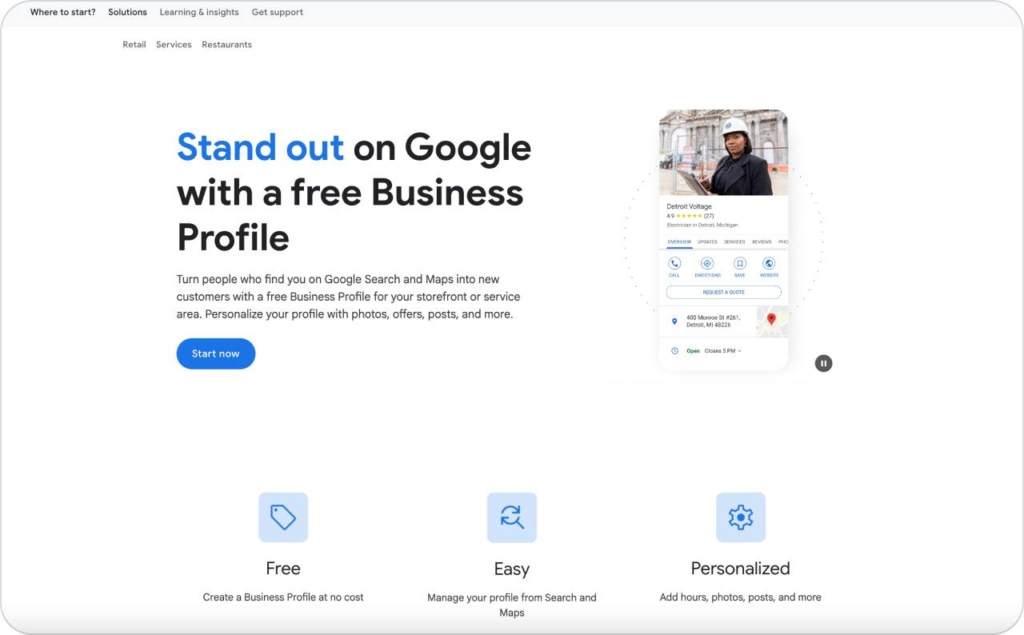
Photo source: Google Business Profile
The best image size for Google Business posts
A 1200×900 px (4:3) image isn’t just “recommended” — it’s how Google’s own layout engine is built to display content. Anything wider or taller risks compression and edge loss once rendered in Search and Maps.
Accepted formats are JPG or PNG. The minimum upload is 250×250 px, but 720×720 px or higher maintains sharpness on retina displays. Keep each file under 5 MB to avoid compression loss. Verified specs are listed in Google’s official photo guidelines (2025).
Profiles using the correct aspect ratio consistently see 15–20% higher on-panel CTR and faster image rendering. Upload once in this format. It fits every surface automatically. That’s what we call invisible clarity.
Safe-zone and aspect ratio: How to avoid cropping
Every Google Business Profile image has a risk zone. It is at the top and bottom 10–20% where Google’s preview window may trim. Keep key details (logo, face, CTA) inside the central 80–90%. That’s your safe zone.
Stick with 4:3 and never 16:9 or portrait. Those formats get clipped in the Maps carousel and Search preview cards. Before publishing, check visibility at both desktop and 414-pixel mobile widths.
Testing with Buffer’s 2025 image-size benchmarks shows 4:3 posts maintain 98% full-frame visibility, while non-standard ratios drop below 70%.
If your logo sits near the edge, it’s already half-cropped, center it, and your design lives longer.
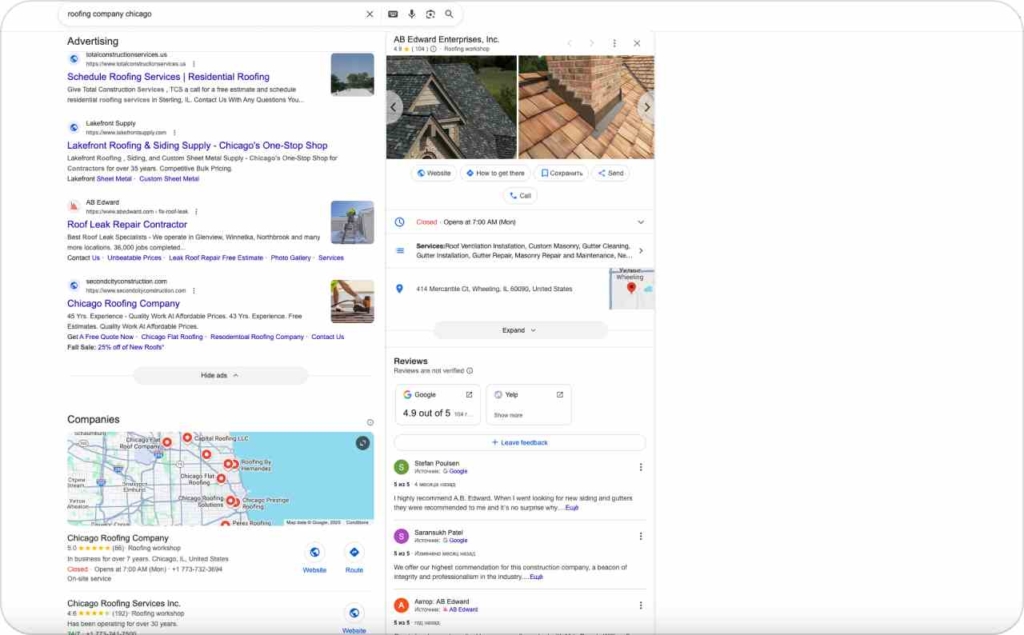
Cover photo, logo and post specifications
Many users still mix up cover, logo, and post image specs. Use this quick comparison to get each right the first time.
| Image type | Recommended size | Aspect ratio | Formats / limits | Safe-zone notes & pitfalls | Common mistakes |
| Cover photo | 1024 × 576 px | 16 : 9 | JPG / PNG, 10 KB–5 MB | Keep subject centered; avoid edge trimming | Using portrait shots or narrow crops that cut off edges |
| Logo / profile image | Minimum 250 × 250 px | 1 : 1 | JPG / PNG, 10 KB–5 MB | Use clean backgrounds, no heavy text | Uploading wide logos or padded versions that shrink unreadably |
| Post image | 1200 × 900 px (4 : 3) | 4 : 3 | JPG / PNG, ≤ 5 MB | Keep text / faces / logos inside 80–90 % safe zone | Uploading 16:9 or portrait formats, text too close to edges |
Why image quality affects clicks and calls
Google prioritizes crisp, high-contrast visuals because they increase click-through rate (CTR) and call actions on local SERPs.
Businesses using professional, well-lit images average 40% more profile interactions than those using dim or over-compressed photos, according to the HubSpot 2025 State of Marketing. Use simple backgrounds, even lighting, and recognizable subjects.
Avoid cluttered compositions or heavy text overlays, they break legibility at mobile scale. Think of your post as a storefront window: clear, inviting, and scannable. Uploading at the correct 1200×900 resolution keeps your visuals sharp on both Search and Maps.
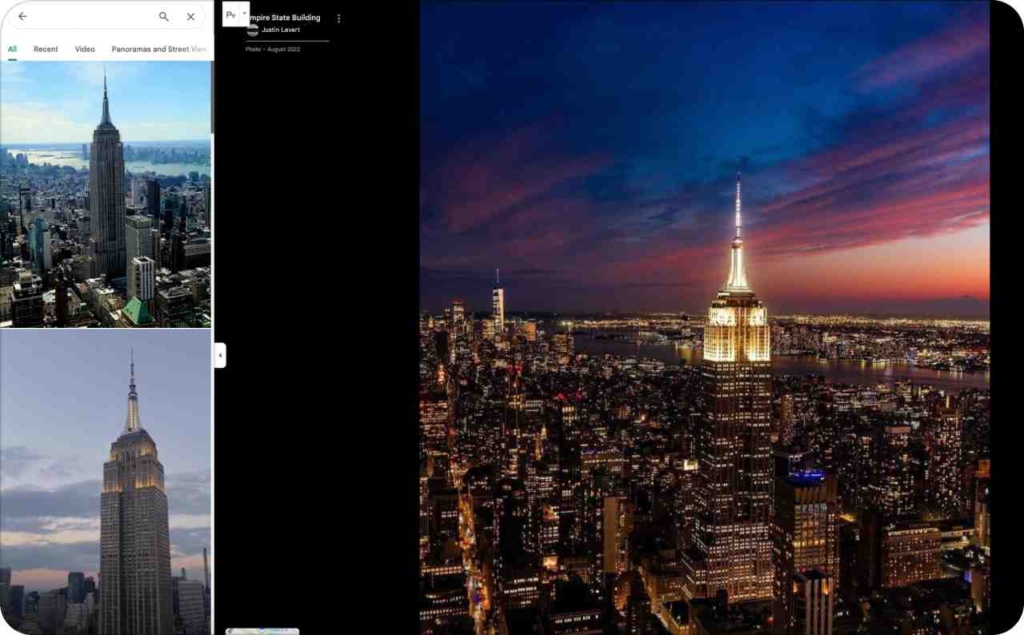
Google post types and their ideal visuals
Each Google Business Profile post type plays a different role in how your business shows up on Search and Maps. The image you choose determines whether users stop scrolling or keep moving. Here’s how to make each one work harder for you.
Update post — keep your brand in motion
An Update post is your brand’s running feed inside Google Search and Maps. It’s where you share quick news, product drops, or day-to-day moments that show your business is alive.
Why it works
- Recency signals boost local ranking visibility
- Motion builds familiarity — people remember what they’ve seen twice
- Behind-the-scenes visuals humanize your business
- Google favors active profiles for “open now” and “popular this week” placement
How to use it in your advertising
Treat each Update like a micro-campaign. Use an authentic photo — real staff, real space, natural light. Write one clear line that answers “What’s new?” Link to your main offer or landing page. When Updates appear in Maps, they pull viewers closer to action: call, visit, or learn more.
Offer post — turn scrollers into shoppers
An Offer post is a short-term promotion designed to create urgency. It behaves like a small ad card inside your Google profile, showing discounts, bundles, or service perks.
Why it works
- Scarcity (“limited time,” “today only”) triggers immediate clicks
- Google highlights offers in colored boxes, increasing CTR
- The CTA button (“Book,” “Call,” “Order online”) drives measurable conversions
- Clear visuals reduce friction — users understand the offer without reading details
How to use it in your advertising
Design it like a digital flyer: solid background, centered text, one CTA. Keep copy under 15 words. Use the 4:3 format so nothing crops out on mobile. When combined with Meta or Search retargeting, Offer posts reinforce consistency — same visual, same promise, higher recall.
Event post — make the moment visible
An Event post announces something specific and time-bound — a class, opening, or seasonal promotion — appearing in your Business Profile with start and end dates.
Why it works
- Date overlays create temporal relevance; users act before expiry
- Events populate the “Upcoming” tab in Maps, improving exposure
- Faces and crowds trigger emotional appeal and trust
- Repeated event posting increases branded search volume post-campaign
How to use it in your advertising
Show the vibe, not the flyer. Use a candid shot from a past event or prep day, then layer a subtle date tag or headline in the lower third. Link directly to your RSVP or booking form. When Search and social echo the same visuals, you compound recognition — the event becomes findable everywhere.
According to the Forbes 2025 Local SEO study, profiles with visually consistent posts clean updates, clear offers, and human-centered events see up to 35% more engagement and higher map discovery rates. When your visuals match intent, Google rewards it with reach.
How often to update your Google Business posts
Post once a week to keep your Google Business Profile fresh and visible. Regular updates send strong activity signals to Google’s local algorithm, improving ranking stability and engagement. Consistency matters more than volume, steady posting shows your business is active and trustworthy.
Each post remains live for about six months, unless it’s an Event, which disappears after the listed date. That gives you time to rotate visuals and test which formats attract clicks or calls.
According to Social Media Today’s 2025 posting cadence study, brands that post weekly maintain 30–40% higher visibility in local results than those updating monthly. Treat your GBP like a living storefront.
Optimize for mobile-first viewers
More than 80% of local searches happen on mobile devices, so your images need to read clearly on smaller screens. Check text and focal points at 360–414 px widths. The most common range for Android and iPhone displays.
Avoid tiny text, thin fonts, or busy backgrounds. Keep your call-to-action centered and legible in one quick glance. Google’s mobile preview crops tighter than desktop, so framing within the 4:3 ratio ensures the whole image survives compression.
Pew Research’s 2025 mobile usage data shows that clear, mobile-optimized visuals increase click-through rates and map directions by up to 25%. The easier it is to see, the faster people act.
How Zeely simplifies post creation
Zeely makes Google Business Profile rapid ad creation effortless. The AI tool generates ready-to-post visuals in the 4:3 format Google prefers, automatically aligning safe zones, resolution, and file size.
You can export posts in Google-safe dimensions within minutes, no manual cropping or resizing. It’s designed to fit right into your workflow: upload, tweak, and publish directly to your GBP feed. Read also about successful Google Ads consulting services marketing examples.
As noted in Gartner’s 2025 AI in Marketing report, AI-powered design tools cut content production time by over 60% while improving visual consistency. Zeely turns that insight into action, giving every local business the polish of a national brand — with none of the extra steps.