The Brief alternatives: what small businesses should know before switching
Tired of testing ad tools that promise speed, then still leave you building every creative from scratch? Emma from Zeely reviewed The Brief, former Creatopy, and real small business ad pain points to help you choose the right static ad workflow.
The Brief is a strong creative automation platform, especially for teams that need many formats, brand kits, exports, and multi-market campaign workflows. But most small business owners do not need a heavier design system. They need faster static ads, clearer offers, and enough creative variations to fight ad fatigue.
The Brief used to be Creatopy. That matters because many people still search for Creatopy alternatives, while the product now presents itself as The Brief: an AI marketing platform for campaign creation, launch, and optimization. The company says Creatopy evolved into The Brief to support the full campaign loop, not just ad design.
Nice. But here is the small business question: do you need a full campaign loop, or do you just need better ads before your current ones stop working?
That is where this The Brief review gets practical.
The Brief is not “bad.” It may just be too much tool.
The Brief is built for people who ship a lot of creative. Its pricing page says every plan includes Ad Studio, AI generation, and export. The Pro plan starts at $29/month billed annually and includes 5,000+ templates, AI image, video, copy and resize, plus export formats like JPG, PNG, WEBP, GIF, HTML5, MP4, PDF, and AMP.
Problem: small business owners often buy tools for what they might need later, not what they need this week.
Why it’s important: extra features feel exciting during comparison, then become friction during real work. If you are running a bakery, skincare shop, dog groomer, local fitness offer, Etsy-style store, or Shopify product brand, your bottleneck is usually not HTML5 export. It is this: “I need three new ads today, and they should not look like a sleepy robot made them.”
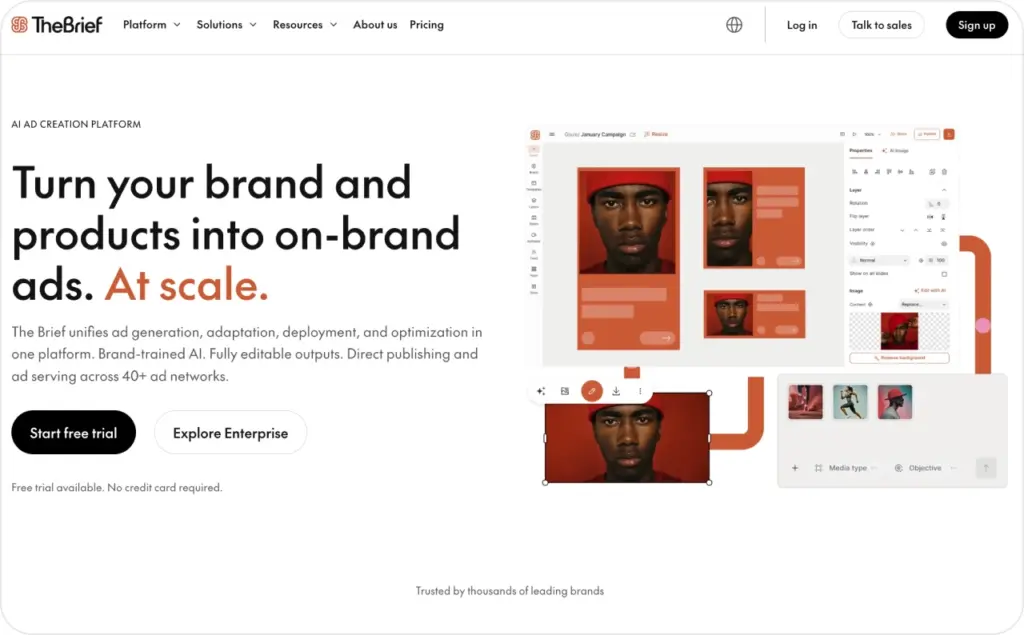
Solution: choose by workflow, not by feature count. The Brief makes sense if you need advanced exports, brand systems, team collaboration, localization, and high-volume creative production. For a smaller team that mainly needs product-led static ads, start with an AI banner ad generator that helps you move from product to ad faster, like Zeely’s static ad creator.
The Brief pricing: what small businesses actually pay for
The Brief is not priced like a tiny “make me one ad” tool. It is priced like a creative production workspace.
Its Pro plan starts at $29/month, billed annually at $348, and is built for one user who needs ad design, templates, AI generation, and exports. Ultra starts at $79/month, billed annually at $948, and adds higher-volume creation, ad serving, publishing to Meta and Google Ads, AI Translate, automated A/B testing, and performance reports. Team starts at $49 per seat/month, billed annually at $588 per seat, for 2–10 users. Enterprise is custom-priced.
Problem: the starting price looks friendly, but the real question is not “Can I afford $29/month?” It is “Will I actually use the advanced workflow I am paying for?”
Why it’s important: many small business owners do not need HTML5 exports, ad serving, localization, shared brand systems, or multi-seat collaboration yet. They need static ads that can be created, edited, tested, and refreshed quickly. Paying for a broader creative platform only makes sense when those extra features remove a real bottleneck.
Solution: compare price against the job. If you need one-person ad creation with advanced export options, The Brief’s Pro plan may be enough. If you need publishing, ad serving, and testing reports, Ultra is the more relevant plan. But if your real goal is fast product ads for Facebook and Instagram, Zeely may be the simpler spend. Zeely’s pricing page currently lists Starter at $29.95/month, Plus at $49.95/month, and Growth at $79.95/month, with batch static ads, prompt-to-ad, paid campaigns, viral campaigns, templates, and AI ad tools included across plans. Zeely also notes that plan availability can vary between app and website, and running ads through Zeely may involve additional ad-related charges.
Here is the honest small business version: The Brief is worth the price when you need creative operations. Zeely is worth comparing when you need ad momentum.
A founder does not wake up thinking, “I need a more advanced export system.” They wake up thinking, “My sale starts tomorrow, my current creative is tired, and I need a new ad before I lose the weekend.”
That is why price should not be read as subscription cost only. The real cost is:
subscription + time to create + time to edit + time to test + missed sales if creative is late.
For a small business, a cheaper tool that takes too long can become expensive. A bigger tool with unused features can also become expensive. The best choice is the one that helps you publish better ads more often.
The hidden problem is not making one ad. It is making the next ten.
Most comparison articles miss the real pain. They talk about templates, resizing, pricing, and AI features. Useful, but not enough.
The real problem small business owners talk about in ad forums is creative fatigue. One Facebook Ads Reddit discussion shows a very normal situation: a business has creatives that work, but the owner worries about what happens when frequency rises and the same ads keep getting shown. People in the thread discuss whether to keep running winners, move creatives into a different test setup, or add new creative before fatigue hits.
Problem: winning ads do not stay fresh forever.
Why it’s important: when the same static ad keeps appearing, people stop noticing it. Your offer may still be good. Your product may still be good. But the ad starts feeling invisible. Small businesses feel this quickly because they do not have endless budget to waste while waiting for performance to recover.
Solution: build a weekly creative refresh habit. Do not create one “perfect” ad. Create one strong ad angle, then turn it into variations: new headline, new product crop, new pain point, new proof, new CTA, new discount framing, new background. This is where Zeely fits the small business workflow better than a heavy design platform. Zeely is built around fast ad creation for small teams, with product-led creatives, UGC-style video ads, and sales-focused scripts based on frameworks like AIDA, PAS, Before-After-Bridge, 4U, and FAB.
The Brief alternatives: which one should you actually use?
Pick the tool that matches the job, not the one with the loudest AI promise.
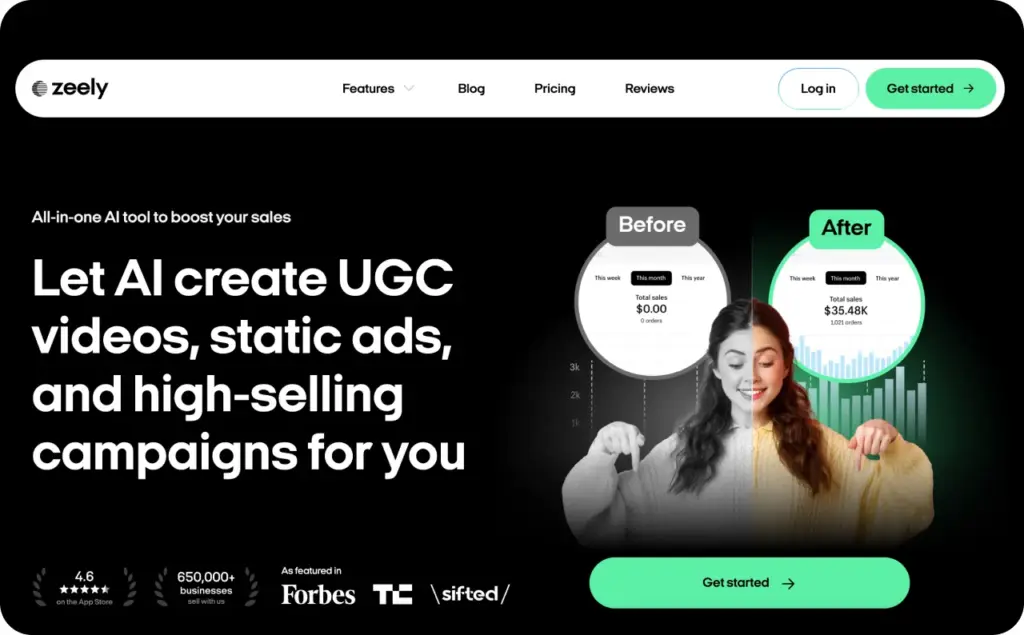
Zeely AI: best for small businesses that need ads live fast
Zeely is the strongest fit when you want to create static ads, UGC-style video ads, and sales-focused creatives without building a full design department. Zeely’s blog describes its audience clearly: small business owners, ecommerce founders, and marketers who want practical ad strategies and creative workflows that work.
Problem: you do not have time to brief a designer, wait two days, test one version, then start again.
Why it’s important: ad speed changes what you can test. Slow creative means slow learning. Slow learning means more wasted budget.
Solution: use Zeely when you need a simple path from product to ad. Especially if your main channels are Facebook, Instagram, and ecommerce-style paid social.
The Brief: best for teams that need control and scale
The Brief is stronger when your team needs lots of formats, brand kits, storage, integrations, ad serving, localization, and performance reports. Its Ultra plan includes publishing to Meta and Google Ads, AI Translate, automated A/B testing, and shareable performance reports.
Problem: growing teams can lose brand consistency when every ad is made differently.
Why it’s important: if several people create ads across markets, you need structure. Otherwise, your brand starts looking like five different companies.
Solution: use The Brief when creative control matters more than simplicity. It is a better fit for agencies, larger ecommerce teams, and brands with multi-market campaigns.
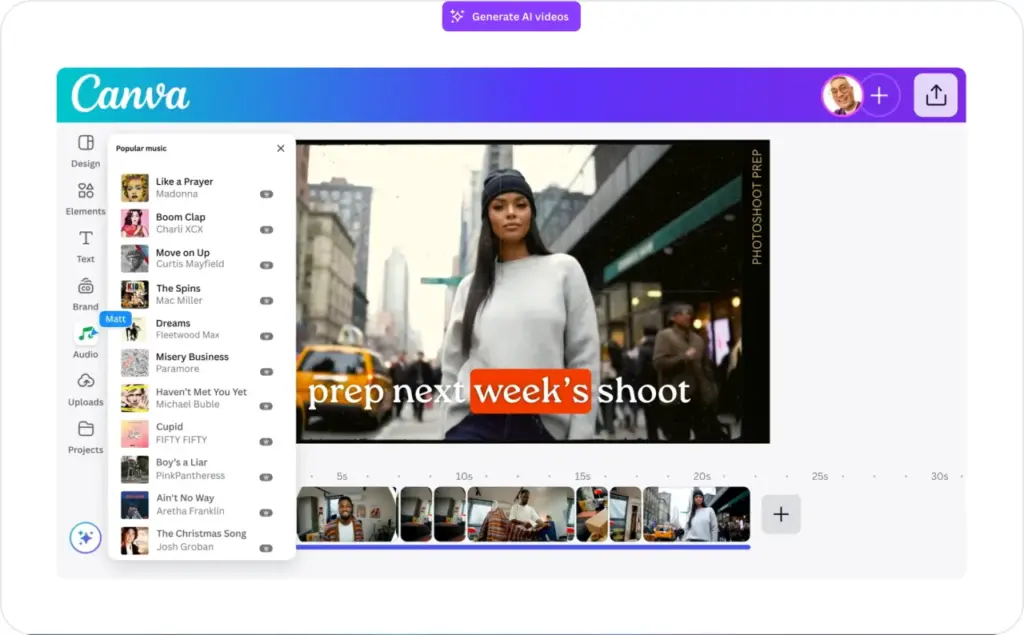
Canva Magic Studio: best for general content and easy editing
Canva says Magic Studio was made for people without complex design skills and brings AI-powered tools into one easy workspace.
Problem: some owners need social posts, flyers, carousels, menus, and simple ads in one place.
Why it’s important: not every design task is a paid ad task.
Solution: use Canva when your main need is broad content creation. Use Zeely when the job is specifically sales-driven ad creative.
Adobe Express: best for brand-safe design workflows
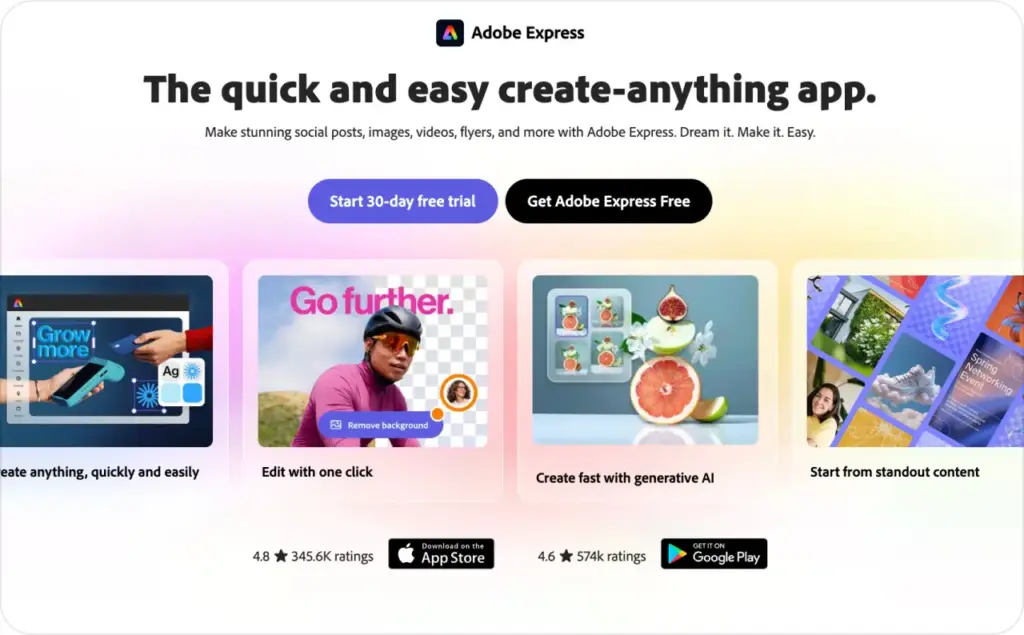
Adobe Express highlights AI-powered content creation, real-time collaboration, Creative Cloud integration, and business plans for teams and enterprises.
Problem: some businesses care deeply about brand control and professional design polish.
Why it’s important: polished assets matter in categories where trust is expensive: finance, health, education, legal, premium services.
Solution: use Adobe Express if your team already lives near Adobe tools. For faster small business ads, Zeely will usually feel lighter.
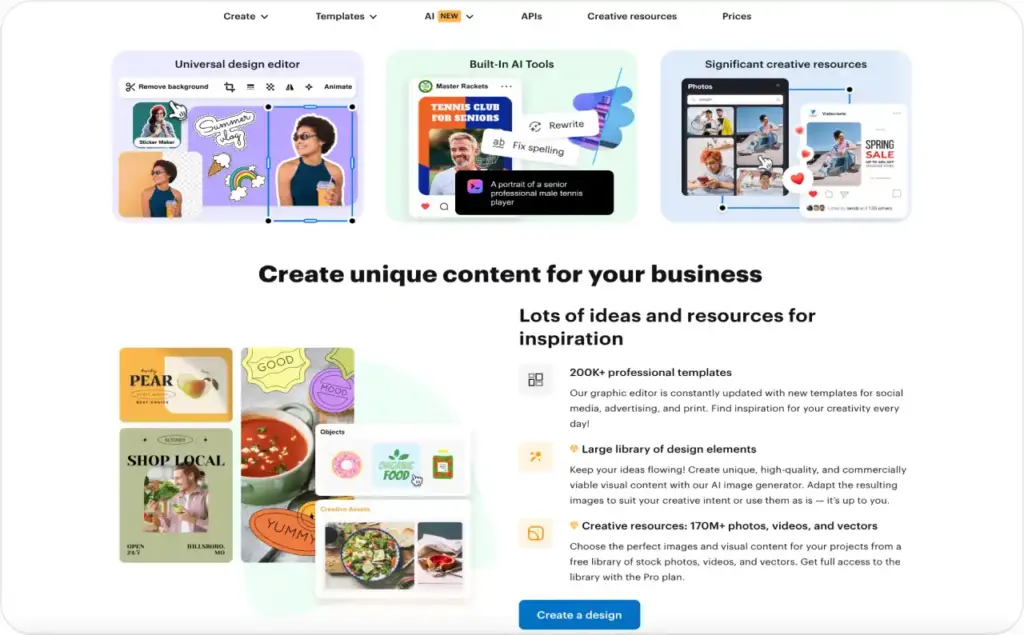
VistaCreate: best for template-led social visuals
VistaCreate offers thousands of templates and AI tools for creating visuals, text, and social content.
Problem: small teams often need something simple and visual, but not necessarily ad-performance focused.
Why it’s important: social content and paid ads overlap, but they are not the same job.
Solution: use VistaCreate for easy branded visuals. Use a dedicated AI banner ad generator when you need more conversion-focused static ads.
Kittl: best for stylish design and creator products
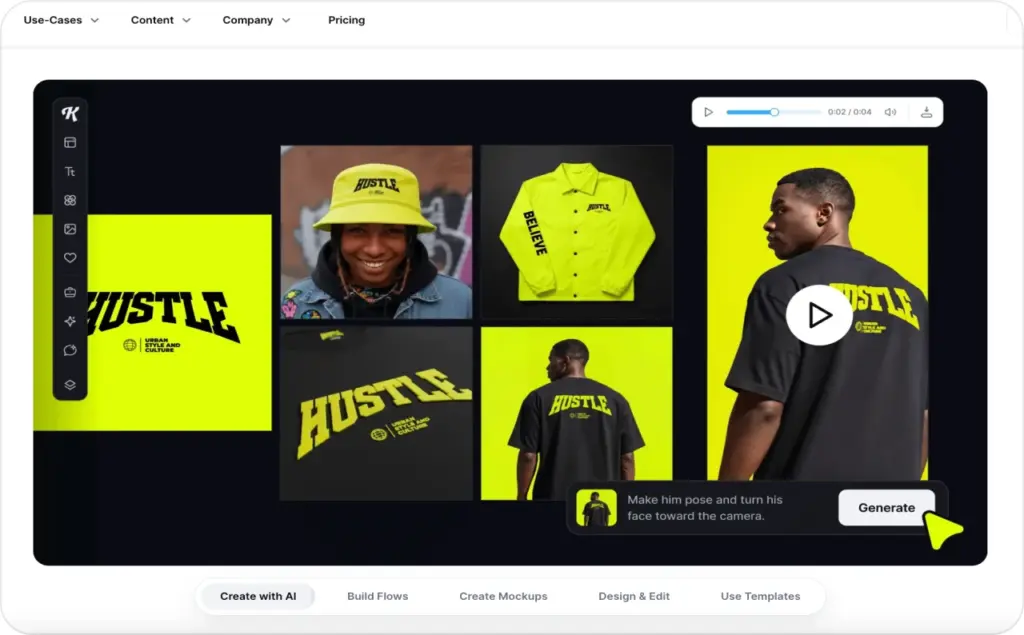
Kittl positions itself as an AI-first design platform with image generation models, pro editing tools, mockups, and curated assets.
Problem: some brands need style first: apparel, print-on-demand, posters, logos, packaging, creator merch.
Why it’s important: visual identity can be the product.
Solution: use Kittl when typography, mockups, and visual taste are the priority. Use Zeely when the ad needs to sell quickly on paid social.
The secret sauce: do not compare tools before you compare bottlenecks.
Most small businesses do this backward.
They ask: “Which tool is best?”
Better question: “What slows down my ads right now?”
Problem: choosing a tool without naming the bottleneck leads to shelfware.
Why it’s important: the wrong tool does not just waste subscription money. It slows your campaign rhythm. You end up with more dashboards, more half-finished drafts, and no better ads.
Solution: pick your tool by bottleneck:
- If you cannot make enough ads, choose Zeely
- If you cannot keep brand control across many people, choose The Brief
- If you cannot design basic content, choose Canva
- If you need Adobe-style polish, choose Adobe Express
- If you need stylish creator assets, choose Kittl
- If you need template-based visuals, choose VistaCreate
That is a more honest comparison than pretending every tool belongs in the same box.
What business owners should read before choosing The Brief
Here is the part that matters most for small business owners.
Problem: the tool will not fix a weak offer.
Why it’s important: a beautiful static ad cannot save a vague message. “High quality,” “best service,” “premium product,” and “limited time offer” are not enough on their own.
Solution: make the offer sharper before you generate the ad. Say who it is for. Say what problem it solves. Say why now. Say what happens after the click.
Problem: the first creative usually teaches you more than it earns.
Why it’s important: owners often judge the tool too early. One ad does not prove much. A batch of variations tells you what people respond to.
Solution: test angles, not just designs. Try price angle, pain angle, proof angle, speed angle, comparison angle, and seasonal angle.
Problem: comments are part of the ad.
Why it’s important: on Facebook and Instagram, people do not only see your image. They see reactions, questions, doubts, and complaints. Negative comments can turn a good-looking ad into a trust problem.
Solution: review comments like free customer research. If people ask the same question, your ad is unclear. If they doubt the product, add proof. If they compare you with a competitor, make the value difference obvious.
Problem: “more AI” can mean less brand.
Why it’s important: when every competitor uses similar prompts, the outputs start blending together. Speed is useful only if your ads still feel like your business.
Solution: feed the tool real product images, real customer language, real objections, and real offers. AI should multiply your brand, not flatten it.
So, is The Brief worth it?
Yes — for the right team.
The Brief is worth reviewing if you need creative automation, many export formats, HTML5 ads, multi-market production, brand kits, publishing, and performance reporting. It is not just a simple banner maker anymore. It is moving toward a broader AI campaign platform, and that can be valuable for teams that need scale.
But if you are a small business owner, ask the uncomfortable question: do you need scale, or do you need momentum?
Because momentum looks different. It looks like creating five ad variations before lunch. It looks like testing a new hook when CTR drops. It looks like changing the image because comments show people are confused. It looks like launching before the sale weekend is already over.
That is why Zeely is the stronger first choice for many small businesses looking for The Brief alternatives. Not because The Brief lacks features. Because Zeely is closer to the daily reality of small business advertising: make the creative, keep it clear, test faster, and get back to selling.
Final takeaway
The best The Brief alternatives are not the tools with the longest feature pages. They are the tools that remove the actual block between your product and your next customer.
For agencies and larger teams, The Brief makes sense. For design-heavy teams, Adobe Express or Canva may be enough. For style-led creators, Kittl is worth a look. But for small business owners who need static ads that can be made quickly, refreshed often, and tied to real product selling, Zeely’s AI static ad creator is the smarter place to start.
That is the practical answer. Not the fanciest one. The one that gets your next ad out the door.

Emma blends product marketing and content to turn complex tools into simple, sales-driven playbooks for AI ad creatives and Facebook/Instagram campaigns. You’ll get checklists, bite-size guides, and real results, pulled from thousands of Zeely entrepreneurs, so you can run AI-powered ads confidently, even as a beginner.
Written by: Emma, AI Growth Adviser, Zeely
Reviewed on: June 30, 2026