AI avatar video ads: how they work and when they convert
AI avatar video ads are fast to make, easy to scale, and risky to use blindly. Here’s when they lift performance, when real people still win, and how to test them without wasting budget.
AI avatar video ads are short ads where a synthetic spokesperson delivers your message over product visuals. They’re a strong fit when you need speed, variant volume, localization, and fast paid-social testing. They’re a weak fit when your ad depends on founder trust, raw customer proof, or emotionally messy human delivery.
If you use them, treat them like performance creative. Recent Business Insider industry reporting says AI-powered advertising revenue in the U.S. is projected to grow 63% to $57 billion in 2026, reaching 12% of total ad spending, which is exactly why this format deserves a serious look right now.

What AI avatar video ads are and why marketers care in 2026
AI avatar video ads sit in the middle of two older formats. They borrow the clarity of a talking-head ad and the speed of automated creative production. That makes them useful when you need more spokesperson-style video ads than your team can film by hand.
- An AI avatar is the on-screen presenter
- A digital twin is a modeled version of a real person, often built to resemble their face, voice, or both
- A synthetic spokesperson is the role the avatar plays in the ad
- A standard talking-head video ad uses a real human on camera

Example of a digital twin
That distinction matters because the strengths and risks are different.
Marketers care because the economics changed. IAB says 83% of ad executives now use AI in the creative process, 86% of buyers use or plan to use GenAI for video ad creative, and 64% now name cost efficiency as the top benefit. That tells me this is no longer a novelty format. It’s part of normal creative production now.
What is an AI avatar in advertising?
In advertising, an AI avatar is a synthetic human presenter used to read a script on video. Some are stock avatars from a platform library. Some are custom avatars built to match a person or brand style. Some sit in the middle as brand-safe digital presenters that look polished without pretending to be a specific real person.
The key point is this: the avatar is not the ad. It is the delivery layer. The script, offer, product proof, pacing, captions, and CTA still do most of the selling.
How AI avatar video ads differ from traditional video ads
Easy to create, those live-action video ads give you real presence, natural motion, and stronger trust signals. UGC gives you social proof and a more casual feel. Slideshow ads are cheap and fast but weak on spoken clarity. Motion graphics can explain a product well but often feel abstract.
An AI video avatar sits between those options. You get a face, a voice, and a clear spoken message without filming. In return, you accept some risk of robotic delivery, thinner emotional range, and lower authenticity if the ad leans too hard on “human” trust.
Why this topic matters more in 2026
This matters more now because brands are spending more through AI-led ad systems and creating more creative through AI at the same time. That puts pressure on teams to make more assets, faster, for more audiences and more placements.
At the same time, consumers are seeing more AI-made ads and forming opinions about them. IAB found that 71% of Gen Z and Millennial consumers believe they’ve seen AI-generated ads, while advertiser optimism about those ads is much higher than actual consumer positivity. That gap is why quality and disclosure matter so much here.
Are AI avatar video ads effective? Benefits, ROI, and where they beat traditional video
Yes, AI avatar video ads can be effective. No, they do not automatically convert better than live-action ads.
They earn their place when speed, testing volume, and localization matter more than raw human presence. They lose when the ad needs deep trust, personal credibility, or highly specific human proof. That’s why I treat them as a format with a job, not as a blanket replacement for real actors or UGC.
The business case is clear enough. IAB’s latest work shows that AI use in ad creation is widespread, Generative AI is now central in video creative production, and advertisers increasingly value AI for cost efficiency. That’s not proof that every AI avatar video ad performs well. It is proof that the production economics are real.
Where AI avatars save time, budget, and production effort
They save time when you need many versions of the same core ad. New offer. New audience. New language. New CTA. New intro line. With live-action, every change can trigger another shoot, edit cycle, or approval loop. With AI avatar videos, those revisions are much cheaper to make.
That’s why this format is useful for small businesses too. If you can’t afford a recurring video production setup, AI ads can give you more shots on goal. The gain is not just lower cost. It is faster creative iteration.
When AI avatar video ads can outperform static or stock creative
They can beat static or stock-based creative when a human-like presenter helps explain the offer faster. On paid social, a face can still buy you a second of attention. A spoken line can clarify value faster than text on a card. A simple AI avatar video can outperform a plain slideshow if the message is easier to grasp and the CTA is clearer.
This is especially true for short explainers, offer intros, PDP ads, lead-gen pitches, and retargeting reminders. In those cases, clarity often matters more than emotional depth.
When live-action or UGC still wins
Live-action still wins when the person is the proof.
If your founder’s credibility closes the sale, don’t replace them with a realistic avatar. If the product needs a messy real demo, show the real demo. If testimonials matter, use real customers. If the ad depends on personality, humor, chemistry, or emotional texture, synthetic delivery can flatten it.
Here’s the block I’d use:
When avatar ads win
- fast testing across hooks, offers, and audiences
- localized ads for multiple markets
- explainers where spoken clarity matters
- repeatable prospecting and retargeting ads
- small teams that need more video ad output
When avatar ads lose
- founder-led trust ads
- proof-heavy demos
- testimonial-driven sales
- emotionally charged storytelling
- high-scrutiny categories where realism can feel misleading
Best AI avatar video ad use cases by funnel, industry, and market
This is the section most marketers actually need. The best use case is not “any video.” It’s the point in your funnel where clear, repeatable explanation matters more than personality.
Kantar’s 2026 marketing trends report says 24% of AI users already use an AI shopping assistant, and 74% of people who use AI assistants regularly seek AI-driven recommendations. That pushes brands toward clearer, more structured, more machine-readable product information. It also makes localization and content consistency more important.
Best use cases from cold prospecting to retargeting
- For cold traffic, use avatar ads for simple hooks and fast category education. Think: what this product is, who it’s for, and why the offer matters.
- For mid-funnel, use them for objection handling, feature explanation, and side-by-side comparisons.
- For retargeting, use reminder ads, limited-time offers, cart nudges, and “here’s what you missed” scripts.
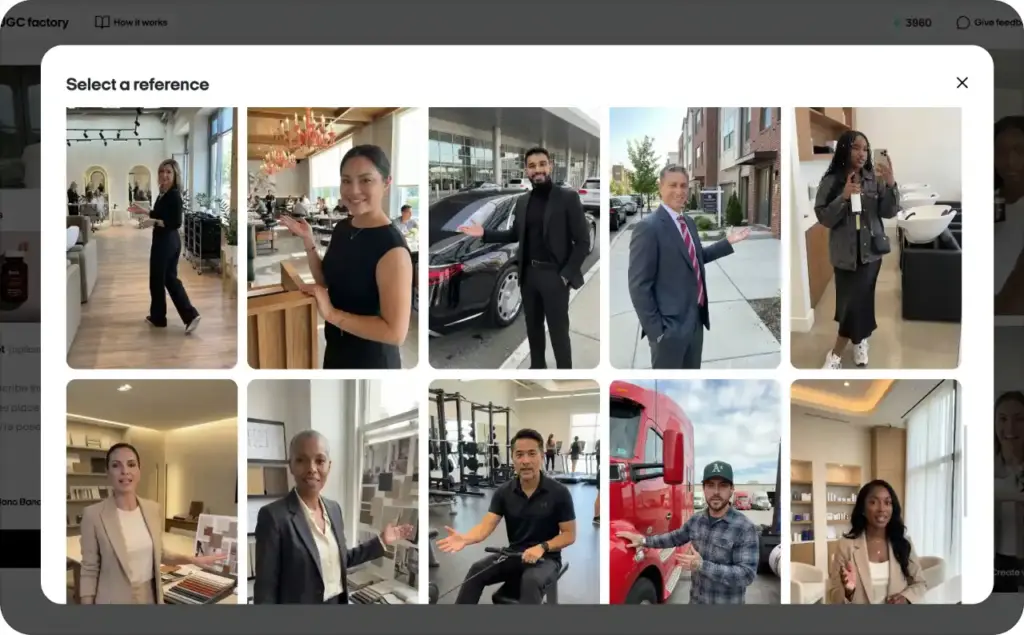
Read and watch now different AI avatar video ad examples.
Industries that benefit most from AI avatar video ads
- Ecommerce is a strong fit because product visuals already do part of the selling. The avatar just guides attention.
- Services can do well when the offer is clear and the sale does not depend on a single real founder face.
- Coaching and info products can work if the avatar frames the lesson or offer, but many brands in this category still convert better with real-person presence.
- SaaS is a good fit for product explainers, feature teasers, and retargeting.
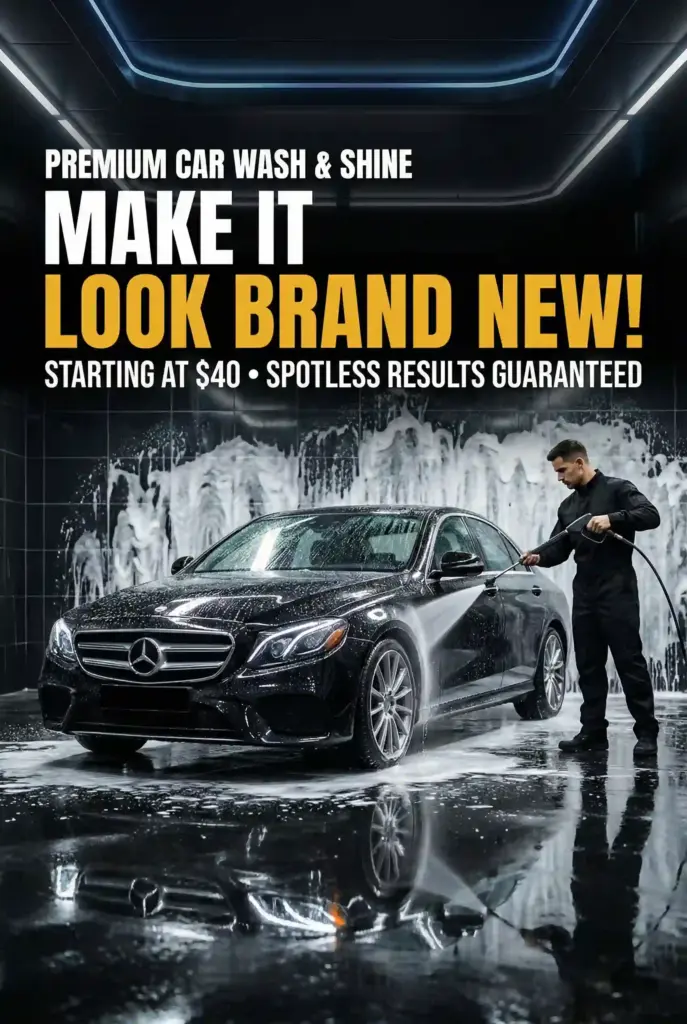
- Local business can use avatar ads for promos, seasonal offers, and service intros, especially when budget is tight.
The weaker fits are categories where trust is fragile and proof requirements are heavy, like sensitive health, finance, or political messaging.
How to localize and personalize avatar ads without losing control
This is where AI video avatars earn their keep.
You can swap language, price, CTA, voice, and examples without rebuilding the whole ad. That makes AI avatars for video useful when you want one base concept adapted for several markets.
But keep control tight:
- localize the offer, not just the language
- use market-specific proof points
- check regulatory claims by region
- keep branding and caption style consistent
- avoid cultural shortcuts that make the ad feel fake
If you want to create an avatar online and push it into many markets, the winning move is not maximum realism. It’s consistent message quality.
How to A/B test and measure AI avatar video ads that sell
That part matters even more in 2026. IAB says measurement systems are under strain because of privacy regulation, signal loss, platform-led optimization, and fragmented data. The same report frames AI as part of the shift in attribution, incrementality testing, and MMM. In plain English: platform reporting is useful, but it is not enough on its own.
What metrics matter most for AI video ads by funnel stage
Use a metric ladder:
Attention
- thumbstop rate
- 3-second hold
- hook rate
- watch time
Click
- CTR
- landing page views
- outbound click rate
Conversion
- CVR
- CPA
- cost per lead or purchase
Revenue
- ROAS
- contribution margin
- incrementality where possible
Views are not useless, but they are not the score. A polished avatar ad can look strong in-platform and still die after the click.
A/B tests that actually teach you something
Test one major variable at a time first.
Start with:
- avatar type
- opening line
- script angle
- CTA
- offer
- caption style
- ad length
- language version
Here’s the rule I use: keep the landing page and audience steady while you test the creative. Otherwise you learn nothing.
My first test set would be 3 to 5 variants:
- same offer, different hook
- same hook, different avatar
- same avatar, different CTA
- same concept, shorter cut
- same script, localized version
Once you have a clear winner, then you can stack variables.
How to plug avatar ads into paid media without messy attribution
Do not rely only on in-platform results. Use clean UTMs. Match each creative angle to a distinct naming pattern. Keep your offer naming consistent across ad, landing page, and reporting. Then compare platform results with post-click behavior and downstream conversion data.
If you’re running enough spend, use lift testing or geo splits. If you’re not, at least isolate creative families so you can compare avatar ads against UGC, static, or motion graphics without muddy naming.
AI advertising is getting easier to launch. Measurement is not getting easier. That’s why discipline matters more than dashboards.
Trust, authenticity, and legal guardrails for AI avatar ads
Can people tell an ad uses an AI avatar? Often, yes. Does it matter? Sometimes a lot.
IAB’s 2026 work shows a real trust gap between advertisers and younger consumers, and it also says disclosure can improve purchase likelihood when consumers understand what AI is doing in the ad. IAB’s AI Transparency and Disclosure Framework now uses a risk-based model: disclosure is needed when AI materially changes authenticity, identity, or representation in ways that could mislead consumers.
Can people tell an ad uses an AI avatar, and does it matter?
Younger audiences are not always impressed by realism. In fact, they may be more skeptical than advertisers expect. If the creative looks polished but emotionally empty, that skepticism grows.
In some categories, a clearly synthetic presenter is fine. In others, especially sensitive purchases, realism without clarity can feel slippery. The question is not “Can we fool people?” The question is “Will this feel clear, fair, and credible?”
When to disclose AI use, and how to keep it clear
Use disclosure when the synthetic part changes how a person would interpret identity, authenticity, or endorsement.
A short label can be enough in many cases. Something like “AI-generated presenter” or “AI-generated voice and visuals” is often clearer than pretending nothing happened.
That aligns with FTC principles that advertising claims must be truthful, not deceptive, and evidence-based. Endorsements must be honest and not misleading, and material connections or misleading representations need clear disclosure.
How Zeely AI turns AI avatar video ads into launch-ready campaigns
This is where Zeely fits well. Not because it makes AI avatar videos in the abstract, but because it maps to how marketers actually work.
Just import a product from a website, generate an avatar video ad around that product, and launch a Meta campaign from the app using your creative.
Start with a product page, not a blank canvas
Zeely lets you paste a product page link and pull in core details like the product name, images, and price. That matters because most small teams do not want to rebuild product data by hand before they even start creative work.

Build avatar video ads faster with scripts, hooks, and rendering
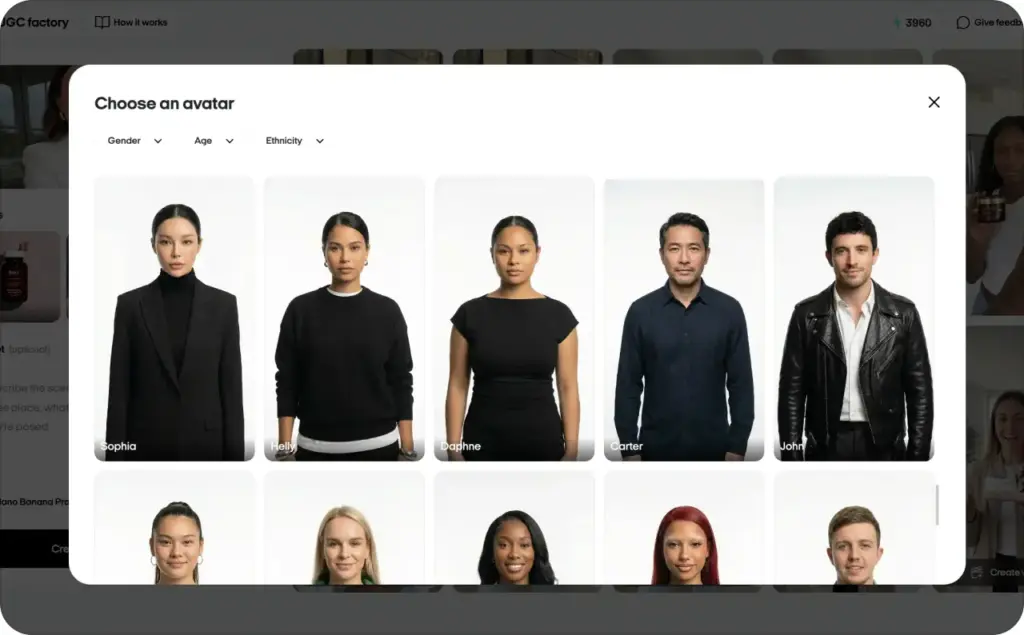
Zeely helps prepare an Avatar video ad flow where the product is selected first and the AI avatar presents it in a ready-to-use clip. That’s a good match for brands that need AI avatar videos quickly and want the product to stay central, not buried behind flashy effects.
From creative to live paid campaign inside the same flow
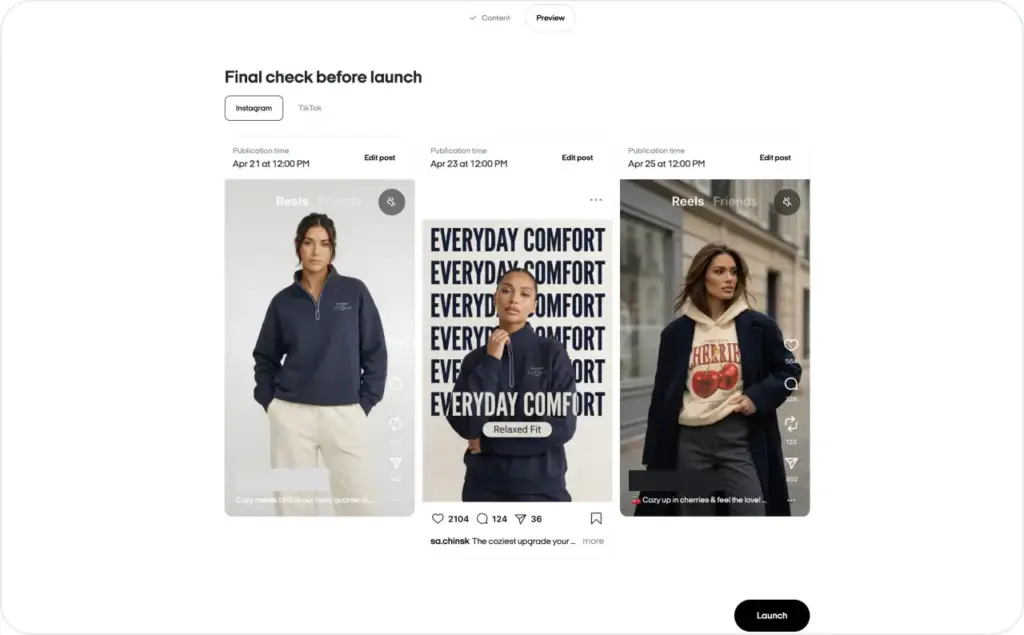
Zeely also connects the creative side to launch. It moves from created assets into a live paid ad flow in the same app, which is a real win for speed when you’re testing several video ad variants.
That’s the part I like most for performance teams. Not just avatar creation. The handoff from creative into paid media.
Verdict: when AI avatar video ads are the smart pick
AI avatar video ads are the smart pick when you need clear spoken selling, fast revisions, multiple variants, and easy localization.
Skip them when your ad needs real human proof, a founder’s credibility, or testimonial energy that only a real person can carry.
What I’d test first in Zeely:
- 3 to 5 avatar ad variants
- one offer
- two hook angles
- one short and one medium cut
- one control creative from another format, like UGC or static
That gives you a fair read.
If the avatar version wins on CTR but loses on CVR, the problem may be trust after the click. If it wins on both, keep scaling. If it loses fast, move the format to a narrower job, like retargeting or localization, instead of forcing it into every campaign.
The best use of Zeely AI here is not making one polished AI avatar video and hoping. It’s making several purposeful variants, reading the metrics clearly, and only then adding spend.

Emma blends product marketing and content to turn complex tools into simple, sales-driven playbooks for AI ad creatives and Facebook/Instagram campaigns. You’ll get checklists, bite-size guides, and real results, pulled from thousands of Zeely entrepreneurs, so you can run AI-powered ads confidently, even as a beginner.
Written by: Emma, AI Growth Adviser, Zeely
Reviewed on: April 9, 2026