AI avatar video ads examples: 25 formats that work in 2026
What are the best AI avatar video ads examples right now, and why do some feel real enough to stop the scroll while others lose people in the first second? At Zeely, we build avatar-led ads for real paid-social campaigns, not just pretty demo videos. That means I’m judging these examples the way a performance marketer would.
The best AI avatar video ads examples do three things fast. They open with a strong hook, they do not make the avatar carry the full ad alone, and they layer in product shots, captions, motion, and proof right away.
The ads that work do not feel like stiff corporate presenters reading a script. They feel more like UGC-style ads, spokesperson explainers, fast product demos, or retargeting reminders made for TikTok, Reels, Meta, and Shorts. My goal in this article is to show you which formats actually work and which ones Zeely can help you build quickly with avatars, scripts, hooks, subtitles, and product visuals already inside the platform.
You need examples you can borrow from, patterns you can test, and a fast way to tell which AI video avatar examples can sell and which ones will just sit there, talk at people, and burn your budget.
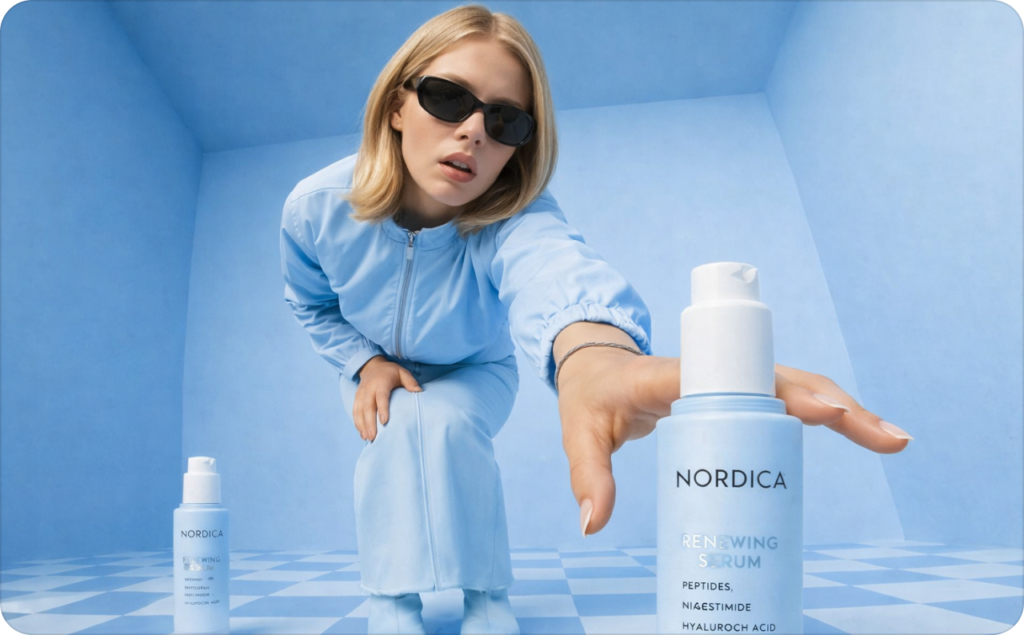
What counts as an AI avatar video ad example in 2026?
An AI avatar video ad is a paid-social creative where a synthetic presenter, AI talking head, or generated spokesperson helps deliver the message, but the ad still behaves like an ad. It is different from cinematic AI showcase videos, training clips, or long product tours built for onboarding.
In practice, the five buckets that matter are simple: UGC-style, spokesperson, product demo ads, explainers, and retargeting ads. Those are the buckets I’d use when judging AI video avatars advertising examples for TikTok, Meta Reels ads, Facebook and Instagram placements, and YouTube Shorts.
AI avatar ads vs generic AI video ads
Generic AI video can be cinematic, abstract, or image-led. AI avatar video ads are more direct. They usually use a face, voice, captions, product proof, and a paid-social CTA structure that fits TikTok, Reels, Meta feed, or Shorts. Read now about the best AI avatar generators.
AI avatar ads vs creator-shot UGC
UGC means user-generated content. In ad language, it usually means creator-style footage that feels native and personal. Avatar-led UGC-style video ads borrow that tone, but they are still generated. The closer they get to creator pacing, rougher hooks, and clear product proof, the better they tend to fit short-form placements. TikTok and Google both lean toward authentic, creator-like assets instead of polished talking-head filler.
Where avatar ads fit in the paid-social funnel
Avatar ads work best when the message needs a voice fast. I like them in top-of-funnel explainers, mid-funnel proof-led demos, and bottom-funnel retargeting reminders. They can also work for local lead gen when the offer is simple and the CTA is strong. What they do not fix is a weak hook, vague offer, or missing proof.
25 AI avatar video ads examples by format
UGC-style AI avatar ad examples
These are the short AI avatar ad examples that look like UGC. They work because they feel less like a studio pitch and more like a person talking you through a real problem.
1) Problem confession
What the ad looks like: the avatar opens with a small frustration like “I was wasting money on this every month.” Product shots cut in by second two.
Why it works: the confession makes the first line feel personal, not scripted.
Best for: ecommerce, beauty, home gadgets.
Can Zeely make this? Yes. This matches its avatar, hook, script, captions, and product-image flow.
2) I tried this product
What the ad looks like: a first-person reaction with “I tried this for a week” over quick visual proof.
Why it works: it feels like a test, not a lecture.
Best for: wellness tools, kitchen tools, organizers.
Can Zeely make this? Yes, especially if you already have enough images or a product URL.
3) Before/after quick take
What the ad looks like: split-screen pain and outcome, with the avatar bridging the story.
Why it works: contrast does the selling fast.
Best for: cleaning, beauty, productivity, home upgrades.
Can Zeely make this? Yes, if you have clear before and after visuals.
4) Three reasons why
What the ad looks like: the avatar gives three quick reasons with on-screen text and tight scene cuts.
Why it works: list structure helps short attention spans.
Best for: impulse products, subscriptions, app features.
Can Zeely make this? Yes. Script frameworks and captions make it easy.
AI avatar product demo ad examples
This is where a lot of AI avatar product ad examples for Meta ads live. The avatar helps frame the product, but the product still needs screen time. Meta’s own placement guidance points advertisers toward vertical creative for Stories and Reels, and Google’s Shorts guidance says mobile-first visuals matter across devices.
6) Feature walkthrough
What the ad looks like: the avatar names one feature at a time while the screen or product view changes behind them.
Why it works: it teaches without feeling like onboarding software.
Best for: gadgets, apps, software tools.
Can Zeely make this? Yes.
7) Comparison demo
What the ad looks like: “Here’s what this does better than the old way,” with side-by-side visuals.
Why it works: comparison helps undecided buyers.
Best for: household goods, SaaS swaps, service upgrades.
Can Zeely make this? Yes, if you provide the comparison visuals and keep claims honest.
8) Product-in-hand illusion
What the ad looks like: the avatar appears beside or “holding” the product while close-ups do the real selling.
Why it works: you get presenter energy without losing the item.
Best for: cosmetics, accessories, packaged goods.
Can Zeely make this? Sort of. It can simulate this style with staged product visuals and avatar scenes, but the illusion depends on your assets.
AI spokesperson ad examples for SaaS and apps
The best AI spokesperson ad examples for SaaS are simple. The avatar is there to reduce friction, not to sound futuristic.
8) Homepage summary ad
What the ad looks like: the avatar says what the tool does in one sentence while the UI moves behind them.
Why it works: it saves the viewer from reading the homepage.
Best for: broad awareness, cold traffic.
Can Zeely make this? Yes, especially with a clean script and UI screenshots.
9) Onboarding pain-point ad
What the ad looks like: “Still doing this by hand?” then the product solves the pain in three cuts.
Why it works: pain first, software second.
Best for: SaaS, operations tools, sales tools.
Can Zeely make this? Yes.
10) Feature reveal
What the ad looks like: one new feature, one promise, one fast proof point.
Why it works: it keeps the ad focused.
Best for: app updates, feature launches, beta waitlists.
Can Zeely make this? Yes.
11) Use-case explainer
What the ad looks like: “If you run a salon, clinic, or shop, here’s how this helps,” with tailored visuals.
Why it works: buyers picture themselves using it.
Best for: vertical SaaS, service apps, local tools.
Can Zeely make this? Yes.
Testimonial-style and proof-led avatar ad examples
This group works only when it stays honest. If the ad pretends the avatar is a real customer when it is not, trust drops fast. TikTok’s 2026 report pushes real-feeling storytelling, not fake-human shortcuts.
12) Expert take
What the ad looks like: the avatar speaks like an advisor, not a “happy customer.”
Why it works: authority can work without fake intimacy.
Best for: skincare, finance tools, B2B, clinics.
Can Zeely make this? Yes.
13) Customer-story format without fake customer claims
What the ad looks like: “One of our customers came to us with this problem,” with the avatar narrating the setup.
Why it works: it keeps the story format while staying truthful.
Best for: services, coaching, SaaS.
Can Zeely make this? Yes.
14) Case snapshot
What the ad looks like: the avatar states one result, one timeframe, one key action, with proof on screen.
Why it works: short proof beats vague praise.
Best for: agencies, apps, local lead gen.
Can Zeely make this? Yes, if you already have the proof asset.
Retargeting AI avatar ad examples
These are some of the highest-utility AI video ad example formats because the viewer already knows you a little.
15) Viewed-product reminder
What the ad looks like: “Still thinking about this?” with the item front and center.
Why it works: it reconnects fast.
Best for: ecommerce.
Can Zeely make this? Yes. Product URL plus avatar plus CTA makes sense here.
16) Cart recovery
What the ad looks like: the avatar names the product, the benefit, and the nudge to finish checkout.
Why it works: it answers hesitation in plain English.
Best for: DTC stores.
Can Zeely make this? Yes.
17) Objection crusher
What the ad looks like: “Too expensive?” “Not sure it works?” then one proof beat answers the concern.
Why it works: it handles doubt head-on.
Best for: premium products, subscriptions, consultations.
Can Zeely make this? Yes.
Local business and lead-gen avatar ad examples
These formats do well when the offer is concrete. A vague service promise will still flop.
18) Clinic consult ad
What the ad looks like: the avatar explains who the consult is for, what happens next, and how to book.
Why it works: it reduces fear and confusion.
Best for: med spas, dental, wellness clinics.
Can Zeely make this? Yes.
19) Service quote ad
What the ad looks like: “Send us your details, get a quote today,” with a fast process breakdown.
Why it works: the CTA is simple and measurable.
Best for: roofing, cleaning, moving, contractors.
Can Zeely make this? Yes.
20) Neighborhood offer
What the ad looks like: the avatar calls out a local area and a limited-time deal.
Why it works: specificity beats generic reach.
Best for: restaurants, home services, local retail.
Can Zeely make this? Yes.
YouTube Shorts and explainer-first avatar ad examples
Shorts ads are vertical, full-screen, and immediately skippable by swiping, so the explainers that work here need stronger visual layering than a plain speaking face. Google also recommends action-oriented vertical videos in the 10 to 30 second range for many use cases, plus creator assets where possible.
21) Fast explainer
What the ad looks like: problem, promise, product, CTA in under 20 seconds.
Why it works: it respects the swipe.
Best for: apps, software, education products.
Can Zeely make this? Yes.
22) Product myth-buster
What the ad looks like: the avatar opens with “People think this is only for…” then flips the assumption.
Why it works: curiosity plus clarity.
Best for: niche tools, supplements, B2B tools.
Can Zeely make this? Yes.
23) Feature demo teaser
What the ad looks like: a tiny taste of the product in action, then the CTA lands before the viewer gets bored.
Why it works: teaser pacing fits Shorts well.
Best for: SaaS, gadgets, utilities.
Can Zeely make this? Yes.
Bad AI avatar ad examples: What brands keep getting wrong
Most bad AI-generated avatar ads fail in boring ways, not exotic ways. The face is too polished, the copy is too generic, the product barely appears, and the opening acts like the viewer owes it attention. TikTok’s 2026 report basically explains why this loses. People want real stories and grounded signals, not empty synthetic gloss.
Seven mistakes that make AI avatar video ads flop
Here are the seven I keep seeing:
- the avatar talks too long without visual support
- the script sounds polished but says nothing
- the hook could fit any product on earth
- the ad hides the actual product
- the pacing feels like software onboarding
- the voice does not match the offer
- the CTA arrives after the viewer is already gone
This is where a lot of AI advertising still falls apart. The tool is not the problem. The ad structure is.
Why fake-testimonial style is the fastest way to lose trust
A fake-review vibe is the quickest way to make a promising avatar ad feel creepy. If the video implies a made-up customer is real, you’ve lost the room. I’d rather see an honest founder note, expert take, or case snapshot every time. It sells better because it sounds true. TikTok’s own language about human brands lines up with that.
AI avatar video ads that Zeely AI can create right now
If you’re comparing an AI avatar video maker, an AI avatar video generator, or even a free AI talking avatar video generator, the real question is not “Can it make a face talk?” The real question is “Can it turn that face into a paid-social ad with a hook, proof, captions, visuals, and enough variation to test?”
Ecommerce avatar ad examples you can build in Zeely
I’d use Zeely for a product demo avatar ad, a problem-solution ad, a three-reasons-why ad, and a viewed-product reminder. Those all map cleanly to its avatar video flow, product URL flow, and image-led setup. Avatar video ads can start with a visual hook and need at least seven images, which is exactly the kind of structure ecommerce ads need.
Service-business avatar ad examples you can build in Zeely
For services, I’d build a founder-style explainer, a consult-booking ad, a quote request ad, and a local offer ad. Zeely’s text-to-speech and avatar flows work well when the message is simple, local, and tied to one next step.
SaaS and app ad examples Zeely can emulate best
For apps and SaaS, I’d stick to homepage summary ads, onboarding pain-point ads, feature reveals, and use-case explainers. The win here is speed. Zeely’s flow can generate scripts, use avatars, pull product or brand assets, add music, and prepare multiple creatives for testing, which is exactly what an app team needs when it wants fresh vertical ads without a big production loop.
What Zeely does well for speed, variation, and testing
The Zeely team’s sweet spot is not “perfect digital humans.” It’s faster ad assembly. You can start from a product URL, have the platform gather product data and images, add an avatar, generate a script, add music, and build additional creatives for testing across Facebook, Instagram, TikTok, YouTube Shorts, Meta, and Google Ads workflows. Create your first Zeely AI Avatar video ad and upload it to your social media today!
If you’re searching for the AI avatar generator with realistic video quality, that is the smarter lens to use: not just lip-sync quality, but whether the whole ad is ready to test like a real paid-social asset. Read now how to make AI avatar video ads.
Checklist before you publish your next AI avatar video ad
Use this before you spend a dollar:
- Lead with one clear hook in the first second
- Show the product or proof by second two or three
- Keep the avatar from talking alone for too long
- Use captions people can read quickly
- Match the voice to the offer
- Build at least two to four variants
- Test one hook change at a time
- Keep the CTA simple and visible
Metrics to watch: hook hold, CTR, CPA, ROAS.
If CTR is weak, fix the opening. If CTR is fine but CPA is ugly, fix the offer, landing page, or audience match. If ROAS is flat, stop polishing the avatar and start tightening the message.
Emma blends product marketing and content to turn complex tools into simple, sales-driven playbooks for AI ad creatives and Facebook/Instagram campaigns. You’ll get checklists, bite-size guides, and real results, pulled from thousands of Zeely entrepreneurs, so you can run AI-powered ads confidently, even as a beginner.
Written by: Emma, AI Growth Adviser, Zeely
Reviewed on: April 8, 2026