From billboards to DOOH: 10 types of OOH ads + real examples
What makes some outdoor ads impossible to ignore? Zeely AI reviewed top-performing OOH campaigns to give you the most impactful formats and examples.
OOH advertising still works, when it earns attention and drives results. Here’s proof: real campaigns that made people stop, look, and act — from creative 3D billboards that spark conversation to measurable digital out-of-home ads that quietly lift store visits.
And here’s a telling number: according to Forbes, in Q2 2025, the U.S. out-of-home advertising market brought in $2.86 billion, marking about 3% growth.
Smart outdoor advertising turns a glance into intent. Smart billboard advertising blends creativity with data to prove its performance.
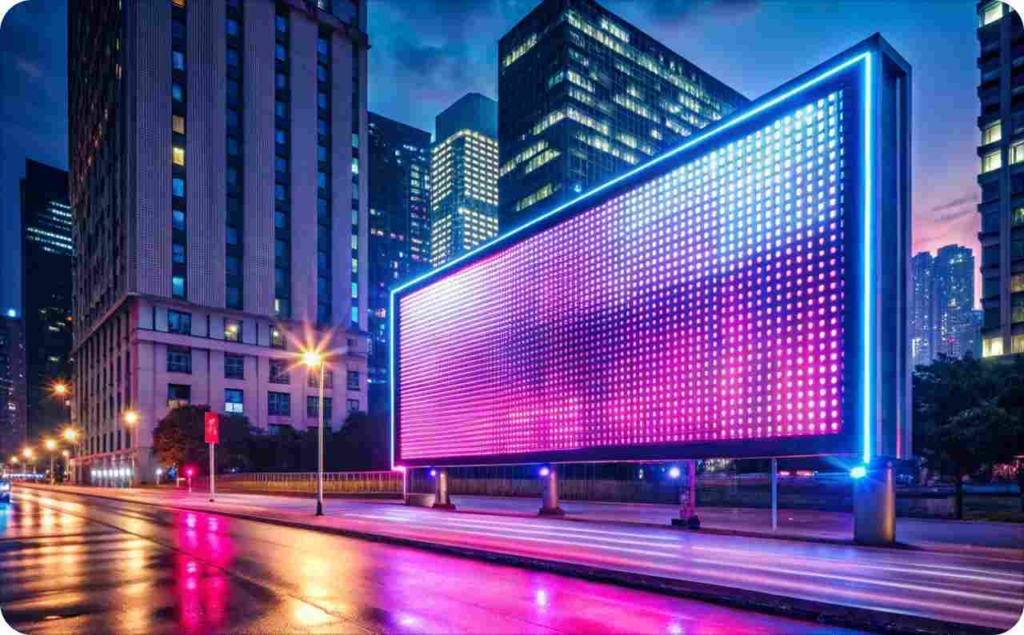
The many faces of OOH: From fame to feeling
In the sections below, you’ll see creative OOH advertising examples that span every intent: awareness, participation, conversion, and more. Each one shows how brands turn public space into living media.
This isn’t just a gallery of campaigns. It’s a roadmap for how out-of-home advertising adapts to different goals, whether you’re launching a product, recruiting talent, or sparking emotion that lasts long after the moment’s gone.
1. Building awareness and fame that can’t be missed
The best billboard ads don’t shout; they own the space. Think large-format 3D or anamorphic builds, the kind of creative billboard advertising examples that fill social feeds before the brand even posts.
Use a few words. Let bold imagery and a confident logo do the work — classic OOH advertising that travels across cities and continents.
Keep your loop short, brightness high, and placement unmissable. These formats earn reach, recall, and social lift.
Wonka 3D billboard: Storytelling that feels alive
A cinematic 3D billboard advertising example where Wonka steps right out of the screen — a global film launch that blurred the line between outdoor and digital spectacle.
Why it works: It turns a passive glance into a shareable, emotional moment. The illusion builds instant recall and social reach, people don’t just see it, they film it.
How to use it in your advertising: Use 3D motion for creative billboard advertising examples that already have visual depth — entertainment releases, product reveals, or brand storytelling. Keep the loop under 15 seconds and land the motion early.
Nike Air Max 3D billboard: Product as performance
A massive anamorphic screen showing the sneaker bursting out of the frame — one of the most talked-about examples of OOH advertising in recent years.
Why it works: It turns a simple product into a show. The motion captures the Air Max’s energy and design story without a single line of copy.
How to use it in your advertising: Highlight a product feature worth exaggerating, texture, movement, engineering, and build your 3D billboard narrative around that single idea.
Babybel peelable-cheese build: Playful, tactile spectacle
A giant outdoor advertising installation that peeled open in real time, revealing Babybel’s iconic red wax layer.
Why it works: It leans on humor and texture — a small, satisfying motion everyone recognizes. Playful, sensory, and instantly tied to the product.
How to use it in your advertising: Choose tactile or kinetic builds for products with a distinct action — pour, peel, twist. Keep it bold enough to photograph, simple enough to understand in one glance.
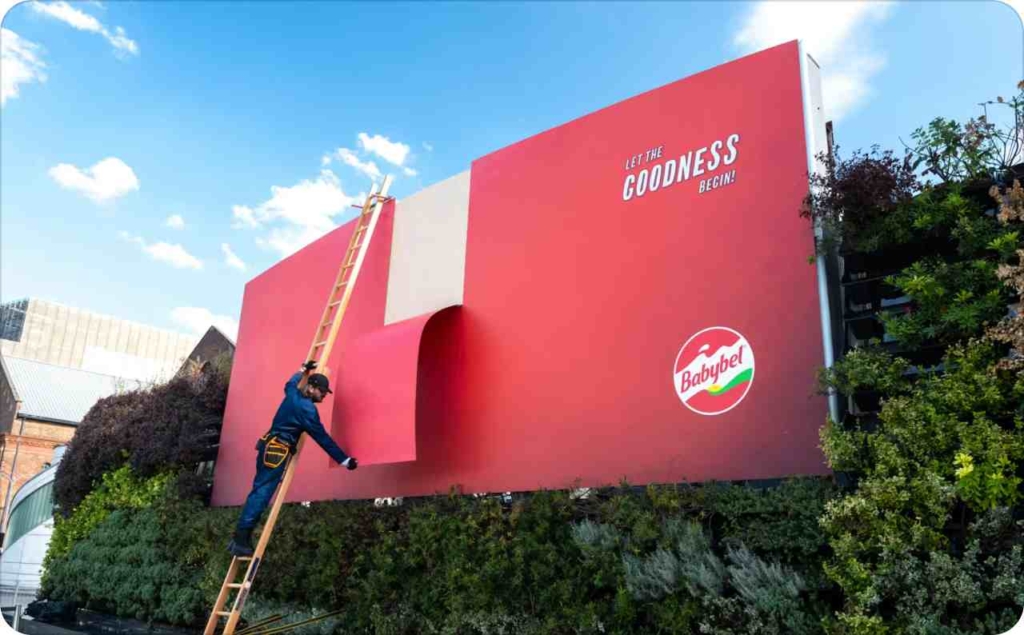
Photo source: Spark Foundry and Popcorn PR
KFC “Too tall” tower burger build: Size as a statement
An oversized billboard advertising stunt that showed a towering burger rising above the street — playful exaggeration at its best.
Why it works: It turns scale into appetite. The creative makes indulgence the headline and stays unmistakably on-brand.
How to use it in your advertising: Amplify your hero product in a way that feels fun, not boastful. Works well for limited-time offers or product launches tied to local buzz. For more food/QSR inspiration, see our food ads that drive results.
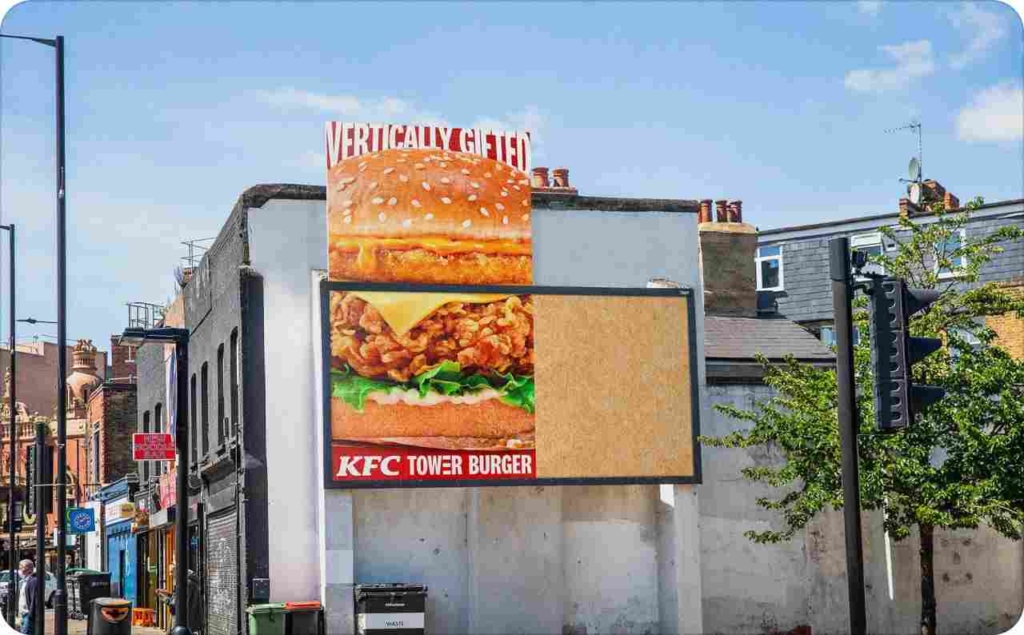
Photo source: Mother London / KFC UK
2. Teaching through the streets: OOH that explains, engages, and educates
The smartest examples of OOH advertising that educate don’t overload or lecture. They use space like a storyboard, each panel a beat of the message, building curiosity through sequence and simplicity.
Think interactive OOH campaigns that invite play or quick learning: benefit-led copy, proof moments, or snackable trivia that rewards a second glance.
These campaigns thrive in high-dwell spots, stations, malls, busy walkways, where people linger long enough for a story to unfold.
Keep each creative beat tight and timed. Sequence short “chapters” across multiple screens, then rotate by performance. Measured right, these placements grow time-in-view, QR scans, and content completions.
LANDMARKS60 trivia campaign: Learning that feels like play
A city-wide trivia game spread across digital screens, teaching local facts one clue at a time.
Why it works: It turns idle dwell time into discovery. Every answer deepens brand familiarity through repetition and fun.
How to use it in your advertising: Design quick, one-screen interactions — a question, a reveal, a smile. Use transit or mall placements where curiosity outlasts the wait.
3. Turning attention into action: OOH that invites participation
The best interactive OOH advertising examples invite response. QR hunts, live polls, and social takeovers turn passersby into participants. Each scan, vote, or selfie builds memory because the audience isn’t just watching, they’re co-creating the moment.
Use high-footfall areas and sync creative bursts to real-world triggers like match days, festivals, or product drops. Keep a “moment-marketing kit” ready, approved copy, legal notes, and templates for same-day reactions.
These campaigns measure success through engagement, not exposure — QR scans, app opens, UGC posts, dwell time.
Pepsi Max “Unbelievable bus shelter”: Surprise in plain sight
A London AR billboard that showed UFOs, tigers, and robots suddenly appearing through an augmented-reality screen at a normal bus stop.
Why it works: It flipped routine waiting time into viral content. People recorded, laughed, and shared, giving Pepsi Max organic reach far beyond the street.
How to use it in your advertising: Blend tech and timing. Use AR or motion sensors to surprise audiences in high-dwell spots where curiosity naturally builds.
Spotify “Wrapped live”: Fans as the billboard
Digital billboards across major cities displayed real users’ Wrapped playlists and listening stats, updating in real time.
Why it works: It turned user data into recognition. Fans searched for their names, shared screenshots, and extended the social conversation offline.
How to use it in your advertising: Leverage user-generated content or first-party data to create recognition moments. Keep visuals bold and messages instantly readable from a distance.
Coca-Cola “Share a coke” DOOH: Personalized at scale
Interactive QR-code billboard ads let people generate their own Coke bottle labels on-screen, instantly downloadable or shareable via mobile.
Why it works: It tied personalization to physical presence. Each user felt part of a global campaign made local.
How to use it in your advertising: Pair QR functionality with a creative payoff — a name, selfie, coupon, or shareable asset. Make the reward feel personal but fast.
4. Driving real-world action: OOH that converts
The strongest programmatic OOH campaign examples use data and context to serve the right message at the right moment. From weather-based triggers to store-level personalization, these campaigns prove that out-of-home advertising can be both creative and performance-driven.
Smart examples of OOH advertising that increase footfall match tone to environment — a hot day, a nearby store, a rush-hour craving. Add proximity targeting, mobile retargeting, and clear offers, and you can track impact down to visits, scans, and redemptions.
Always define control vs. exposed audiences before launch, that’s how you turn “great visibility” into provable lift.
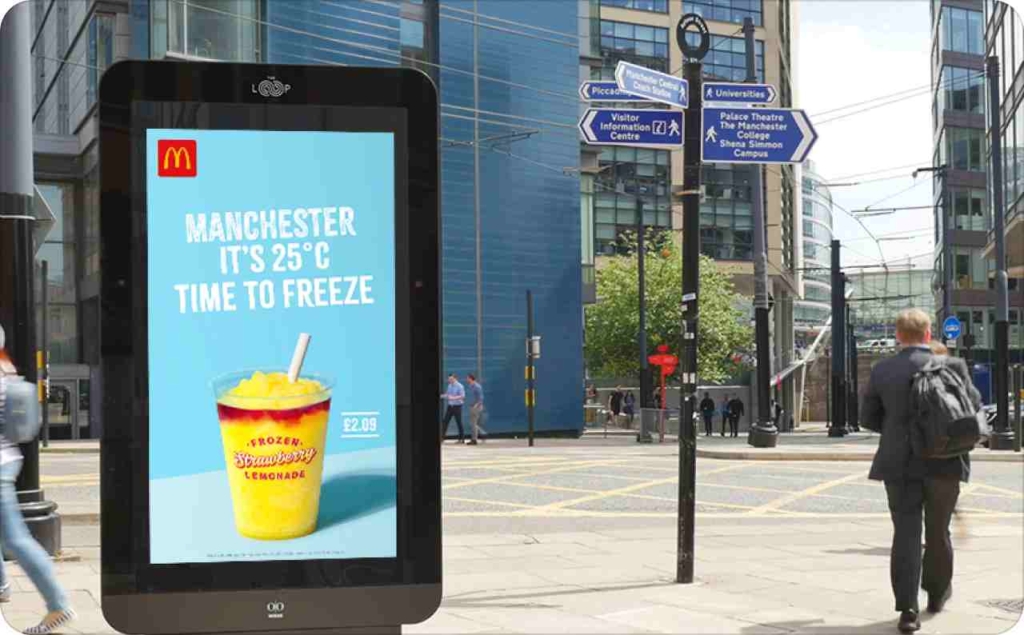
McDonald’s “Weather-targeted DOOH”: Context that craves conversion
Digital location-based DOOH ads across the switched creatives in real time: McFlurrys during heatwaves, hot coffee in the rain.
Why it works: It uses relevance as persuasion. The copy feels personal to the moment, not mass. Each change boosts impulse and makes the brand feel tuned-in.
How to use it in your advertising: Pair weather or time-of-day data with simple, visual offers. Keep CTAs directional to convert attention into action.
IKEA “Find your way home”: Location meets intent
A programmatic OOH series that guided drivers to the nearest store, with creative dynamically updating distance and directions.
Why it works: It transforms navigation into advertising. Each message feels useful, not interruptive, while reinforcing IKEA’s accessibility.
How to use it in your advertising: Combine live mapping data with clear value. Works best for retail OOH marketing examples that drive sales.
Starbucks “This one’s on us”: QR-to-visit offers
Digital QR-code billboard ads in commuter zones offered free drink coupons via QR code during new-store launches.
Why it works: It bridges awareness and conversion in a single moment. The scan feels rewarding, not transactional, and drives first visits.
How to use it in your advertising: Connect QR offers to a physical outcome — store entry, sample redemption, or app signup. Keep the creative minimal so the CTA shines. If you’re launching a café, these coffee shop marketing ideas will help you turn scans into visits.
5. Hiring in motion: OOH that finds people where they work and travel
The best OOH recruitment campaign examples meet potential hires on their daily routes, not on job boards. Clear “earn now” messages, authentic imagery, and location-aware placements turn digital billboard hiring ads into real-time talent funnels.
Transit corridors, logistics hubs, and high-traffic commutes are prime ground. Combine that with mobile retargeting and simplified landing forms, and you’ve built a full recruitment flow — from street to signup in under 30 seconds.
These campaigns track what matters: applications started, completions, and cost per hire, visibility that pays back fast.
Amazon “Now hiring drivers”: Recruitment at scale
Amazon ran dynamic digital billboard hiring ads near fulfillment centers, displaying local pay rates and immediate-start messaging.
Why it works: It connects opportunity to location. Drivers see a job they can start today, within reach of where they already are.
How to use it in your advertising: Localize every detail — role, pay, commute distance. Keep the CTA short and scannable.
Deliveroo “Earn when you want”: Freedom as the hook
An out-of-home recruitment campaign featuring delivery riders with real earning stats, placed near transport stations and universities.
Why it works: It speaks to flexibility, not obligation. The message feels like empowerment, not pressure — key for gig-economy audiences.
How to use it in your advertising: Tie real testimonials to familiar routes. Use DOOH formats to update offers or highlight surging demand by area.
Royal Mail “Join the team that delivers Christmas”: Seasonal, local, human
Part of successful OOH advertising campaigns — examples for hiring, these festive DOOH spots celebrated postal workers while inviting applicants for temporary holiday roles.
Why it works: It blends pride and practicality. The tone feels communal and time-bound, urgency wrapped in goodwill.
How to use it in your advertising: For seasonal or short-term hiring, lean into emotion and timing. Pair civic imagery with a simple URL or QR that leads straight to a one-screen form.
6. Building anticipation that moves crowds: OOH for launches and live moments
The strongest OOH launch campaigns build rhythm and urgency. They don’t just announce; they count down. From synchronized takeovers to live social tie-ins, these event-based OOH examples prove how outdoor can amplify buzz in real time.
Use countdown clocks, dayparted teases, and full-network “roadblocks” to dominate attention during key windows — premieres, tournaments, drops, openings. Coordinate with social or influencer posts for simultaneous spikes in engagement.
The goal: drive measurable momentum, trailer views, ticket sales, tune-in intent, share of voice, all fueled by presence in the physical world.
Netflix “Stranger things countdown”: Every second builds suspense
A global network of creative OOH advertising examples for entertainment, featuring real-time countdown clocks and flickering neon typography echoing the show’s eerie tone.
Why it works: It stretches anticipation over days, turning waiting into marketing. Each passerby becomes part of the countdown community.
How to use it in your advertising: Use dynamic scheduling to mirror your content’s emotional arc. Start with mystery, reveal the hook mid-week, and land the CTA near release day.
Nike “Marathon route motivation”: Inspiration in real time
Dynamic event-based OOH examples updated live along marathon routes, showing split times, encouragement messages, and personal shoutouts.
Why it works: It meets athletes in the moment. The creative feels alive, reacting to what’s happening right there on the course.
How to use it in your advertising: Integrate live data feeds into OOH creative. For sporting or city events, sync messaging to real-time stats or audience actions.
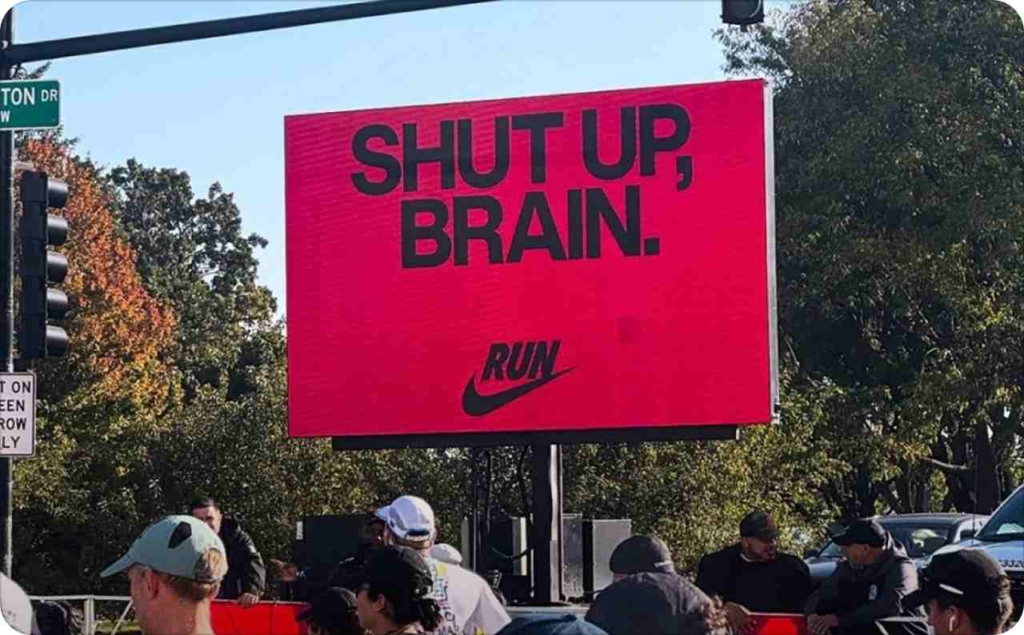
Photo source: Nike
Disney “Frozen II premiere”: Iconic landmarks, instant wonder
A global OOH launch campaign that transformed city landmarks — from London Bridge to Times Square, into immersive, animated winter scenes.
Why it works: It brings movie magic into the streets. The experience invites photos, social shares, and emotion, extending premiere buzz offline.
How to use it in your advertising: Anchor big creative to high-footfall landmarks. Use synchronized visuals and ambient sound for a spectacle that doubles as social content.
7. Changing minds in public: OOH with purpose and heart
The most effective purpose-led OOH campaigns prove that simplicity can carry weight. A few words. A single image. A message that lingers. These ads use public space to spark reflection, not reaction, and create connection where people least expect it.
Whether it’s supporting a cause or re-shaping perception, the best social impact billboard examples make their intent unmistakable — clear purpose, honest tone, and visible action. Use civic or high-traffic placements, keep language universal, and link to measurable outcomes through a small “impact note” QR.
It’s about clarity, empathy, and earned attention — the kind that moves both reputation and results.
British heart foundation “Missing heart”: A symbol that says everything
A stark red billboard with a cut-out heart shape and no logo — one of the most powerful examples of OOH advertising for nonprofits ever made.
Why it works: It uses absence to speak louder than words. The empty heart embodies the cause without explanation, driving instant emotion and awareness.
How to use it in your advertising: Let symbolism carry meaning. Remove clutter. One visual truth beats a paragraph of explanation.
Patagonia “Don’t buy this jacket”: Sustainability, not slogans
A bold headline on a minimalist background, urging consumers not to purchase — part of Patagonia’s ongoing push for responsible consumption.
Why it works: It flips expectation. By rejecting consumerism, the brand earns deeper trust and positions itself as genuinely purpose-driven.
How to use it in your advertising: Challenge your own category. Use honesty as your creative device. Be specific about the change you want, not vague about caring.
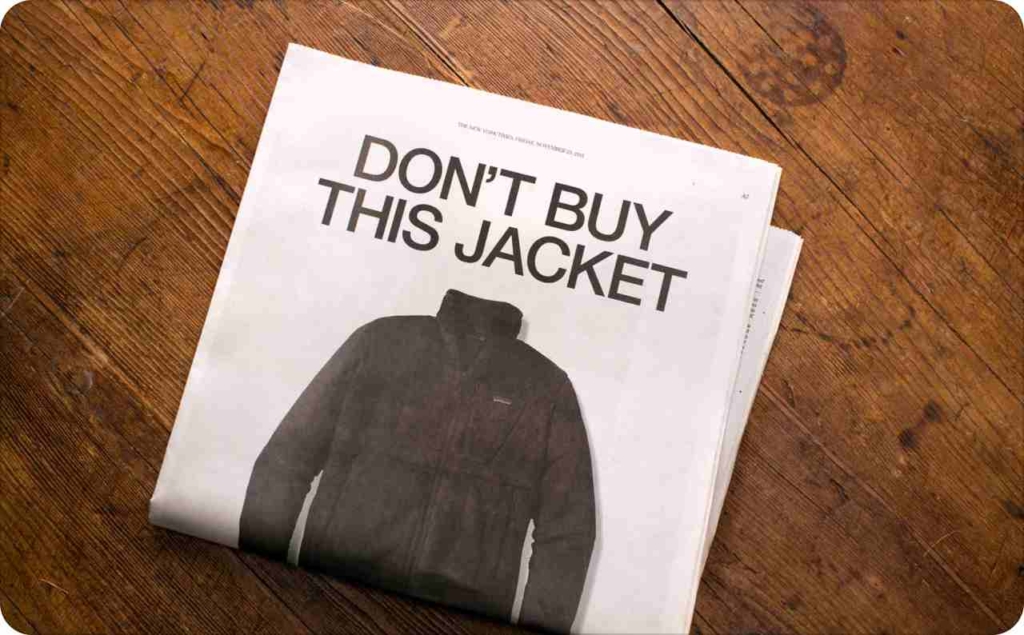
Photo source: Patagonia
Lacoste “Save our species”: Fashion with a mission
Billboards and storefronts replaced the brand’s crocodile logo with endangered animals, each representing a species close to extinction.
Why it works: It transforms a familiar icon into a statement of urgency. The design feels premium yet purposeful, reinforcing values through restraint.
How to use it in your advertising: Use your visual identity as the message. When a brand symbol changes, people notice and share.
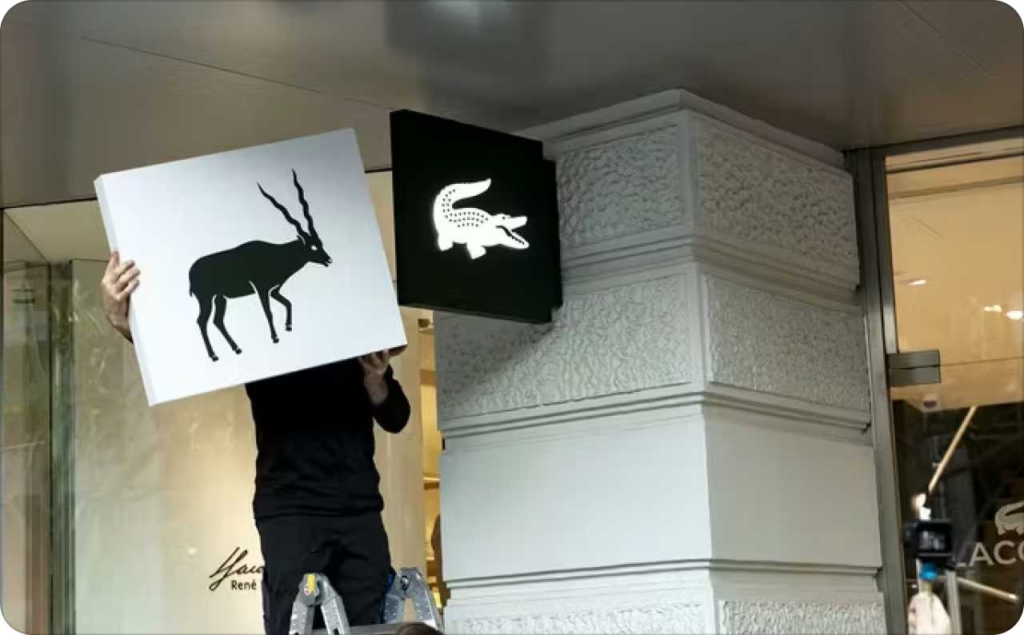
Photo source: Lacoste
8. Inspiring the next journey: OOH that sparks exploration
The best tourism OOH campaigns turn travel dreams into booked trips. They capture emotion first, sweeping landscapes, candid faces, a quiet “you could be here” energy, then follow with clarity: a destination name and a simple next step.
Use scenic visuals paired with clear planning CTAs. Daypart messaging to match traveler mindset — aspirational mornings, planning evenings, arrival moments at airports and stations. Retarget exposed audiences with itinerary guides or creator content for a full-funnel path from wanderlust to booking.
Great destination billboard advertising doesn’t just show where to go; it shows why it matters, how it feels to be there.
VisitScotland “Scotland is calling”: Turning emotion Into itineraries
A global creative OOH advertising example for tourism, using misty highlands and simple copy: “Scotland Is Calling.”
Why it works: It trades information for emotion. The quiet design stirs longing, which later advertising converts into action.
How to use it in your advertising: Lead with atmosphere, not itinerary. Use stillness and space, then retarget viewers with guides and trip tools once curiosity peaks.
Tourism Australia “Come and say G’day”: Character-led discovery
A worldwide tourism OOH campaign featuring animated ambassador “Ruby the Roo,” combined with digital extensions and influencer tie-ins.
Why it works: It humanizes travel promotion. The mascot builds emotional recall while the media plan drives measurable intent.
How to use it in your advertising: Pair recognizable characters or voices with data-backed DOOH targeting — airports, streaming lounges, or high-traffic cities.
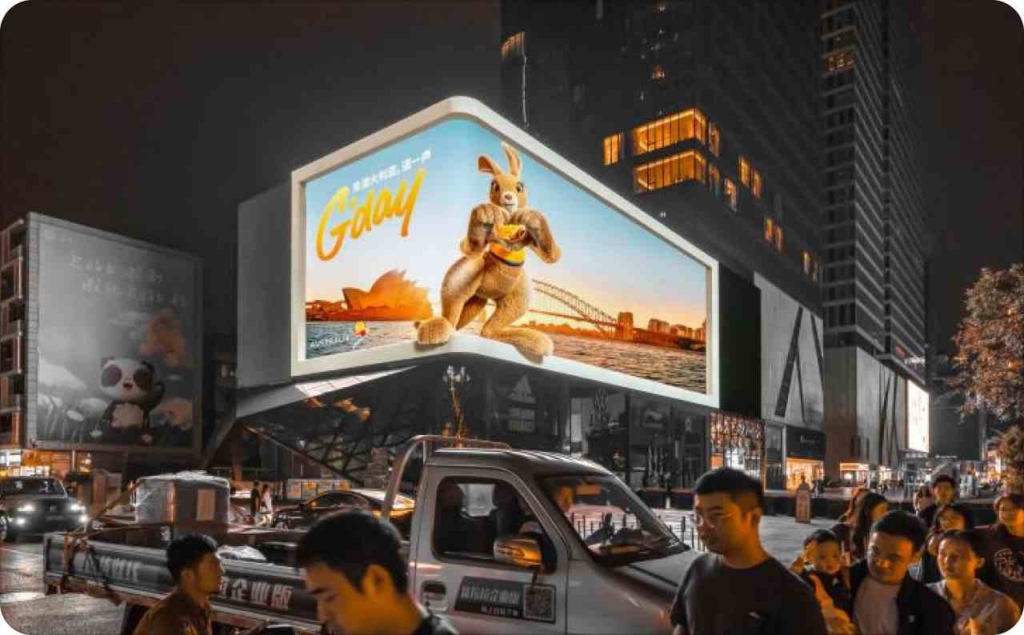
Photo source: Tourism Australia’s global campaign
New Zealand “Good morning world”: A greeting that traveled the globe
A daily series of destination billboard advertising clips showing locals saying good morning from stunning landscapes.
Why it works: It’s deeply human. Every clip feels personal, yet collectively builds a national invitation.
How to use it in your advertising: Think serial storytelling — short, real moments that evolve. Consistency and warmth outperform spectacle in building long-term visitation intent.
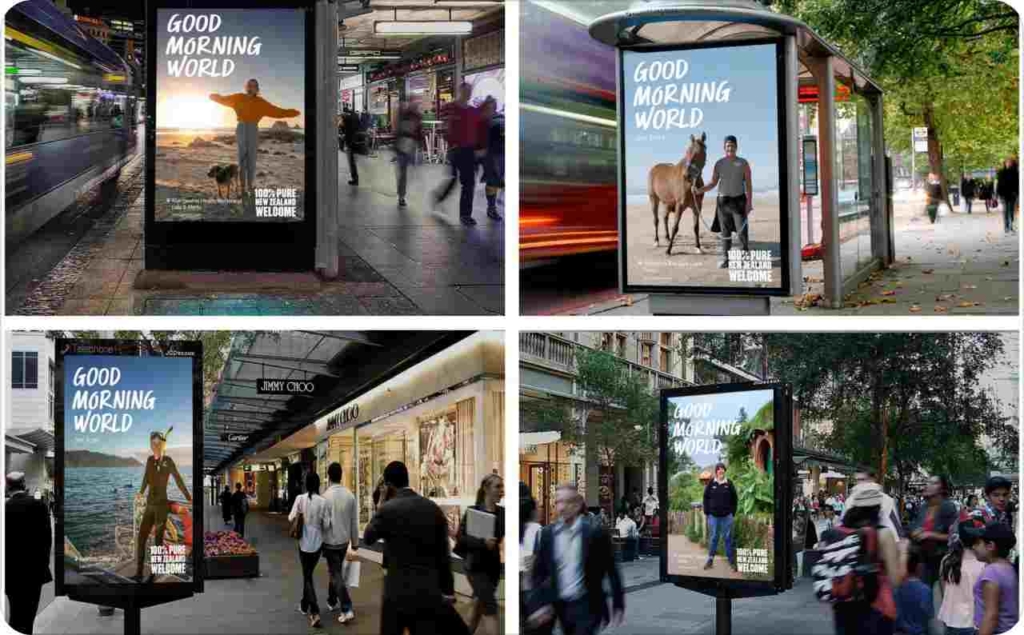
Photo source: Special New Zealand
9. Making it local: OOH that winks, not shouts
The most local OOH advertising examples win with personality. They use regional humor, city slang, or timely event tie-ins to make big brands feel homegrown. It’s about relevance that earns a grin, a photo, or a share.
Use airports, neighborhoods, and transit hubs as rotating canvases. Swap out copy by city or event, and keep a reusable library of idioms for quick creative refreshes. The best localized OOH campaigns prove that small tweaks in language can create big spikes in local recall and organic sharing.
Specsavers “should’ve gone to Specsavers”: Local humor that lasts
One of the most enduring successful OOH advertising campaigns examples, with playful taglines adapted to towns, landmarks, and sports moments.
Why it works: It feels personal, not corporate. The tone says “we get you,” whether it’s at an airport gate or a football pitch.
How to use it in your advertising: Rework familiar taglines to mirror local quirks or moments. Humor scales faster when it sounds like it came from down the street.
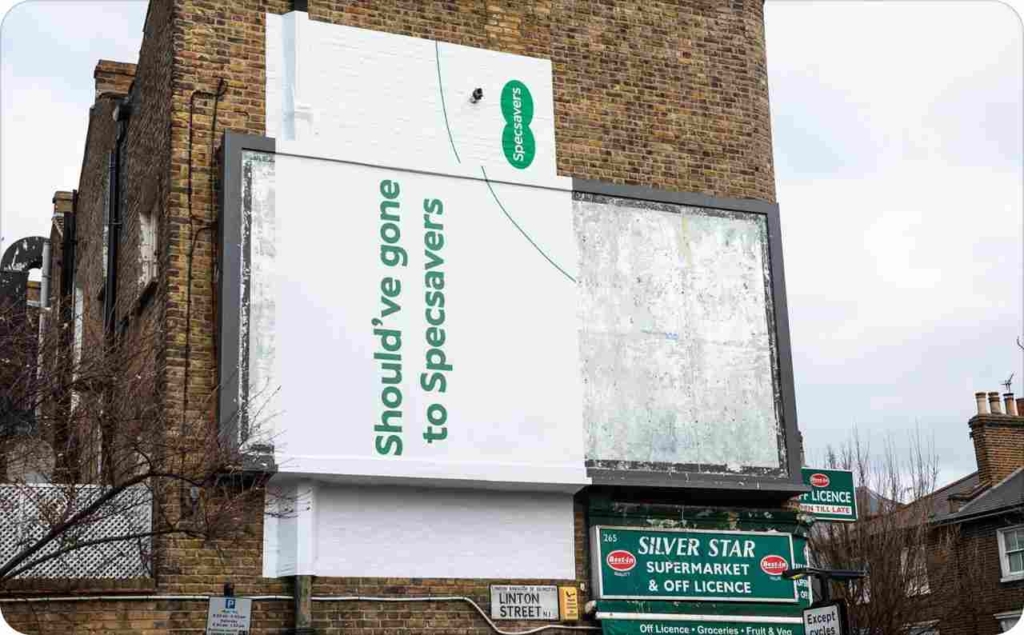
Photo source: Specsavers Creative
Deliveroo “Hungry, [City name]?”: Instant recognition through place
Localized DOOH boards across cities replaced headlines with the neighborhood name and nearby food options.
Why it works: It connects immediacy with service relevance. Personalization makes a global app feel local and human.
How to use it in your advertising: Use dynamic copy that auto-fills locations, events, or times. Small, contextual updates make repetition feel fresh.
British Airways “BA better world”: Pride in place
A series of localized OOH campaigns highlighting sustainability efforts and local staff stories from each city.
Why it works: It blends pride with purpose. Local employees and recognizable landmarks make global values feel rooted in the community.
How to use it in your advertising: Pair real local voices with brand initiatives. Authenticity turns corporate messages into neighborhood stories.
10. Experiences you can feel: OOH that engages every sense
The most memorable experiential OOH advertising examples turn curiosity into contact. They light up, move, shimmer, or even scent the air, creating moments too vivid to scroll past. These 3D billboard experiences don’t just advertise; they stage small, unforgettable events in public space.
Plan early and precisely. Permits, safety checks, and standby content matter as much as design. Build with modular or reusable parts to keep production efficient and sustainable. The right execution can earn more than attention, it earns PR coverage, social shares, and real dwell time.
Guinness “Scented christmas ad”: Smell that sells
A London underground creative OOH advertising example that diffused the scent of roasted barley to evoke freshly poured Guinness.
Why it works: It turns brand identity into a sensory cue. Smell becomes memory, reinforcing Guinness’s craftsmanship and warmth.
How to use it in your advertising: Connect your product’s defining sensory trigger to the brand story. Keep it subtle but unmistakable.
Samsung “Infinity screen”: Motion as immersion
A curved 3D billboard experience in Seoul that simulated crashing ocean waves on an endless loop.
Why it works: It transforms technology into awe. The illusion draws crowds and endless videos, pure earned media.
How to use it in your advertising: Use motion or perspective tricks that reward real-world viewing angles. Aim for visual serenity, not chaos.
Coca-Cola “Share the magic”: Lights, music, and joy
A holiday experiential OOH advertising example where digital billboards synced light shows and holiday jingles across city squares.
Why it works: It brings emotion to the surface — nostalgic, communal, and photo-ready.
How to use it in your advertising: Use synchronized sound and light when your campaign’s goal is shared joy. Tie each activation to a clear time or event to maximize attendance and coverage.
Make your digital ads work with AI ad generator while you run your ooh campaigns
When you’re investing in a big outdoor presence, your digital advertising still needs to keep pace. Zeely AI ad generator steps in so your online ads don’t lag behind your physical ones.
Why it matters:
- You’ll get scroll-stopping creatives ready in minutes, freeing you to focus on location, messaging, and timing
- It doesn’t just generate visuals; it sets the campaign in motion with tested templates, optimized copy, and real-time performance feedback
- When your OOH campaign is live — billboards, transit, or digital screens, use Zeely to launch matching digital ads, drive traffic, and measure impact
How to use it with your OOH strategy:
- After launching a 3D billboard or DOOH activation, use Zeely to spin up digital ads within hours that reinforce the same message
- Let your online creatives follow the outdoor campaign’s rhythm — teaser, proof, CTA, so your physical and digital presence move as one
- Track both: outdoor impressions and digital conversions. Use Zeely’s data to see which outdoor formats drove the highest lift online
Ready to sync your offline buzz with digital results? Create your first AI-powered ad set with Zeely today, launch faster, test smarter, and keep every impression working for you.