How much do TikTok ads cost in 2026?
How much do TikTok ads cost, and what affects your final budget? Zeely AI analyzed the latest pricing trends to present clear insights and practical tips for small businesses.
On TikTok, attention moves fast, but value comes from knowing what that attention’s worth. In 2025, TikTok reported that users spend an average of 58 minutes a day on the app, and every one of those minutes is part of a live auction where creativity meets cost. Smart advertisers aren’t guessing budgets anymore, they’re learning how to work with TikTok’s system, not against it.
This guide breaks down what TikTok ads really cost today, how billing and bidding work, and why creative quality now shapes price more than spend. Once you understand the math behind the feed, cost control becomes much simpler.
What are TikTok Ads: Types of TikTok advertising and marketing
TikTok Ads help your business show up where attention already lives right in the feed. They’re short, scroll-native videos that reach people while they’re watching, liking, and sharing. Instead of fighting for a moment, you join the moment.
At their core, TikTok Ads move through a simple funnel: people first notice you, then remember you, then act. For example, you can turn TikTok views into Shopify sales. Every ad type supports a step in that path. When they work together, you turn quick views into steady results.
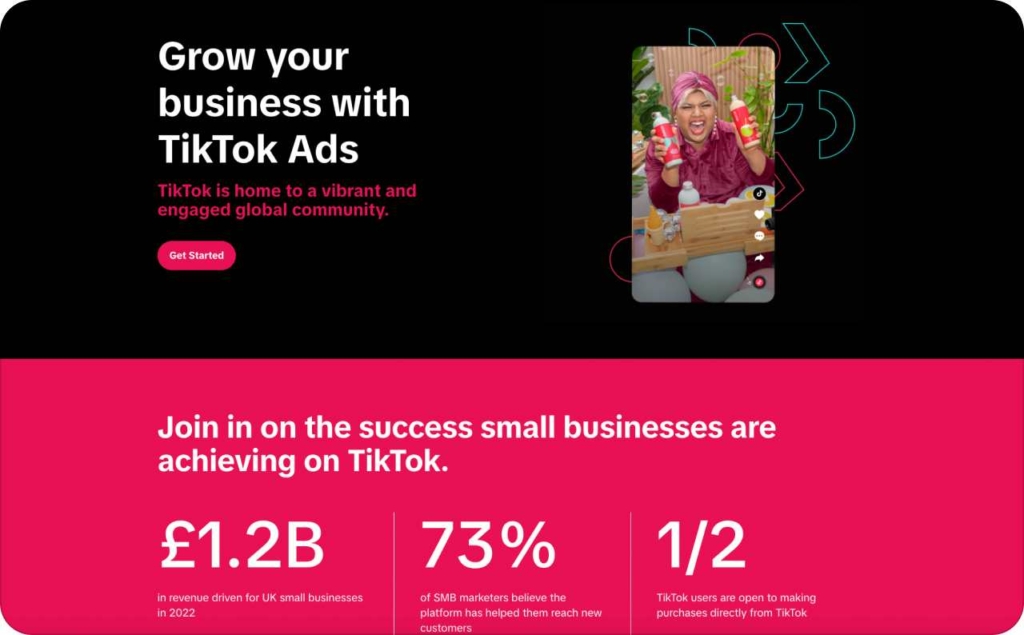
Photo source: TikTok for Business
Paid vs. organic vs. spark ads — when to use each
- Paid ads: Run through Ads Manager for full control over targeting, spend, and performance. Use these when you’re ready to scale
- Organic content: Everyday posts that build trust. Great for testing creative ideas and finding what naturally clicks
- Spark ads: Promote an existing organic post yours or a creators and keep its original likes and comments. It’s authentic storytelling with real performance data behind it
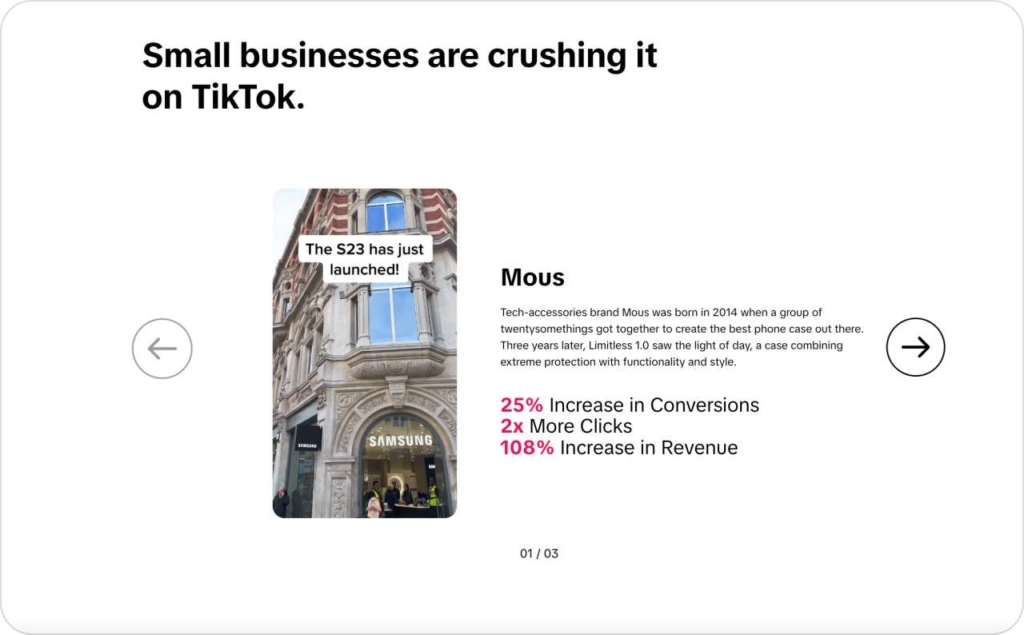
Photo source: TikTok for Business
Auction vs. reservation buys — what changes in cost logic
- Auction: You bid against other advertisers. Prices shift with competition and how well your ads perform. More flexible, more dynamic
- Reservation: You book fixed placements like TopView ahead of time. Predictable reach, steady delivery, ideal for launches or brand moments you can’t miss
How much do TikTok ads usually cost?
So how much do ads cost on TikTok? The short answer: it depends on what you want to achieve and how the platform bills your results. The better your creative and targeting, the more efficiently you’ll spend. TikTok’s pricing model is flexible, built to reward performance rather than raw spend.
Most campaigns use one of three billing types:
- Cost per 1,000 impressions: You’re paying for visibility. Each thousand views helps you reach new audiences fast
- Cost per click: You’re paying when someone takes action, clicks to your site, app, or offer
- Cost per action: You’re paying when a meaningful result happens, like a sign-up or purchase
Every campaign also has a small daily and total minimum so TikTok can gather enough data to learn who responds best. Your invoice will break down spend by campaign, ad group, and ad, so you can see exactly where each dollar went.
What actually drives your invoice: Delivery vs. results billing
TikTok uses two cost logics.
- Delivery-based billing means you’re charged for ad delivery, typically every 1,000 impressions or views. It fits awareness or traffic goals
- Results-based billing means you pay only when your chosen action happens. It’s ideal for conversions or lead campaigns, but costs can rise if your signals or events aren’t well-optimized
Strong creative and clean data signals help the algorithm deliver more efficiently, often lowering effective CPM or CPA over time.
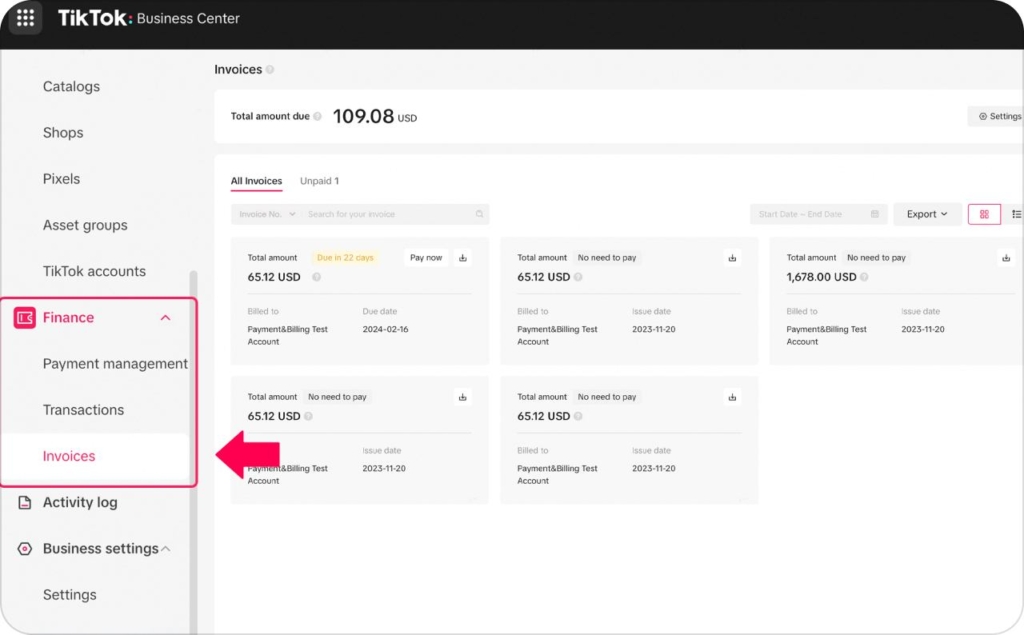
Photo source: TikTok Business Help Center
Cost snapshot
| Objective | Typical billing | Common formats | Example ranges* | Best-fit industries | Notes you’ll actually use |
| Reach / awareness | CPM | In-Feed, Spark Ads; Reservation: Topview/Brand takeover | $5–$12 CPM | Retail/CPG, Entertainment, Local multi-location | Lowest friction when creative feels native; short hooks + product in first 2s usually lower CPM. Reservation buys provide predictable reach but require larger commitments. |
| Traffic / engagement | CPC; sometimes CPM w/ optimized delivery | In-feed, spark ads, collection | $0.20–$1.50 CPC | E-commerce, Apps, Travel, Events | CTR swings with thumb-stop moments and caption clarity. Spark Ads often earn cheaper clicks when the original post has social proof. |
| Conversions / sales | CPA | In-feed, spark ads, shopping ads | $5–$25 CPA | DTC, Subscriptions, Local services | Stable CPAs require clean pixel events and enough daily volume. Expect short learning periods to reset when you change too much at once. |
| Lead generation | CPA | Lead gen objective in native form, in-feed | $4–$18 CPA | Services, Education, Finance, B2B Lite | Native forms reduce friction; always validate post-lead quality to avoid cheap but low-intent leads. |
| App installs | CPI / CPA | App installs, gaming formats | $0.70–$3.50 CPI | Mobile apps, Gaming, Fintech | Post-install quality (events, ROAS) strongly influences costs after day 1; expect CPIs to settle as signals improve. |
| Video views | CPV / CPM | In-feed, Topview in reservation | $0.01–$0.03 CPV or $5–$10 CPM | Entertainment, New product launches | Use when you need watch time and recall before driving action; add retargeting to harvest attention. |
*Example ranges are directional averages across U.S. advertisers and standard consumer geos; niche B2B, HNW, and tight geo/device filters can price higher.
Table last updated: January 2025
How much do TikTok ads cost per day?
You don’t need a huge budget to start running TikTok ads, you just need enough for the system to learn. TikTok’s minimum daily budget is about $20 for an ad group and $50 for a campaign, according to recent HubSpot benchmarks. That’s the baseline TikTok uses to collect data and begin optimizing who sees your ads.
In real campaigns, most small businesses spend between $50 and $150 a day during the first test phase. That’s usually enough to find out which creatives and audiences actually work without burning through your entire budget. Once performance steadies, scaling to $200 – $500+ per day helps the system learn faster and lowers your cost per result over time.
If you’re working with a lean budget, even $10–$20 a day can teach you something, just expect slower results and fewer impressions. What matters most is consistency. Let your campaign run at least three to five days before judging performance. That gives TikTok enough signals to understand what’s working.
To put it simply:
- Minimum to run: $20–$50/day
- Recommended test range: $50–$150/day
- Efficient scaling range: $200–$500+/day
Start small, stay consistent, and let your creative and targeting guide the budget, not the other way around.
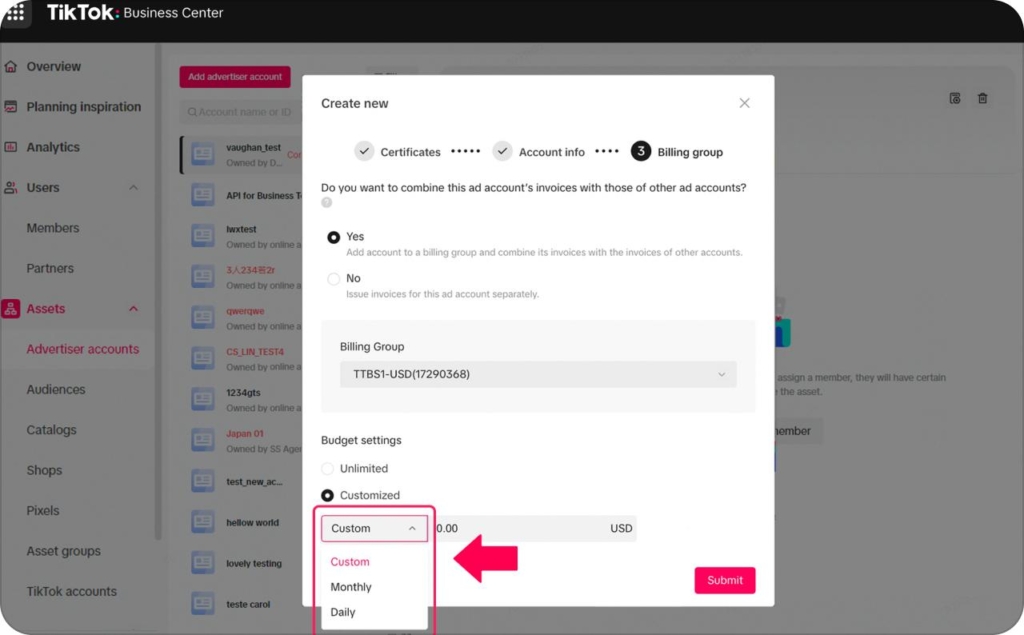
Photo source: TikTok Business Help Center
Cost-influential factors and how to reduce them
TikTok’s ad costs are a mirror. Before launching a campaign, read what works best on TikTok. They reflect how clearly your campaigns tell the system what matters. When your setup is simple, creative stays fresh, and signals are clean, your spend stretches further and performance feels steadier.
Below are the five levers that quietly shape what you pay, and how to make each one work for you.
1. Account structure that lowers costs
Think of your account like a roadmap. Too many turns, and the system gets lost.
- Campaign Budget Optimization / CBO: TikTok moves spend toward what’s performing best. Once your pixel has enough data, this usually delivers more consistent results for less
- Ad Group Budget Optimization / ABO: Gives you control, but spreading spend too thin slows learning
- Consolidation: Fewer ad groups mean stronger data and faster learning, which often leads to cheaper conversions
In 2025 Forrester showed, marketers who simplify media structures to reduce fragmentation see more predictable performance.
2. Bidding and pacing settings explained
Your bid tells TikTok how much room it has to balance reach and efficiency. “Lowest cost” gives the system full freedom to find results at the best available price. It’s ideal when you’re still testing creative or audience segments.
Once your results stabilize, “Cost cap” can bring more control. It keeps your average CPA near a target while maintaining delivery volume. “Bid cap” sets a hard ceiling per result and useful if you know exactly what each conversion is worth, but risky if set too low.
The goal isn’t to outsmart the algorithm; it’s to give it enough flexibility to perform efficiently. Start open, then guide the system once you have reliable data.
3. Creative as a cost lever
On TikTok, creativity isn’t decoration, it’s data. Check how to create effective TikTok ads for dropshipping. The platform reads watch time, replay rate, and engagement as signs of quality. If people stop, watch, or share, your CPM naturally drops.
Focus on the hook rate: those first two seconds determine whether someone stays or scrolls. Design clean, fast-paced videos with clear captions and natural sound to create thumb-stop moments. Refresh your creativity every one to two weeks to avoid fatigue.
TikTok rewards content people actually enjoy watching. The better your creative holds attention, the less you’ll pay for the same reach.
4. Signal quality and attribution windows
TikTok learns from your data. If that data’s fuzzy, your costs rise.
- Track real outcomes: purchases, leads, installs
- Use Aggregated event measurement, so conversions still count under privacy rules
- Review post-lead quality to make sure you’re attracting real customers, not empty clicks
Clean, consistent signals help TikTok recognize what success looks like and find it faster.
5. Geo, device, and placement filters
Tight targeting feels safe, but it often increases CPM. Smaller audiences give the algorithm less space to test and learn. Starting broad across locations, devices, and placements gives TikTok room to discover what performs best.
According to Nielsen 54% of marketers planned to reduce spend in 2025, so efficiency gains come from better planning and optimization, not tighter targeting alone. Once you see consistent results, narrow your filters based on real data, not assumptions. Freedom first, precision later. That’s how you lower costs without sacrificing quality.
TikTok vs. Facebook vs. Instagram vs. YouTube ads cost
Every platform prices attention differently. TikTok moves fast. Facebook and Instagram reward consistency. YouTube rewards patience. The goal isn’t to find the cheapest clicks it’s to spend where your message fits the medium. So let’s discover differences of platforms and what impact on pricing.
1. Cost stability across platforms
TikTok’s prices move with culture. When a trend hits, CPMs drop and reach explodes. When it cools off, you’ll pay more for the same attention. It’s flexible but unpredictable.
Facebook and Instagram are steadier. Their algorithms have years of data, so costs hold more consistent even when creative changes. YouTube falls between them: stable, but slower to react.
If you like fast feedback, TikTok’s volatility can work in your favor. If you prefer predictability, Meta’s ecosystem still feels safest.
2. Creative workload and lifespan
TikTok rewards motion, not polish. You’ll need a steady stream of short, native-feeling videos. Simple lighting and clear hooks beat high-end production every time.
Facebook and Instagram stretch each ad’s lifespan longer. One good creative concept can run for weeks. YouTube flips the equation, you’ll produce fewer ads, but each one takes more planning and cost.
So TikTok needs rhythm, Meta needs variety, YouTube needs storytelling.
3. Learning speed and stability
TikTok learns fast and forgets fast. Once it gets enough conversions, costs fall sharply — but tweak too often and you reset progress. Facebook learns more slowly, yet carries that data further. YouTube takes longest to stabilize, but when it does, it holds.
If you like testing daily, Meta or YouTube will handle that better. TikTok prefers longer stretches of consistency to reward you with cheaper CPAs.
4. Attribution windows and what they really mean
TikTok attributes most results within seven days. Facebook and Instagram stretch to 28. YouTube counts view-through conversions, which can appear days or weeks later. When comparing CPAs, match the attribution window first, otherwise TikTok always looks pricier than it really is.
| Platform | Typical CPM | Typical CPC | Cost predictability | Creative volume | Learning speed | Strength |
| TikTok | $5–$12 | $0.20–$1.50 | Volatile | High | Fast | Reach, quick awareness, impulse buys |
| $8–$14 | $0.50–$2.00 | Steady | Moderate | Moderate | Reliable conversions, retargeting | |
| $10–$16 | $0.70–$2.50 | Stable | Moderate | Moderate | Brand lift, lifestyle storytelling | |
| YouTube | $6–$20 | $0.40–$3.00 | Gradual | Low | Slow | Deep engagement, brand trust |
Reasons to use an AI ad generator for your TikTok ads
Creating TikTok ads shouldn’t drain your time, budget, or creativity. Yet for most small businesses, that’s exactly what happens: endless filming, editing, and guessing what might work. Zeely makes that process simple. It’s an AI-powered ad tool built for SMBs, marketers, and e-commerce owners who want real results without a full production crew.
Here’s how Zeely turns common pain points into quick wins:
- No time to create? Zeely’s AI ad generator builds scroll-ready TikTok videos in minutes, not hours
- Low budget for content? Forget studio shoots. You can make professional-looking ads for a $29.95/month, all from your phone
- No design or editing skills? The app handles visuals, captions, and music automatically. You just choose a product and goal, Zeely does the rest
- Need more videos, fast? Generate up to 8 unique UGC-style videos at once: perfect for ads, posts, Stories, or Shorts. Each comes watermark-free, ready to publish anywhere
- Struggling with scripts or ideas? Zeely’s AI writes your headlines, hooks, and product angles based on what actually performs on TikTok
- Worried about wasted ad spend? Smart performance insights help you see what converts before you scale, saving money while growing faster
- Hard to test or scale campaigns? Zeely helps you launch multiple creative variations instantly, so you can test more and spend less guessing.
TikTok Ads have changed how businesses reach people: fast, visual, and built for action. When you understand how the platform works, what drives cost, and where it fits beside Meta and YouTube, advertising stops feeling like guesswork. You can plan smarter, test cleaner, and scale without overspending.
With tools like Zeely’s AI ad generator, you don’t need a big team or production budget to compete. You can create polished TikTok videos, test multiple versions, and post them across channels in minutes, all from your phone. Clear structure, strong creative, and smart tools make TikTok advertising not just affordable, but sustainable for any growing business.
Try Zeely today and see how easy great ads can feel.