Is Zeely legit? Honest review for small businesses
If you’re unsure whether you can trust Zeely with your ad budget, I’ll walk you through real results, real support cases, and what the Zeely team sees behind the scenes so you get a clear, honest answer.
Quick answer: Is Zeely legit in 2026?
If you want the short answer, yes, Zeely is a legit SaaS company. It’s registered as Zeely, Inc. 2810 N Church St, Ste 27833, Wilmington, DE 19802-4447, public, and used every day by tens of thousands of small business owners who want faster ads without hiring a team.
But I want to be honest with you. Legitimacy is only one part of the story. Your experience depends a lot on expectations and how comfortable you are with AI tools in general. Before reading this article you may also like to find out first what Zeely AI is in general.

Let me start with what’s actually solid.
You’re working with a product that ships updates weekly, has a real support team behind the chat, and responds to reviews in public. You can check our pricing before you buy. You can see every feature on our site. There’s no hidden company, no disappearing act, no mystery billing. That’s what I mean when I say Zeely is real.
Now let’s talk about the parts people get frustrated with.
Many of the complaints fall into a few patterns. Some users misunderstand how trials work and expect a full free demo instead of a discounted trial that rolls into a paid plan. Others delete their account and assume it cancels the subscription, which no platform does automatically. Billing friction creates stress, and I get that.
Some users also feel the support replies look “AI-generated” because the responses are polished and quick. I can promise you there are real humans on the other side, but I understand why it sometimes feels robotic.
Creative quality comes up a lot too. When the original product photos or store pages are low quality, the AI has less to work with. That leads to visuals that feel “off” or too generic. A few users also mention glitches, slow rendering, or outputs that don’t match their brand right away. These things happen, and the team works on them constantly, but they’re part of the reason expectations matter.
To put everything in context, the entire AI marketing space exploded in 2025. Almost 88% of marketers now use AI daily, and the market passed $47.32 billion this year. That means people compare every AI tool to the biggest names out there, and expectations skyrocket.
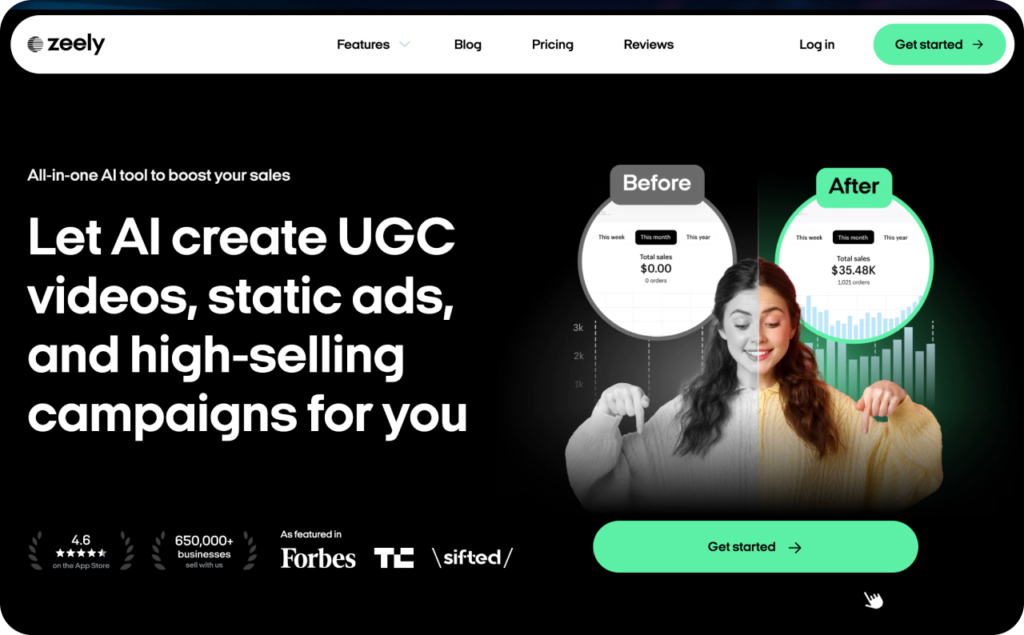
Here’s where satisfaction tends to split.
If you’re a small business owner without a designer, a copywriter, or a marketing strategist, Zeely usually feels like a breath of relief. You paste your link, make a few choices, and you get usable ads fast. You don’t need to know design rules, ad structure, or how Facebook bidding works. It saves time and avoids the usual “blank page panic.”
If you expect agency-level custom work, full creative direction, advanced controls, and immediate refunds at the first sign of friction, Zeely will probably feel too limiting. AI is quick, but it’s not a human art director. And no subscription platform cancels itself or manages App Store billing for you.
So yes, Zeely is legit. The question to ask is whether your expectations match what the tool is built for. My goal is to help you make that call with full clarity, not hype.






Why AI marketing tools trigger “is this a scam?” in 2026
If you feel a little suspicious about any AI marketing app right now, you’re not overreacting. In 2026, AI tools are everywhere. Every week there’s a new app promising instant growth, instant videos, instant ads. At the same time, more small businesses are shifting their ad spend into automated platforms, which means more subscriptions, more trials, and more unexpected renewals across the board.
The bigger issue is what happened last year.
According to the FTC’s latest report, people lost $12.5 billion to fraud in 2024. That’s a 25% jump in a single year. This environment makes it hard to tell the difference between real risk and normal SaaS frustration.
Actual fraud looks like this: fake companies, disappearing websites, stolen cards, no way to contact a team, no product behind the promises.
How to tell if any AI platform is legit: a 2026 checklist
Most people don’t know what to look for when they evaluate an AI platform. That’s how fake apps slip through and real apps get labeled as scams. In 2026, this matters more than ever. Deepfakes, synthetic identities, and subscription traps are rising fast. Financial fraud alone hit record levels last year, with losses jumping again across the U.S.
I want to give you a simple checklist you can run on Zeely or any AI tool. It takes a few minutes and helps you separate a trustworthy product from a risky one. You may also like to read more about whether Zeely is reliable.
1. Look for a real legal entity and a real address
A legit platform tells you who’s behind it. You should find a company name, registration details, and a physical address.
If you can’t find this, or the company name changes across pages, that’s a red flag.
Why this matters in 2026: fake companies use synthetic identities. They can mimic real companies for a short time before disappearing. Verifying the legal entity protects you from that.
2. Check app store presence
A real business has a listing on the App Store or Google Play. Those stores verify developer accounts before publishing. If the tool avoids app stores entirely and only offers third-party downloads, pause.
Why this matters: scammers often avoid app stores because they can’t pass verification.
3. Pricing must be transparent
You should see the monthly price, what’s included, and how trials work. When a trial rolls into a paid plan, it should say so clearly. You should also see how to cancel.
Why this matters: subscription fraud has grown because many tools hide renewal terms or make cancellation a maze. A legit SaaS describes the flow upfront.
4. Marketing must sound realistic
Any platform promising “guaranteed results” is not credible. AI can give you a creative boost, but it can’t promise sales. A legit product explains limits and tells you what depends on you (inputs, budget, niche).
Why this matters: fraudsters rely on extremes. Real tools talk about outcomes, not miracles.
5. Read public reviews, not just the homepage
Look for a mix of positive and negative reviews. A platform with only perfect reviews is suspicious. Most importantly, look at how the team replies. Are the responses human, specific, and consistent? Or copy-paste?
Why this matters: scammers never respond. Real teams show up, even when the review is harsh.
6. Verify data privacy and billing policies
A trustworthy tool explains how it stores data, what it uses, and how billing works. You should have access to a full privacy policy and terms.
Why this matters: in 2026, stolen identities and card scraping are built into many fraudulent apps. A real company puts its policies front and center.
Red flags vs yellow flags
| Signal | What it means | How to treat it |
| Red flag: no company name, no address, no team | High risk of fraud | Avoid the platform |
| Red flag: no real app-store listing | Possible fake tool | Do not enter payment info |
| Red flag: guaranteed results | Unrealistic and unsafe | Skip immediately |
| Red flag: no public reviews | New or unverified | Treat as high risk |
| Yellow flag: confusing billing flow | Legit tool, poor UX | Double-check terms before subscribing |
| Yellow flag: mixed reviews | Normal SaaS pattern | Read the details, not the score |
| Yellow flag: slow support | Real team, overloaded | Expect delays but not danger |
What Zeely actually does for small businesses in 2026
If you’re running a business alone, you don’t have hours to design ads or learn editing tools. You need something that works fast and doesn’t confuse you. Here’s the clearest way to understand what Zeely actually does.
What Zeely creates for you
Zeely builds UGC-style video ads and static creatives from the info you already have.
You paste your product link or type a few details. The system reads your page, pulls your images and descriptions, and generates ad-ready content. No filming. No editing. No design skills.
What you can export:
- Videos (UGC-style, vertical, ad-ready)
- Static ads for Meta, TikTok, IG
- No watermark
- Correct sizes for each platform
This is the creative layer that saves you time.
Imagine your product turned giant.
With Seedance 1.5 Pro and Zeely, you can build a modern Gulliver’s world. A familiar city like Paris, real streets, real people — and a product that suddenly takes over the space.
Seedance works well when you want to turn a product or fashion… pic.twitter.com/ADjB2jFeIw
— Zeely AI (@zeely_ai) January 11, 2026
What Zeely does not replace
Your ad budget.
Meta, IG, TikTok charge for impressions. Zeely doesn’t control or include that cost.
This is where many complaints come from. When someone says “I have to pay for Zeely and ads,” they’re describing how every ad platform works. Zeely replaces your editing tools and not your media spend.
Think of it like this:
- Meta = delivers the ads
- Zeely = builds the ads
- Your budget = fuels the ads
Clear and separate.
Why creative quality sometimes disappoints
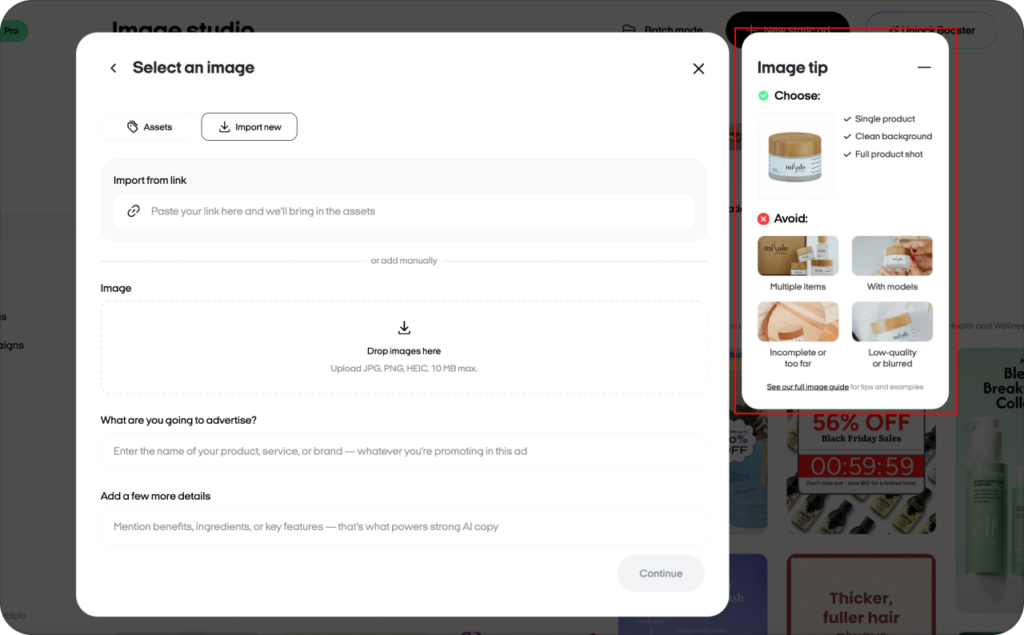
AI is only as strong as your inputs.
If your product photos are dark, blurry, or inconsistent, the results look weaker. When users upload clean shots, the quality jumps immediately. This is true for every AI tool, not just Zeely.
Before generating, check:
- Are my photos bright?
- Are they sharp?
- Is my product centered and clear?
Better inputs → better ads. Read now which images work best for AI generator.
What the numbers show
- 75,000+ sellers using Zeely
- UGC-style ads reach ~9% CTR (many small businesses average ~4% on their own)
- Up to +323% sales growth in case studies using strong creatives + steady testing
These aren’t promises. They’re patterns the team sees when inputs are solid and users stay consistent.
Zeely helps you create ads fast, launch them without stress, and keep your workflow simple. That’s the real value for small businesses in 2026.
What real Zeely users say in 2026: reviews and patterns
Public reviews help you understand where a product delivers and where it still frustrates people. I read every pattern carefully so you don’t have to.
What people are happy with
Many users on Trustpilot and the app stores talk about fast ad creation and a clear bump in traffic. They like that they can make UGC-style videos without shooting anything. For small business owners who don’t edit videos, this is a real win.
What people struggle with
There’s a different group that feels the experience is confusing. When you read the reviews closely, the same themes appear.
Common themes you’ll see:
- Billing and auto-renewal confusion
- “I canceled but still got charged”
- Deleting an account instead of canceling a subscription
- Difficulty canceling through the App Store or Google Play
- Ads that don’t match the brand visuals
- Avatars or product details that look off
- Support replies that feel robotic even when humans write them
The Zeely team replies to almost every negative review and clarifies the situation. They also point out that support is handled by real people, not AI. But when users get quick, clean replies, they often assume it’s automated.
How to read these reviews correctly
A frustrated review doesn’t mean fraud. It usually means the UX wasn’t clear or the expectations didn’t match the tool. When you evaluate any tool, look at:
- Volume of reviews
- Recency (what people say this month)
- Whether the company replies
- Whether issues get resolved
This mix of reviews helps you understand the real Zeely customer experience in 2026.
Zeely pricing, trials, and “hidden” costs: how it really works
Pricing confusion is one of the biggest reasons people feel unsure about a subscription app. Here’s the clearest version of how Zeely’s pricing actually works.
What the plans look like
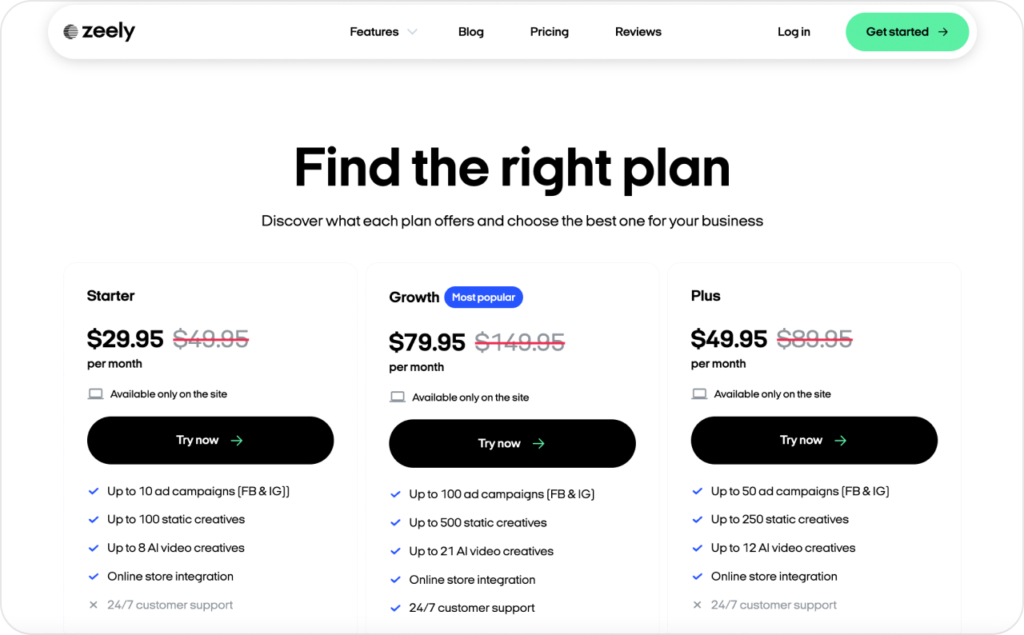
Zeely doesn’t offer a fully free plan. You start with a discounted trial that rolls into a paid tier unless you cancel. Plans include Starter, Plus, and Growth. The Growth plan is often the one people refer to as “the $80 plan.” Each plan covers the creative tools and features at that level.
What you pay separately
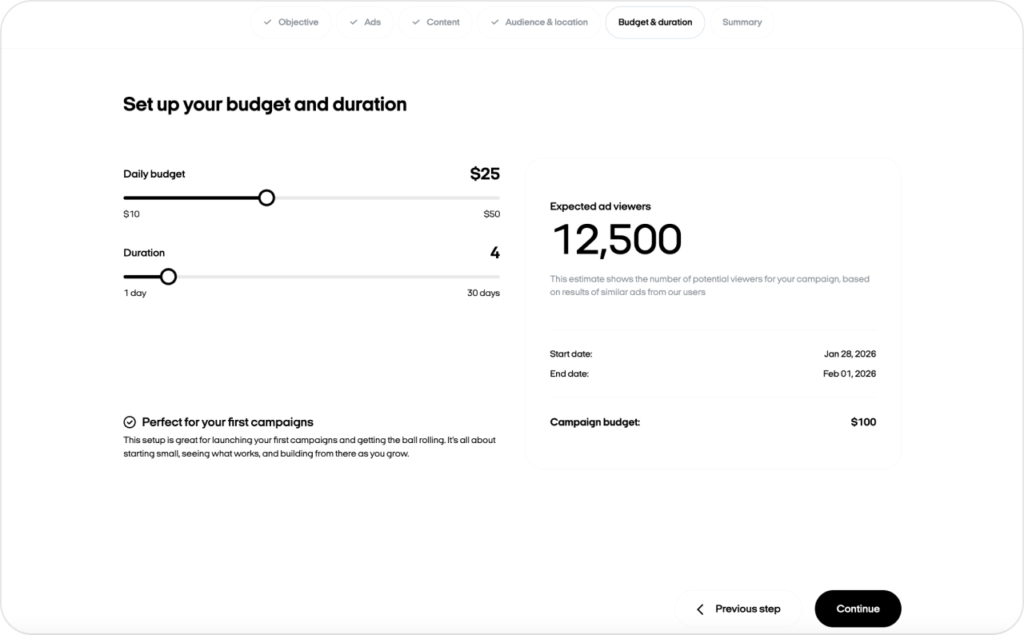
Your ad spend for Meta, Facebook, Instagram, or TikTok is always separate. This is how every ad platform works. Zeely creates and manages the ads. The platforms charge for delivering them. Some reviews mention “Booster” or add-ons. Those are optional features you can enable. If you turn one on, you need to cancel it separately.
How to cancel Zeely AI subscription correctly
To cancel your Zeely subscription, you need to use the same place where you first paid. I know this part can feel confusing, so let me walk you through it clearly.
If you subscribed using Apple Pay or Google Pay in the app, you need to cancel (and request any refund) directly in the App Store or Google Play. The app doesn’t see or control these payments on its side, so not able to cancel or refund them for you from inside Zeely.
If you subscribed using a bank card or PayPal, you can cancel your Zeely subscription in your Zeely account:
- Open the account menu in the top-right corner
- Click your email
- Go to Subscription → Manage subscription → Cancel subscription
A few important things to know:
- Deleting your Zeely account does not cancel your subscription
- Add-ons are billed separately, so you need to cancel each add-on individually if you no longer need it
If your purchase was not made via Apple Pay or Google Pay and something does not work when you try to cancel in your account, message Zeely Support in Zeely Help Center, and I’ll make sure the team helps you cancel.
Zeely vs building your own AI marketing stack (HeyGen, Canva and more)
Most owners try a “DIY stack” before they try Zeely. It works until the tools start stacking up, the edits pile up, and posting becomes another job. I want to show you the real trade-offs so you can choose the path that fits your time and budget.
What the DIY stack looks like
Many reviewers describe the same workflow:
- HeyGen for AI video
- Canva for design
- Caption tools for text
- Manual resizing for every platform
- DMing freelancers for fixes
- Meta Ads Manager for publishing
It’s flexible, but it takes time. And it also takes skill. Not everyone wants to learn five different interfaces.
The money trade-off
A typical stack might include:
- HeyGen: separate subscription
- Canva Pro: separate subscription
- Caption tools: usually paid
- Editors or freelancers: variable
- Your ad budget: always separate
Zeely rolls your creative tools into one subscription. Your ad budget stays separate because Meta and TikTok always charge for delivery. So the question isn’t “Which is cheaper?” It’s: How many tools are you paying for, and how many hours are you spending inside them?
The time trade-off
Turning a URL into ads takes minutes inside Zeely. Doing the same inside a DIY stack can take hours: script writing, image selection, cropping, resizing, caption writing, exporting, re-exporting, and then posting.
Small businesses say that AI tools can save them up to 14 hours per week and more than $5,000 per month when used consistently. That’s the real value: fewer moving parts and fewer decisions.
The skill trade-off
If you’re a non-designer or a non-technical owner, the DIY approach can feel heavy. Zeely gives you tested templates, UGC structures, and captions you can adjust quickly. If you’re a power user who loves building everything manually, a DIY stack gives you full control.
Simple decision matrix
Choose Zeely if:
- You want to turn a product link into ads quickly
- You don’t want to edit automated video ads or visuals yourself
- You prefer one place to generate and launch ads
- You value speed more than deep customization
DIY is better if:
- You want full creative control
- You have strong design and editing skills
- You enjoy working across multiple tools
- You prefer hand-built scripts and custom scenes
Zeely is the faster, simpler path. A DIY stack is the flexible, hands-on path. Both work. Your time and skills decide which one fits. Read more about how Zeely works.
What Zeely is improving for 2026: credits, templates and support
More credits for the same price
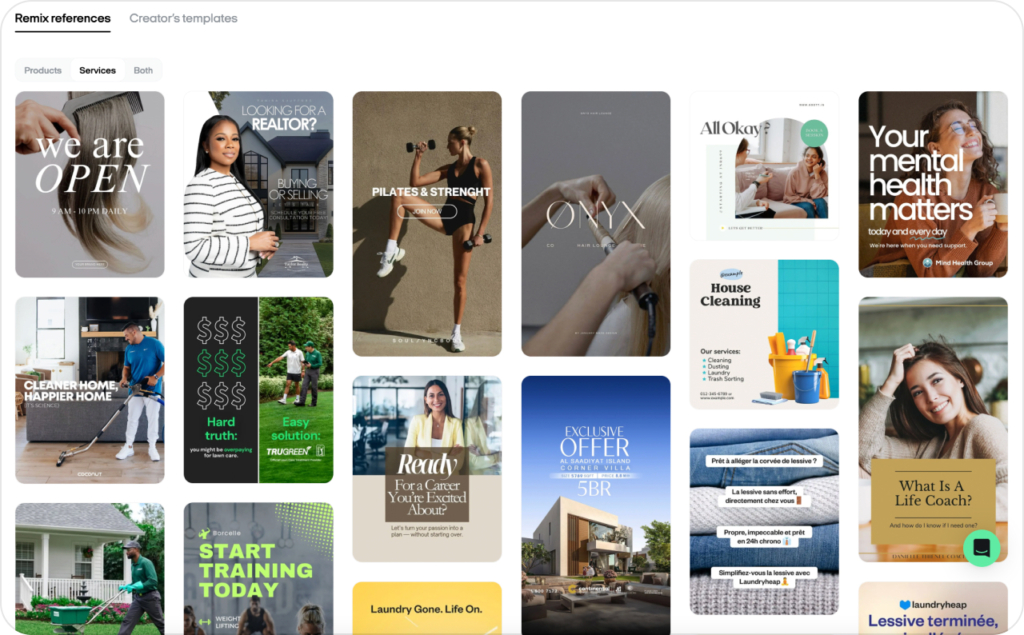
Many users wanted more generations inside their plans. The team has been expanding credit limits so you can create more ads without upgrading. If you want to confirm your current limits, support can check it for you.
Templates: why they sometimes feel limited
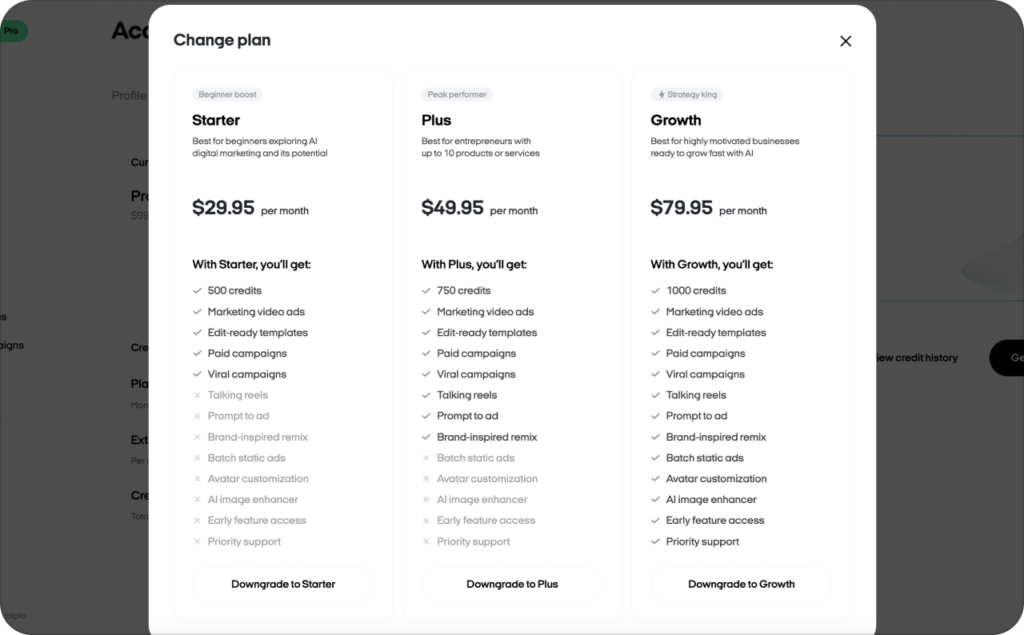
Templates are filtered by industry at onboarding. That means you see fewer templates, but all of them match your niche. The library is growing, but the filtering stays — because relevance beats quantity.
Customer support: what’s different now
Older reviews mention robotic replies or slow responses. The team acknowledges that support wasn’t perfect. Today, paid subscribers get human support 24/7 through chat and email. There is no phone line, but you get real people — and you can see that in Zeely’s public replies to reviews.
Final verdict: is Zeely a legit platform for your business?
Before people ask “Is Zeely legit?” they usually ask, “Will this actually work for me?” Let’s answer both clearly.
Many users expect:
- One-click sales
- Trial = full demo
- No separate ad spend
- Studio-grade videos from low-quality inputs
These expectations come from marketing across the whole AI space, not just Zeely. But they shape how people judge tools.
What Zeely actually is
Zeely is a legitimate AI creative ad generator platform. It turns your product link into UGC-style videos and social content. You get no-watermark creatives you can use anywhere. You can launch ads from the app, but your ad budget is separate because Meta charges for delivery.
The quality depends on your inputs, your product pages, your visuals, and your targeting. Zeely helps you move fast, but it doesn’t replace strategy.
Zeely is not a scam. It’s also not a magic money machine. It’s a real AI tool that gives you fast creatives, simple ad launches, and a single place to run your marketing. It works best when you bring solid inputs and realistic expectations.
This is the clearest, most honest verdict on Zeely’s legitimacy in 2026.

Emma blends product marketing and content to turn complex tools into simple, sales-driven playbooks for AI ad creatives and Facebook/Instagram campaigns. You’ll get checklists, bite-size guides, and real results, pulled from thousands of Zeely entrepreneurs, so you can run AI-powered ads confidently, even as a beginner.
Written by: Emma, AI Growth Adviser, Zeely
Reviewed on: February 2, 2026