UGC Ads

UGC ads in 2025: The simple way to make people actually watch your ads

Want viewers to actually watch your ugc ads? Get easy, proven tips for boosting attention and improving results with authentic user-generated content.

19 Nov 2025 | 15 min read

What are UGC ads?

UGC ads are ads built from user-generated content. That might be a customer review, a quick demo, or a short video. It doesn’t look like a studio production, and that’s exactly why it works.

People scroll past ads that feel staged. They stop for something that feels real. UGC advertising is built on that pause. It’s proof from real people, not a polished pitch.

Influencer marketing works by leveraging personality and reach — it’s about borrowing trust from someone with an audience. UGC ads flip that model: they win because the content feels authentic, no matter who’s behind the camera. And the numbers back it up — studies show UGC is up to 8× more effective at driving purchase decisions than influencer posts, making it the smarter bet when conversion is the goal.

And the timing couldn’t be better. Short-form video is still the format marketers use most in 2025 according to Hubspot research. UGC ads fit that space perfectly — quick, personal, and believable.

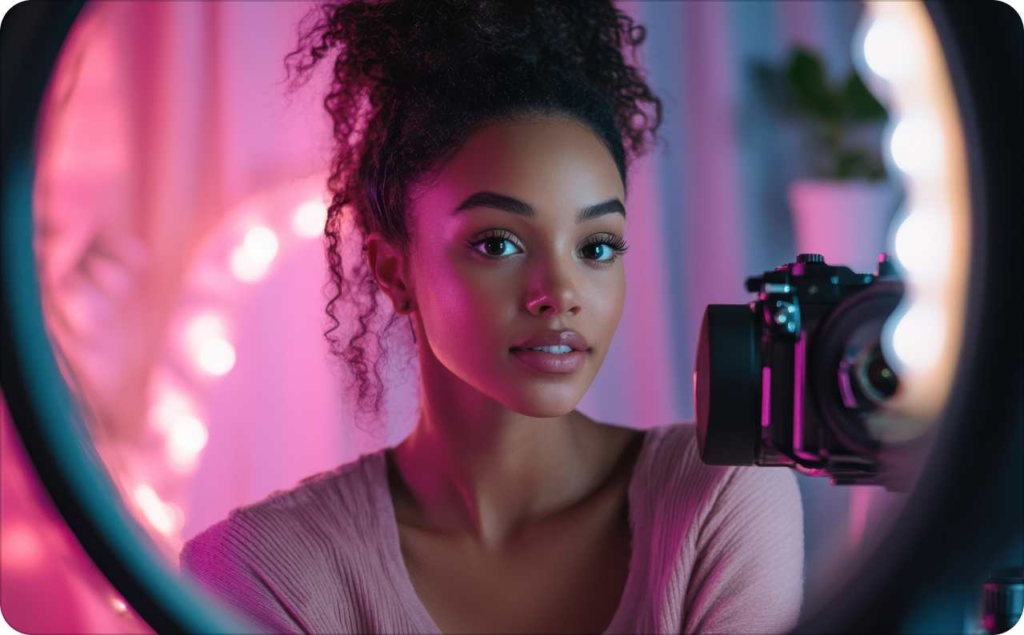
Young woman recording content in a pink-lit studio for UGC ads.

Two types of UGC every brand needs

Organic vs ad-ready

Think of organic UGC as the stories customers tell on their own. A buyer posts a late-night selfie with your product, writes a review that sounds more like a diary entry, or films an unboxing that’s shaky but real. It’s not built for conversion. That’s why it works so well as social proof. People trust it because nobody coached it.

Ad-ready UGC starts from the same place but is carefully tuned for the ad environment. A raw testimonial might be shortened to under 30 seconds, framed vertically, and given captions so it works with the sound off. The “unpolished” feel is preserved, but it’s guided by rules: hook in the first three seconds, keep the pacing tight, and let the product be the quiet hero. Organic UGC wins hearts. Ad-ready UGC wins clicks.

@sharonmaa

WE ARE BACK WITH @Gymshark code SHARON10 gymshark a Black Friday is live 16th up to 50% off everything! use my code for 10% extra off and if u want to support. ad

♬ ACELERADA – sma$her & MXZI

5 UGC formats that sell while staying real

  • Text reviews reassure shoppers when they’re on the edge of a decision
  • Photos, especially casual snapshots, not studio shots, give instant credibility
  • Short videos bring personality to life: a quick demo, a reaction, or a “this is how I use it” clip
  • Q&A threads can double as UGC, when buyers answer each other’s doubts better than a sales rep could
  • Stories blend the immediacy of video with the intimacy of everyday life, making them one of the most natural fits for ads

Among these, short videos consistently drive the strongest results. A written review may convince, but a 15-second clip of someone unboxing, smiling, and saying they’d buy again delivers trust at speed.

TikTok isn’t Instagram: How UGC performs on each platform

UGC ads for social media won’t perform the same on every platform. TikTok, Instagram, and Facebook each reward different styles, so knowing the difference helps you get more out of the same piece of content.

  • On TikTok, speed and spontaneity matter. Clips that feel too polished usually flop. Vertical, fast, captioned videos blend in with the feed, and creators under 100K followers average 5–7.5% engagement rates.
  • On Instagram, authenticity still counts, but visuals play a bigger role. Reels and Stories work best when they’re supported by overlays and captions. For similar creator sizes, engagement drops to 2–4% Influencer Marketing Factory claims.
  • On Facebook, depth is more effective. Longer testimonials, demos, and captions resonate with people who are closer to purchase. Reports show UGC content here can deliver up to 28% higher engagement than standard ads.

The takeaway: organic UGC builds raw trust while ad-ready UGC channels it into clicks. Brands that adapt content for each platform — raw on TikTok, polished on Instagram, deeper on Facebook — tend to win more consistently.

@anisiafromsprouts

new @DFYNE impact launching tmr 👏🏼 code anisia 🤍🤍 #gymtok #gymfit #gymgirl #fyp

♬ suara asli – HXRVEST – HXRVEST

Benefits and impact of UGC ads on your business

The numbers are telling: shoppers are 144% more likely to purchase after interacting with UGC if to believe Shopify. That’s more than a bump, it’s a shift in consumer behavior. People want to see how it lives in someone else’s hands before they decide to buy.

Trust: the foundation of UGC ads

Studio ads polish the story; UGC ads validate it. Authenticity acts as a trust signal, especially for younger buyers who are skeptical of brand-driven claims. When someone scrolls past a friend-style video instead of a high-budget commercial, they instinctively lean in rather than tune out. This is why UGC often beats even the sharpest studio spots — it feels like a conversation.

Conversion: higher CTR and CVR

The data backs it up. UGC ads frequently show stronger click-through rates and conversion rates compared to studio campaigns. They work particularly well in the middle and bottom of the funnel: where shoppers are considering and comparing, not just discovering. A/B testing shows that UGC creatives often lift return on ad spend by double digits when swapped into retargeting sequences.

Cost: lower production, faster testing

Producing a studio campaign can eat weeks and thousands of dollars. UGC can be filmed, edited, and launched the same day. That speed matters. It means you can run more tests, refresh ads before fatigue sets in, and scale what performs without budget paralysis. Brands that rely on UGC often see lower CPA precisely because they test and iterate faster.

Scale: from one ad to an endless pipeline

The beauty of UGC is repeatability. Every buyer is a potential creator, and platforms encourage that ecosystem. Once you have a system for sourcing and licensing, you never run out of content. That scale advantage matters in 2025, where creative fatigue is one of the biggest killers of campaign performance. Brands rotating in new UGC every 2–3 weeks see longer campaign lifespans and better sustained ROAS.

In controlled tests, UGC ads often outperform studio ads on efficiency, especially in direct response campaigns. Studio content still has a place for brand building and awareness, but when the goal is clicks and conversions, UGC wins by blending in with the feed instead of standing apart from it.

How to source or create UGC ads

People are already making content about the things they love. The trick isn’t forcing it — it’s giving them an easy path to share it with you. And the scale is massive: viewers now spend more than 90 million hours per day watching shopping videos on YouTube. That’s not just entertainment. That’s proof people want to see products through real, everyday stories — the exact space UGC fills.

Briefs, incentives, and community prompts

Most UGC doesn’t appear out of thin air. It happens because a brand created the right nudge. That can be as simple as: “Show us how you use it.”

  • A skincare brand might invite before-and-after photos
  • A fitness app could launch a hashtag like #TrainWithMe and watch the videos stack up
  • A home goods store might run a contest where customers share their favorite setup, with the winner featured on the brand’s page

When you work with creators directly, keep the instructions short and flexible. A UGC brief is a pointer. “Film yourself unboxing it. Mention the feature you use most. Keep it under 30 seconds.” That’s enough direction to make it usable in ads, but loose enough that it still feels personal.

The payoff? You don’t just get content. You get content people actually want to watch, because it looks like something their friends would post.

@itsedonna

Omg!! I need to tell you that @Biodance Store US is 35% off for prime day ✨ and there’s a bogo event all week 👇 buy a mask pack, get a matching toner pad free 7/8 – collagen + collagen pad 7/9 – ceranol + ceranol pad 7/10 – sea kelp + sea kelp pad 7/11 – collagen + vita pad limited time only don’t miss your day 🤍 #biodance #primedaydeals #kbeautytok #bogo #glassskingoals #skincaretiktok #koreanskincare #clearskin #kbeauty

♬ AURA – Ogryzek

Rights, permissions, licensing, and disclosures

Here’s the non-negotiable part: you can’t just grab a customer’s video and run it as an ad. Organic sharing and paid distribution live under different rules.

  • Permission first. A quick “yes” in the comments is fine for reposting, but not for campaigns. Paid use requires a signed agreement
  • Licensing matters. Decide if rights are for 30 days, 6 months, or perpetual use. Decide if it’s just organic or also paid. Write it down
  • Faces = releases. If a person is on camera, you need a model release. Always
  • Allowlisting (whitelisting). Running ads through a creator’s own handle instead of your brand’s. Powerful, because it feels like their voice, not yours
  • Stay compliant. Platforms require disclosure of sponsored posts. Keep a consent log to prove compliance if asked

The short version: rights aren’t red tape — they’re protection. They keep your best ad from becoming your biggest liability.

The art of sourcing UGC is balance. Give enough direction to make it usable, but enough freedom to keep it real. And once rights are secured, you’re free to scale it across ads, product pages, email, and anywhere else trust drives decisions.

@rhode

BIRTHDAY STAPLES. @Shania everyday rhode routine featuring peptide eye prep, glazing milk, pocket blush in sun soak, peptide lip tint in stretch, and scented peptide lip tint in espresso.

♬ original sound – rhode skin

Integrating UGC into marketing

UGC works because it doesn’t look like marketing. That’s what makes it so flexible. You can run it in ads, drop it on product pages, even slip it into emails — and it always feels like it belongs.

One apparel brand tested this across channels. On TikTok, they ran a quick customer clip — someone unboxing jeans, laughing about the fit, spinning in front of the mirror. On Instagram, the same video got trimmed into a Reel with text overlays. On Facebook, it sat next to a longer caption about sizing and shipping. Three platforms, three slightly different executions, but the same voice: a real person, not a script. 

The result wasn’t just views. Meta reported that campaigns using UGC with its “maximize conversion value” tools delivered a 12% ROAS lift in 2025. Proof that the right content, in the right context, compounds.

@frank_simple

3 key nutrients to heal your gut? Prebiotic fibre ✔️ collagen ✔️ digestive enzymes ✔️ your gut will thank us later 💗 #gutrestore #guthealth #guttok #guthealing

♬ There She Goes – CYRIL & MOONLGHT & The La’s

Paid activation

In ads, UGC shines because it blends into the feed. A polished studio spot can look like an interruption. A UGC video looks like something you’d see from a friend. And when a creator allows you to run the ad through their own handle — a process called allowlisting — it feels even more native. People scroll, they see a trusted face, and they lean in instead of tuning out.

Owned channels

The power doesn’t stop at paid. Drop UGC into your owned spaces, and it keeps pulling weight:

  • On product pages, a single testimonial video can tip hesitation into purchase
  • In emails, especially cart abandonment, a customer’s 15-second demo can feel like reassurance instead of a sales push
  • On landing pages, Q&A clips do the job of brand copy, but with more credibility

When you stitch UGC into these touchpoints, you build consistency. Ads get people curious. Pages get them convinced. Emails get them back if they walk away. The same authentic voice carries them through the funnel.

Screenshot of Rare Beauty landing page

Photo source: Rare Beauty

Quality vs poor UGC

Not all UGC is created equal. Some ads feel like a genuine recommendation you’d send to a friend. Others collapse into noise — blurry, rambling, or so overproduced they lose what made them believable in the first place.

The difference matters. LinkedIn’s 2025 analysis found that “Human Touch” creative drives +78% engagement, and cultural coding can lift it by +111%. That’s a reminder that people don’t want generic polish; they want ads that feel alive, human, and relevant to their world.

Here’s how good vs. poor UGC usually stacks up:

Creative elementWhat makes good UGC adsWhat makes poor UGC ads
Hook (first 3s)Grabs attention fast with a relatable question, reaction, or bold claim.Starts slow, no reason to keep watching.
AuthenticityFeels unscripted, personal, like someone sharing their real experience.Over-rehearsed, generic, sounds like an ad.
CaptionsClear, readable on mobile, highlight key points.Missing captions, or tiny text that’s hard to read.
Audio & visualsClear audio, steady framing, bright enough to see details.Muffled sound, shaky camera, poor lighting.
Product proofShows the product in action — demo, before/after, testimonial.Talks about the product without showing it.
Narrative arcSimple story: problem → product → result.Rambling or disjointed, no clear takeaway.
ComplianceProper disclosures, no risky claims, rights secured.Missing disclaimers, risky promises, unclear permissions.

Why do some UGC ads flop?

Because they forget the basics. If the product isn’t shown, if the audio is muddy, or if the story drags, people swipe away. The Grimace Shake trend from McDonald’s for example:

  • What they did: Released a purple shake for Grimace’s birthday, which TikTok users turned into a meme, acting like drinking it caused horror-movie scenarios
  • Why it flopped: The viral trend stole the narrative. Instead of a fun birthday drink, the product became a prop in unsettling memes. The buzz was high, but the brand message got lost
  • Lesson: Viral UGC isn’t always positive. Brands need a plan to redirect or embrace trends quickly, or risk letting the story drift far from what they intended.

A successful case study

Made for Locs UGC commercial — 10× ROAS in 6 weeks

UGC ads helped haircare brand Made for Locs turn real customer demos and testimonials into high-performing Amazon Ads. Instead of polished commercials, they used everyday clips that showed the product in action.

Why it works

  • Problem/solution framing: customers showed their hair struggles and results
  • Proof through demos: the product was always visible, being used
  • Testimonials gave credibility that studio ads can’t replicate
  • Mashup compilations kept attention and reduced fatigue

How to use it in your advertising

Start with real customer footage — a before/after, a casual routine, or a quick review. Then adapt it into short, platform-ready videos with captions. One authentic clip can run as a TikTok, a Reel, or a shoppable Amazon ad without losing believability.

Measurement & optimization of UGC ads

Running UGC ads is simple. Proving they work is harder. Nielsen’s 2025 report shows that only 32% of marketers measure traditional and digital spend holistically — meaning most still can’t see the full impact of their campaigns. To make UGC work long-term, you need more than surface numbers. You need to test, refresh, and measure incrementality.

How do you know if UGC ads are working?

Start with the basics: CTR (click-through rate), CVR (conversion rate), CAC (customer acquisition cost), and ROAS (return on ad spend). If CTR and CVR are healthy while CAC stays low and ROAS rises, your UGC ads are doing their job.

But true performance goes deeper than clicks. Run holdout tests — keep a group of your audience from seeing the ad and compare results against those who did. If the ad group shows more conversions, that’s incrementality — the lift directly caused by your UGC campaign.

At the creative level, use content-level reporting. Don’t just ask, “Which campaign worked?” Ask, “Which hook worked? Which testimonial carried the most weight?” That’s how you decide what to cut, what to scale, and what to remake.

How often should you refresh creatives?

UGC ads burn out faster than studio campaigns because people scroll past so much of it every day. A safe rhythm is to refresh every 2–3 weeks. That doesn’t mean scrapping the whole creative — it can be as simple as:

  • Swapping in a new hook for the first three seconds
  • Re-cutting a testimonial into a mashup
  • Adding captions or overlays to the same clip

Small edits can reset fatigue while keeping your strongest proof alive.

Measure UGC ads like a living system, not a one-off campaign. Track the core metrics, prove lift with holdout tests, and refresh before fatigue sets in. That’s how you scale UGC without losing trust or efficiency.

How to leverage UGC for ads with an AI ad generator

For a long time, UGC ads felt out of reach unless you had an influencer budget or a filming team. That’s changed. With AI tools, small businesses can now produce authentic, UGC-style ads in minutes — no contracts, no cameras, no waiting. And the shift is widespread: 63% of marketers are already using generative AI in 2025.

And Zeely makes it even easier. Instead of writing long prompts, you just add your product link and choose from ready-made creative templates. The system builds the flow for you with hooks, CTAs, avatars, captions, and even AI voiceovers. That means your ads look like real customer content — testimonials, demos, or quick “day in the life” clips — without you ever touching a script.

Why it works:

  • UGC AI video generator: creates vertical ads designed for TikTok, Instagram, and Facebook
  • Pre-built UGC hooks that sell and CTAs: proven frameworks that stop scrolls in the first 3 seconds
  • 500+ AI avatars and voiceovers: a human presence without hiring talent
  • Built-in compliance checks: guardrails so your ads stay safe to run

What prompts generate believable UGC?

With Zeely, you don’t need to craft prompts yourself. The tool uses structured frameworks — like testimonials, product demos, and mashups — so the content comes out short, natural, and human. Instead of typing instructions like “make a 20-second unboxing video,” the system already knows how to structure it.

How to use it in your advertising

Picture this: you paste your product link into Zeely. The AI instantly pulls product info, drops it into a UGC-style template, and gives you a ready-to-launch ad. From there, you can test multiple hooks, remix with captions, and push it live across TikTok, Instagram, or Facebook. What used to take weeks and a crew now takes minutes — and it scales as fast as you need.

UGC ads don’t have to be hard. With Zeely, you can start making them today — quickly, simply, and without the overhead.

High-converting UGC video made easy
Trusted by 75,000+ customers
Get started
Explore the library
of winning
AI-generated ads
Get started
Keep up with
the latest from Zeely