Best Shopify apps to increase your sales in 2026
Which Shopify apps actually boost sales in 2026 without bloating your store? OUR Zeely team pulled this guide from real ad and funnel workflows to help you pick fast.
The best Shopify apps to increase sales fall into five buckets:
- traffic acquisition,
- conversion rate optimization,
- AOV growth,
- retention,
- and trust.
Start with one tool per revenue job. Avoid overlapping plugins. Track lift with conversion rate, AOV, revenue per session, CAC, and repeat purchase rate. If paid social is a main lever, Zeely belongs near the top because it turns product URLs into UGC-style ads and launches Meta campaigns from one dashboard.

Which Shopify apps to boost sales in 2026 are worth installing?
Shopify’s ecosystem is huge on purpose. In its 2025 annual filing, Shopify says that as of December 31, 2025, more than 21,000 apps were available in the Shopify App Store.
That’s also the trap. Most stores install too many nice-to-haves, then wonder why speed and clarity slip. I like to pick one app per revenue job, prove lift, then move on.
Which paid acquisition and traffic apps drive Shopify sales?
Zeely AI
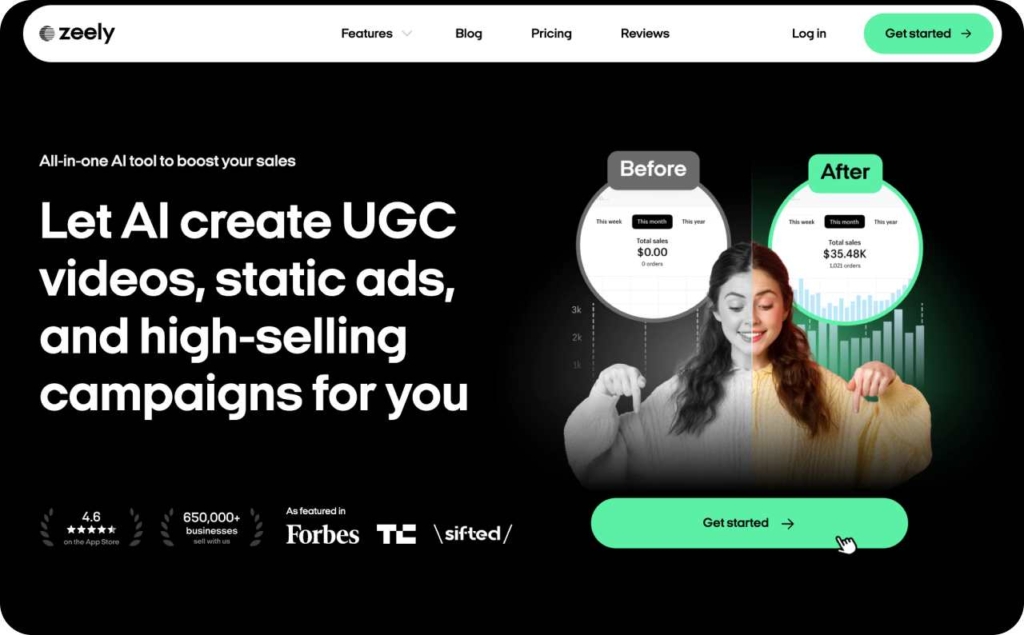
Zeely is a sales app built for paid social speed. You paste your Shopify product links, and Zeely pulls key product details so you can generate UGC-style video ads and static creatives without starting from a blank page. You may like to read more about Shopify short video ads with AI.
Zeely is built by Zeely, Inc. (Delaware), and you can use it on web plus iOS and Android with one account across all three. The app runs on a subscription model, and when you launch AI Shopify video ads and campaigns through Zeely, your ad budget is handled through the Zeely flow described in its official guide.
Zeely also charges a service fee on Meta ad spend (lower with Booster), so I treat it as a creative-and-launch layer you add only when you’ll actually ship more ads each week. Read now an article on how to boost Shopify sales with Zeel AI generator.
Price: Starter is $29.95/month and Growth is $79.95/month on the Zeely pricing page.
Notable clients: Zeely says it’s trusted by 650,000+ sellers (example testimonial: New Wave).
KPI: CTR, CAC, ROAS.
Facebook & Instagram by Meta
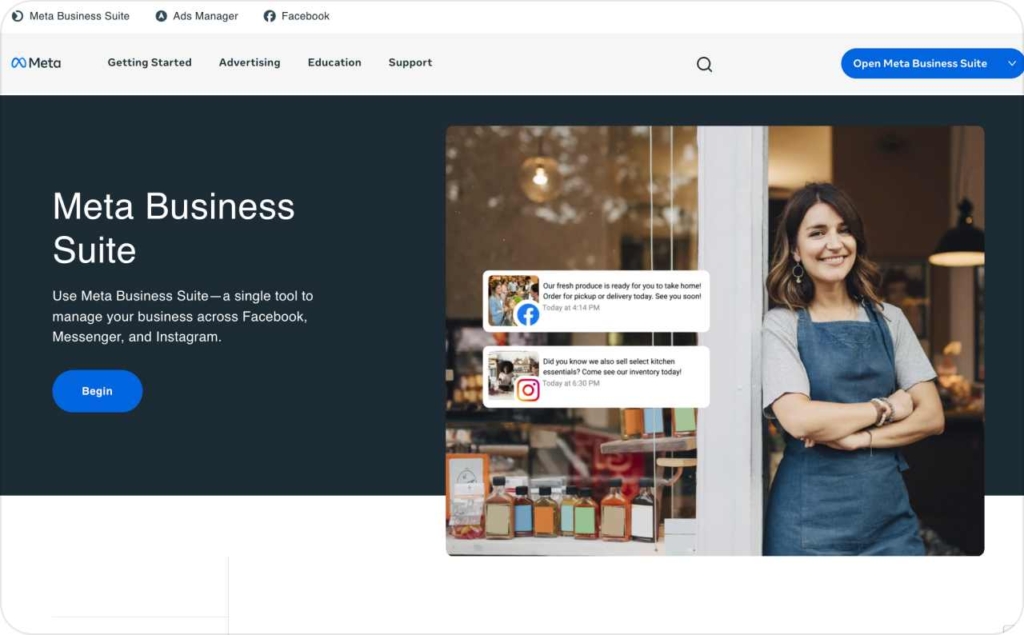
These are the Shopify marketing apps I set up first when Meta is a core channel. They automatically sync eligible products to your Facebook and Instagram shop, so you sell from one inventory instead of juggling feeds.
You can create ads and shoppable posts, and it pushes you to set up a conversion pixel so Meta can learn purchases and optimize delivery. It also brings the unglamorous stuff into one place, like managing orders and returns tied to the channel, which matters once customer volume climbs. I like this app because it cleans up the foundation.
Price: Free to install; when you advertise, ad spend is billed to your Facebook ad account.
Notable clients: Not listed as a roster, but it has 4,002 Shopify App Store reviews.
KPI: purchase conversion rate from paid traffic, ROAS.
Google & YouTube
If you sell products people already search for, these apps can bring high-intent traffic fast to your Shopify store. It syncs your products, deals, and shipping to Google Merchant Center, then lets you run Performance Max across Google properties like Search and YouTube. It also supports connecting Google Analytics so you can see what converts beyond last click and stop funding the wrong queries.
I treat this like a feed-and-measurement system. Your product titles, variants, and shipping settings do most of the selling, so I fix those first, then scale. When the feed is clean, paid search becomes a steady Shopify sales engine, not a money leak.
Price: Free to install; ad spend is billed to your Google Ads account, and you set the daily budget.
Notable clients: No public roster on the listing; it has 4,574 Shopify App Store reviews.
KPI: revenue from paid search/PMax, ROAS.
TikTok
TikTok is the fastest-moving traffic lever on this list, and it rewards fresh creative. The Shopify app lets you create TikTok ads using your own images or videos, adds 1-click TikTok Pixel integration, and supports syncing products from Shopify to TikTok so you don’t rebuild catalogs by hand. If you use TikTok Shop, it also supports managing Shop orders and inventory inside Shopify admin, which keeps operations steady when a video hits. I like TikTok for Shopify when you can produce new angles weekly and keep your landing page tight. If your creative refresh is slow, CPA usually climbs fast because the feed moves on. Read now an article on how to run TikTok ads for Shopify.
Price: Free to install; ad spend is billed directly to your TikTok ad account.
Notable clients: TikTok doesn’t publish a verified roster on the Shopify listing; the app has 2,531 Shopify App Store reviews.
Main risk: creative fatigue and platform volatility.
KPI: CPA by campaign, CTR, ROAS.
Pinterest is a quieter Shopify traffic app that works best for visual categories where shoppers plan purchases. The Pinterest for Shopify app helps you publish Product Pins, automatically update your product catalog every day, and track results with the Pinterest Tag plus the API for Conversions.
It also supports running campaigns from your Shopify interface, which is nice when you want a simple workflow and clean attribution. I rarely judge Pinterest in the first few days. The ramp can be slower than Meta or Google, but the clicks often come from shoppers who save, compare, then buy later, so assisted conversions matter here.
Price: Free to install; ad charges apply only when you run campaigns.
Notable clients: No roster on the listing; it has 1,576 Shopify App Store reviews.
Main risk: slower ramp than Meta or Google.
KPI: assisted conversions, revenue per session from Pinterest traffic.
Which Shopify email and SMS marketing apps increase repeat sales?
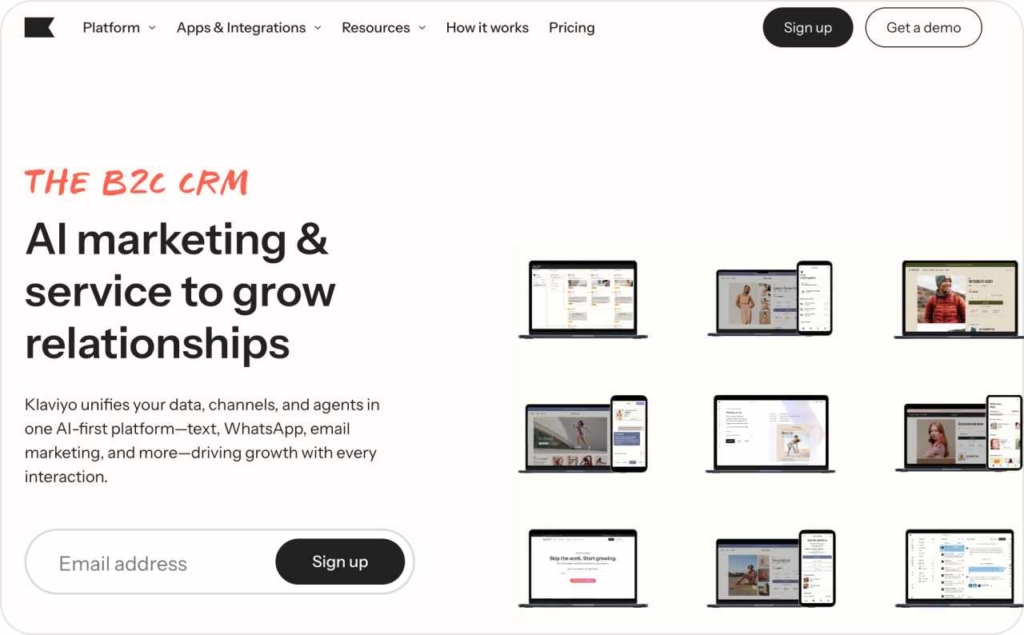
Klaviyo
Klaviyo is the Shopify email marketing app I reach for when you want real lifecycle control, not just newsletters. It’s built around customer data, so you can segment by purchase behavior and run flows like welcome, browse abandonment, and winback while tracking revenue attribution.
On Shopify, the listing highlights segmentation, personalization, A/B testing, and analytics, plus a free tier for smaller lists. Klaviyo also promotes its Shopify integration with public case studies, and says 117,000+ Shopify customers use it. This is usually the right pick once you’re serious about retention and you’re willing to maintain list hygiene, suppression, and reporting weekly.
Price: Free to install (email free up to 250 contacts); paid tiers start at $20/month for 251–500 contacts.
Notable clients: Culture Kings, Jones Road Beauty, Daily Harvest (case studies on Klaviyo’s Shopify integration page).
Main risk: complexity and cost creep as your list grows.
KPI: revenue per recipient.
Omnisend
Omnisend is a clean one place option if you want Shopify email and SMS together without living in a complex setup. The Shopify listing leans into ready-made templates, list growth tools like popups and forms, and pre-built automations like abandoned cart and welcome flows, plus built-in AI for email copy.
The pricing is tiered by contacts, which is why it can feel easy at first and pricey later if you don’t prune inactive subscribers. I like Omnisend for newer stores that need flows fast, with enough reporting to know what’s working before you upgrade to deeper segmentation.
Price: Free plan up to 250 contacts; Standard $16/month up to 500 contacts; Pro $59/month up to 2,500 contacts.
Notable clients: Merchant examples in Shopify reviews include Make Believe Co.
Main risk: limited advanced segmentation versus Klaviyo.
KPI: flow revenue percentage.

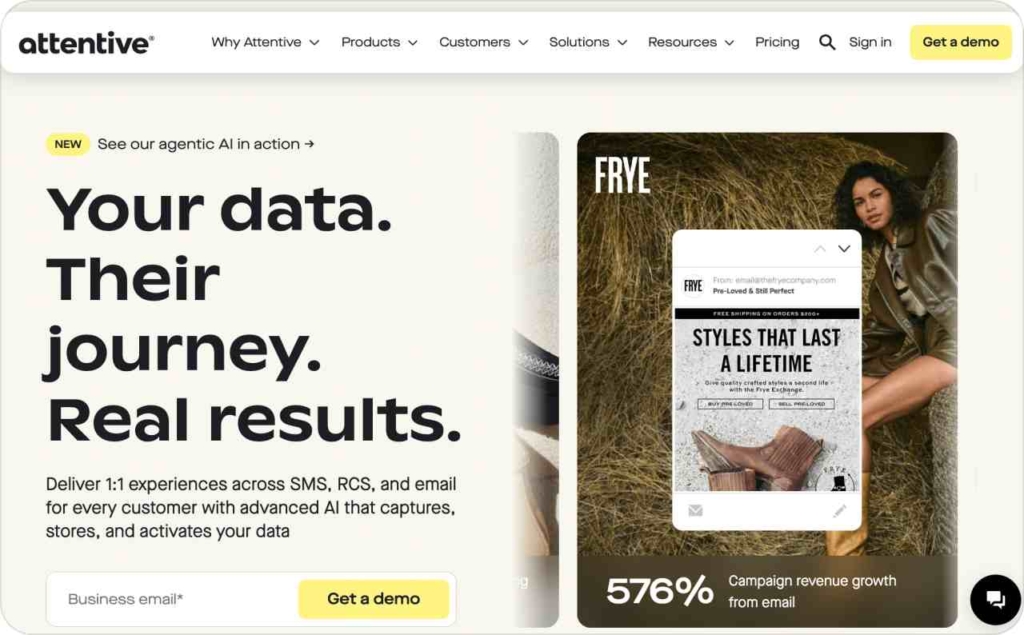
Attentive
Attentive is an SMS-first Shopify marketing tool designed for scaled messaging, where deliverability, compliance, and list growth mechanics matter. On the Shopify listing, it’s free to install with a minimum 30-day trial, and then moves into month-to-month or longer agreements.
If you’re running paid social and want a strong “capture and convert” loop, Attentive can pair well with on-site opt-ins and segmented campaigns. I’d only install it when you’re ready to be disciplined: clear signup language, controlled frequency, and real reporting. Attentive also publishes Shopify-specific proof points and quotes from ecommerce brands on its Shopify page.
Price: Free to install; minimum 30-day free trial; agreements after trial.
Notable clients: Pura Vida Bracelets, Rebecca Minkoff.
Main risk: compliance and list fatigue if you over-message.
KPI: SMS revenue per subscriber.
Postscript
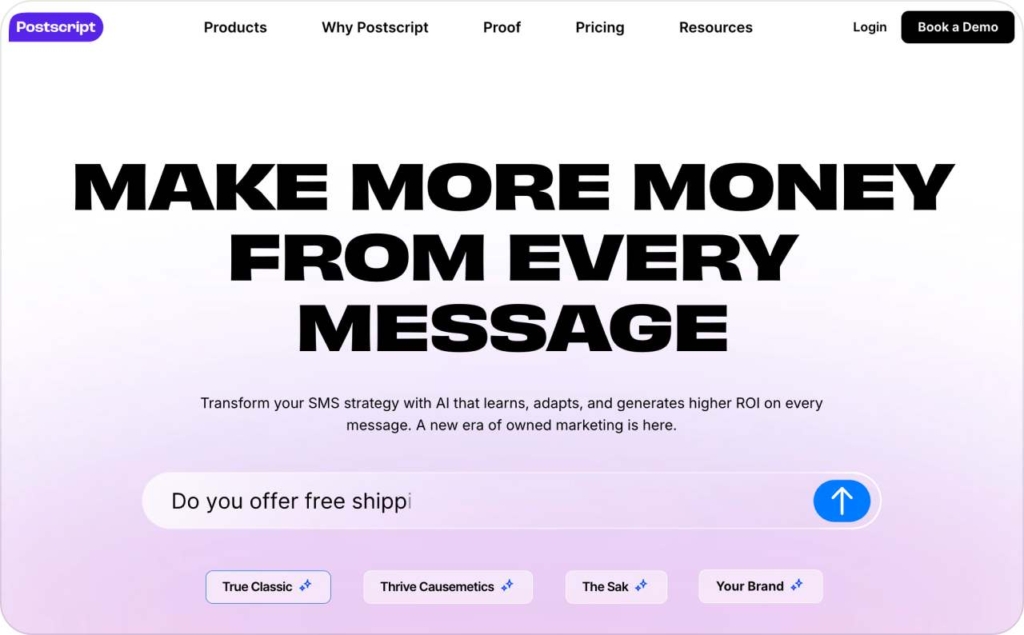
Postscript is another SMS-first choice that’s very Shopify-native, especially if you want structured automations, segmentation, and a clear billing model tied to messaging volume. The Shopify listing calls out “customized, conversational, and compliant” texting, plus tools like campaign and automation flows, list growth, and reporting.
Pricing starts with a monthly minimum spend and per-message rates, so you need to forecast list growth and sending frequency before you scale. I like Postscript when you want SMS to behave like a revenue channel with testing, not a random blast tool.
Price: Free to install with $49 monthly minimum spend; then $0.009/SMS and $0.045/MMS plus carrier fees (Starter).
Notable clients: Merchant examples in Shopify reviews include Doses of Grace and STICKERBEANS.
Main risk: compliance and list fatigue, plus cost spikes if you spam.
KPI: SMS revenue per subscriber.
Shopify Email
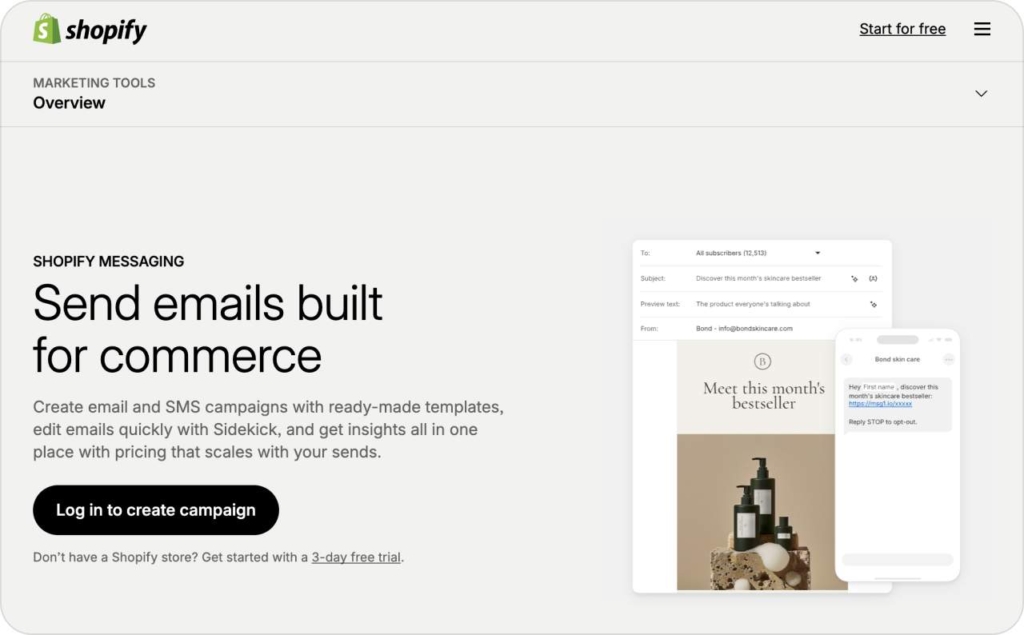
Shopify Email is the “start here” option when you need a basic retention lever inside Shopify without adding another platform.
Shopify’s documentation says you get 10,000 free emails each month, then charges apply after you pass that limit. Pair it with Shopify’s abandoned checkout automation so you recover revenue you already paid to acquire. This isn’t built for deep segmentation like Klaviyo, but it’s enough to launch the basics: welcome, abandoned checkout, and a weekly promo cadence while you learn what your customers respond to.
Price: 10,000 free emails/month, then usage charges.
Notable clients: Shopify doesn’t publish a client roster for Shopify Email.
Main risk: limited automation depth as you scale.
KPI: campaign revenue.
Which Shopify AOV booster apps increase average order value?
Rebuy
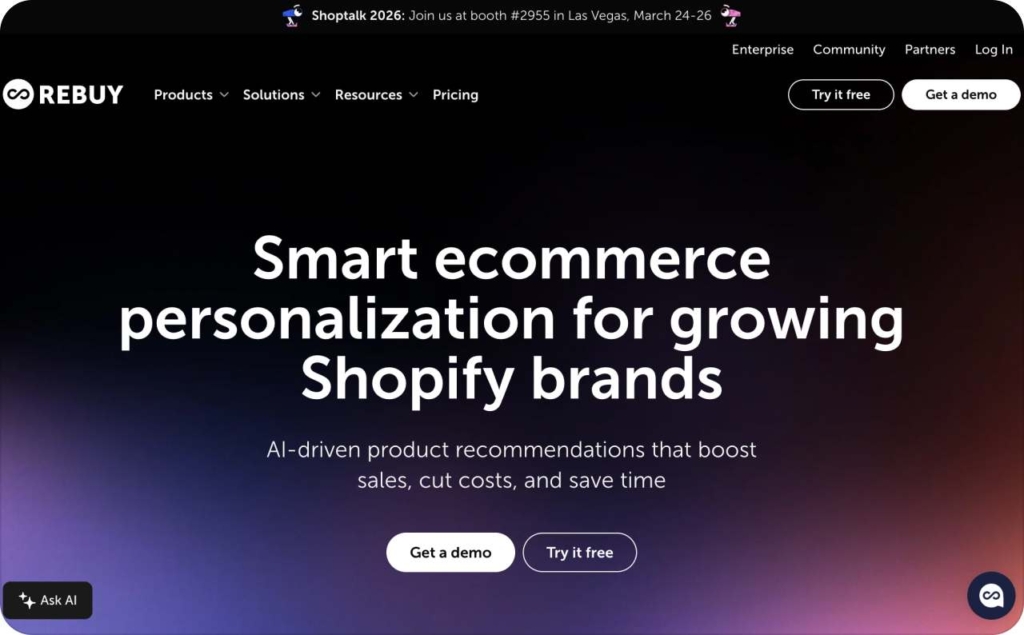
Rebuy is a heavier Shopify upsell app that’s meant to run personalization across cart, checkout, post-purchase, and even search and collections. The listing positions it as AI-powered upsells, cross-sells, product discovery, and A/B testing, with packages that cover cart merchandising and post-purchase flows.
The pricing scales based on orders, which is fair if you actually use the modules. I like Rebuy once you already have steady traffic and you’re ready to optimize per visitor, not just add one upsell widget. Keep the UI clean and measure incremental lift, not just “upsell revenue.”
Price: Starts at $25/month; pricing scales based on orders per month.
Notable clients: Merchant examples in Shopify reviews include Leaner Creamer and VukGripz.
Main risk: too many widgets reduce clarity.
KPI: AOV lift.
Upsell.com
Upsell.com (ReConvert) is a post-purchase-focused Shopify upsell tool that turns the thank-you page into a revenue page. The listing emphasizes offers across product, cart, checkout, and post-purchase, plus AI recommendations and A/B testing.
Pricing starts low and scales with order volume or upsell revenue, so it’s approachable early but needs monitoring as you grow. This is best when you have clear “next best” items: refills, add-ons, bundles, or warranty-style extras. Keep offers tight, relevant, and consistent with what the customer just bought.
Price: Starts at $4.99/month; charges increase with order volume or upsell revenue.
Notable clients: Merchant examples in Shopify reviews include Les Siffleux (breuvages torréfiés).
Main risk: irrelevant offers (and too many steps) can reduce trust.
KPI: post-purchase take rate.
UpsellPlus
UpsellPlus is built around Shopify checkout extensibility, so it’s a strong option when you want checkout and post-purchase offers that look native. The listing calls out checkout upsells using extensions, thank-you page customization, dynamic blocks based on cart contents, plus A/B testing and analytics.
Pricing scales by plan, with Shopify Plus-specific checkout features noted in the plan details. I like this for stores with stable conversion rates that want higher order value without turning the cart into a circus.
Price: $49/month (Launch); higher tiers include Shopify Plus and Scale plans.
Notable clients: Merchant examples in Shopify reviews include Legion Fitness Equipment and Art Bar Magazine.
Main risk: offer friction if the upsell interrupts checkout intent.
KPI: checkout AOV.
Bundler
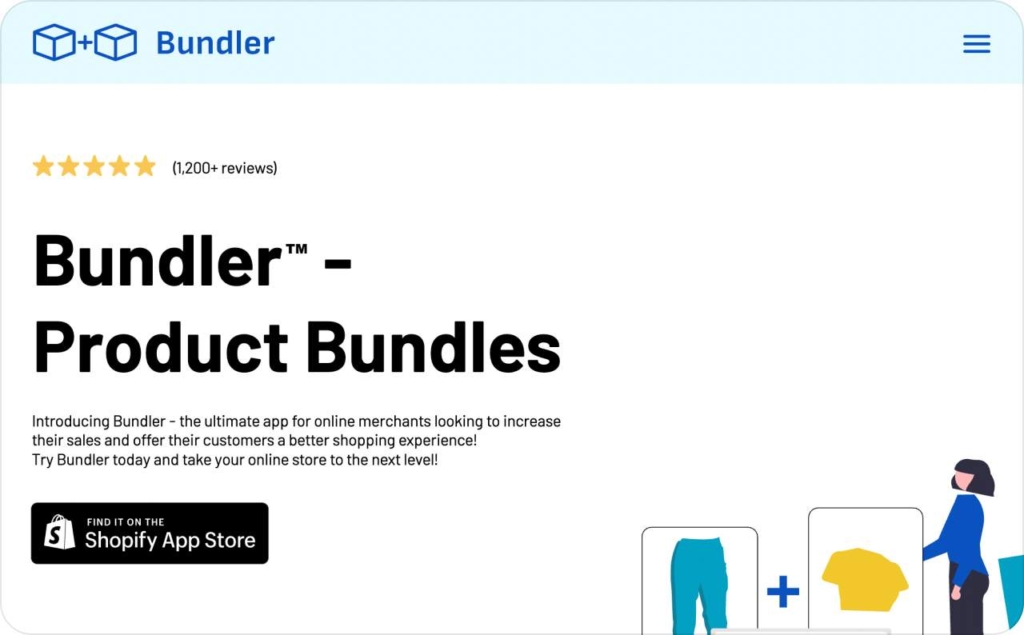
Bundler is the Shopify bundle app I recommend when you want mix-and-match and BOGO offers without overengineering. The listing highlights classic bundles, Mix & Match, quantity breaks, tiered discounts, landing pages, and subscription-friendly bundling. It’s also unusually accessible on price: a free plan, a Premium and Executive with analytics.
This is the right tool when your margin can support a clear bundle discount and you want to measure attach rate cleanly.
Price: Free; Premium $9.99/month; Executive $19.99/month.
Notable clients: Merchant examples in Shopify reviews include Girls Gone Hajj Apparel and Nailfitt.
Main risk: margin leakage if bundles replace full-price purchases.
KPI: bundle attach rate.
Fast Bundle
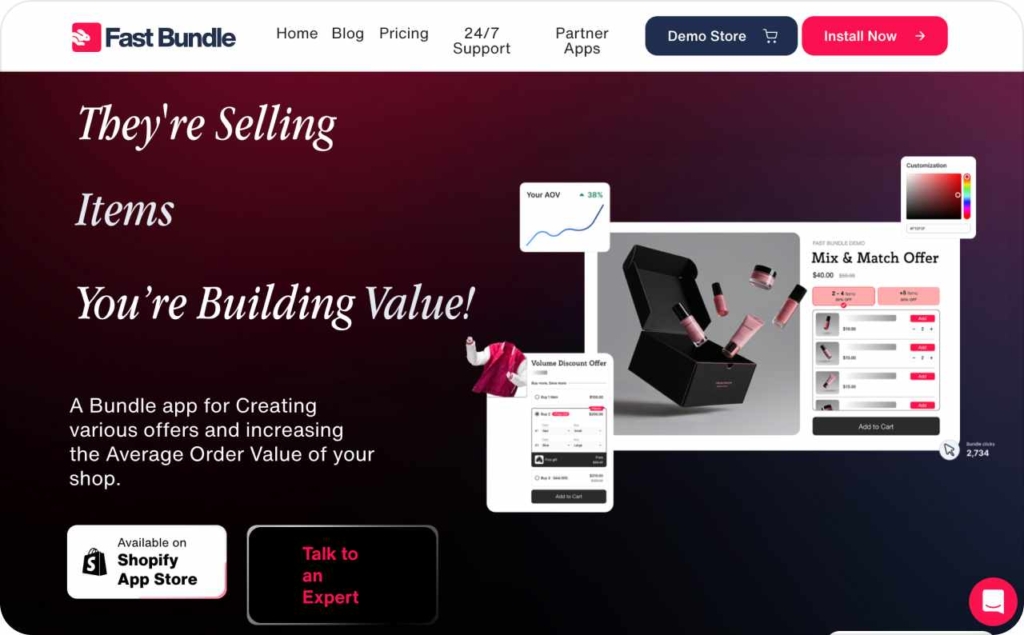
Fast Bundle is another strong Shopify bundles option, especially if you want multiple bundle types plus an AI “frequently bought together” layer. The listing calls out mix and match, volume discounts, quantity breaks, BOGO, Buy X Get Y, add-ons, and an AI bundle image generator on paid tiers. Pricing is tied to monthly bundle sales, bundle sales, then scaling up. This works well when you actively merch bundles and you want the app to keep up as bundle revenue grows.
Price: Starts at $19/month (Standard 1K); scales by monthly bundle sales.
Notable clients: Merchant examples in Shopify reviews include Tactical Edge Hobbies and Seoul Recipe HK.
Main risk: margin leakage and discount stacking confusion.
KPI: bundle attach rate.
Which Shopify conversion helper apps reduce cart friction and lift conversion rate?
Sticky Add to Cart Booster Pro
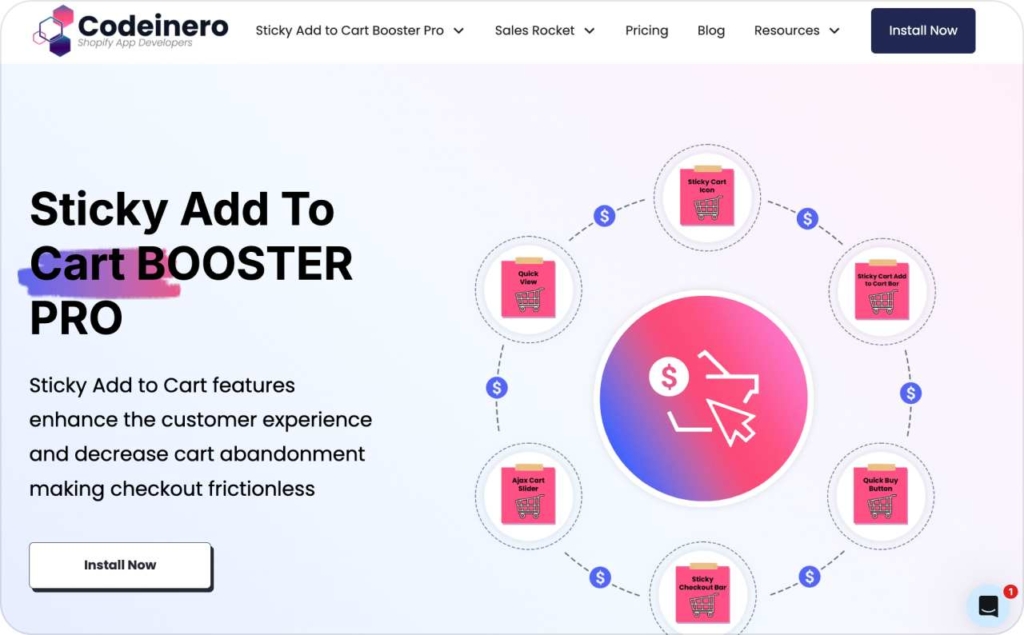
Sticky Add to Cart Booster Pro is a classic conversion rate optimization app for Shopify when your shoppers scroll, hesitate, and lose the CTA. The listing includes a sticky add-to-cart bar, quick buy buttons, sticky cart and checkout bars, plus a cart drawer with in-cart upsell. Pricing starts after a free plan capped by clicks, with higher tiers by Shopify plan.
This is most useful on mobile-heavy stores where product pages are long. Keep the UI clean and test after install because sticky UI plus other overlays can fight each other.
Price: Free plan (limited clicks); paid plans start at $6.99/month.
Notable clients: Merchant examples in Shopify reviews include Wholesome Provisions and Courthouse Interiors.
Main risk: mobile clutter and overlapping widgets.
KPI: add-to-cart rate.
Hextom Free Shipping Bar
This Shopify free shipping bar app works because it makes the threshold feel achievable, not abstract. The listing supports a free plan, then a premium plan with Shopify Markets geo-targeting, auto currency conversion, scheduling, and performance tracking. It’s a small tool, but it can lift AOV when your free shipping threshold is set correctly relative to your current average order value.
I like it most when you pair it with a simple bundle or add-on offer so shoppers know what to add next.
Price: Free plan; Premium $9.99/month.
Notable clients: Merchant examples in Shopify reviews include Charles’ Custom Creations and Urban Slicer Pizza Worx.
Main risk: banner blindness if it’s always on and never changes.
KPI: AOV increase.
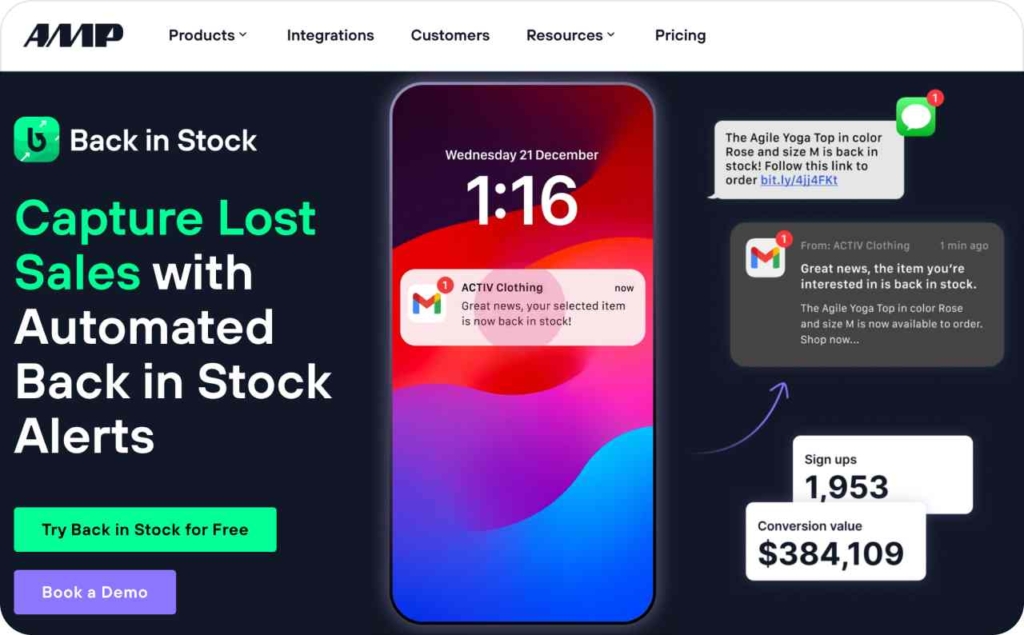
AMP Back in Stock
AMP Back in Stock is a demand-capture tool for Shopify that pays off when you sell out and shoppers still want the product. The listing supports alerts via email, SMS, and push, plus preorder options and reporting so you can track demand and recovered revenue.
Pricing includes a free tier with limited notifications, then plans and higher tiers with more notifications and preorder allowances. This tool also forces a good discipline: don’t just notify, restock smartly and keep messaging reasonable.
Price: Free tier; paid plans start at $19/month (Lite).
Notable clients: No official roster published on the listing; merchant usage is visible via Shopify reviews.
Main risk: too many notifications can cause unsubscribes and spam complaints.
KPI: recovered revenue.
UpCart Cart Drawer
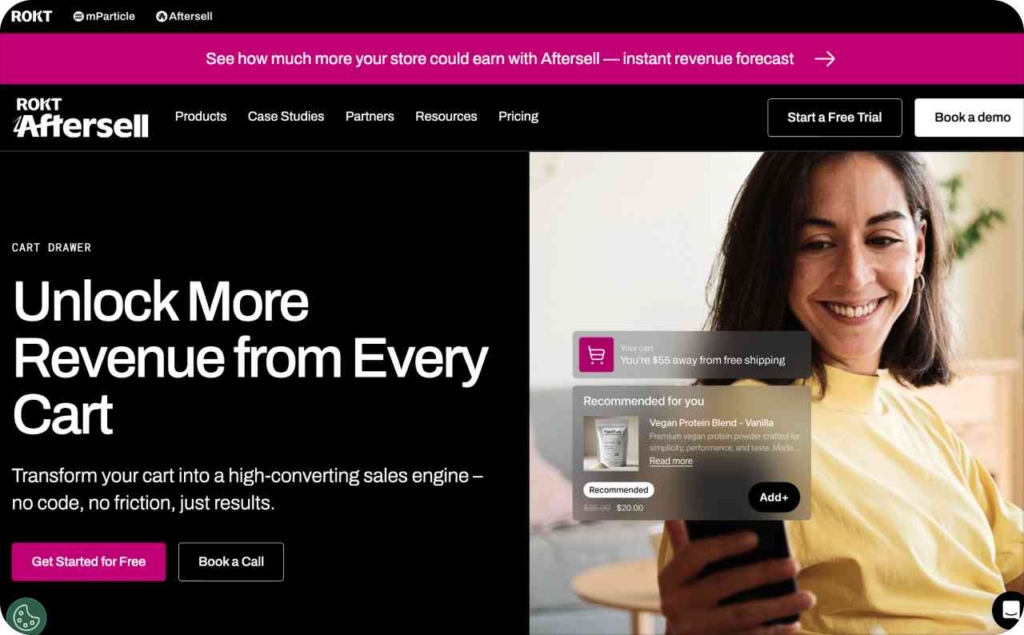
UpCart is a cart drawer app that turns the cart into a sales surface: upsells, add-ons, rewards, announcements, and design control so it matches your theme. The listing positions it as a custom slide cart built to increase AOV and reduce cart abandonment, with modules and the ability to customize with HTML and CSS.
This is the right install when your default cart is a dead end and you have clear cross-sells that genuinely help the buyer.
Price: Starts at $29.99/month (0–200 orders).
Notable clients: Merchant examples in Shopify reviews include B Couture.
Main risk: script conflicts and too many cart distractions.
KPI: cart conversion rate.
Vitals
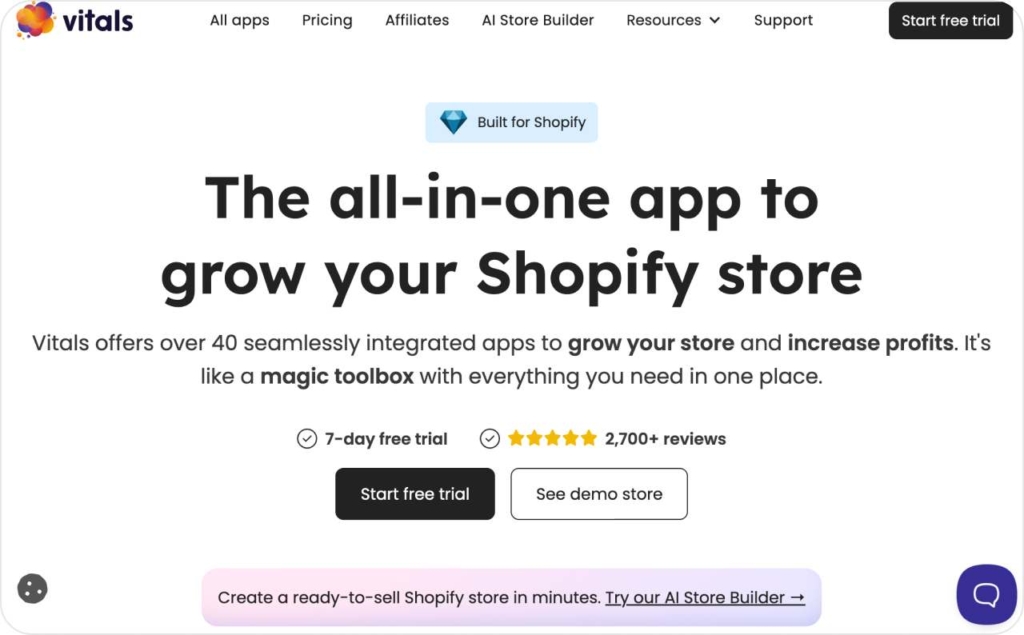
Vitals is the “replace a pile of apps” option. The Shopify listing describes it as an all-in-one app with reviews, bundles, sticky add to cart, wishlist, cart drawer, back-in-stock alerts, popups, and AI tools, all under one subscription.
Has additional charges as store revenue and “impact” increase. This can be a win if your store is overloaded with tiny plugins. It can also be wasteful if you install it and only use two features.
Price: $29.99/month (7-day free trial).
Notable clients: Merchant examples in Shopify reviews include Greycord Beauty and Geoffrey Siu Art LLC.
Main risk: unused features still add load and complexity.
KPI: conversion rate lift.
Which Shopify reviews and trust apps increase product page conversion rate?
Judge.me
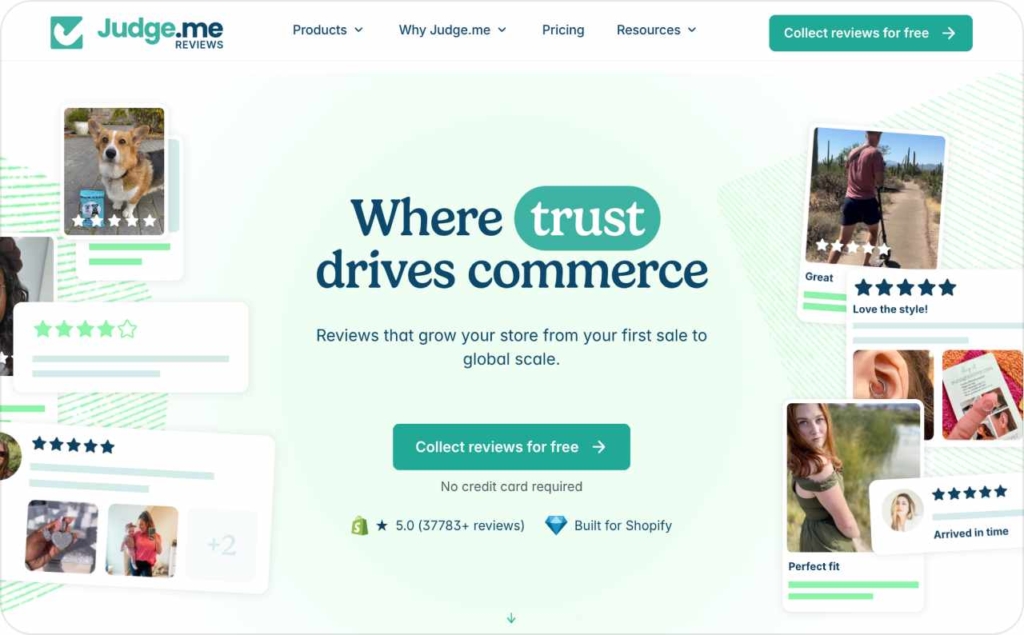
Judge.me is the Shopify product reviews app I pick when you want strong social proof without a heavy monthly bill. It replaces “no reviews” with automated review requests, review widgets, star ratings, and SEO-friendly markup so your PDP can earn more trust fast.
On Shopify, Judge.me includes a free plan with unlimited product and store reviews, plus visual reviews and multiple widget types like carousels and badges. The paid plan adds advanced features like AI helpers, more integrations, more widgets, and deeper customization, which matters once your review volume grows. I like it for Shopify stores that need reliable review collection and clean display, not a complex UGC stack.
Price: Free plan available; paid plan is $15/month.
Notable clients: Judge.me features customer stories like Popov Leather on its customers page.
Main risk: low-quality review requests can hurt authenticity.
KPI: product page conversion rate.
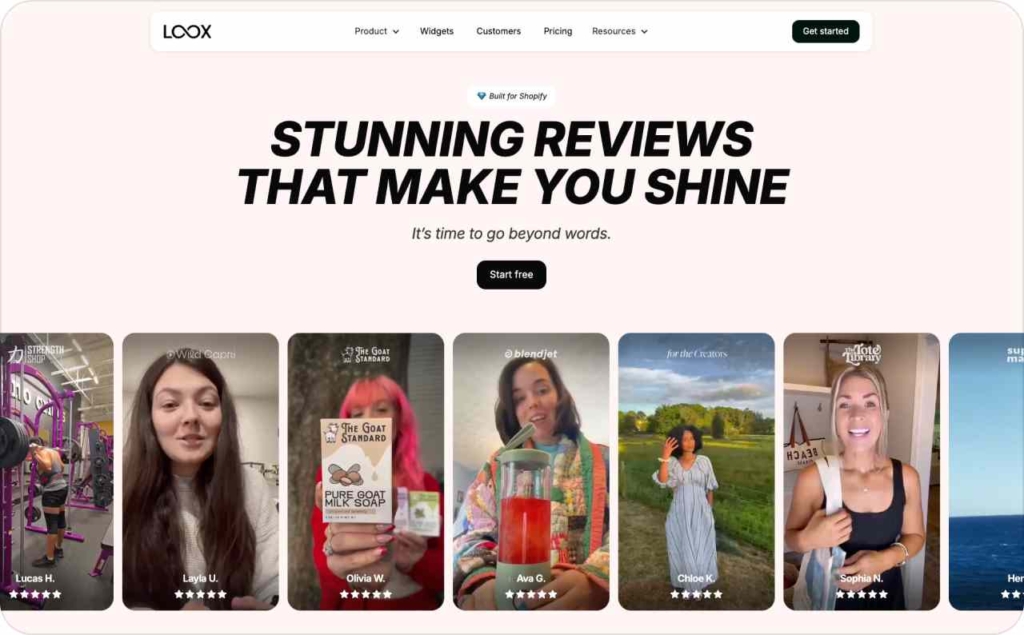
Loox
Loox is the Shopify photo reviews app I use when your category sells better with visuals. It replaces text-only testimonials with photo and video reviews, plus widgets that make reviews feel like real customer proof, not a generic block at the bottom of the page.
Loox supports review request emails, multiple widget options, and add-ons like referrals on certain tiers. The tradeoff is page weight. If you run too many widgets at once, you can slow down your PDP and distract shoppers. I keep Loox tight: one main gallery on PDP, one compact star rating near the title, and a simple post-purchase request flow.
Price: Starts at $12.99/month; higher tiers scale by orders and features.
Notable clients: Loox highlights BlendJet in customer quotes on its pricing page.
Main risk: heavier widgets can affect speed and clarity.
KPI: PDP conversion lift.
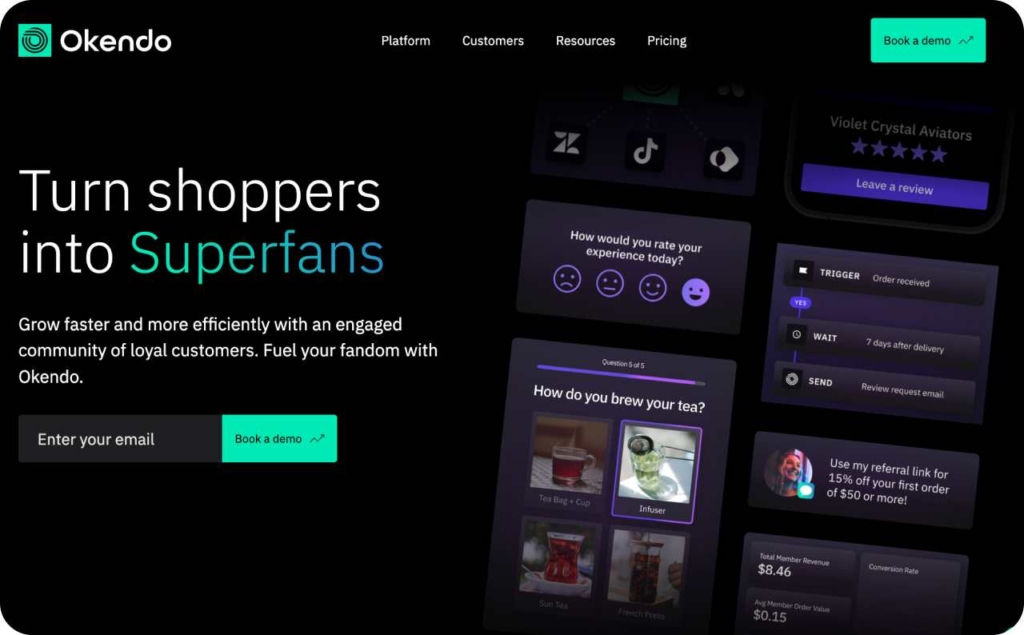
Okendo
Okendo is for Shopify brands that want an advanced reviews layer, plus optional modules like loyalty and quizzes, without duct-taping separate systems. It replaces basic review apps with richer collection and display, plus AI summaries on higher tiers and deeper integrations once you scale.
I like it when you care about onsite conversion and you also want review data to feed lifecycle email, segmentation, and product decisions. Keep the rollout simple: migrate reviews, set one request flow, then add Q&A after you see lift.
Price: Free plan available; paid tiers include $19/month, $119/month, and $299/month (order-volume based).
Notable clients: Okendo publishes case studies, including Lectric eBikes.
Main risk: pricing grows as order volume grows.
KPI: review volume and conversion rate.
Yotpo Reviews
Yotpo is a big system Shopify reviews app when you want reviews, UGC collection, and more structured controls like smart sorting and Google-facing features. It replaces patchwork tools with a single pipeline for review requests (email and SMS), moderation, widgets, and analytics.
On Shopify, Yotpo offers a free plan and paid tiers that scale with order volume, and the higher tier includes AI review summaries and smart sorting. I like Yotpo when reviews are a real growth lever for you, especially if you plan to push social proof into ads and search results. The key is restraint: do not overload your PDP with every widget.
Price: Free plan available; Starter is $15/month; Pro is $119/month (order-volume based).
Notable clients: Yotpo’s case study collection mentions brands like Chubbies and Steve Madden.
Main risk: pricing can jump at scale.
KPI: review volume and conversion rate.
Stamped
Stamped is a Shopify reviews and UGC app that’s often chosen when you want reviews, photos, videos, and Q&A with a clean widget system, plus optional loyalty layers. It replaces basic review apps with more collection options and stronger on-site display controls, including SEO support like rich snippets.
Stamped’s plans scale by order volume, so it fits merchants who want a predictable tier as they grow. I like Stamped when you care about trust and repeat purchases, but you still want one system that can expand later. Start with reviews and Q&A, measure lift, then consider loyalty only after your baseline conversion is stable.
Price: Starts at $23/month (up to 200 orders), scaling to higher tiers like $99/month and $199/month.
Notable clients: Stamped publishes case studies, including wildwonder, and says it empowers over 75,000 brands.
Main risk: design and widget tuning can be limiting for some themes.
KPI: social proof engagement and PDP conversion rate.
Which Shopify loyalty and retention apps improve repeat purchase rate?
Smile.io
Smile.io is the Shopify loyalty app I use when you want points, referrals, and VIP tiers without building a custom program from scratch. It replaces manual discount codes with a structured rewards system that can drive second purchases and higher lifetime value when margins allow it.
Smile has a free-to-install tier for smaller stores, then paid tiers that scale by monthly orders and add deeper reporting, nudges, and integrations. This only works if your rewards are tight. I keep earn rules simple, set a clear redemption threshold, and watch whether members actually buy again.
Price: Free to install (up to 200 monthly orders); paid tiers include $15/month and higher plans. Notable clients: Smile publishes a case study on Death Wish Coffee.
Main risk: over-discounting can reduce margin.
KPI: repeat purchase rate.
LoyaltyLion
LoyaltyLion is for Shopify brands that want a deeper loyalty engine and more customization than a basic points widget. It replaces simple rewards with a loyalty page, targeted rewards, and integrations that can push higher engagement across reviews, referrals, and repeat purchases.
LoyaltyLion is free to install up to a set order threshold. Classic plan, with higher plans available via custom quotes. I like it when you have enough order volume to justify onboarding and ongoing tuning. Your loyalty program should be easy to understand in 10 seconds, or shoppers ignore it.
Price: Free to install (includes 400 monthly orders); Classic is $199/month.
Notable clients: LoyaltyLion publishes customer stories, including HOLY and LANX.
Main risk: setup complexity leads to “installed but unused.”
KPI: LTV growth and repeat purchase rate.
Recharge
Recharge is the subscription app I recommend when your product has a real replenishment cycle and customers want “subscribe and save.” It replaces manual subscription hacks with subscription checkout options, a customer portal, retention tooling, and analytics.
Recharge tiers include a $25/month plan (with no transaction fees for the first 50 subscribers), then paid plans like $99/month and $499/month with processing fees. If you do subscriptions, churn management is the job. Build skip options, predictable delivery, and cancellation prevention before you scale acquisition.
Price: Starts at $25/month; paid tiers include $99/month and $499/month (plus processing fees).
Notable clients: Recharge case studies list brands like quip and Sightglass Coffee.
Main risk: churn becomes your main problem if the product fit is weak.
KPI: subscriber retention rate.
Social Snowball
Social Snowball is an affiliate, influencer, and referral platform for Shopify when you want word-of-mouth that you can track. It replaces spreadsheets and manual payouts with tracking links, program setup, attribution, and automated rewards. The Shopify listing says it’s free to install, with a custom plan after install.
I like it when you already have happy customers and a product that people naturally share.
Price: Free to install; plans include $199/month plus 2% of revenue generated (per pricing page).
Notable clients: Social Snowball case studies include brands like Outway Socks and Bones Coffee.
Main risk: low-quality affiliates can damage brand trust.
KPI: referral revenue share.
Which Shopify support apps help turn questions into checkouts?
Gorgias
Gorgias is the Shopify helpdesk I use when support volume is high enough that a shared inbox starts breaking down. It replaces scattered email, DMs, and chat tools with a unified helpdesk, live chat, and automation add-ons that can speed replies and reduce refunds.
The sales benefit comes from speed and context. If your team can see the order and answer in one message, you save the sale that was about to leave.
Price: Starts at $10/month; higher tiers include $60/month, $360/month, and $900/month (plus overage fees).
Notable clients: Gorgias customer stories include Orthofeet and Pepper.
Main risk: setup takes time, and bad routing creates chaos.
KPI: refund rate and repeat purchase rate.
Tidio
Tidio is a Shopify live chat and chatbot option when you want fast pre-purchase answers without staffing a full support desk. It replaces “unanswered objections” with live chat, automated flows, ticketing, and optional AI features, which can lift assisted conversions when your response time is tight.
Tidio also claims 300k+ businesses use it, and publishes case studies like Ad Hoc Atelier using live chat to boost conversions.
Price: Free plan available; paid tiers include $39/month.
Notable clients: Case studies include Ad Hoc Atelier; Tidio states 300k+ businesses use it.
Main risk: slow replies make chat feel pointless.
KPI: assisted conversion rate.
Shopify Inbox
Shopify Inbox is the simplest support that sells app because it’s built into Shopify and it’s free. It replaces having no chat with a business chat inbox where you can respond to customers from mobile or web, send product links, discount codes, and images, and keep the conversation tied to your Shopify admin.
Shopify’s product page says you can add Shopify Inbox for free and use tools like automated messages and AI-generated answers to common questions. If your store is early-stage, this is usually enough. The real rule is response time. Chat only helps if someone answers while the shopper is still deciding.
Price: Free.
Notable clients: Shopify highlights a case study with Wood Wood Toys using chat.
Main risk: slow response times reduce trust and conversions.
KPI: assisted conversion rate.
The lean Shopify stack: what should you install first?
Cloudflare’s 2026 report says 96% of companies struggle with complex tech stacks, and 85% are actively reducing redundant tools. Complexity slows growth. It means you better choose the most relevant tools for your current situation.
If you are a new store and need a stack:
- 1 traffic lever
- 1 reviews tool
- 1 email platform
- 1 simple AOV tool
- 1 conversion helper
Example: Zeely for paid acquisition, Judge.me for reviews, Shopify Email to start, Bundler for simple offers, Sticky Add to Cart Booster for friction. Do not add loyalty yet. Do not add advanced personalization yet.
If you are a scaling store and need a stack:
- Zeely for creative scale
- Klaviyo for lifecycle automation
- Rebuy for personalization
- ReConvert for post-purchase upsells
- Gorgias for support
Install in this order: Reviews, email flows, AOV tool, paid traffic scale, advanced personalization.
Use this checklist: one app per function, one popup tool, one review system, one discount engine, one cart drawer. Avoid stacking multiple shipping bars, two upsell engines, or overlapping analytics scripts. Check permissions, uninstall cleanly (remove snippets, disable theme app embeds), then test cart and checkout. Audit quarterly and remove dead tools. You may also like to read an article about Shopify AI ads.
FAQ
Too many is when two apps do the same job or when conversion rate drops after install. Most healthy stores run 8 to 20 apps, but only one per function.
Paid acquisition, email automation, and advanced upsells often justify cost. Basic popups and simple shipping bars can be free.
Poorly coded or overlapping apps can slow load time. Choose well-reviewed apps and remove unused ones.
Shopify Email, Shopify Inbox, and some shipping bar apps offer free tiers.
Yes, if your margins support them and offers are relevant.
Only if you already have repeat buyers. Otherwise focus on acquisition and trust first.
Remove theme snippets, disable app embeds, and retest checkout.

Emma blends product marketing and content to turn complex tools into simple, sales-driven playbooks for AI ad creatives and Facebook/Instagram campaigns. You’ll get checklists, bite-size guides, and real results, pulled from thousands of Zeely entrepreneurs, so you can run AI-powered ads confidently, even as a beginner.
Written by: Emma, AI Growth Adviser, Zeely
Reviewed on: March 19, 2026