E-commerce product data feed: The hidden growth engine behind your marketing channels
Are your marketing channels truly performing at their full potential? Zeely AI analyzed thousands of data points to show you how optimized product feeds can unlock growth, visibility, and conversions across every channel.
Every great campaign starts long before the ad, it starts in the data. Behind every smooth product launch and high-performing ad sits one unsung hero: a clean, structured e-commerce product data feed. It’s the quiet system that tells Google, Meta, and TikTok exactly what you sell, why it matters, and who should see it.
And here’s the real impact: as Forrester reports that companies with complete, well-structured product data see up to 35% higher conversion rates compared to those with partial or inconsistent feeds. That’s not marketing fluff, it’s the compounding effect of accuracy, clarity, and automation working together.
Because when your catalog speaks clearly, your marketing doesn’t have to shout.

What is an e-commerce product data feed?
An e-commerce product data feed is a structured file that lists every product you sell complete with titles, images, prices, and key attributes. It’s what connects your store to ad platforms, shopping channels, and marketplaces so your products can appear where people are already searching or scrolling.
Think of it as the language your store uses to talk to Google, Meta, TikTok, and beyond. A well-built product data feed e-commerce setup ensures your catalog is always up to date, accurate, and eligible to appear in the right results at the right time. Read our e-commerce advertising guide.
At its simplest, it’s a living spreadsheet for your products. But in practice, it’s the backbone of modern marketing automation: fueling dynamic ads, product recommendations, and smart bidding systems.
A complete e-commerce product data feed management file usually includes:
- ID: unique product identifier
- Title & Description: searchable, readable copy
- Image link: your product’s main photo
- Price & Sale price: what customers pay now
- Availability: in stock, preorder, or backorder
- Brand & GTIN/MPN: essential for search matching
- Google category & product_type: help platforms understand what you’re selling
- Custom labels: for bidding tiers, margin levels, or seasonality
Marketers rely on a healthy product data feed because it controls how products look, when they appear, and who sees them. And the stakes are high: according to HubSpot the average conversion rate across all e-commerce sites is under 2%, so richer, more accurate feed data can be the difference between being seen and being chosen.
Why product feeds matter for marketing results
A clean, consistent e-commerce product data feed doesn’t just organize your catalog, it powers your performance. Every platform you advertise on uses your feed to decide when, where, and how your products appear. When that data is clear and current, your ads win better placement, cheaper clicks, and higher intent traffic.
Good product data feed e-commerce management ties directly to your core marketing levers:
- Query matching: clear titles and GTINs help your products surface for the right searches
- Eligibility: complete attributes reduce disapprovals and expand your ad reach
- Dynamic creatives: accurate data fuels real-time product ads that stay in sync with your store
- Measurement: clean IDs and UTMs connect ad clicks to conversions in your analytics
Marketers who treat their feed as a growth engine see measurable lift. Fixing titles and images alone can raise CTR by double digits, while full e-commerce product data feed management: including enrichment, QA, and structured custom labels, translates directly into better CVR, ROAS, and long-term efficiency.
For example, when Reddit expanded Dynamic Product Ads which pull live product data from your catalog, advertisers who ran them alongside standard conversion campaigns saw 2× higher ROAS in Q1 2025.
KPI map: CTR, CVR, ROAS/POAS, margin ROAS, catalog coverage %, disapproval rate, and price mismatch rate.
What a good product data feed looks like
A great e-commerce product data feed simply performs. Every title reads naturally, every image loads cleanly, and every price matches what’s live on your site. The experience feels seamless because the structure behind it is solid. And according to Nielsen annual marketing report in U.S. retail media spend grows 20% in 2025, so clean, enriched feeds are always critical to reach shoppers inside retail networks.
Here’s what that structure looks like when it’s done right:
- Completeness. Every field that matters is filled. ID, title, image, price, availability, brand, GTIN, and category, nothing missing, nothing guessed. Complete data means every product can actually compete
- Consistency. Your naming and formatting follow one clear pattern. The same logic applies across every platform, helping algorithms recognize your products faster and rank them more confidently
- Granularity. Each product stands on its own. Sizes, colors, materials, all unique and accurate. When shoppers see the exact version they want, you waste fewer clicks and win better conversions
- Enrichment. Beyond the basics, add what real buyers care about: benefits, compatibility, care details. Richer data answers questions before customers even ask them and that’s what drives action
- Governance. Your feed has an owner, a version history, and a regular QA routine. That discipline keeps revenue steady even when campaigns change
- Compliance. Every description follows platform rules and product truth. No exaggerated claims, no restricted words. Clean compliance keeps your ads live and your accounts safe
Modern feeds also handle variant logic correctly, include alt text for accessibility, and keep versioning with rollback to undo sync errors in seconds.
Before you scale, run your Feed QA in 9 quick checks:
- Unique IDs and GTINs
- Clear, scannable titles
- Price and availability match site
- Images render fast and clean
- Accurate category mapping
- Policy-safe copy
- Custom labels aligned to bidding
- No missing or duplicate fields
- Rejection rate trending down
A strong product data feed e-commerce setup isn’t just organized, it’s trustworthy. It tells every platform exactly what you sell and every shopper exactly what to expect. That’s how e-commerce product data feed management quietly drives better clicks, smoother conversions, and sustainable growth.
Marketing use cases by channel
A great e-commerce product data feed doesn’t just power ads, it powers your entire marketing ecosystem. When your catalog is clean and structured, every channel knows exactly what to do with it. Your feed becomes the shared language between your store and the platforms that sell for you.
Google Shopping & Performance max
Google reads your e-commerce product data feed to decide which products appear for which searches. Every title, category, and custom label affects performance. Clear product names, complete attributes, and accurate GTINs improve visibility, while smart labeling for margin or season helps your campaigns bid more efficiently.
The result: better query matching, fewer disapprovals, and stronger ROAS, because Google knows exactly what you’re selling and who wants it.
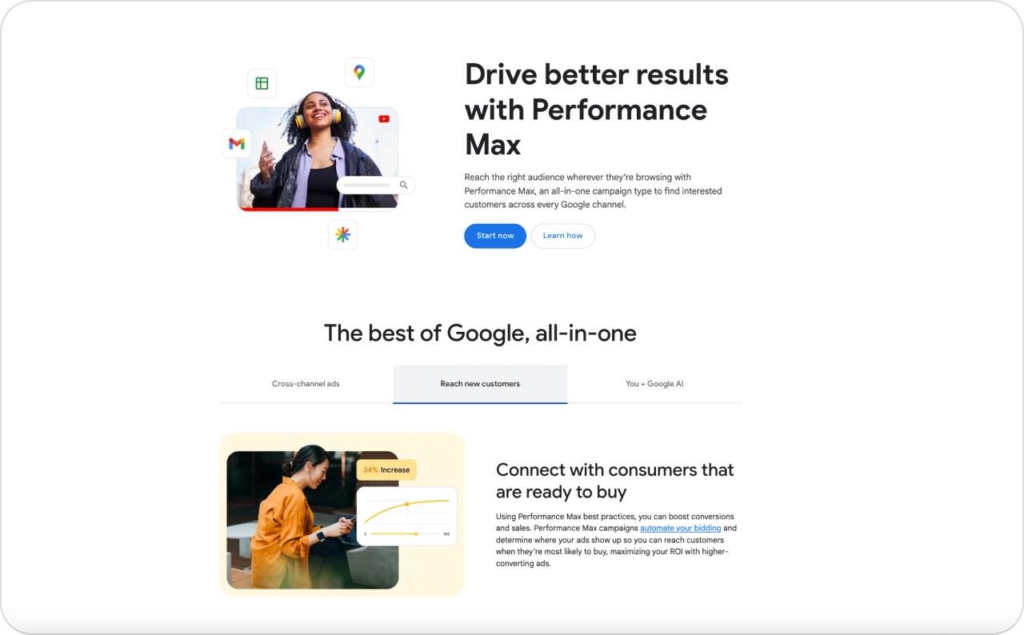
Photo source: Google Ads
Facebook & Instagram
Meta uses your product data feed e-commerce setup to build and refresh Dynamic Product Ads. Short, scannable titles and vertical or square images help your products blend naturally into user feeds. When you segment products by intent: viewed, added to cart, or new arrivals, Meta automatically serves the right item to the right person.
Takeaway: The feed becomes your silent retargeting engine: always relevant, always current.

Photo source: @instagram on Instagram
TikTok
TikTok’s shopping formats thrive on synced, structured product data. Updated prices, real-time stock levels, and benefit-driven captions help your e-commerce product data feed stay aligned with your store. Matching vertical visuals and quick, engaging copy make your products feel native to the platform.
Takeaway: Instant updates mean no wasted spend on sold-out items and smoother paths from discovery to checkout.

Pinterest transforms your product data feed e-commerce into a visual shopping experience. Rich Pins with accurate pricing, live availability, and lifestyle imagery help products appear in search and “shop the look” boards. Adding alt text and descriptive titles further boosts discovery and accessibility.
Takeaway: With an optimized feed, your Pins continue driving saves and clicks long after they’re posted.

Marketplaces as Amazon or eBay
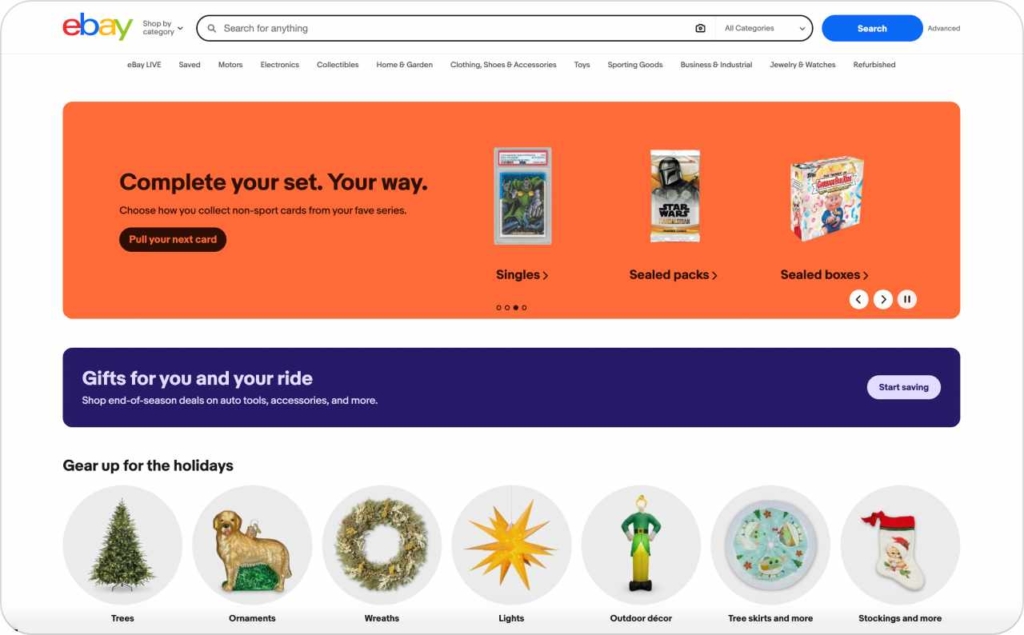
Marketplaces run on structured accuracy. Complete taxonomy, clear parent/child variants, and active Brand Registry fields help listings stay visible and compliant. Precise data makes it easy for buyers to find the right version and trust what they see.
The result: fewer returns, better rankings, and stronger seller performance built on product truth.
Affiliates & Price engines
Affiliate platforms rely on consistency. Structured fields for price, brand, and availability plus clean UTMs ensure tracking is accurate and performance measurable. Every update in your feed keeps partner listings aligned and transparent. A disciplined e-commerce product data feed management process turns affiliates into dependable revenue channels instead of guesswork.
The result: reliable data for partners, clearer attribution for you, and no wasted clicks on outdated offers.

Photo source: Rakuten Advertising
Email, SMS & Onsite personalization
Your e-commerce product data feed can do more than drive ads, it powers personalization, too. Synced with your owned channels, it fuels real-time product blocks for cross-sells, restocks, and custom offers without manual updates.
The result: campaigns that always reflect what’s live in your store, creating consistency across ads, site, and messages.
B2B catalogs
In B2B, buyers want precision. Feed attributes like pack sizes, MOQs, and tiered pricing help them make faster decisions and reorder with confidence. Adding clear logistics details like lead times or certifications builds trust and removes friction from the buying process.
The result: streamlined procurement, fewer manual updates, and repeat business built on trust and clarity.
Best practices to optimize e-commerce product data feed
A strong e-commerce product data feed isn’t built once, it’s built right, then improved constantly. Every title, image, and attribute carries weight across your marketing ecosystem. Small fixes in structure or clarity can ripple into higher CTRs, cleaner approvals, and steadier ROAS.
1. Title formulas that earn the click: Make every word work
A strong title is your product’s first handshake. For e-commerce product data feed success, keep it structured, not stuffed. Use clear, consistent patterns like
Brand + Model + Key Benefit + Size/Color or Material + Use Case + Fit/Size + Differentiator
Each word should help search engines and shoppers instantly understand what’s being sold. Stay within 55–70 characters for Google Shopping and shorter for social placements.
What problem does it solve: Most product data feed e-commerce setups fail because titles read like keyword dumps or vague labels. That confuses algorithms and turns off buyers. A clean, scannable title gives both Google and real people confidence to click, it bridges clarity and conversion.
Benefits
- Increases click-through rate with instantly understandable listings
- Boosts query matching accuracy for search and Performance Max campaigns
- Reduces ad disapprovals from over-optimization or repetition
- Makes your e-commerce product data feed management easier to scale
2. Lead with benefits in descriptions: Hook interest before specs
People skim before they read. That’s why your e-commerce product data feed descriptions should open with the payoff, not the specs. Start with what the product does “stain-resistant, 10-minute cleanup” before listing materials or dimensions. Keep it short, clear, and structured in two to three bullets. Add care details, compatibility notes, and anything that helps someone picture owning it.
What problem does it solve: Many product data feed e-commerce descriptions bury the benefit under jargon or overclaiming. That slows down shoppers and can trigger policy flags. Leading with results helps people decide faster and keeps your listings compliant across ad networks.
Benefits
- Improves engagement by showing outcomes, not just features
- Builds trust and lowers disapproval risk on Google, Meta, and marketplaces
- Boosts conversion rate through clarity and emotional relevance
- Strengthens your e-commerce product data feed management with cleaner, compliant copy
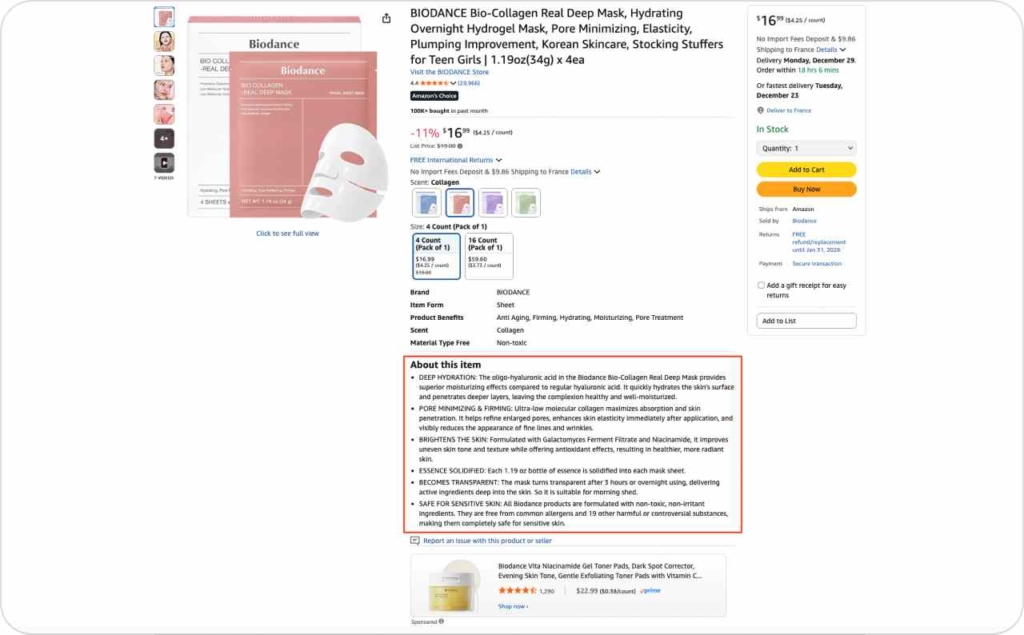
Photo source: Amazon
3. Image sets that convert: Show more, sell more
Your images sell before your words do. In every e-commerce product data feed, include a clean hero shot on white, a lifestyle photo that shows context, and a close-up for detail or scale. Keep it real: centered product, tight crop, no busy text or fake shadows. Add alt text for accessibility, it also strengthens how your products surface organically.
What problem does it solve: Many product data feed e-commerce catalogs fail because images are inconsistent or unclear. Shoppers can’t tell size, quality, or real color. Platforms penalize low-resolution or cluttered visuals. Strong, structured image sets make your listings look trustworthy and ready to buy.
Benefits
- Increases CTR and CVR with more relatable, scroll-stopping visuals
- Reduces product returns by setting realistic expectations
- Improves organic visibility through accessible alt text
- Supports smoother e-commerce product data feed management with standardized asset

Photo source: Etsy
4. Variants done right in parent/child tree: Structure that scales
Every variant deserves its own spotlight. In your e-commerce product data feed, each child SKU should have unique attributes like color, size, or material plus its own image. The parent SKU groups them logically but never replaces them. That hierarchy helps both platforms and shoppers find the right version without confusion.
What problem does it solve: Too many product data feed e-commerce setups reuse IDs or collapse variants under one listing. That creates mismatched images, wrong sizes, and inaccurate analytics. Structured parent/child logic keeps data consistent and ensures ads show the exact product someone wants.
Benefits
- Improves query relevance and ad accuracy across Google, Meta, and marketplaces
- Reduces returns caused by variant confusion or wrong selections
- Keeps SKU-level reporting clean for smarter decisions
- Strengthens e-commerce product data feed management consistency at scale
5. Map taxonomy like a pro: Get found where it counts
Think of taxonomy as the roadmap inside your e-commerce product data feed. Every product needs to land in the exact right category: not “Clothing,” but “Men’s Jackets > Lightweight.” Keep a living mapping table that aligns with Google, Meta, and marketplace structures, and review it quarterly. The more precise the mapping, the smarter your placements become.
What problem does it solve: Many product data feed e-commerce catalogs drift over time. A single miscategorized item can lose visibility, skip eligibility for premium spots, or show in irrelevant searches. Clean taxonomy keeps your ads discoverable, accurate, and efficient.
Benefits
- Boosts visibility and query matching on shopping and discovery surfaces
- Unlocks eligibility for better placements in Performance Max and DPAs
- Simplifies optimization for multi-channel feeds
- Strengthens long-term feed governance

6. Enrich required + recommended attributes: Feed the algorithm what it loves
Your e-commerce product data feed isn’t complete until every attribute tells a story. Go beyond the basics as ID, title, price, availability and fill in the essentials: GTIN, MPN, brand, product_type, gender, material, pattern, size, and shipping details. Include energy, safety, or compliance data where relevant. These fields help algorithms understand and promote your products correctly.
What problem does it solve: Many product data feed e-commerce files stop at the bare minimum. That limits eligibility, reduces impressions, and makes ads harder to optimize. When attributes are missing, platforms guess and guesses rarely sell. Enriched data removes ambiguity and boosts performance.
Benefits
- Expands reach by meeting full platform requirements
- Increases ad relevance and eligibility for premium placements
- Reduces feed errors and disapprovals across channels
- Supports scalable e-commerce product data feed management with structured detail

7. Custom labels with a purpose: Make data work for strategy
Custom labels turn your e-commerce product data feed into a smarter marketing tool. Use them only for data you’ll actually bid or report on like margin tiers, lifecycle stages, price buckets, seasonality, or inventory risk. This structure lets Google Shopping, Performance Max, and Dynamic Product Ads make decisions that align with your real business goals.
What problem does it solve: Too many product data feed e-commerce setups use custom labels as catch-alls or ignore them entirely. That wastes targeting potential and clutters reports. Focused labeling connects business logic to campaign logic, helping platforms spend smarter.
Benefits
- Enables performance segmentation by margin, lifecycle, or season
- Sharpens bidding and reporting in automated ad systems
- Reduces wasted spend through clearer campaign structures
- Keeps product strategy data-driven, not reactive
8. Price and inventory hygiene: Keep feeds honest and fast
Prices and stock levels change fast. Your e-commerce product data feed should keep up. Sync data every 15–30 minutes for top sellers and use both sale_price and sale_price_effective_date for clarity. Mark backorders and preorders honestly so platforms and shoppers know exactly what’s available.
What problem does it solve: Inconsistent prices or out-of-stock listings break trust. They also trigger ad disapprovals and wasted clicks. When your feed updates slowly, campaigns bid on products you can’t fulfill, hurting both budget and reputation.
Benefits
- Protects ROAS by avoiding bids on unavailable items
- Reduces feed disapprovals from mismatched prices or inventory gaps
- Builds shopper trust through accurate, real-time information
- Keeps product data feed e-commerce campaigns performing cleanly across markets
9. Internationalization without headaches: Scale feeds, not problems
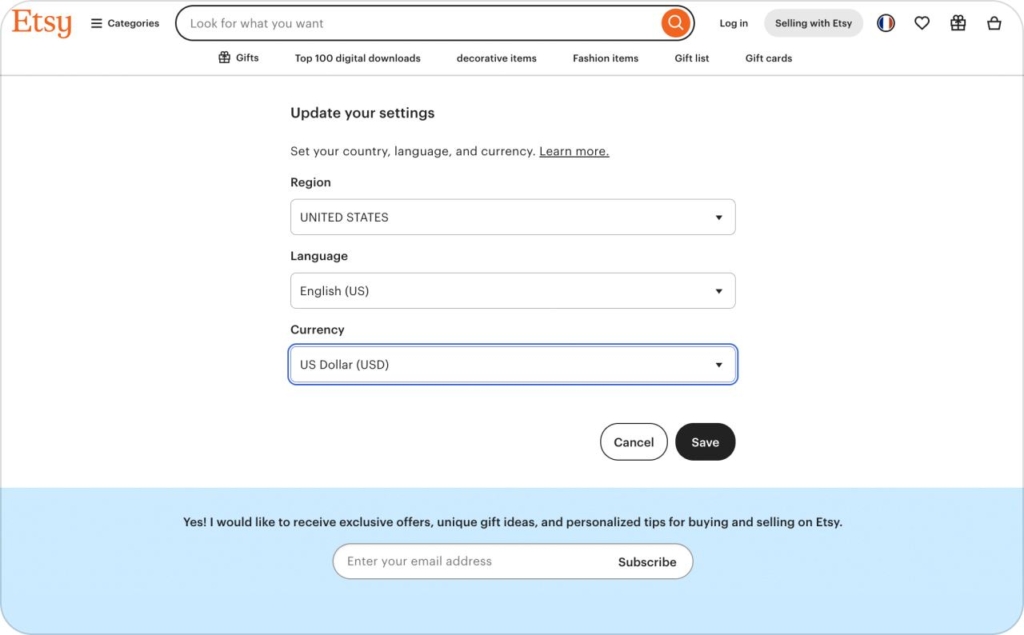
Selling across borders starts with a localized e-commerce product data feed, not just translated ads. Adjust language, currency, units, and size systems for each market. Mirror your custom labels: margin tiers, lifecycle stages, or season codes to fit regional realities like VAT or shipping costs. Always keep one clean feed per locale to avoid data mix-ups.
What problem does it solve: Many stores push one global feed everywhere and hope algorithms adapt. The result: mismatched prices, wrong units, and frustrated customers. Proper localization makes every shopper feel you built the store for them, not around them.
Benefits
- Boosts CTR and conversion by matching local language and pricing
- Prevents disapprovals from inconsistent units or currencies
- Simplifies optimization per region through structured product data feed e-commerce management
- Builds long-term trust in each market through accurate product data
10. Governance and version control: Build feeds you can trust
A stable data feed runs on discipline, not guesswork. Assign an owner, maintain a changelog, and document every schema or mapping update. Set clear approval steps for edits and keep rollback versions on hand. This structure turns your feed from a messy spreadsheet into a managed system.
What problem does it solve: Without ownership or version history, small mistakes snowball: IDs break, attributes vanish, and ad performance drops without anyone knowing why. Strong governance keeps every update transparent and recoverable.
Benefits
- Prevents data loss during updates or feed restructuring
- Speeds up issue resolution with clear edit history
- Improves collaboration between marketing and data teams
- Strengthens e-commerce product data feed management through process, not luck
11. QA checklist you run weekly: Catch small errors before they cost you
Your data feed isn’t “set and forget.” A short, consistent QA routine keeps it healthy. Review stable IDs and GTINs, check price and availability alignment, and scan for broken image links or risky words in titles. Track coverage of required fields and watch your rejection rate trend down over time.
What problem does it solve: Most product data feed e-commerce issues start small: a renamed column, a missing GTIN, a stray claim in copy. Left unchecked, they quietly drain spend and visibility. A 15-minute weekly check catches what automation misses.
Benefits
- Reduces feed disapprovals before they hit campaigns
- Keeps data accurate across all ad channels
- Protects ROAS and product visibility through steady maintenance
- Builds confidence in long-term e-commerce product data feed management
12. Policy-safe copy rewrites: Stay compliant, stay live
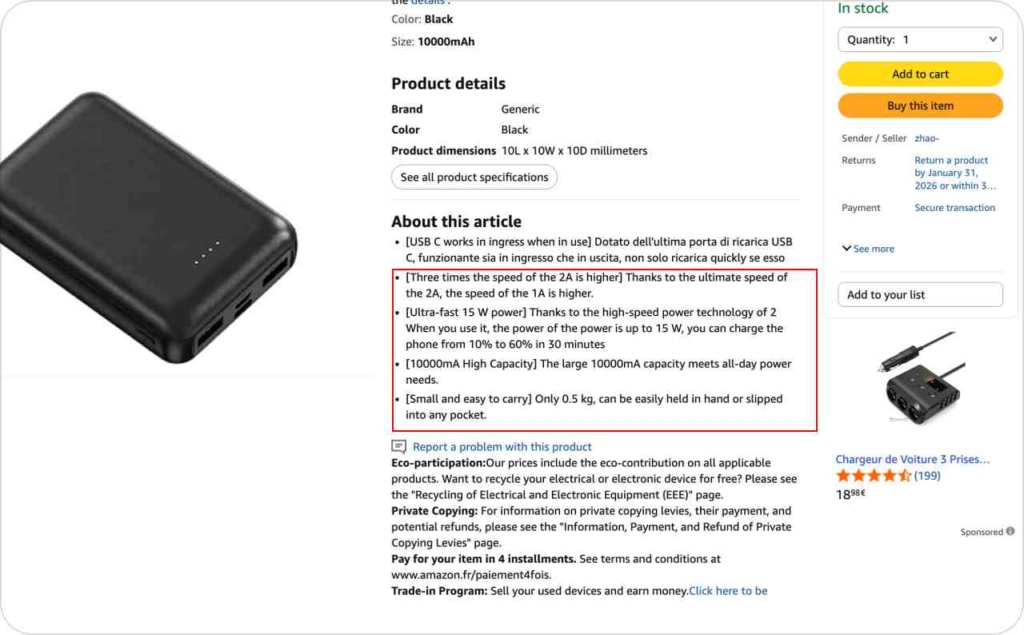
Great copy doesn’t need risky claims to sell. In your e-commerce product data feed, replace superlatives like “best” or “guaranteed” with neutral proof: “lab-tested for durability” or “up to 10-hour battery in internal tests.” When in doubt, show the result, not the promise. Stay aligned with each platform’s ad policies so your listings keep running.
What problem does it solve: Many product data feed descriptions get flagged for medical, financial, or exaggerated claims. That stalls campaigns and hurts visibility. Rewriting with credibility and restraint keeps performance steady while maintaining trust with shoppers and platforms alike.
Benefits
- Reduces ad disapprovals across Google, Meta, and marketplaces
- Keeps campaigns active with compliant, confidence-building copy
- Builds credibility through factual, benefit-first language
- Strengthens e-commerce product data feed management with safer, scalable messaging
13. UTM discipline for partners and engines: Track what matters, not just clicks
Your data feed powers more than ads; it powers analytics. Standardize your UTM tags: utm_source, utm_medium, utm_campaign, and utm_content, to match naming across channels. That consistency connects product-level data with ad performance, so every click tells a complete story.
What problem does it solve: Most teams rely on feed automation but skip clean tracking. As a result, they can’t tell which label or price test drove the sale. Clear UTM governance links your feed structure to your results, making every optimization credible.
Benefits
- Unlocks accurate reporting across Google Analytics, Meta, and affiliates
- Makes testing and A/B experiments traceable and reliable
- Eliminates guesswork when linking product feeds to revenue outcomes
- Simplifies product data feed e-commerce reporting with clean, consistent data
14. Test like a scientist: Let data prove the difference
Your e-commerce product data feed isn’t static, it’s a live experiment. Change one variable at a time: test a new title format, add a lifestyle image, or apply a new custom-label strategy. Compare results against a control SKU group over 14–28 days to see what truly improves CTR, CVR, or ROAS.
What problem does it solve: Most teams tweak too many things at once, then can’t tell what worked. Without structure, optimization turns into guessing. Controlled tests reveal the small, repeatable changes that create reliable gains.
Benefits
- Turns feed updates into measurable, data-backed improvements
- Boosts confidence in scaling winning changes across categories
- Saves budget by focusing on proven adjustments
- Builds smarter product data feed e-commerce management through iteration
15. AI as an assistant, not an autopilot: Work smarter, not lazier
AI can speed up your e-commerce product data feed, but it shouldn’t run it unchecked. Use it to draft titles, fill missing attributes, or suggest tags like “likely bestseller.” Set guardrails for tone, length, and brand voice, then always review before publishing. The goal is faster accuracy, not blind automation.
What problem does it solve: Many teams let AI overwrite context or overfit keywords, turning clean data into clutter. That leads to policy flags, miscategorized products, or robotic copy. Treating AI as a helper keeps quality high and control in human hands.
Benefits
- Speeds up feed creation without losing accuracy or tone
- Reduces manual workload on repetitive updates
- Protects compliance and brand integrity across listings
- Strengthens long-term e-commerce product data feed management with scalable human oversight
Measuring the ROI of a product feed
A strong e-commerce product data feed isn’t just a technical win, it’s a measurable growth driver. When your catalog data is clean, structured, and synced, every marketing channel becomes easier to scale and optimize. The ROI shows up not only in revenue, but in how much smoother your entire system runs. And the upside is real: in 2025, WordStream found that 65% of industries saw year-over-year conversion-rate increases in search ads.
Start by tracking what your feed directly influences. Titles and attributes improve CTR. Image quality and enriched descriptions lift CVR. Clean structure and fast updates drive better ROAS or POAS, while lower disapprovals reduce wasted spend.
Here’s what to measure to see real impact:
- Feed health KPIs: coverage % of required/recommended fields, disapproval rate, and price mismatch rate
- Performance KPIs: CTR, CVR, ROAS/POAS, margin ROAS
- Operational KPIs: update frequency, sync speed, and error resolution time
What it tells you: a well-optimized product data feed e-commerce setup increases efficiency across the board: fewer errors, faster learning cycles, better targeting. You’ll see spend go further and your ads perform with less effort.
True data feed management turns every field into leverage. Each clean attribute, each synced update, compounds into cheaper clicks, smarter algorithms, and predictable revenue growth, the kind that doesn’t depend on luck or trend spikes, but on data done right.
How to use AI tools and product feeds to improve your marketing
The best proof of a well-structured data feed is a beautiful product page. And that same clarity: clean titles, real images, accurate pricing is exactly what powers great ads. Zeely takes those ready-made product links and turns them into complete static or video creatives in minutes. Your feed provides the facts; Zeely adds the persuasion to create the best e-commerce video ads. Together, they make your marketing feel effortless.
Here’s how that process works in Zeely:
1. Add your product link or Shopify store
Paste your product URL, and Zeely’s AI automatically pulls the title, description, price, and images from your site. Your existing data becomes the foundation for ad creation, no manual uploads or copy-pasting needed.
2. Choose your ad format
Pick from over 100 static templates or create a dynamic video ad. You can use one of 500+ AI avatars, hooks, and ready-made scripts to bring your product to life. Every template is designed for Meta, TikTok, and Instagram, proven layouts that convert faster. Check in detail how to create AI video with e-commerce CTAs
3. Let AI craft your ad
Zeely instantly generates visuals, text, and CTAs that match your product and brand tone. The copy stays clear and compliant while highlighting what customers actually care about. You save hours of writing and editing while keeping your ads consistent and professional.
4. Refine your creative with built-in tools
Easily crop or resize images, adjust colors, and enhance quality. The AI-powered background remover keeps focus on your product, not the clutter. You get studio-grade results.
5. Launch your campaign with confidence
Once your ads are ready, publish them directly to Meta in one tap. Zeely’s AI helps test versions, optimize budgets, and scale what works. Your feed fuels your ads, and your ads feed back real performance data.
6. Keep improving with insight
As campaigns run, Zeely shows which creatives and products perform best. Those learnings help you refine both your feed and your future ads. The smarter your data gets, the easier every next launch becomes.
Great marketing doesn’t start in the ad manager, it starts in the data. A structured e-commerce product feed gives your store clarity, and tools like Zeely turn that clarity into motion. When every title, image, and price syncs perfectly, your ads stop guessing and start performing. That’s how your marketing grows: quietly, efficiently, and on your terms.
If you’re ready to see how effortless that can feel, try creating your first AI-powered ad with Zeely, your feed already has everything it needs to shine.