Meta Advantage+ vs manual setup: Which Facebook ads strategy wins?
Meta Advantage+ can find cheaper delivery fast, but manual setup still matters when audience rules, placement quality, or lead qualification can make or break the campaign.
Meta Advantage+ vs manual setup is not a fight between “AI is better” and “manual control is safer.” I’m Emma from Zeely, and I’ll keep this simple. Meta AI can test, shift, and learn faster than a person manually checking Ads Manager every morning with cold coffee and rising blood pressure. But Meta does not magically understand your profit margin, your sales process, or what a good customer looks like. It learns from the goal and signals you give it.
That is why the real question is not “Should I use automation?” It is “Which parts should I automate, and which parts still need human guardrails?”
Use Meta Advantage+ when you have a clear offer, broad buyer pool, enough creative, reliable conversion tracking, and a simple success event like purchase, booked call, or qualified lead.
Use manual Facebook ads when you need strict control over audience, location, compliance, placements, budget split, or lead quality.
Use a hybrid setup when you want Meta to optimize one layer, such as placements or budget, while you keep control over audience rules, exclusions, or creative claims.
For ecommerce, Advantage+ often has more room to work because Meta can learn from purchase and value signals. For lead gen, be more careful. Cheap leads are not a business model. They are a spreadsheet with trust issues.
The safest starting rule is this: automate the parts where Meta has good data, but manually control the parts where your business has non-negotiable rules.
What Meta Advantage+ automates and what manual setup still controls
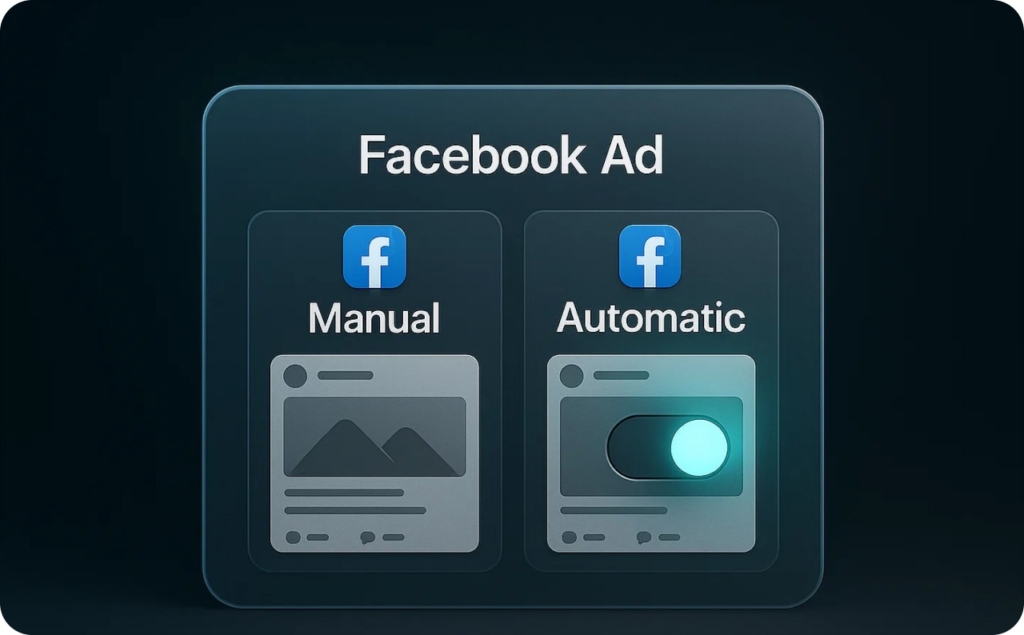
Meta Advantage+ is not one button. It is Meta’s automation layer for audience discovery, placements, campaign budget, creative variation, and full campaign setup in some objectives. Meta describes Advantage+ as a set of AI-powered tools that can simplify campaign setup and improve delivery.
Advantage+ helps Meta decide who should see the ad, where the ad should appear, how budget should move, and which creative variation is most likely to work. That can save time and reduce guesswork, especially when the account has enough data.
Manual setup gives you tighter control over the parts Meta should not guess. You still choose the objective, conversion event, offer, landing page, budget limits, geography, exclusions, ad copy, creative direction, tracking setup, and success metric.
That last part matters most. If Meta only sees “lead submitted,” it will try to get more leads. If it sees “qualified lead,” “booked appointment,” or “purchase completed,” it gets a better signal. AI does not need more mystery. It needs better data.
So the clean distinction is this: Advantage+ is good at finding delivery opportunities inside the rules you set. Manual setup is good at defining the rules before the system starts spending.
This is where many accounts go wrong. They treat Advantage+ like a strategy. It is not. It is a delivery system. Your strategy is the offer, audience logic, tracking quality, creative angle, and decision rule for what counts as a win.
How targeting changes with Advantage+ audience
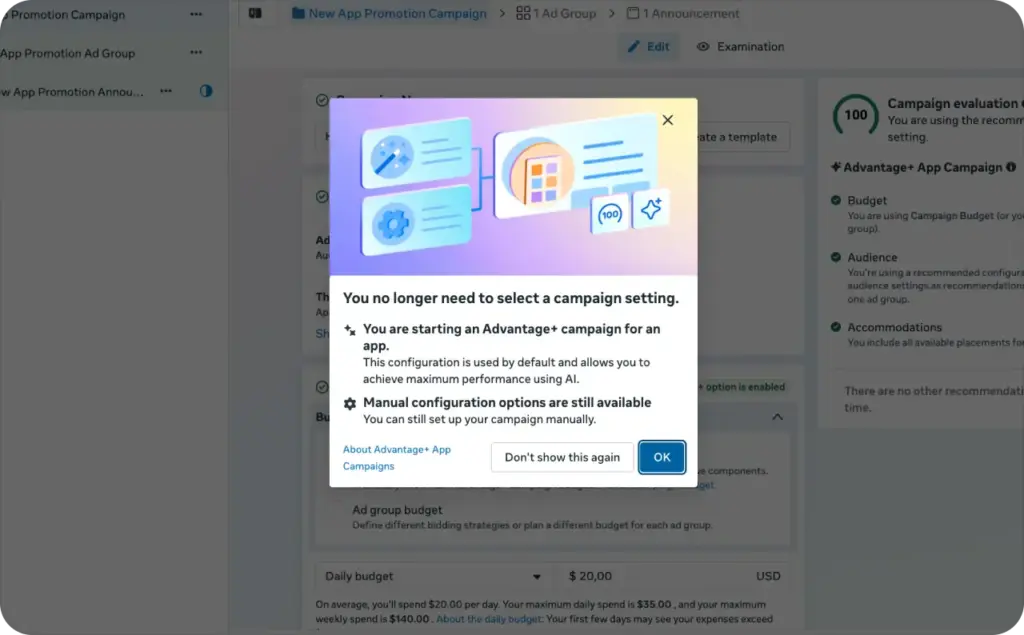
The biggest shift with Advantage+ audience is that your targeting inputs become more flexible. Meta can use your customer knowledge, such as interests, gender, demographics, custom audiences, and lookalikes, then search more widely when it predicts better performance.
Manual targeting feels more like drawing a fence. Advantage+ audience feels more like giving Meta a starting map. That difference is small in wording and huge in results.
This works well when your product has broad appeal. A fitness product, cleaning service, beauty brand, candle shop, online course, or simple ecommerce offer may not need a tiny interest stack. Good creative and clean conversion data can teach Meta more than your best guess at five overlapping interests.
It works less well when your buyer is very specific. If you only want procurement managers at mid-sized companies, homeowners in one exact service area, or high-intent leads for a premium consultation, broad expansion can create noise. Meta may find people who are likely to click or submit a form, but not likely to buy.
The practical rule is simple. Use Advantage+ audience when being surprised by new buyers is useful. Use manual control when being surprised costs money after the click.
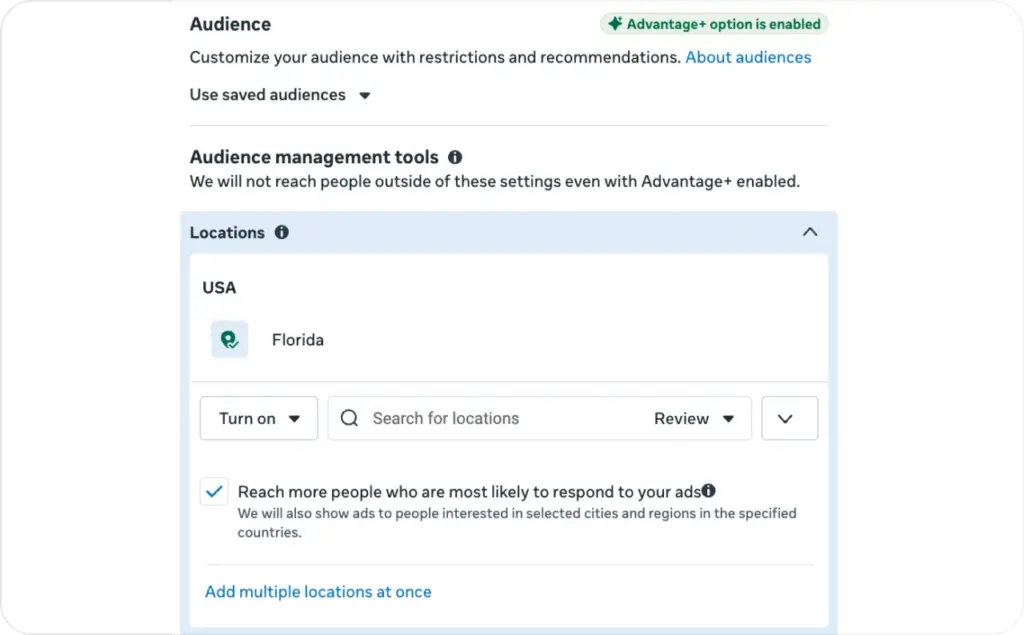
Also remember that some controls remain strict. Location, minimum age, language, and custom audience exclusions can still be used as real constraints in the Advantage+ audience setup. Use them. Guardrails are not a lack of confidence. They are what keep the machine from driving into a pond.
How placements, budgets, and creative testing differ
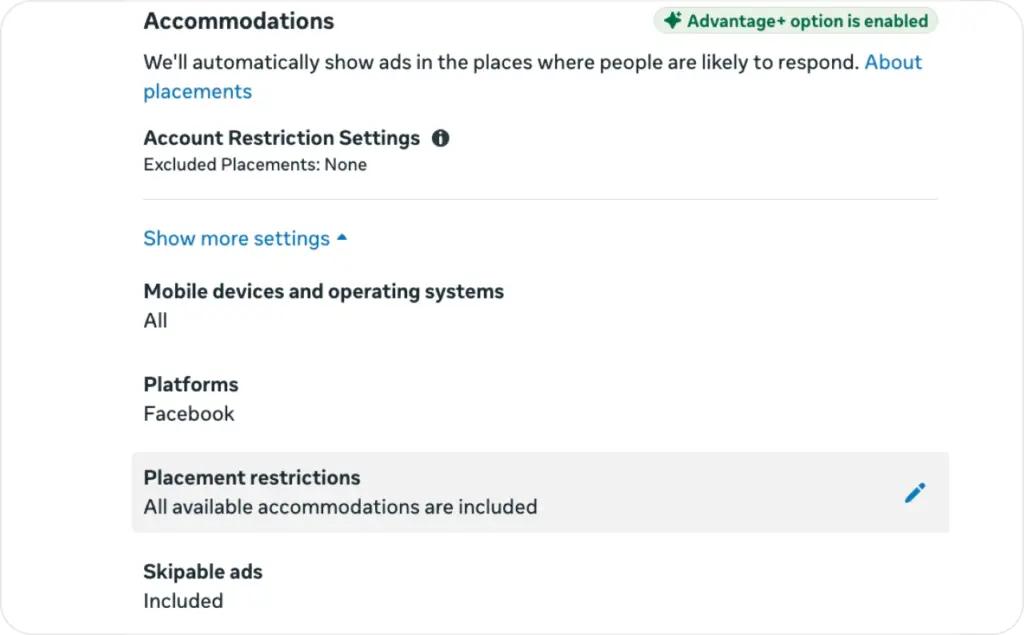
Placements are usually where advertisers first feel the loss of control. Advantage+ placements allow Meta to show ads across eligible surfaces such as Facebook, Instagram, Messenger, Reels, Stories, Feeds, and Audience Network. The idea is simple: more eligible placements give Meta more chances to find lower-cost results.
That can work. It can also hide quality problems.
If one placement sends cheap leads that never answer the phone, that placement is not winning. It is just loud. This is why the brief point matters: some recommended setups reduce manual placement control. That is fine when your conversion signal is strong. It is risky when your platform metric and business metric are not the same thing.
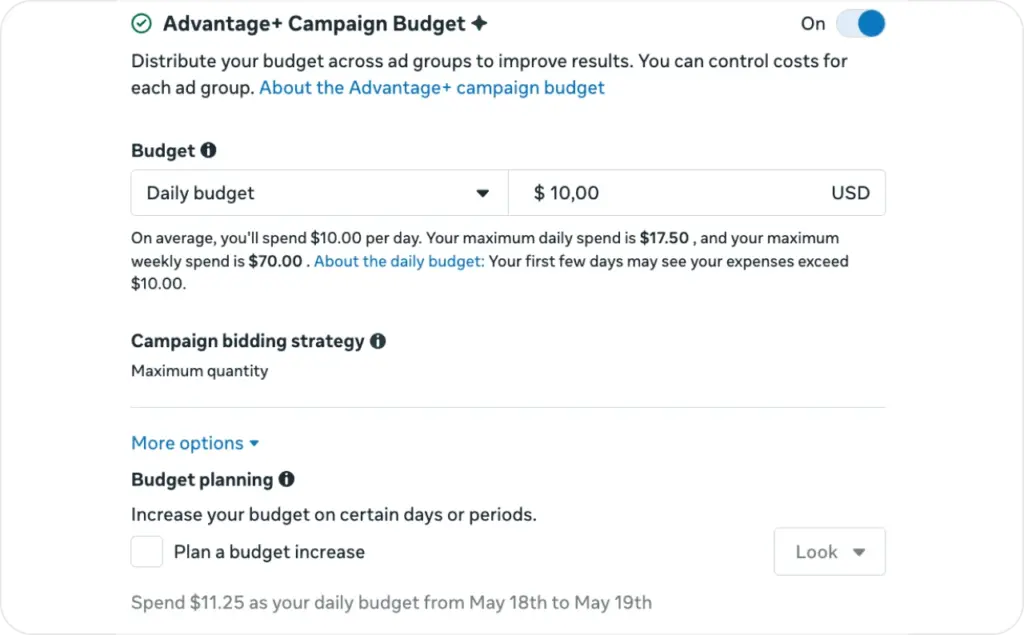
Budget automation works in a similar way. With Advantage+ campaign budget, Meta can distribute one campaign budget across ad sets in real time. This helps when you want the system to fund the strongest opportunities. It hurts when you need a clean test or a protected spend split. Read now how much you should spend on Facebook ads.
For example, if you are testing two audiences, campaign budget automation may push money to the cheaper early winner before the quality data is clear. That does not mean the system is broken. It means you asked it to optimize before you finished learning. Read more about optimizing Facebook ads with AI.
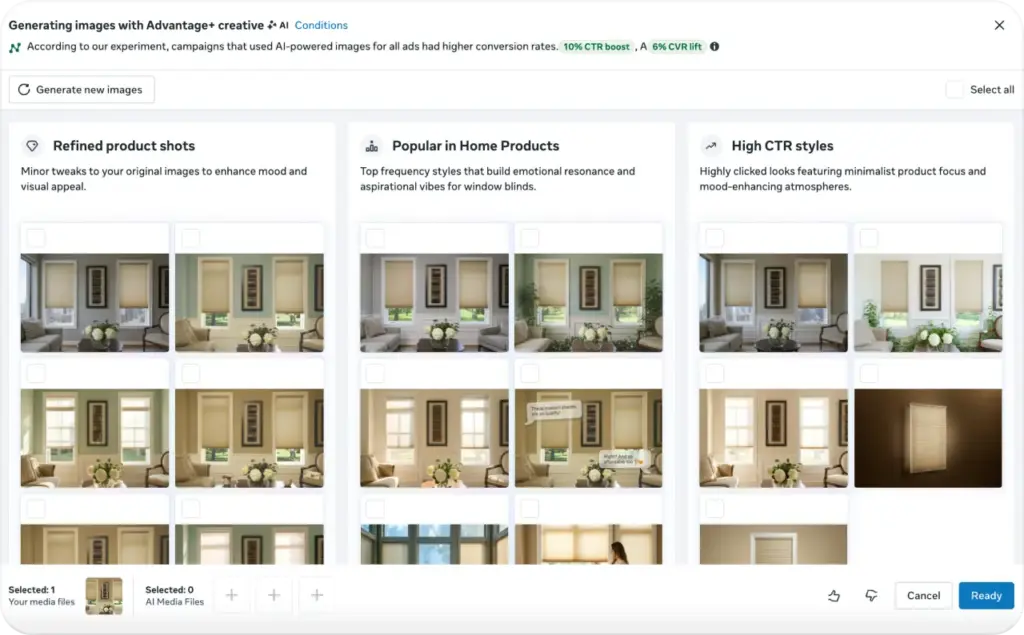
Creative automation adds the final layer. Advantage+ creative can resize images, generate text options, expand images, create background variations, animate static assets, and tailor creative variations to different viewers.
Use this when your brand has room to flex. Be careful when your product claims, legal wording, pricing, medical language, before-and-after images, or luxury visuals must stay exact. A slightly changed crop is fine for a candle. A changed claim in a regulated service is not fine. That is how “helpful automation” becomes a very small legal campfire.
The best hybrid approach is usually this: let Meta test delivery layers where the risk is low, but manually review any layer that changes the promise, claim, or customer expectation.
When Advantage+ works best for ecommerce and when it fails for lead gen
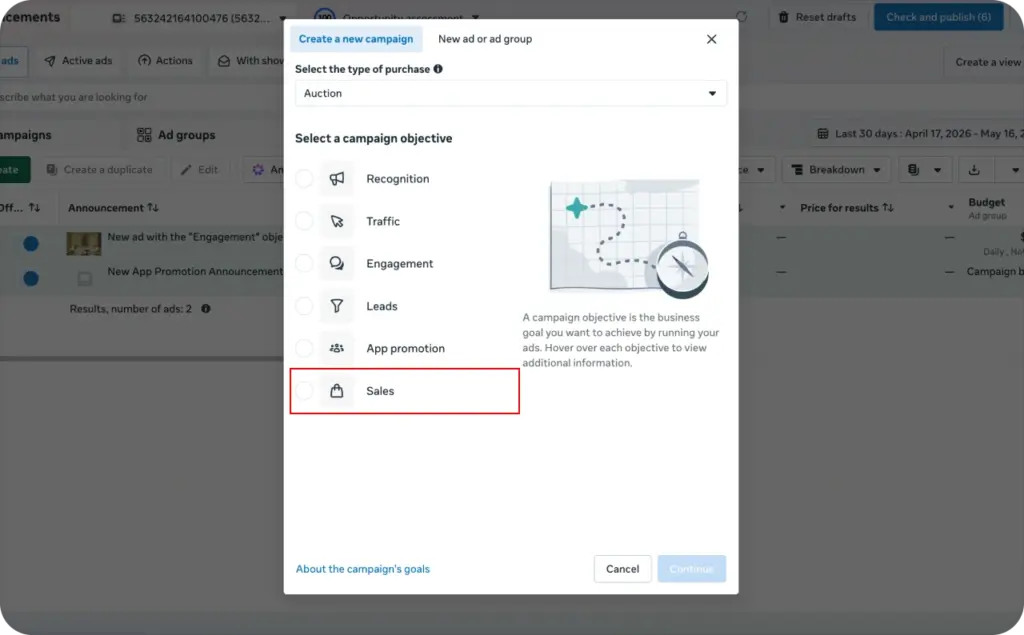
Advantage+ usually has the cleanest path in ecommerce because the conversion event is closer to revenue. With Advantage+ sales campaigns, Meta can optimize creative, targeting, placements, and budget for online sales. If your pixel, catalog, purchase event, and value tracking are set up well, the system has useful signals.
That does not mean ecommerce can run on autopilot. You still need strong creative, enough product-market clarity, a landing page that does not collapse under basic questions, and a real margin target. But ecommerce gives Meta a clearer learning loop: someone saw the ad, visited, added to cart, bought, and generated value.
Lead generation is more fragile. Meta has Advantage+ leads campaigns, and they can absolutely work. The problem is not the format. The problem is signal quality.
If Meta only learns from form submissions, it may optimize for people who submit forms easily. That can lower cost per lead and make the report look lovely. Then sales opens the CRM and finds fake numbers, wrong-fit leads, students doing research, and people who forgot they filled out the form six minutes ago.
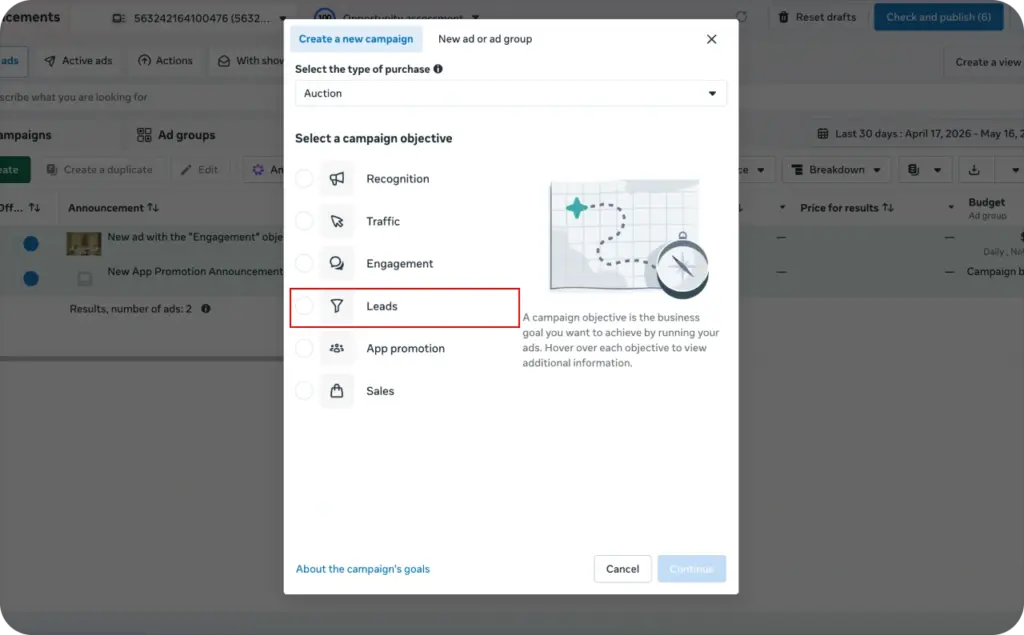
For lead gen, you need stronger filters. Ask qualifying questions. Use higher-intent forms when needed. Track booked calls, qualified leads, and closed deals. Connect better first-party data through Meta Conversions API when possible, so Meta can learn from deeper events instead of shallow activity.
Use Advantage+ for lead gen when your offer is broad and qualification is simple. Use manual or hybrid setup when bad leads create real operational cost. A cheap lead that burns 20 minutes of sales time is not cheap. It is wearing a tiny disguise. You may also like to find out more about Facebook dynamic ads and Facebook video ads.
How to test Advantage+ vs manual without corrupting the data
A bad test compares a fully automated campaign against a completely different manual campaign, with different creative, budget, landing page, audience, and optimization event. That test will tell you something, but not what you think.
To compare Meta advantage vs manual properly, isolate one main variable. Test Advantage+ audience against manual audience. Or Advantage+ placements against manual placements. Or Advantage+ campaign budget against ad set budgets. Do not test everything at once unless you enjoy making decisions in fog.
Start with the same objective, offer, conversion event, landing page, core creative, and attribution view. Set budgets that are large enough to collect useful results. Keep the test running long enough to see patterns, not just early noise.
Before launch, define the winner. For ecommerce, that may be cost per purchase, ROAS, average order value, new customer acquisition cost, or contribution margin. For lead gen, it should be cost per qualified lead, booked call rate, show-up rate, opportunity rate, or revenue per lead.
Cost per lead alone is not enough. It is the metric equivalent of judging a restaurant by how quickly the waiter brought water. Nice, but not the meal.
During the test, do not edit everything because day two looks weird. Every major edit can reset learning or blur the comparison. If performance is not dangerous, let the system gather data. If something is clearly broken, pause and document the reason.
A clean testing setup looks like this:
- One clear hypothesis.
- One changed variable.
- Same offer and creative base.
- Same conversion event.
- Same evaluation window.
- Quality metric defined before launch.
- No emotional budget edits at breakfast.
This is boring. That is why it works.
Warning signs of junk leads, weak match quality, and wasted spend
The first sign of a bad Advantage+ setup is often a beautiful Ads Manager report paired with an angry sales team. When platform performance and business performance disagree, trust the business outcome.
Watch for these warning signs:
- Cost per lead falls, but qualified lead rate falls faster.
- One placement drives volume, but those leads do not reply.
- Form submissions increase, but booked calls stay flat.
- Meta spends most of the budget before quality data is available.
- Advantage+ creative changes the promise or makes the offer look broader than it is.
- Audience expansion brings people from locations, age groups, or segments you cannot serve.
- CTR improves, but sales conversations get worse.
- Retargeting audiences get mixed into prospecting logic and make results look cleaner than they are.
The fix depends on the problem. If the lead quality is weak, add better form questions, connect CRM feedback, or optimize for deeper events. If placements are noisy, review placement breakdowns and use account-level controls where needed. If creative is attracting the wrong person, rewrite the hook so it filters as well as sells.
A good ad does not only pull people in. It also quietly pushes the wrong people away. That is useful. Your budget deserves boundaries.
A simple decision framework by account type and funnel stage
Here is the easiest way to choose between Meta Advantage+ vs manual setup without turning it into a 42-tab spreadsheet.
| Situation | Best starting setup | Why |
| Ecommerce with clean purchase tracking and broad appeal | Advantage+ sales campaign | Meta has a clear purchase signal and room to find buyers. |
| Ecommerce with weak tracking or thin data | Hybrid | Fix signal quality before giving automation too much freedom. |
| Local service with broad demand | Advantage+ audience with strict location controls | Meta can explore buyers, but geography still needs a fence. |
| High-ticket lead gen | Manual or hybrid | Quality matters more than lead volume. |
| Narrow B2B audience | Manual setup first | The buyer pool is too specific for broad expansion on day one. |
| Retargeting warm audiences | Manual or controlled hybrid | You need message control and clean audience separation. |
| Creative exploration | Advantage+ creative with review | Automation can help generate variation, but claims still need human eyes. |
| Compliance-sensitive offer | Manual setup | Control beats speed when wording and audience rules matter. |
| Scaling a proven campaign | Advantage+ budget or broader automation | Once quality is proven, Meta can safely get more room. |
The funnel stage matters too. At the top of the funnel, Advantage+ can help you find demand you did not expect. In the middle, hybrid often works best because you need both learning and message control. At the bottom, manual setup can protect intent, exclusions, and retargeting logic.
My honest rule: start broad only when wrong-fit traffic is not expensive. Start controlled when wrong-fit traffic burns sales time, compliance risk, or budget you cannot replace.
FAQ about Meta Advantage+ vs manual setup
Meta Advantage+ is better when your goal is clear, your conversion data is reliable, and your audience can be broad. Manual setup is better when you need strict control over targeting, placements, budget split, creative claims, or lead quality.
Use advantage+ audience when Meta can safely search beyond your starting inputs. Use manual targeting when the buyer is narrow, the service area is strict, or unqualified traffic creates real cost after the click.
Meta recommends Advantage+ placements because more eligible placements give the delivery system more opportunities to find results. That can improve efficiency, but it can also hide quality problems if one placement drives cheap, weak leads. Review placement performance against business quality, not only cost per result.
No. Manual Facebook ads are still useful when you need precision, clean tests, protected budgets, or tighter compliance control. Manual setup is not the opposite of smart. It is the right tool when control matters more than reach.
Yes. A hybrid setup is often the best starting point. You can use Advantage+ placements with manual audience rules, Advantage+ audience with strict exclusions, or Advantage+ campaign budget after ad sets have proven quality.
Meta probably learned from a shallow event, such as form submission. If the system does not see qualified leads, booked calls, or closed deals, it may optimize for people who are easy to capture instead of people who are likely to buy.
Run the test long enough to collect meaningful conversion and quality data. For high-volume accounts, a week may show useful patterns. Smaller accounts need longer. The real requirement is not a fixed number of days. It is enough qualified outcomes to make a decision.
Check your tracking, define the success event, prepare multiple creative options, set exclusions, review placement risk, and decide your quality metric before launch. Do not give automation full freedom until you know what good performance actually looks like.
My honest closing take
Meta Advantage+ is not a magic media buyer. Manual setup is not a museum exhibit. They are two ways to control how much freedom Meta has while it tries to find your next customer.
Use Advantage+ when your account has clean signals and room to explore. Use manual setup when you need to protect quality, budget, compliance, or audience precision. Use hybrid when you want the best of both: Meta handles the repetitive optimization work, and you keep the strategic guardrails.
If you are building Facebook and Instagram ads without a full marketing team, tools like Zeely can help you move faster on the parts humans still need to get right: offer clarity, creative direction, landing page flow, and campaign structure. Meta can optimize delivery. It cannot fix a weak message.
So let the machine do what it does well. Just do not hand it the keys before you have drawn the map.

Emma blends product marketing and content to turn complex tools into simple, sales-driven playbooks for AI ad creatives and Facebook/Instagram campaigns. You’ll get checklists, bite-size guides, and real results, pulled from thousands of Zeely entrepreneurs, so you can run AI-powered ads confidently, even as a beginner.
Written by: Emma, AI Growth Adviser, Zeely
Reviewed on: May 25, 2026