Reels vs Stories vs Feed Video
This guide breaks down the key differences between Reels, Stories, and Feed videos, helping you understand when and how to use each format effectively. It highlights their unique features, visibility, and best use cases so you can choose the right content type to maximize engagement on Instagram.
Reels are still the best pick for reach and follower growth. Stories are better for replies, DMs, urgency, and warmer clicks. Permanent feed content still matters because it lives on your profile and helps people trust you. In 2026, the smartest move is not choosing one format forever. It’s matching the format to the job.
When people search the difference between Reels and Stories, or compare Instagram reel vs Story vs Post, they usually don’t want a glossary. They want to know what to publish today, what result to expect, and whether Instagram Reels vs feed video is even the right question.
At Zeely, we look at these formats as three different jobs inside one content system. One format gets you found. One keeps people close. One proves you’re worth buying from.
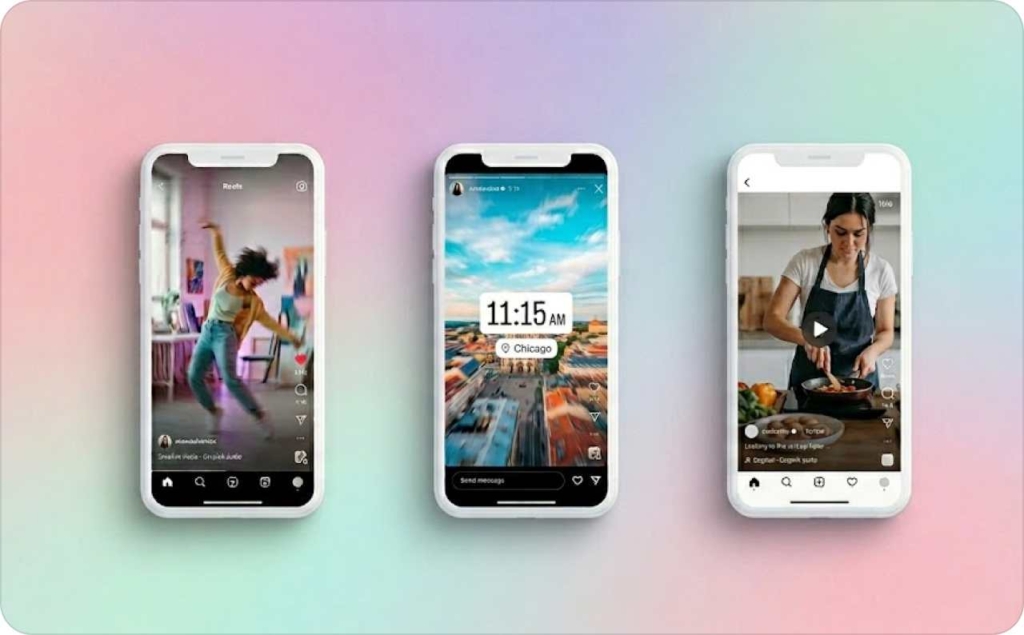
Instagram Reels vs Stories vs Posts: Which format wins for reach, engagement, and sales?
Recent data from Emplifi’s 2026 Social Media Benchmark Report shows 44% higher median engagement from Instagram Reels and carousels than image-based posts. That doesn’t mean every Reel beats every Story or post. It means format choice matters enough that just posting consistently is too flimsy to be useful.
If you need the fast call, use this:
- Best for reach: Reels
- Best for engagement from existing followers: Stories
- Best for profile trust and evergreen proof: feed video posts
- Best for follower growth: Reels
- Best for direct action, replies, and warm clicks: Stories
- Best for full campaigns: all three, with each format doing a different job
That’s the real reels vs stories vs feed video comparison. Reels handle discovery. Stories handle response. Posts handle permanence. When brands compare Instagram post vs Story vs Reel, that’s usually the split they actually care about.
Difference between Reels and Stories, and where posts fit
Most articles reduce the difference between reel and story to one thing: Stories disappear and Reels don’t. True, but thin. In Sprout Social’s 2026 Instagram algorithm guide, Feed, Reels, Stories, and Explore are described as separate ranking environments. Feed leans toward close connections, Reels lean toward entertainment and discovery, and Stories lean toward recency and relationship strength. The same guide notes that Instagram now treats views as the primary metric across formats, which changes how you compare winners and losers.
| Format | Main goal | Audience reach | Lifespan | Best content types |
| Reels | Discovery and reach | Non-followers and new audiences | Permanent unless deleted | Tutorials, trends, product demos, educational clips |
| Stories | Interaction and response | Mostly existing followers | 24 hours (unless added to Highlights) | Polls, updates, behind-the-scenes, launches |
| Feed video posts | Trust and profile proof | Followers plus some discovery | Permanent on profile | Testimonials, case studies, product proof |
So if you’re asking what a Reel is on IG, think of a Reel as your best shot at being found by people who don’t know you yet. A Story is for people who already know you, or are close enough to care. A feed post, or what many people still search as a feed video, is the content that stays on your profile and keeps doing quiet trust-building work after the first rush fades.
That means the difference between story and reel is really about audience temperature. Reels are colder and wider. Stories are warmer and closer. The difference between reel and post is permanence. Reels go hunting for attention. Posts sit on the shelf and keep selling. If you prefer the phrasing difference between reels and story, difference between stories and reels, or difference between reels and posts, the answer is still the same: discovery, relationship, and proof are not the same job.
Which one wins reach?
Meta gave creators a loud hint in its June 2025 update on creativity and Trial Reels. After trying Trial Reels, 40% of creators posted Reels more often, and 80% of those creators saw an increase in Reels reach from non-followers. That’s not a subtle nudge. If your goal is awareness, Reels still have the cleanest path.
At Zeely, we see the same pattern in client accounts. When a brand shifts from only feed posts to a mix that includes Reels, the first change is usually reach. Profile visits start rising within the first few weeks because Reels travel beyond the existing follower base.
Stories are weaker for cold reach because they lean on recency and relationship. Feed video posts can still move past your follower base, but the route is less predictable. In a Reel vs Story Instagram choice, pick the Reel when you want the platform to do more of the distribution work. In a Story vs Reel Instagram choice, pick the Story when the audience is already there and you want response, not discovery.
There’s also a practical ranking clue in Social Media Today’s January 2025 breakdown of Adam Mosseri’s ranking notes. It says likes matter a bit more for connected content, while sends matter a bit more for unconnected content. That helps explain why useful, funny, or highly shareable Reels can punch above their weight for smaller accounts. People forward them beyond your current bubble. That is why Instagram Reels vs Posts and Reels vs Stories often ends with the same answer for growth: Reels first.
For low-follower accounts, that matters even more. If you only have time for one growth format, start with Reels. Then let Stories and posts support what the Reel started.
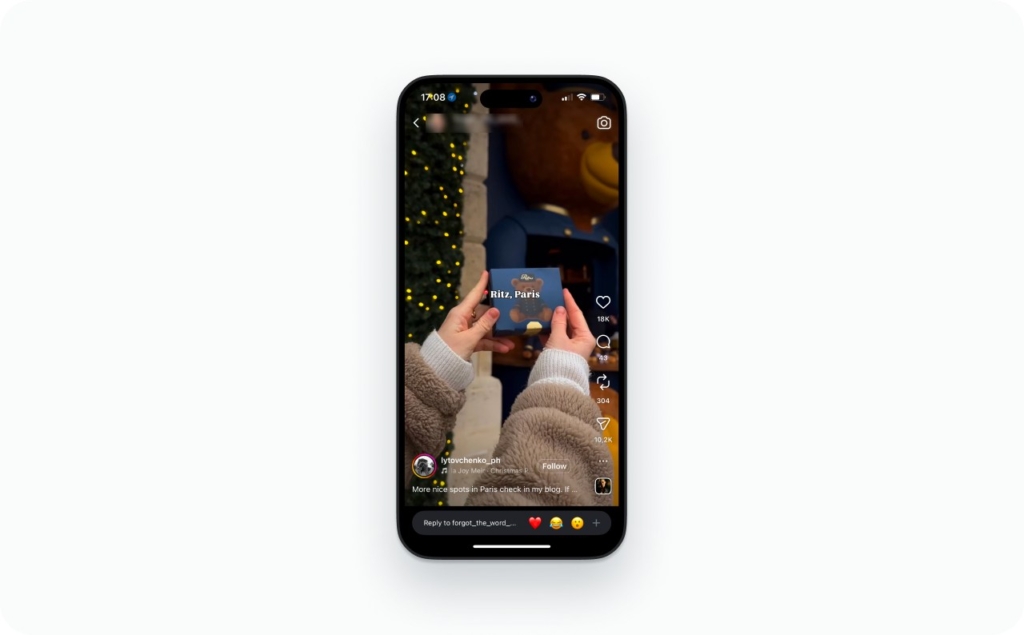
Which one drives better engagement?
This is where lazy advice falls apart, because “engagement” is not one blob. If you mean replies, DMs, taps, polls, and question-box responses, Stories usually win. If you mean shares and saves, Reels often win. Socialinsider’s 2025 Instagram Stories Benchmarks found that Stories are now less about reach and more about retention, and that most exits happen after the first three Stories. It also found that the best Stories reach growth happens between six and thirteen Stories. That paints Stories as a relationship format, not a mass-distribution machine.
That’s why the difference between Instagram Story and Reel matters so much. Reels work when the content is strong enough to earn saves and shares from strangers. Stories work when the content asks for a quick, human reaction. Polls, countdowns, emoji sliders, and direct prompts are not filler. They’re the whole point. If you’re looking for the difference between IG Story and Reel, it usually comes down to this: Reels travel farther, Stories get people to answer back.
Feed video posts sit in the middle. They can earn comments and saves, especially when they package proof, tutorials, or before-and-after results. But for community building, the pattern is usually simple: Reels bring people in, Stories keep the conversation alive, and video posts give those people something solid to look at when they check your profile.
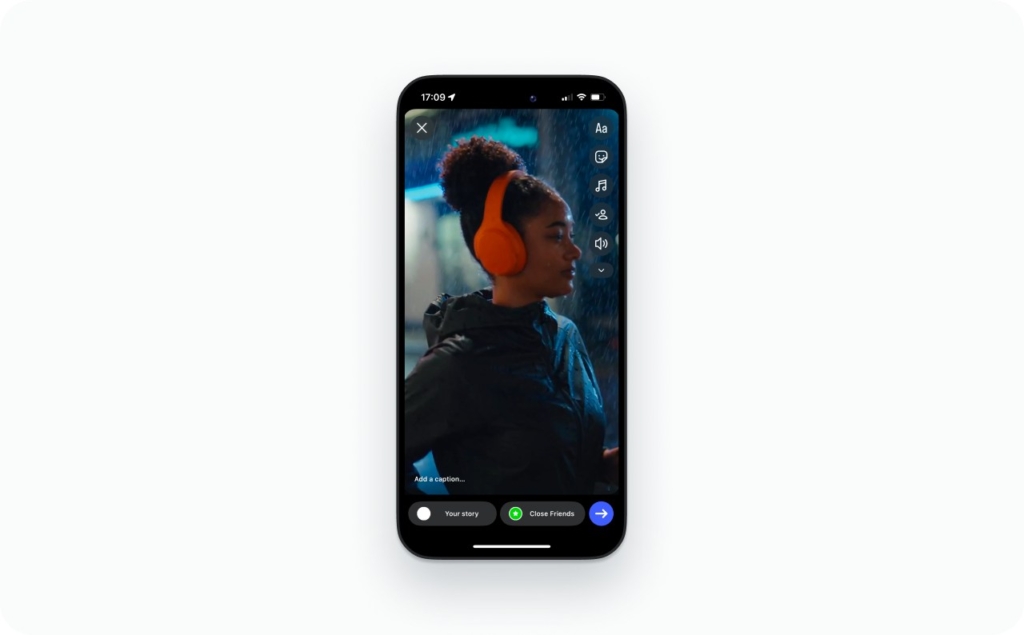
Which one converts better?
When marketers ask which format is best for sales, the real answer is that conversions rarely belong to one lonely asset. Even Meta’s own systems treat Feed, Stories, and Reels as separate but connected surfaces. In Meta’s January 2026 performance update, the company said a new run-time model across Instagram Feed, Stories, and Reels increased conversion rates by 3% in Q4 2025, while broader ranking improvements helped drive more than a 1% gain in conversions on Instagram. That’s paid-side evidence, but the lesson carries over to organic work too: different placements do different parts of the selling job.
Stories are usually the strongest direct-response format. They create urgency, they make link stickers feel natural, and they sit closest to the DM layer. Reels are stronger at top-of-funnel demand creation. Video posts do the quieter closing work by storing testimonials, product proof, FAQs, comparisons, case studies, and founder credibility on the profile. That’s why Instagram reel vs feed video is not really a fight. It’s a sequence. Reel first, post second.
So if you’re stuck on reel vs post, use the Reel when the audience still needs a reason to care. Use the post when the audience already cares and now needs a reason to believe. If you’re stuck on Reel vs Story, use the Story when there is a clear next step, like a click, reply, consultation prompt, or limited-time offer. For ecommerce brands, Reels can create desire while Stories close launches and flash sales. For service brands, Reels can spark interest while Stories and proof-heavy posts help move people into DMs or bookings.
When to post each?
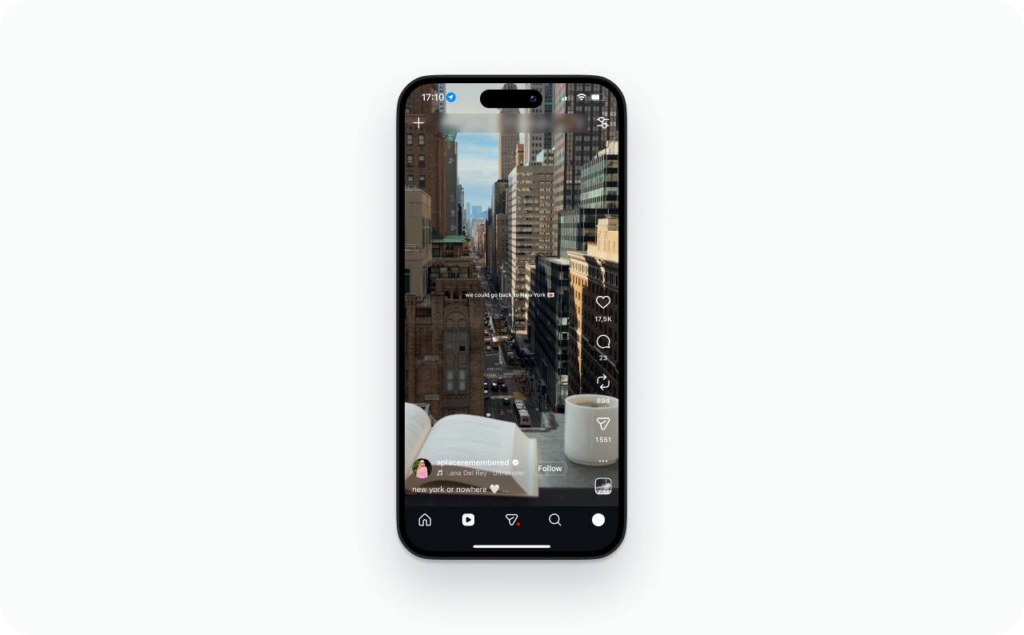
Reels got more flexible in 2025. The Verge reported that Instagram extended Reels to three minutes, doubling the earlier 90-second limit. Read now how long Instagram Reels can be. That matters because the old idea that Reels are only for tiny snippets is now stale. Tutorials, product demos, founder explainers, transformations, and tighter case-study storytelling have more room to breathe.
Use a Reel when the goal is discovery. That includes trend-led content, educational clips, product reveals, creator collaborations, UGC, and any idea that can hook fast without much setup. Use a Story when the content is timely, casual, or interactive. That includes behind-the-scenes content, launches, polls, updates, limited offers, and anything that works better with a quick reply than a public comment. Use a permanent feed video when the content needs to live on your profile next week, not disappear tonight. That includes testimonials, client results, product proof, carousels, and evergreen explainers. Read a detailed guide on the best time to post Reels.
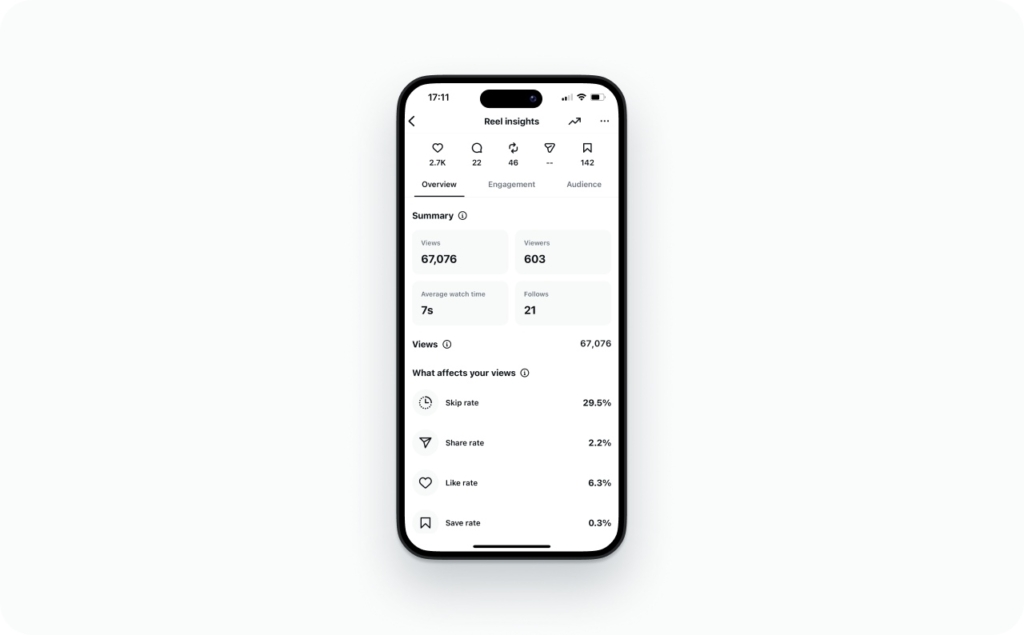
Instagram’s newer Reel analytics back this up. In TechCrunch’s coverage of Instagram’s January 2025 analytics update, Instagram added View Rate, which shows what percentage of followers and non-followers keep watching after the first three seconds. In plain English, the hook is doing brutal amounts of labor. If your idea needs a slow warm-up, it may work better as a Story series or a permanent post instead of a Reel.
The best reel story workflow is simple. Publish the Reel for reach, then share the Reel to Stories with a new frame around it. Add context, a poll, a reaction, or a CTA. Don’t just dump the same asset into both placements and hope the app feels generous that day.
Best weekly mix of Instagram Reels, Posts and Stories
One of the worst habits in Instagram advice is treating volume like virtue. Rival IQ’s 2025 Social Media Industry Benchmark Report found that median posting frequency on Instagram decreased slightly for the first time in three years, and its benchmark data argues against the idea that more is always better. Fit and format still do more work than brute-force output.
If you only have one strong idea per week, use that one idea three ways:
- Turn it into one Reel for reach.
- Turn the same idea into three to five Story frames for reactions, replies, or link taps.
- Turn the proof, takeaway, or result into one permanent feed video or post every week or two.
For a small business, a good starting mix is two Reels a week, Stories on three to five days, and one proof-heavy post. For creators, a heavier Reel mix usually makes sense, with Stories most days and one grid post to hold authority pieces in place. For ecommerce brands, use Reels for product desire, Stories for launches and offers, and posts for reviews, bundles, and comparison content. For service businesses, use Reels for expertise, Stories for consultations and DMs, and posts for case studies and testimonials.
Inside Zeely campaigns, we rarely rely on one format alone. We recommend a typical product launch starts with a Reel that introduces the idea, followed by a few Story frames that ask for reactions or link taps. Then we publish a proof-style feed video or post with testimonials or results so profile visitors see something credible when they check the page.
What else you should know about Instagram Stories and Reels
Now that you understand the difference between Reels, Stories, and Feed Video, and what works best, let me guide you through some other useful articles about Stories and Reels. These will help you go deeper and actually use each format more effectively.
- How to pause Instagram Reels
Learn the exact way to pause Reels so you can analyze content, read captions, or study what competitors are doing. - How to see who views your Reels
Understand what visibility Instagram actually gives you and what data you don’t get about your viewers. - AI Reel maker
Explore a tool that can automatically create high-performing Reels without spending hours editing. - Can you schedule Instagram Stories?
Find out how scheduling works, what tools support it, and where Instagram still limits automation. - How to see old Stories on Instagram
Learn how to access archived Stories and reuse past content strategically.
FAQ
For reach, usually yes. For close engagement, not always. Reels are better for discovery, while Stories are better for replies, DMs, and timely nudges. That’s the simplest answer to the real difference between Reels and Stories.
If you mean Instagram Reels vs ideo post for reach, usually yes. If you mean trust, proof, or a polished profile, not always. The difference between reel and video post is that the Reel travels farther, while the post stays put and keeps working longer.
Sometimes, but much less reliably than Reels. Stories are mostly a warm-audience format, which is why the difference between story and reel matters so much for smaller accounts trying to grow.
Yes. Feed posts still help with proof, permanence, and profile trust. If you ignore them completely, your reach may grow faster than your credibility. That’s why Instagram Posts vs Reels is the wrong fight for most brands. You usually need both.
Open the Reel, tap the share icon, choose Story, then add context before publishing. A Reel shared to Stories works best when the Story gives people a reason to tap, reply, or click instead of repeating the exact same thing with no new angle. That is the cleanest answer to how to post a reel to your story.
If you searched what Instagram Reels are, what’s a Reel on Instagram, the correct platform term is Reel. A Reel is Instagram’s short-form discovery video format, and it is built to reach beyond your current followers more often than Stories do.
If you keep asking Reel vs Story vs Post, you’re still one layer too high. The better question is what this piece of content needs to do next. Once that’s clear, Instagram stops looking like three competing formats and starts behaving like one usable system.

Emma blends product marketing and content to turn complex tools into simple, sales-driven playbooks for AI ad creatives and Facebook/Instagram campaigns. You’ll get checklists, bite-size guides, and real results, pulled from thousands of Zeely entrepreneurs, so you can run AI-powered ads confidently, even as a beginner.
Written by: Emma, AI Growth Adviser, Zeely
Reviewed on: April 1, 2026