What works with UGC video ads for ecommerce in 2026
Why do some ecommerce video ads feel believable enough to sell while others get skipped in a second? I built this guide from 2026 platform shifts, shopper behavior, and the Zeely workflows I use to turn product pages into creator-style ads that convert.
Yes, UGC video ads for ecommerce still work in 2026, but only when they feel specific, product-led, and native to the platform. I’d start with product review video ads, unboxing video ads, and product demo video ads, then reuse the winners on TikTok, Instagram Reels, Meta, and your product page. Use AI to speed up scripts, cuts, and versions. Do not use it to fake proof.
If your ads look polished but still feel flat, the problem is usually not quality. It is proof. Shoppers want to see how a product looks, works, and fits into real life before they click or buy.
In this guide, I’ll show you how I’d build UGC video ads for ecommerce in 2026, which formats still work, where to place them, and how to scale them without making the creative feel synthetic.
What are UGC video ads for ecommerce?
UGC video ads for ecommerce are short, creator-style videos built around real product use. Sometimes they come from customers. Sometimes they come from creators. Sometimes they are founder-led. What matters most is not who filmed them first. What matters is whether the ad feels clear, believable, and close to real life. Read now a detailed guide on what UGC ads are.
That matters more in 2026 than it did a few years ago. Shopify’s January 2026 ecommerce trends piece says “2026 is the year of the normal person,” and says brands are finding more ways to engage with real people in a genuine way. That lines up with what I see in performance creative every week. The polished ad is not dead, but the ad that feels human has a better shot at earning trust first.
Customer-shot, creator-style, and founder-led: what counts as UGC now
I use UGC as the umbrella term, but I split it into three buckets:
- Customer-shot UGC, where a real buyer records a review, unboxing, or result
- Creator-style video ads, where a creator delivers the message in a native, feed-first format
- Founder-led proof, where the brand owner explains the product in a simple, direct way
All three can work. What they share is a personal point of view, product visibility, and language that sounds like a person, not a committee.
Why ecommerce buyers respond to proof faster than polish
Ecommerce shoppers do not buy with a camera-grade mindset. They buy with a risk mindset. They want to know if the hoodie fits right, if the serum texture looks good, if the earbuds stay in place, or if the pan is easy to clean. User-generated video ads work because they answer those questions with context.
That is why I treat UGC ads for ecommerce brands as proof assets first. They are not just there to “look native.” They are there to reduce doubt.
This article is about paid social, product page video ads, and simple creative systems that help products sell. I am not writing about the broader creator economy or influencer culture. I am writing about ad formats that help a shopper say, “Okay, now I get it.” You may also like to read about the successful real UGC video ads examples.
Why UGC video ads work better in 2026
The big shift is simple. People do not just scroll anymore. They check, compare, search, and validate before they commit. That makes UGC video ads more useful because they can do all four jobs at once.
TikTok’s 2026 trend forecast says user behavior is moving away from passive consumption, and it frames 2026 as a year when people want more curiosity, conviction, and proof. In TikTok’s own language, users are looking for real-life product usage, and 81% of users say TikTok gives them a view into how products are used in real life. That is exactly why TikTok UGC ads work when they show routine, fit, texture, setup, or outcome rather than generic praise.
From passive scrolling to product validation
A few years ago, a short-form ad could survive on novelty. That is harder now. A shopper wants to know why the item matters, how it works, and whether someone like them actually likes it. That is why product validation matters so much. Comments, search behavior, and creator explanation all shape the buying decision.
I see this most clearly in beauty, fashion, and home. A clean studio shot can get attention. A real use case gets belief.
Why real-life product usage matters more than brand polish
If I am buying skincare, I want to see texture, skin finish, and how the product layers. If I am buying apparel, I want to see fit, movement, and how the fabric sits. If I am buying a home item, I want to see setup and daily use.
That is what strong ecommerce UGC video ads do well. They make the benefit easier to picture.
In 2026, context beats volume. The best ads do not just say, “This is amazing.” They say, “Here is what I used, here is why I tried it, and here is what happened.” That is a better sales message because it lets the buyer do some of the believing on their own.
How UGC fits TikTok, Reels, and Meta in 2026
Every short-form platform now rewards fresher, more original creative. That is good news for creator-style video ads, because you do not need one perfect ad. You need more than one believable version.
Meta’s January 2026 performance update says Facebook’s feed and video ranking improvements drove a 7% lift in views of organic feed and video posts in Q4 2025, and Facebook surfaced over 25% more same-day Reels than the quarter before. Meta also says its latest ad ranking improvements drove a 3.5% lift in ad clicks on Facebook and more than a 1% gain in conversions on Instagram in Q4 2025. To me, that supports a very practical rule: make more original cuts, test more hooks, and stop relying on one polished asset to do all the work.
Why original, timely creative gets more room to win
Recommendation systems keep getting better at spotting what feels current. If your ad feels stale, too broad, or too overworked, it has less room to land. That is why Instagram reels, UGC ads, and Meta UGC ads work best when they feel close to current user behavior, not copied from last quarter’s studio spot.
What this means for ecommerce ad production
For ecommerce, I’d build creative in clusters. One product, one promise, three hooks, three cuts, maybe two creators. That gives the platform more chances to find the right match.
This is not about making content for the sake of volume. It is about giving good products enough believable entry points.
When to use TikTok-first creative vs Meta-first creative
I keep this simple.
- TikTok-first creative can be looser, faster, and more conversational
- Meta-first creative can be a little tighter, with a stronger offer and cleaner CTA
The product still needs to show up early on both.
Best UGC video ad formats for ecommerce brands
This is the part most teams overcomplicate. You do not need twelve random ad concepts. You need a small set of formats you can repeat across products.
TikTok’s February 2026 Spark Ads page says Spark Ads let brands use organic TikTok posts and their features in advertising, including posts made by other creators with authorization. TikTok also says this format helps brands build image and trust while leveraging creator content with fewer resources. That makes a lot of sense for ecommerce brands that already have organic creator content or want paid ads that still feel like feed content.
Product review video ads
Product review video ads are the easiest place to start. A creator or customer says what they bought, why they tried it, and what they liked after using it. The reason this format works is specificity. “I love this” is weak. “I bought this because I wanted a lip oil that still looked good two hours later” is stronger.
Best for:
- beauty
- wellness
- supplements
- home products
- pet products
Common mistake: the review stays too vague.
Unboxing video ads
Unboxing video ads are strong when the buying experience matters almost as much as the product. Packaging, texture, color, setup, and reaction all help here.
Best for:
- gifting
- premium DTC
- beauty
- fashion
- subscription products
Common mistake: spending too much time on packaging and not enough on the actual product use.
Product demo video ads
Product demo video ads are my favorite format for products that need one extra beat of explanation. This is where you remove friction. Show the kitchen tool in use. Show the beauty device on skin. Show the organizer fitting into a real drawer.
Best for:
- kitchen products
- beauty tools
- fitness items
- home organization
- small gadgets
Common mistake: overexplaining the feature instead of showing the outcome.
Before-and-after UGC ads
This format works when the result is visible. It is great for skincare, haircare, cleaning, and organization. Keep it grounded. Let the improvement feel believable.
Common mistake: trying too hard to dramatize the change.
Testimonial video ads
Testimonial video ads work when the story is short and sharp. Problem, trial, result, fit. That is enough. A good testimonial gives the buyer one clear reason to trust the product more.
Common mistake: turning the testimonial into a brand speech.
15-second, 20-second, and 30-second cuts
I like to cut the same idea three ways:
- 15 seconds for cold traffic
- 20 seconds for review-style content
- 30 seconds for story-led or objection-handling creative
This helps me test the same core message without rebuilding the whole ad.
How to make UGC ads shoppable without killing native feel
A lot of brands lose the plot once the ad becomes more commerce-driven. The content starts feeling like a mini catalog. That is where performance usually drops.
TikTok’s March 2026 Video Shopping Ads guide says advertisers can make in-feed video ads shoppable, add up to 20 active products to an ad, and use up to 50 videos per ad group. That matters because it turns creative planning into a batch problem, not a one-off production problem. If you have multiple products or angles, you can pair them intentionally instead of hoping one hero video carries everything.
How video shopping ads change your creative brief
Once the ad is directly shoppable, product-first framing matters more. The shopper needs to understand what is being sold fast. That means:
- show the item early
- keep the offer simple
- match the visual to the product card
- avoid vague hooks that hide the SKU
What to show before the click
Before the click, I want five things:
- product in hand
- product in use
- one visible benefit
- one line of context
- one CTA
That is enough for most shoppable video ads.
How to keep the ad native after adding commerce
The trick is restraint. Too many overlays, price flashes, badges, or claims make the ad feel forced. I want the commerce layer to help the buyer, not interrupt the story.
How to use UGC on product pages, PDPs, and retargeting
Your best UGC video ads should not live only inside paid social. Some of them belong on your product page too.
Shopify’s March 2026 product page guide says product pages are where shoppers learn about features, benefits, and pricing, and it highlights the role of videos, customer reviews, product comparisons, and other interactive elements in helping buyers decide. Shopify also points out that the best product pages are becoming more interactive and personalized, with videos and richer product understanding built in. That matches what I see on winning PDPs. The page closes better when it feels like a proof layer, not just a spec sheet.
Where video should sit on the PDP
I usually want video near one of these places:
- inside the main product gallery
- near the buy box
- just above the review section
If the video sits too low, fewer buyers will see it before hesitation kicks in.
How reviews, photos, and walkthroughs work together
A good PDP trust stack looks like this:
- product images for first understanding
- short demo or walkthrough for use case
- customer photos or videos for realism
- reviews and FAQs for doubt removal
That sequence works because it lets the shopper see it, understand it, then believe it.
How to reuse UGC for retargeting
Retargeting is where I get more specific. If someone visited but did not buy, I do not need a broad “meet the product” ad. I need an objection-handling ad.
That could be:
- a review that answers a fit question
- a demo that shows how easy setup is
- a founder clip that explains why it costs more
- a side-by-side comparison cut
Retargeting UGC ad creatives do better when they close one doubt at a time.
Where AI UGC helps and where it hurts trust
I am not anti-AI. I use AI. I just do not want AI pretending to be proof.
YouTube’s 2026 letter says creators must disclose realistic altered or synthetic content, that YouTube clearly labels content created by its AI products, and that it is building on Content ID to give creators new tools to manage the use of their likeness in AI-generated content. That is a strong reminder that synthetic content is no longer a side topic. Platforms are taking it seriously because audiences care what is real.
Use AI for speed, scripts, and variants
This is where AI UGC video ads help most:
- script drafts
- hook variations
- subtitles
- translations
- cutdowns
- faster testing
- quick first-pass creative from product assets
That kind of help saves time without weakening trust.
Do not use AI to fake trust
The line gets crossed when the testimonial feels invented, the face feels uncanny, or the emotion feels too clean to believe. A synthetic voice can explain a feature. It should not pretend to be a real customer result. Read now about the best UGC AI video generators.
My favorite setup is still hybrid. Real product proof, real use case, real sales logic, then AI on top to speed up versions and production. That gives you the best of both worlds.
How I’d scale UGC video ads with Zeely AI
Once you know which formats work, the next problem is volume. You need more hooks, more versions, and more product-specific cuts without dragging every ad through a slow production cycle.
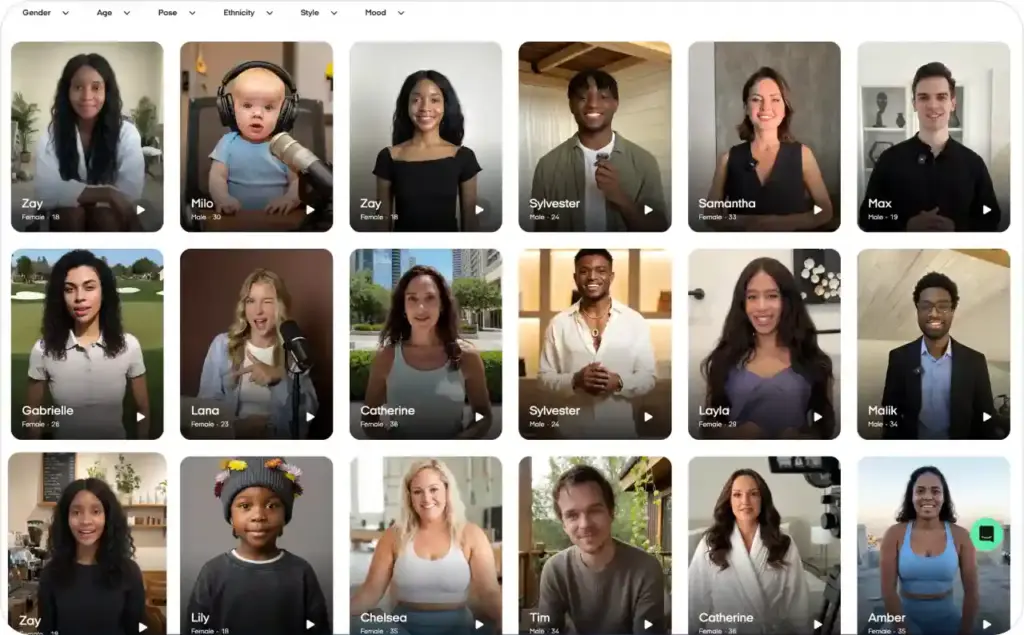
Zeely’s Avatar video ad can be made in a few minutes and that rendering takes about 12 minutes for a video ad. Batch mode is for creating multiple ads and direct paid campaign launch from Zeely web. I like that setup for small ecommerce teams because it keeps ideation, variation, and launch closer together.
Create a creator-style ad from one product
Before using a UGC ad builder, I’d start with one product and one core promise. From there I’d choose the angle, pick the avatar or format, tighten the script, and build around visuals that show the product clearly. Zeely’s avatar workflow also supports a visual hook, which is useful when I want the first frame to stop the scroll.
Build more than one version fast
This is where Batch mode matters. One good idea is rarely enough. I want several ad versions I can compare by hook, offer, or visual emphasis, especially if I am testing one product across more than one audience. Zeely frames Batch mode exactly that way, as a way to create multiple creatives for a single product quickly.
Launch and learn without leaving the workflow
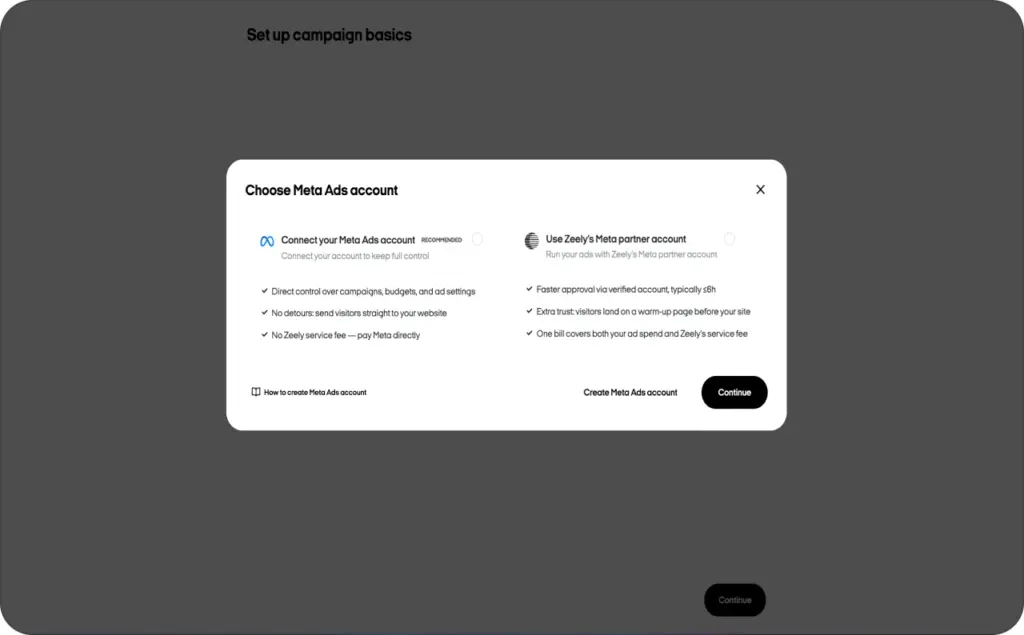
Zeely also shows paid campaign launch directly from the product and creative flow. For a small team, that matters because it cuts out some of the handoff friction between building an ad and putting budget behind it.
The bottom line
If your ads look polished but feel distant, UGC video ads for ecommerce are one of the cleanest fixes you can make. Read now an article about the best ecommerce video ads examples.
You do not need bigger productions. You need better proof. Start with one product, one angle, and one format like a review, unboxing, or demo. Then cut it for TikTok, Reels, Meta, and your product page. Use AI to move faster, not to fake trust.
That is how I’d build creative that feels more believable, covers more buyer objections, and gives the platform more than one honest chance to find a winner.
Checklist
- Pick one product and one buyer problem
- Choose one format: product review video ads, unboxing video ads, or product demo video ads
- Write three hooks: problem, curiosity, result
- Show the product in the first seconds
- Keep one CTA per ad
- Reuse the winners on PDP, paid social, and retargeting
- Use AI UGC video ads for speed, not fake proof
Metrics to watch
- CTR
- hook rate
- hold rate
- landing page views
- add-to-cart rate
- CPA
- ROAS

Emma blends product marketing and content to turn complex tools into simple, sales-driven playbooks for AI ad creatives and Facebook/Instagram campaigns. You’ll get checklists, bite-size guides, and real results, pulled from thousands of Zeely entrepreneurs, so you can run AI-powered ads confidently, even as a beginner.
Written by: Emma, AI Growth Adviser, Zeely
Reviewed on: April 22 2026