The quick answer for 2026: which social media platform pays the most
Still unsure which social platform actually pays the most in 2026? I pulled new payout rules, program updates, and creator earnings data so you can see where real money comes from this year.
You’re here for a clear answer, so I’ll give it to you straight. YouTube still pays the most in 2026 because its revenue share model rewards steady watch time and gives you several ways to earn at once. Long videos, Shorts, memberships, live support tools, and shopping integrations all feed into one payout system. When creators talk about consistent income, they usually mean YouTube.
TikTok and Instagram can beat YouTube on specific weeks, especially when you lean on sponsors or Shop conversions. Live platforms like Twitch and Kick pay the highest per subscriber.
To help you find your best fit, I built a simple flow you can follow inside the article.
2026 RPM payouts by platform and eligibility rules
Let’s clear up a common mix-up:
- CPM is what advertisers spend
- RPM is what you actually earn
Those two numbers aren’t twins, and every platform splits them differently. Your format, audience, and session quality all shape the result.
And here’s the money context: U.S. digital ad revenue hit record levels in 2024 and kept growing in 2025, according to IAB and PwC. That growth is exactly what funds rev-share models on platforms like YouTube, TikTok, and Meta. In short, the money’s there if your content qualifies.
Now let’s break that down by format:
| Platform | Format | How you earn | RPM range | Who qualifies | When you’re paid |
| YouTube | Long-form, Shorts, Live | Ads, Super Chats, Memberships, Shopping | $1–$9 | 500 subs + 3k hrs (or Shorts views) | Monthly |
| TikTok | 1-min+ Videos, Live | Creator Rewards, Pulse, Shop | $0.20–$5 | 10k+ followers + 100k views | Bi-weekly |
| Reels, Stories, Lives | Gifts, Subscriptions, Sponsorships | $0.10–$3 | Some invite-only | Monthly | |
| Reels, In-stream, Live | Ads, Stars (tips) | $0.15–$4 | Page + content hour minimum | Monthly | |
| Twitch | Live | Subs, Bits, Ads | Up to $3.50/sub | Affiliate status | Bi-weekly |
| Kick | Live | Subs (95/5), Tips | Up to $4.75/sub | None | Weekly |
| Snapchat | Spotlight, Stories | Creator Rewards, Rev Share | $0.50–$4 | Invitation-based | Monthly |
| Shoppable Pins | Affiliate, Product Tags | Varies—usually % commission | Tags enabled | Varies | |
| X (Twitter) | Tweets, Replies | Ads in replies, Subscriptions | $0.50–$2.50 | Premium subs, activity threshold | Monthly |
If your RPM is stuck below $1, it’s usually format mismatch, low watch time, or poor CTR. Want to fix that? Watch your session duration and audience overlap and those are the hidden levers platforms actually reward.
How platform payouts actually work for creators in 2026
I reviewed payout policies across YouTube, TikTok, Instagram, Facebook, Twitch, Snapchat, Pinterest, and X and matched them to where creators are building the most monetizable attention. According to the Pew Research Center’s latest platform usage report, time spent on content‑heavy platforms directly tracks with revenue opportunities.
Here’s a full breakdown
YouTube payouts in 2026 through ads, Shorts, and Shopping
YouTube remains the most robust platform for creator earnings, largely due to the YouTube Partner Program. To qualify, you need either 500 subscribers and 3,000 valid public watch hours, or, for Shorts-focused channels, 10 million Shorts views over 90 days.
YouTube’s income streams include:
- Long-form ad revenue, preroll and midroll
- Shorts revenue share, new in 2026, replacing the older fixed pool
- Channel memberships
- Super Chat from livestreams
- Integrated Shopping tags
RPMs typically fall between $1 to $9 per 1,000 views, with the top of the range going to channels in niches like finance, tech, and career content. Your watch time, viewer geography, and retention rate all affect that number.
Payments are made monthly, with a 21-day hold period after the month closes. For long-form creators especially, YouTube still offers the clearest path to steady revenue.
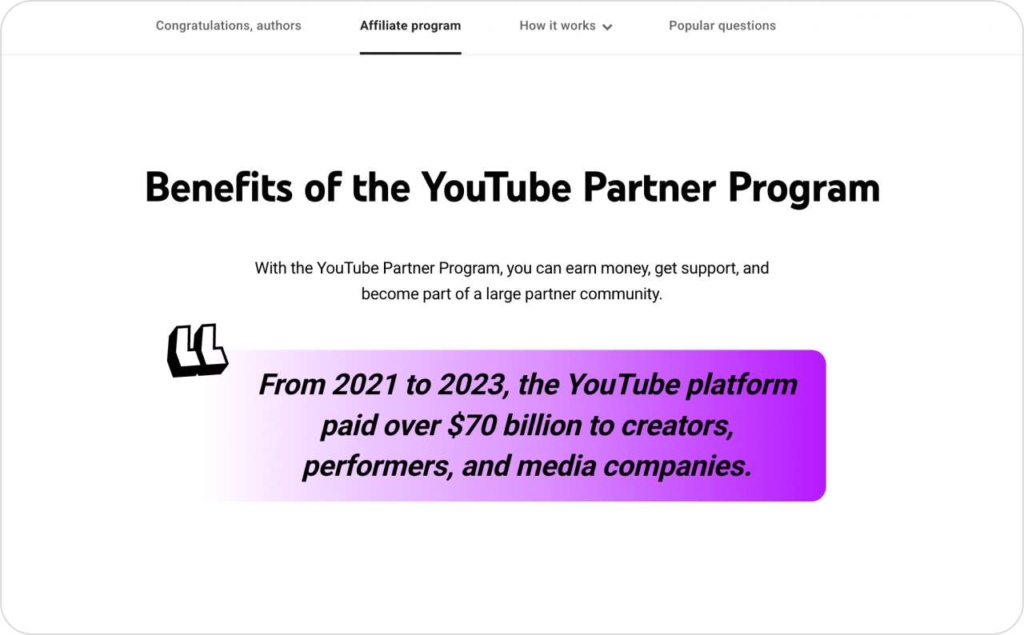
Photo source: YouTube Creators
TikTok monetization in 2026 with Creator Rewards and TikTok Shop
TikTok’s payout options are diverse, but you need to meet key thresholds: 10,000+ followers and at least 100,000 authentic video views in the past 30 days to unlock the Creator Rewards Program. That’s the baseline for earning directly from the app.
Key earning routes on TikTok include:
- Creator Rewards for longer, original videos longer than 60 seconds
- TikTok Pulse, which places content next to top-tier brand ads and shares revenue
- TikTok Shop affiliate commissions and live commerce
- Live Gifts, which viewers purchase and send during livestreams
RPMs vary based on region and content format, typically ranging from $0.20 to $5 per 1,000 views. TikTok Shop, however, can outperform ad-based revenue, especially for creators driving direct sales through product links or shoutout-style videos.
Payments are distributed bi-weekly and tracked in the Creator Tools dashboard. Read more about how much TikTok ads cost.
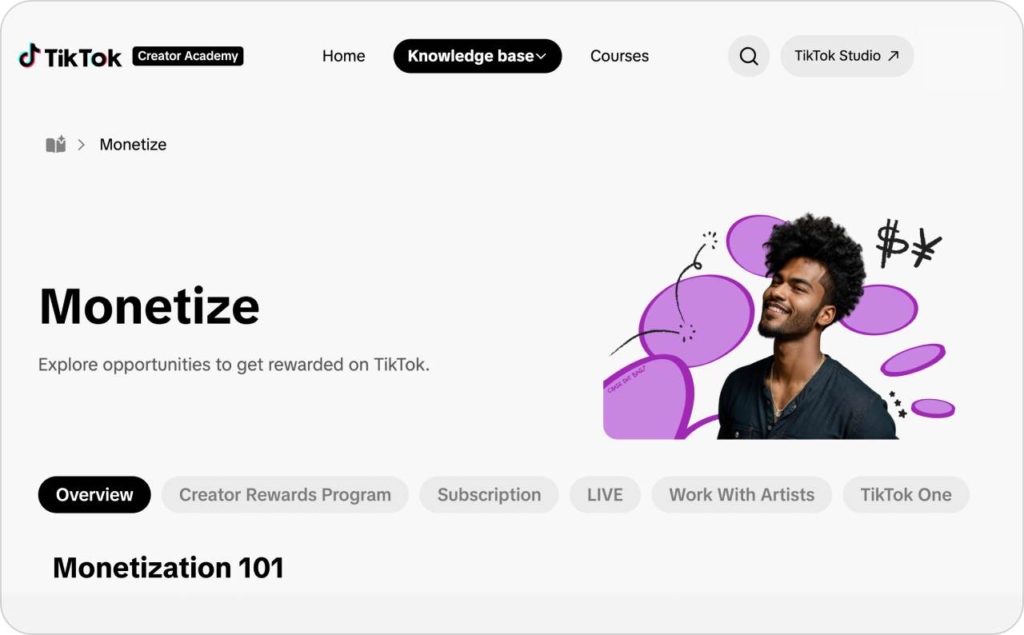
Photo source: TikTok Creator Academy
Instagram earnings in 2026 through Gifts, Subscriptions, and sponsorships
Instagram gives creators multiple ways to make money, but not all are open-access. While anyone can earn through brand deals and affiliate links, in-app monetization tools like Gifts or Subscriptions are often invite-only or region-limited.
Monetization methods:
- Reels bonuses and ad share in testing phases
- Gifts during Lives and Reels
- Monthly Subscriptions with paywalled content
- Branded Content Marketplace as sponsor matchmaking
In-platform RPMs typically range from $0.10 to $3 per 1,000 views, though most creators earn more through sponsored content and partnerships. Sponsors often prefer Instagram’s visual storytelling and shoppable formats.
Payouts are handled monthly through Meta’s Creator Studio. Read also about how to get paid on Instagram and monetize your content.
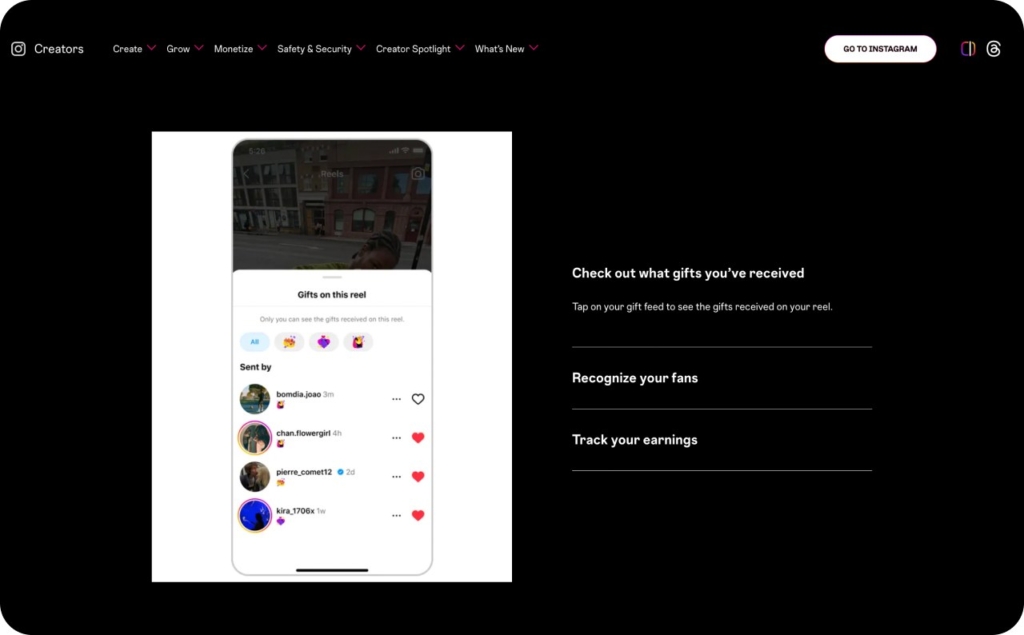
Photo source: Instagram Creators
How Facebook pays creators with Reels ads, Stars, and in-stream bonuses
Facebook monetization has moved sharply toward Reels-first content. As of 2026, all new video uploads on Facebook are treated as Reels, which are eligible for ad share, bonuses, and tipping through Stars.
To access payouts, you typically need:
- A Facebook Page, not just a personal profile
- 5,000+ followers
- At least 60,000 minutes watched in the last 60 days
Payout channels include:
- In-stream ads on eligible longer videos
- Reels ad placements
- Stars (micro-tips from viewers during Lives or Reels)
RPMs hover around $0.15 to $4, depending on video length, niche, and audience engagement. Facebook pays creators monthly via Meta’s payout system. Read also about how much you should spend on Facebook ads.
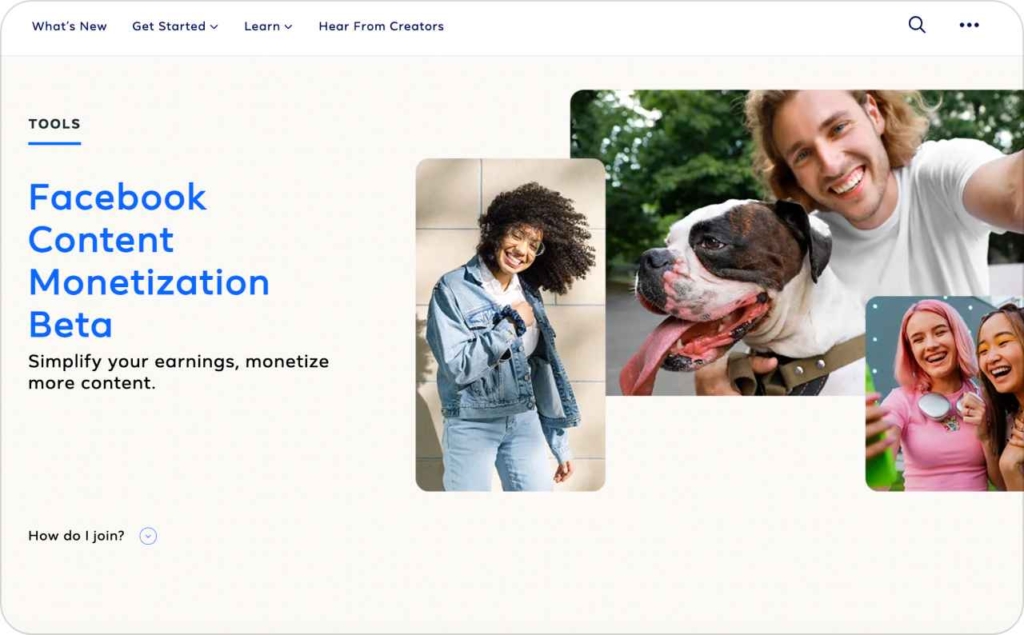
Photo source: Facebook Creatos
Twitch and Kick streaming payouts compared
Twitch and Kick are built for livestreamers and monetization here depends less on views and more on your relationship with loyal viewers.
Twitch requires Affiliate or Partner status to start earning:
- 50 followers
- 500 minutes streamed over 7 days
- 3 average viewers or more
Revenue comes from:
- Paid subscriptions (Twitch splits vary by level, typically 50/50 to 70/30)
- Bits (micro-tipping system)
- Midroll ads
Kick has positioned itself as creator-friendly by offering a 95/5 split on subs, you keep 95% of the fee. There’s no eligibility threshold, but monetization depends on consistent, scalable traffic.
Live payouts aren’t calculated by RPM, they’re based on fan density. A tight, paying community will out-earn casual audiences every time.
Snapchat monetization through Spotlight and Stories
Snapchat offers creators a mix of rewards and rev-share models, primarily through Spotlight, which is a feature designed for short-form vertical videos.
Key points:
- Eligibility is invite-only or based on consistent Spotlight views
- Payments are based on performance, engagement, and Snap’s internal metrics
- RPMs range from $0.50 to $4 per 1,000 views
Snapchat suits creators who can produce fast, punchy, viral content. Stories can also generate returns, but monetization is more opaque than on other platforms.
How Pinterest pays creators through tagging and affiliate tools
Pinterest isn’t about views, it’s about conversions. In 2026, most creator earnings come from affiliate links, shoppable Pins, and paid partnerships with brands.
To monetize:
- Enable product tagging on eligible content
- Join affiliate platforms or brand programs
- Focus on evergreen content with strong click-through rates
There’s no fixed RPM, creators earn a percentage of product sales, usually between 10% and 20%. Pinterest’s AI-driven product suggestions also help boost discovery in niche categories like home, style, and wellness.
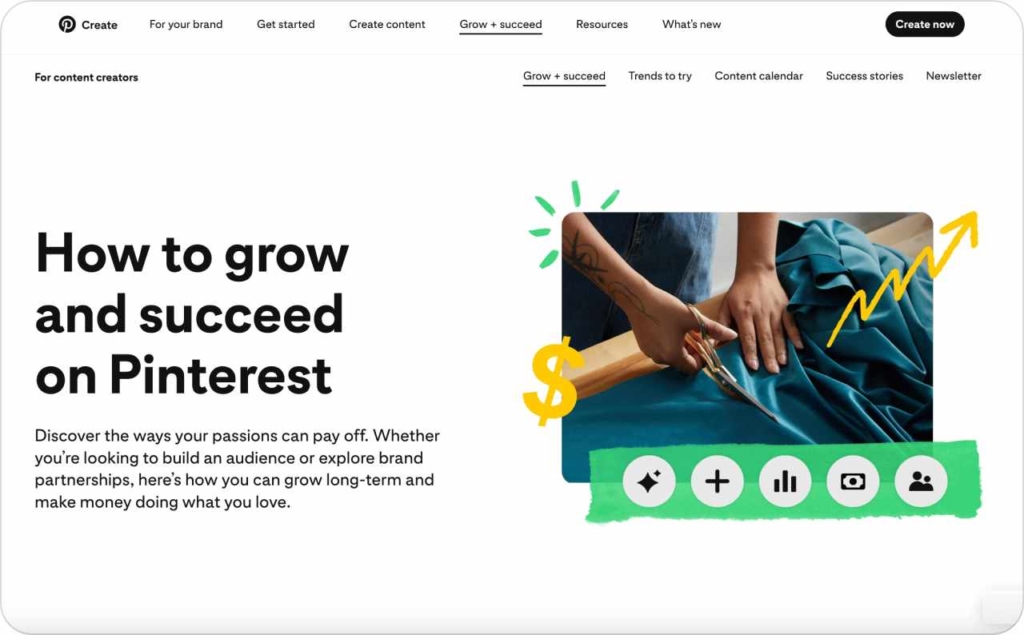
Photo source: Pinterest Create
X monetization in 2026 through reply ads and paid subscriptions
X (formerly Twitter) allows monetization through ad revenue sharing and monthly Subscriptions, but access is gated.
You’ll need:
- X Premium subscription
- A minimum of 500 followers
- Consistent recent activity and engagement
RPM estimates range from $0.50 to $2.50, depending on how many people see and interact with replies on your posts. Ads show up in comment threads, not the main feed, which impacts exposure.
Volatility is a concern and X changes policy often and lacks transparency. I advise you to use it as a supplementary income source, not a core channel.
Short‑form vs long‑form and what actually pays more in 2026
In 2026, long‑form and short‑form videos compete for creator dollars, but they win in different ways. Long‑form content tends to deliver higher RPM (revenue per 1,000 views) because of deeper session times, more ad slots, and stronger retention. Short‑form content scales wider, faster—especially when paired with brand sponsors or commerce integrations that bypass ad splits.
Here’s a rule‑of‑thumb calculator you can plug your numbers into:
Estimated Earnings = Views × CTR (click‑through rate) × CVR (conversion rate) × AOV (average order value) × Commission + Rev‑share
Example: 50,000 views × 2% CTR × 5% CVR × $40 AOV × 8% commission = ~$160 in shop earnings, plus any rev‑share you might get.
Key takeaways:
- If you’re producing long‑form evergreen content (10+ minutes) and ad RPM is strong, you’ll often see $2–$8+ RPM
- If you’re doing short‑form (under 2 minutes) purely for ad revenue, RPM might drop to $0.20–$2, but you can compensate with volume + commerce
- If you build a commerce funnel (shop links, affiliates, sponsors) inside short‑form, you can outrun ad-only long‑form in total dollars—if you convert
Pick your format → estimate your views & conversion numbers with the above calculator → pick the channel short or long, where your real audience lives.
Social commerce is the sleeper moneymaker
Earning “the most” doesn’t always mean ad RPM. It can mean checkout proximity. When your content links directly to a sale, you tap into commerce margins that often outperform ad splits.
The expansion of TikTok Shop, Instagram Shopping, and YouTube Shopping shows how creators shift from views to transactions. In fact, TikTok Shop’s Europe push in 2025 underscores commerce momentum.
Here’s a checklist to turn views into carts:
- Have a clear product offer in the video, tag your product or link it
- Use a strong call‑to‑action like “Tap the link to buy”, “See the drop”
- Set up tracked links or affiliate codes so you capture commissions
- Optimize landing page speed & mobile UX, because friction kills conversion
- Measure views → clicks → purchases → AOV to know your real payout
If you drive $100 in sales with a 10% commission, that’s $10 earned on top of any ad revenue. Stack enough of those and you may out‑earn a high‑RPM long‑form channel without ever hitting $5 RPM. By mixing short‑form reach with product offers, you plug into both volume and conversion.
Live pays per superfan, subs, tips, streaming, snapshot in 2026
On platforms such as Twitch, you’re paid per subscriber, per tip, per moment your audience chooses you, not a generic ad split. The Plus Program terms show how serious this is.
Here’s how it works:
- You build a viewer base that consistently shows up
- You convert a portion into paid subs (e.g., 100 subs × $5/month = $500 recurring)
- You add tips/gifts and ad income on top
If your sub density (paid viewers divided by total live viewers) exceeds what standard ad RPMs would give you, live wins.
If you can get 300 average viewers and 5% convert to paid subs, you’re likely earning more than a small long‑form channel. Track your average live viewers → estimate sub conversion → compare to your ad‑based earnings. Then decide whether shifting more energy into live makes sense.
What has changed at Meta in 2026 and why it matters for money
When your platform changes the format, your earning model shifts too. Meta Platforms announced in June 2025 that every new video upload on Facebook will become a Reels format, no longer separated by Feed or Watch tabs. For creators this matters because:
- The ad inventory layout changes (more Reels = different ad types)
- Audience habits adjust (users may scroll Reels differently than longer videos)
- Payout mechanics and distribution algorithms may shift along with format
If you’re still treating Facebook videos like traditional long‑form uploads, you risk mis-matching your format to the new distribution engine and losing potential revenue. If more than 50% of your views come via Facebook, revisit your content format. Are you creating Reels‑first? Are you exploiting the newer monetization paths? Make the shift now.
Sponsors and affiliates can pay more than platforms in 2026
In 2026, sponsors and affiliate links often earn more, especially for creators with strong engagement and clear product fit. You don’t need to go viral. You need to convert.
According to Influencer Marketing Hub’s 2025 benchmark report, even accounts with 10k–50k followers can earn $300–$1,500 per post if they hit the right niche. That’s before counting affiliate revenue.
Here’s what makes the difference:
- Tiered pricing still works. Know your value per platform
- Bundling multiplies payouts. One post + one story + one TikTok beats single placements
- Track everything. Use UTM links or creator codes to show actual sales and not just impressions
- Set limits on usage rights. Give brands 30–60 days of rights, not forever
For affiliate earnings, focus on this:
Clicks × Conversion Rate × AOV × Commission %
If 1,000 clicks convert at 3%, AOV is $40, and your commission is 10% → that’s $120 earned just from one post with a product link.
Try this now:
- Draft your media kit (audience size, engagement, rates)
- Add screenshots of real affiliate sales
- List what formats you offer (video, story, newsletter, etc.)
The strongest creators in 2026 don’t just create content, they sell it twice: once to their audience, once to their brand partners.
What to expect in 2026 for platform risk and policy shifts
No platform is stable forever. In 2026, what you earn depends just as much on policy as it does on views. And that’s already changing.
AP News confirms that U.S. antitrust pressure is reshaping how big ad networks operate, affecting rev-share models across social media. Combine that with possible TikTok bans and algorithm volatility, and you’ve got a payout landscape that could shift fast.
What that means for you:
- TikTok’s U.S. future is still uncertain. Build on more than one channel
- Meta and YouTube are tightening eligibility and adding more “bonus” systems
- Platform rules can change mid-campaign. You need a backup
Here’s your safety net:
- Don’t rely on one app. Post across 2+ channels
- Own something direct: an email list, product site, or community
- Track RPM and payout shifts every 30 days. If a platform dips, move fast
You don’t need to be everywhere. But you do need to be portable.
Tools to maximize payout with creative testing and RPM lift
In 2026 the fastest path to higher earnings is tight creative loops: rapid variations, clear hooks, stronger CTR, steady retention, and sponsor packages you can price with proof. Adoption keeps rising across the industry, and value shows up when teams ship faster tests, not bigger decks, as seen in the 2025 State of AI from QuantumBlack by McKinsey, which ties AI adoption to measurable business impact and speed of execution.
Here is the workflow I use and teach:
- Idea → hook test
Write three hooks for the same concept. Test them cold. Keep the one that holds attention in the first 2 seconds and earns the first click.
- Variant sprint
Cut 3–5 versions per idea. Change the opener, caption, and call to action. Publish on your primary format and your secondary format the same week.
- CTR and retention check
CTR tells you if the promise lands. Retention tells you if the video keeps its promise. Improve CTR with tighter framing and clearer value. Improve retention by front-loading the result, then showing how you got there.
- RPM lift logic
RPM improves when ads can run longer and more often. That means fewer bounces, higher watch time, cleaner topics for advertisers, and thumbnails that match content. Repackage winners for sponsors.
- Sponsor bundle with proof
Pitch one deliverable across multiple placements: short-form, story, newsletter, community post. Add tracked links. Show conversions, not just impressions.
Simple calculator you can reuse:
Estimated Earnings =
Rev-share (views × RPM/1000)
+ Commerce (views × CTR × CVR × AOV × commission)
+ Sponsorship (fee ÷ estimated hours)
Your goal is to raise the “earnings per hour” number every month by improving hooks and variants, not by working longer.
Where Zeely AI fits to compound your payouts
I build this loop inside Zeely. It cuts the busywork and keeps quality high.
- Turn a product link into ready-to-test ads: Paste a URL and Zeely pulls product data and images, then builds static ads you can use right away. This trims setup time and keeps your visuals consistent with the offer.
- Spin quick video variants with scripts and voice: Pick a template, select an AI avatar, generate an ad script, add music, and export in minutes. This is how you get five clean hooks instead of one long guess.
- Run a mini playbook for short-form RPM lift: Open with the outcome. Add a clear caption CTA. Keep the first cut under two seconds. Zeely helps you ship multiple cuts fast so you can chase the best CTR and retention combo.
- Package sponsor deliverables fast: Use the same base creative to produce a Reel, a Story cut, a YouTube Short, and a pinned community post. Price the bundle. Add unique UTM links so brands can see real sales. Zeely’s workflow makes the assets match, which brands trust.
- Build a shop-first ad set: Create two versions: one that names the benefit in the first second and one that shows the product in use. Tag the product. Use the calculator above to model expected affiliate revenue. Zeely’s templates help you keep the CTA clear and the message consistent.
Do this now: pick one product, generate three hooks, export five variants, post two placements, and check CTR and retention in 24 hours. Keep the winner. Replace the rest. That’s how you raise payout per hour without burning out.
Try Zeely AI to generate your first ads in minutes and turn ideas into revenue-ready creatives that lift RPM, CTR, and ROAS.
Emma blends product marketing and content to turn complex tools into simple, sales-driven playbooks for AI ad creatives and Facebook/Instagram campaigns. You’ll get checklists, bite-size guides, and real results, pulled from thousands of Zeely entrepreneurs, so you can run AI-powered ads confidently, even as a beginner.
Written by: Emma, AI Growth Adviser, Zeely
Reviewed on: December 26, 2026