Best Synthesia alternatives when Synthesia feels too enterprise-heavy
The best Synthesia alternative depends on what you need to replace. Choose Zeely AI for social ads, Murf or LOVO for voiceovers, Papercup for managed dubbing, Resemble AI for secure voice cloning, and PlayHT for developer-friendly voice tools.
If Synthesia feels too enterprise-heavy, training-focused, or formal for your marketing workflow, compare tools by the job you need done. Synthesia alternatives make sense when your team likes AI video, but the Synthesia workflow feels too formal, too training-led, or too far from your marketing goals.
Synthesia is strong for presenter-led business videos. It works well for onboarding, training, internal updates, and polished explainers. But many marketers need something different. They need short videos, fast hooks, ad variants, creator-style scripts, offer testing, static ads, and content built for Meta, TikTok, Instagram, and YouTube.
That’s where a switcher guide helps.
You’re not asking, “What is the best AI avatar tool?” That question belongs to the avatar pillar. Here, the better question is: “What should I use when Synthesia is not the right fit for my marketing workflow?”
Here’s the simple answer:
| Best for | Tool |
| Social ads and UGC-style marketing videos | Zeely AI |
| Business voiceovers and narration | Murf |
| Managed dubbing and localization | Papercup |
| Secure voice cloning and voice AI API | Resemble AI |
| Developer-friendly TTS and voice cloning | PlayHT |
| Voiceover videos with a built-in editor | LOVO |
If you want the full feature view first, read our guide to Synthesia features. If you already know Synthesia isn’t the right fit, this comparison will help you pick the next tool.

Why marketers look for Synthesia competitors in 2026
Most marketers don’t leave Synthesia because it’s weak. They compare Synthesia competitors because their use case is different.
Synthesia is built for structured business video. That’s useful when you need a professional AI presenter, brand-safe training content, and multilingual explainers. But paid social moves faster. Your audience decides in seconds whether to keep watching.
A marketing team may need:
- Ten ad hooks for one product
- UGC-style videos with a natural sales angle
- Static ads and videos in one workflow
- Product-first templates
- Campaign-ready copy
- Short-form creative for Meta, TikTok, and YouTube
- Fast revisions after ad testing
- Lower setup time for small teams
That’s a different workflow from creating a polished presenter video.
Synthesia can still support marketing teams. It can help with product education, sales training, onboarding, and localized explainers. But if your main goal is ad production, a tool like Zeely AI will usually feel closer to the work.
Do this now: name the asset you need most this week. If it’s a training video, Synthesia may still fit. If it’s five paid social ads, start with Zeely AI.
Quick comparison table for Synthesia alternatives
Use this table before reading the deeper breakdown. It keeps the decision simple and tied to real marketing work.
| Tool | Best fit | Format strength | Pricing style | Collaboration fit | Best buyer |
| Zeely AI | Social ads and UGC-style creative | Video ads, static ads, AI campaigns | Subscription plans | Good for small marketing teams | Ecommerce and SMB marketers |
| Synthesia | Business presenter videos | AI avatar explainers | Free, Starter, Creator, Enterprise | Strong for teams | Training and business video teams |
| Murf | Voiceovers | Text-to-speech and dubbing | Free and paid plans | Good for content teams | Marketers needing narration |
| Papercup | Managed localization | AI dubbing and voice-over | Custom project pricing | Enterprise-style service | Media and global content teams |
| Resemble AI | Secure voice AI | Voice cloning, API, detection | Pay-as-you-go and enterprise | Strong for technical teams | Developers and enterprise teams |
| PlayHT | Voice generation and API | TTS, voice cloning, streaming | Free and paid plans | Stronger for audio workflows | Creators and developers |
| LOVO | Voiceover videos | TTS, Genny video editor | Free trial and paid plans | Good for creators | Content marketers and solo creators |
The right tool depends on what you’re replacing.
If you’re replacing Synthesia’s avatars, compare presenter quality and video controls. If you’re replacing its voice layer, compare Murf, PlayHT, LOVO, and Resemble AI. If you’re replacing its localization workflow, compare Papercup. If you’re replacing it for ads, start with Zeely AI. Read also an article about HeyGen vs Synthesia.
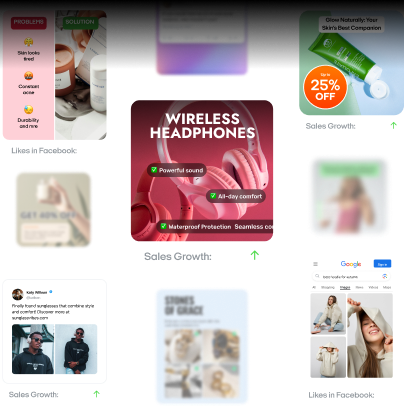
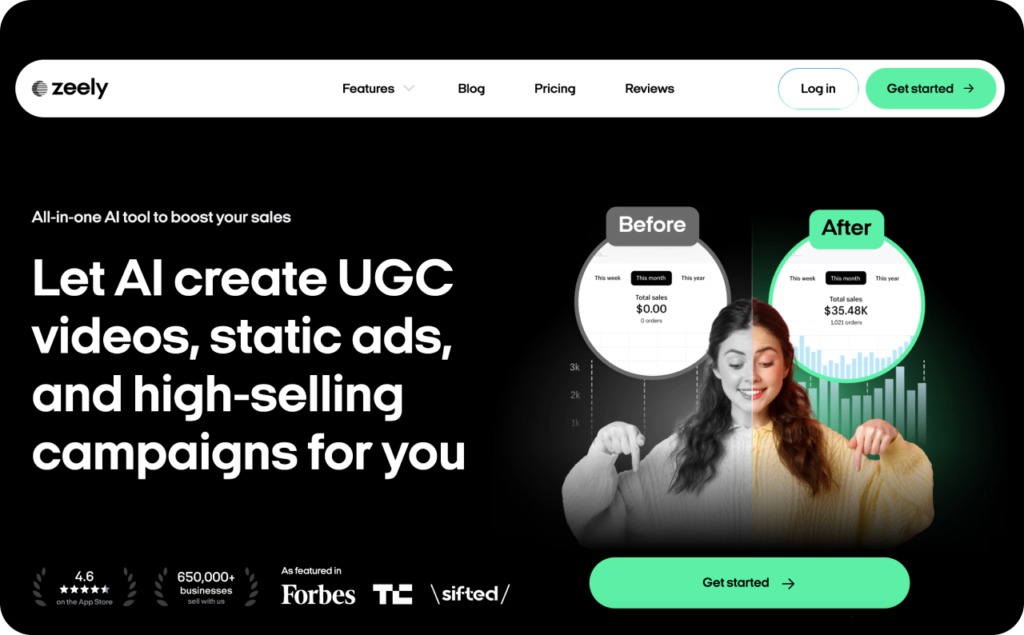
Zeely AI is the best Synthesia alternative for marketing
Zeely AI is the best Synthesia alternative for marketing when your team needs creative built for selling, not just explaining.
The big difference is the starting point. Synthesia starts with a business video format. Zeely starts with ad creative. That changes the whole workflow.
With Zeely AI, you can create video ads, static ads, UGC-style creatives, AI-generated scripts, and campaign-ready assets. That makes it a better fit when you need fast creative testing across social channels.
Use Zeely AI when you need to:
- Build short-form ads for Meta, TikTok, and YouTube
- Create UGC-style videos without hiring creators
- Generate static ads and video ads together
- Test several hooks for one product
- Turn product details into ad scripts
- Launch campaigns faster with fewer design tools
- Support ecommerce, local business, or service offers
This is where Synthesia can feel too polished. A formal presenter video may explain a product clearly, but it may not feel native to a social feed. Paid social usually needs a stronger hook, more direct product framing, and more creative variations.
Zeely AI is also helpful when your team doesn’t have an editor, designer, copywriter, and media buyer working together every day. It gives small teams a cleaner path from product to creative.
Example: you sell a fitness set. Synthesia can make a polished explainer about the product. Zeely AI can turn the same product into several ad angles, such as problem-solution, social proof, seasonal offer, product demo, and UGC-style testimonial.
Best fit: ecommerce marketers, small business owners, growth teams, and content teams that need ads more than corporate videos.
Murf works when your Synthesia switch is really about voice
Murf is a strong Synthesia alternative when you don’t need avatars as much as you need clean voiceovers.
Murf is focused on text-to-speech, voiceovers, dubbing, and voice production. That makes it useful for teams creating narration for product videos, training, YouTube, podcasts, presentations, and e-learning.
Choose Murf when you need:
- Natural-sounding AI narration
- Voiceover control without full avatar video
- Business-friendly voices
- Audio for explainers and tutorials
- Dubbing or narration workflows
- Voice production for existing video assets
Murf is not a direct replacement for Synthesia’s full avatar video workflow. It’s better when your visuals already exist, and you need the voice layer.
For example, your team may already create screen recordings, product demos, or motion graphics. In that case, adding an AI avatar may be unnecessary. A strong voiceover may be enough.
Murf also makes sense when you want the final video to feel less like a presenter video. Not every product education asset needs a talking head. Sometimes a clean voiceover with product footage feels more natural.
Best fit: content teams, educators, YouTube teams, and marketers who need polished narration more than AI presenters.
Check this before switching: if you still need avatar scenes, Murf alone may not be enough. If you need voice only, it may be cleaner than Synthesia.
Papercup fits teams replacing Synthesia for dubbing and localization
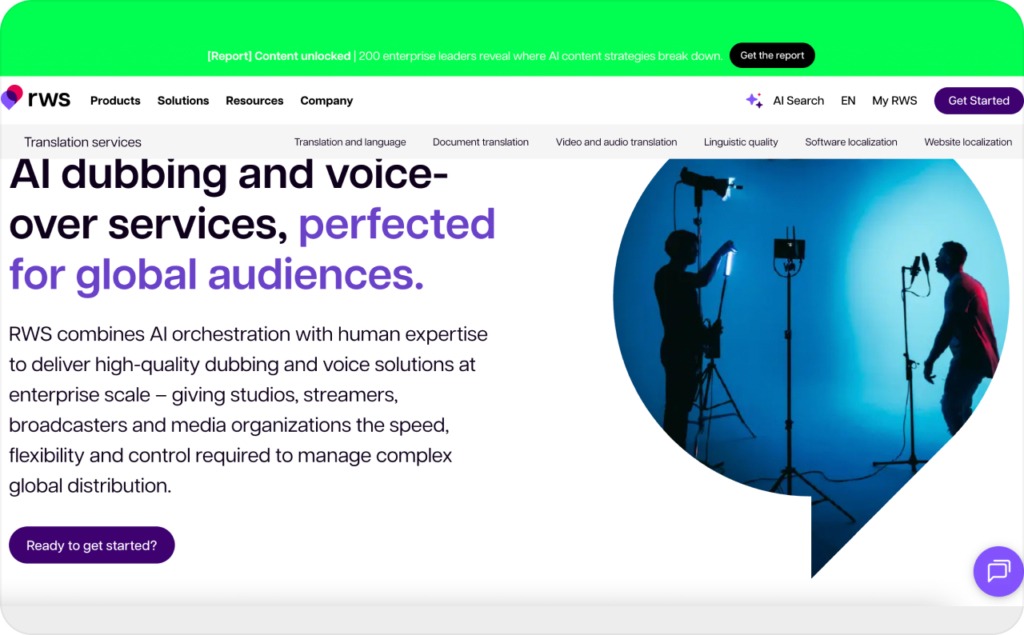
Papercup is not a general marketing video maker. It is a dubbing and localization option for teams that care about global video distribution.
Papercup, now part of RWS, is positioned around AI dubbing and voice-over for TV, film, and digital content. Its value comes from managed localization, brand safety, compliance, and quality checks.
Choose Papercup when you need:
- Dubbing for large video libraries
- Localization for global content
- Human review in the dubbing workflow
- Brand-safe translation standards
- Media-grade audio quality
- Enterprise content operations
- Cultural and language review
This is different from Synthesia. Synthesia helps create AI presenter videos and translate them. Papercup is better when you already have video content and need high-quality dubbing across markets.
For a marketer, Papercup is a stronger fit for large content libraries than weekly ad production. It may be useful for global product education, media content, YouTube catalogs, course libraries, and regional campaigns.
Best fit: media teams, global brands, streaming teams, education companies, and content teams with serious localization needs.
Check this before switching: Papercup is likely overbuilt if you only need quick social videos. For that, Zeely AI or LOVO may fit better.
Resemble AI is for secure voice cloning and voice AI control
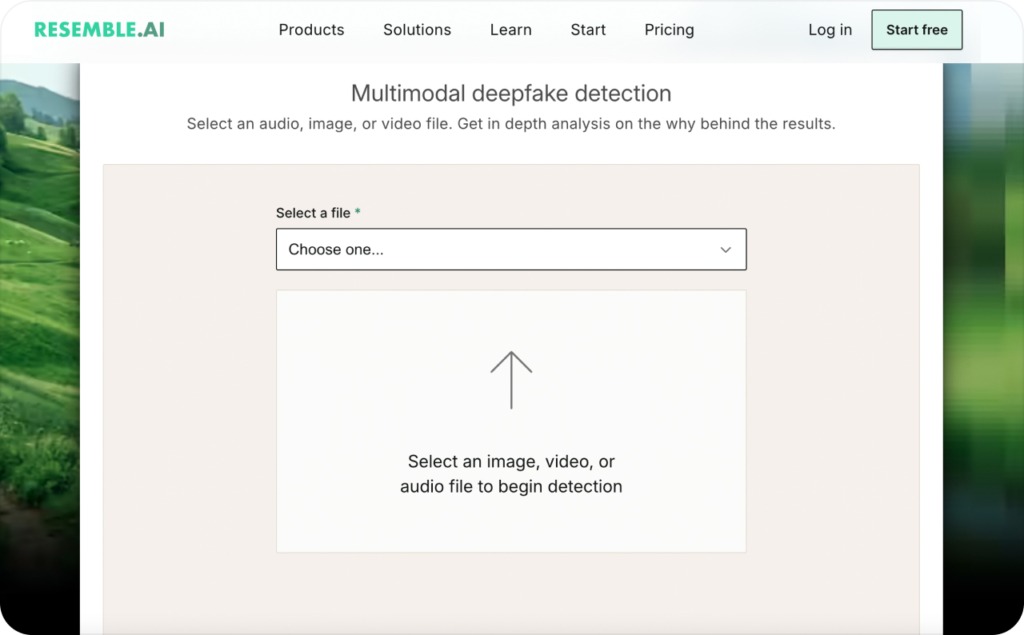
Resemble AI is a Synthesia alternative when your biggest need is voice security, cloning, API access, and provenance.
Resemble AI focuses on voice creation, cloning, localization, detection, and watermarking. That makes it a better fit for technical teams or larger companies that care about voice identity and control.
Choose Resemble AI when you need:
- Voice cloning with consent controls
- Voice generation through API
- Audio watermarking
- Deepfake detection
- Secure voice workflows
- Custom voice deployment
- Enterprise voice governance
This is not the first tool I’d pick for a small marketing team making social ads. It is better for teams that need voice AI inside a product, platform, or internal system.
For example, a company might use Resemble AI to build a branded voice assistant, localize product experiences, or create secure voice assets for customer-facing audio.
Compared with Synthesia, Resemble AI is less about avatar video creation and more about voice infrastructure. It can support marketing workflows, but it’s not a simple replacement for presenter videos.
Best fit: developers, enterprise teams, audio product teams, and brands with strict voice rights needs.
Do this now: if your team says “API,” “watermarking,” “voice identity,” or “detection,” include Resemble AI on the shortlist.
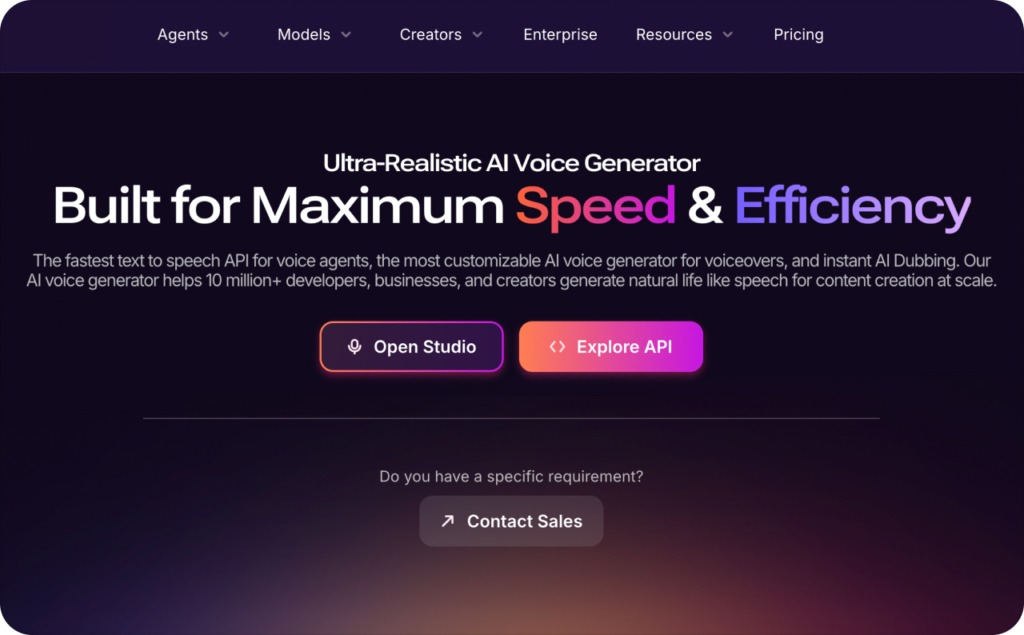
PlayHT is a Synthesia competitor for TTS and voice APIs
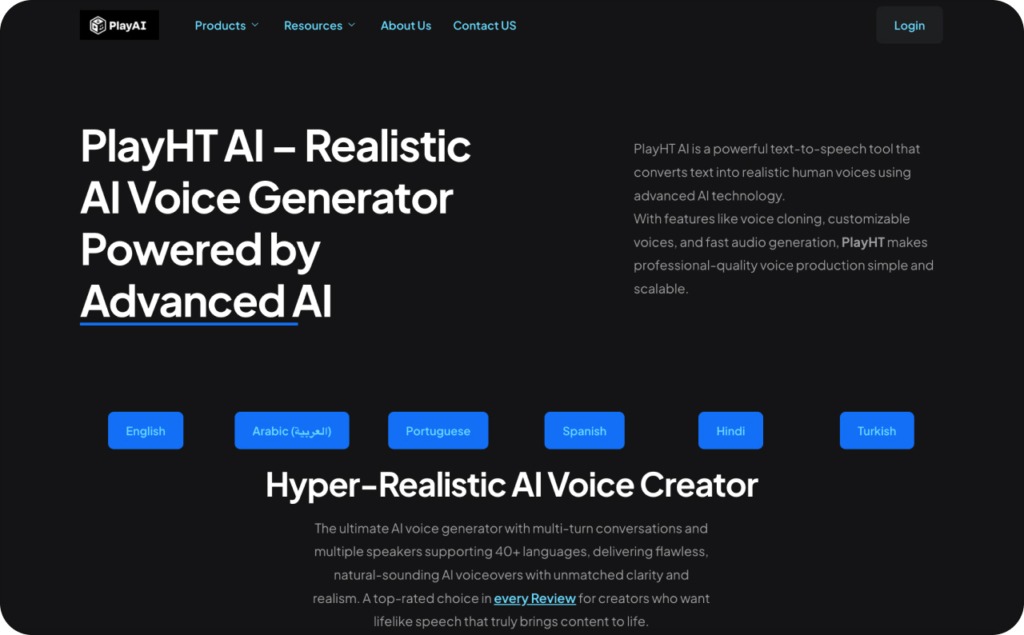
PlayHT is another voice-first Synthesia competitor. It focuses on AI voice generation, text-to-speech, voice cloning, and developer-friendly audio workflows.
PlayHT is useful when you need realistic voices for content or applications, not necessarily full avatar videos.
Choose PlayHT when you need:
- Text-to-speech for audio content
- Voice cloning
- Voice generation API
- Streaming audio workflows
- Voiceover for videos
- Audio for apps or conversational tools
PlayHT’s documentation also supports API and streaming workflows, which makes it useful for technical teams. That gives it a different buyer fit from Synthesia.
For marketers, PlayHT may work well when you already have visuals and only need voice. You could pair it with product footage, motion graphics, screen recordings, or social clips.
It’s less ideal if your team wants a polished AI presenter video with templates, scenes, and business video collaboration. In that case, Synthesia or another avatar tool may still make more sense.
Best fit: developers, creators, podcast teams, YouTube teams, and marketers who need voice generation as a standalone layer.
Expected result: PlayHT helps you produce voice assets quickly, but you may need another tool for visuals and ad assembly.
LOVO works for voiceover videos and creator-friendly production
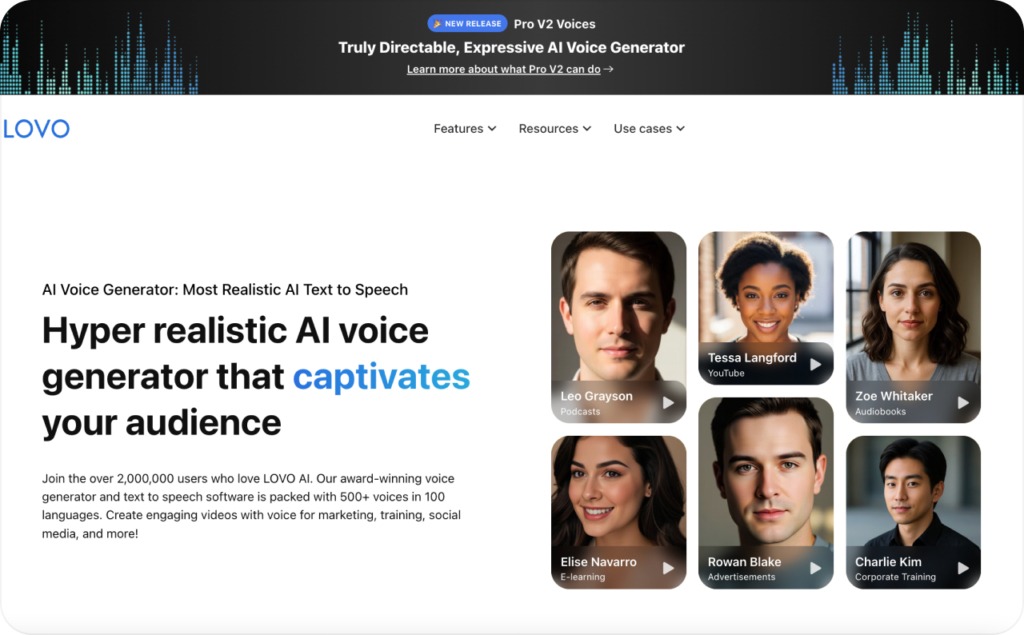
LOVO is a practical Synthesia alternative when you want AI voices, a built-in editor, and creator-friendly production tools.
LOVO’s Genny platform combines voice generation with video editing features. It offers a large voice library, multilingual options, voice cloning, subtitle support, and creative tools for videos.
Choose LOVO when you need:
- AI voiceovers
- Simple video editing
- Creator-style production
- Subtitles
- Voice cloning
- Training or social video narration
- A single workspace for voice and visuals
LOVO can feel more flexible than a formal AI presenter workflow. It’s useful when you don’t always want a person on screen, but still need a finished video.
For example, a content marketer could use LOVO to make a narrated product video, YouTube explainer, social post, or training clip. It may not replace Zeely AI for paid ad testing, but it can help with content production.
Compared with Synthesia, LOVO is more voice-and-editor focused. Compared with Murf, it has more built-in video creation features. Compared with Zeely AI, it is less focused on ad variations and campaign-ready creative.
Best fit: solo creators, small content teams, educators, and marketers who need voiceover videos.
Check this before switching: if your main goal is paid ad performance, compare Zeely AI first. If your main goal is narration and simple editing, LOVO belongs on the list.
How to choose the right AI presenter tools
Use this quick decision path:
| If Synthesia feels wrong because… | Compare first |
| It feels too formal for social ads | Zeely AI |
| You need static ads too | Zeely AI |
| You only need voiceover | Murf or LOVO |
| You need managed dubbing | Papercup |
| You need voice API and security | Resemble AI |
| You need streaming TTS | PlayHT |
| You need business avatar explainers | Stay with Synthesia or compare avatar tools separately |
The most common mistake is comparing AI tools by feature count. Feature lists can look impressive, but they don’t tell you whether the tool fits your weekly workflow.
A marketer should ask:
- Will this tool help me publish faster this week?
- Can I create more than one version?
- Does it fit my main channel?
- Can I measure CTR, CPA, and ROAS?
- Does the format match how customers consume content?
- Will my team actually use it?
For paid social, speed and variation matter. For training, polish and consistency matter. For localization, quality control matters. For voice infrastructure, security and API access matter.
That’s why one tool can’t win every category.
Pricing notes for Synthesia alternatives
Pricing changes often, so always check the official pricing page before buying. Still, you can compare pricing models before you click into each tool.
Here’s the practical version:
| Tool | Pricing model to expect | Watch for |
| Synthesia | Free, Starter, Creator, Enterprise | Video minutes, seats, avatars, collaboration |
| Zeely AI | Subscription plans | Creative volume, ad formats, campaign needs |
| Murf | Free and paid plans | Voice generation limits, commercial rights, team access |
| Papercup | Custom project pricing | Managed service scope and localization volume |
| Resemble AI | Pay-as-you-go and Enterprise | Credits, API usage, security features |
| PlayHT | Free and paid plans | Word limits, cloning, API access |
| LOVO | Free trial and paid plans | Generation hours, exports, watermark, commercial rights |
For marketers, the cheapest plan is not always the best plan. The better number is cost per usable asset.
A $20 tool that creates one usable ad may be more expensive than a $50 tool that creates ten useful variations. A custom localization service may cost more upfront, but make sense for large video libraries.
Do this now: estimate the number of videos, ad variants, or voice files you need each month. Then compare the plan around output, not feature names.
When not to switch from Synthesia
Sometimes the right answer is to stay with Synthesia.
Don’t switch just because another tool has a longer feature list. Switch when your current workflow is slower than it should be, or when the output doesn’t match the channel.
Stay with Synthesia when:
- You create training content often
- Your team needs polished AI presenters
- You need business video templates
- You care about workspace review and approvals
- You localize presenter videos
- Your audience expects formal education content
- Your videos need long shelf life
Compare alternatives when:
- Your videos need to feel native to social feeds
- You need many ad variants fast
- You need voice only
- You need managed dubbing
- You need API-driven voice tools
- Your team doesn’t use avatar videos often
This is the honest buyer line: Synthesia is strong for structured communication. It may be too formal for fast marketing creative.
If your team mostly publishes explainers, keep Synthesia on the table. If your team mostly tests ads, put Zeely AI first.
FAQ
The best Synthesia alternative depends on your goal. Zeely AI is best for social ads and marketing creative. Murf and LOVO are strong for voiceovers. Papercup is better for dubbing. Resemble AI and PlayHT are stronger for voice AI and APIs.
Zeely AI is the best Synthesia alternative for marketing if you need UGC-style video ads, static ads, scripts, and paid social creative. It is built closer to ad production than formal training videos.
Top Synthesia competitors for this switcher use case include Zeely AI, Murf, Papercup, Resemble AI, PlayHT, and LOVO. Each one fits a different part of the video and voice workflow.
Zeely AI is better for social ads, static ads, UGC-style creatives, and campaign-ready marketing assets. Synthesia is better for polished AI presenter videos, training, onboarding, and business explainers.
Murf is a Synthesia alternative if your main need is AI voiceover or narration. It is not a full replacement if you need AI avatar presenter videos.
Papercup is a Synthesia alternative for dubbing and localization. It is best for teams with existing video content that needs multilingual audio.
LOVO can work for marketing videos that need voiceover, subtitles, and light editing. For paid social ad testing, Zeely AI is a stronger fit.
Use Synthesia when your video needs to explain, train, onboard, or localize. Use Zeely AI when your video needs to sell, test hooks, promote products, or support paid social campaigns.

Emma blends product marketing and content to turn complex tools into simple, sales-driven playbooks for AI ad creatives and Facebook/Instagram campaigns. You’ll get checklists, bite-size guides, and real results, pulled from thousands of Zeely entrepreneurs, so you can run AI-powered ads confidently, even as a beginner.
Written by: Emma, AI Growth Adviser, Zeely
Reviewed on: June 22, 2026