The best MakeUGC alternatives for creator-style ads
Looking for MakeUGC alternatives? Here’s a practical comparison of Zeely AI, Insense, Trend.io, Showcase, Influee, and Social Cat based on the five criteria that actually matter for UGC ad production.
Looking for MakeUGC alternatives usually means one of three things. Either you like the idea of AI UGC ads but want more creative flexibility, you need real creators instead of avatars, or you are trying to build a repeatable content engine without turning your marketing calendar into a spreadsheet jungle.
I get it. UGC tools all promise speed, authenticity, and better ad performance. Lovely. But when you actually have to choose one, the differences matter. Some platforms generate AI avatar ads. Some help you hire human creators. Some are better for paid social testing. Others are better for gifted campaigns, product seeding, or global creator sourcing.
MakeUGC positions itself around AI UGC ad creation, with claims such as professional AI UGC ads in minutes and hundreds of AI actors or avatars depending on the product page you land on. Its public pages describe script-to-video ad creation, AI video creation, an ad maker, a script maker, and video licensing inside subscription plans.
That can be powerful. But if you are comparing MakeUGC alternatives, do not just ask, “Which tool makes videos?” Ask, “Which tool helps me create the right kind of ad, fast enough to test, with enough control to scale?”
For a broader category view, I’d also keep this AI UGC ad generators guide open while you compare. And if you want a deeper MakeUGC-specific breakdown before choosing, read this MakeUGC AI features guide.

Why compare MakeUGC alternatives in the first place?
MakeUGC is built for a clear job: creating AI-generated UGC-style video ads without hiring creators or filming. That is useful for lean teams, especially if you need quick talking-head style ad drafts.
But not every brand needs the same UGC workflow.
A DTC skincare brand may need fifteen hook variations by Friday. A supplement company may need real creators showing product use at home. A SaaS team may need founder-style ads, testimonials, and static creative in the same workflow. An agency may need usage rights, creator payments, approvals, and Spark Ads codes without chasing people in DMs.
That is why the best MakeUGC alternatives split into two camps:
- AI-first tools, where speed, automation, and creative testing matter most
- Creator-first marketplaces, where human creators, licensing, content rights, raw footage, and creator relationships matter more
Neither camp is automatically better. The right choice depends on what kind of bottleneck you are trying to remove.
The 5 criteria I use to compare MakeUGC alternatives
I do not rank UGC tools by homepage sparkle. I rank them by whether they help a real marketing team get from idea to usable ad without wasting budget.
Here are the five criteria I’d use.
1. Production model
Is the platform AI-first, creator-first, or hybrid? AI-first tools are faster. Creator-first platforms usually feel more natural but take longer.
2. Creative quality and authenticity
Do the ads feel native to TikTok, Instagram Reels, Shorts, and paid social? Or do they look like a polished explainer wearing a fake UGC hoodie?
3. Workflow speed
How quickly can you go from product, script, or brief to finished ad? This includes setup, approvals, revisions, editing, and export.
4. Ad testing and performance support
Can you make multiple variations, change hooks, adapt formats, and test paid social angles? A single pretty video is not a growth system.
5. Rights, scale, and cost control
Do you understand what you can do with the content? Can you reuse it in ads? Can you scale without messy contracts, hidden costs, or manual admin?
Now let’s compare the strongest options.
MakeUGC baseline: what it does well
Before we compare the alternatives, let’s be fair to MakeUGC.
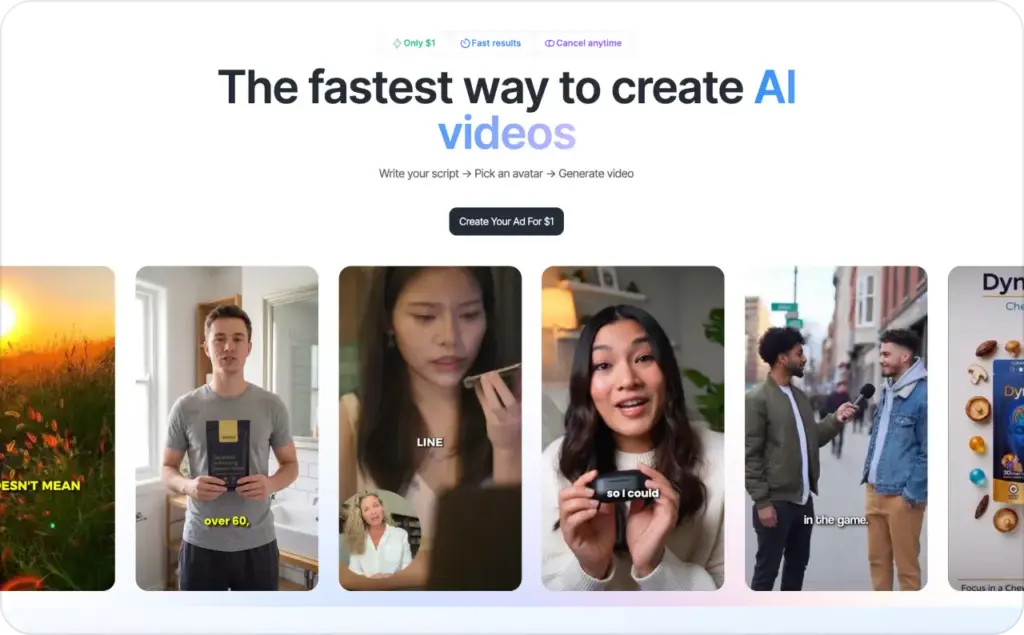
MakeUGC is a good fit when you want AI avatar UGC ads and you already have a script or product angle ready. Its public messaging focuses on creating AI UGC ads quickly without creators, cameras, or hassle. One MakeUGC page says users can turn scripts into ads with 300+ hyper-realistic AI actors, while another MakeUGC page describes subscription access to AI video creation, an ad maker, a script maker, video licensing, and 150+ avatars.
That makes MakeUGC useful for fast creative drafts, simple avatar-led ads, and teams that do not want to coordinate real creators.
Where MakeUGC may not be enough is broader ad production. If you need static creatives, AI ad copy, campaign variants, creator sourcing, raw footage, real product demos, usage-rights workflows, or paid social distribution support, you may want a different tool.
1. Zeely AI — best MakeUGC alternative for AI UGC ads and ecommerce testing
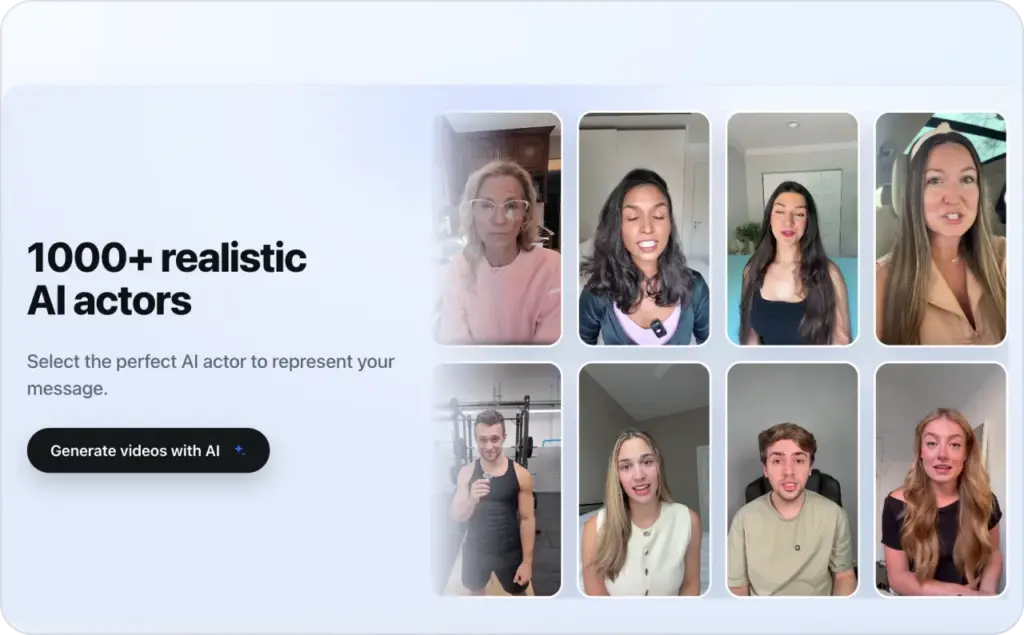
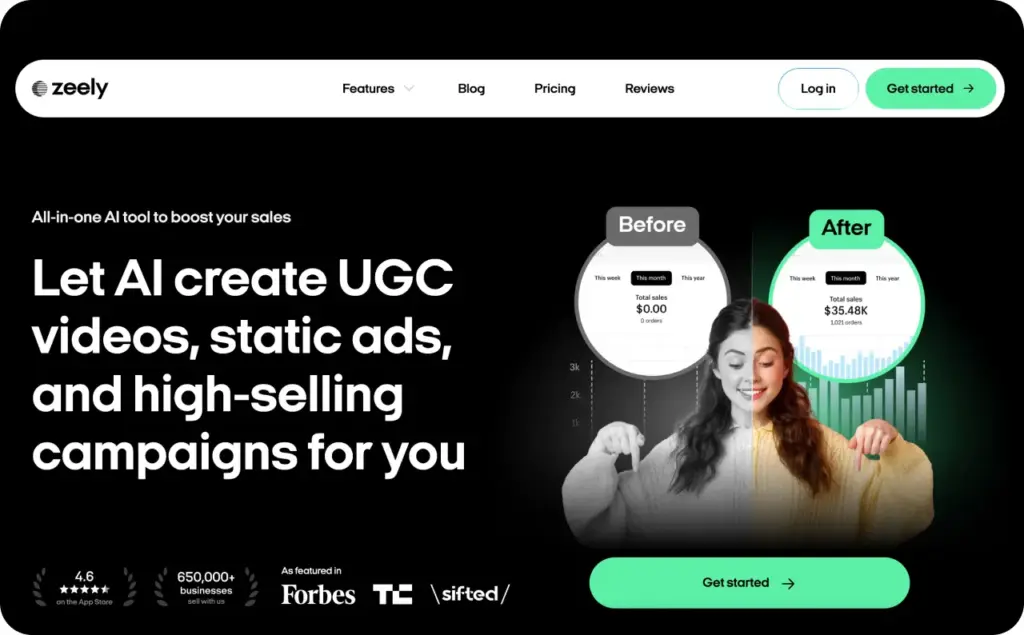
Zeely AI is the strongest MakeUGC alternative if you want AI-powered UGC-style ads but also need a broader ad creation workflow.
Where MakeUGC is mainly about AI UGC videos, Zeely is built more like an AI ad creation stack for small businesses and ecommerce teams. Zeely’s UGC video ad creator page describes AI UGC video ads made with avatars, scripts, and voiceovers, with no filming or editing, and positions the workflow for TikTok, Instagram, YouTube Shorts, and ecommerce brands. It also highlights hooks, scripts, scenes, captions, multiple versions for testing, lifelike avatars, natural voiceovers, and publishing across Meta, TikTok, and Google Ads.
That matters because real ad growth rarely comes from one video. It comes from testing hooks, angles, products, audiences, and formats until you find something that earns its budget.
Zeely is especially useful if you want to move fast without getting stuck in production admin. You can use it for UGC-style videos, static ads, copy, and product-led creative. That makes it a better choice for ecommerce brands that need a steady creative rhythm, not just occasional avatar videos.
I’d choose Zeely over MakeUGC when the goal is not only “make a UGC-style video,” but “build more ad variations and test them across paid channels.”
Best for: ecommerce brands, small businesses, solo marketers, and lean paid social teams.
Main advantage: AI UGC ads plus broader ad creative workflows.
Possible limitation: if you specifically want real human creators filming physical product content, choose a creator marketplace instead.
2. Insense — best MakeUGC alternative for human creator ads
Insense is not trying to be MakeUGC. That is exactly why it belongs in this comparison.
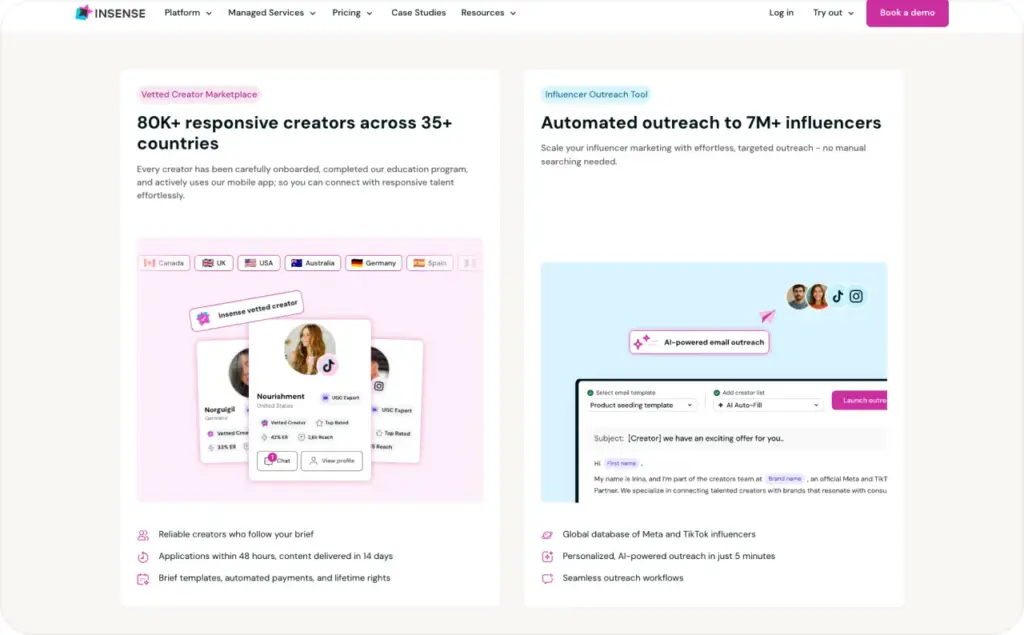
Insense is a creator marketplace and influencer marketing platform for UGC and creator ads. Its public site describes an all-in-one solution for UGC and influencer marketing, with self-service and managed options. It also highlights an 80K+ creator marketplace across 35+ countries, applications within 48 hours, content delivery in 14 days, automated payments, lifetime rights, Meta Partnership Ads, TikTok Spark Ads, and creator campaign management.
So the trade-off is simple.
MakeUGC helps you avoid creators. Insense helps you manage creators properly.
That makes Insense a better fit when authenticity is not optional. If your product needs to be held, worn, opened, tasted, applied, assembled, or shown in a real home, a human creator often beats an AI avatar. Insense also makes sense for teams running creator ads, whitelisting-style workflows, Spark Ads, affiliate programs, or TikTok Shop campaigns.
The downside is speed. Real creators need briefs, shipping, filming, reviews, edits, and approvals. That takes longer than generating AI avatars. But if your best-performing ads usually come from real product use, the wait can be worth it.
Best for: DTC brands, agencies, TikTok Shop teams, and paid social teams using creator ads.
Main advantage: real creator content with campaign management and rights workflows.
Possible limitation: slower than AI-first tools and more operationally involved.
3. Trend.io / soona UGC — best for ecommerce content packs and PDP assets
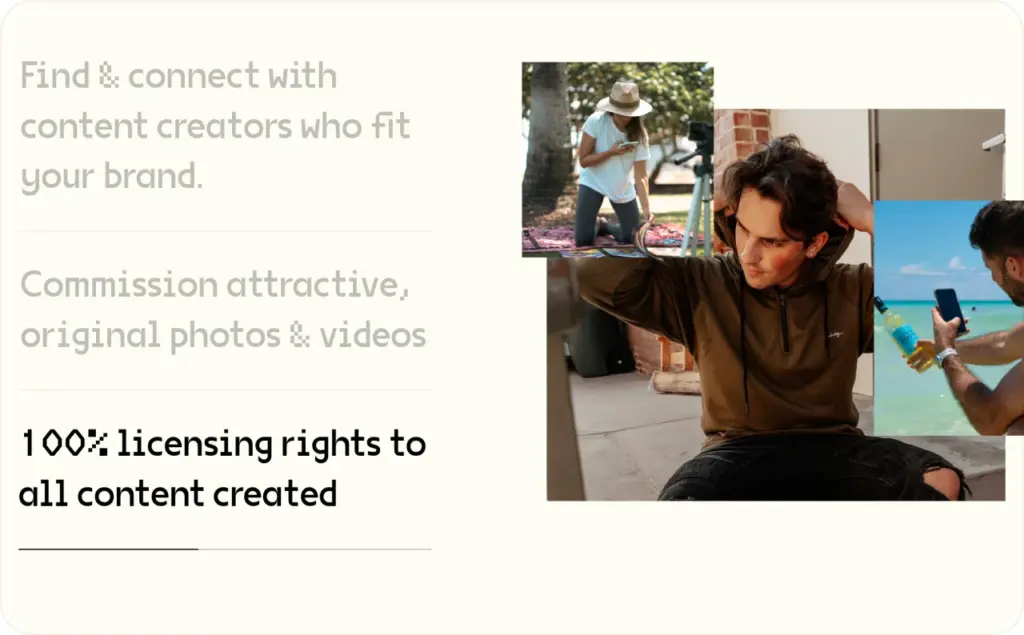
Trend.io has historically been known as a UGC creator marketplace for ecommerce brands. Its public page describes user-generated content for product shots, testimonial videos, unboxing videos, product-in-action videos, portrait shots, and lifestyle shots, with brands able to find creators, commission photos and videos, and get licensing rights to created content.
There is also an important current note: soona announced on April 28, 2026, that Trend.io is becoming soona UGC, combining UGC with studio photography, PDP content, clearer campaign management, creator tiers, and unlimited usage rights. The announcement says brands using Trend will continue to access campaigns and content through the end of 2026 while conversion to soona UGC happens throughout the year.
So I would treat Trend.io as a strong option if you care about ecommerce content beyond ads.
This is not just about getting a talking-head testimonial. It is about building a content library for product pages, paid social, organic social, email, Amazon, Shopify, and wherever else your product needs to show up. If MakeUGC is about fast AI video ads, Trend.io / soona UGC is more about real creator content inside a broader ecommerce content system.
Best for: ecommerce brands that need UGC, product visuals, and PDP-ready content.
Main advantage: real creator content plus ecommerce-focused usage.
Possible limitation: not as instant as AI generation, and the platform transition means buyers should check current packaging before committing.
4. Showcase — best for data-led creator selection
Showcase is a good MakeUGC alternative if your priority is creator quality and performance signals.
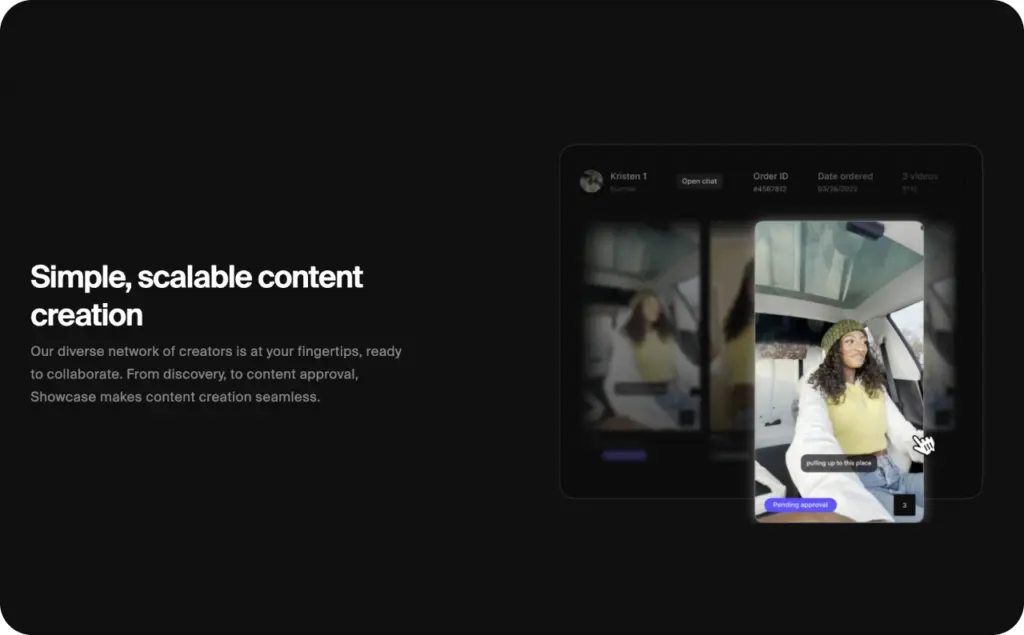
Its public site positions Showcase as a UGC marketplace to lower CPA, with handpicked creators backed by data-driven insights. Showcase says it tracks performance to connect brands with creators who consistently deliver low CPAs, and that it supports the process from discovery to content approval.
That is a useful angle because creator marketplaces can become noisy. More creators does not always mean better ads. Sometimes you need fewer creators, better matching, and clearer performance logic.
Compared with MakeUGC, Showcase is less about instant AI production and more about finding human creators who can produce premium UGC ad content. This can be a better option for brands that have already learned that creator style matters, but do not want to manually source talent or guess who might perform.
I would put Showcase on the shortlist for teams that care about paid social outcomes and want human-made UGC with a more selective creator approach.
Best for: brands focused on paid social performance and creator quality.
Main advantage: data-led creator matching and performance-minded positioning.
Possible limitation: less suitable if your main need is instant AI creative generation.
5. Influee — best for global creator volume and usage rights
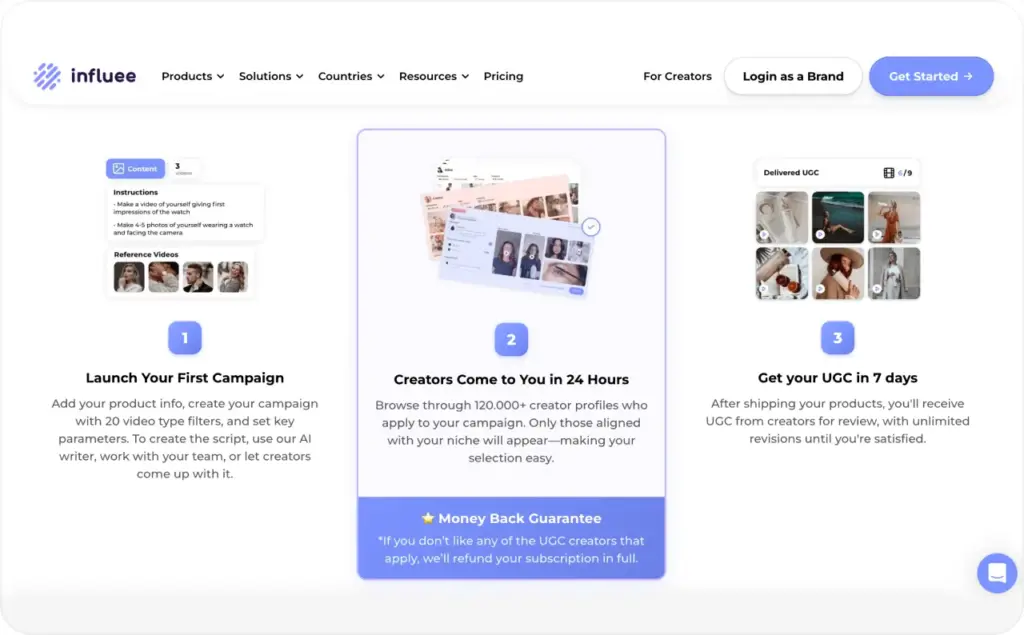
Influee is a creator-first UGC platform with a strong global angle. Its public page describes 120,000+ creators worldwide, UGC videos starting at $78, unlimited revisions and usage rights, creator matching, campaign filters, AI writing support, and delivery after shipping products. It also says it handles contracts, rights, and creator payments, and supports content types like raw assets, ready-to-publish video, unboxing, testimonial, talking head, voice-over, TikTok ads, Facebook ads, and Instagram Reels.
That makes Influee one of the stronger MakeUGC alternatives for brands selling across markets.
If you need creators in different countries, different accents, different homes, different skin tones, different use cases, and different lifestyle contexts, Influee gives you a broader human creator workflow than an AI-avatar-only tool.
The rights angle also matters. Usage rights are one of those boring details that become exciting only after something goes wrong. Influee puts rights, contracts, and payments close to the center of the workflow, which is exactly where they belong.
Best for: ecommerce brands and agencies scaling creator content across multiple markets.
Main advantage: large creator network, usage rights, revisions, and creator operations.
Possible limitation: physical product workflows are still slower than AI generation.
6. Social Cat — best for small-brand micro-influencer campaigns
Social Cat is the MakeUGC alternative I’d consider when the goal is not just UGC assets, but micro-influencer collaboration.
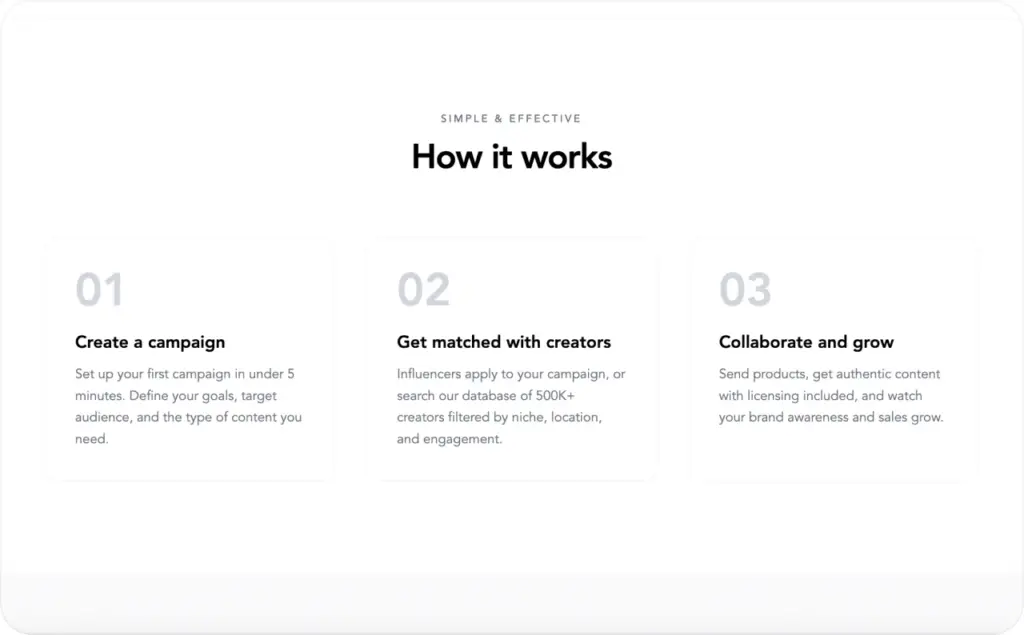
Social Cat’s public site describes gifted and paid campaigns with vetted Instagram and TikTok creators, authentic UGC with licensing included, and a workflow where brands create a campaign, get matched with creators, send products, and receive content. It also says the platform is trusted by 2,000+ brands and gives access to a large creator database.
This is a different kind of tool from MakeUGC. MakeUGC is for AI video production. Social Cat is for small brands that want real creators, gifted collaborations, paid creator posts, and content licensing without jumping straight into a heavy enterprise platform.
I like Social Cat for early-stage ecommerce brands that are still learning which creator niches work. It can help you create social proof, get product content, and build relationships with micro-influencers.
Best for: small brands, ecommerce startups, and teams testing micro-influencer campaigns.
Main advantage: accessible creator collaboration for gifted and paid campaigns.
Possible limitation: less focused on instant ad generation and advanced AI creative production.
MakeUGC alternatives comparison table
| Tool | Best for | Production model | Strongest advantage | Watch-out |
| MakeUGC | Fast AI avatar-led UGC ads | AI-first | Quick script-to-video UGC-style production | Narrower if you need real creators or broader ad workflows |
| Zeely AI | Ecommerce AI ads and testing | AI-first ad platform | UGC-style videos, static ads, copy, and variations | Not a human creator marketplace |
| Insense | Creator ads and paid social workflows | Creator-first | UGC, Spark Ads, Meta Partnership Ads, rights, payments | Slower than AI generation |
| Trend.io / soona UGC | Ecommerce UGC and PDP content | Creator-first / ecommerce content | Product visuals, testimonials, lifestyle content, usage rights | Platform transition in 2026 |
| Showcase | Performance-minded creator sourcing | Creator-first | Data-led creator matching and CPA-focused positioning | Less instant than AI tools |
| Influee | Global creator UGC at scale | Creator-first | Large creator network, usage rights, revisions | Requires creator coordination and product shipping |
| Social Cat | Small-brand micro-influencer campaigns | Creator-first | Gifted and paid campaigns with licensed UGC | Less built for high-volume AI ad testing |
Which MakeUGC alternative should you choose?
Here is the clean version.
Choose MakeUGC if you mainly want AI avatar UGC videos and you already like its script-to-video workflow.
Choose Zeely AI if you want the best AI-first MakeUGC alternative for ecommerce ad creation, UGC-style videos, static ads, copy, and creative testing.
Choose Insense if your team is ready to work with real creators and needs paid social workflows like Spark Ads, Meta Partnership Ads, raw footage, and creator licensing.
Choose Trend.io / soona UGC if ecommerce content is the bigger picture and you want UGC that can support product pages, paid ads, and sales channels.
Choose Showcase if you care about creator quality and want a more performance-led creator marketplace.
Choose Influee if you need global creator volume, usage rights, revisions, and multi-market UGC production.
Choose Social Cat if you are a smaller brand that wants micro-influencer campaigns, gifted collaborations, and licensed UGC without overbuilding the process.
My pick? For most lean ecommerce teams comparing MakeUGC alternatives, I’d start with Zeely AI. It keeps the speed advantage that makes AI UGC attractive in the first place, but it gives you a wider ad workflow than a single-purpose avatar tool.
Then, once you know which hooks, products, and offers are working, add a creator marketplace like Insense, Influee, Showcase, Trend.io / soona UGC, or Social Cat to bring real human proof into the mix.
That is the blend I like most: AI for speed, creators for texture, testing for truth.
FAQ
The best MakeUGC alternatives are Zeely AI, Insense, Trend.io / soona UGC, Showcase, Influee, and Social Cat. Zeely AI is the strongest AI-first alternative for ecommerce ad creation and creative testing. Insense, Trend.io, Showcase, Influee, and Social Cat are stronger if you want real human creators.
Zeely AI is better if you want more than AI avatar videos. It is a stronger fit for teams that need UGC-style video ads, static ads, copy, variations, and ecommerce-focused creative workflows. MakeUGC can still be a good fit if your main priority is quick avatar-led UGC video generation.
Yes, some are. Insense, Trend.io / soona UGC, Showcase, Influee, and Social Cat focus on human creator workflows. They are better choices when your product needs real demos, unboxings, testimonials, lifestyle footage, or creator usage rights.
For AI-first speed, Zeely AI is one of the best options because it supports fast UGC-style ad creation and multiple creative formats. For human creator content, speed depends on briefing, shipping, filming, approval, and revisions.
Use AI UGC when you need speed, volume, and fast testing. Use real creator UGC when authenticity, product handling, lifestyle context, and human proof matter more. The best paid social teams often use both: AI to test angles quickly, creators to scale the winners with more realism.
Final recommendation
Do not choose a UGC platform because it has the loudest promise. Choose it because it removes your actual bottleneck.
If your bottleneck is speed, choose an AI-first tool like Zeely AI or MakeUGC.
If your bottleneck is authenticity, choose a creator marketplace like Insense, Showcase, Influee, Trend.io / soona UGC, or Social Cat.
If your bottleneck is performance testing, choose the tool that helps you make more variations, not just better-looking videos.
That is how you find the right MakeUGC alternatives without overbuying, overthinking, or building a content workflow that only looks good in a demo.
Emma blends product marketing and content to turn complex tools into simple, sales-driven playbooks for AI ad creatives and Facebook/Instagram campaigns. You’ll get checklists, bite-size guides, and real results, pulled from thousands of Zeely entrepreneurs, so you can run AI-powered ads confidently, even as a beginner.
Written by: Emma, AI Growth Adviser, Zeely
Reviewed on: June 18, 2026