Creative real estate ads: 20 ideas and examples that work in 2026
Nobody scrolls back up for three bedrooms and an updated kitchen. The 20 ideas here actually produce leads, plus six real campaigns I think are worth stealing from. Every format, every platform, real benchmarks, and the AI shortcuts that cut a week of production to an afternoon.

I keep running into the same problem when I look at real estate ads. The agent listed three bedrooms, an updated kitchen, a great neighborhood. Then they sat there and waited. Here’s the truth: nobody scrolls back up for that.
Key takeaways
- The ads that actually get showings? They sell a feeling or fix a problem. Listing square footage and hoping someone bites has never worked
- Vertical video has earned its place in real estate, but Benly’s Q1 2026 data tells a more honest story: video is still only about 23% of real estate creatives on Meta, below the average across industries
- Social proof beats polish every time. “Sold in 3 days, $12K over asking” lands harder than a stock photo with your headshot on it
- I studied six big 2025-2026 campaigns. Redfin, Realtor.com, Zillow, Homes.com, StreetEasy, Balfour Place. Every single one led with emotion. Not one opened with a mortgage rate
- AI handles image generation, video with avatars, copy. Fast, yes. But fast creative on a weak offer just burns money faster
- Fair Housing and Meta’s Special Ad Category are not optional. Miss this and your campaign gets pulled before anyone sees it
The ads I have actually seen produce leads do something different. They pick one person’s frustration, show the property as the answer, drop one real result, and tell you what to do next. Twenty ways to pull that off below, plus six campaigns I think are worth stealing from.
Real estate ad ideas for Instagram and Facebook
Meta platforms are where most paid real estate advertising happens right now. The formats below work across both Facebook and Instagram, though some are better suited to one or the other.
Idea 1. Before/after renovation carousel
Show the old room next to the new one. Side by side. The photos do the explaining. Before and after, right next to each other. Buyers swipe through and think that kitchen is worth it. Sellers see it and think, this agent gets it. And because people keep swiping, you hold their attention way longer than a single photo.
Put the ugly version next to the pretty version. Then write what the upgrade actually cost: “Kitchen: $18K upgrade.” Last slide, one question: “Ready to see what we can do for your home?”
A Zeely example: Before/after renovation video
Why it works:
- The before/after jump in the first five seconds creates a visual gap impossible to scroll past. The viewer’s brain needs to resolve the contrast, so they stay
- Putting the renovation cost on screen ($18K) answers the seller’s real question before they ask it. Buyers see value. Sellers see what their own kitchen could become
- The avatar walkthrough feels personal without requiring a film crew or the agent’s afternoon. One generation, multiple rooms, done
- Drone pull-back at the end gives the neighborhood context that photos alone never deliver. Half the buying decision is the street, not the house
To build this in Zeely:
To build this in Zeely: go to Video ads → Video ad. Upload the kitchen before/after photos plus any extra rooms you want in the video. Pick a reference, check if the avatar fits, swap it if not. Write the hook: “Same kitchen. Eighteen thousand dollars later.” Body script: “This Lincoln Park colonial just hit the market at four eighty-five. Every major room has been redone. Let me show you. Book your private tour today.” Then add the video prompt:
“Real-estate listing ad, vertical 9:16, 15 seconds, 7 shots joined by hard cuts. Realistic, bright, modern real-estate tour style, smooth stable camera, natural daylight. No on-screen text, captions, subtitles, logos or graphics in any shot. Shot 1: dark dated 1990s kitchen from the doorway, yellow linoleum, honey-oak cabinets, beige counters, flickering fluorescent light. Hard cut. Shot 2: same kitchen, same angle, fully renovated, white quartz counters, white shaker cabinets with black hardware, light oak floor, glass pendants over the island, warm daylight, camera slowly pushes forward. Hard cut. Shot 3: agent stands in the renovated kitchen, speaks to camera, warm and confident. On the last words she turns and walks toward the hallway, camera follows with smooth handheld move. Hard cut. Shot 4: renovated bathroom, white tiles, walk-in glass shower, floating wood vanity, smooth slide-in. Hard cut. Shot 5: living room, refinished honey hardwood floors, light sofa, large windows, smooth pan. Hard cut. Shot 6: new wooden deck in the backyard, drone-style pull-back revealing the whole house and tree-lined street. Hard cut. Shot 7: agent stands on the front walkway, smiles, speaks to camera. Sunny late afternoon. Light upbeat modern music starting from shot 2, fluorescent buzz only in shot 1, whoosh on each cut.”
Generate the start image, check it, render the video. Add captions, price overlay, hook headline. Launch to Meta directly from Zeely.
Idea 2. Price-drop alert lead ad
Price just dropped on a listing? That is your cue. Run a lead ad. The form pulls the viewer’s name and email straight from their Facebook profile. Almost zero effort on their end.
There is a ticking clock feeling with price cuts. Buyers worry someone else will jump first. Since submission takes one tap, there is barely any hesitation. In my experience this pulls leads cheaper than driving traffic to a separate page. Something like: “Price just reduced: $465K was $489K.” Automatic reply with listing details.
Idea 3. “Just sold” social proof ad
Post the numbers from a recent close. Days on market, final price, how far over asking. “Sold in 3 days, $12K over asking” tells your story better than any bio paragraph.
There is a second job here too. Homeowners nearby see those results and start wondering what their place might fetch. Two birds. You celebrate a win and quietly plant a valuation offer at the same time. Put together a simple graphic with the numbers and the neighborhood name. Boost it to homeowners who live within a few miles.
A Zeely example: “Just sold” social proof video
Why it works:
- Real closing data is the hardest-working creative material an agent has. Specific numbers land harder than any tagline because they cannot be faked
- The ad does two jobs at once. Buyers see proof the agent moves fast. Homeowners nearby start doing mental math on their own property
- Fifteen seconds is short enough for Stories and Reels, long enough to deliver three real data points and a CTA. Nothing wasted
To build this in Zeely:
Here is how I made this one in Zeely. I went to Video ads → Video ad, uploaded the listing photo and a closing-day shot of the buyers. Grabbed a reference that had that clean, suburban feel. The avatar in the reference looked right so I kept her. For the hook I wrote “Sold in three days.” The script reads: “Forty-two Oak Street. Listed Friday, three offers by Monday. Closed twelve thousand over asking. Your neighbors are watching. What’s your home worth?” Then I dropped this into the video prompt field:
“Real-estate agent ad, vertical 9:16, 15 seconds, 6 shots joined by hard cuts. Realistic, bright, warm suburban style, stable camera, sunny daylight. No on-screen text, captions, logos or graphics in any shot. No signs, boards, plates, banners or any objects with letters or numbers anywhere in the video. Shot 1: green front door opens from inside, happy young couple steps onto the porch, the woman holds up house keys, both smiling, camera slowly pushes in. Hard cut. Shot 2: agent stands on the front lawn in front of a light grey craftsman house and speaks to camera, warm and confident. Hard cut. Shot 3: clean wide listing-photo style shot of the house front, perfectly framed, empty lawn, slow push-in. Hard cut. Shot 4: close-up of hands, agent places house keys into the open palm of the young woman who closes her hand around them, soft golden light, shallow depth of field. Hard cut. Shot 5: couple on the porch hug and laugh, keys jingling, golden sunlight. Hard cut. Shot 6: close-up headshot of the agent on the porch, house softly blurred behind her, she smiles and speaks to camera. Light upbeat music, door creak in shot 1, keys jingle in shots 1, 4 and 5, whoosh on each cut, voice clearly above the music.”
Generated the start image, checked the framing, rendered the video. Added captions, dropped the “Just Sold” stats into the headline overlay, set the CTA to “What’s your home worth?” Boosted it to homeowners within a few miles and launched straight to Meta from Zeely.
Idea 4. “Just listed” multi-photo carousel
Walk buyers through a new listing in five to seven swipeable photos. Nobody wants just the hero shot. Buyers want to know: is the kitchen any good, does the yard have space, was the bathroom redone. A carousel walks them through all of it. I usually start with the front of the house, move through the strongest rooms, and finish on a detail that sticks. New listings already feel urgent. Captions do not need to be clever. “Swipe to tour. Book a showing today.”
Idea 5. Pet-friendly homes niche ad
The moment a golden retriever shows up in a listing photo, your ad looks different from everything else in the feed. Most real estate ads are interchangeable. Yours will be. Show the fenced yard, the dog park two blocks away, the mudroom with the pet wash. Something like “Give your pup the backyard they deserve” as copy.
One thing: Meta’s Housing Special Ad Category limits interest targeting to an approved list. You cannot target “dog owners” the way you normally would. Let the creative itself do the filtering. Trust me, the dog photo does the targeting for you.
A Zeely example: Pet-friendly homes niche video
Why it works:
- The dog in the first frame is the entire targeting strategy. Meta’s Special Ad Category strips interest targeting for housing ads, but a golden retriever self-selects the audience visually. The right people stop; everyone else scrolls past
- Naming the dog park, the mudroom, and the pet wash answers specific questions pet owners actually have. Generic “pet-friendly” means nothing. Specifics mean everything
- The map graphic at the end does neighborhood selling without a single extra word of copy
To build this in Zeely:
To build this in Zeely: go to Video ads → Video ad. Upload the backyard photo, mudroom photo, and the pet wash station shot. Pick a reference with an outdoor, lifestyle feel. Choose an avatar that matches the suburban neighborhood vibe, or keep the one from the reference if it works. Write the hook: “Your dog called. They want this yard.” Body script: “Half a mile to Lakewood Dog Park. Fenced yard. Mudroom with a built-in pet wash. This one was basically designed for dog people. DM me for a showing.” Then add the video prompt:
“Real-estate listing ad, vertical 9:16, 15 seconds, 6 shots joined by hard cuts. Realistic, bright, warm, playful suburban style, stable camera, sunny afternoon light. No on-screen text, captions, logos, maps or graphics in any shot. Shot 1: sliding glass door opens, golden retriever bolts into fenced backyard, tail wagging, ears flapping, running across the grass toward camera, low angle, slight slow motion. Hard cut. Shot 2: agent stands in the backyard on the lawn, fence and dog playing behind her, speaks to camera warm and upbeat. Hard cut. Shot 3: bright mudroom, white cabinets, wall hooks with leashes, wooden bench, tiled floor, smooth slide-in. Hard cut. Shot 4: built-in tiled pet wash station with handheld shower head, golden retriever sitting inside wagging, water gently spraying, smooth push-in. Hard cut. Shot 5: back gate swings open revealing a green walking trail along trees behind the house, smooth push forward. Hard cut. Shot 6: wide shot of the whole backyard in warm golden afternoon light, dog running across the lawn, agent standing by the fence smiling and waving to camera. Light cheerful acoustic music, door slide and happy panting in shot 1, playful bark in shot 6, water spray in shot 4, gate creak in shot 5.”
Generate the start image, check it, render the video. Add captions and hook headline. Note: Meta’s Housing Special Ad Category restricts interest targeting, so you cannot target “dog owners” directly. Let the creative do the filtering. Launch to Meta from Zeely.
Idea 6. Free home valuation lead ad
Offer a free CMA. Homeowners are curious about what their place is worth. Most have wondered but never asked anyone. That curiosity is your opening. Three fields max: name, address, email. Headline along the lines of “What’s your home worth in today’s market?”
Get the branded report in their inbox within a day. Call the same day. Wait too long and the curiosity disappears. People move on.
Idea 7. Virtual tour lead ad
Plenty of people look at homes at midnight, half asleep. If you have a 3D tour or video walkthrough available, they can poke around the whole place without getting out of bed. One thing I have picked up: putting the neighborhood in the headline changes the response. “Tour this Lakeview condo without leaving your couch” gets a noticeably different response than just “See the virtual tour.”
Hook up a lead ad to whatever tour platform you use. Matterport, Zillow 3D Home, a video walkthrough, does not matter. Form auto-fills. Tour link goes out right away. Then call within a few hours, while the rooms are still fresh in their head.
Idea 8. Client testimonial image ad
I started doing this after every closing: ask for a photo and a quick quote. Two sentences is plenty. A real face saying something real about the experience does not register as an ad. It reads like a personal post, which is why people actually stop for it. A corporate graphic with clip art and your logo cannot compete with that.
Let the client’s own words do the work: “We closed on our dream home in 21 days. [Agent name] made it happen.” Tack on “Ready to be our next success story?” at the end and boost it in your zip code.
Idea 9. Video open house ad
Only film the rooms worth seeing in person. Usually three, maybe four. Under 45 seconds. Open house details go at the end as a text card. CTA: “RSVP now.”
Photos can only do so much. Stills show you what a room looks like. Video shows you what it feels like to walk through it. Different thing entirely. Anyone who watches the whole thing is already interested. Putting the date and address right there lets them commit on the spot. I wire the RSVP to a calendar link or lead form because I want to know who is actually showing up.

Short-form video ad ideas for TikTok, Reels, and Shorts
Short-form vertical video has gone from experiment to established format in real estate marketing. The content that performs well on TikTok, Reels, and Shorts tends to feel natural rather than heavily produced.
Idea 10. 60-second story tour
Phone out, walk through, trending audio on, captions over the footage. That is the whole production. It feels like the agent is personally walking you through the home, which is why these get saved and shared. Captions are a must. The vast majority of people scrolling through their feed have the sound off.
Shoot vertical. Stay under a minute. Open on whatever would make you stop scrolling. Maybe it is the kitchen island. Maybe the balcony view. Maybe the pool. Slap captions on, find a sound that is trending this week, and wrap it with “DM me for a private showing.”
Idea 11. Lifestyle people-in-scene video
I have never saved a video of an empty hallway. Neither has anyone else.
Film real people using the space. Somebody making dinner. Somebody reading on the patio. Kids running circles in the grass. The second someone appears on screen doing something normal, the viewer’s brain starts filling in their own life. A trending track on top of that makes it feel like organic content. Which is the whole trick.
3-4 clips, upbeat sound, text overlay: “Now on the market in Westlake.” CTA: “Message us to tour.” Get the homeowners to do it, or borrow a friend for twenty minutes. The only real rule: if it looks rehearsed, you wasted everyone’s time.
Idea 12. UGC testimonial montage
String together short clips from different clients. Each one holding their keys, standing by their front door, saying a few words. Multiple faces, multiple voices. That variety is what breaks the usual single-agent pattern.
Start collecting material after each closing. A selfie video works. A photo holding the keys works. Whatever they are up for. Do this for a few months and suddenly you have ten clips sitting in a folder, ready to be cut together. CTA: “Ready to be next? Let’s talk.”
Idea 13. Agent tips and market updates
“3 mistakes first-time buyers make in 2026” builds trust faster than another headshot carousel with a motivational quote on it. Saves and shares are free reach. Give it a quarter and the organic numbers actually start to mean something.
Record yourself giving one useful tip. Under 60 seconds. Face to camera, captions on. Do it regularly enough and people genuinely start waiting for the next video. End with a low-key ask. “Follow for more” or just tell people to drop questions below.
Real estate ad ideas for Google, display, and other channels
Meta gets most of the attention in real estate advertising, but Google Search, Display, and other channels reach buyers and sellers at different stages of intent.
Idea 14. Google Search ads for high-intent buyers
Someone typing “3 bedroom homes for sale in Scottsdale” is not casually browsing. They are actively looking. That intent is worth paying for. LocaliQ’s 2026 benchmark puts real estate search CPC at $3.22 on average, with competitive keywords pushing $4-8.
Your headline should read like the search query that triggered it. If someone googled “3-bed homes in Scottsdale,” they should see “3-Bed Homes in Scottsdale from $450K” staring right back at them. Then the click has to go somewhere worthwhile. A landing page with matching listings. Not your homepage. Your homepage is not closing anybody.
Idea 15. Neighborhood hotspots map ad
Half the buying decision is the neighborhood. Where is the closest school? Good coffee? A park within walking distance? Stick all of that on a map and you have basically answered the neighborhood question before anyone even brings it up.
Works as a static graphic or a quick animation. Runs well on Google Display and Instagram both. CTA: “See homes near Lincoln Park.”
Idea 16. Retargeting ads for listing visitors
Someone visited your listing page and left without doing anything. Now your ad follows them around the internet. These people are not cold. They already looked. Re-showing a listing to someone who already clicked through it costs a fraction of finding a cold lead. And plenty of people just need that one extra nudge. They were already interested. The reminder closes the gap.
Meta Pixel and Google tag on your listing pages. Retargeting audiences built by property. Ad copy: “Still thinking about 42 Oak Street? Schedule a private tour.”
Idea 17. First-time buyer educational ad
I have talked to first-time buyers who genuinely did not know if they should get pre-approved or find an agent first. Pre-approval? Find an agent? Just start looking? When you are the one who breaks it down plainly, you go from “some agent” to “the person who actually helped me figure this out.” Much better position to sell from.
Google Display or Facebook ad: “Step 1: Get pre-qualified. Step 2: Tour homes. Step 3: Close with confidence.” Stick a free guide or webinar behind a form. They give you their info, you give them the resource. Fair trade.
Idea 18. Expired listing / FSBO rescue ad
These sellers already wanted to sell. They tried. It fell apart. At this point they are kicking themselves. That frustration makes them receptive in a way they were not three months ago. Show up now and your timing does the selling for you.
Google Display: “Your home didn’t sell? Let’s fix that. See our 14-day action plan.” Send them to a page with case studies showing homes you sold after they had been sitting.
Idea 19. Pre-construction CGI campaign for developers
You literally have nothing to photograph. CGI is the only option for showing a buyer what the finished home looks like.
Balfour Place on England’s Suffolk coast did exactly this on Meta in 2025. Reach Digital Media published the results: 2.2 million people saw the ads, 217 downloaded the brochure, and the CPM came in at £1.62. The building was still dirt and blueprints. Get renders of exteriors and interiors. Run a phased campaign. Phase one: the project and location. Phase two: floor plans and pricing. Phase three: private showings. Retarget throughout.
Idea 20. Outdoor billboard with a digital CTA
I like what Sarasota agent Theresa DiNapoli did. She put up billboards in Queens, NY, aimed at people thinking about relocating to Florida. The URL was FisforFlorida.com. Worked as both punchline and CTA. Got press coverage too, per Ads of the World.
Find wherever people sit in traffic or wait for the train in your area. The billboard needs to be dead simple because nobody stares at a billboard for more than a couple seconds. One image, one line, one QR code. After it goes live, check your scan and visit numbers weekly. That is how you know if the spend justified itself. That tells you whether the billboard spend is doing anything.
Real estate ad campaigns worth studying in 2026
The ideas above are frameworks you can adapt. The campaigns below are real examples from 2025 and 2026 that show how major brands executed creative real estate advertising at scale.
Redfin and Rocket: “The Great American Home Search”
Redfin and Rocket bought their first Super Bowl slot for Super Bowl LX. They got Lady Gaga to sing “Won’t You Be My Neighbor.” Fine spot. But that was not the interesting part.
After the game, Redfin launched a scavenger hunt inside their app. The prize was a house worth over a million dollars. Six clues came out over two days, and you could not solve them without actually opening Redfin’s search tools and messing with the filters. Trevor Rainbolt, the geography guy from social media, helped design the clues.
250,000+ people played. 275,000 app downloads. 1.6 billion impressions. Kiel Murphy from Arizona found the Denver home in 19 seconds flat.
What I took from this: Obviously you cannot give away a house. But you can run a scavenger hunt at an open house. You can post a listing quiz on Stories. The point is getting someone to do something with your content instead of just watching it scroll by.
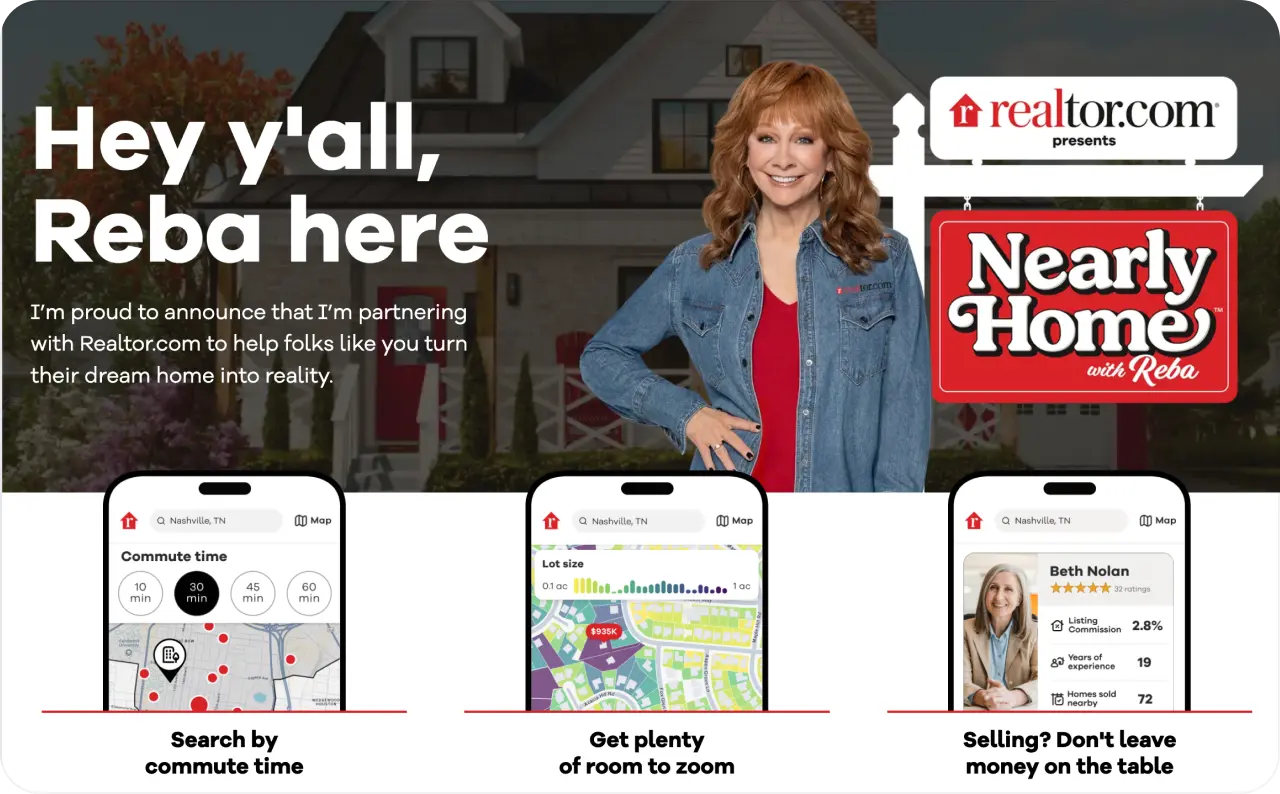
Realtor.com: “Nearly Home” with Reba McEntire
Realtor.com put Reba McEntire in sitcom-style episodes. She pops up in a couple’s living room to mediate their house-hunting arguments. Biggest brand push from Realtor.com in about 30 years.
First episode: “The One Without the Break-Up.” A couple fighting about what “more space” actually means. Later episodes throw in a hyper dog and a terrible commute. Each one sneaks in a different platform feature without feeling like a product demo.
The response was, per Realtor.com, “the strongest in its history.” New episodes kept dropping through 2026. They even did a Country Music Awards sponsorship.
What I took from this: Reba helped, sure. But the real move was recurring characters. When the same couple shows up in episode two and three, viewers already know them. That recognition is something a one-off ad can never build.
Zillow: “Someday Starts Today”
Debuted during the Grammys in early 2026. The agency was 72andSunny. Simple idea: browsing homes online is not wasting time. It is progress. Instead of models they cast real people off the street. Shot on film, not digital. The result has this grainy, lived-in warmth to it that feels completely different from every other housing ad out there. Intentionally.
Johannes Leonardo picked up the creative in mid-2026 and kept building on it with new spots and social content.
What I took from this: Urgency is overused in real estate marketing. Sometimes it is more effective to tell someone “it’s okay to just be looking.” That kind of patience is rare in this industry. People notice.
Homes.com: “Not Saying We’re the Best” with Dan Levy
The setup: Homes.com’s fictional lawyer refuses to let them say “Homes.com is the best.” Dan Levy and Heidi Gardner spend two 30-second Super Bowl spots finding workarounds. In one spot, Morgan Freeman just says it for them. Taika Waititi directed both.
Teaser videos before the game hinted Levy and Gardner had something they were “not allowed” to say. By game day, people were already curious.
What I took from this: When you have a constraint, try making it the whole concept. For a listing: “We’re not supposed to tell you the neighbors throw the best block party on the street, but…”
StreetEasy: “Never Become a Former New Yorker”
StreetEasy went after New Yorkers who moved away and now regret it. Subway ads. MTA buses. Metro-North trains aimed at commuters who already left. Copy pulled from quotes by actual ex-New Yorkers stuck in suburban life.
There was also a phone number: 1-833-I-MISS-NYC. You could call it and listen to subway noise, bodega chatter, whatever. Or you could just complain about your cul-de-sac to nobody in particular. The 15-second video spots were almost aggressively simple. One scene, one slow camera pullback, one joke, one CTA. That was the whole thing.
What I took from this: Five scenes and a drone shot are not required. Sometimes one sharp observation about your neighborhood, said plainly, is the whole ad.
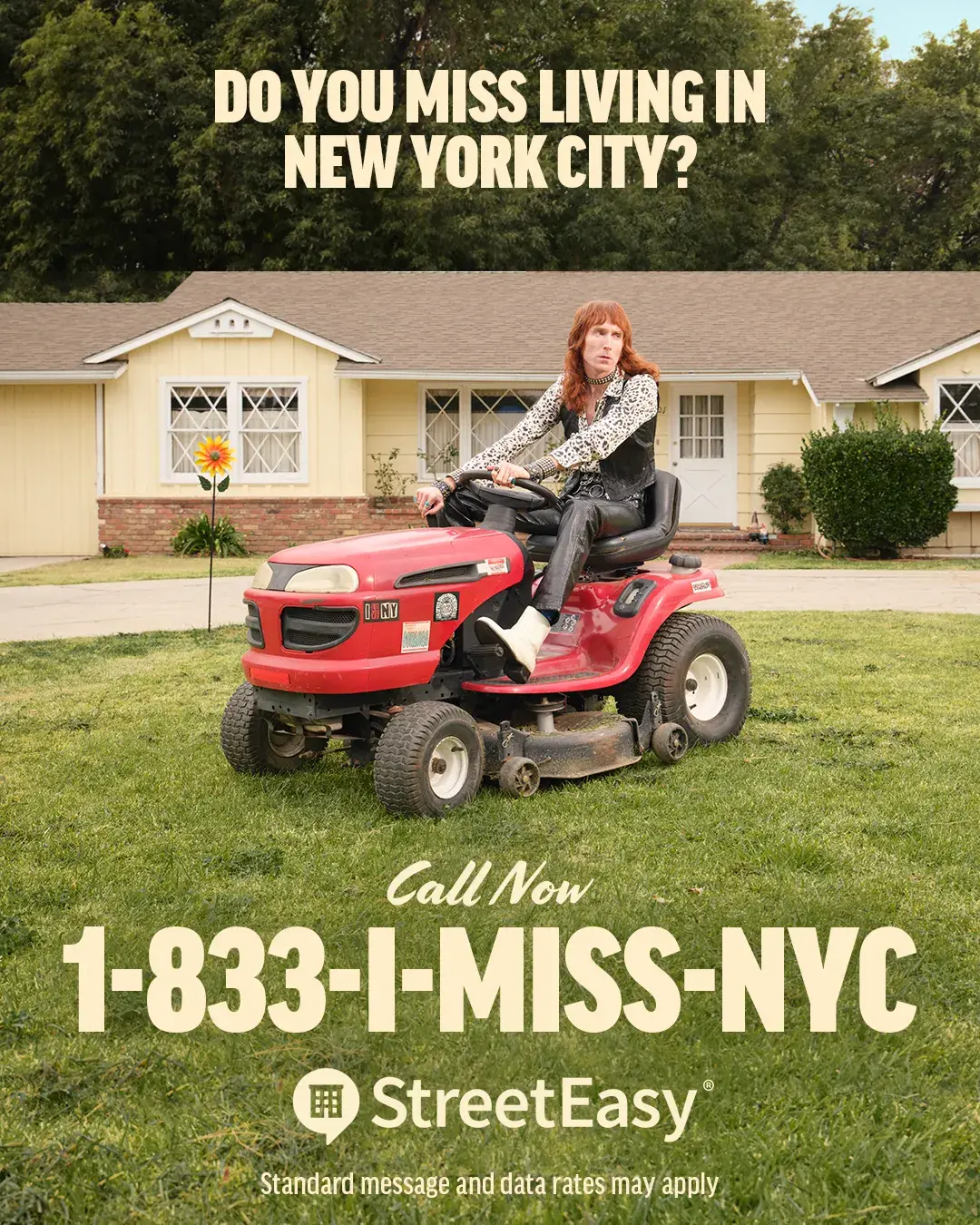
Photo source: StreetEasy
Balfour Place: Pre-construction Meta campaign July-September 2025
Five luxury homes on England’s Suffolk coast. Nothing built. No photos. So they ran CGI renders through a phased Meta campaign.
Phase one: the location. Phase two: floor plans and pricing. Phase three: private viewings. Remarketing ran through all of it.
Numbers from Reach Digital Media: 2,230,894 reach, 23,810 site visits, 217 brochure downloads, £1.62 CPM. One unit sold. Another went under offer.
What I took from this: A person hearing about the project for the first time wants to know where it is, what it looks like, what the vibe is. A person who has already visited twice wants the price sheet and the floor plan. Obvious, right? But most campaigns treat every viewer like they are at the same stage. True for every listing, not just new construction.

Photo source: reach.
What actually separates agents who get leads from agents who burn budget
The pattern across every campaign and idea in this guide is the same: specificity wins. A real number beats a superlative. A real client photo beats a stock image. A 15-second video that shows one room well beats a 60-second montage that shows six rooms poorly.
If I had to bet on what separates agents who generate leads from ads in 2026 and agents who burn budget, it comes down to three things: they refresh creatives before fatigue sets in (the Benly data says you have about 11 days), they treat every ad as a test rather than a finished product, and they make the next step so obvious that a half-asleep person scrolling at midnight can still do it. Everything else is details.
FAQ
Start with whatever is frustrating your buyer right now. Show them the listing that fixes it. Then make the next step so obvious they do not have to think about it. Clear image, real details, one CTA. Not much more to it than that.
Depends entirely on what you are trying to accomplish. Showing multiple rooms? Carousel. Chasing reach on TikTok or Reels? Vertical video. Lead ads on Meta when capturing contact info matters more than website traffic. Just because some skincare brand blew up with a certain format does not mean it transfers to real estate.
Open with a photo or video good enough to make someone stop mid-scroll. The headline should sound like something your buyer would actually type into a search bar: “3-bed homes in [neighborhood] from $X.” Simple CTA. Meta’s lead ad format works well when you want frictionless sign-ups. For more on this, see our guide to Facebook ads benchmarks in 2026. And all housing ads on Facebook have to go through the Special Ad Category. No exceptions.
They can. A year ago the output was rough. Now it is genuinely usable for a lot of campaigns. Zeely does images, avatar video, and scripts, then plugs into Meta for campaign launch. I still look at every single output before it goes anywhere. It will not flag a wrong price or catch that you uploaded the neighbor’s yard photo. That part is still on you. But the speed is real. What used to eat a full week of back-and-forth with a designer now takes an afternoon. The judgment part stays with you.
WordStream/LocaliQ’s 2026 data puts real estate lead campaigns on Facebook at roughly $1.27 CPC and about $13.74 cost per lead. Google Search costs more, roughly $3.22 CPC on average. Those numbers are directional, not promises. A luxury market in Manhattan and a starter home campaign in suburban Ohio are going to produce very different costs. Personally I assume costs will come in higher than any published benchmark and let myself be pleasantly surprised if they do not.
Benly’s Q1 2026 study covered 1,700 real estate creatives on Meta. The median lifespan came out to 11 days. So I try to have 3-5 backup creatives sitting in a folder, ready to go the moment a top performer starts losing steam.
There is no magic format. What I reach for most often is a vertical walkthrough, kept under a minute. It works on TikTok. It works on Reels. It works on Stories and Shorts. Without captions you lose most of your audience since sound-off scrolling is the default. And if a raw walkthrough feels too casual for your brand, AI avatars reading a script over polished visuals can bridge that gap. No studio needed. Looks professional, costs a fraction of a real shoot.
Nope. Your phone shoots perfectly fine walkthrough video, testimonial clips, “just sold” graphics, tip content. When it comes to paid ads, I usually start with a daily Meta budget small enough that losing it all would not ruin my week. Zeely start at $29.95/month and can produce ad creatives that would otherwise require a designer or agency. Before anything goes live I decide in advance how much I am willing to lose if it does not work. That number should come from your bank account, not your optimism.
Sources
- Benly — Real estate creative DNA benchmarks Q1 2026
- WordStream by LocaliQ — Facebook ads benchmarks 2026
- WordStream by LocaliQ — Google Ads benchmarks 2026
- LocaliQ — Real estate search advertising benchmarks 2026
- U.S. Department of Housing and Urban Development — Fair Housing Act
- Meta — Special Ad Category requirements for housing ads
- Redfin — The Great American Home Search press release (February 2026)
- Marketing Dive — Why Rocket’s Redfin is kicking off a $1M home giveaway at the Super Bowl
- PR Newswire — Realtor.com “Nearly Home” campaign with Reba McEntire (July 2025)
- Zillow Mediaroom — “Someday Starts Today” campaign launch (January 2026)
- CoStar Group — Homes.com Super Bowl LIX ads press release (February 2025)
- Reach Digital Media — Balfour Place Meta Ads case study
- Ads of the World — StreetEasy “Never Become a Former New Yorker”
- Ads of the World — Zillow “Someday Starts Today”
Fact checked by Anastasiia Stovpova