25 skincare ad examples and what makes each one worth copying
I analyzed 25 skincare advertisements and listed what each brand actually does, why I flagged it, and what I would take from each.
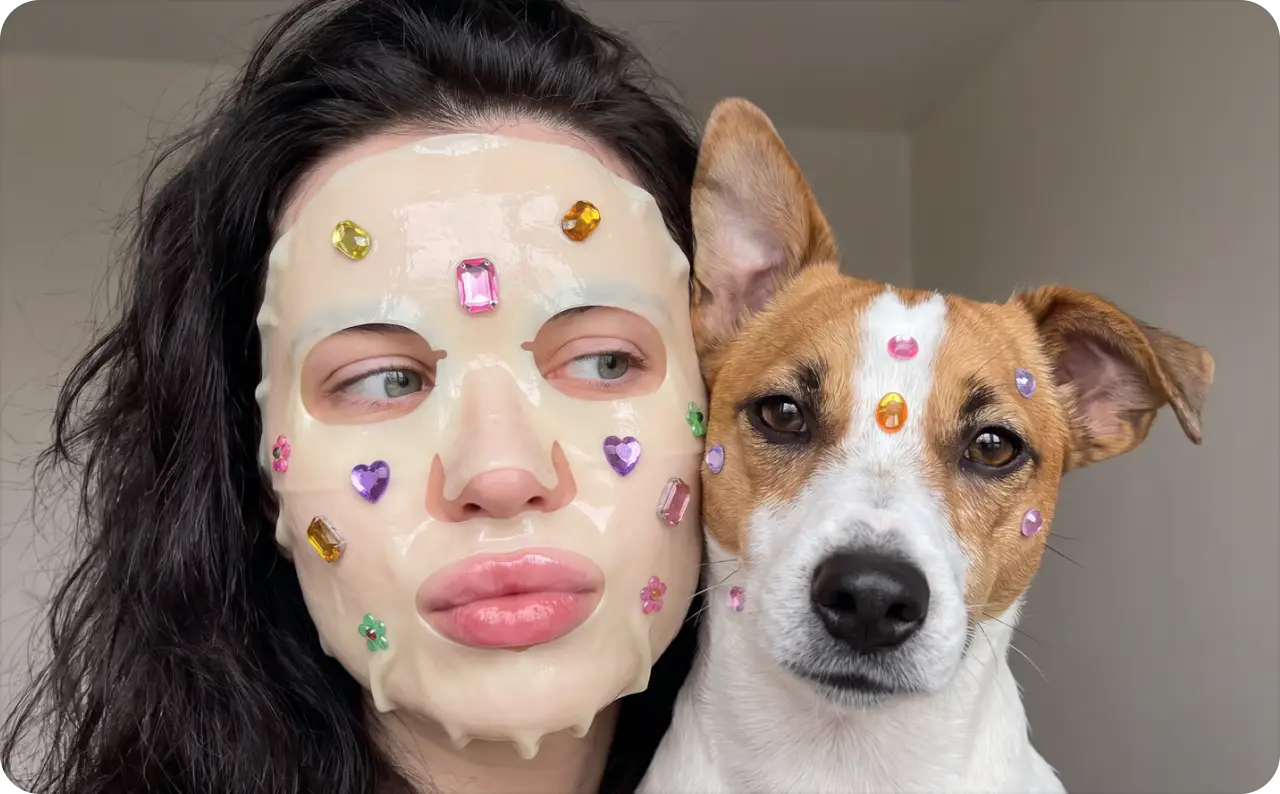
Here are all 25. Some are UGC, some are ingredient explainers or shoppable videos, some are full brand campaigns with celeb talent. I included some AI-assisted creatives as that is the route most indie brands are taking to make their ads these days. For each, I will say what they did, what I liked and what I would use.
Key takeaways
- One proof point per ad. Not two, not five. The ads I kept coming back to all made one choice and committed to it
- BYOMA, SKIN1004, and Cocokind posted organic creator clips first, then spent money amplifying what worked via Spark Ads or Video Shopping Ads. Going organic-only did not get them there. Paid alone did not either
- Short explainer clips keep showing up. BYOMA and COSRX. The pattern is identical each time: take one ingredient question, answer it in a short clip, link the product below
- The hooks I kept seeing in the video examples land in three buckets: naming a problem the viewer already has, bringing in a doctor or expert voice, and leaving a question hanging just long enough
- SKIN1004’s TikTok Shop Indonesia campaign saw an 8.5x GMV increase with in-app checkout. When the buyer never leaves TikTok, there is one less place for them to drop off
What the best skincare ads have in common
I pulled out what I kept seeing across all 25. This is not formal research, just stuff I kept noticing.
One concern, one proof, one action
“Developed with dermatologists” is what CeraVe says. “National Eczema Association approved” is what Tower 28 says. The Ordinary writes “Niacinamide 10% + Zinc 1%” and that’s it. No long explanatory texts. The Indie brands kept it simple and clear. The bigger brands tried to fit in as many selling points as they could. The shorter, simpler sentences won in this ad compilation.
A face on camera
Many of the ads with high engagement feature a person, usually the creator, applying or showing a reaction to the product. That is the standard on TikTok and people are used to watching videos of people talking to the camera. Static product shots work great for retargeting and product catalogs. However when you want to reach a new, cold audience, a human face seems to be the most effective way to do that in this ad compilation.
In skincare, texture sells
Other products need the help of a narration or demonstration to sell. Texture benefits from the instant gratification that comes with filming a product being applied. You can see how fast it absorbs and how it finishes. COSRX, Glow Recipe and Supergoop lean on texture for their major visuals and it pays off. The viewer can judge it for themselves.
Different platforms get their own creatives
SKIN1004, Cocokind and Bubble (among many others) all get different treatment for different channels. Many folks I’ve seen became quickly disillusioned with TikTok and blamed the platform, often posting IG Carousels and getting no engagement. Thing is, the kinds of things that take off on TikTok look unfinished on brand pages. A well done product shot looks corporate and stale.
First impressions are everything
The opening seconds of a video carry the most weight and TikTok agrees. The examples here back it up. Openers often name a viewer problem, bring in a trusted voice or dermatologist, or use an attention getting method to raise a question then give the answer shortly after. For more opener examples, take a look at 40 UGC hooks for video ads.

UGC and creator led skincare ads
If you are new to UGC ads or wondering how AI UGC compares to real creator content, my guides cover the fundamentals.
1. CeraVe: Michael Cera Super Bowl UGC seeding
CeraVe seeded influencer clips suggesting that Michael Cera was somehow involved with the brand. It leaked a few weeks prior to the Super Bowl with dermatologists front and center. The entire situation was covered by Adweek and several other advertising related publications as a case study in edutainment.
Most people, myself included, took the name joke for what it was. However, because there was a decent amount of uncertainty around whether it was a leak or a joke, speculation ran wild for weeks. On Super Bowl Sunday, CeraVe finally confirmed the speculation. By that time, millions of people had seen, speculated, and/or engaged with the name jokes on social media. The confirmation essentially just refocused all the speculation on the product.
The best way to describe their strategy would be to come up with a speculation-worthy angle that is actually related to the product truth. Confirm it. Provide the speculation space and time to really grow. When it is confirmed, provide the product truth message.
2. Starface: Acne patches as self-expression
Starface achieved something that most skin care brands have been afraid to accomplish. They made acne treatment something that people can proudly display. Their bright-yellow star-shaped patches turned into a viral trend on TikTok and Instagram. The brand has sold over one billion individual patches globally. In March 2026, Starface raised a $105 million minority funding round led by Astō Consumer Partners and Align Ventures. Projected 2026 revenues were nearing $150 million according to Beauty Independent.
I find it most fascinating that no Starface employee had to brief a creator or develop a posting guide. The product sells itself. Sticking a large yellow star on a breakout feels like you’re joining something, and people are naturally going to want to share it.
Would your customers post pictures of your product without being asked? No? Then that’s the issue you should be working to resolve first. Starface didn’t need a UGC program. The product itself was the UGC program.
3. Bubble Skincare: Creator partnerships to fuel UGC at retail
Bubble has activated a legion of teen and young adult ambassadors to drive business at Ulta, CVS, and Walmart. Modern Retail broke down the playbook.
What makes this work? Because it doesn’t feel like an attempt to impress. This is just a normal teen or young adult doing something relatable, like washing her face before school or taking a quick rinse after volleyball practice. Nothing about it feels sponsored, and that’s the point.
4. Cocokind: Only boost what already holds attention
If you scroll Cocokind’s TikTok, you’ll see: multiple creator clips for the same product, with the paid version of the video being the only one of the bunch that shows up organically. It seems the only paid posts that get made are the ones that inspire a second look and replay. This suggests a type of filtration system between organic posts and sponsored posts.
I think that makes sense. Most brands film something, turn it into an ad, and cross their fingers. Cocokind seems to be doing the opposite. They let viewers of the organic posts decide. If viewers of the free post don’t like a video, why would the brand want to pay to promote it?
My suggestion would be to post several different organic cuts of the same video, and then boost what already has attention.
5. Drunk Elephant: “Smoothie” mixing UGC
Drunk Elephant basically invented a content format by accident. They told customers to mix their products together and called the results “Smoothies.” People filmed it. Not only are the videos pleasing to watch, but each one showcases exactly what products you’d need to buy to make the drink. Drunk Elephant holds 26% citation share across major AI search engines. According to the 2026 AI Beauty Authority Index by 5WPR and Everything-PR, not bad for a brand built partly on palm-mixing videos.
They hook you with vibrant swirls of liquid in a hand. You watch because the video is eye-catching. You end up buying several products because the formula in the video calls for multiple ingredients and they don’t even use the word “bundle”. The format does the upselling.
Here’s what to do: If your product has a process that looks interesting when filmed, name that process. Show people how to do it, and then film yourself doing it. That way, you get new content on your page without having to do anything.
Educational and ingredient-based skincare ads
With skincare, you can provide an ingredient explanation that is under 15 seconds and it can be a sales pitch. The brands below incorporated this into a repeatable ad format.
6. BYOMA: Barrier-first storytelling that drives retail clicks
BYOMA created successful TikTok ads with an educates and explanation format. They used a creator to explain barrier basics and why the consumer’s barrier may be broken. The ads drove retail clicks to Target. In 90 days the campaign amassed 147.6 million video views and 500,000 clicks to Target.com. The industry benchmarks for CTR and CPL were beat by 117% and 229% respectively. BYOMA became a best selling skincare launch at Target.
The campaign’s success is attributed to this one line: “Your skin barrier is broken and here is why”.
Try this: Pick just one concern your product solves and build a series of short explainers around it. Boost the top performers and send the audience to your product page at the retailer. Not your homepage.
7. COSRX: Ingredient education scaling into TikTok Shop
On COSRX’s TikTok, they have a very clear system. Most posts are creators doing explainers, hashtag challenges, and of course, linking to TikTok Shop. The structure of the clips barely changes. They open with the concern, hold up the bottle, show it being applied, and offer a suggestion for a different product to use with it.
“What does [X] ingredient actually do for your skin?” is a question you could answer with a ton of different clips. There are a ton of ingredients. With TikTok Shop linked, someone can tap to purchase without even going to a browser. The short distance between “huh. that’s interesting” to “purchased” is their game.
Try this: For product education, film quick lessons. Pin the product card. Then go live and answer questions.
8. The Ordinary: Ingredient-as-headline static ads
The Ordinary has a huge active ad spend on Meta (as evidenced in the Meta Ad Library). Their strategy is the opposite of the brands on this list. Rather than focus on lifestyle imagery, they use simple product shots, where the ingredient is the focus of the ad. No frills, backgrounds are plain. That’s it.
Some potential customers are past the education stage and are curious about things like formulation, percentage, and price. The Ordinary provides all three in two seconds and doesn’t waste time on filler.
Try this: For users who research actives before they shop, formulation is your best-selling copy. Don’t hide it behind a brand story. Active up front. Percentage visible. Clean shot. That’s the ad.
9. MiiN Cosmetics: K-beauty education with Catalog and Spark Ads
MiiN uses educational clips and trend hooks in TikTok Catalog and Spark Ads. TikTok’s case study has more info on the strategy. Catalog Ads place the product within the video itself. With Spark Ads, MiiN places paid promotions behind the most successful organic creator clips.
“What is [K-beauty product] and what does it do?” is a winning format because most of MiiN’s audience has never seen these formulations in a product on a shelf. The audience has a natural interest in the product. MiiN just needs to be there to answer the audience’s questions.
Try this: One question per clip. Catalog Ads to tag the product. And when a creator organically mentions the product, use a Spark Ad to promote the clip before it loses visibility.
Commerce and shoppable skincare ads
With skincare ads, the quicker the path from ad to purchase, the better. These three brands integrated purchase directly in the ad.
10. SKIN1004: Live and video shopping ads in Indonesia
For its 6.6 Day Booster Pack program, SKIN1004 ran video shopping ads and live shopping ads on TikTok Shop Indonesia. TikTok has since published the results. SKIN1004’s video shopping ads had a 8.5x increase in total GMV from the previous campaign and a 8.41x return on ad spend (ROAS) with a 2.02% click-through-rate (CTR) and reached 670,000 people. Their live shopping ad pulled in 190,000+ viewers, a 2.82% CTR and a 4.06x ROAS.
Demonstrations, product cards, and rapid-fire customer questions, all watched by thousands. All this, and more, is done with the ease of a tap. No browsing.
Try this: Keep things short and sweet. Keep the product card pinned and ping the demo to showcase before and after results. Oh, and for everything you sell? Go live for the promotion and demo.
11. Glow Recipe: Selling directly inside TikTok
Glow Recipe used TikTok Shopping and Shopify to integrate their product catalog to sell skincare products inside TikTok. According to a case study published by TikTok, Glow Recipe’s videos showing their products increased by 140% since launching their product tiles.
Try putting the texture on screen before the text. Tag the SKU. Check that TikTok price matches the site. A price mismatch at checkout is money lost.
12. ManCave: Nine-day budget burst with Display Cards
In a case study by TikTok, ManCave, a men’s skincare brand, utilized their entire TikTok budget in 9 days by using In-Feed Ads and Display Cards.
For a skincare brand that isn’t aimed at the skincare market, a simple offer like “Say Goodbye to Dark Circles,” works. The display card kept the offer on screen for the entire duration of the video. The 9 days gave them the opportunity to align it to a single promotion.
If your budget is small, don’t try to spread it across a long period of time. Concentrate it to a short period and one offer. Try different hooks for that one offer. Display Cards keep your CTA on screen for the whole video.
Brand campaigns and storytelling
Skincare ads don’t always require product demonstration. In the case of brand partnerships and cultural moments, skincare is sold for you.
13. Fenty Skin x A$AP Rocky
Renell Medrano’s photography for the 2026 Fenty Hydra Vizor SPF 30 campaign featured no labs, no water droplets, and no marble counter tops. Rocky is seen in real-world settings. In the ad he says “Don’t be dumb, gotta use SPF.” According to The Impression, the campaign conceptualizes skincare as part of your outfit instead of before you put on your outfit.
I think Fenty is targeting a younger demographic of men, one that may never click on a traditional clinical sunscreen ad. It’s an interesting choice to promote sunscreen like a limited-edition sneaker. It’s probably going to work for the demographic they are going after.
What about your buyer is beyond skincare? Are they into fashion? Music? Sports? Find ways to put your product there.
14. Naturium: “Glow Better Together” with Bretman Rock
In May 2026, Naturium launched a campaign featuring Bretman Rock and customers selected from a national casting call. BusinessWire has more info. What’s interesting: Bretman Rock organically discovered Naturium in 2024. There was no paid deal. It created an authentic partnership that this area of the campaign was able to leverage.
Putting a well known creator, like Bretman Rock, and actual customers in the same frame is a smart choice. And the national casting call generated content and buzz.
What’s your angle? Running a creator campaign? Bring actual customers into the shot. The casting call generated content and buzz, all before any marketing dollars were spent.
15. La Roche-Posay x Minions
La Roche-Posay partnered with Effaclar and Minions. Universal Pictures, Illumination, agency Silenzio. Campaign on Ads of the World. Ran on film, OOH, and social.
The trust of a parent is key to the success of an acne product, but not every 13 year old boy wants to be seen buying it. The partnership with the Minions handles that part. La Roche Posay’s dermatological reputation does the rest. The Minions provide the playfulness, and the dermatological heritage does the trust. The two can’t work without the other.
Try this: To create a product that is both science-forward and warming, pair your clinical cred with a cultural or visual partner that can carry the warming.
16. RoC Skincare: Celebrity reunion retinol campaign, 2026
RoC partnered with Bethenny Frankel, Ramona Singer and Sonja Morgan, in April 2026 for its Retinol Correxion Deep Wrinkle Rich Cream. According to a PR Newswire press release, it was the first joint brand partnership for the three reality TV stars. RoC’s campaign mainly focused on the heritage of the brand in developing the method of stabilizing retinol.
The celebrity reunion aspect of the campaign made the product launch newsworthy, and generated a lot of interest. Coverage focused on the nostalgia factor. The science behind retinol and its stabilization provided depth to the coverage.
Try this: A brand reunion can be used to launch a new product, and this framing technique can be used for any brand, especially micro-influencers.
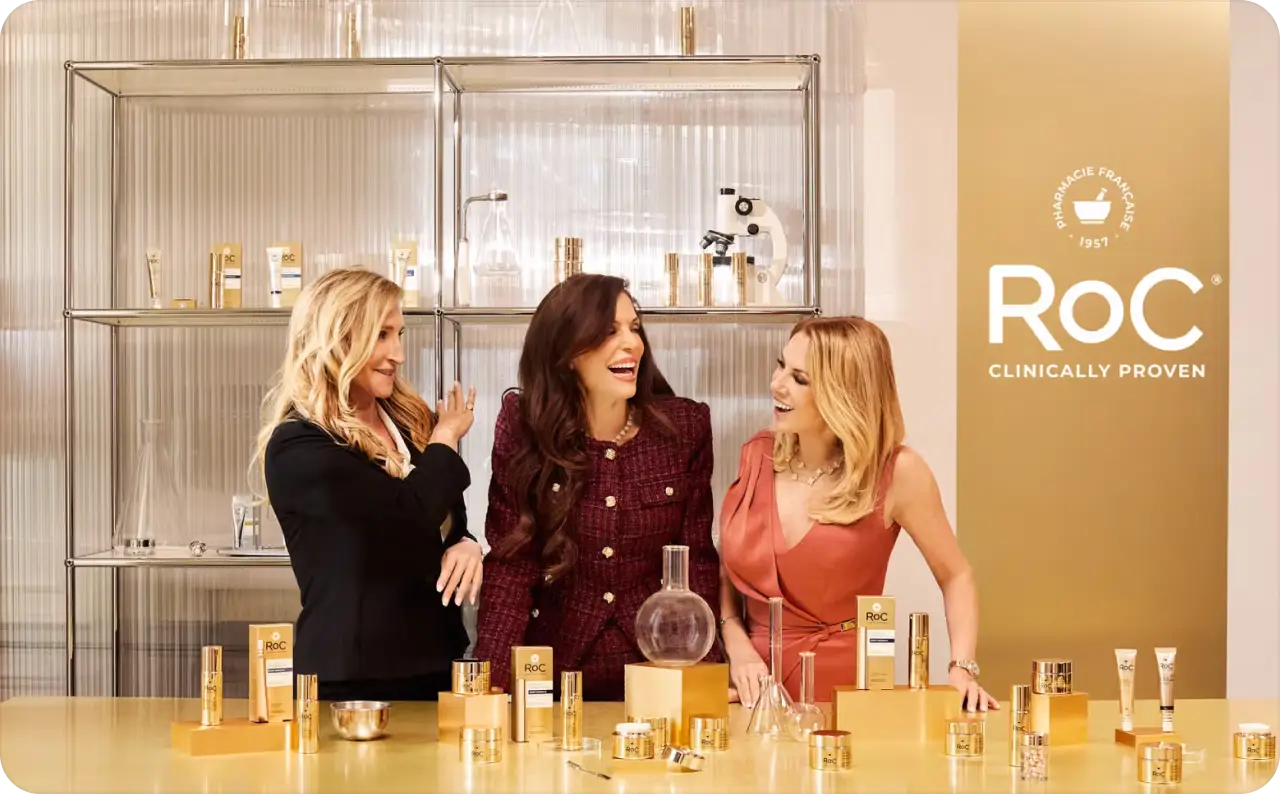
Photo source: New Beauty
17. Cetaphil: Skin Activator celebrity launch
Cetaphil launched its Skin Activator line with Mariska Hargitay as the face. Social assets focused on “hydrating and firming” with close-up natural-light creative.
Cetaphil isn’t selling aspiration. They’re selling trust. Hargitay comes off as warm and reliable. Not glamorous. That is what Cetaphil needs in a spokesperson. There are better candidates for other brands. For example, Cetaphil is a clinical skin care brand, so having a trusting relationship with their spokesperson makes sense.
There are a lot of candidates with big followings, but trust can’t be bought. Fame can.
18. KraveBeauty: “Waste Me Not” turns transparency into demand
KraveBeauty recently documented how they repurposed over $1.5 million of unsalable product. The full program, including the dollar amount and where the inventory is, is available on their site.
Usually, in sustainability, a brand will say “we care about the planet” and leave it at that. KraveBeauty actually set a goal and said what happened to the product. When a brand is vague, it doesn’t lend itself to being shared. KraveBeauty, in setting an actual goal and saying what happened to the product, showed something that people can get behind.
Try this: Name one real decision. Attach a real number. Show what happened. One reel with actual receipts beats ten posts about your values.
Credibility and trust-led skincare ads
Skincare buyers have been burned before. These brands lead with proof that someone other than the marketing team vouches for the product.
19. Tower 28: Sensitive-skin credibility with NEA approval
Tower 28 leads with its National Eczema Association seal in almost every ad. Brief creator clips show SOS Spray and barrier cream as quick and simple solutions. Fashionista covered the brand.
Sensitive skin means you’ve been lied to before. “Gentle formula” that stung. “Calming” cream that made it worse. Independent medical seals say things that branding can’t and do it better. Close ups of the product sealing things up and taking away reaction and showing no irritation does the rest.
Try this: Have a third-party seal of approval or a clinical result? Lead with it. First seconds. In the frame. Captions get skipped. The badge should be on-screen.
20. Black Girl Sunscreen: Education as acquisition
Black Girl Sunscreen leverages SPF education and community voices in its advertising strategy. The founder and parents are the trusted voices in the videos and answer the questions/address the concerns the target audience has. The ads take on the worries of their target audience and incorporate the questions people have into their advertising.
The ad for Black Girl Sunscreen answers a question that is already on the target audience’s mind, “Will it leave a cast?” The ad even includes the skin demonstration to prove that it will not.
Your customers’ most common objection is your best opening line. Film the answer. Then, link to a page that addresses that concern.
21. Supergoop: Timed SPF creative
Supergoop times its advertising so that it peaks at the times of the year most concerned with UV rays. Video content is created for Instagram and TikTok, and timed to the season. The company has been interviewed by Marketing Brew about their SPF advertising.
“PSA: UV doesn’t care that it’s October. Keep the SPF on!” only makes sense if it is actually October. The ad is timely. The company also demonstrates the real finish of the product on a range of skin textures. That is the detail that actually matters when you are concerned with using a daily SPF.
Try this: For peak timing, anchor your ads to a specific date or season. “October and you still need SPF” works. “Protect your skin” with no date does not.
22. Dieux Skin: Fashion collab as credibility signal
Dieux did a limited run of its Forever Eye Mask with Eckhaus Latta for New York Fashion Week. The collaboration gained coverage in both beauty and fashion outlets.
Skincare you wear to Fashion Week is a claim few eye masks can make. The pairing of a fashion label and a reusable skincare tool is unexpected. The surprise and the unusual pairing earned press and social shares. A typical product shot would not have.
Video formula: serum, mask, wait, peel. Tag any collab partner. Link to a bundle.
Viral and community-driven skincare ads
In most cases, these three brands did not pay for the majority of the attention they got. They built products, visuals, or launch strategies that got people talking.
23. Rhode Skin: one visual system, zero deviation
Rhode Skin repeats three strategies: macro textures close-ups, limited releases, “less is more” messaging. Both the Peptide Glazing Fluid and Lip Treatments continue to generate UGC with no paid promotions. You can’t tell the difference between paid and organic posts. Same close-ups. Same “glazed donut” finish. TIME magazine named them one of their 100 most influential companies for 2026.
What stands out: you recognize Rhode content before you see the account name. Not from a single viral moment. From someone at the brand deciding on a look and never deviating.
Try this: Establish a visual system. Define it with a style, texture, palette. Stick to it, don’t tweak it. It takes repetition to reinforce.
24. Peach & Lily: mystery serum seeding
In 2025, Peach & Lily used an invite-only event and seeding to give creators, dermatologists and educators a first look at its MiniProtein Exosome Bioactive Ampoule. By the time the product was publicly available, search interest for exosome serums was rising.
Try this: Create a product that’s genuinely novel, build anticipation for it, and time your unveiling for when the conversational “ buzz” is already there.
25. Naturium: “Good Chemistry Starts in the Shower”, 2026
Naturium’s March 2026 campaign, built with Day One Agency, launched the Multi-Peptide Advanced Body Wash. In the hero spot, a woman is thanked by her future self for caring for her skin. It was placed on Connected TV, YouTube, Instagram, Facebook, TikTok, Reddit, and Pinterest.
“Good Chemistry” works two ways: the peptide science angle and the personal care angle. Oh, and hearing your future self narrate a body wash ad? That’s an emotional move for a shower product. A standard demo could never pull that off.
Try this: Next time you’re writing a personal care ad, find a tagline with double meanings, and film the long version for the Internet. See if you can capture the emotion in shorter social cuts. If you cut too deeply, you lose the emotion.
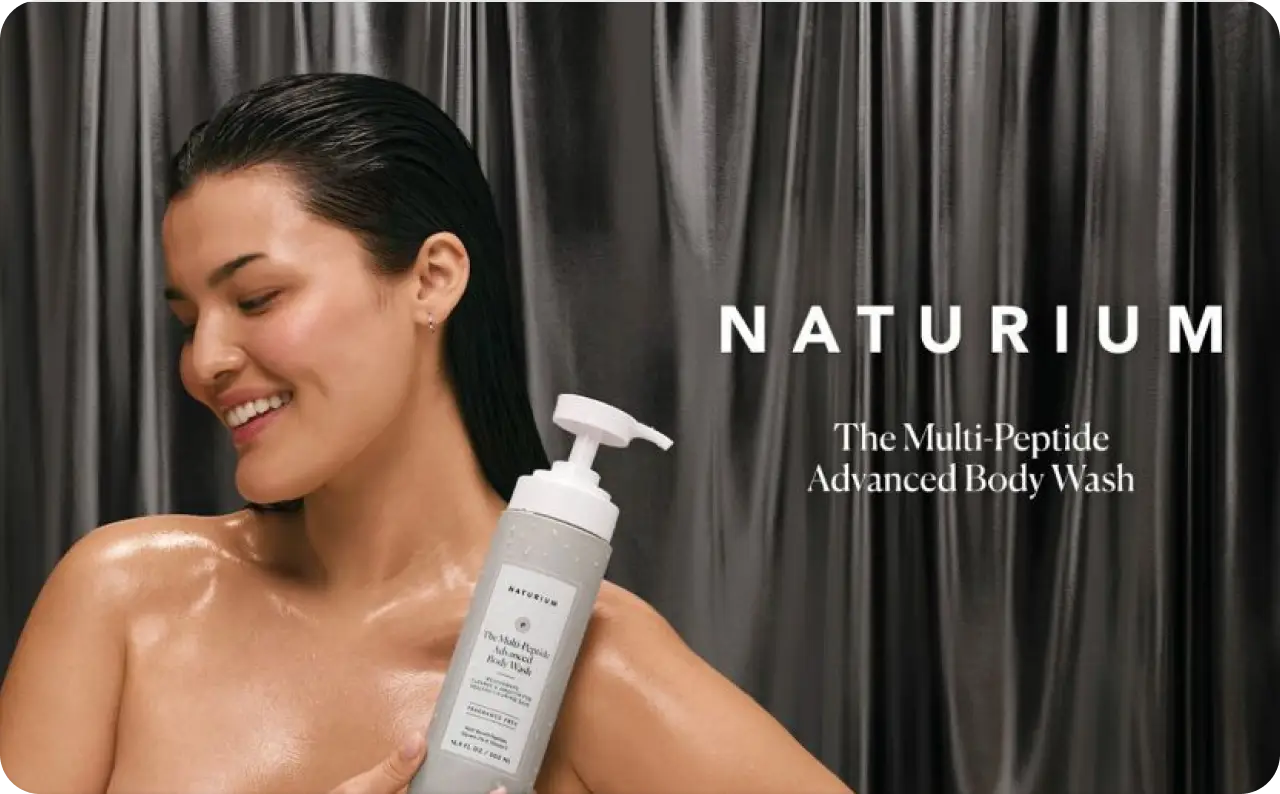
Photo source: Little Black Door
A Zeely example: Try it for your skincare ad
Here’s an example of a 15-second ad built within Zeely, for a vitamin C brightening serum.
What makes this video unique?
This video doesn’t look like a traditional ad. That’s why the viewer keeps watching.
This ad uses the first two seconds to capture a slice of the viewer’s daily life. This ad says “I stopped covering my dark spots” to grab the viewer’s attention. “Get glowing skin” doesn’t do the same.
This ad uses an application shot to give the viewer proof. The serum absorbs quickly into skin. This shot is common in ads by COSRX and Glow Recipe.
An honest before and after shows a believable improvement in vitamin C serum. “Same light. Same camera. Four weeks apart.” tells the viewer that these are honest comparison photos.
This entire ad works on mute. Text on screen, visual application, and a self-explanatory split. One CTA at the end “Shop now.” Done.
To build this in Zeely
Import your serum by pasting your product page URL. Zeely fills in the product name, description and images for you. If you want to give more info, the Market Intelligence feature adds 6 customizable areas: niche, core value, target audience, pain points, purchase triggers and social proofs.
For the video, go to the Video Ad tool and select the AI avatar that is most like your target customer. Enter or generate the script. Zeely creates the avatar lip-flapping the text, adds captions and a headline. Select the resolution and length. Click generate.
For a static split frame, use the Image Ad tool. Select a product picture from your project. Pick a split screen reference from the Inspiration Gallery, enter a headline and CTA. Zeely creates the layout. Add and adjust your logo directly on the creative.
You can test the ad you created by launching it as a Meta campaign, directly from Zeely. Set your budget and audience. For a broader look at skincare ad strategy, check out how to create skincare ads that convert.
Common mistakes in skincare advertising
- Over promising results. Offer anything “instant” or “overnight” and you’ll gain the attention of the regulators while losing the trust of consumers
- Ignoring skin diversity. If your advertisements only feature one race, one age, or one skin type, consumers will quickly pick up on the lack of inclusion and lose interest. Make sure there is a representation in your advertisements for everyone who will be in the target market for your product
- Too many filters. Using video editing programs to blur and/or smooth skin may seem like a good way to showcase your product, but consumers can tell when an image is doctored. Remember, filters destroy texture. Texture is proof
- Skipping proof. “Clinically proven” means nothing if there isn’t a published study, reported data, or a seal to provide support
- Generic CTAs. “Learn more” is not a good next step. “Add to cart” or “Get 50% off” are better options
Sources
- TikTok for Business — BYOMA case study
- TikTok for Business — SKIN1004 Indonesia case study
- Adweek — CeraVe Super Bowl campaign breakdown
- BeautyMatter — Starface $105M funding round, March 2026
- Beauty Independent — Starface strategic review, 2026
- BusinessWire — Naturium “Glow Better Together” announcement, May 2026
- Ads of the World — La Roche-Posay “Ready, Clear, Action!” campaign, July 2026
- Ads of the World — Naturium “Good Chemistry Starts in the Shower” campaign, March 2026
- PRNewswire — RoC Skincare reunion campaign, April 2026
- TheImpression — Fenty Skin x A$AP Rocky 2026 campaign review
- TIME — 100 most influential companies of 2026
- 5WPR / Everything-PR — 2026 AI Beauty Authority Index
- Meta Ad Library
Fact checked by Anastasiia Stovpova
FAQs
I’ve seen a ton of demos for texture. Also plenty of routines. Then there are the “I had this problem, here’s what fixed it” clips. BYOMA & SKIN1004 tag everything through TikTok Shop so people buy without leaving the app.
Most skincare video ads fall between 10-20 seconds, but plenty of testimonials run longer. The length really doesn’t matter. What is important is that you have a good first line. Full stop.
Both. Using UGC and studio production together is not a cop-out answer. From a practical standpoint, I’d let CPA (your cost per acquisition data) decide the winner. CPA is the best indicator of long-term customer value. UGC feels like a trusted recommendation. Studio gives you total control.
I flagged 3 patterns here that repeated. Name a problem. (Example: “Your skin barrier is probably damaged.”) or put a derm on camera. Another hook that worked: open with a question, and then don’t answer it. Leave your audience hanging with a question that they want the answer to. Flop hooks: vague hooks. “Looking for better skin?” No one stops for that.
Static and video ads, yes. Results are only as good as your brief. Hand AI specific info about the product, audience, and creative direction? The AId generates ads you can run. A vague two-line brief? The result is equally vague. I use AI to do concept testing. Once the variations are made, I find the winning concept, and then I pay a creator to film it.