Best AI ad creative testing tools for faster A/B tests
Wondering which AI ad creative testing tools actually help small teams make smarter ad decisions? I reviewed pricing, workflows, product docs, and marketer pain points to explain where each tool fits.
The best AI ad creative testing tools depend on what you need to test. Zeely is best for small businesses that need AI-assisted ad creation, launch preparation, and simple post-launch learning, but it is not a native A/B testing platform. Motion is best for paid social creative analytics. Marpipe is strongest for catalog ad testing. Northbeam and Triple Whale fit ecommerce brands that need attribution and creative reporting. Varos is useful for benchmark context.

Best AI ad creative testing tools for faster A/B tests
Choosing AI ad creative testing tools should start with one question: “Will this tool help me decide what to run next without wasting more budget?” For small business owners, that usually means clear pricing, simple outputs, and a testing workflow that connects creative ideas to sales.
I’m Emma from Zeely, and I built this comparison for business owners who do not have a full media buying team behind them. I checked public pricing pages, product docs, tool positioning, and real questions from ad forums where owners ask why ROAS drops, why Meta favors one creative, and how many ads they should test at once.
How I reviewed these AI ad creative testing tools
For this guide, I focused only on testing and analytics. That means I did not review general AI tools in depth, even if they can generate ad images or videos.
Each tool was checked against five things: pricing clarity, testing workflow, analytics output, small-business fit, and whether the tool helps you decide the next test. Public prices were checked on June 29, 2026.
One important warning before we compare tools: platform A/B tests are not always as clean as they look. Recent research on Meta experiments found that ad delivery algorithms can send different variants to different audience segments, which means a “winning creative” may partly reflect delivery behavior, not only creative quality.
That is why good creative testing tools should help you read patterns, not worship one result.
Quick comparison: best AI ad creative testing tools
| Tool | Best for | Price check | What you get |
| Zeely | Small businesses testing ads without a team | From $29.95/month | Ad variations, campaign launch, performance recommendations |
| Motion | Paid social teams analyzing creative patterns | Starter $250/month | AI tags, ad leaderboard, creative analytics |
| Marpipe | Ecommerce brands testing catalog ads | Free feed plan; paid plans vary | Catalog creative, product feed testing, DPA optimization |
| Northbeam | DTC brands needing attribution + creative analytics | Starter from $1,500/month | MTA, creative analytics, ROAS/CAC reporting |
| Triple Whale | Shopify/ecommerce operators | Free; paid tiers shown from $219/month | Attribution, dashboards, Moby AI, business reporting |
| Varos | Benchmarking against similar brands | Pricing less transparent now | Peer benchmarks for CAC, ROAS, spend context |
1. Zeely — best for small businesses preparing multiple ads for manual testing
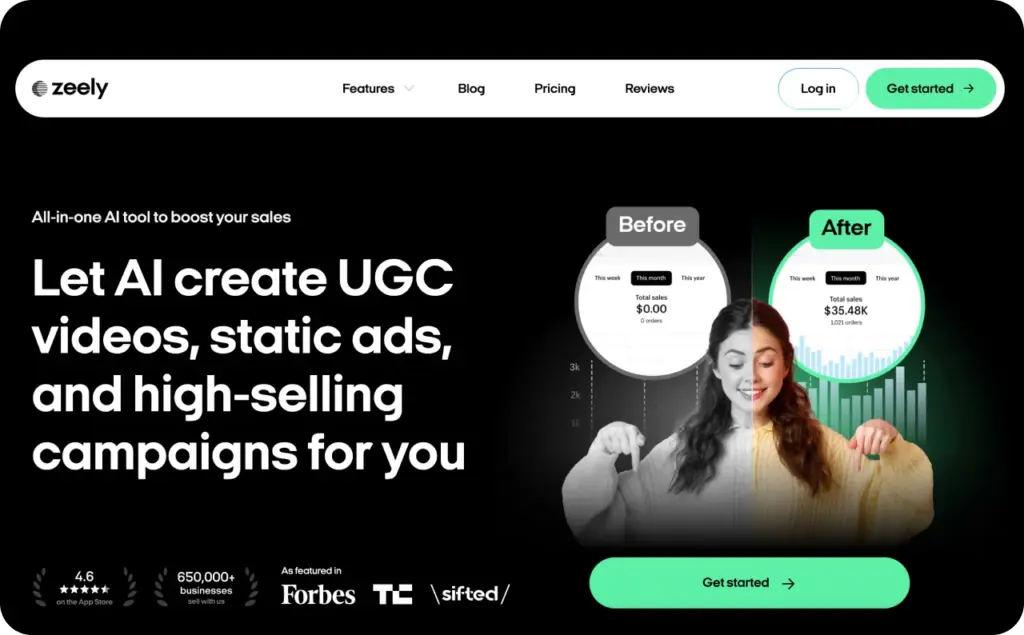
Zeely is not a native A/B testing platform, and that distinction matters. It does not replace tools like Motion, Northbeam, or Triple Whale for advanced creative analytics. Instead, Zeely helps small business owners create ad-ready assets, launch campaigns, and learn from basic performance signals without needing a designer, editor, or media buyer.
In Zeely’s own pre-launch guidance, we recommend launching at least three ads instead of putting the whole budget behind one creative. The logic is simple: Meta can compare those ads in delivery and send more budget toward the one that performs better. We also recommend keeping the creatives focused on the same product so the comparison is fair. Reqs also about best AI ad generators for small business.
Best for: small business owners who need to create several testable ads quickly, launch them through a guided workflow, and compare basic campaign results after delivery.
Not best for: teams that need controlled split-test setup, statistical confidence, creative-level attribution, automated winner detection, or deep creative tagging.
Price check: Zeely plans start from the lower SMB-friendly monthly tier shown on its pricing page.
Best-for verdict: Choose Zeely when you need AI-assisted ad production and a simple way to start learning from campaign performance. Do not choose Zeely if your main requirement is native A/B testing software or advanced creative analytics.
2. Motion — best for creative teams that already spend enough to need pattern analysis
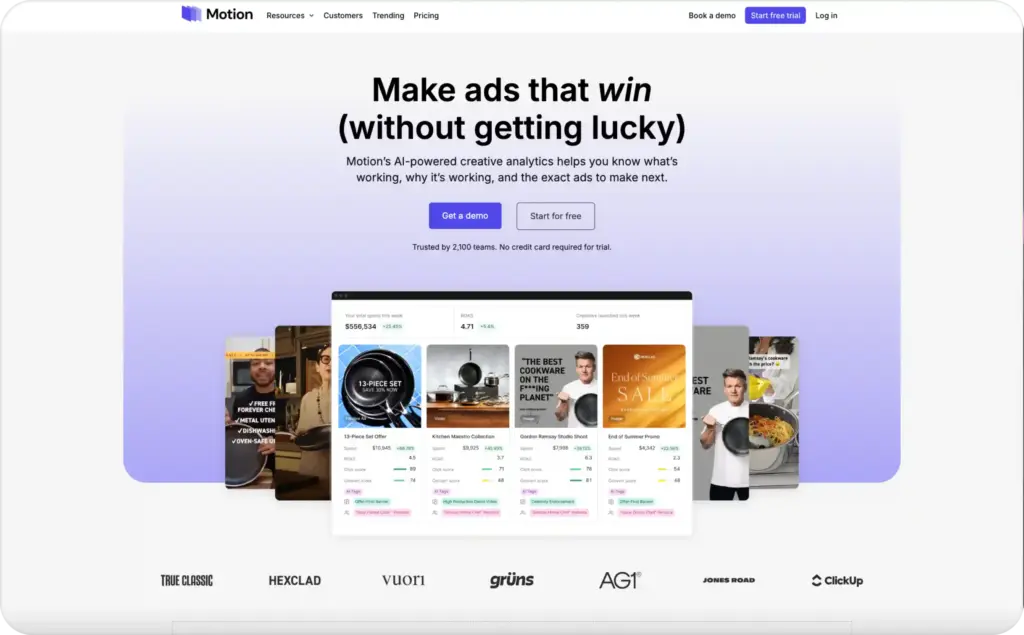
Motion is a strong ad performance prediction AI and creative analytics platform for teams running paid social at scale. It auto-analyzes creative across messaging, visuals, hooks, and audience targeting, then uses AI tagging to surface patterns across reports and dashboards.
Best for: performance marketers, creative strategists, DTC teams, and agencies that already launch enough ads to need structured analysis.
Price check: Motion’s Starter plan is listed at $250/month for smaller brands spending up to $50k/month on ads. Pro and Growth are sales-led for higher spend tiers.
Motion is not the cheapest option for a tiny business, but it becomes valuable when your problem is not “I need more ads.” Your problem is “We have too many ads and nobody knows what is working.”
Verdict: Choose Motion when your ad account has enough volume for creative pattern mining.
3. Marpipe — best for catalog ad testing
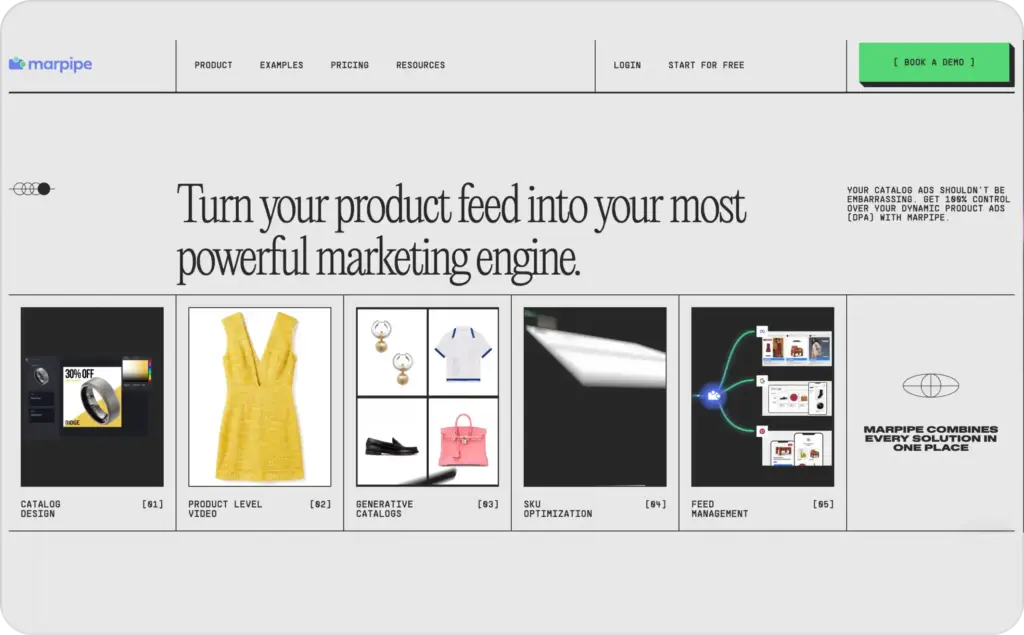
Marpipe is more specialized than most tools in this list. It focuses on catalog creative, product feeds, enriched catalog ads, and Dynamic Product Ads. Its pricing page highlights a free Feed Management plan and a flat monthly-fee model without charging by ad spend, revenue, or usage.
Best for: ecommerce stores with product catalogs, especially brands running dynamic product ads across Meta, TikTok, Pinterest, Snap, or Google.
Price check: Marpipe shows a free Feed Management option publicly, while higher-tier pricing is less straightforward from the parsed public page. It states it uses one flat monthly fee rather than a percent of ad spend or revenue.
Marpipe also publishes an enriched catalog examples library with before/after catalog creative examples across categories like apparel, accessories, furniture, retail, health/beauty, and travel/event.
Verdict: Choose Marpipe if your biggest ROAS leak is plain catalog ads, not general creative strategy.
4. Northbeam — best for attribution-heavy creative analytics
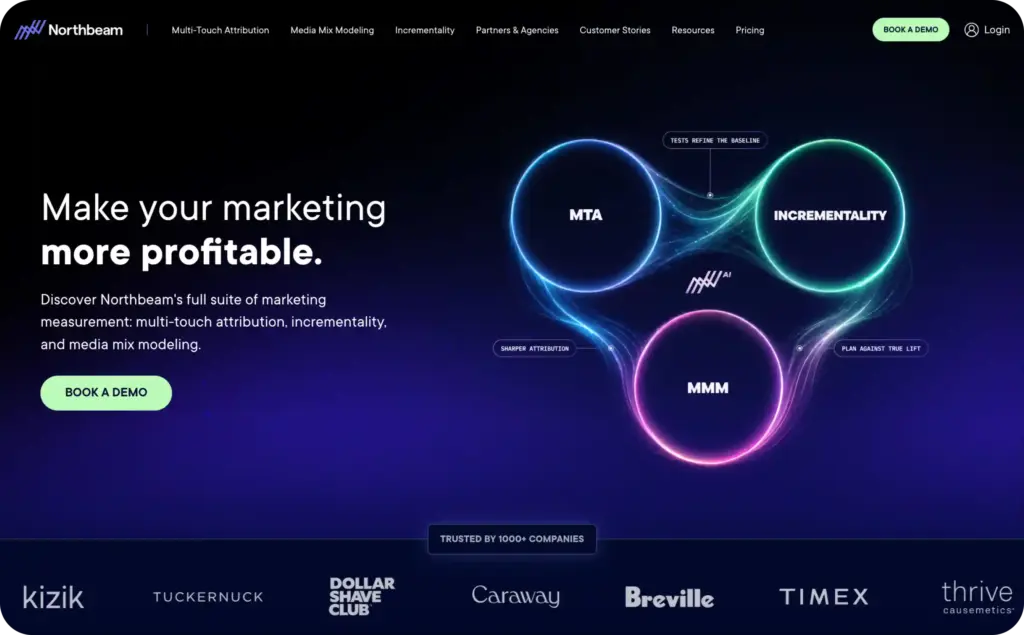
Northbeam is a serious measurement platform. Its Creative Analytics docs describe a cross-platform view of ad creative performance, with metrics such as CTR, CPM, ecommerce conversion rate, CAC, and ROAS. It also notes an important limitation: for dynamic creative and feed-based campaigns, the exact preview may not always be available, but performance data remains available.
Best for: DTC brands with meaningful spend, complex attribution needs, and teams that want creative performance tied to first-party measurement.
Price check: Northbeam lists Starter at $1,500/month for brands under $1.5M/year in media spend. Enterprise is custom for brands above $500k/month in media spend.
Verdict: Choose Northbeam when attribution accuracy matters more than simple creative ranking.
5. Triple Whale — best for ecommerce operators who want creative inside business reporting
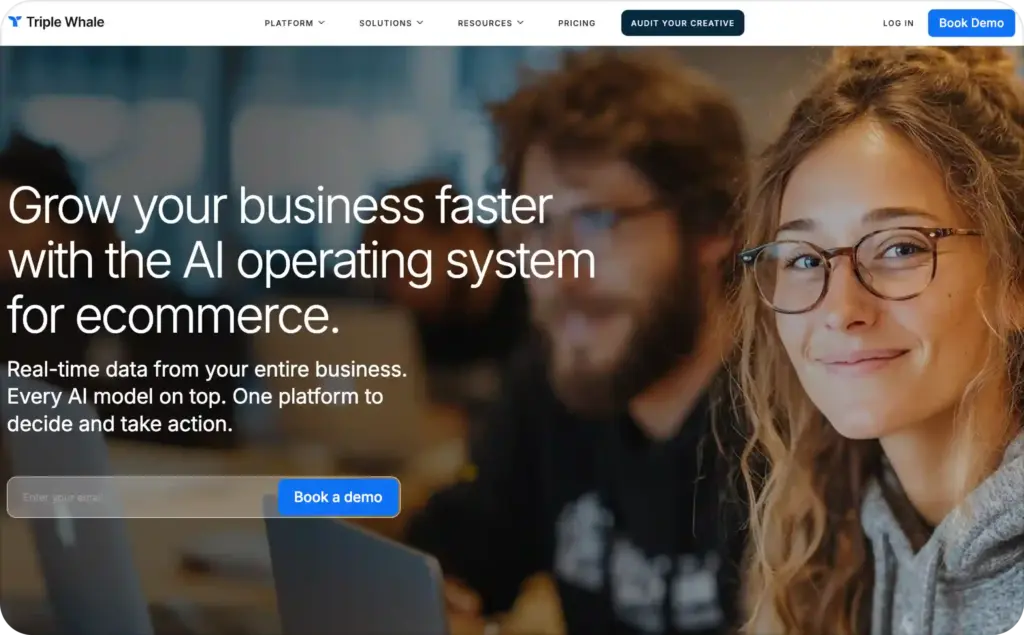
Triple Whale is not only a creative testing tool. It is broader ecommerce intelligence software with dashboards, attribution, post-purchase surveys, benchmarks, and its Moby AI operator. Its pricing page shows a Free plan, Foundation at $219/month, and Automate at $749/month in the visible public page state, with pricing also tied to GMV and package selection.
Best for: Shopify and ecommerce brands that want one place to understand blended ROAS, channel performance, customer behavior, and creative impact.
Price check: Free is available. Foundation appears from $219/month and Automate from $749/month in the public pricing page, though Triple Whale also says prices depend on annual GMV and package.
Triple Whale is especially useful when founders ask, “Is the ad actually growing the business, or just making Ads Manager look nice?”
Verdict: Choose Triple Whale when creative testing must connect to the full ecommerce picture.
6. Varos — best for benchmark context, not full creative testing
Varos is different. It is mainly about benchmarking performance against similar companies. G2 describes Varos as a platform that helps DTC brands anonymously benchmark CAC and other marketing KPIs against similar companies in real time.
Best for: founders who keep asking, “Is this ROAS drop my fault, or is everyone seeing the same thing?”
Price check: Current public pricing is harder to verify from the official Varos site than the other tools. Third-party listings mention free trials or plans around $99/month, but I would treat that as unverified until checked directly with Varos.
Verdict: Choose Varos for market context, not as your main creative testing engine.
The hidden problems small business owners should know
The first hidden problem is that Meta may not spend evenly across your new creatives. In one Reddit thread, an advertiser worried that new creatives inside a CBO campaign were not getting a fair shot because spend kept going to ads already getting leads.
That means a “losing” ad may simply be under-tested. For small budgets, test fewer ideas at once. Zeely’s own creative testing guidance recommends two to three hook variants rather than seven, keeping the rest of the ad nearly identical so the signal is easier to read.
The second hidden problem is false confidence. One Reddit user asked how many creatives to run per ad set, and answers ranged from three creatives to five or ten depending on budget and campaign type. The secret is not the perfect number. The secret is matching the number of variants to your budget.
The third hidden problem is AI control. A recent Business Insider report described REI apologizing after a Meta AI tool altered an Instagram ad image in a strange way, with REI saying it had been auto-enrolled in an AI personalization feature. For small brands, the lesson is simple: never let AI changes go live without human review.
How to choose the right tool
Choose Zeely if you want the simplest path from creative idea to campaign learning. Choose Motion if you already run enough paid social to need pattern analytics. Choose Marpipe if catalog ads drive your sales. Choose Northbeam if attribution is the problem. Choose Triple Whale if creative performance must sit inside broader ecommerce reporting. Choose Varos if you need peer benchmarks before blaming your ads.
For external testing basics, Google’s Ads Experiments page explains how experiments can run side by side with an original campaign, while TikTok’s official split testing guide explains testing two ad versions to identify the better performer. Reddit’s own creative best practices also analyzed more than 100,000 ads and found that adopting just three recommended headline features can improve conversion rate by up to 12%.
Final verdict: the best AI ad creative testing tools by use case
For most small businesses, the best AI ad creative testing tools are not the most advanced. They are the tools that help you create enough testable variations, launch safely, read performance clearly, and avoid emotional budget decisions.
Zeely is the strongest fit for small businesses that want faster AI A/B testing ads without hiring a strategist, designer, editor, and analyst. Motion is the better pick for creative teams with heavy paid social volume. Marpipe wins for catalog testing. Northbeam and Triple Whale are better for brands that need attribution and business intelligence around creative performance. Varos is useful when you need to know whether your numbers are bad or just normal for the market this week.
The secret sauce is not testing more ads. It is testing the right number of ads, reading the right metric, and making the next creative decision before your budget teaches the lesson the expensive way.

Emma blends product marketing and content to turn complex tools into simple, sales-driven playbooks for AI ad creatives and Facebook/Instagram campaigns. You’ll get checklists, bite-size guides, and real results, pulled from thousands of Zeely entrepreneurs, so you can run AI-powered ads confidently, even as a beginner.
Written by: Emma, AI Growth Adviser, Zeely
Reviewed on: July 20, 2026