The key difference between native ads and display ads
Which format earns its budget back, native or display? Emma from Zeely AI compares both across six factors, from what gets seen to what gets ignored, with 2026 numbers behind each call.
Key takeaways
- Native ads borrow the look of whatever page they sit on, and that alone explains most of the engagement gap
- Display ads announce themselves as ads. That works in your favor for retargeting and for reach campaigns where you mostly need eyeballs
- Native is usually bought on CPM and gets clicked more often, so the same budget tends to buy a cheaper action
- If you want to test twelve creative variations this week, display is the only one of the two that will let you
- There’s no default winner. It comes down to the funnel stage, how much convincing your buyer needs, and what you’re asking them to do after the click
- The accounts I’ve seen perform best run both. Native warms people up, display retargeting brings them back
Most native ads vs display ads comparisons end on “it depends” and leave you where you started. I’ll put the 2026 numbers in front of you first: where the spend is going, what actually gets seen, and how people react to each format.
Then we’ll run them through the six factors that actually settle the choice, from engagement and cost through to retargeting and funnel stage. You should leave knowing which format your next campaign needs and what it will cost you, not carrying around someone else’s blended average.

Difference between native ads vs display ads
| Factor | Native ads | Display ads |
| Appearance | Blends with surrounding content | Stands out as a separate ad unit |
| Engagement | Higher attention per impression | Lower, and the eye skips ad-shaped slots |
| Typical CPM | $5 to $12 planning range | $3 to $8 planning range |
| Cost efficiency | Lower CPA due to higher engagement | Wider CPC range; cheap impressions possible |
| Trust and perception | Higher, because sponsored content draws less negative reaction | Low, because interruption is the format’s whole mechanic |
| Best funnel stage | Awareness and consideration | Retargeting and broad reach |
| Format flexibility | In-feed, sponsored content, recommendation widgets | Banners, interstitials, video, rich media, pop-ups |
| Ad-blocking impact | Less affected, blends with page structure | More affected. Standard units get blocked |
| Retargeting strength | Possible but less common | Strong. Purpose-built for follow-up |
| Creative testing | Limited by platform design constraints | High. A/B test visuals, copy, CTAs, and formats freely |
| Best platforms | Taboola, Outbrain, Meta, LinkedIn, publisher direct | Google Display Network, programmatic DSPs, Meta |
1. Engagement: native earns more attention per impression
Two 2026 numbers frame this better than any click-through comparison:
- Budgets have already voted. US native display spending reaches $147.98 billion in 2026, up 13.1% year over year, and higher engagement rates are one of the reasons cited for the shift
- Plenty of display impressions never get the chance to engage anyone. Integral Ad Science measured global display viewability at 67.9% in 2026, with mobile web display weakest of all at 64.5%. Roughly a third of what you buy is never seen
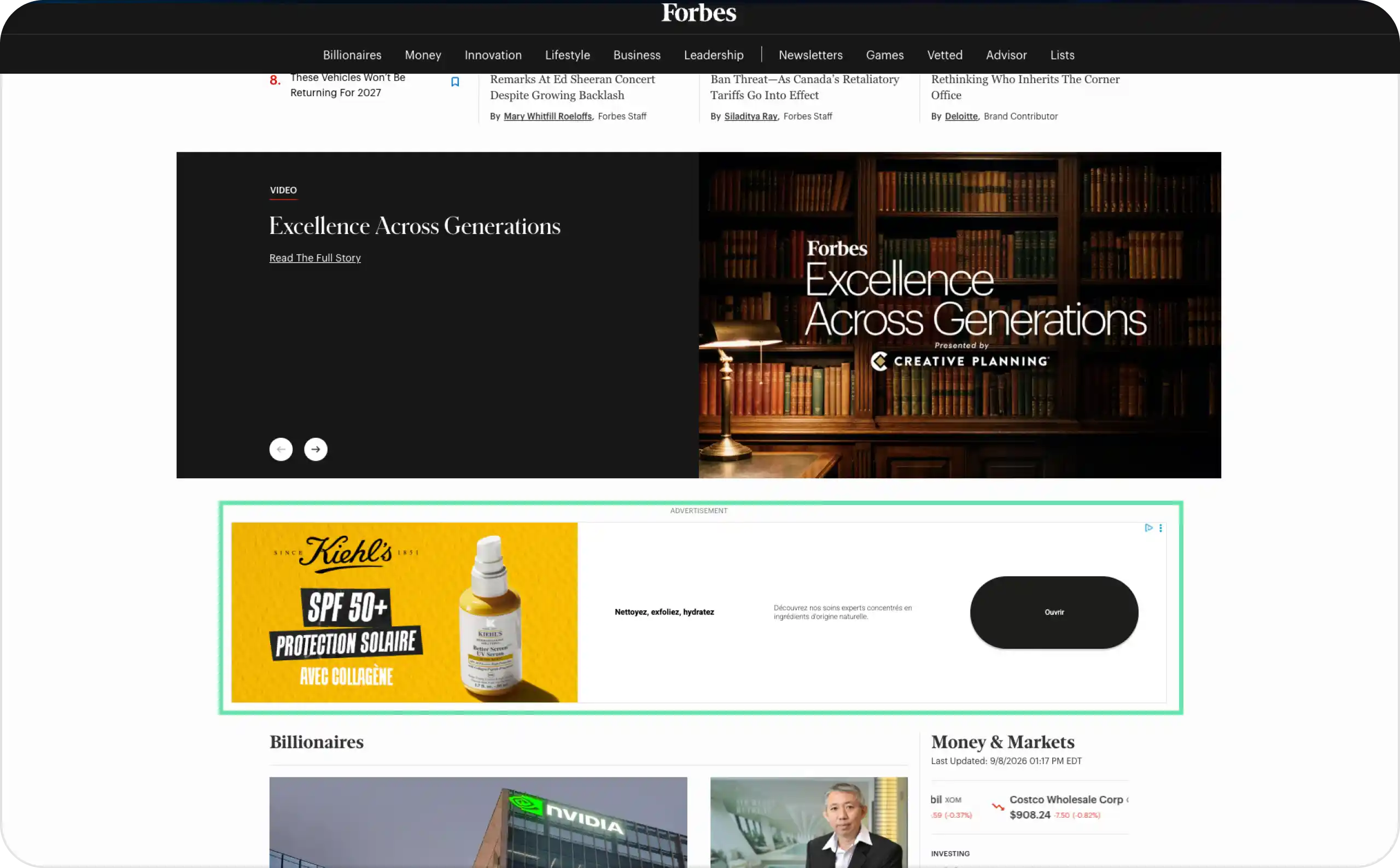
The reason isn’t complicated. On a news site, a native unit reads like the next headline in the list, so people process it before they’ve decided whether to care. A banner sits in a slot the eye has been trained to skip past, a habit the industry has called banner blindness for two decades and has never managed to solve.
None of which makes display impressions worthless. A banner someone never clicked can still be the reason your brand name feels familiar three weeks later when they finally go looking. One format buys attention now. The other leaves a trace that shows up later in someone’s search bar. Which of those you need depends entirely on what the campaign is supposed to do.
2. Cost: native often lowers CPA, display offers cheaper reach
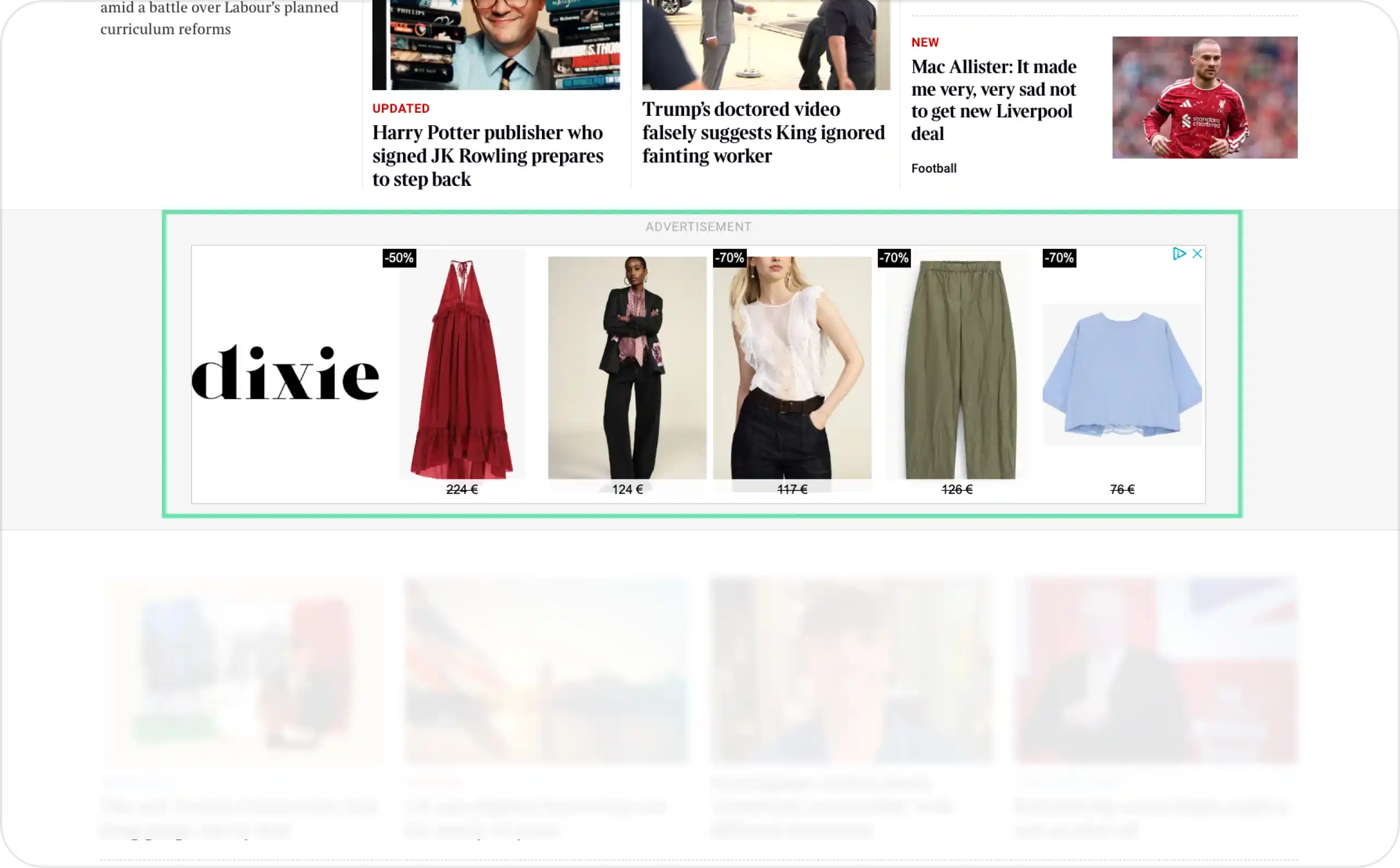
On raw CPM, display usually wins. Native placements tend to sit in a $5 to $12 range while standard display runs closer to $3 to $8, though treat both as directional planning ranges rather than rate cards. What you pay depends on format, publisher quality, targeting, and buying route, and the spread between cheap open-exchange inventory and curated, brand-safe inventory keeps widening.
StackAdapt lays out the math on why the premium can still pay: native is usually purchased on a CPM basis, so more clicks per thousand impressions means a lower cost per click. If your conversion rate holds, cost per action follows it down.
| Metric | Native ads | Display ads |
| Typical CPM | $5 to $12 | $3 to $8 |
| Effective CPC | Lower, driven by higher CTR | Wider spread, cheap impressions possible |
| CPA direction | Generally lower | Varies widely |
Where advertisers get burned is buying on CPM alone. A $3 CPM is worth nothing if nobody clicks, and a $12 CPM with triple the click rate can bring in cheaper customers than either number suggests. It gets worse when the cheap impression was never viewable in the first place, which is most of what separates a bargain from waste on the open exchange. Same advice I give on Instagram budgets: work out your break-even CPA before you look at a rate card, then check which format can actually hit it.
3. Trust: native reduces friction, display needs stronger creative
Someone reading a sponsored article on a publisher site is usually a paragraph in before the “Sponsored” label registers. That head start is worth a lot, and it shows up in how people react afterward. Gartner’s 2026 consumer research found that sponsored ads and content draw less negative reaction than advertising that intrudes on content, while pop-ups and unskippable units are the ones that turn people against the brand being advertised.
Display is honest about what it is, which counts for something, but the interruption still costs you. The same Gartner work found 81% of consumers now actively try to tune out advertising. On a phone, where an interstitial eats the whole screen, that resistance gets sharper.
Ad blockers put a number on it. Around 29.5% of internet users run blocking software, roughly 1.77 billion people, and the reasons they give are the format’s own report card: too many ads, ads getting in the way, and privacy. Standard display units get caught more often than native placements built into the page structure.
Neither format gets trust for free, though. A native ad with a bait headline burns credibility faster than any banner could, and a display retargeting ad showing the exact bag someone abandoned last night can be genuinely useful. Native starts you closer to the reader. With display you have to earn that distance back through sharper creative and better targeting.
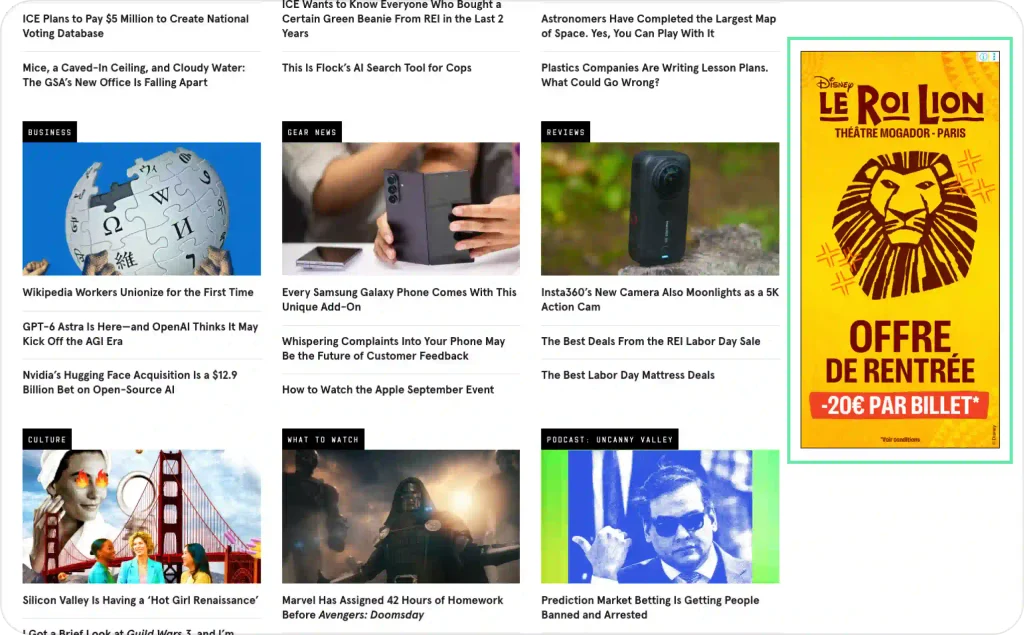
4. Creative flexibility: display gives you more visual control
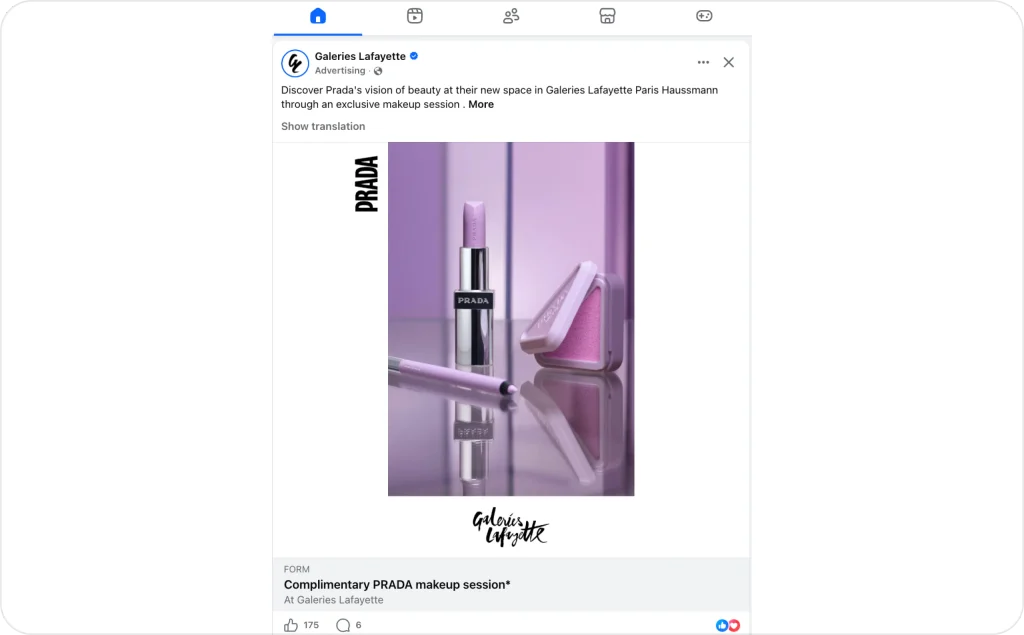
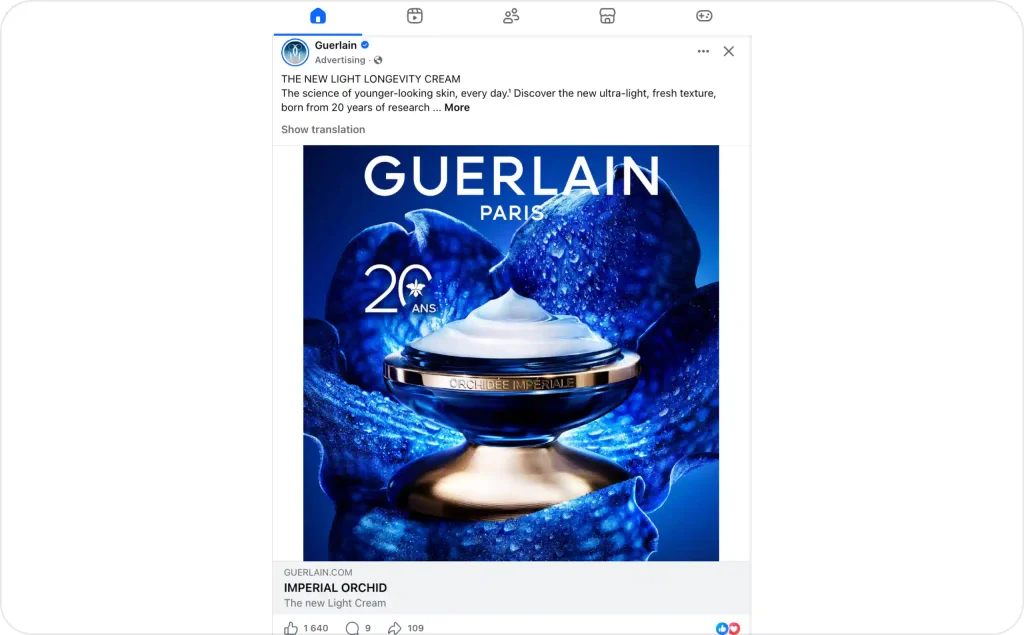
With native, the publisher owns the layout. You write the headline, pick the image, supply the description, and the platform decides how all of it looks. That restriction is the whole point, since it’s what lets the ad blend in, but it also caps how much you can test. Your options are roughly:
- In-feed ads in social and news feeds
- Sponsored long-form editorial
- Content recommendation widgets through networks like Taboola and Outbrain
Display hands you the whole canvas instead. Dimensions, colors, animation, interactivity, where it sits on the page, all of it yours. You can run:
- Standard banners
- Full-screen interstitials
- Rich media
- Responsive units auto-sized by Google
- Interactive formats with embedded video
Amazon Advertising notes that display lets brands test copy, visuals, and calls to action in real time. DCO (dynamic creative optimization) tools take that further and swap those elements automatically across audience segments.
Our display ad examples guide breaks down brand banners and the thinking behind each one. The native ad examples roundup covers campaigns across platforms.
My rule of thumb: display when I need to move fast and test a lot, native when the message only works if it feels like it belongs on the page.
5. Retargeting: display was built for follow-up
Retargeting is where display makes up for its weak click numbers. Someone lands on your site, looks at a product, leaves without buying. A display retargeting ad then follows them around with creative built for that exact moment, whether that’s the product image, a discount, or a cart-abandonment nudge, served across millions of placements on the Google Display Network and programmatic exchanges.
Native can retarget too, but the format fights you. There’s no way to drop a dynamic product image into a recommendation widget the way you can into a responsive display unit.
StackAdapt outlines a workflow that uses both:
- Target a user with a native ad
- Drive them to content: a blog post, product guide, or quiz
- Retarget the same user with a display ad driving them to a landing page or checkout
One caution before you lean on it too hard. Gartner expects that by 2027, reliance on retargeted ads will become a primary driver of negative brand perception among Gen Z, pushing brands toward opt-in and embedded formats. Frequency caps stop being a nice-to-have if that’s your audience.
Think of native as the introduction and display as the follow-up call. If you need retargeting creative to model, our targeted display advertising guide has different brand examples.
6. Funnel placement: match the format to the buying stage
Where your buyer sits in the decision should decide the format for you.
| Funnel stage | Best format | Why |
| Awareness | Native | Educates without disrupting; builds initial trust |
| Consideration | Native + Content | Sponsored articles, guides, and comparisons deepen understanding |
| Decision | Display | Retargeting with specific offers converts warm prospects |
| Retention | Both | Native for brand storytelling; display for cross-sell and loyalty |
That bottom row is getting more attention than it used to. IAB’s 2026 Outlook Study found that 25% of buyers now name driving repeat purchases as a top focus, nearly double the 13% who said so in 2024, as acquisition costs rise and first-party data becomes the thing worth building on.
Take a D2C skincare brand. It runs a sponsored article on what its active ingredients actually do. Readers get curious, poke around the site, and leave without buying, which is normal. A week later a display ad shows up with a time-limited discount on the serum they were reading about, and that’s the purchase.
Match your metrics to the stage while you’re at it. CPM and content engagement tell you whether the native awareness layer is doing its job. CPC and CPA tell you whether the display retargeting is paying for itself. Compare them across stages and you’ll just confuse yourself.
Where third-party cookies actually stand in 2026
The cookieless future everyone planned for did not arrive on schedule. Google cancelled its Chrome deprecation plan and later retired most of the Privacy Sandbox APIs built to replace cookies. Chrome still carries third-party cookies in 2026. The erosion is gradual now instead of scheduled.
That does not put display back where it was. Safari, Firefox, and Brave block third-party cookies outright, ad blockers cover close to a third of internet users on top of that, and buyers have stopped waiting for a deadline. First-party data ecosystems are maturing precisely because cross-site targeting keeps getting less reliable regardless of what Chrome does.
Native leaned on context from the beginning. It matches the ad to the article rather than to the visitor’s browsing history, and a running shoe ad inside a marathon-training piece doesn’t need a tracking pixel to make sense. That makes native the sturdier bet, though I wouldn’t call either side safe.
Testing one thing at a time is easy to say and hard to staff
The advice above assumes you can produce ten near-identical versions of an ad. Most teams can’t, so they test two, change everything between them, and learn nothing.
Zeely AI ad generator is built around that exact gap. Paste a product link from Shopify, Etsy, Amazon, Instagram, or your own site and it pulls the title, description, and images, then works out the niche, the audience, and a suggested CTA on its own. From there you generate up to five variations of a single idea and pick what changes between them: text, visuals, audience, style, or composition. Text is the default, because it is the test worth running most weeks.

The rest sits in the same place. Over 2,000 references when you want a proven starting point, Brand DNA and logo controls so five variations still look like one brand, and static, video, talking-head, and UGC formats for the feed placements native ads live in. When you have a set worth running, you can launch a Meta campaign without leaving Zeely.
FAQ
For most advertisers, yes on engagement. Native earns more attention per impression and better viewability, and spending patterns follow that. Display isn’t competing for clicks in the first place. Its job is remarketing and broad campaigns where being seen matters more than being clicked.
Native inventory costs more per thousand impressions, generally $5 to $12 CPM against roughly $3 to $8 for standard display. What you get back is a higher share of people actually interacting, which improves CPC and often CPA. Treat both ranges as planning figures and check them against your own account data, since format, publisher quality, and buying route move them more than any benchmark does.
Yes, and the pair usually beats either one on its own. Introduce the brand through native content, then retarget the people who engaged with a display ad carrying a specific offer. Watch your frequency if you sell to a young audience, since Gartner expects retargeting to become a major source of negative brand perception among Gen Z by 2027.
They get through more often, because they load as part of the page rather than from the ad-serving domains blockers watch. That matters more each year, with more than half of consumers across 48 markets having installed or used a blocker at some point. Not immune, just harder to catch than a standard banner.
Native is better at getting a reaction. Display is better at staying in front of someone until they’re ready. Mobile web display is also the weakest environment for viewability that IAS measures, so banners there need to work harder for the same result. The strongest mobile campaigns use both, with native making the introduction and display doing the reminding. Let your own performance data decide the split.

Emma blends product marketing and content to turn complex tools into simple, sales-driven playbooks for AI ad creatives and Facebook/Instagram campaigns. You’ll get checklists, bite-size guides, and real results, pulled from thousands of Zeely entrepreneurs, so you can run AI-powered ads confidently, even as a beginner.
Written by: Emma, AI Growth Adviser, Zeely
Reviewed on: September 8, 2026