How much should I spend on Facebook Ads?
Wondering whether your Facebook ad budget should be $10 a day, $30 a day, or $1,000 a month in 2026? I’m Emma from Zeely, and I built this guide to help small businesses plan Facebook ad spend with clear formulas, testing rules, and AI campaign support.
I get this question all the time: how much should I spend on Facebook ads without wasting money? The honest answer is that there is no perfect number for every business, but there is a smart way to start.
If you are just starting, I would not overcomplicate your first campaign. A practical 2026 starting point is:
| Business stage | Daily budget | Monthly budget | Best for |
| Careful test | $10/day | About $300/month | First campaign, small local offer, low-risk testing |
| Better learning | $20–$30/day | $600–$900/month | Small business lead gen, simple ecommerce tests |
| Stronger data | $50/day | About $1,500/month | Faster testing, more creative variations, stronger signal |
| Scaling | $100+/day | $3,000+/month | Campaigns with proven CPA, CPL, or ROAS |
So, if you are asking how much to spend on fb ads, my answer is this: start with the smallest budget that can produce real learning, not just impressions. For many small businesses, that means at least $10 per day. For faster answers, $20–$50 per day is usually more useful.
The reason I don’t like guessing too low is that Meta’s ad auction is active and competitive. Meta reported that ad impressions across its Family of Apps increased 19% year over year in Q1 2026, while the average price per ad increased 12% year over year, which means advertisers are buying into a growing but more expensive environment.

How much should I spend on Facebook ads per day?
A good daily budget for Facebook ads is usually $10–$50 per day for a small business. I would use $10/day only when the goal is simple testing. I would use $20–$50/day when you need enough clicks, leads, or sales data to make a decision within a week or two.
How much should I spend on Facebook ads per month?
A good monthly budget usually starts around $300/month and becomes more useful around $600–$1,500/month. If your target customer is expensive to acquire, or your product costs more, your monthly budget may need to be higher before the data becomes reliable.
How to calculate your Facebook Ads budget
The best Facebook ad budget does not start with what another business spends. It starts with what you want the ads to produce.
Before you open Ads Manager or launch a campaign, answer three questions:
- What result do I want?
- How much is that result worth?
- How many results do I need before I can judge performance?
That is the difference between spending and investing. Spending is “I’ll try $100 and see what happens.” Investing is “I need 30 leads, I can afford $12 per lead, so my test budget is $360.”
EMARKETER forecasts that Meta’s family of apps will produce $100.86 billion in U.S. net digital ad revenues in 2026, putting Meta ahead of Google on a net basis for the first time. That tells me small businesses are competing in a serious paid media channel, not a cheap experiment.
Start with the result you want
Your budget changes depending on your campaign goal.
If you want traffic, you are paying for visits and attention. If you want leads, you are paying for contact details, bookings, calls, or quote requests. If you want sales, you are paying for the hardest action: someone trusting you enough to buy.
That is why how much should I spend on fb ads has different answers for different businesses. A local nail salon might only need enough budget to bring in booking inquiries. A skincare ecommerce brand might need more budget because it has to test creative, product positioning, landing pages, and retargeting before sales become stable.
Estimate your cost per result
If you have past campaign data, use it. Your own numbers beat every benchmark.
If you do not have past data, start with an estimate. For example:
| Goal | Estimated cost per result | Target volume | Starting budget |
| Website visits | $0.50–$2 per click | 300 visits | $150–$600 |
| Leads | $5–$25 per lead | 50 leads | $250–$1,250 |
| Purchases | $15–$60 per sale | 20 sales | $300–$1,200 |
These are planning ranges, not promises. Your actual costs depend on your offer, audience, creative, location, season, landing page, and sales process.
Connect budget to profit margin
This is where many beginners make a mistake. They ask, how much should I spend on Facebook ads, but they do not ask how much they can afford to pay for a customer.
If you sell a $40 product with a $15 gross profit, you cannot afford a $30 purchase cost unless you have repeat purchases. If you sell a $500 service with a $300 margin, a $40 lead may be completely reasonable if your close rate is strong.
My rule is simple: never judge a Facebook ad spend number alone. Judge it against profit.
Facebook Ads budget formula
Here is the simple formula I use when I want to turn a goal into a budget:
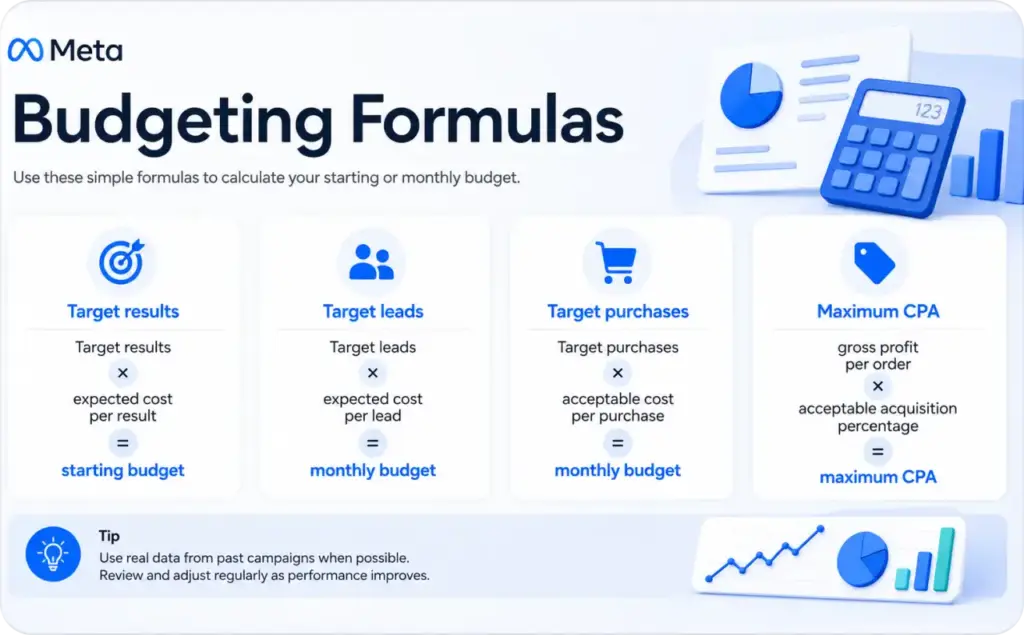
Target results × expected cost per result = starting budget
That’s it. Not glamorous, but very helpful.
Lead generation formula
If your goal is leads, use this:
Target leads × expected cost per lead = monthly budget
Example:
You want 100 leads this month. You estimate a $10 cost per lead.
100 leads × $10 CPL = $1,000 monthly budget
That means your daily budget should be around:
$1,000 ÷ 30 days = $33/day
So in this case, if you ask how much should I spend on Facebook ads per day, the answer is not random. It is about $33/day because that matches your lead target.
Sales formula
If your goal is purchases, use this:
Target purchases × acceptable cost per purchase = monthly budget
Example:
You want 30 sales this month. You can afford to pay $25 to get one sale.
30 sales × $25 CPA = $750 monthly budget
Your daily budget would be:
$750 ÷ 30 days = $25/day
If your product is new and your website has no conversion history, I would treat that first $750 as a learning budget, not guaranteed sales money.
Profit-first formula
This is the formula I prefer for small businesses:
Maximum CPA = gross profit per order × acceptable acquisition percentage
Example:
Your product sells for $100. Your cost of goods, shipping, and payment fees total $45. Your gross profit is $55. You are willing to spend up to 50% of gross profit to acquire a customer.
$55 × 50% = $27.50 max CPA
Now your budget has boundaries. If Meta brings you purchases under $27.50, you can keep testing or scale. If purchases cost $50, you need to fix the offer, creative, landing page, or audience before increasing spend.
Here is a quick recap of formulas that you can save:
Example budgets by goal
Your Facebook ad budget should match your campaign goal. A traffic campaign does not need the same spend as an ecommerce sales campaign. A retargeting campaign should not usually get the same budget as a cold prospecting campaign.
Triple Whale’s updated 2026 Meta ads benchmark report analyzed nearly 35,000 brands across 2025 performance data, covering metrics like CPA, CPM, CTR, CVR, AOV, ROAS, and spend. I like using this kind of benchmark as context, but not as a rulebook, because your own margins and conversion rate matter more than an average.
Traffic campaign budget
If your goal is traffic, you can start lower because you are optimizing for visits, not direct sales.
A useful traffic test might look like this:
| Daily budget | Monthly budget | What to measure |
| $10/day | $300/month | CTR, CPC, landing page engagement |
| $20/day | $600/month | Winning creatives, audience response |
| $50/day | $1,500/month | Faster creative and landing page data |
Traffic campaigns are best when you want to test interest in a product, blog post, collection, quiz, booking page, or landing page. But I would not call traffic successful just because clicks are cheap. Cheap clicks only matter if people stay, browse, sign up, message you, or buy later.
Lead campaign budget
For lead generation, I would usually start with enough budget to get at least 20–50 leads before making major judgments.
If you estimate $10 per lead, then:
| Lead goal | Estimated CPL | Budget |
| 20 leads | $10 | $200 |
| 50 leads | $10 | $500 |
| 100 leads | $10 | $1,000 |
Lead ads can work well for service businesses, local businesses, coaches, consultants, beauty providers, home services, fitness studios, and B2B offers. The biggest mistake is optimizing only for lead volume. A $4 lead is not good if no one answers the phone. A $25 lead can be excellent if it becomes a $1,000 customer.
Sales campaign budget
Sales campaigns need more patience. Meta has to find people who are likely to buy, and your website has to convert them.
For ecommerce, I would usually start with at least enough budget to test:
- 3–5 creatives
- 1–2 core offers
- 1 primary audience
- 1 retargeting group if you already have traffic
A small sales test might be $20–$50/day. A stronger test might be $100/day or more, especially if the product has a higher CPA.
Retargeting budget
Retargeting usually needs less money than prospecting because the audience is smaller and warmer.
A simple split:
| Total monthly budget | Retargeting budget |
| $300 | $30–$60 |
| $1,000 | $100–$250 |
| $3,000 | $300–$750 |
If your website traffic is tiny, do not force a big retargeting budget. Meta cannot spend efficiently if the audience is too small. Build cold traffic first, then retarget people who visited, watched, clicked, added to cart, or started checkout.
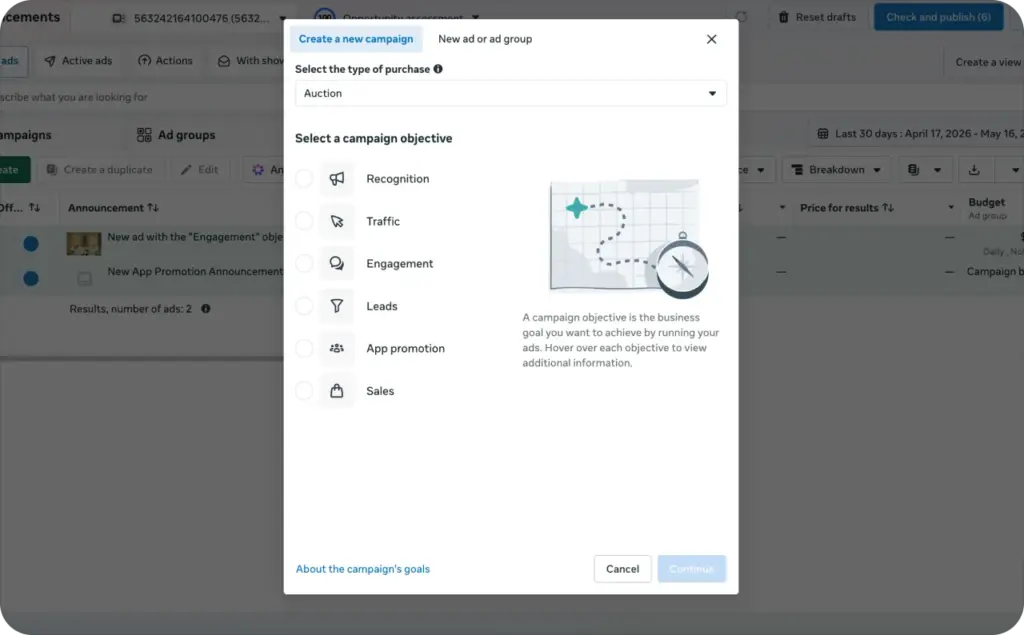
Daily vs monthly Facebook Ad budget
When people ask what is a good daily budget for Facebook ads, they usually want control. When they ask how much should i spend on Facebook ads per month, they usually want planning.
You need both.
Your daily budget controls how fast Meta spends. Your monthly budget controls whether the campaign makes sense for your cash flow.
What is a good daily budget for Facebook ads?
A good daily budget is the amount that gives your campaign enough room to collect useful data.
Here is how I think about it:
| Daily budget | My take |
| $5/day | Too slow for most businesses |
| $10/day | Good minimum test |
| $20–$30/day | Better small business starting point |
| $50/day | Stronger learning and creative testing |
| $100+/day | Scaling or higher-CPA offers |
If you only have $5/day, I would rather you improve your offer, creative, website, or organic content first, then launch with a clearer test. Very tiny budgets can work, but they often take so long to produce results that you cannot make confident decisions.
What is a good monthly budget for Facebook ads?
A monthly budget helps you stay calm. Ads can have good days and bad days, so judging everything daily can make you overreact.
Here is a simple monthly planning view:
| Monthly budget | What it can support |
| $300 | One small test campaign |
| $600 | Better daily testing and simple lead gen |
| $900 | More reliable small business testing |
| $1,500 | Multiple creatives and stronger optimization |
| $3,000+ | Scaling, retargeting, and ongoing creative testing |
If you are starting from zero, I like $600–$1,500/month better than $100 one-off tests. A $100 test can show whether people click, but it rarely proves whether the whole funnel works.
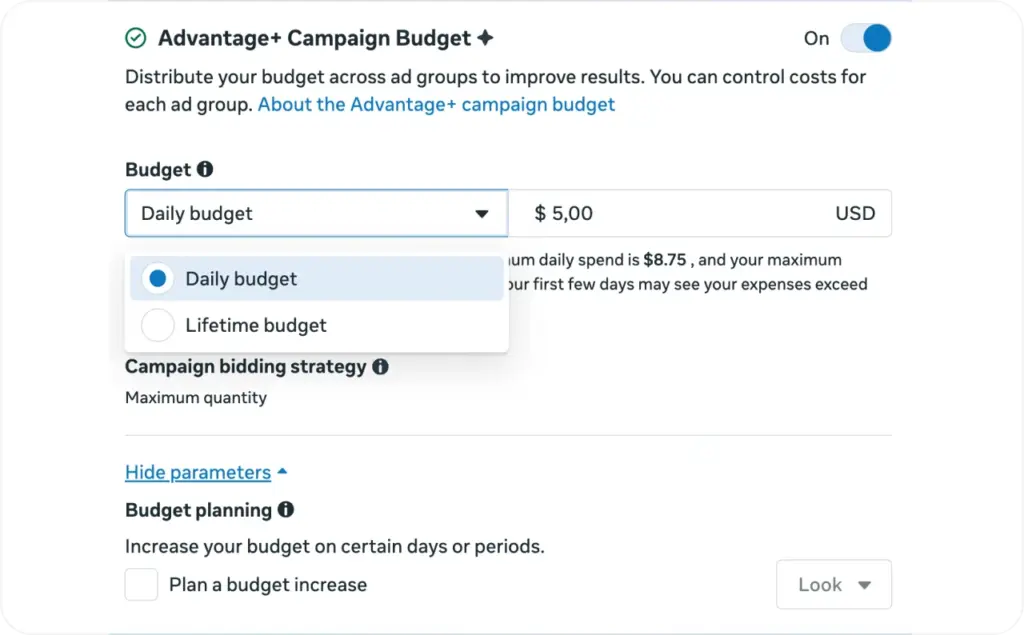
Daily budget vs lifetime budget
Use a daily budget when you want steady control. This is best for ongoing campaigns, testing, and small business budgets.
Use a lifetime budget when your campaign has a fixed end date. This is best for launches, events, holiday sales, webinars, limited offers, and seasonal promotions.
For example, if you are running a Valentine’s Day offer for seven days, a lifetime budget makes sense. If you are running evergreen ads for monthly leads, a daily budget is easier to manage. Learn more about Meta Advantage+ and how it can help you to set up the right budget.
How much to spend on Fb ads before judging results
The first few days of a campaign are not always the truth. They are the beginning of the truth.
I know it is tempting to launch an ad, check it every hour, and panic when the first clicks do not turn into sales. But early ad data is noisy. One day can be affected by audience size, time of day, creative delivery, budget pacing, or just randomness.
How long should you test Facebook ads?
For most small businesses, I like a first read after 3–7 days.
Use 3 days for directional signals like CTR, CPC, and early clicks. Use 7 days or more for leads and purchases. If your target CPA is high, you may need more time because one or two conversions are not enough to prove a pattern.
The more expensive the action, the longer the test needs to run.
How much should you spend before deciding if ads work?
A practical rule is to spend at least 2–3 times your target CPA before judging one ad or ad set.
If your target CPA is $20, do not panic after spending $8. If your target CPA is $50, a $25 test is not enough. You have not given the campaign enough room to find the right person.
For lead campaigns, I usually want at least 20 leads before making strong conclusions about quality. For sales campaigns, I want enough purchase data to see whether results repeat.
What metrics should you check first?
Look at metrics in layers.
First, check attention:
- CTR
- CPC
- Thumb-stop rate if you use video
- Comments and reactions
Then check intent:
- Landing page views
- Form starts
- Add to carts
- Messages
- Bookings
Finally, check business results:
- CPL
- CPA
- ROAS
- Close rate
- Profit per customer
Do not scale just because an ad gets cheap clicks. Scale when the clicks turn into business.
When to increase, decrease, or stop your budget
A bigger budget does not fix a broken campaign. It only makes the result happen faster.
That result can be good or bad.
When to increase Facebook ad spend
Increase your budget when the campaign is stable, not when you are impatient.
Good scaling signs include:
- CPA is at or below your target
- CPL is affordable and lead quality is acceptable
- ROAS is profitable or trending toward profit
- CTR is healthy
- Comments and feedback are relevant
- Landing page conversion rate is not weak
- Tracking looks clean
When those signs are there, increase slowly. A common safe move is increasing the budget by 15–30%, then watching results for a few days.
When to decrease Facebook ad spend
Decrease spend when costs rise and business results do not follow.
For example, if CPC goes up but leads stay flat, your creative may be losing strength. If CPL looks fine but lead quality is poor, your form or offer may be attracting the wrong people. If purchases stop after budget increases, the campaign may have moved into a less efficient part of the audience.
Do not cut budget just because one day looks bad. Look for patterns.
When to stop and rebuild
Stop the campaign when the problem is not the budget.
I would rebuild if:
- The ad has low CTR
- The offer is unclear
- The landing page is slow or confusing
- The audience is too broad or too narrow
- The campaign gets clicks but no meaningful actions
- Leads are cheap but unqualified
In that case, spending more is not scaling. It is leaking.
Common Facebook Ad budget mistakes
Most budget problems are not really budget problems. They are strategy problems wearing a budget costume.
Spending too little to learn anything
I understand why people want to start with $2 or $5 per day. Nobody wants to waste money. But the risk of a tiny budget is that you spend slowly and still do not learn enough.
If your campaign gets five clicks in a week, what can you really conclude? Not much.
A small but useful budget is better than a tiny budget that creates doubt.
Testing too many ad sets at once
Do not split $20/day across five ad sets and expect clean data. Each ad set gets too little spend, and the campaign becomes messy.
With a small budget, simplify:
- One campaign
- One main audience
- A few strong creatives
- One clear goal
Simple campaigns usually learn faster.
Scaling before the offer works
If people do not want the offer at $20/day, they probably will not want it at $200/day.
Before scaling, check the basics. Is the product clear? Is the price easy to understand? Is the landing page trustworthy? Does the ad show the benefit quickly? Does the call to action match what the customer actually wants?
Budget amplifies the offer. It does not rescue it.
Judging only clicks instead of revenue
Clicks feel good because they happen quickly. But clicks are not the final goal.
If your campaign gets cheap clicks and no leads, something is wrong. If it gets leads and no sales, something is wrong. If it gets sales but no profit, something is wrong.
The best Facebook ad budget is not the one that buys the most traffic. It is the one that buys the most useful action at a cost your business can afford.
Learn how to use AI for Meta ads and avoid those mistakes.
How Zeely AI helps you spend your Facebook Ads budget smarter
This is where I naturally bring in Zeely, because budget is only one part of the campaign. Your ad also needs a goal, creative, audience, landing experience, and performance tracking.
Zeely’s paid campaign flow helps you choose a goal, create ads, select an audience, and set budget and duration. In Zeely’s Help Center, the campaign setup explains that after choosing Traffic or Leads, Zeely suggests a recommended budget and campaign duration based on the visitor or lead goal, and notes that the minimum recommended daily budget is $10/day.
Create enough ads before you spend
One ad is rarely enough. I prefer testing a few creative options so the campaign has room to find what works.
With Zeely Fb ad creator, you can create AI-powered ad visuals even for dynamic ads and prepare different versions of your message before launching. That matters because creative is often the difference between a $2 click and a $0.50 click, or between leads that ignore you and leads that are ready to talk.
Before spending more, I would rather improve the ad.



Pick the right campaign goal
Your campaign goal should match what you actually need.
If you need people to visit a page, choose traffic. If you need contacts, inquiries, bookings, or form submissions, choose leads. Zeely also recommends choosing one clear goal before launch so results are easier to measure and Meta can optimize budget accordingly.
This is important because a vague goal creates vague results. A clear goal gives your budget a job.
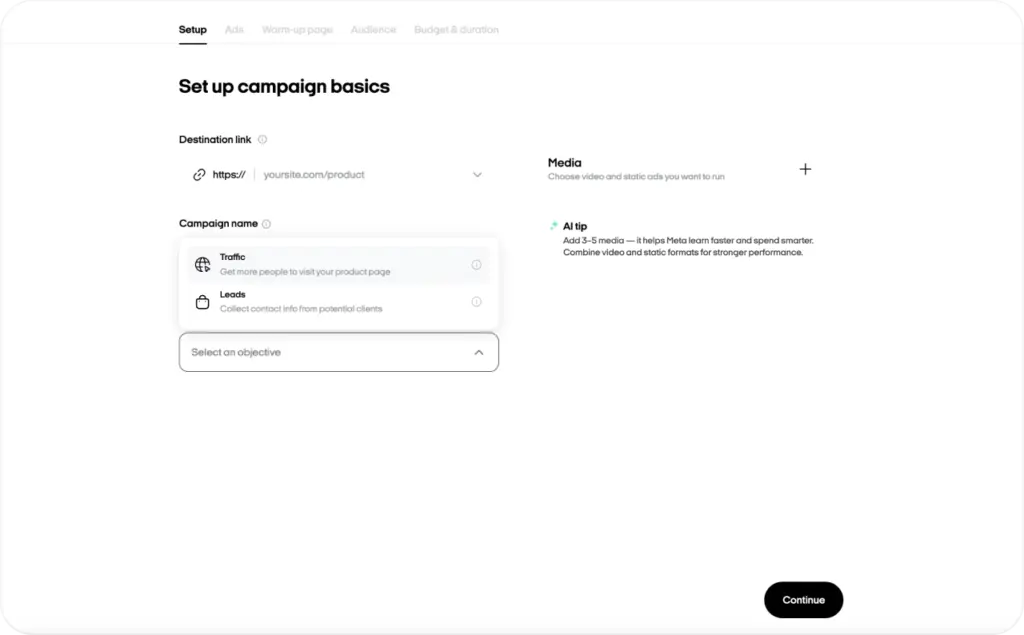
Set budget and duration with guidance
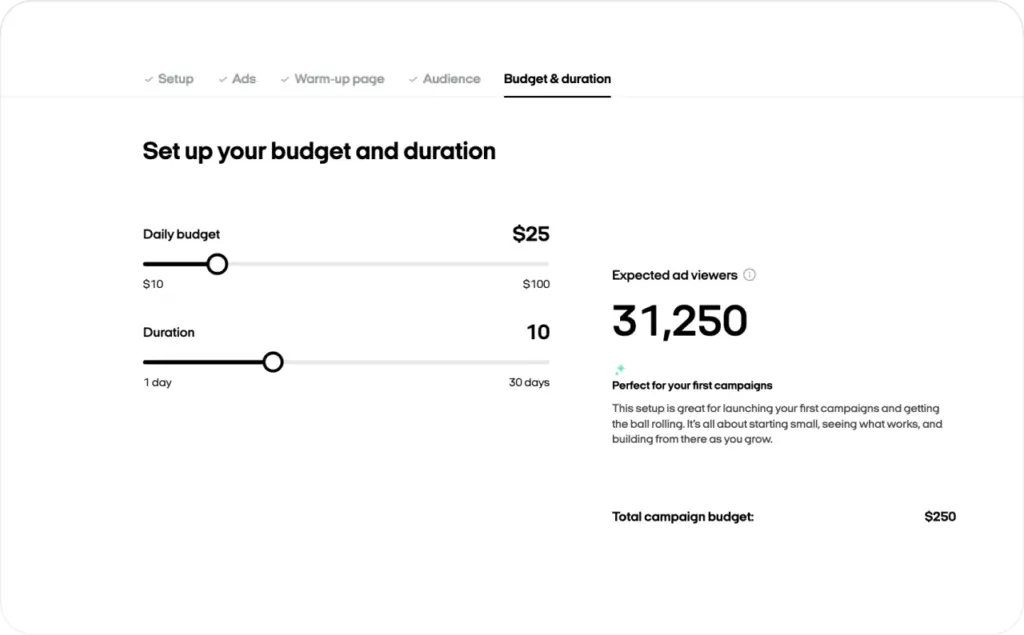
A good budget also needs a realistic duration. A $300 budget spent over 30 days behaves differently from $300 spent over three days.
In Zeely, your total campaign budget helps calculate the daily budget based on how long the campaign runs. That makes budget planning easier because you can think in two ways at once: what you can afford overall and how much the campaign needs per day to perform.
Track what happens after launch
Once ads are live, do not judge them by emotion. Read the numbers.
Zeely’s campaign metrics explain clicks, impressions, budget, current spend, leads, and results so you can see whether your campaign is getting attention and whether that attention is becoming useful action.
That is exactly how I want small businesses to think about ads in 2026: not “spend and hope,” but “launch, measure, improve, and scale.”

Emma blends product marketing and content to turn complex tools into simple, sales-driven playbooks for AI ad creatives and Facebook/Instagram campaigns. You’ll get checklists, bite-size guides, and real results, pulled from thousands of Zeely entrepreneurs, so you can run AI-powered ads confidently, even as a beginner.
Written by: Emma, AI Growth Adviser, Zeely
Reviewed on: May 27, 2026