15 Black Friday ad ideas and real examples for 2026
Looking for Black Friday ad ideas? Explore 15 creative concepts, real campaigns from major retailers, and practical tips for making your own image and video ads.
Black Friday 2026 falls on Friday, November 27. It’s the annual shopping event after Thanksgiving, when retailers offer limited-time deals on everything from electronics to clothing. For small businesses, Black Friday ads are a chance to put a strong offer in front of shoppers already looking for discounts. Below, I’ll break down real Black Friday ad examples.
Key takeaways
- Lead with a specific offer. Show the discount, product, or extra benefit before shoppers scroll past your Black Friday ad
- Borrow ideas from major retailers. Walmart, Amazon, Target, and Best Buy use different ways to promote deals that smaller businesses can adapt
- Test static images, product demos, and UGC-style videos
Best Black Friday ad examples from popular brands
Walmart, Amazon, Target, and Best Buy each sell Black Friday their own way, which makes their Black Friday ad examples useful for businesses of any size. Some lean on entertaining videos. Others stick to the product and the deal.
I picked campaigns from 2026 to show how these brands talk about their offers. Those creatives are worth studying. Just mind that these are only creatives and we do not have any information on their sales. To find what your own competitors are running right now, here’s how to spy on competitors’ ads for free.
Walmart ads for Black Friday: Storytelling and early access
Walmart’s 2026 holiday campaign, “A Who Knew Carol,” puts The Muppets on the screen with actor Walton Goggins and uses those familiar characters, plus plenty of humor, to introduce its holiday products and deals. Walmart holds back the discount and lets the story do the early work.
The Black Friday promotions themselves were split into separate shopping periods, with early deals set for November 12 to 15 and the main sale for November 23 to 29. Walmart+ members got early access to some online offers, which gave the retailer another thing to announce.
What I like is how the two pieces fit. The video entertains and shows off the holiday selection, and the deal announcements give people a specific reason to come shop.
What I’d borrow: If you sell handmade candles, a short scene of someone holiday gift shopping with your candles in it would do the job, followed by a separate Black Friday ad with the exact discount and sale dates. You can skip the celebrity cameo, since plenty of products hold attention without one.
Amazon Black Friday ads: Daily deals and product-focused creatives
Amazon’s 2026 Black Friday campaign runs from November 19 to 30, and its “Today’s Big Deals” promotion brings 12 days of themed offers across beauty, electronics, fashion, toys, and other categories.
A new batch of deals goes live every day, and Black Friday and Cyber Monday each get two scheduled releases. Amazon also leans on recognizable products and names the exact savings, up to 60% on selected offers.
Amazon gets to give shoppers something new to check each day without reworking the whole campaign. Grouping deals by category helps too, since people can head straight for what they’re shopping for.
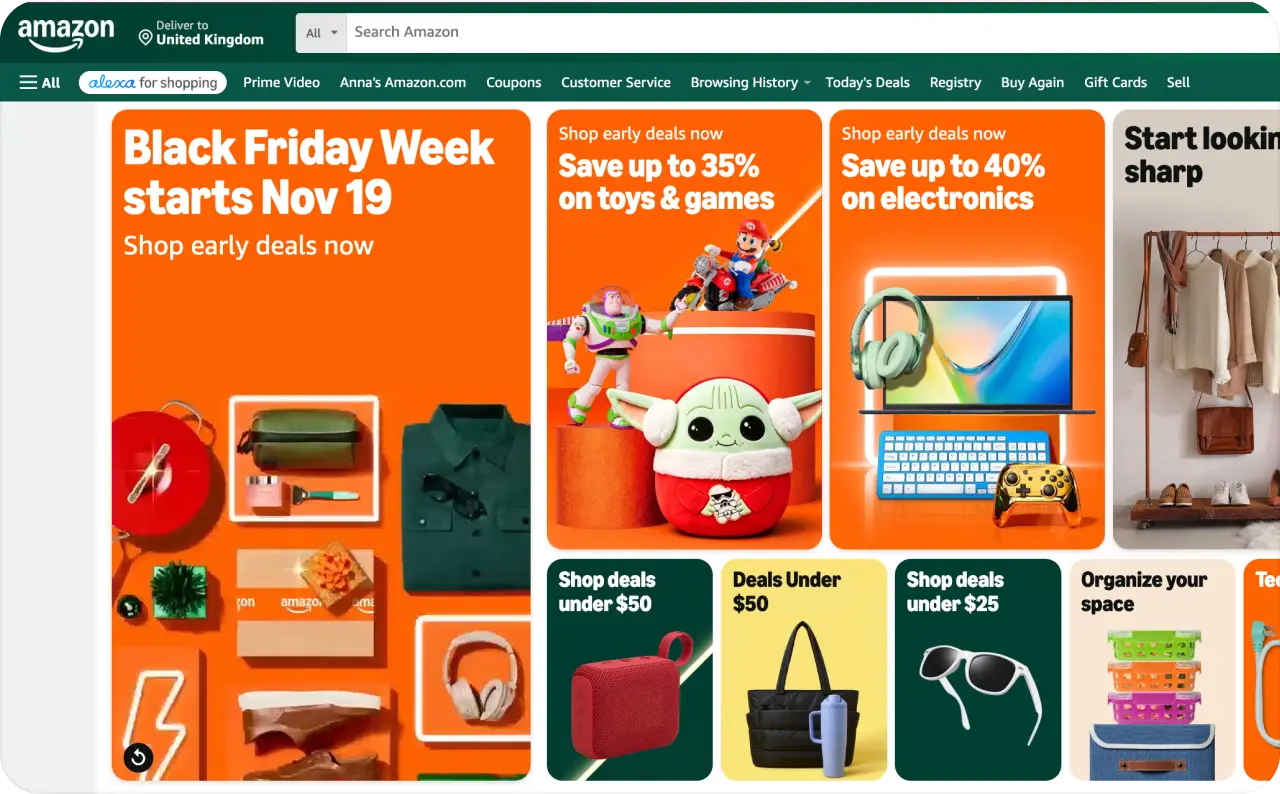
Photo source: Amazon
What I’d borrow: Running daily offers across a whole catalog is a lot for small businesses, so I’d cut down to three products. A skincare brand could give its cleanser, serum, and moisturizer their own Black Friday sale ads, each showing just the one product with its discounted price and a clear “Shop now” CTA.
Target Black Friday ads: Simple discounts and daily previews
Target’s 2026 holiday promotions rely on familiar products and simple offers, and that’s enough to carry an ad. At its early Black Friday sale on November 5 – 7, sweatshirts and sweatpants were 40% off, Levi’s apparel 30% off, and kitchen appliances were up to 50% off.
Shoppers know what they’re getting before they click. Target also runs a “Deal of the Day” with a different product offer every day, and for 2026, customers can preview the next day’s deal ahead of the time.
The preview is basically a second ad moment. People see what’s coming tomorrow and come back once it’s live.
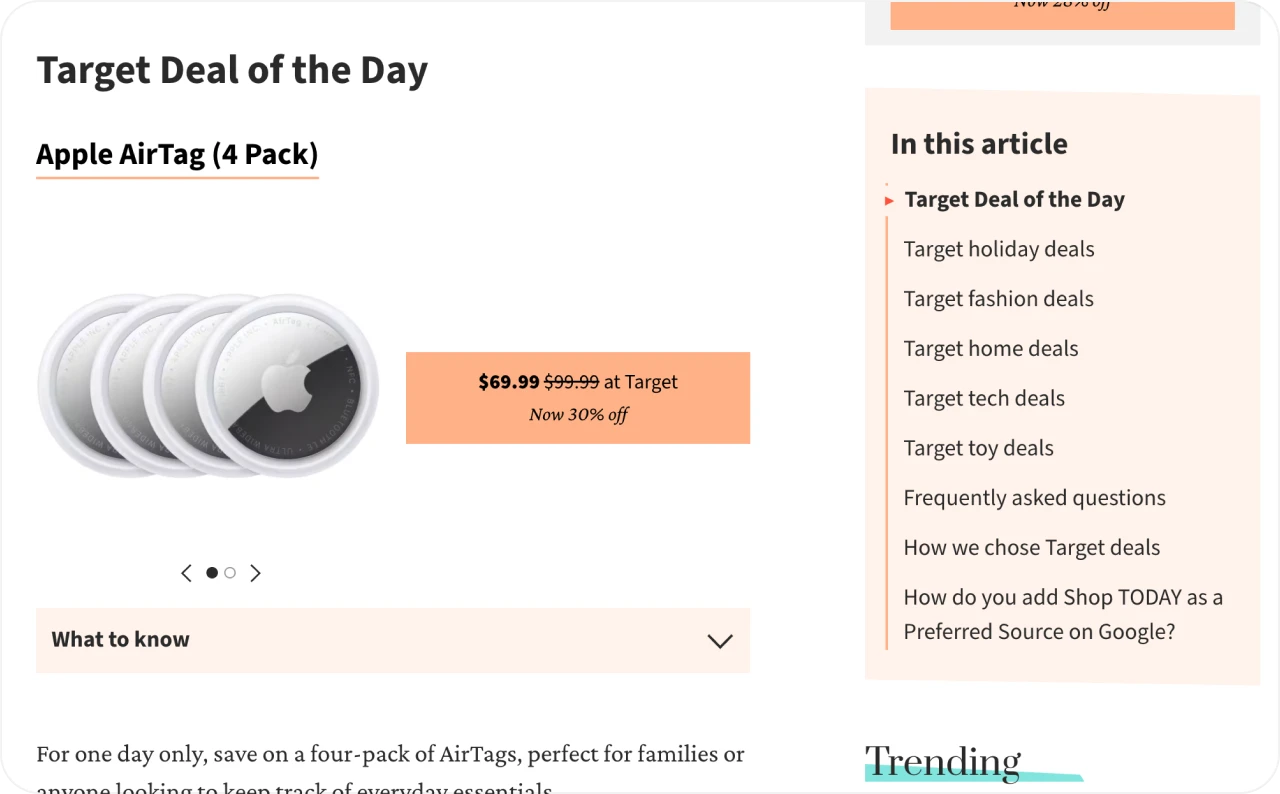
Photo source: Today
What I’d borrow: Tease one deal before it starts. A clothing store could post a product photo with “Tomorrow Only: 30% Off Winter Jackets”, then swap it on sale day for the live offer and a direct link to the shop. Whatever you post, keep the product and discount easy to see, with no long explanation to wade through.
Best Buy Black Friday ads: Doorbusters and clear savings
Best Buy’s 2026 Black Friday advertising focuses on recognizable electronics, limited-time doorbusters, and visible savings. The retailer introduced early Black Friday deals on November 6, with new doorbusters scheduled every Friday. Its main holiday sale runs from November 19 to 28.
On its Black Friday deals page, Best Buy has promoted offers such as $1200 off Samsung 65-inch OLED-TV. The product, discount amount, and purchase action appear together, helping shoppers compare the offer quickly.
This format is especially useful for products where price plays a major role in the purchase decision. A clear discount amount can be more informative than a general claim about low prices.
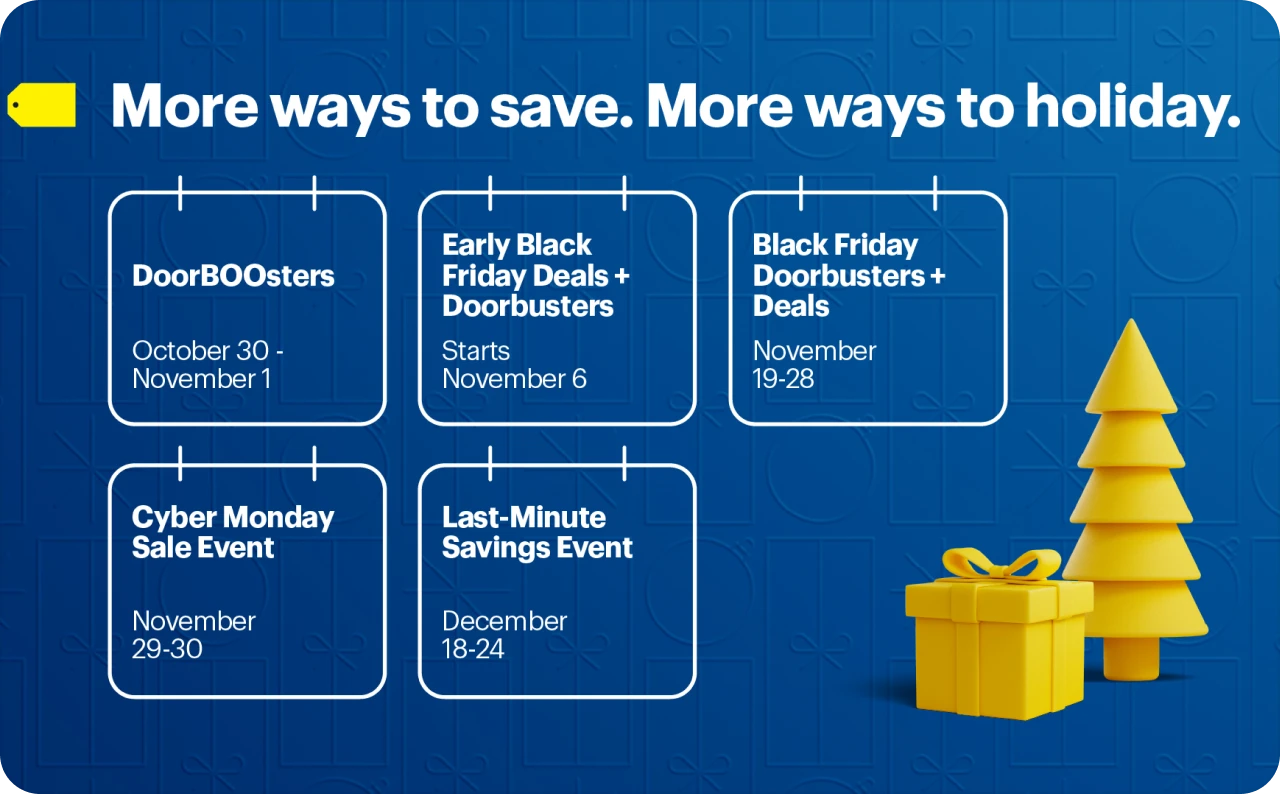
Photo source: Best Day
What I’d borrow: For your business, consider a product-focused image with the item taking up most of the frame. Place the original price beside the sale price, then add a short headline. For example, a coffee machine reduced from $180 to $135 could use “Black Friday: Save $45” above the product.

15 Black Friday advertising ideas to inspire your campaign
On Black Friday, your ad sits in a feed full of other sales, and it has to give people a reason to stop and check your offer. What works depends on what you sell, how big the discount is, and who’s seeing it.
For a small store, I’d start by testing three things: a straight discount, a product demo, and a special offer. The 15 Black Friday ad ideas below give you plenty of other ways to present those details in image and video ads.
- Bold percentage-off ads
The number goes first here. Put a big “40% OFF” next to the product in a contrasting color and cut most of the other text. A skincare brand might show its bestselling serum on a dark backdrop with the discount in bright yellow. The bottle still needs room, so don’t let the headline take over. I’d only use this when the discount is big enough to grab someone on its own.

- Before-and-after price ads
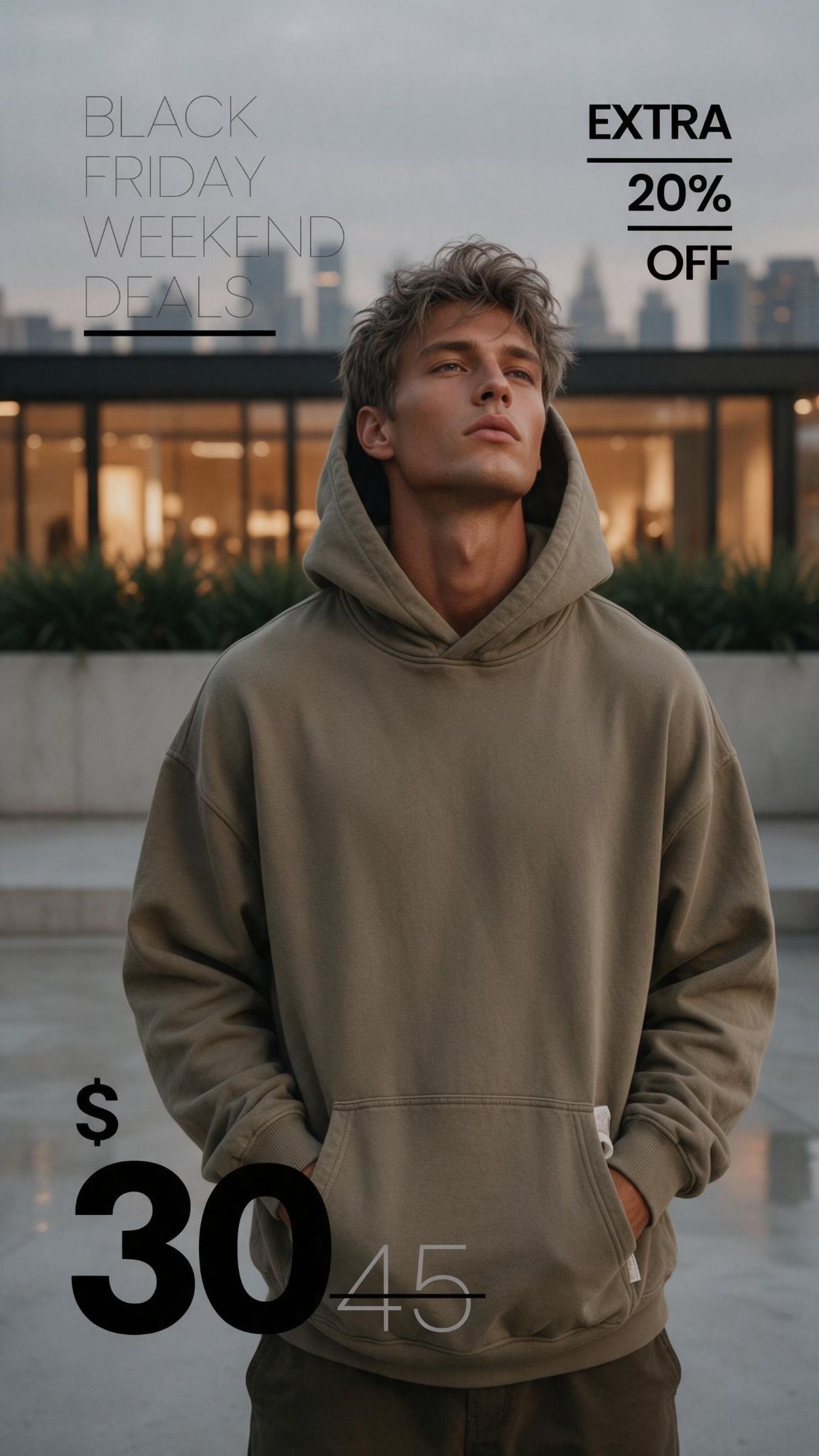
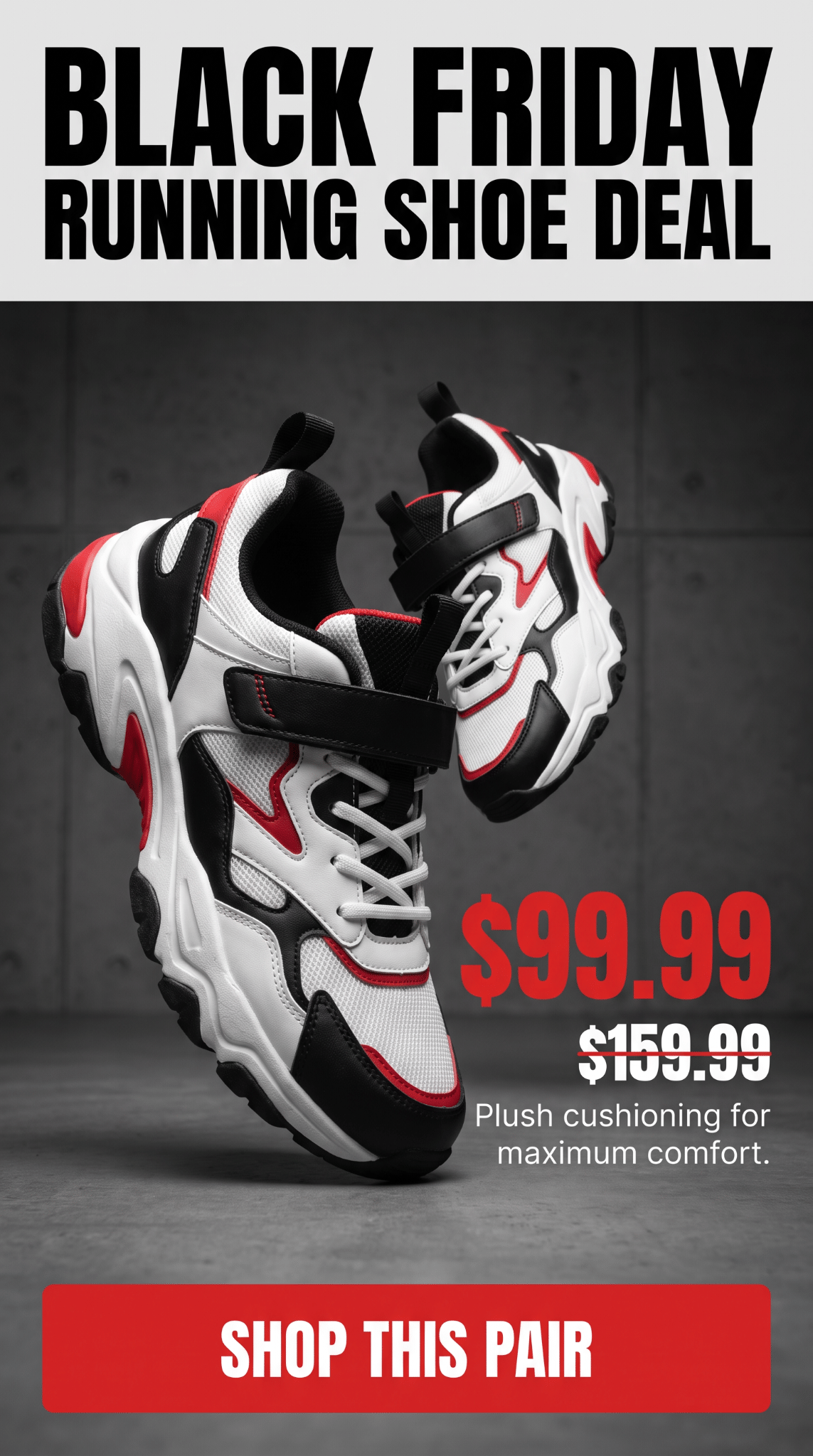
Take a $45 hoodie marked down to $30. Show both prices with the $45 crossed out. Make $30 the biggest text in the ad, with the hoodie in the middle. I’d use this for electronics, furniture, and pricier items, where people care about the dollar amount saved.
Just make sure $45 is what the hoodie normally sells for. An inflated “before” price hurts trust and can get you into trouble with advertising rules.
- Countdown Black Friday ads
A short video that opens with “48 Hours Left”, then cuts to the product and its sale price, builds pressure without much effort. The clock has to match a real deadline, though. If the sale lasts several days, make fresh versions for each stage.
Countdowns make the most sense for people who already saw your first promotion. Run one against the plain discount ad and see whether the deadline actually moves them.
- Early access Black Friday ads
This is the one I’d run if you’re trying to grow your email list before Nov 27, 2026. For example, a clothing brand could post “Black Friday starts early for email subscribers” with a peek at its upcoming collection. One or two pieces are enough. Hold back the rest of the deals, and send anyone curious to a signup page where they can request access. Then make sure subscribers really do get in early, as promised.
- Daily deal reveals
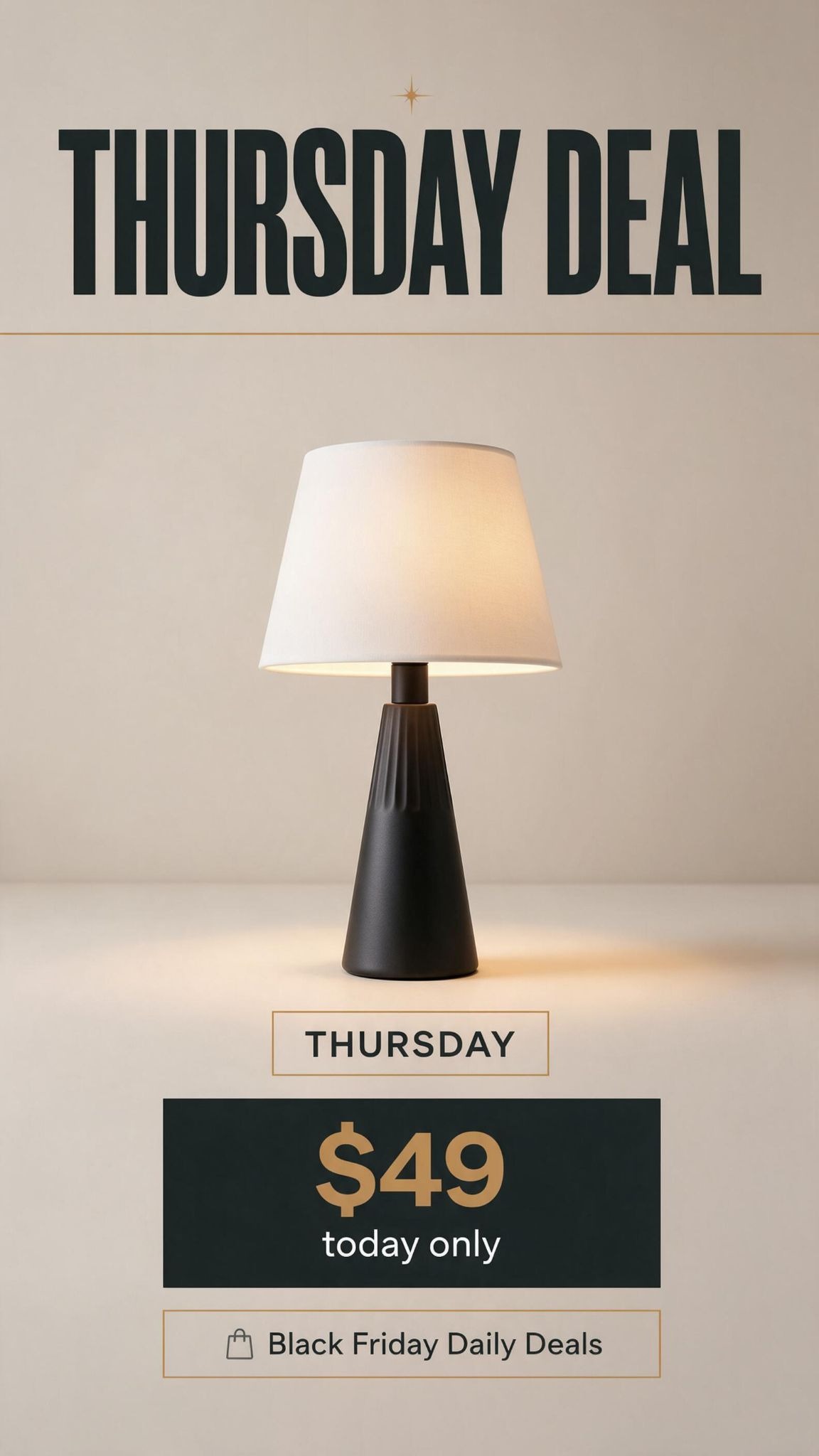
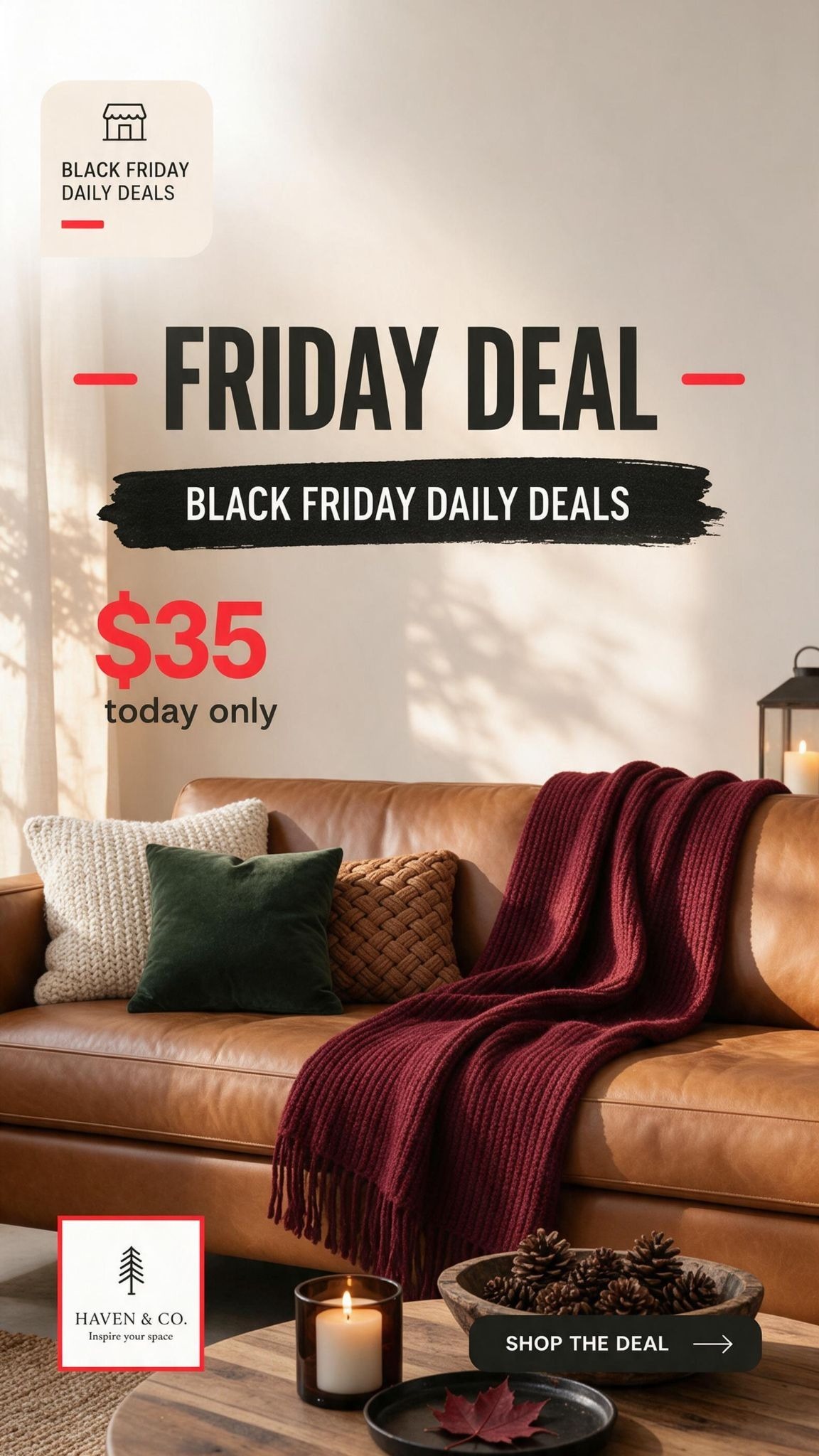
Showcase a new product each day to keep your promotion interesting. For example, a home decor store might highlight lamps on Thursday, blankets on Friday, and decorative pillows on Saturday.
Create a consistent look and swap the product, price, and headline for each deal. This keeps the campaign familiar while giving shoppers a new offer to check out. Include relevant sale dates in every creative. Customers shouldn’t discover an expired deal after clicking an older ad.

- Doorbuster deal ads
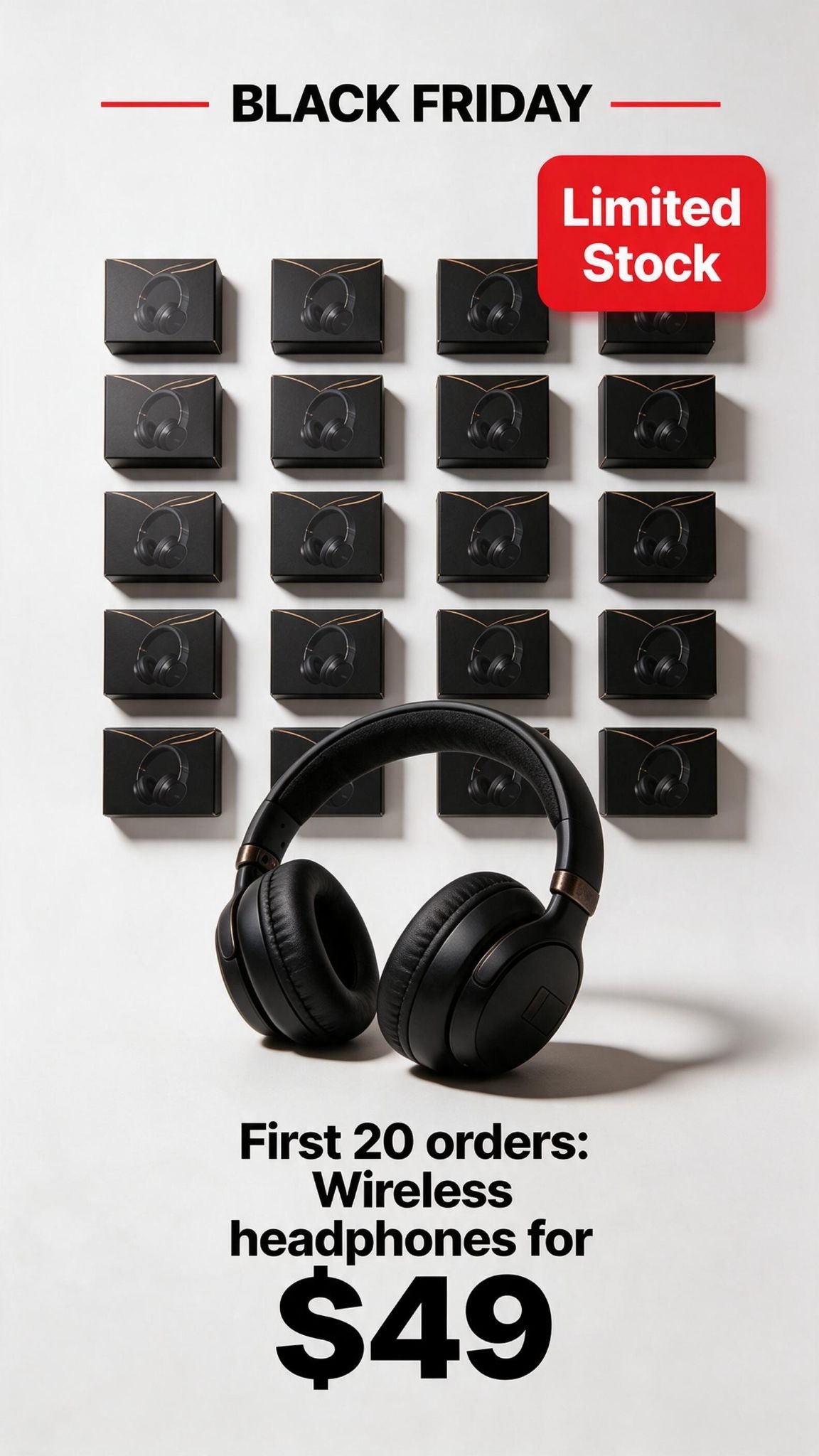
Offer a special Black Friday price on a limited number of products. For instance, a small electronics store might promote “First 20 orders: Wireless headphones for $49”. Show the product prominently and explain any purchase limits. A simple “Limited Stock” label works when the quantity is genuinely restricted.
Use this kind of ad only if you can keep track of your stock and stop the promotion when the deal sells out. Customers may get upset if they click expecting to buy but the offer is no longer available.
- Product bundle ads
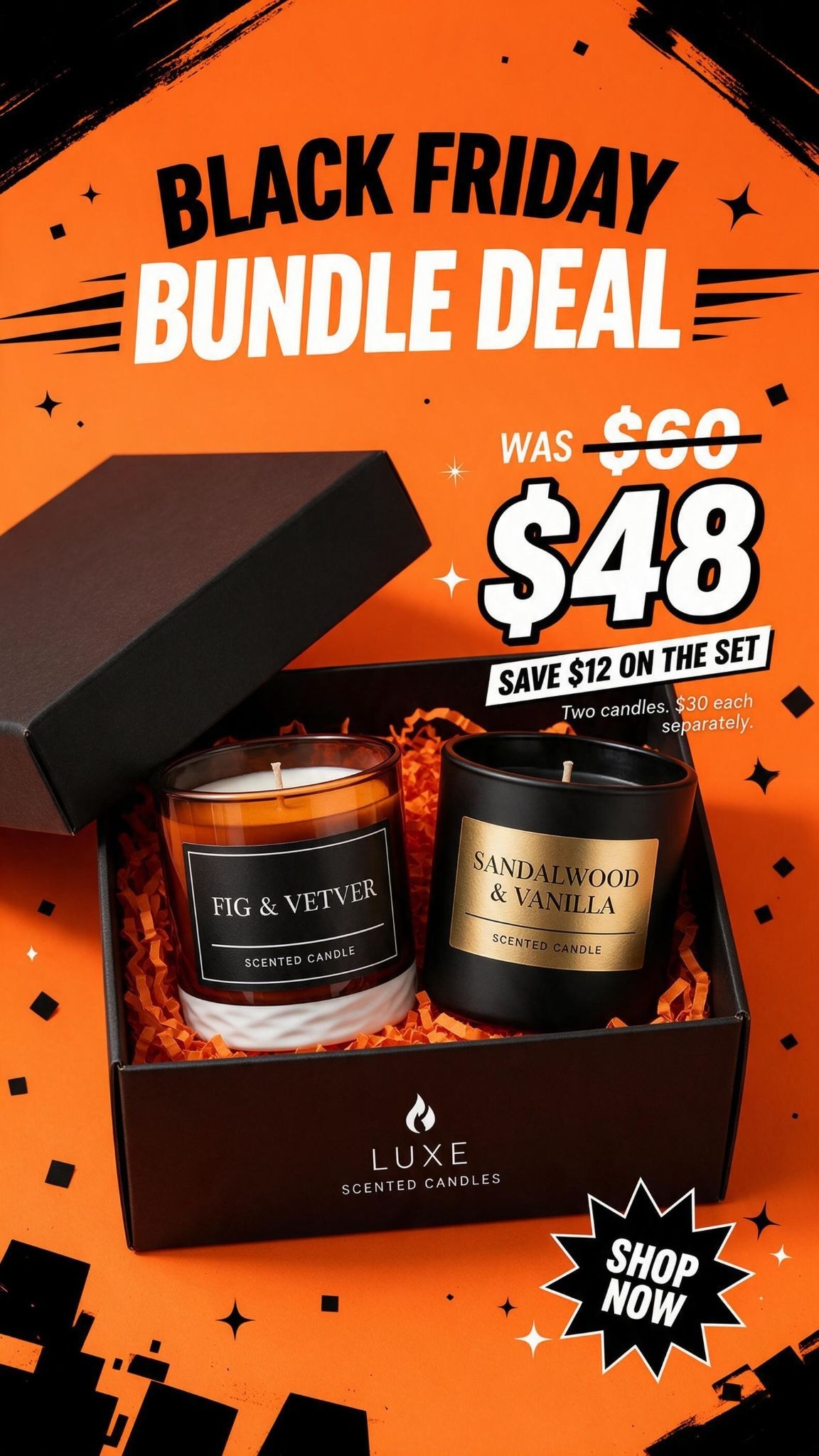
Picture a candle brand selling a $48 gift set with two candles that go for $30 each. Shoot the whole set on a plain background so it’s clear what’s in the box, and put $48 beside it, along with the $60 they’d cost separately.
Bundles work when the products obviously go together, like two scents meant for the same room as an aroma cocktail. Lumping random discounted items into one set just leaves shoppers with more decisions to make.
- Free gift with purchase ads
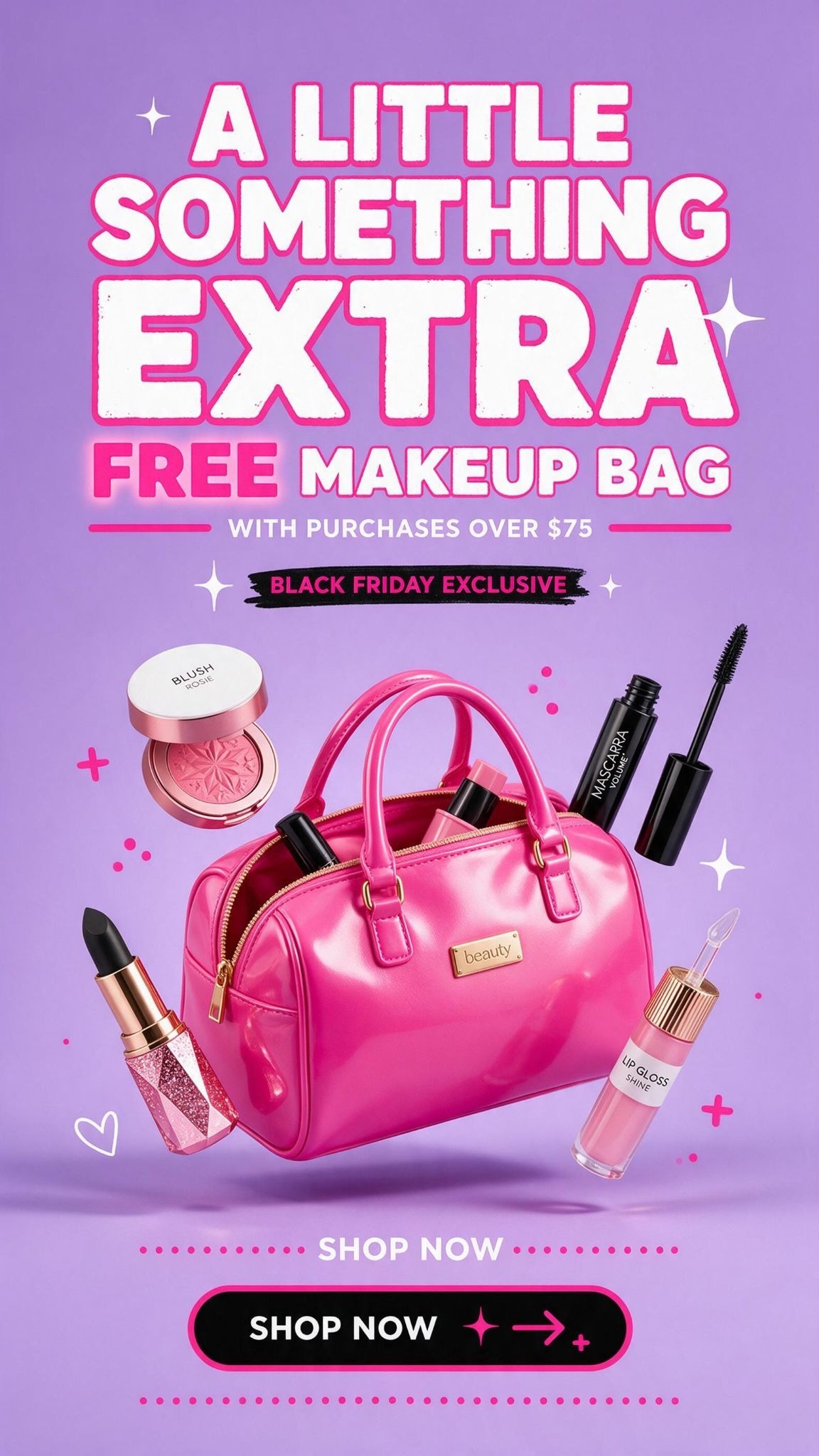
With a free gift, you can sweeten the order without cutting prices any further. A cosmetics store might include a make-up bag with purchases over $75. Put the bag right next to the main product, big enough that people can tell what it is. The $75 minimum should be in the ad too.
If the bag is something people would actually use and it fits what they’re buying, I’d test it against a straight percentage discount.
- UGC-style Black Friday video ads
Make it look like a regular post. For a small skincare brand for kids, that could be the founder opening the package, putting the moisturizer on, and talking through the Black Friday offer. Open on the product or a question your customers ask all the time, and get to the sale early so the viewers know why they’re watching.
A phone camera is plenty, and you can skip the fancy lighting and editing. If you’re playing a creator, disclose it wherever the rules require.
- AI avatar Black Friday marketing
If you’d rather not be on camera yourself, an AI avatar can present the offer while the product and discount sit on the screen. A fitness accessories store might give it a script as short as this: “Shopping for someone who loves working out? Our resistance bands are 30% off this Black Friday”
Have it talk the way a person would, and show the real resistance bands. What you don’t do is pass the avatar off as an actual customer giving an independent review.
- Black Friday unboxing ads
People like knowing what will actually show up at their door. A subscription box brand could film someone opening the holiday package and pulling out each item, shot in close-up with relaxed, natural vibes. The Black Friday offer comes on screen once the box is open.
Gift sets, beauty boxes, and curated collections are a natural fit. Use the real packaging and the real contents, especially for a limited-edition bundle, since people will compare the video to what arrives.
- Split-screen comparison ads
Two side-by-side panels can get a point across fast. A travel accessories brand might show a suitcase with everything thrown in loose on the left and the same items sorted into packing cubes on the right. Shoot both from the same angle so the comparison is fair, then add a short headline tying it to your Black Friday offer.
It’s a good fit for anything with a visible result. Don’t exaggerate the difference, though, and skip any comparison you couldn’t back up.
- Customer review Black Friday ads
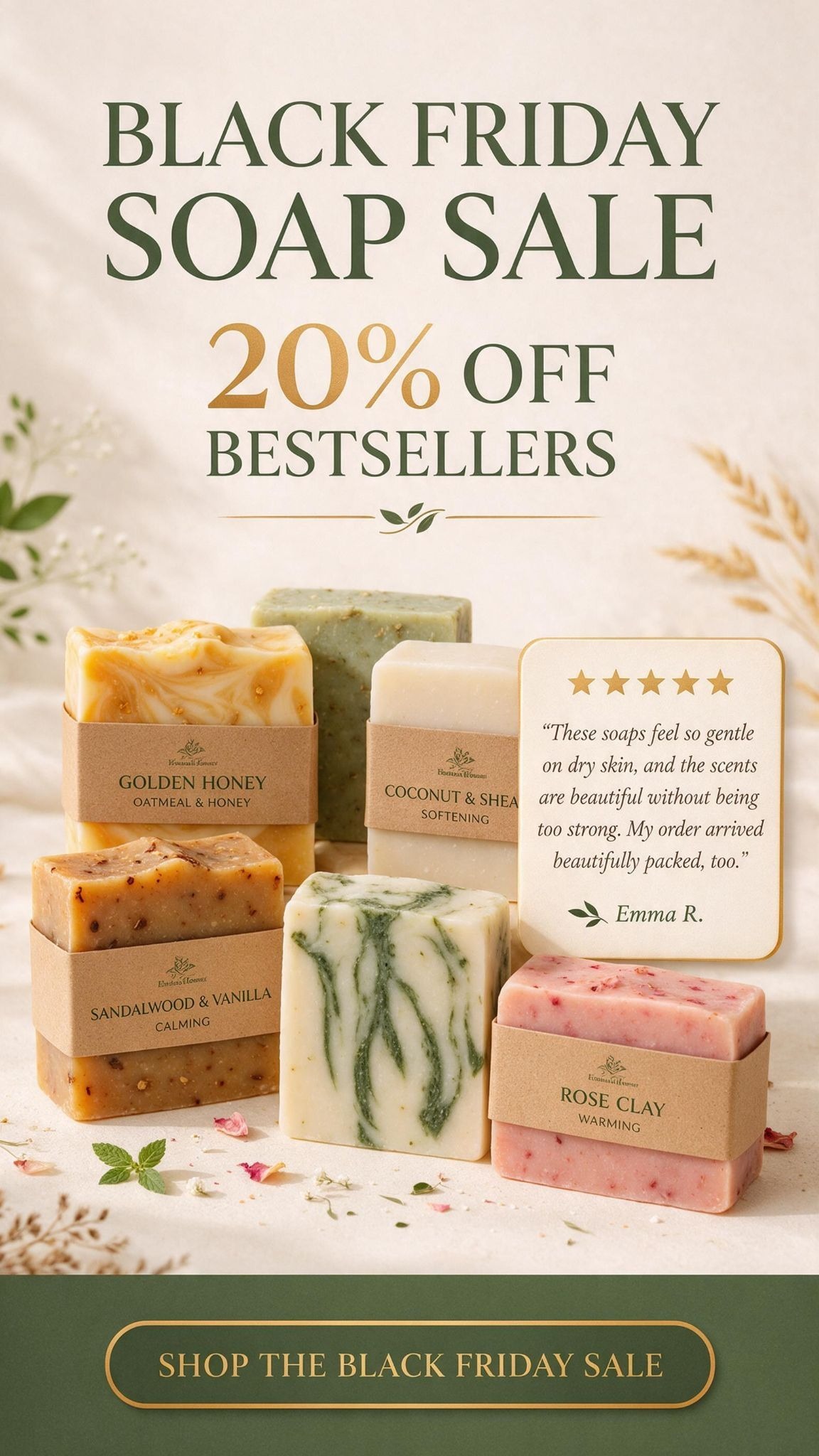
A real customer review works nicely next to whatever you’re putting on sale. A handmade soap brand could run a short, verified quote besides its bestselling soap collection, in a font people can read at a glance. Only add the customer’s name or star rating if you have permission and it is accurate.
The best quotes answer something a buyer would actually wonder about, like how the soap feels on dry skin or what comes in the box. “Love it!” doesn’t tell anyone much.
- Personalized retargeting ads
Someone who browsed your running shoes last week could see those same shoes again with their Black Friday price. Talk about the shoes and the deal, and leave it there. Lines like “We saw you looking” make people feel watched.
You’ll need a retargeting audience set up properly in your ad account for any of this to work. If your tracking isn’t reliable yet, I’d put the effort into testing broader product ads first.
- Last-chance Black Friday sale ads
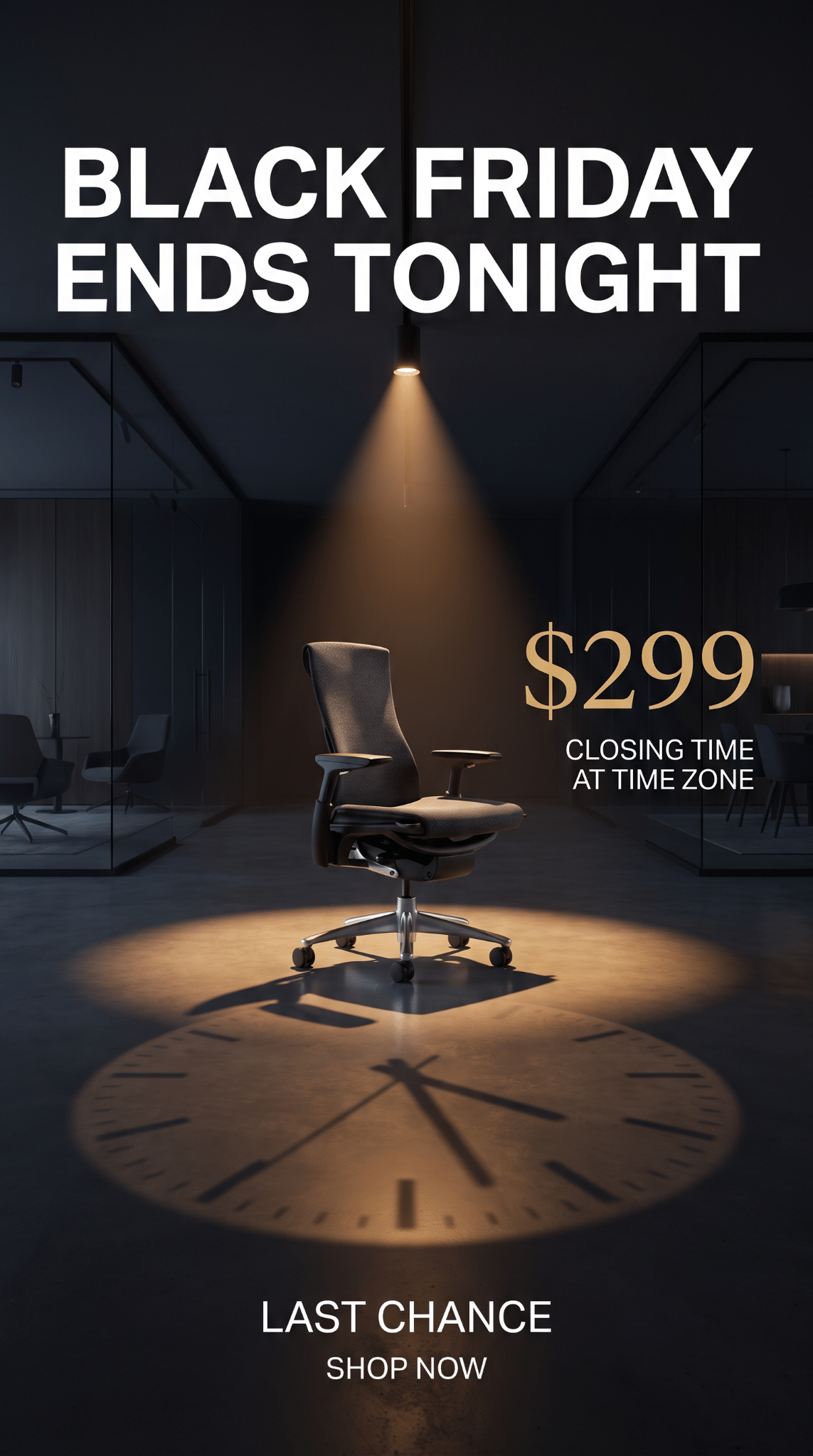
When a real sale is about to wrap up, a reminder ad can catch people who meant to buy and forgot. A furniture store could show its discounted office chair with “Black Friday ends tonight”, the final price, and the closing time beside it. If you sell across time zones, say which one.
Hold this ad for the final stretch, and switch it off when the deal ends. Restarting the countdown the next morning to fake urgency is something regular customers catch on to.
FAQ
Black Friday falls on Friday, Nov 27, 2026, the day after Thanksgiving, with Cyber Monday on November 30. You can give each date its own promotion or run one sale across both, as long as the deadline in your ads matches when the offer really ends.
Work backward from the CPA your margins can handle. If $20 per purchase is your limit, a $200 test budget gives you room to judge the results. It won’t necessarily bring in 10 sales, though. I’d hold back most of your holiday ad budget until you’ve seen how the first ads do.
I’d start testing teaser ads 7 to 10 days before Nov 27, 2026, hinting at the promotion without implying the discounts are live yet. When the sale starts, swap in the real sale ads. Platform reviews take time, more so on a brand new ad account, so build in a buffer.
Yes. Zeely can generate image ads, video ads, editable scripts, and creative variations, and you can also set up Facebook and Instagram ad campaigns from Zeely.
Sources
- Time and Date: Black Friday 2026
- Time and Date: Cyber Monday 2026
- Walmart: Three Major Holiday Shopping Events for 2026
- Amazon: Black Friday Week and Cyber Monday 2026
- Target: 2026 Holiday Shopping Information
- Best Buy: 2026 Holiday Deals and Doorbusters
- Best Buy: Black Friday Deals and Savings
- Federal Trade Commission: Advertisement Endorsements
- Zeely: AI Ad Generator