29 ChatGPT prompts for ads that sound human
What should you tell ChatGPT if you want ad copy that fits your product, audience, and offer? I’ll share 29 prompts I use to create specific ads, stronger variations, and copy that’s ready to review and test.
The best ChatGPT prompts for ads give the model verified facts, one audience situation, one desired action, and firm output limits. Start by creating a reusable business context card. Then use separate prompts for angles, Facebook ads, hooks, scripts, rewrites, claim checks, and test variations.
Never ask ChatGPT to invent reviews, results, prices, or product benefits. Treat every output as a draft that needs a fact check and a human edit before launch.
ChatGPT can help when you’re staring at a blank ad box. It can also return ten smooth variations that all say the same thing.
The difference usually starts before the writing. A useful prompt tells ChatGPT what’s true, who the buyer is, what they should do next, and what the copy must avoid. A weak prompt asks, “Write a high-converting ad for my business,” then leaves the model to fill every gap.
That problem appears often in Reddit small-business forum discussions and copywriting discussions. Owners describe generic answers until they provide their offer, customer profile, past ads, budget, and business history. Copywriters also report AI rewrites that erase brand voice, distort product details, or keep editing copy without identifying what’s actually wrong.
So this guide doesn’t give you vague commands dressed up as templates. It gives you ChatGPT ad copy prompts built around the work small businesses actually need to finish.

How to use ChatGPT prompts for ads without generic copy
Before you paste any prompt below, collect six pieces of information:
- Product: What you sell and how it works
- Audience: The buyer and the situation they’re in
- Offer: The price, discount, trial, bundle, or next step
- Proof: Verified features, reviews, results, or credentials
- Placement: Facebook feed, Instagram Story, video, carousel, or another format
- Goal: Purchase, lead, booking, click, message, or awareness
OpenAI’s prompt engineering guidance recommends placing instructions clearly, separating reference material, adding relevant context, and specifying the output format. Examples also help when you need a consistent voice or structure.
I also recommend a “fact lock.” Mark prices, guarantees, ingredients, dates, product names, and claims that ChatGPT cannot change. This small step prevents a good-sounding sentence from becoming an inaccurate ad.
The prompts below use brackets for details you should replace. Keep the parts that protect accuracy, even when you shorten a prompt.
ChatGPT ad copy prompts for clearer angles
Good ads start with a reason to care, not a clever sentence. These first prompts help ChatGPT understand your business, find useful customer language, and create angles that differ in meaning.
Prompt 1: Build a reusable business context card
Create a reusable business context card from the information below. Organize it under: product, audience, buyer situation, offer, proof, brand voice, banned phrases, approved claims, and desired action. Do not add facts. Mark missing information as “needed.”
[PASTE BUSINESS INFORMATION]
Save this card in a document and update the date whenever prices, offers, or product details change. This solves a common forum complaint: old context becomes stale while the copy still sounds confident.
Prompt 2: Turn product material into a source pack
Extract only verified advertising facts from this product page or brief. Separate features, benefits supported by those features, prices, offer terms, proof, and restrictions. Quote uncertain wording under “needs review.” Do not write ad copy yet.
[PASTE SOURCE MATERIAL]
Prompt 3: Find customer language in real reviews
Analyze these genuine customer reviews. List repeated problems, desired outcomes, objections, exact phrases, and moments when the product felt useful. Do not invent quotes or combine words into fake testimonials. Flag claims that require verification.
[PASTE REVIEWS]
Customer reviews give you something a feature list rarely can: the situations, objections, and words real buyers use. In an open-access study based on 100 customer reviews, people rated review-driven copy 10% points higher for attractiveness and 3.3 points higher for faithfulness than GPT-3.5 output.
Prompt 4: Identify the buyer moment
For [AUDIENCE], list five specific moments when they would notice or need [PRODUCT]. Each moment must include the situation, frustration, desired result, and likely hesitation. Avoid broad demographics and generic pain points.

Prompt 5: Create meaningfully different ad angles
Using the verified context below, create six ad angles that differ in core meaning. Label each by buyer problem, product benefit, proof, emotional driver, and best funnel stage. Reject angles that depend on unsupported claims.
[PASTE CONTEXT CARD]
Prompt 6:Choose one promise for one ad
Review these possible angles and select the clearest promise for [AUDIENCE] at [FUNNEL STAGE]. Explain why it fits their current situation. Then write one plain-English value proposition under 20 words. Do not combine multiple promises.
[PASTE ANGLES]
Prompt 7: Frame the offer without fake urgency
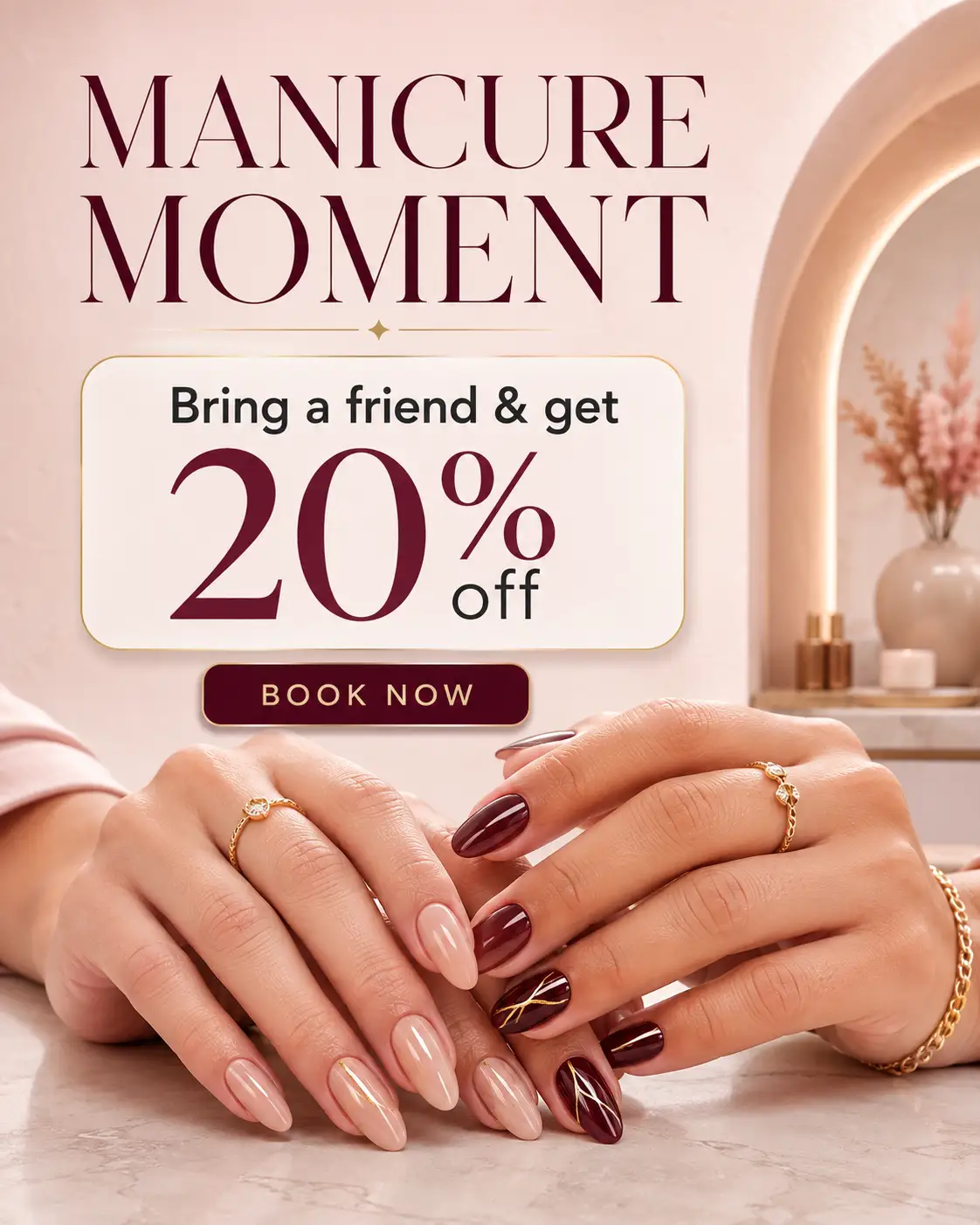
Write five ways to present this real offer: [OFFER]. Use clear value, transparent terms, and a specific next step. Do not invent scarcity, deadlines, savings, guarantees, or bonus value. Include one straightforward option with no urgency language.
ChatGPT prompts for Facebook ads and Instagram copy
A Facebook feed ad, lead ad, carousel, and Instagram caption shouldn’t share one generic template. The reader sees each format differently, so the prompt should define the placement and desired action.
Prompt 8: Write Facebook primary text
Write three Facebook primary-text options for [PRODUCT] and [AUDIENCE]. Use this angle: [ANGLE]. Keep each under [LENGTH]. Open with a specific buyer situation, include one verified benefit, and end with [CTA]. Avoid hype and unsupported claims.
Prompt 9: Create a Facebook lead ad
Write a Facebook lead ad for [SERVICE]. Target [LOCAL OR NICHE AUDIENCE]. Explain the problem, what the consultation or quote includes, who it suits, and what happens after form submission. Keep the commitment clear. CTA: [CTA].
Prompt 10: Write an Instagram feed ad
Write an Instagram feed caption for [PRODUCT]. Begin with a relatable moment, show how the product fits naturally, include one concrete detail, and close with [CTA]. Use short paragraphs. Avoid generic inspiration, excessive adjectives, and invented social proof.
Prompt 11: Plan Carousel ad copy
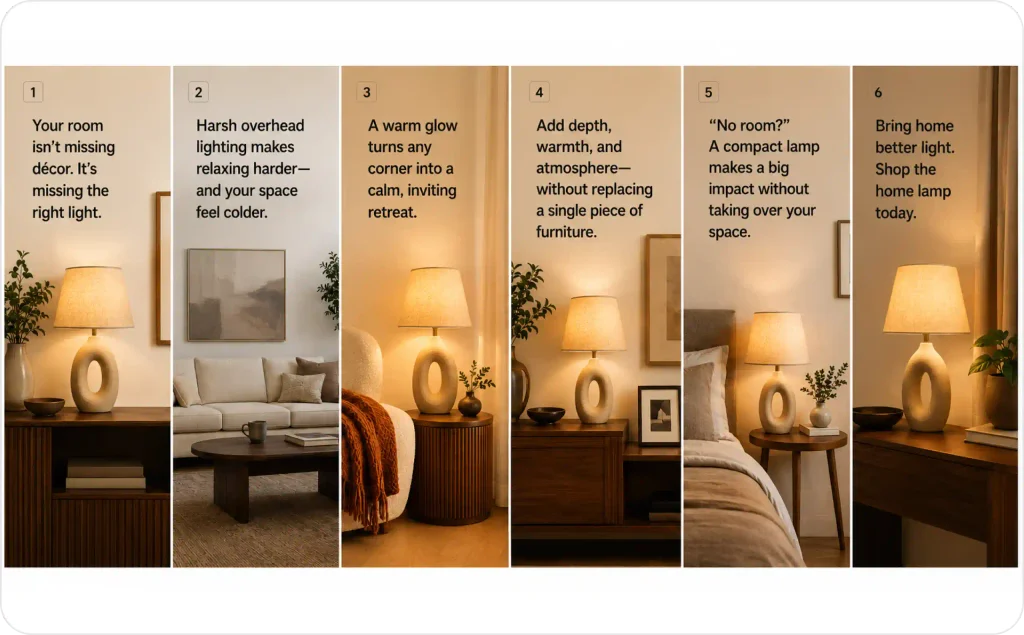
Create copy for a six-card carousel about [PRODUCT]. Card 1: specific hook. Cards 2–4: one problem, benefit, or proof point each. Card 5: objection answer. Card 6: offer and CTA. Keep overlay text under [WORD LIMIT] words per card.
Prompt 12: Write a retargeting ad
Write four retargeting ads for people who [VIEWED PRODUCT / ADDED TO CART / VISITED PAGE] but did not buy. Use one verified objection per version. Remind without pretending to know personal details. Keep the offer and urgency exactly as provided.
Prompt 13: Create a local service ad
Write a Facebook or Instagram ad for [LOCAL SERVICE] in [LOCATION]. Mention the service area naturally, name the customer situation, explain what is included, and give one trust signal. End with a booking or quote CTA. Do not claim to be “best” unless proven.
You can adapt these templates inside Zeely’s Facebook ad creator when you’re ready to connect the copy with visuals and campaign assets.
AI ad prompts for hooks, headlines, and CTAs
Hooks deserve careful treatment because Zeely already has dedicated guides to scroll-stopping ad hooks and TikTok video ad hooks. The prompts here help you apply an approved angle without rebuilding those libraries.
Prompt 14: Diagnose a weak opening
Evaluate this ad opening for specificity, audience recognition, relevance, clarity, and connection to the offer. Name the single biggest problem before suggesting edits. Do not rewrite the full ad yet.
[PASTE OPENING AND OFFER]
Prompt 15: Generate distinct hooks
Write eight hooks for [ANGLE] aimed at [AUDIENCE]. Use different entry points: buyer moment, problem, contrast, question, proof, objection, demonstration, and direct benefit. Keep every hook under [WORD LIMIT] words. Remove near-duplicates.
Prompt 16: Write constrained ad headlines
Write ten ad headlines for [PRODUCT] using only these approved facts: [FACTS]. Keep each under [CHARACTER LIMIT] characters. Label the angle used. Avoid “revolutionary,” “game-changing,” “unlock,” “elevate,” and other generic AI wording.
Prompt 17: Match CTAs to buyer readiness
Create three CTA options for each stage: curious, comparing, and ready to buy. Product: [PRODUCT]. Next step: [ACTION]. Keep every CTA accurate about what happens after the click. Do not use false urgency.
Prompt 18: Open with a real objection
Turn these verified customer objections into five ad openings. Acknowledge each concern without shaming the buyer. Connect it to one approved product fact, then invite the next step. Do not promise that every objection disappears.
[PASTE OBJECTIONS]
Prompt 19: Write first-frame overlay copy
Write ten first-frame text overlays for a [VIDEO LENGTH]-second ad. Product: [PRODUCT]. Angle: [ANGLE]. Keep each readable in two seconds and under [WORD LIMIT] words. The overlay must match the first visual: [DESCRIBE VISUAL].
The hidden rule here is alignment. A hook about saved time should not open on an unrelated lifestyle shot. The first line, first frame, and offer should tell the same story.
ChatGPT prompts for video ads and UGC scripts
Video prompts work better when ChatGPT knows the duration, speaker, visual proof, and final action. A script that reads well on a page can still sound unnatural when spoken aloud.
Prompt 20: Write a 15-second video ad
Write a 15-second video ad for [PRODUCT]. Structure: 0–3 seconds hook, 3–9 seconds problem and demonstration, 9–12 seconds verified benefit, 12–15 seconds CTA. Use spoken language and short sentences. Include matching visual notes.
Prompt 21: Draft a UGC-style ad script
Write a UGC-style script from the viewpoint of [CREATOR TYPE]. Base it only on these genuine product experiences: [DETAILS]. Make it conversational, not overexcited. Do not invent personal use, results, quotes, or a testimonial the creator cannot truthfully make.
Prompt 22: Create a product demonstration script
Write a short demonstration script showing [PRODUCT] completing [TASK]. Describe what viewers can actually see in each shot. Pair every benefit with visible evidence or an approved fact. End with [CTA]. Avoid claims the demonstration cannot prove.
Prompt 23: Write a founder-led ad
Turn this founder story into a 30-second ad. Keep the sequence: problem noticed, reason for building the product, what makes it useful, proof, and invitation. Preserve the founder’s natural wording. Remove corporate language and unsupported claims.
[PASTE STORY]
Prompt 24: Adapt one script by platform
Adapt this approved script for Facebook feed, Instagram Reels, TikTok, and YouTube Shorts. Keep the product facts, offer, and core angle unchanged. Adjust only the opening pace, spoken length, caption style, CTA, and visual rhythm. Label every version.
[PASTE SCRIPT]
ChatGPT ad prompts for rewrites, checks, and testing
Many prompt lists stop once the first draft appears. Small businesses usually need the next five jobs more: make the copy specific, protect the voice, verify claims, create useful variations, and decide what each version tests.
Prompt 25: Replace generic AI language
Highlight every vague, inflated, or interchangeable phrase in this ad. For each one, suggest a replacement based only on the supplied product facts and customer language. Preserve the core angle and CTA. Do not rewrite accurate specific wording.
[PASTE AD AND SOURCE PACK]
Prompt 26: Match an existing brand voice
Analyze these three approved brand examples for sentence length, tone, vocabulary, rhythm, directness, and phrases to avoid. Rewrite the ad using those patterns without copying sentences. Keep all facts, offer terms, and CTA unchanged.
[PASTE EXAMPLES AND AD]
Prompt 27: Run an advertising claim check
List every explicit and implied claim in this ad. Classify each as verified, needs evidence, subjective opinion, or risky. Compare it with the source pack. Suggest safer wording where needed, but do not weaken accurate facts.
[PASTE AD AND SOURCES]
Prompt 28: Create testable variations
Create four ad variations from this approved control. Change only one element per version: hook, proof order, CTA, or objection. Keep the audience, offer, core angle, landing-page promise, and format stable. Label exactly what changed.
[PASTE CONTROL]
Prompt 29: Build an ad test matrix
Turn these approved ads into a test matrix with columns for version, audience, angle, hook type, proof, CTA, placement, and hypothesis. Flag near-duplicates and tests that change too many variables. Do not predict winners without performance data.
[PASTE ADS]
This last prompt prevents a common mistake: calling minor wording changes separate ideas. Useful variants should teach you something, not simply make your review queue longer.
The secret sauce behind better ChatGPT ad copy prompts
The strongest prompts are not always the longest. They protect the few decisions that matter most.
Lock the facts before asking for style. ChatGPT should know which details cannot move. Put product names, prices, deadlines, ingredients, guarantees, and proof into a clear source pack.
Name one reader action. A copywriting discussion surfaced a useful question: what exactly should the reader do after seeing this ad? Diagnose that before requesting another rewrite.
Choose the angle before multiplying variants. Ten rewrites of the same promise are still one idea. Approve the meaning first, then vary the wording or format.
Use customer language without manufacturing testimony. Reviews can reveal moments, objections, and phrases. They should never become fabricated quotations or invented experiences.
Set a stopping rule. Endless critique loops happen because ChatGPT can always suggest another edit. Ask it to identify one material problem, preserve approved copy, and stop when the ad meets your checklist.
Keep the copy and creative together. The visual, overlay, script, offer, and CTA should express the same angle.
Once your copy is approved, Zeely’s AI ad generator can help turn it into static, video, and UGC-style creative variations without rebuilding every asset in separate tools.
FAQ
The best prompts include verified product facts, a specific audience situation, one ad angle, the platform, a clear CTA, and output limits. They also tell ChatGPT what it cannot invent or change.
Provide your product, audience, offer, proof, placement, brand voice, desired action, and banned claims. Include approved examples when voice matters. Mark uncertain information instead of letting ChatGPT guess.
Yes. ChatGPT prompts for Facebook ads can produce primary text, headlines, lead ads, carousel copy, retargeting messages, and local service ads. You still need to verify claims, offer terms, and platform fit.
Give it real customer language, a narrow buyer moment, verified proof, and banned phrases. Ask it to flag vague wording and replace it with specific facts rather than simply making the copy “more engaging.”
Yes. ChatGPT is useful for drafting angles, ads, scripts, hooks, and variations when a small business provides enough context. It cannot replace product knowledge, customer understanding, legal review, or real campaign data.
Start with three to six meaningfully different angles. After choosing the strongest ones, create controlled variations that change one element at a time. Large batches of near-duplicates add work without adding much learning.
No. Check every product fact, price, offer, deadline, comparison, testimonial, and performance claim. Review the copy for brand voice and landing-page consistency before publishing.
ChatGPT can create clear, testable drafts, but it cannot guarantee conversions. Results also depend on the offer, audience, visual, placement, landing page, budget, and campaign setup.
Turn prompts into ads you can actually test
The best AI ad prompts do more than produce fluent sentences. They help you keep facts accurate, choose one message, match the platform, and build versions that answer a real question.
Start with the business context card. Use one prompt for one job. Then review the final copy against your source material before it reaches a design, video, or campaign.
So this guide doesn’t give you vague commands dressed up as templates. It gives you ChatGPT ad copy prompts built around the work small businesses actually need to finish. For help choosing the right model, reviewing outputs, and moving approved messaging into creative production, use my guide to GPT models for ad copy and creative workflows.
Emma blends product marketing and content to turn complex tools into simple, sales-driven playbooks for AI ad creatives and Facebook/Instagram campaigns. You’ll get checklists, bite-size guides, and real results, pulled from thousands of Zeely entrepreneurs, so you can run AI-powered ads confidently, even as a beginner.
Written by: Emma, AI Growth Adviser, Zeely
Reviewed on: August 25, 2026