How to write ad scripts people watch and click
Why do some ads sound natural and sell, while others lose the viewer by line two? I’ll show you how to turn one customer problem into a focused script with a clear hook, credible proof, and direct CTA.
Key takeaways
- To learn how to write ad scripts, focus each video on one audience, problem, benefit, proof point, and action
- The key tradeoff is structure versus natural speech. Use a framework to organize the message, then rewrite every line for a real voice
- Short formats fit offers people understand quickly. Longer scripts work when buyers need proof, context, or one objection answered
- Choose the format by buyer awareness, platform behavior, available footage, and the action you want after the click
- I recommend drafting three hooks first. Keep the body and offer stable, then test one meaningful change at a time
Good ad scripts do not win because they sound clever. They work because the right person quickly understands the problem, the product, the proof, and the next step.
I use one simple rule when writing them: every line needs a job. It should earn attention, explain value, lower doubt, or prompt action. If a line does none of those things, it is spending your budget without helping the sale.
This guide gives you the complete writing method, plus the right next resource for each stage.

What makes ad scripts convert?
U.S. digital video ad spending is projected to pass $80 billion in 2026, with digital video taking more than 60% of total TV and video ad spend for the first time, according to IAB’s 2026 digital video report. More spending means more ads competing for the same seconds of attention.
A converting script gives the viewer four quick answers:
- Is this for me? The hook names a familiar problem, goal, or moment
- Why should I care? The body connects the product to a useful benefit
- Why should I believe it? The proof supports the promise
- What should I do next? The call to action gives one clear step
A discount cannot rescue a confusing offer. A polished voiceover cannot fix a claim nobody believes. A strong hook earns more time, but the body still needs to spend that time well.
The best script also carries one main idea. You may love six product benefits. Your viewer has one thumb and a lunch break.
Before you write, finish this sentence:
This ad helps [specific person] understand that [product] can help with [specific problem] because [proof], then asks them to [one action].
Keep that line beside your draft. Cut anything that does not move it forward.
How to write ad scripts in 5 steps
IAB expects U.S. social media ad spending to grow 14.6% in 2026, faster than the total ad market. Its survey also found that customer acquisition remains the leading buyer goal, even as advertisers place more weight on retention and repeat purchases. The full IAB outlook gives useful context for why every paid-social line needs a clear commercial job.
1. Choose one customer and one goal
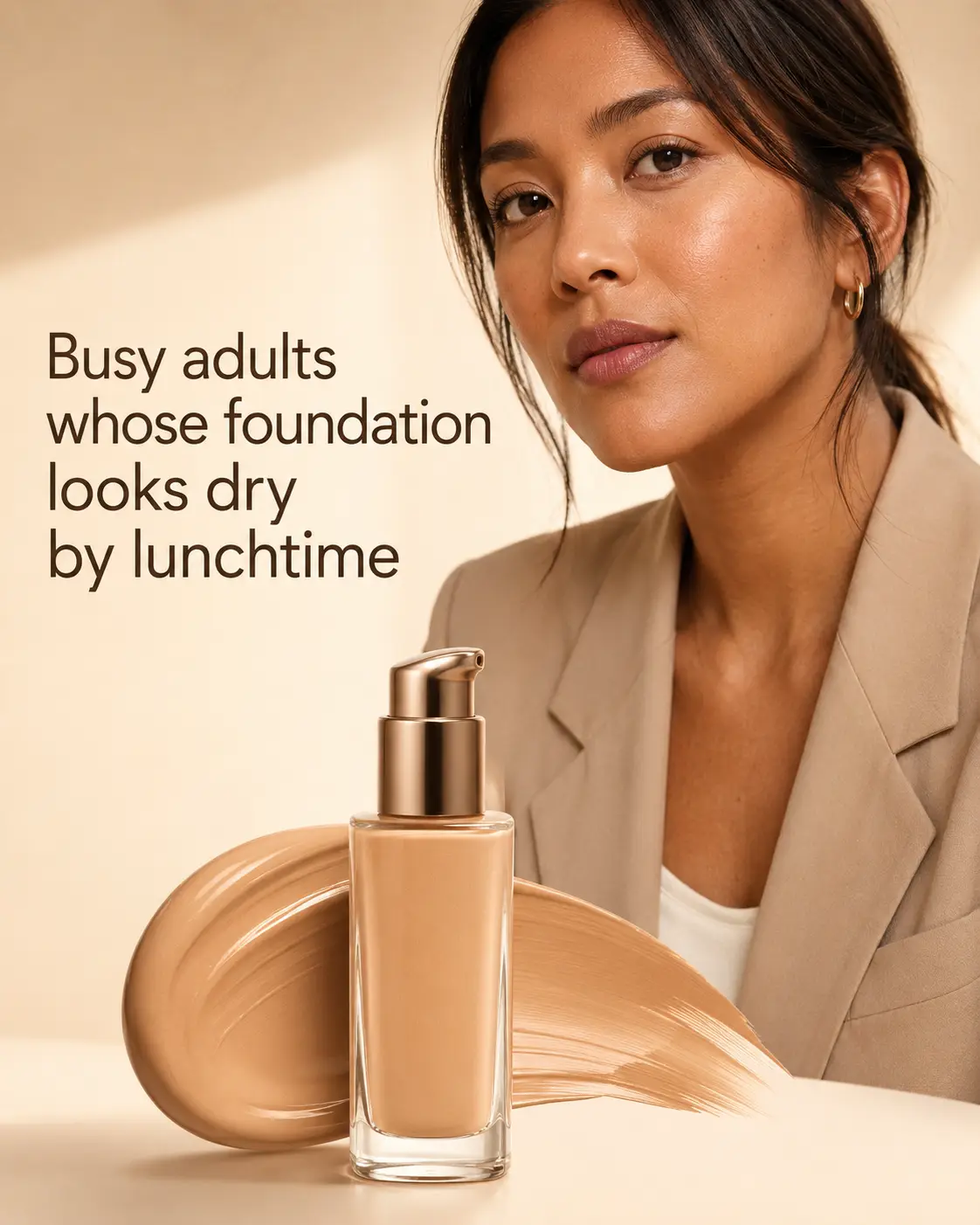
Do not write for “people who want better skin.” Write for “busy adults whose foundation looks dry by lunchtime.” Specific people give you specific language.
Then choose one campaign goal. Do you want a purchase, booking, trial, app install, quote, or product-page visit? Your goal shapes the CTA and decides how much explanation the script needs.
Use this short brief:
- Audience: Who should recognize themselves?
- Problem: What frustrates them now?
- Benefit: What becomes easier or better?
- Proof: What can you honestly show or verify?
- Action: What should they do after watching?
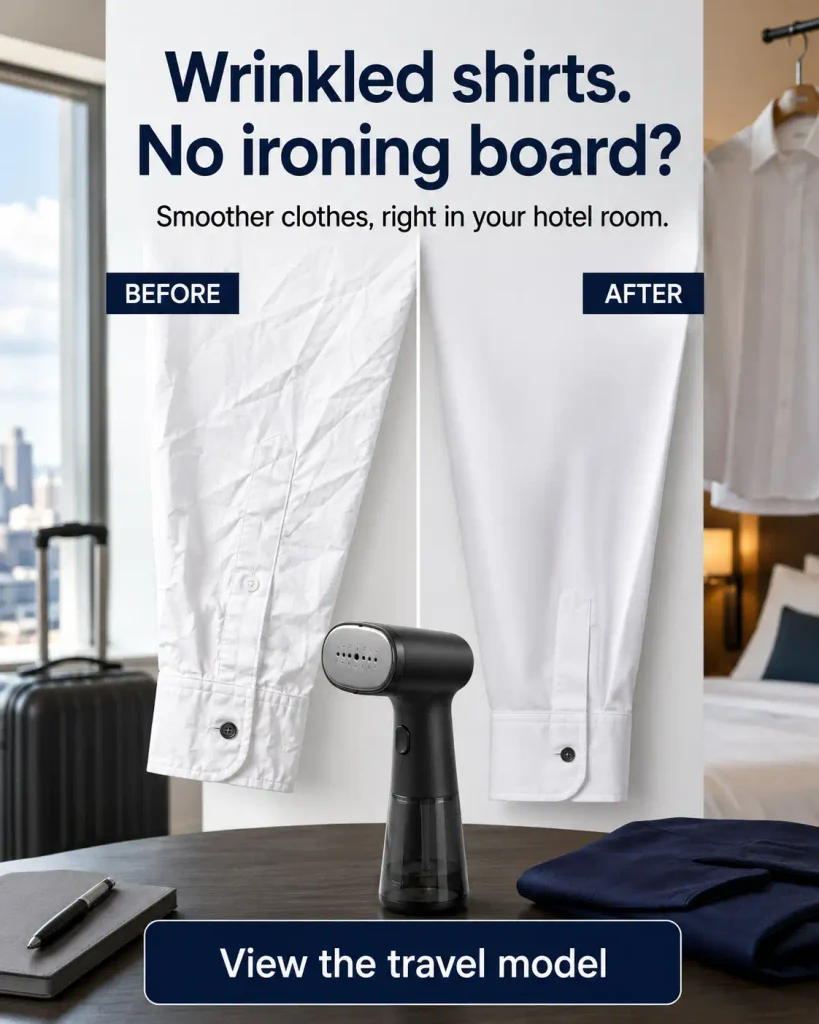
Here is a simple example for a compact clothing steamer:
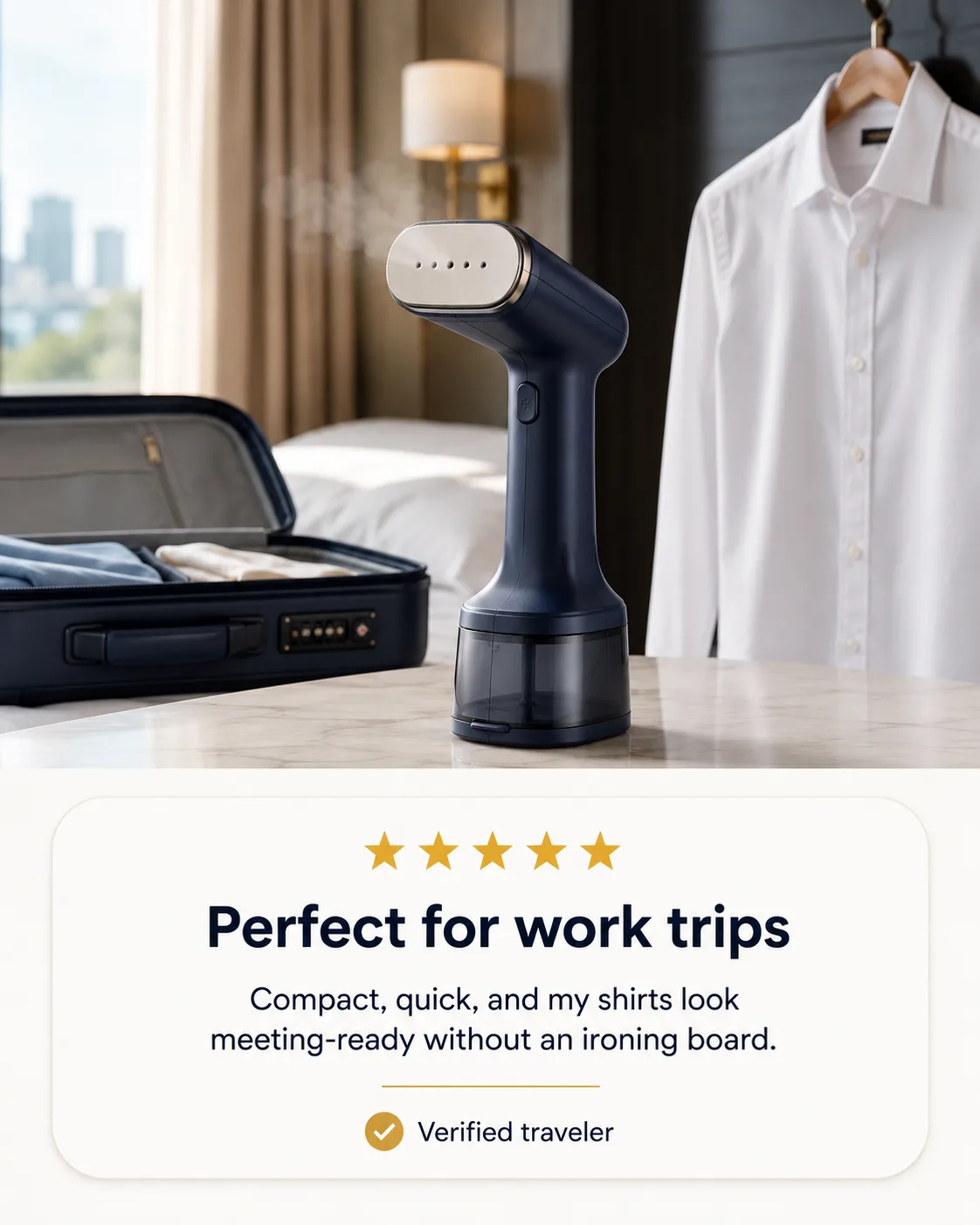
Audience: frequent business travelers. Problem: wrinkled shirts in hotel rooms. Benefit: smoother clothes without an ironing board. Proof: a side-by-side sleeve demo. Action: view the travel model.
You now have enough direction to start. Sometimes more notes are procrastination wearing glasses.
2. Write a hook built around recognition
Your hook should help the right viewer recognize a problem, result, or useful surprise. It should not hide the point behind vague suspense.
Try four opening routes:
- Problem-first: “Hotel iron again?”
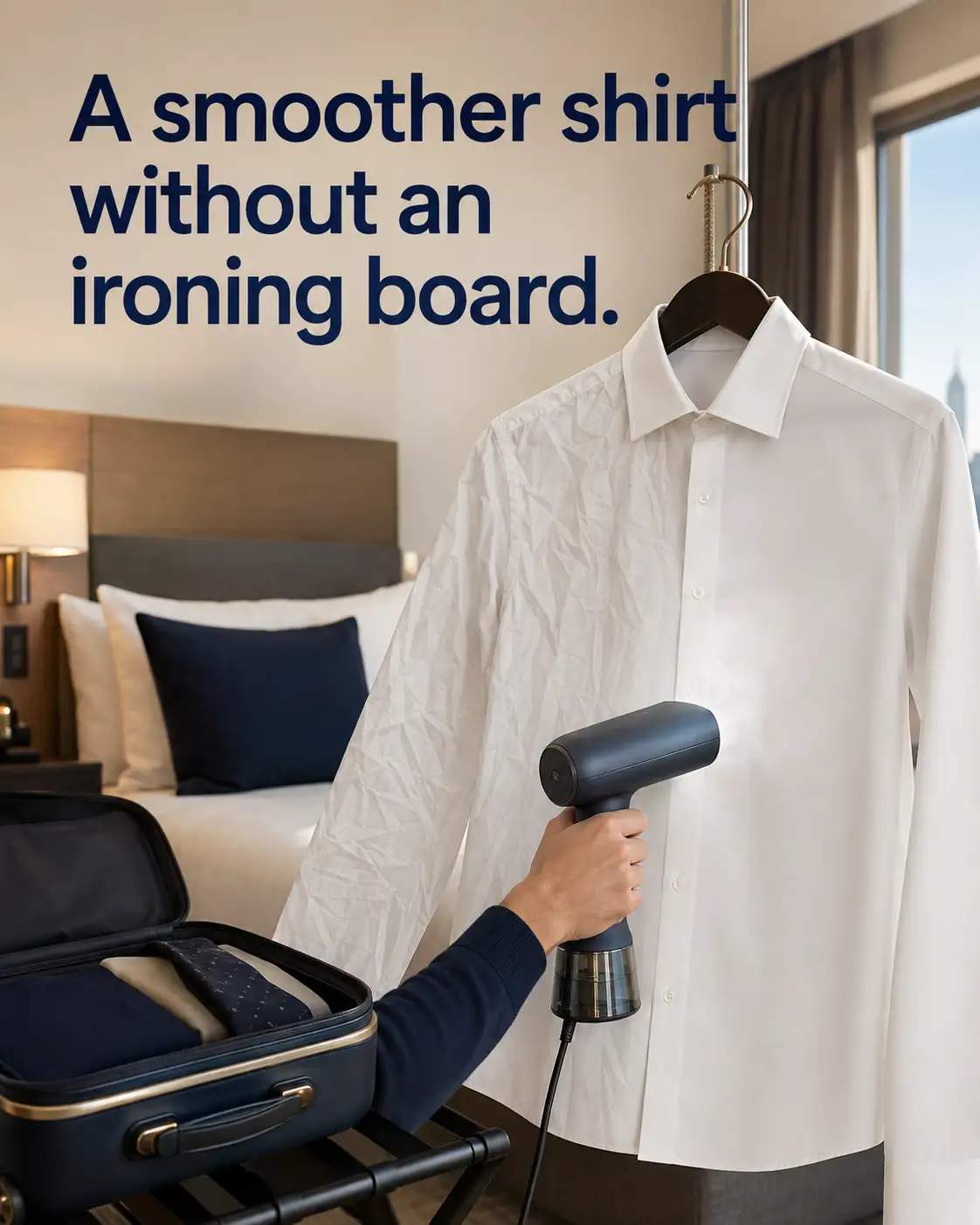
- Result-first: “A smoother shirt without an ironing board.”
- Proof-first: Show one wrinkled sleeve beside one steamed sleeve.
- Objection-first: “No, you do not need the full-size steamer.”
Write at least three options. The first line carries too much responsibility to accept your first draft politely.
For a deeper library of opening structures, use Zeely’s guide to scroll-stopping hooks for ads. That page owns detailed hook inspiration, while this guide shows how the hook connects to the rest of the script.
3. Turn one feature into a useful benefit
A feature tells the viewer what the product has. A benefit tells them what changes in their day.
Compare these lines:
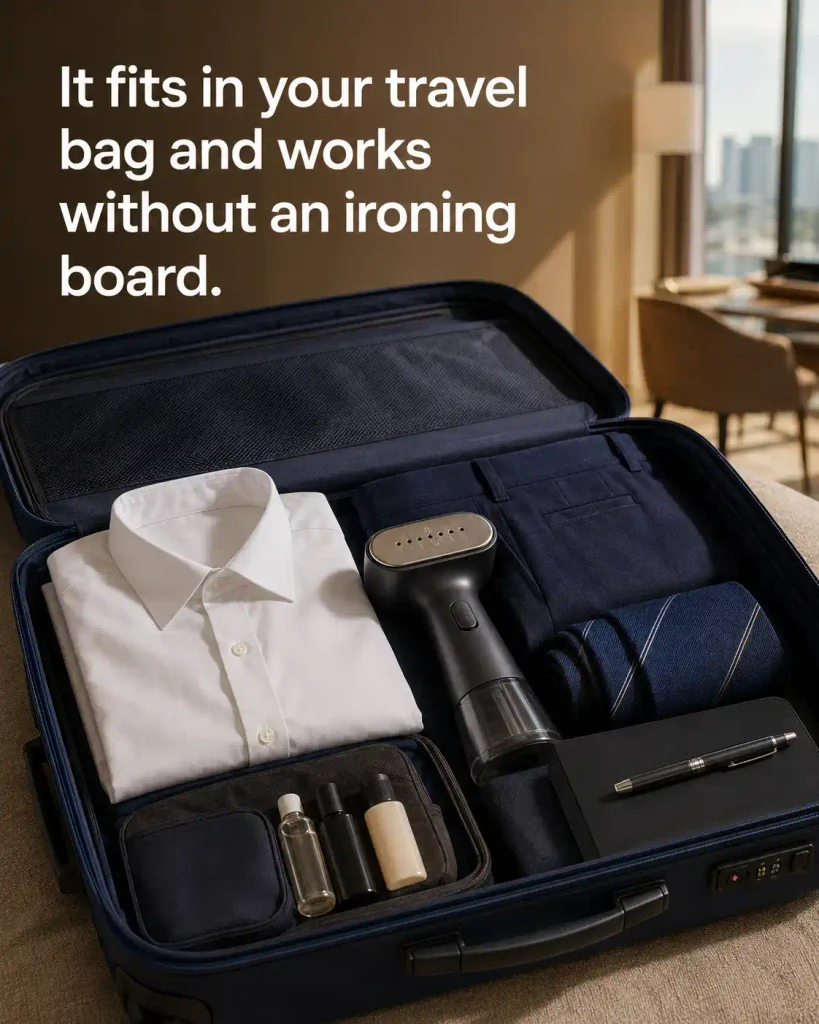
“It has a compact handheld design.”
“It fits in your travel bag and works without an ironing board.”
The second gives the buyer a reason to care.
Use this sentence when your copy feels flat:
Because the product has [feature], you can [practical benefit] without [old frustration].
Keep the mechanism simple. You are writing an ad, not defending a doctoral thesis before a stern committee.
Keep the mechanism simple. You are writing an ad, not defending a doctoral thesis before a stern committee.
4. Add proof that matches the promise
Proof can come from a demonstration, customer review, verified result, fair comparison, guarantee, certification, or clear product mechanism. Choose the strongest honest option you have.
When the benefit is visual, show it. A before-and-after sleeve needs fewer words than “our powerful steaming technology delivers exceptional smoothing performance.” Let the footage prove the result.
Check every number, review, price, deadline, and comparison before launch. The Federal Trade Commission’s advertising guidance requires truthful claims supported by appropriate evidence. Your spoken line, captions, footage, and landing page should make the same promise.
5. Finish with one clear CTA
A call to action should tell the viewer what happens next. Match it to their readiness.
Use lower-friction CTAs when the buyer still needs information:
- See the travel model
- Compare both sizes
- Watch the product demo
- Check availability
Use direct CTAs when the offer already feels clear:
- Choose your shade
- Start your trial
- Book your appointment
- Order the travel size
Avoid stacking requests. “Shop now, follow us, share this, and join our email list” does not create momentum. It creates admin.
Here is the completed ad script:
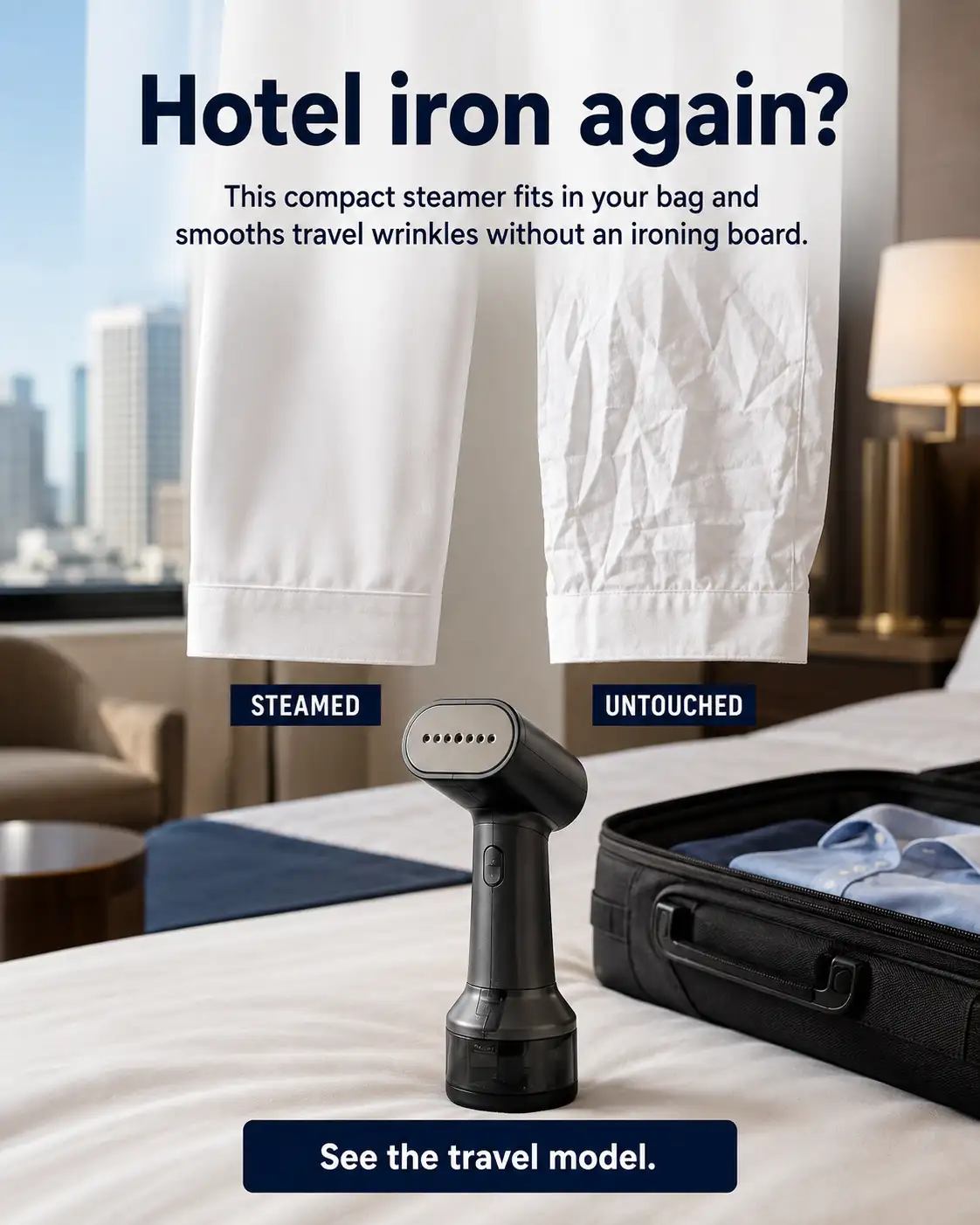
Hook: “Hotel iron again?”
Benefit: “This compact steamer fits in your bag and smooths travel wrinkles without an ironing board.”
Proof: “[Show one steamed sleeve beside one untouched sleeve.]”
CTA: “See the travel model.”
The demonstration carries the proof. An unfamiliar offer may need more context.
Choose the right ad script framework and length
A 2026 Kantar study compared 15-second and 30-second versions of one campaign across TV, Prime Video, YouTube, and Instagram. Both lengths produced comparable brand lift, while early brand cues helped Instagram match TV-level recall. The study covered one campaign, so use it as direction rather than a universal rule. Kantar’s findings support a practical lesson: clear timing matters more than padding.
Choose a framework by the buyer’s situation:
| Framework | Best use case | Basic order |
| AIDA | The buyer needs context | Attention, interest, desire, action |
| PAS | The buyer already knows the problem | Problem, pressure, solution |
| Before-After-Bridge | The change is easy to picture | Current state, desired state, product bridge |
| FAB | A feature creates a clear advantage | Feature, advantage, benefit |
| Demo-Proof-CTA | The product works well on camera | Show it, support it, ask |
Motion’s UGC scripting guide uses six beats: hook, problem, solution, value, proof, and CTA. That is useful for creator ads, but too crowded for six seconds.
Match the length to the message:
| Ad length | What usually fits | Best use case |
| 6 seconds | One idea, product, CTA | Clear offer or visual result |
| 15 seconds | Hook, benefit, proof, CTA | Paid social and product demos |
| 30 seconds | Hook, context, benefit, proof, objection, CTA | New products, services, or considered purchases |
After choosing the message, open Zeely’s AI video ad script templates for 6, 15, and 30 seconds. That page gives you ready-to-use templates, prompts, first-frame ideas, and duration examples..
Adapt scripts for UGC, voiceover, and short-form video
Pew Research Center reports that 62% of adult TikTok users use the platform to look at product reviews or recommendations. Many viewers are comparing options and checking whether a product feels credible. Pew’s 2026 TikTok summary gives the full breakdown.
Your core promise can stay stable across formats. The delivery should change.
Voiceover scripts
Use voiceover when the product demonstration carries most of the story. Keep each sentence easy to match with a shot. Do not describe what the viewer can already see unless the words add meaning.
“Fill it at night. Pour cold brew in the morning. Skip the coffee line.”
UGC scripts
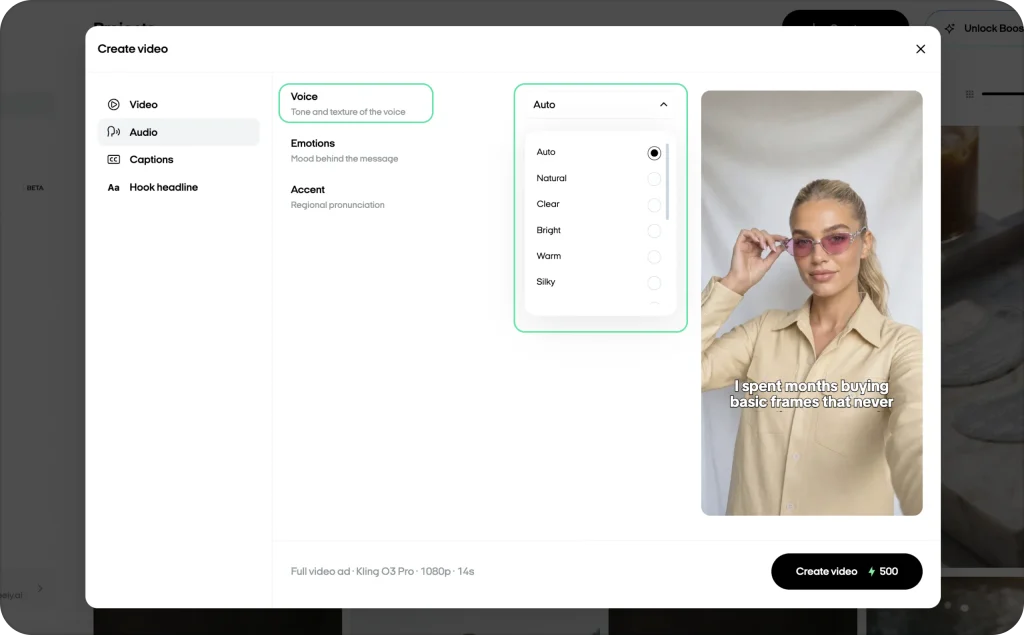
UGC means user-generated content. In paid ads, it often describes creator-style video designed to feel personal and native to the feed.
Give the creator required message beats, approved claims, and a clear CTA. Let them shape natural transitions.
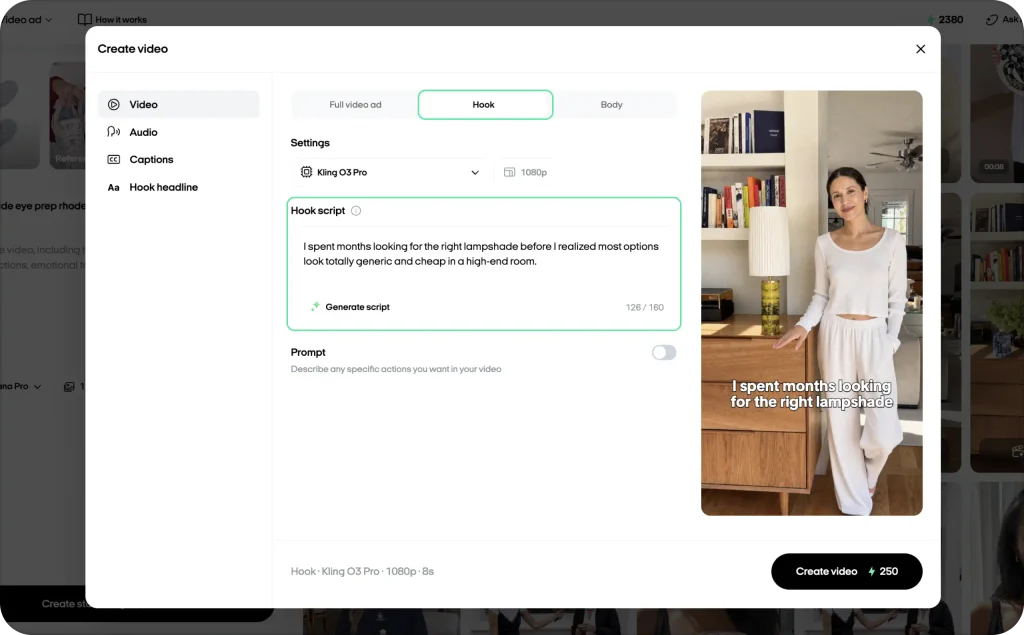
For creator-style opening lines, use Zeely’s UGC hooks for video ads. The page focuses on creator-style openers, so link to it for hook inspiration.
TikTok and other short-form scripts
Start with movement, a face, a product action, or a clear text line. The first frame should make sense before the viewer decides whether to turn on sound.
For TikTok-specific openings, continue with Zeely’s TikTok ad hooks. That article owns platform-native opener ideas.
Keep the promise stable. Change the doorway.
Edit every script until it sounds human
Good scripts for ads sound clean when spoken. They use familiar words, short thoughts, and pauses that feel natural.
Read the draft aloud at normal speed. Mark every place where you stumble, lose breath, or feel silly. The sentence is usually the problem.
Cut these common fillers:
- In today’s fast-paced world
- We are excited to introduce
- Our revolutionary product
Replace praise with something the viewer can picture.
Before:
“Our innovative planner streamlines your workflow for maximum productivity.”
After:
“Put today’s tasks in one list and start with the first one.”
The second line gives the viewer a visible action.
Now give every spoken beat a visual job. Let the voice explain the benefit while the footage proves it. Do not make the narration, caption, and text overlay repeat the same long sentence.
Finish with a claim check. Confirm prices, reviews, offers, guarantees, dates, and comparisons. One unsupported sentence can make the ad unusable.
Test ad scripts without wasting your budget
Motion’s 2026 Creative Benchmarks analyzed $1.29 billion in Meta spend across 578,750 creatives and 6,015 advertiser accounts. Roughly 5% met its “winner” definition, meaning they spent at least ten times their account median and at least $500. Motion measures spend allocation, not revenue or return on ad spend, so treat the finding as a testing signal rather than a sales promise.
Start with the hook. Write three openings for the same body, proof, offer, audience, CTA, and landing page:
- Problem-first hook
- Result-first hook
- Proof-first hook
Keep the stronger opener, then test the next useful variable. That might be the proof type, offer wording, or CTA.
Do not change the hook, creator, offer, landing page, and audience together. You may improve the ad without learning why.
| What you see | What the script may need | Next test |
| Weak early viewing | A clearer hook or first frame | Test a sharper opening |
| Healthy viewing, weak clicks | A more specific benefit or CTA | Test the promise or action |
| Strong clicks, weak sales | Better message-to-page alignment | Check the offer and landing page |
| A former winner slows down | A fresh opener or proof format | Refresh one creative element |
One test should answer one useful question. That is slower than guessing for ten minutes and much faster than guessing for ten weeks.
Use an AI ad script generator without losing control
An ad script generator works better with a real brief. Include the audience, problem, benefit, proof, format, tone, and CTA.
Try this prompt with an AI script generator:
Write three 15-second creator-style video scripts for [product]. The audience is [specific buyer]. They struggle with [problem]. Focus on [benefit]. Use only this proof: [evidence]. Give each version a different hook and one CTA. Keep the language easy to say aloud. Do not invent reviews, numbers, prices, or guarantees.
Review every AI script against five questions:
- Does the hook match a real customer moment?
- Does the script make one clear promise?
- Can you support every claim?
- Can a person say each line naturally?
- Does the CTA match the landing page?
Weak AI generated ad scripts often start with vague inputs. “Write a viral skincare ad” gives the tool no useful boundaries. A precise brief makes each option easier to judge.
When you want help moving past the blank page, open Zeely’s AI ad script generator. Keep your brief beside you and review every usable line against the same five-step method. Check the product page for the current workflow and supported formats, since those details can change as the tool develops.
FAQ about ad scripts
Choose one audience and goal. Write a relevant hook. Turn one feature into a practical benefit. Add proof that supports the promise. Finish with one clear CTA.
Read the draft aloud before filming. That final pass catches stiff wording and crowded sentences.
Start with a precise brief covering the buyer, problem, benefit, proof, format, and action. Give every line one job, use plain language, and remove unsupported claims.
Then test one meaningful variable instead of rebuilding everything together.
Most scripts need a hook, product context, benefit, proof, and CTA. A six-second ad may combine several jobs in one visual. A longer ad can answer one objection.
Choose the shortest length that explains the offer honestly. Use six seconds for one clear idea, 15 seconds for a simple sales sequence, and 30 seconds when the buyer needs context or reassurance.
Give the creator fixed message beats, approved claims, and the CTA. Let them shape everyday transitions around those points. Keep disclosures, prices, guarantees, and exact claims fixed when needed.
AI can produce a useful first draft and several hook options. You still need to check the facts, customer fit, spoken rhythm, proof, and landing-page match.
Write one focused script today. Add one honest benefit, one proof point, and one action. Then test two new hooks without changing the rest of the message.
That clean test will teach you more than another hour spent polishing adjectives.

Emma blends product marketing and content to turn complex tools into simple, sales-driven playbooks for AI ad creatives and Facebook/Instagram campaigns. You’ll get checklists, bite-size guides, and real results, pulled from thousands of Zeely entrepreneurs, so you can run AI-powered ads confidently, even as a beginner.
Written by: Emma, AI Growth Adviser, Zeely
Reviewed on: August 31, 2026