How to promote your business on TikTok and get customers
When you want TikTok to bring in customers, better start with the right content and promotion mix. I’ll show you what to post, when to use creators or Shop, and when paid promotion makes sense.
Key takeaways
- You need to pick a TikTok business account if you usually use TikTok to sell products or services
- Build your content around demos, customer questions, useful tips, proof, and occasional offers
- Use the words people search for on TikTok in your scripts, on-screen text, captions, and descriptions
- Involve authors, TikTok Shop, Promote, or Ads Manager if they help you achieve a specific goal
- Keep track of clicks, leads, purchases, and customer engagement, not just views
When you’re looking for ways to promote your business on TikTok, growing your follower count is just one part of the equation. You need the right people to discover your content, understand what you’re selling, and decide to take the next step.
Sometimes a simple video can do the trick. In other cases, a creator’s post, a product in TikTok Shop, a “Promote” campaign, or a paid ad will prompt someone to make a purchase.
This is my take on using TikTok for business: you need to use each tool where it’s most effective, and then tie all the pieces together into a single customer journey.
What is TikTok for business, and is it worth it in 2026?
TikTok for business is simpler than most guides make it sound. You post videos that show what you sell. People watch, get curious, and some of them buy. That’s it at the core.
How they buy depends on what you set up. Maybe they tap a link to your website. Maybe they check out through TikTok Shop without leaving the app. Maybe they just message you and ask “how much?” All of those count. You’ve got organic videos, TikTok search, creators, Shop, Promote, and paid ads to work with, and you don’t need all of them on day one.
Is TikTok big enough to bother with? For most U.S. businesses, yes. Pew Research Center found in March 2026 that 37% of U.S. adults now use TikTok, nearly double what it was in 2021. That’s not a niche app anymore.
But the audience size alone wouldn’t convince me. What makes TikTok different from, say, running a Google ad is that people can watch your product being used before they ever click anything. A fitness coach can show a 40-second morning routine. A jeweler can film a ring being sized. A dog groomer can post a before and after that gets shared by people who don’t even own a dog yet. By the time a viewer reaches your store or your DMs, they already understand what you’re offering. That changes the conversation.
Advantages of TikTok for business
The thing I like most about TikTok for business is that one video can do more than one job.
A 45-second clip of you packing an order can reach someone who’s never heard of your brand, show them exactly what the product looks like, and end with “link in bio” or a Shop tag. That’s awareness, proof, and a path to purchase from a single piece of content you filmed on your phone during a lunch break.
Here’s what a business TikTok account actually lets you do:
- Get in front of people who don’t follow you yet
- Show a product being used instead of just describing it
- Handle the “but does it actually work?” question before anyone has to ask
- Let real customers and real results speak for you
- Try out a hook or an offer organically, and only spend money on the one that gets a reaction
- Point viewers somewhere specific, whether that’s your website, a booking page, Shop, or your DMs
Not every video needs to do all six. Most of mine wouldn’t. One video earns the attention. A different one answers the doubt that was keeping someone from buying. A third one finally gets them to tap through to your product page. They work as a set, not individually.
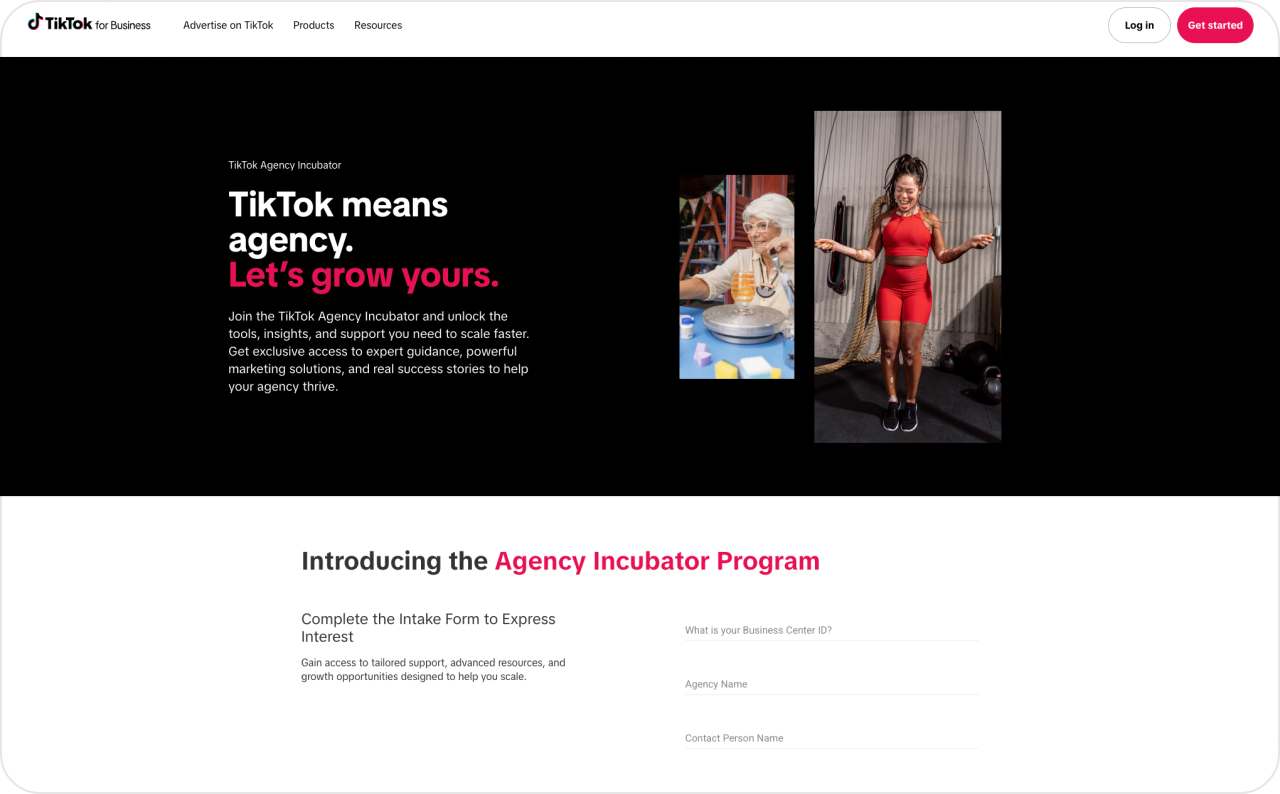
Benefits of TikTok for small businesses
If you’re running a small operation, TikTok has one advantage over most other ad channels: you can learn what works before you spend anything.
Post a video about your product. Try a different angle the next day. See which one people actually watch. You’re testing hooks, offers, and messages with real reactions from real people, and it costs nothing but your time. By the time you’re ready to put money behind something, you already know it connects.
You also don’t need expensive production. I’ve seen a candle maker outsell a competitor’s polished studio ad with a video shot on a kitchen counter, because the kitchen video actually explained why the candle smells different. Helpful beats pretty on TikTok almost every time.
If I were starting fresh with a small team, I’d give TikTok three jobs before anything else:
Discovery. Get your product in front of people who haven’t found you yet.
Education. Show what it does, who it’s for, and what makes it worth the price.
Conversion. Tell the viewer exactly what to do next. Visit your site. Message you. Add to cart. One clear action.
Build that before you worry about your follower count or chase a viral moment. Those three jobs are what actually bring in revenue.

How to use TikTok for business from day one
If you’re starting from zero, don’t begin with trends.
Start with four decisions:
- Who should find this account
- What problem or desire brings them to TikTok
- What you want them to do after watching
- What content you can realistically make every week
That keeps using TikTok for business connected to an actual business outcome.
How to find your target audience on TikTok
Forget the advice that starts with “define your ideal customer avatar.” On TikTok, your audience tells you who they are. You just have to know where to look.
Open TikTok and search for what you sell. Not your brand name. The thing. “Curly hair conditioner.” “Custom birthday cake.” “Bookkeeping for freelancers.” Whatever people would type if they wanted something like your product but didn’t know you existed.
Now watch what comes up. Pay attention to the comments more than the videos themselves. Comments are where people say things like “does this work on 4C hair?” or “how long does shipping take?” or “I bought something like this and it broke in a week.” Those questions and complaints are gold. They tell you what your audience cares about, what they’re nervous about, and what nobody else is answering well enough.
Look at who’s creating popular videos in your category. Not to copy them, but to see which topics keep showing up. If five different creators have posted about “what to look for in a wedding photographer” and all five got traction, that’s a topic people actively search for. You don’t have to guess.
After that, start posting. Try a product demo one day and a common question the next. Maybe a behind-the-scenes video after that. Don’t overthink it. Your real target audience shows up in the data, not in a spreadsheet you filled out before posting anything.
Watch which videos bring profile visits. Read who’s commenting and what they’re asking. Check which posts actually send people to your link. Within a few weeks, you’ll know more about your TikTok audience than any demographic report could have told you upfront.
TikTok business account vs personal account
TikTok says businesses whose primary goal is promoting a product or service should use a Business Account. Business Accounts include commercial-focused tools, performance information, audience data, Promote, and access to TikTok’s Commercial Music Library.
There is one tradeoff worth knowing before you switch.
Business Accounts use the Commercial Music Library for business content rather than TikTok’s full general music catalog. TikTok says its current Commercial Music Library contains about 1 million tracks cleared for commercial use.
A trending sound may work perfectly for a personal creator while lacking commercial rights for your brand.
How to switch to a business account on TikTok
TikTok’s current app flow is simple:
- Open your profile
- Tap the menu
- Open Settings and privacy
- Tap Account
- Select Switch to Business Account
- Follow the prompts and choose the business category that fits you
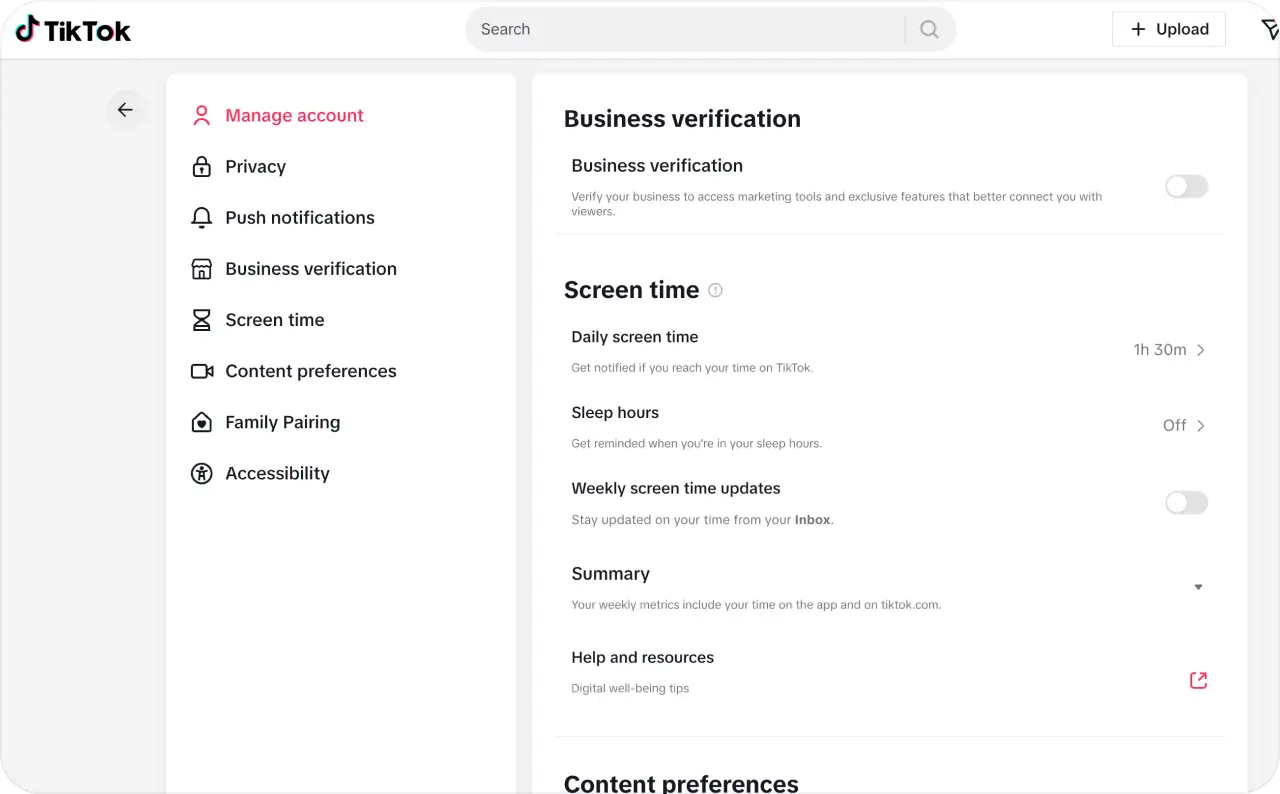
TikTok also separates business features into different entitlement levels in 2026. Some profile, lead, conversion, and public business features depend on advanced access or business verification rather than appearing automatically for every account.
So I would not build your profile around a feature until you can actually see it in your account.
Make your profile answer three questions fast
When somebody likes one of your videos and checks the profile, they should immediately understand:
What do you sell?
“Handmade desk organizers for small home offices”
Who is it for?
“Built for people working from tiny spaces”
What should they do next?
“See sizes and colors below”
Keep your username close to your business name when possible. Use a recognizable logo, product, or founder image. Add your website or destination link when your current account entitlement supports it.
Business verification can add further business features. TikTok says account-level business verification typically takes one to five business days after submission.
How to promote products on TikTok without sounding salesy
You do not need 30 unrelated TikTok ideas. You need a small group of formats you can repeat without making the account feel repetitive. I would start with five.
The easiest way to promote products on TikTok is to make the product useful inside the content.
A bottle sitting on a table gives me almost nothing.
The same bottle solving a specific problem gives me a reason to watch.
That difference matters because shopping behavior on TikTok is already substantial. EMARKETER reported in August 2026 that 70% of US social buyers surveyed had made a purchase on TikTok during the previous 12 months, more than on any other social platform in that survey.
I would build product videos around one of these jobs:
Demonstrate: “Here is what happens when I use it”
Teach: “Here is the problem this solves”
Compare: “Here is the difference between these two options”
Answer: “Here is what customers keep asking before they order”
Prove: “Here is the result or detail people usually want to see”
Offer: “Here is what is available, for whom, and why now”
You can still make direct promotional posts. Just do not make the viewer decode the value from a product beauty shot and a discount code. If filming every new version slows you down, Zeely’s AI TikTok ad creator can help you turn product details into short-form video creative with scripts, avatars, captions, references, and editable inputs.
Promote a service the same way
A service business has no physical product to hold on camera, but you still have something to demonstrate. Show the process.
A cleaning company can show one difficult surface. A consultant can explain one expensive mistake. A photographer can show how the same scene changes with positioning and light.
The service becomes easier to buy when the viewer understands what you actually do.
Your first seconds still matter
A good video can lose the viewer before the useful part arrives. I would test the first line separately from the body of the video. Problem-first, demonstration-first, POV, customer-comment, and curiosity openings can all work depending on the product.
I’ve collected more examples in my guide to TikTok ad hooks that fit short-form video. You do not need to use the same hook forever. Keep the core message and test different ways to enter it.
How TikTok SEO helps your business get discovered
TikTok is also a search environment. TikTok’s Creator Search Insights also lets creators explore topics people are actively searching for and identify areas with content demand. I would use that information in four places.
Say the phrase people search
If your video answers “how to clean white sneakers,” say that naturally near the start.
Do not replace it with a vague line like “you need to see this.”
Put the topic on screen
Use readable on-screen text that explains the subject.
“3 ways to style a linen shirt” gives TikTok and the viewer clearer context than “look 1.”
Write a useful caption
Your caption does not need to become an SEO paragraph.
Name the product, problem, audience, or use case naturally.
Use specific hashtags, not a cloud of generic ones
A local bakery gets more context from #chicagobakery and a product-specific tag than from stacking broad tags simply because they have billions of views.
TikTok SEO works best when the video actually answers the query. Keywords cannot rescue content that dodges the question.
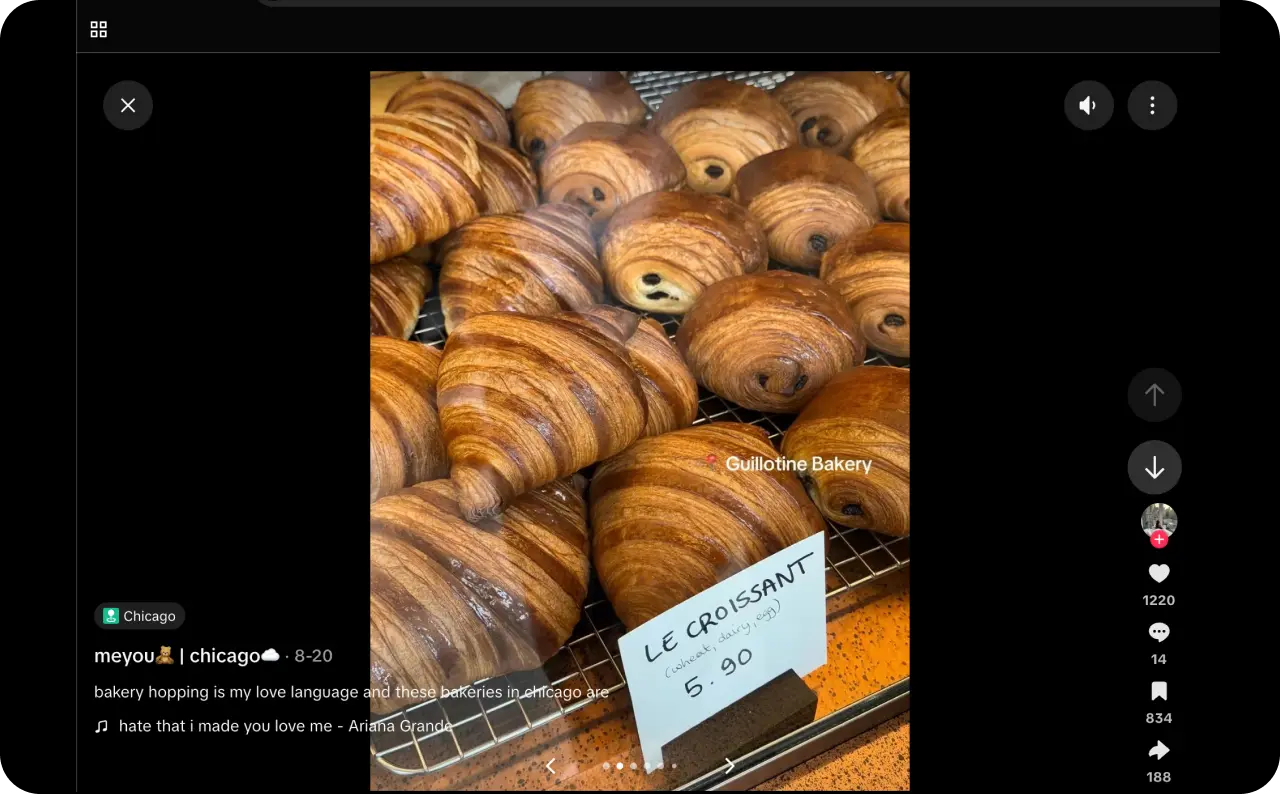
Source: TikTok
How creators and TikTok Shop can turn discovery into sales
You do not have to build every piece of content yourself.
Creators can show your product in a different voice, environment, or use case. For a small business, I care less about the creator having the largest possible audience and more about whether their audience overlaps with the people who could genuinely buy.
Before paying for a collaboration, check:
- What subjects the creator normally covers
- Whether comments look relevant to your category
- How they demonstrate products
- Whether previous sponsored posts feel natural
- What usage rights you receive
- Whether paid amplification is included
A creator partnership should give you more than a temporary view spike. Good creative can also teach you which messages, objections, demonstrations, and hooks deserve another test.
Do you need TikTok Shop to sell?
No. Plenty of businesses sell through TikTok without it.
A bakery posts a video of a custom cake, someone messages “how do I order one,” and the sale happens over DM or on the bakery’s own website. TikTok Shop just removes that extra step. The customer sees the product, taps, and checks out without leaving the app. Useful, but not required.
One thing worth knowing if you’re a US seller in 2026: you don’t need a follower count to open your own TikTok Shop. That surprises people because the “1,000 followers” number gets repeated everywhere. But that rule is about affiliate creators who want to sell other people’s products through the marketplace. If you’re selling your own products through a TikTok Shop or marketing account, there’s no follower minimum to get started. Creators who want affiliate marketplace access need at least 1,000 followers, and marketing creators need 5,000.
So if you’ve been waiting to hit 1,000 before setting up Shop, you might not have to.
How to advertise your business on TikTok when organic content starts working
Paid promotion becomes more useful once you know what message people respond to. I would think about TikTok’s paid options in two levels.
TikTok Promote
Promote lets you amplify existing TikTok videos and LIVEs with a simpler in-app flow.
Current objectives include account growth, leads, sales, and LIVE promotion. TikTok lets you choose a preset promotion pack or configure your own audience, duration, and budget. I would use Promote when the goal is straightforward and you already have a post worth amplifying.
TikTok Ads Manager
Use Ads Manager when you need more control over objectives, campaign structure, targeting, bidding, measurement, retargeting, or a larger paid testing setup.
TikTok groups Ads Manager objectives across awareness, consideration, and conversion. Current options include Reach, Traffic, Video Views, Community Interaction, Lead Generation, App Promotion, and Sales depending on the account and setup.
Spark Ads sit between organic and paid nicely because they let you amplify an existing authorized TikTok post rather than rebuilding the idea as a separate-looking ad.
I’m deliberately keeping budgets out of this section. If you need minimum spend, CPC, CPM, CPV, CPA, testing budgets, or ad-format pricing, use my separate guide to TikTok advertising costs in 2026.
How to turn TikTok views into customers
Views tell you that TikTok distributed the content. They do not tell you whether the content helped the business. I would connect each video to the next action I actually want.
| Goal | What I would watch |
| Discovery | Views, unique viewers, search traffic, watch behavior |
| Interest | Profile visits, comments, shares, saves |
| Traffic | Website clicks, product-page visits |
| Leads | Forms, calls, messages, booked appointments |
| Ecommerce | Product clicks, add-to-cart activity, purchases |
| Paid advertising | CTR, CPC, CPA, ROAS alongside conversion quality |
The useful question is not “Did this video go viral?”
Ask, “What happened after people watched?”
A product video with 8,000 views and 60 qualified website visits may matter more than a funny post with 200,000 views and no buying behavior.
Build a visible path after the video
If your TikTok gets someone interested, do not make them search for the next step.
Use the appropriate destination available to your account:
- Product or Shop page
- Website
- Lead form
- Booking page
- Direct message
- Profile with clear next-step information
Then track that destination.
For website traffic, use consistent campaign parameters where possible. For paid campaigns, set up the relevant TikTok measurement tools before judging conversions.
The closer your measurement gets to leads, purchases, and customer value, the less likely you are to mistake attention for business growth.
How Zeely helps you create more TikTok content without another shoot
Most small teams don’t run out of TikTok ideas. They run out of time to film them.
Say you want to know if “buy two, get one free” works better than your usual 20% off. One simple question like that can eat a whole afternoon of filming and editing, all before a single customer sees the video. Now imagine doing that every week.
This is where I’d bring in AI.
Zeely is an AI Marketing Intelligence Platform, and for TikTok, the creative side is the part you’ll use most. In the Video Ad tool, you start with your product or service and choose an image of it. If the video needs someone talking to the camera, pick an AI avatar. A reference image helps the AI get the scene right.
The script can come from AI or from you. I’d let AI write the first draft, then rewrite the opening line yourself, because that’s the line viewers judge you on. You can adjust the voice and captions, and nothing gets generated until you’ve looked it over. Have an ad that’s working but starting to wear out? Make a new hook and keep the rest of the video.
Once a video is done, Social Posting lets you publish it to TikTok from inside Zeely.
For paid TikTok ads, though, you still have to go through TikTok Ads Manager. Zeely’s paid campaign launch currently works only with Meta, which covers Facebook and Instagram.
Here’s how I’d split the work. Make your versions in Zeely, post them organically, and give them about a week. The one people actually watch to the end is the one worth paying to promote.
FAQ
For sure, and you’ve got a handful of paths here. Go the organic route and grow your audience naturally, put budget behind a video that’s already getting views with Promote, link up with creators who know the platform, move products through TikTok Shop (if you’re eligible for that), or go the traditional route with full campaigns in Ads Manager. Really comes down to what action you’re hoping people take.
Switching to a TikTok Business Account doesn’t cost anything on its own. Organic posting stays free. Costs only kick in when you go for paid ads, Promote, creator partnerships, production services, TikTok Shop fees, or other paid activities.
Most people see it wrapped up within one to five business days once they’ve sent in everything TikTok asks for. That said, Business Center verification is its own process and doesn’t always stick to that same timeline, so pop into your account now and then to see where things stand.
If you’re in it to sell something or get your service in front of people, then a Business Account makes the most sense. You get commercial-focused tools and the Commercial Music Library, but the catch is you lose normal access to TikTok’s general music library for business content.