AI ad generators small businesses can trust in 2026
Here’s which AI ad generator to pick based on your budget, ad format, product type, and how much work you can realistically do yourself.
The best AI ad generators for small business are the ones that turn a product, offer, or brief into usable ads with less cleanup. Zeely is the strongest pick for small businesses that need static ads, UGC-style video, ad copy, and launch help in one flow. Canva is best for design control. Predis.ai fits social content volume. Quickads is useful for inspiration and ad research. AdCreative.ai and Pencil suit teams that care about scoring, testing, and creative systems.
Running ads as a small business can feel expensive before you even spend on media. You need the product angle, the visual, the headline, the format, the CTA, and the landing page to make sense together. A good AI tool should help you move faster without making your brand look generic.
I’ll compare the tools by what matters in real work: price, output quality, formats, editing control, brand fit, and how close each tool gets you to a campaign you can test.
Best AI ad generators for small business, compared clearly
Here’s my honest starting point. The best AI ad generators for small business are not always the tools with the longest feature list. They’re the ones that remove the most unpaid work from your day.
For small teams, that usually means five things:
- You can start with a product URL, product photos, or a short brief
- You can create more than one format from the same idea
- You can edit the result without opening three more tools
- You can keep the ad on-brand
- You understand what you’ll pay before you commit
That last one matters more than most comparison articles admit. A cheap AI ad maker becomes expensive when it gives you 40 outputs and only one is usable. A higher monthly price can be fair when it saves editing time, designer back-and-forth, and launch setup.
That’s why I’m comparing these tools through a small-business lens, not an enterprise marketing lens.
| Tool | Current price snapshot | Best for | Ad creative fit | Watch before buying |
| Zeely AI | Starter $29.95/mo, Plus $49.95/mo, Growth $79.95/mo | Small businesses that want ads, copy, UGC-style videos, static creatives, and launch support | Best overall for product-led small business ads | Ad budget and service fees are separate from the subscription |
| Quickads | $0 to start, Pro plans from $99/mo | Ad inspiration, fast image and video ad creation, research library | Strong for fast ad ideation and competitor-style research | Pro starts higher than many small-business starter plans |
| Predis.ai | Core from $19/mo annual, shown as $32 monthly | Social content, product posts, short videos, scheduling | Good for social-heavy sellers and ecommerce posts | Credits, brands, and social channels shape the true cost |
| Omneky | Lite $29/mo, Standard $99/mo, Pro $249/mo | Omnichannel ad generation and teams that want creative plus launch tools | Strong for growth teams with several channels | Credit limits and team needs can move you up fast |
| Pencil | Public pages show Core, Growth, Pro, with third-party listings often citing Core from $14/mo | Teams that want creative scoring and ad testing systems | Strong for performance creative teams | Confirm live pricing before purchase because plan details shift |
| AdCreative.ai | Monthly Starter $39, Professional $249, Ultimate $999 | Static ads, scoring, competitor research, brand kits | Strong for ad creative volume and scoring | Credits are tied to downloads, not just generations |
| Canva | Free plan, Pro and team plans vary by billing | Design control, templates, brand kits, simple social ads | Best design-first option | Not built only for paid ad performance |
How to pick an AI ad generator without wasting budget
The easiest mistake is buying an AI ad generator because the sample ads look polished. Sample ads are not your business. Your products, margins, audience, offer, and landing page decide whether the tool will help.
Before you pick one, ask this:
- Can it work from my real product page?
- Can it create both static and video ads?
- Can I edit every important layer?
- Can I make several versions for testing?
- Can I keep my brand colors, logo, and tone?
- Can I export in the sizes I need?
- Can I launch or hand off the creative without rebuilding it?
For Zeely, the product link workflow is the main reason it fits small businesses. You can start from a product URL, create static ads and UGC-style videos, use templates, and move closer to launch without building everything from scratch. That makes Zeely a strong small business ad generator for owners who do not have a designer, video editor, and media buyer sitting beside them.
If you mostly need polished graphics, Canva is still useful. If you need a social calendar with ad-style posts, Predis.ai makes sense. If you care about competitor research and ad inspiration, Quickads deserves a look. If your team needs scoring and creative testing at a higher volume, Pencil or AdCreative.ai may fit better.
The secret is not finding the “smartest” AI. It’s finding the tool that removes the step you keep avoiding.
AI ad maker pricing is not the full cost
Small business owners usually compare subscription prices first. I get why. It feels clean. But ad tools hide cost in a few places.
The real cost is closer to this:
- Subscription price
- Credits or generation limits
- Download limits
- Number of brands
- Number of users
- Export quality
- Stock assets
- Editing time
- Ad account launch time
- Monthly ad budget
- Extra service fees
That’s why I like pricing tables, but I don’t trust them alone. A $19 plan can be a bargain for light social content. It can also be too tight if your videos burn credits quickly. A $99 plan can feel high, but it may be fair if it replaces research, creation, resizing, and scheduling work.
For small businesses, I’d judge every AI ad maker by cost per usable ad, not cost per output. If you generate 20 ads and only two are worth testing, your real cost is ten times higher than it looks.
Here’s my simple buying rule. Start with the lowest plan that lets you create at least one full test set. A full test set means three to five creative directions, not five tiny text swaps.
For example, test:
- One pain-point ad
- One product demo ad
- One price or offer ad
- One testimonial-style ad
- One founder or behind-the-scenes ad
That gives your campaign real creative variety. It also helps you avoid blaming the tool when the real problem is that every ad says the same thing.
What forum threads say before you buy an AI ad maker
In small-business forums, owners bring up the same concerns again and again. They want to save time, but they do not want their ads to look fake. They want AI help, but they do not want to pay for another tool that is just a prettier prompt box. They want more creative volume, but not more cleanup work.
I’d turn those concerns into buying criteria.
First, check whether the tool helps with direction, not just generation. A weak prompt gives you weak ads. A good tool should ask about the product, audience, offer, format, and goal.
Second, check whether it keeps your product accurate. AI can make beautiful mistakes. A wrong product detail, strange hand, fake feature, or altered item can hurt trust fast.
Third, check whether you can review the ad before it goes live. Automated creative settings are useful only when you still control the final output.
Fourth, check whether the ad feels like something your buyer would believe. This is especially important for beauty, wellness, luxury, health, finance, home services, and anything where trust carries the sale.
My rule is simple. Use AI to make more good options. Do not use it to skip judgment.
Best small business ad generator by use case
Not every business needs the same tool. A solo Shopify seller and a local service business do not create ads the same way.
Here’s how I’d choose the best AI generator.
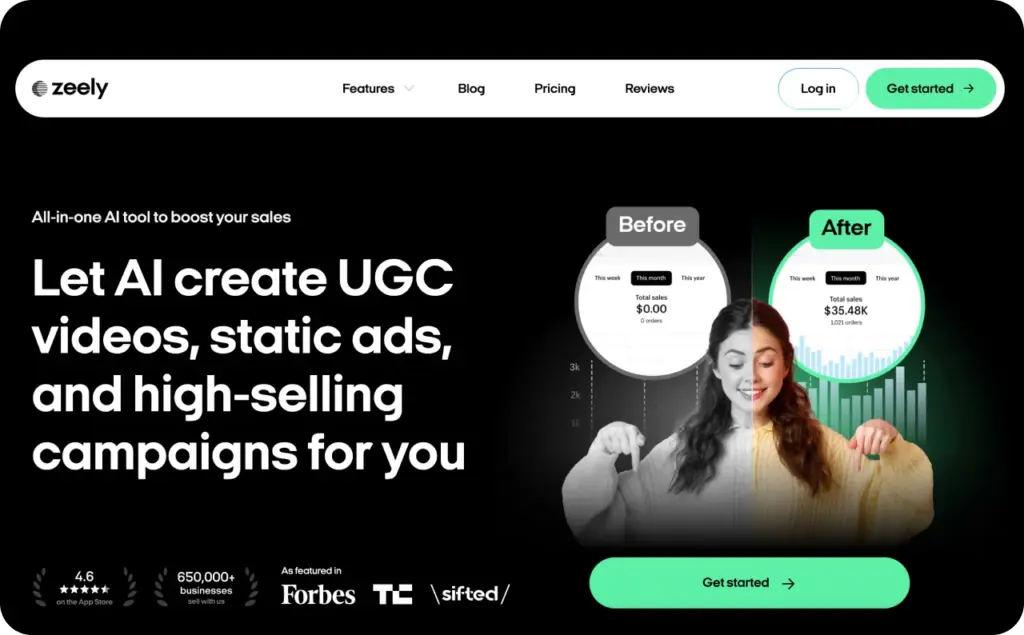
Best overall AI ad generator for small business: Zeely
Zeely is the best fit when you want one flow for product-based ad creation. You can use the Zeely AI ad generator to create static ads, UGC-style video ads, avatar ads, copy, and campaign-ready variations.
I’d choose Zeely if you sell physical products, run ecommerce, manage a dropshipping store, or need ads for Meta, TikTok, YouTube, or social channels without hiring a full creative team.
The strongest part is the workflow. Instead of starting from a blank canvas, you can start from a product and move toward a usable ad. You can also use Zeely’s AI static ads creator when you only need image ads for faster tests.
Best for: ecommerce sellers, service businesses with clear offers, dropshippers, small teams, agencies serving SMBs.
Best AI ad maker for design control: Canva
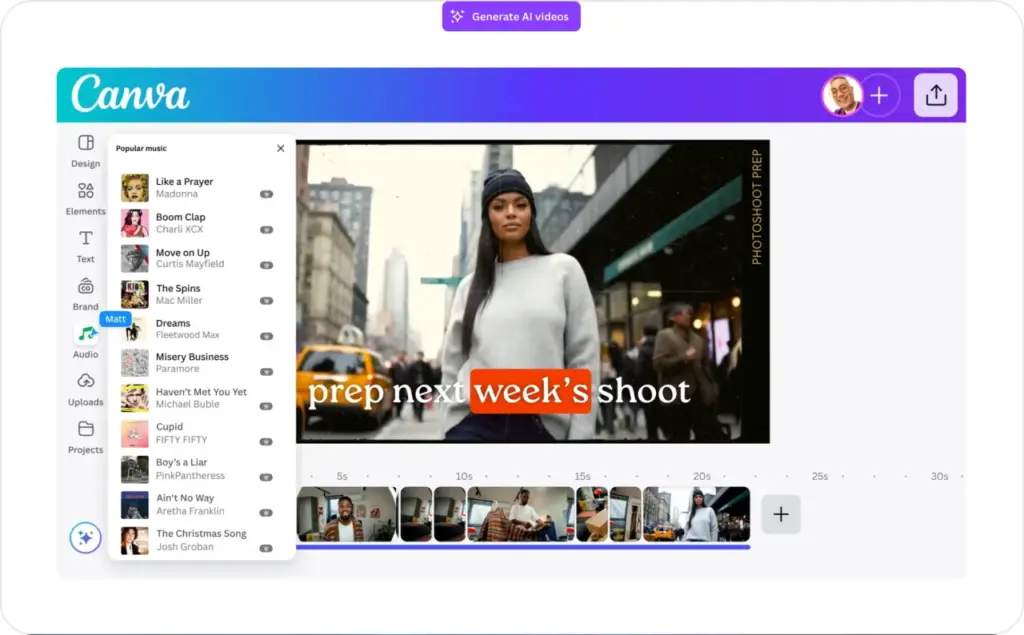
Canva is not only an ad generator. It’s a design platform with templates, brand kits, Magic Studio features, and easy editing.
I’d choose Canva when you already know what you want the ad to say and need a clean design fast. It is strong for simple static ads, social posts, event promos, lead magnets, and local business visuals.
The weak spot is paid ad judgment. Canva helps you make the asset. It does not fully tell you whether the offer, hook, or first frame is likely to sell.
Best for: owners who want control, brand-heavy posts, local promos, static ad layouts. Read more about best Canva alternatives.
Best AI ad generator for social content volume: Predis.ai
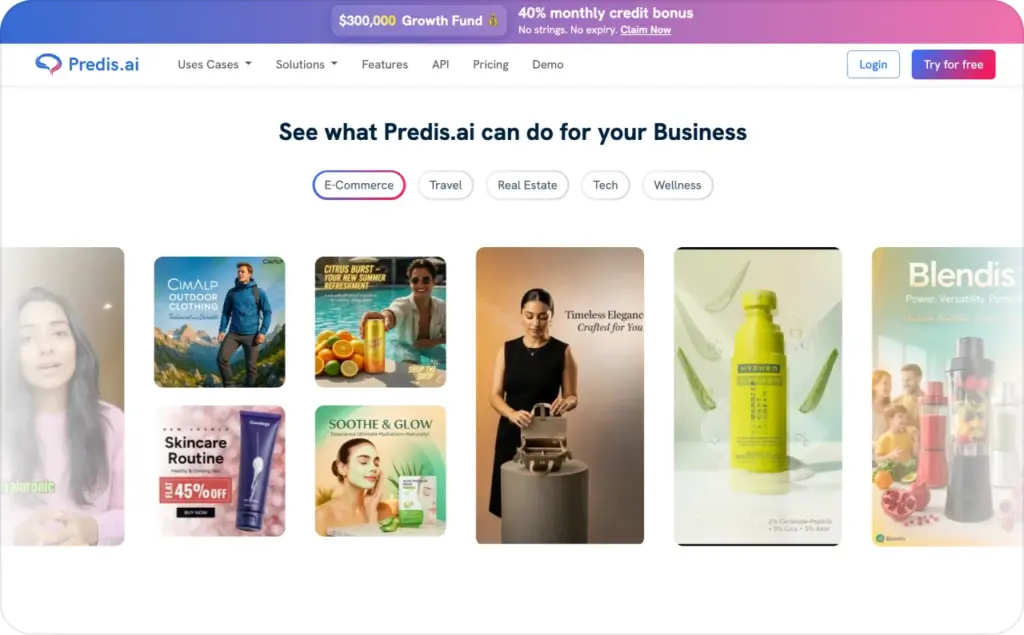
Predis.ai is useful when your ads and organic content sit close together. It can generate social posts, product videos, ad creatives, captions, and scheduling content in one place.
I’d consider it when you need frequent content for Instagram, TikTok, Facebook, LinkedIn, Pinterest, and YouTube Shorts. It’s also worth testing if your team struggles to keep a content calendar alive.
The thing to watch is credits. Video and UGC-style content can use credits faster than static posts.
Best for: social-heavy sellers, creators, coaches, ecommerce stores with frequent promos.
Best AI ad maker for competitor-style research: Quickads
Quickads is interesting because it blends ad creation with a large ad inspiration library. For small businesses, that can be helpful. Many owners do not need more blank-canvas creativity. They need to see what patterns are already working in their niche.
I’d use Quickads when you want to study ad angles, create image or video ads, and move faster from inspiration to output.
The entry point says $0 to start, but Pro plans start from $99 per month, so I’d check how much creation you really need before buying.
Best for: founders who need ideas, agencies, ecommerce teams, performance marketers.
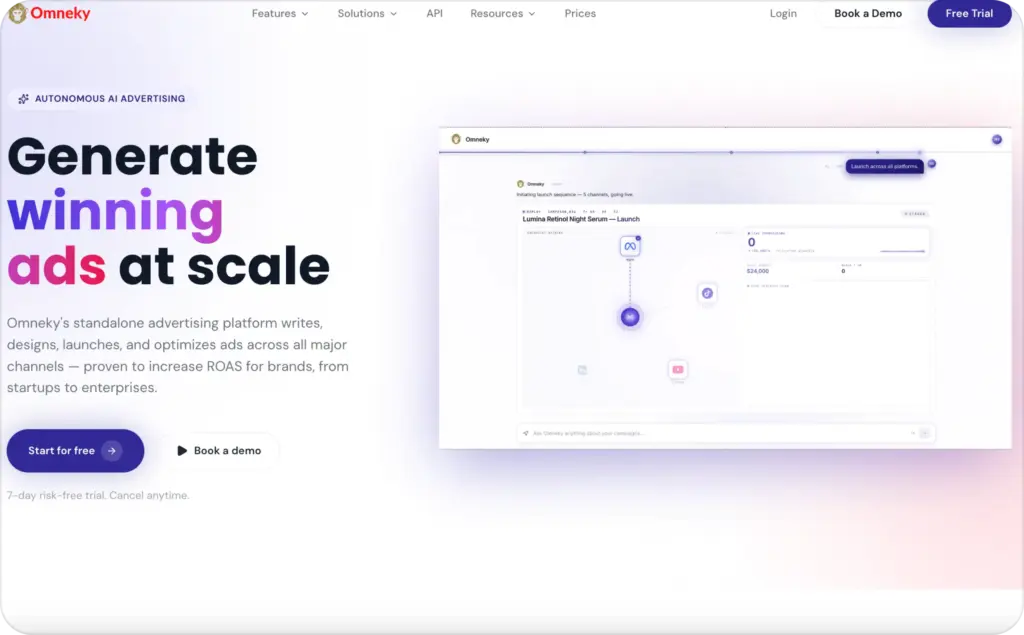
Best AI ad generator for omnichannel teams: Omneky
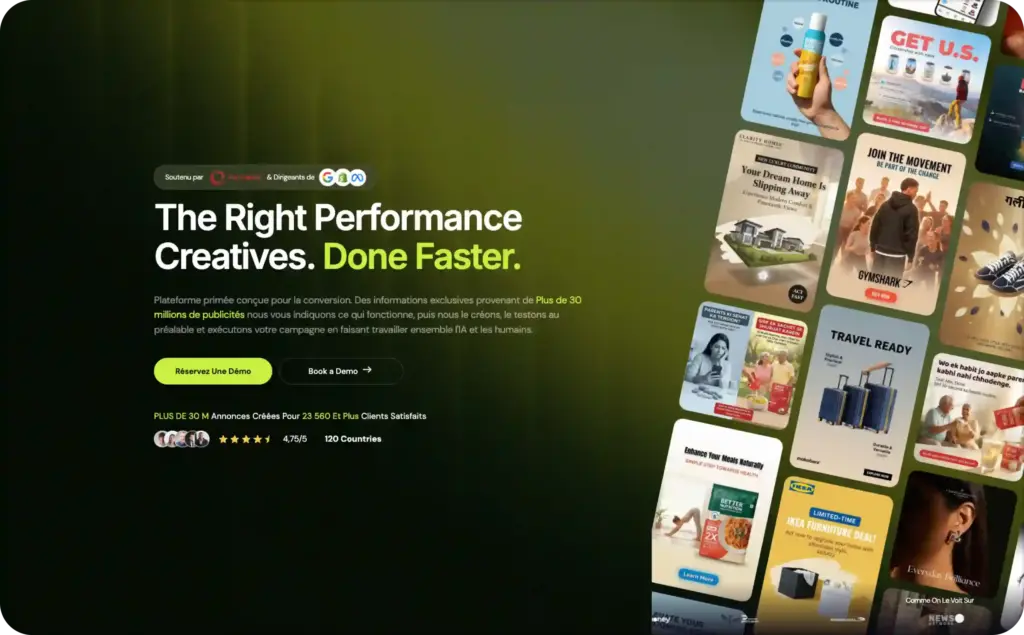
Omneky is a better fit for businesses that want creative generation, campaign launch, brand rules, and performance learning across channels.
It starts at $29 per month, but the more useful tiers for teams are $99 and $249 per month. That makes it more serious than a simple small-business design tool.
I’d consider Omneky when you run ads across Meta, Google, TikTok, LinkedIn, or Reddit and want a more structured creative setup.
Best for: growing brands, teams with several channels, businesses that want creative plus launch tools.
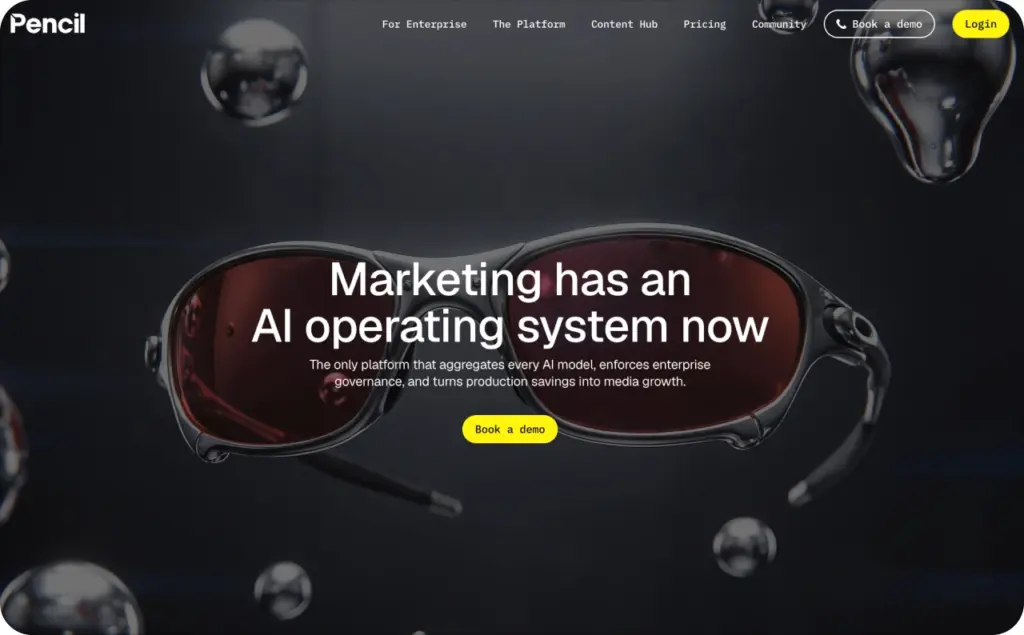
Best AI ad maker for scoring and testing systems: Pencil
Pencil is a creative marketing platform built around generating, editing, launching, and learning from ads. It is more useful when you already run paid media and want a system around creative testing.
For a very small business, Pencil may be more tool than you need. For a team spending regularly on ads, its scoring and creative workflow can be useful.
Because public pricing details can vary across sources, confirm the live plan before making a decision.
Best for: paid media teams, agencies, scaling brands, teams with regular testing.
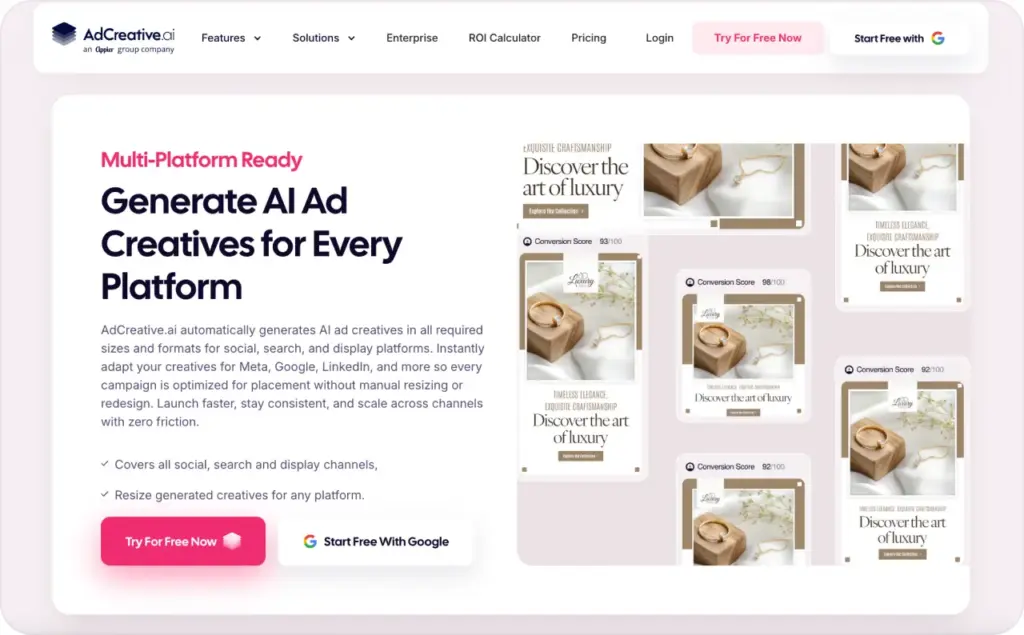
Best AI ad generator for static ads and scoring: AdCreative.ai
AdCreative.ai is strong for static ad creatives, scoring, brand setup, competitor research, and high-volume generation. It gives you unlimited generations, then uses credits when you download creatives.
That model can be helpful if you want to explore many directions before saving final assets. Just remember that credits still matter once you start downloading.
I’d use AdCreative.ai if static ad output and prediction-style scoring are more important than full campaign setup.
Best for: ecommerce ads, agencies, PPC teams, static creative testing.
My verdict on the best AI ad generators for small business
For most small businesses, I’d start with Zeely because it is built around the full ad creation path, not just one piece of it. A small team needs to move from product to creative to campaign faster. Zeely does that better than tools that stop at a pretty image or a headline list.
Use Canva if you want design flexibility. Use Predis.ai if social content and scheduling matter most. Use Quickads if you need inspiration and quick creative ideas. Use Omneky if you are growing into omnichannel ads. Use Pencil if you have a testing system and want creative scoring. Use AdCreative.ai if static ad volume and scoring are your main needs.
The real winner is the tool you can use every week.
A good AI ad generator should help you create more testable ads, learn faster, and protect your brand from lazy creative. If it only gives you more files to sort through, it is not helping enough. Read more about AI tools for small businesses.
FAQ about AI ad generators for small business
The best option for most small businesses is Zeely because it helps create static ads, UGC-style video ads, avatar ads, copy, and campaign-ready variations from one workflow. Canva is better for design control, while Predis.ai is better for social content volume.
An AI ad generator is a tool that turns a product, prompt, URL, or campaign brief into ad creatives. It can create visuals, headlines, copy, video scripts, UGC-style videos, static ads, and size variations depending on the tool.
Yes, if it lowers your cost per usable ad. It is not worth it if you spend more time fixing outputs than you would creating the ad yourself. Test the tool with one real product and one real offer before buying a higher plan.
Yes, but you still need to check each ad for platform rules, claims, image quality, sizing, and product accuracy. Google’s ad guidance also warns that asset-based ads can combine headlines, descriptions, images, and logos automatically, so your assets must work together in many layouts.
Disclosures depend on the ad, market, platform, and content type. At minimum, do not use AI to create fake claims, fake testimonials, fake people, or misleading product visuals. Keep proof for any performance, health, finance, or earnings claim.
Canva has a free plan. Quickads says you can start at $0. Predis.ai Core is listed from $19 per month on annual billing. Zeely starts at $29.95 per month. The cheapest tool is not always the best value if the outputs need heavy cleanup.
Use Article schema, ItemList schema for the tool comparison, and FAQPage schema for the FAQ section. If Zeely adds ratings or product-level pricing blocks, make sure those claims match visible page content.
Emma blends product marketing and content to turn complex tools into simple, sales-driven playbooks for AI ad creatives and Facebook/Instagram campaigns. You’ll get checklists, bite-size guides, and real results, pulled from thousands of Zeely entrepreneurs, so you can run AI-powered ads confidently, even as a beginner.
Written by: Emma, AI Growth Adviser, Zeely
Reviewed on: July 16, 2026