How to use GPT models for better ad copy workflows
Which GPT model can write better ad copy without slowing production or filling your campaign with generic variations? I’ll show you how I choose models, structure inputs, review outputs, and move approved messaging into creative production.
GPT-5.5 for ad copy can handle complex briefs, positioning work, rewrites, and structured variants. However, OpenAI now recommends the GPT-5.6 family, with Sol for demanding tasks, Terra for a quality-cost balance, and Luna for high-volume jobs.
The best workflow does not ask one model to do everything. Use a capable model to find strong angles, a faster model for controlled variations, human review for claims and brand fit, then move approved copy into visual production and testing.
GPT models can move a rough product brief toward useful ad copy faster. They can organize facts, explore messaging angles, rewrite copy, and produce controlled variants.
But a model is not a finished ad workflow. Results still depend on your inputs, model choice, review rules, and creative handoff. I’ll cover that process without turning this guide into another prompt library.

Is GPT-5.5 useful for ad copy in 2026?
Yes, GPT-5.5 for ad copy can be useful, especially when the work requires more than short headline generation.
OpenAI describes GPT-5.5 as a frontier model for complex professional work. That makes it a reasonable fit for tasks such as reading a detailed brief, separating product facts from assumptions, comparing audience segments, finding distinct messaging angles, and rewriting copy under several constraints.
Still, GPT-5.5 is not an advertising-specific model. It does not automatically know which claim your legal team approved, which benefit matters most to your buyers, or what your latest campaign data says. It can only work with the context and rules you provide.
There is also a naming and freshness issue to consider. OpenAI’s current model catalog recommends GPT-5.6 Sol for complex work, GPT-5.6 Terra for a balance of intelligence and cost, and GPT-5.6 Luna for cost-sensitive volume. GPT-5.5 still has an official model page, but it is no longer the clearest evergreen keyword for a new workflow guide.
Use GPT models for ad copy when you need faster thinking, clearer structure, and more controlled copy production. Then choose the exact model based on task difficulty, speed, cost, and output volume.
Which GPT models for ad copy fit each task?
The best model is the least expensive option that meets your quality target consistently. OpenAI’s model selection guide recommends reaching the required accuracy first, then reducing cost and latency without losing it.
Start with a capable model when the brief is messy or the positioning is unsettled. Once you define acceptable output, test whether a faster model can handle narrower production tasks.
| GPT model | Best fit in an ad copy workflow | Watch for |
| GPT-5.6 Sol | Complex briefs, positioning, audience distinctions, sensitive claims | More capability than simple rewrites require |
| GPT-5.6 Terra | Daily drafting, angles, revisions, balanced production | Still needs clear facts and review rules |
| GPT-5.6 Luna | Cost-sensitive batches and controlled variations | Keep tasks narrow and formats consistent |
| GPT-5.5 | Context-rich analysis and multi-step copy work | It is not the current catalog’s first recommendation |
| GPT-5.4 nano | High-volume rewriting, labeling, extraction, and cleanup | It cannot repair weak positioning |
| GPT-4o | Existing multimodal workflows and integrations | Verify the exact model and snapshot status |
Use stronger models to settle the message
Positioning requires the model to connect the product, audience, problem, offer, and proof without inventing facts. Give a capable model the full brief and ask for several angles that differ in meaning. Decide what the ad should say before multiplying how it says it.
Use smaller GPT models for controlled volume
GPT-5.4 nano is built for simple, high-volume tasks. It can shorten approved copy, tag variants by angle, extract product facts, or create tightly formatted rewrites. The task should already be clear.
Treat GPT-4o as an existing-workflow option
GPT-4o still appears in established systems, but some snapshots are deprecated. Check the exact model ID and migration requirements before building a new workflow around it.
What inputs do AI text models need for better ads?
Most weak AI copy starts with a thin brief. “Write an ad for my skincare product” leaves the model guessing about the audience, offer, proof, tone, and platform.
A stronger input does not need to be long. It needs to remove the most expensive ambiguities.
Use this compact framework:
- Product information: What the product is, how it works, and verified features
- Target audience: Who the ad addresses and what situation they are in
- Offer: Price, discount, trial, bundle, deadline, or other real incentive
- Campaign objective: Awareness, traffic, leads, purchases, or retargeting
- Brand voice: Tone, vocabulary, examples, and language to avoid
- Platform constraints: Placement, format, length, character limits, and CTA
You can also attach approved proof, customer language, landing-page copy, or a product feed when accuracy matters. OpenAI’s prompt engineering guidance recommends providing relevant context and precise instructions rather than expecting the model to fill missing information correctly.
This framework belongs in a workflow article because it explains what the model needs. A dedicated ChatGPT prompts page should own full copy-and-paste templates, prompt variations, and reusable examples.
That separation helps both pages rank for a clearer job. This guide answers what to provide, which model to use, and how to review results. The prompt guide answers exactly what to paste into ChatGPT.
A practical GPT ad copy workflow from brief to test
A reliable AI ad copy workflow follows decisions in a fixed order. It does not begin with random headline generation.
1. Build a fact-checked campaign brief
Collect the audience, offer, objective, proof, exclusions, voice, platform, and destination page. Mark prices, guarantees, ingredients, claims, and deadlines that the model must not change.
A good brief gives the model room to write without permission to invent.
2. Generate distinct messaging angles
Request a small set of angles that differ in meaning. Each should connect one audience problem to one product benefit and one reason to believe.
Five headlines that all promise “more time” remain one angle. Review the thinking before polishing sentences, then remove unsupported ideas.
3. Turn approved angles into copy variants
Generate format-specific primary text, headlines, CTAs, video openings, captions, or script sections. Keep every batch labeled by angle so later tests remain readable.
An AI ad script generator can move product details into structured video messaging. Direct GPT access offers more control over instructions and output formats.
4. Review accuracy, voice, and platform fit
Compare product statements with the brief and landing page. Check whether the wording sounds like the brand, then adapt it to the placement.
Meta primary text, a TikTok opening, an image overlay, and a video caption perform different jobs.
5. Move approved copy into creative production
The angle should guide the first frame, product scene, overlay, avatar delivery, or static design. A text-only process often fragments across documents, design tools, editors, and campaign software.
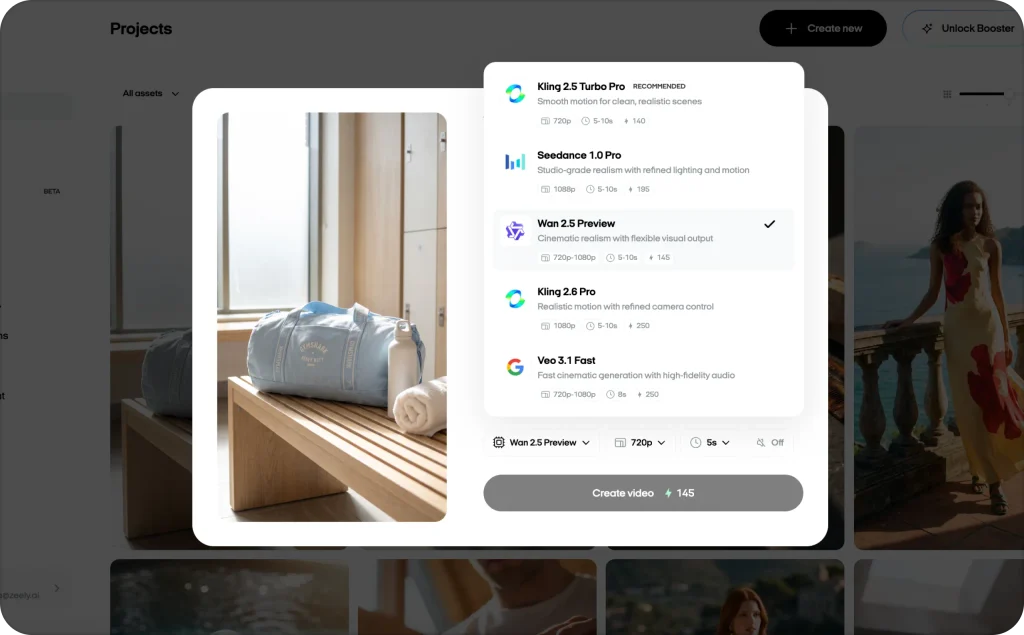
A multi-model AI ad generator can connect ad copy with static, video, UGC-style, headline, and CTA production.
6. Test the message, not only the wording
Launch a few meaningfully different ads. Keep the offer and destination stable when testing angles, then compare results by audience, placement, and format.
A polished sentence does not prove a model is “good at ads.” Useful output is accurate, distinct, testable, and easier to produce.
Where GPT models help most in creative production
GPT models work best when the task is language-heavy and the output can be checked. They cannot replace product knowledge, customer understanding, design, compliance, or campaign testing.
Ideation and messaging angles
A capable model can organize product facts into possible buying reasons. Ask it to explain each angle in one sentence, then remove ideas that repeat the same promise.
It can also adapt one verified value proposition to different buyer situations. The product truth stays stable while the entry point changes.
Controlled copy variants
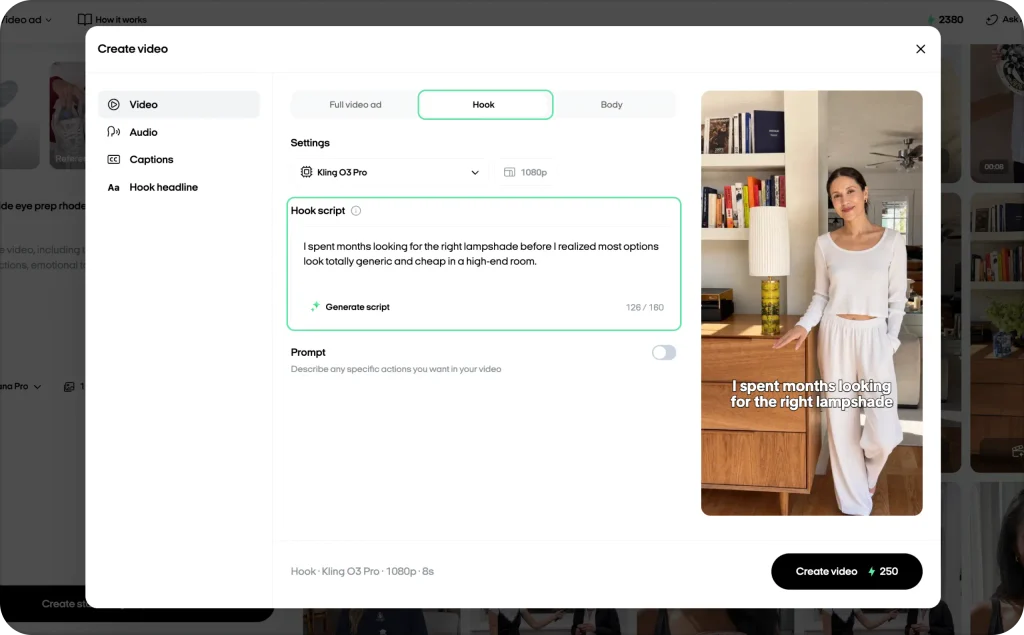
After approving the message, test shorter wording, different proof order, alternative CTAs, or platform-specific lengths. For opening-line craft, use Zeely’s scroll-stopping ad hook frameworks rather than duplicating a hook library here.
Localization and rewriting
GPT models can create multilingual drafts, shorten approved copy, adjust reading level, or convert a paragraph into headline and CTA options.
A fluent reviewer should check localized meaning, offer details, and cultural fit. For every rewrite, identify the claims, numbers, names, and terms that must remain unchanged.


Copy labeling and cleanup
Smaller models can label variants by angle, audience, funnel stage, tone, or format. They can also flag repeated claims and near-duplicates before production, keeping large batches easier to review.
How to review GPT-generated ad copy before launch
A polished output can still be wrong. That is why AI text models for ads need a review system, not a quick read.
I use seven checks:
- Factual accuracy: Every product, price, offer, deadline, and proof statement matches an approved source.
- Audience fit: The copy reflects a real buyer situation rather than a generic demographic label.
- Message clarity: One main idea is easy to understand on the first read.
- Brand voice: The wording sounds consistent with the company’s existing communication.
- Platform fit: Length, opening, CTA, and format suit the intended placement.
- Variant distance: Each test version changes something meaningful enough to teach you.
- Claim safety: The copy avoids guarantees, invented proof, and unsupported comparisons.
Score each area from one to five. Do not approve copy with a weak accuracy or claim-safety score, even when the total looks acceptable.
Human review matters most when the ad includes health, financial, performance, environmental, or comparative claims. It also matters when pricing, availability, or promotion terms can change quickly.
Should marketers use GPT-5.5 directly or a multi-model AI ad generator?
Direct GPT access and a multi-model platform solve different parts of the job.
Using GPT-5.5 or another model directly gives you flexibility. You can control the instructions, provide custom context, choose output structures, connect an API, and build your own review rules.
That flexibility is useful for technical teams, agencies with defined processes, or marketers who need unusual output formats. It also creates more setup work. You must manage model selection, prompt versions, product data, output storage, reviews, and creative handoffs.
A multi-model AI ad generator is usually better when the goal is to move from product information to complete creative assets with fewer separate tools. The platform can connect copy generation with visuals, video, variants, and workflow management.
The neutral choice looks like this:
- Use direct model access when custom control matters more than setup time.
- Use a workflow platform when faster production and fewer handoffs matter more.
- Use both when your team wants custom language work before moving approved copy into production.
The model does not have to be the product. Zeely’s guide to AI models for ad creative generation explains how text, image, video, audio, and workflow layers contribute different parts of a finished ad.
How Zeely connects GPT copy to creative production
A text model can provide a strong hook, headline, script, or CTA. It cannot, by itself, turn every approved line into a finished static ad, UGC-style video, avatar delivery, resized variation, and managed campaign workflow.
Zeely brings copy and creative steps into one application. You can begin with product information, create ad messaging, and move toward static or video assets without treating every model as a separate destination.
This does not mean one hidden model is always responsible for every output. Different tasks may benefit from different AI models. Complex language work, controlled rewriting, image creation, video motion, avatars, and voice production have different requirements.
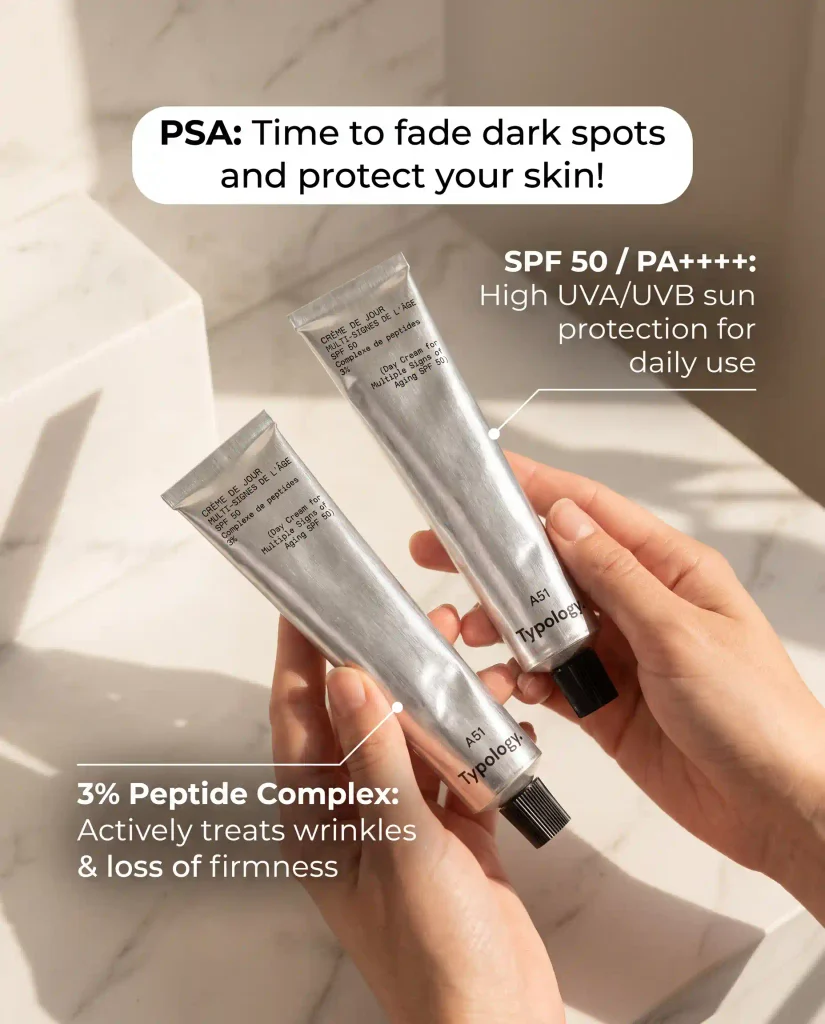

The useful part for a small business is not memorizing every model name. It is getting a workflow that connects the right inputs to reviewable creative assets.
Zeely’s AI ad generator is the commercial next step for readers who want to create copy, static ads, video ads, headlines, and CTA variations. The broader creative automation guide explains how teams scale, adapt, localize, and manage creative production.
Common GPT ad copy workflow mistakes to avoid
The process often fails before the model does.
- Writing before choosing an angle: Smooth sentences cannot rescue a weak message
- Providing incomplete facts: Missing context invites generic language and unsupported assumptions
- Using the strongest model everywhere: Positioning and copy shortening need different levels of capability
- Counting near-duplicates as tests: Change the problem, benefit, proof, framing, or CTA
- Skipping the source check: Review every product and offer claim against approved information
- Separating copy from visuals: The first frame and copy should express the same angle
- Measuring output volume: One hundred repeated variants create workload, not useful learning
FAQ
Yes. It can handle context-rich briefs, messaging analysis, rewrites, and multi-step copy work. OpenAI currently recommends GPT-5.6 models first, so compare quality, cost, and volume needs.
Use a capable model for difficult positioning, a balanced model for daily drafting, and a smaller model for narrow high-volume transformations. Test every option against the same review rubric.
GPT-5.4 nano fits shortening, labeling, extraction, and tightly formatted rewrites. It is less suitable for discovering a differentiated position from an unclear brief.
It may remain useful in existing multimodal workflows. Check the exact version because some GPT-4o snapshots are deprecated.
They can create testable copy, not guaranteed conversions. The offer, audience, creative, placement, landing page, campaign setup, and review quality still shape results.
Yes, but a fluent reviewer should check meaning, claims, offer terms, and cultural fit.
Start with a few distinct angles, then create controlled versions of the strongest ones. Large batches of near-duplicates add review work without adding learning.
No. APIs offer more control, while an AI ad platform can connect copy generation with creative production and variants.
Final takeaway
GPT-5.5 for ad copy is a valid topic, but it should sit inside a broader, more durable guide to GPT model selection and creative production.
Use stronger models to solve difficult messaging problems. Use smaller models for controlled volume. Give every model verified product context, clear constraints, and a defined output format. Then review the copy before it reaches design, video, or campaign launch.
The best result is not the longest prompt or newest model. It is an accurate message that your team can turn into a clear creative, test against another real idea, and improve with campaign data.
Emma blends product marketing and content to turn complex tools into simple, sales-driven playbooks for AI ad creatives and Facebook/Instagram campaigns. You’ll get checklists, bite-size guides, and real results, pulled from thousands of Zeely entrepreneurs, so you can run AI-powered ads confidently, even as a beginner.
Written by: Emma, AI Growth Adviser, Zeely
Reviewed on: August 21, 2026